
Process Safety Instruments: Choosing the Right Fit for Plant Upgrades


When planning plant upgrades, selecting the right process safety instruments is critical to balancing compliance, reliability, and long-term performance. The decision affects shutdown integrity, alarm quality, maintenance workload, and project risk. In complex facilities, the best fit is rarely the newest device alone. It is the instrument set that matches hazard exposure, process dynamics, environmental conditions, and control architecture.
In the broader instrumentation industry, safety devices now support industrial automation, digital transformation, and smarter asset management. That makes process safety instruments part of both protection and performance. A structured checklist helps prevent late-stage redesign, hidden lifecycle cost, and weak integration between safety and operations.
Why a Checklist Works for Process Safety Instrument Selection
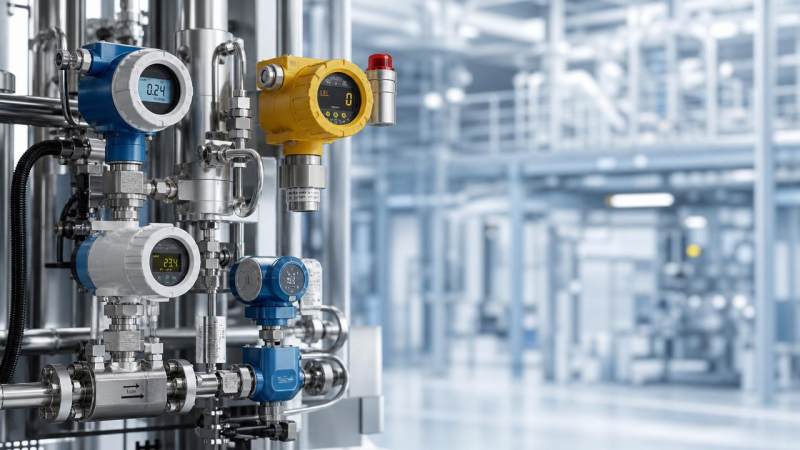
Plant upgrades often combine old wiring, mixed protocols, and evolving standards. Without a checklist, teams may choose instruments by datasheet headline values rather than application fit. That creates gaps in proof testing, diagnostics, response time, or environmental durability.
A checklist also brings consistency across pressure, temperature, flow, level, gas detection, analytical monitoring, and shutdown loops. It turns process safety instruments selection into a repeatable engineering task instead of a reactive procurement exercise.
Core Checklist for Choosing the Right Process Safety Instruments
- Define the safety function first, then map each instrument to trip logic, response time, proof test interval, and safe failure behavior.
- Verify the required SIL capability against the actual loop design, not the transmitter or switch certificate alone.
- Match measurement technology to process conditions such as vibration, corrosive media, high temperature, plugging, foaming, or rapid pressure variation.
- Check compatibility with existing DCS, PLC, SIS, fieldbus, and remote I/O infrastructure before locking the instrument specification.
- Evaluate diagnostic coverage, local indication, fault signaling, and asset visibility to reduce dangerous undetected failures during operation.
- Confirm enclosure rating, hazardous area certification, ingress protection, and material selection for the real installation environment.
- Review calibration method, proof testing access, spare parts availability, and technician familiarity to control lifecycle maintenance effort.
- Assess process connection details early, including impulse lines, manifolds, thermowells, tapping points, and mounting position constraints.
- Plan for cybersecurity and network segregation when smart process safety instruments connect to digital monitoring platforms.
- Document cause-and-effect logic, tag conventions, and testing records so future upgrades do not weaken the original safety intent.
What to Compare Beyond the Datasheet
Many process safety instruments look equivalent on paper. In practice, small differences matter. Sensor stability affects trip confidence. Drift affects nuisance alarms. Diagnostics affect test frequency. Mechanical design affects survivability during vibration, washdown, or thermal cycling.
Good selection also considers vendor support quality, documentation clarity, lead time stability, and migration path for future expansion. During plant upgrades, these factors often decide whether commissioning stays on schedule.
Application Notes for Different Upgrade Scenarios
Brownfield Retrofits with Legacy Systems
Brownfield projects usually face cable reuse, old marshalling panels, and mixed signal standards. Here, process safety instruments should be chosen for integration simplicity as much as measurement quality. Universal input options, stable analog output behavior, and clear fault indication reduce field surprises.
Mechanical fit is equally important. Reusing nozzles, thermowells, or manifolds can save shutdown time, but only if measurement performance remains valid. A retrofit should not force a compromised sensing location that weakens response speed.
High-Risk Process Units
In fired heaters, reactors, storage terminals, and high-pressure lines, the selection focus shifts toward verified shutdown behavior and failure transparency. For these units, process safety instruments must maintain accuracy under upset conditions, not just normal steady state.
Redundancy strategy should be reviewed at the loop level. Two good transmitters do not guarantee safe voting if they share the same impulse line, power source, or environmental vulnerability.
Digitally Connected Plants
Plants expanding remote diagnostics or predictive maintenance can benefit from smart process safety instruments. Device health data helps detect plugged lines, sensor degradation, or configuration drift before a demand event occurs.
Still, digital capability should support safety, not complicate it. Keep the safety function independent, define write access rules, and ensure networked tools cannot silently alter critical parameters.
Commonly Missed Issues That Create Risk
Ignoring Installation Reality
A well-rated device can still fail in service if impulse lines freeze, sensing ports clog, or the mounting point amplifies vibration. Installation details can undermine even high-quality process safety instruments.
Assuming Certification Solves the Whole Problem
A certified instrument does not make the complete safety loop compliant by itself. Logic solver design, final element response, test interval, and common-cause failure still determine actual risk reduction.
Overlooking Maintenance Access
If calibration ports are inaccessible or proof testing requires scaffolding, testing gets delayed. That slowly reduces confidence in process safety instruments and increases hidden exposure.
Selecting One Technology for Every Service
Standardization is useful, but it should not force the same sensing technology into clean liquids, sticky slurries, steam service, and vapor interfaces. Process diversity requires application-specific choices.
Practical Steps for Execution
- Start with a loop-by-loop review of hazards, trip purpose, and operating envelope before preparing any instrument list.
- Build a comparison table covering certification, diagnostics, materials, protocol, maintenance effort, and installation constraints.
- Run a field verification walkdown to confirm nozzle location, cable routing, access space, and environmental exposure.
- Align control, maintenance, and safety documentation so tag data, test records, and cause-and-effect logic remain consistent.
- Pilot critical process safety instruments on the hardest service first, then extend the specification where performance is proven.
Summary and Next Action
Choosing the right process safety instruments for plant upgrades means balancing risk reduction, integration fit, environmental resilience, and maintainability. The strongest result comes from evaluating the entire safety function, not isolated devices.
Use the checklist above to review each critical loop, validate field conditions, and compare lifecycle impact before final selection. That approach improves compliance, reduces rework, and creates a more reliable foundation for future automation and intelligent plant operation.
Recommended for You
 How does cross-interference affect multi-component gas analyzers?How does cross-interference affect multi component gas analyzers? Explore measurement errors, compensation limits, and validation tips to choose the right system for your process.
 How does temperature affect high-accuracy sensor performance?Explore how temperature affects high accuracy sensor performance. Learn to reduce thermal drift, evaluate compensation, and select the right sensor for reliable measurements.
 Can a C4H8O concentration analyzer distinguish between isomers?Can a C4H8O concentration analyzer distinguish isomers? Compare GC, FTIR and MS methods, uncover selectivity limits, and learn what to validate before choosing your instrument.
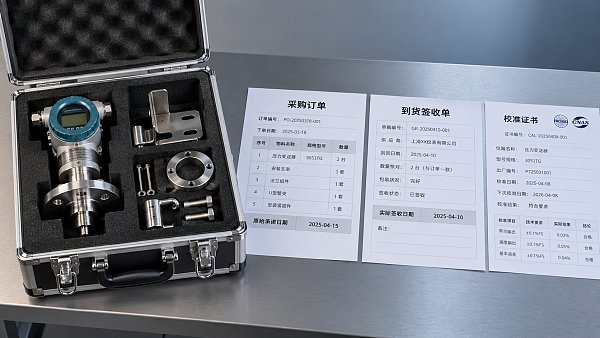
 How to identify a reliable supplier using on-time delivery recordsIdentify a Reliable Supplier by verifying on-time delivery records, original commitments, and complete shipments. Learn practical checks to reduce purchasing risk and protect your project schedule.
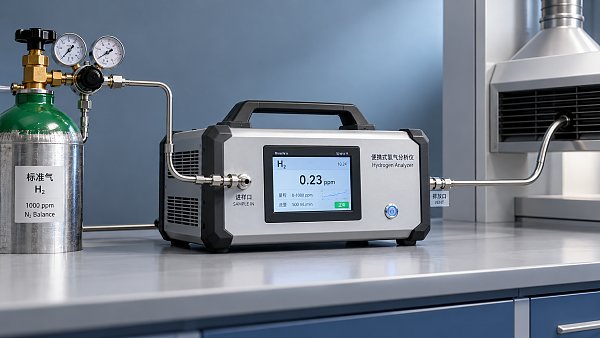
 How sensitive should a portable hydrogen analyzer be for lab use?Choose a portable hydrogen analyzer for laboratory use with the right quantification limit, accuracy, and range. Learn how to verify performance and avoid costly buying mistakes.
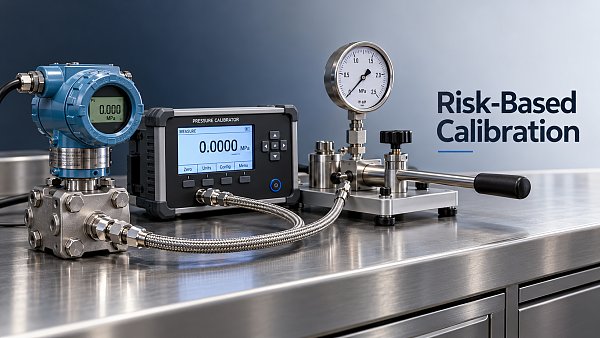
 How to set industrial calibration intervals based on equipment riskSet industrial calibration intervals based on equipment risk, drift, and as-found data. Learn when to shorten or extend schedules to improve reliability and avoid unnecessary costs.
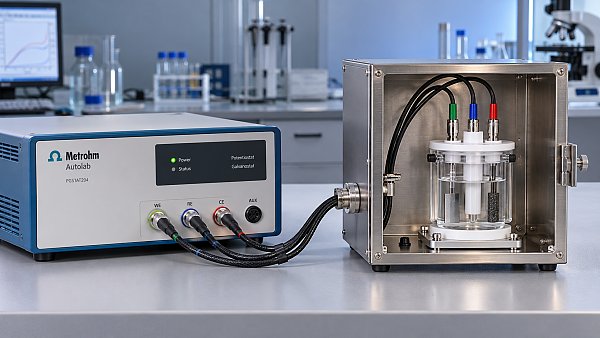
 How to choose electrochemical analyzers for low-current measurementsCompare electrochemical analyzers for precise low-current measurements. Learn how noise, leakage, bandwidth, and real-cell testing help you choose the right instrument.
 What tolerance does a custom gas mixture need for calibration?Choose the right custom gas tolerance for calibration. Learn how blending tolerance, certified uncertainty, and stability affect accuracy—and avoid paying for precision you don’t need.
 How condensation affects stack detector readings in wet flue gasStack detector readings can drift when wet flue gas condenses. Learn how to identify moisture interference, prevent sample losses, and improve emissions monitoring reliability.
 How to prevent condensation in a CO2 analyzer sampling systemPrevent condensation in your CO2 analyzer sampling system. Learn how to control dew point, eliminate cold spots, and manage moisture for reliable readings and fewer costly disruptions.
 How to verify accuracy claims for industrial quality analyzersVerify accuracy claims for industrial quality analyzers with calibration checks, independent testing, and clear acceptance criteria. Learn how to reduce risk and buy with confidence.
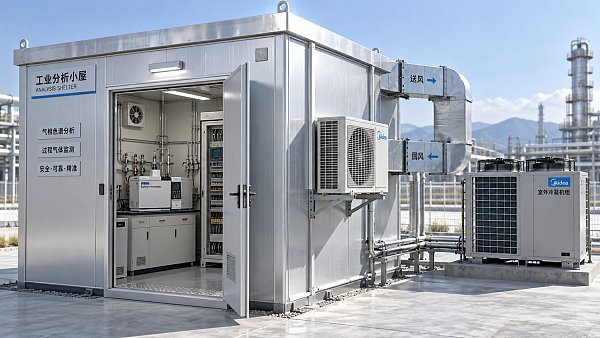
 How to calculate cooling loads for an industrial analyzer shelterSize industrial analyzer shelter cooling with confidence. Learn to calculate equipment heat, solar gains, and ventilation loads, then select HVAC capacity for reliable analyzer performance.
 Hydrogen Analyzers for Energy Storage: Purity Monitoring vs. Leak DetectionChoosing a hydrogen analyzer for energy storage systems? Compare purity monitoring and leak detection to select the right sensors, improve safety, and protect fuel cell performance.
 NH3 Monitoring in Fertilizer Plants: Where Should Leak Analyzers Be Installed?NH3 analyzer for fertilizer production: discover where to place leak detectors around storage, compressors, and loading areas to reduce blind spots and improve early warning.
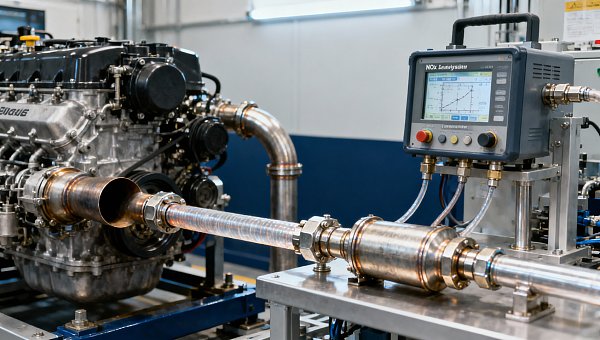
 Diesel Engine NOx Analyzers: Response Time and NO2 Conversion ExplainedChoosing a NOX analyzer for diesel engines? Learn how response time, NO2 conversion, and sampling design affect accuracy—and make a smarter, evidence-based purchase.
 SO2 Analyzers for Smelter Emissions: Sampling Hot, Dust-Laden Flue GasSelect an SO2 analyzer for smelting industry applications. Discover how to handle hot, dust-laden flue gas, prevent sample losses, and achieve reliable emissions monitoring.
 Unstable CH4 Readings in Biogas Monitoring? Check Moisture and Sample FlowCH4 analyzer for biogas monitoring giving unstable readings? Discover how moisture, sample flow, and pressure checks help pinpoint faults and restore reliable methane measurements.
 Buying a CO2 Analyzer for Brewery Gas Recovery: Costs Beyond the Purchase PriceBuying a CO2 analyzer for brewery applications? Compare sampling, installation, calibration, and downtime costs to uncover hidden expenses and make a smarter gas recovery investment.
 Where to Place CO Analyzers for Effective Parking Garage VentilationOptimize your CO analyzer for parking garage ventilation with practical placement tips. Learn how sensor height, airflow, and zone coverage support timely detection and effective fan control.
 NDIR vs. FTIR Gas Analyzers: Which Fits Your Environmental Research?Find the right infrared gas analyzer for environmental research. Compare NDIR vs. FTIR on sensitivity, gas coverage, sampling needs, and cost to choose confidently for your study.
 Oxygen Analyzers for Diving: Calibration Checks Before Nitrox BlendingUsing an oxygen analyzer for diving applications? Discover essential calibration, sensor, and sampling checks before nitrox blending to support reliable readings.
 How Paramagnetic Oxygen Analyzers Work and Why Sample Pressure MattersLearn how a paramagnetic oxygen analyzer works, why sample pressure affects accuracy, and what to check in compensation and calibration before choosing your system.
 How Much Does a Complete CEMS Integration Project Typically Cost?How much does a complete CEMS integration project typically cost? Explore budget ranges, hidden installation costs, and compliance needs to compare quotes and plan confidently.
 What Is the Typical Response Time for Industrial Air Monitors?What is the typical response time for industrial air monitors? Explore T90, sampling delays, and alarm settings to compare performance and choose the right monitor with confidence.
 Do Regulatory Monitoring Systems Need Third-Party Certification?Do regulatory monitoring systems need third-party certification? Learn when it is required, what certificates prove, and how to verify compliance before buying.
 How Do You Choose Wired or Wireless for Stack Monitoring?Learn how to choose between wired and wireless for stack monitoring. Compare reliability, lifecycle costs, and data recovery to find the right CEMS setup for your site.
 What Happens When Combustible Gas Sensor Calibration Is Overdue?What happens if combustible gas sensor is not recalibrated on time? Discover the risks of inaccurate readings and missed alarms, plus steps to restore reliable protection.
 Can One Multi-Gas Detector Replace Four Separate Analyzers?Find out: can a single multi-gas detector replace four separate analyzers? Compare accuracy, safety, compliance, and lifetime costs to make a confident buying decision.
 Industrial Safety vs. Emission Monitoring: What Are the Differences?What are the main differences between industrial safety and emission monitoring? Compare goals, sensors, response times, and compliance needs to choose the right systems for your facility.
 Is Remote Monitoring Worth the Cost for Small Emission Sources?Is it worth investing in remote monitoring for small emission sources? Compare costs, compliance needs, and potential savings to choose the right solution for your operation.
 How Do You Handle Analyzer Failure During an Environmental Audit?Learn how to handle analyzer failure during environmental compliance audit procedures. Protect evidence, verify data, and restore monitoring with this practical response guide.
 Do VOC Monitors Require Explosion-Proof Certification?Does VOC monitoring require explosion-proof certification? Learn when approval is needed, compare ATEX and IECEx, and choose the right monitor for your site.
Search Categories
Search Categories
- Smart Meters & Power Quality
- Transformer Gas Analyzers
- BESS Thermal Runaway Detectors
- Energy, Power & Smart Grid Monitoring
- Optical Profilers & CMM
- Ultrasonic & X-Ray NDT
- Calibration Standards
- Precision Metrology & NDT
- Water Quality Analyzers
- CEMS & VOCs Monitors
- Price Trends
- Import & Export Updates
- Market Trends
- Industry News
- Industry Insights
Latest Article
- How does cross-interference affect multi-component gas analyzers?How does cross-interference affect multi component gas analyzers? Explore measurement errors, compensation limits, and validation tips to choose the right system for your process.Posted by:
- How does temperature affect high-accuracy sensor performance?Explore how temperature affects high accuracy sensor performance. Learn to reduce thermal drift, evaluate compensation, and select the right sensor for reliable measurements.Posted by:
- Can a C4H8O concentration analyzer distinguish between isomers?Can a C4H8O concentration analyzer distinguish isomers? Compare GC, FTIR and MS methods, uncover selectivity limits, and learn what to validate before choosing your instrument.Posted by:
Please give us a message
