
Multi-Department Guidance on Domestic Trade Transactions Released


On May 8, 2026, China’s Ministry of Commerce and 17 national industry associations jointly issued the Guidance on Domestic Trade Transactions (Trial), establishing standardized clause templates for cross-border B2B contracts — including quality acceptance criteria, intellectual property ownership, cross-border data transfer responsibilities, force majeure definitions, and dispute resolution venues. This development is particularly relevant for export-oriented manufacturing, electronics supply chain firms, medical device OEMs, automotive component suppliers, and logistics service providers engaged in international procurement, as the guidance is already being referenced by multinational buyer groups in supplier contract reviews.
Event Overview
On May 8, 2026, the Ministry of Commerce of the People’s Republic of China, together with 17 national trade associations, released the Guidance on Domestic Trade Transactions (Trial). The document provides standardized clause models for 12 key contractual elements specifically in cross-border B2B contexts: quality acceptance standards, intellectual property ownership, cross-border data transfer responsibilities, force majeure determination, choice of dispute resolution venue, payment terms, delivery obligations, warranty periods, liability limitations, termination conditions, governing law, and confidentiality scope. Though designated as a domestic guidance document, it has been incorporated into the contract review checklists of several multinational procurement groups for their Chinese suppliers.
Industries Affected by Sector
Direct Export Trading Enterprises
These enterprises — especially those acting as intermediaries between overseas buyers and domestic manufacturers — are directly impacted because the guidance shapes how contract terms are benchmarked during negotiations. Its adoption by global procurement teams means that deviations from the recommended clauses may trigger additional compliance scrutiny or delays in purchase order approvals.
Raw Material Procurement Enterprises
For companies sourcing inputs used in export-bound goods (e.g., specialty chemicals, electronic components), the guidance’s quality acceptance and warranty provisions affect upstream supplier agreements. Inconsistent specifications across tiers may now require alignment to avoid downstream contractual misalignment with foreign buyers.
Contract Manufacturing & OEM Enterprises
Manufacturers producing under private label or original equipment manufacturer arrangements face heightened attention on intellectual property clauses and data handling responsibilities — particularly where design files, production data, or customer information flow across borders. The guidance introduces clearer expectations around IP ownership attribution and data residency obligations, increasing documentation and process review requirements.
Distribution & Channel Operators
Firms managing regional distribution networks for international brands must reassess their local sales agreements and sub-distributor terms. The guidance’s model clauses on governing law and dispute resolution venues may influence how jurisdictional risk is allocated across multi-tier distribution structures involving foreign principals.
Supply Chain Service Providers
Third-party logistics providers, customs brokers, and contract compliance auditors are affected indirectly but materially: the guidance elevates baseline expectations for traceability, documentation retention, and data handling protocols — all of which feed into audit readiness and service-level agreement performance metrics.
Key Focus Areas and Practical Responses for Enterprises
Monitor official updates and association-led implementation notes
The guidance is labeled ‘trial’; its practical application may evolve through supplementary notices, interpretation documents, or pilot program feedback. Enterprises should track communications from the issuing associations — particularly those representing their specific sector — for clarifications on clause applicability and enforcement expectations.
Review active and pending contracts against the 12 modeled clauses
Focus especially on contracts with multinational buyers whose procurement policies now reference the guidance. Prioritize alignment in quality acceptance procedures, data transfer language, and dispute resolution clauses — not necessarily to revise all existing contracts, but to identify high-exposure gaps ahead of renewal or new negotiation cycles.
Distinguish between policy signal and operational mandate
The guidance does not carry the force of law nor override freely negotiated contract terms. However, its inclusion in buyer checklists signals de facto commercial expectations. Enterprises should treat it as a benchmark for risk-mitigated contracting — not as a binding regulation, but as an emerging market standard influencing counterparty trust and transaction speed.
Update internal contract review workflows and supplier onboarding checklists
Integrate the 12 clause categories into legal and procurement team briefings. For suppliers providing components or services to exporters, consider adding targeted questions on data handling practices and IP assignment clarity during onboarding — aligning upstream controls with downstream contractual commitments.
Editorial Perspective / Industry Observation
Observably, this guidance functions less as a regulatory instrument and more as a coordination mechanism — aiming to reduce friction in cross-border B2B transactions by harmonizing baseline contractual expectations. Analysis shows it reflects growing recognition among both Chinese industry bodies and global buyers that inconsistent or ambiguous contract terms contribute significantly to delays, disputes, and compliance overhead. It is currently best understood as a market-aligned signal rather than an enforceable requirement; its real-world impact depends on continued adoption by procurement consortia and responsiveness from domestic legal and operational teams. The fact that multinational buyers have proactively integrated it into contract review processes suggests early traction — but sustained relevance will hinge on whether it evolves alongside actual trade practice, not just policy intent.

In summary, the Guidance on Domestic Trade Transactions (Trial) marks a step toward greater procedural predictability in China’s cross-border B2B trade ecosystem. Its significance lies not in legal compulsion, but in its role as a shared reference point shaping negotiation norms and risk allocation logic between Chinese suppliers and international buyers. Currently, it is more appropriately understood as an evolving commercial benchmark — one that signals shifting expectations, not immediate compliance mandates.
Source: Joint announcement by the Ministry of Commerce of the People’s Republic of China and 17 national industry associations, published May 8, 2026.
Note: Implementation status, sector-specific interpretations, and potential revisions remain subject to ongoing observation.
Recommended for You
 How does cross-interference affect multi-component gas analyzers?How does cross-interference affect multi component gas analyzers? Explore measurement errors, compensation limits, and validation tips to choose the right system for your process.
 How does temperature affect high-accuracy sensor performance?Explore how temperature affects high accuracy sensor performance. Learn to reduce thermal drift, evaluate compensation, and select the right sensor for reliable measurements.
 Can a C4H8O concentration analyzer distinguish between isomers?Can a C4H8O concentration analyzer distinguish isomers? Compare GC, FTIR and MS methods, uncover selectivity limits, and learn what to validate before choosing your instrument.
 How to identify a reliable supplier using on-time delivery recordsIdentify a Reliable Supplier by verifying on-time delivery records, original commitments, and complete shipments. Learn practical checks to reduce purchasing risk and protect your project schedule.
 How sensitive should a portable hydrogen analyzer be for lab use?Choose a portable hydrogen analyzer for laboratory use with the right quantification limit, accuracy, and range. Learn how to verify performance and avoid costly buying mistakes.
 How to set industrial calibration intervals based on equipment riskSet industrial calibration intervals based on equipment risk, drift, and as-found data. Learn when to shorten or extend schedules to improve reliability and avoid unnecessary costs.
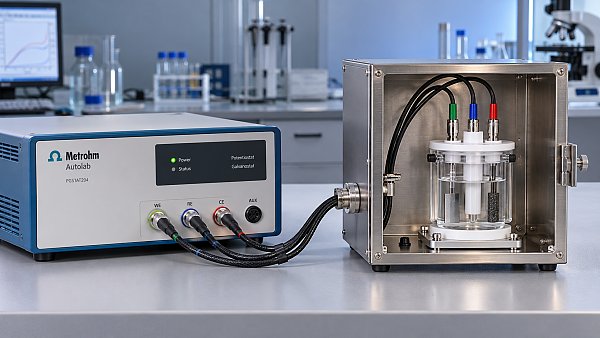
 How to choose electrochemical analyzers for low-current measurementsCompare electrochemical analyzers for precise low-current measurements. Learn how noise, leakage, bandwidth, and real-cell testing help you choose the right instrument.
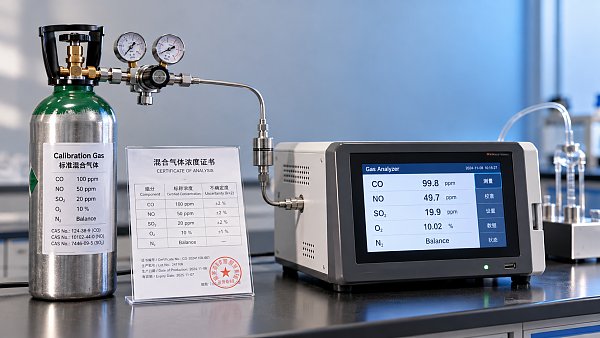
 What tolerance does a custom gas mixture need for calibration?Choose the right custom gas tolerance for calibration. Learn how blending tolerance, certified uncertainty, and stability affect accuracy—and avoid paying for precision you don’t need.
 How condensation affects stack detector readings in wet flue gasStack detector readings can drift when wet flue gas condenses. Learn how to identify moisture interference, prevent sample losses, and improve emissions monitoring reliability.
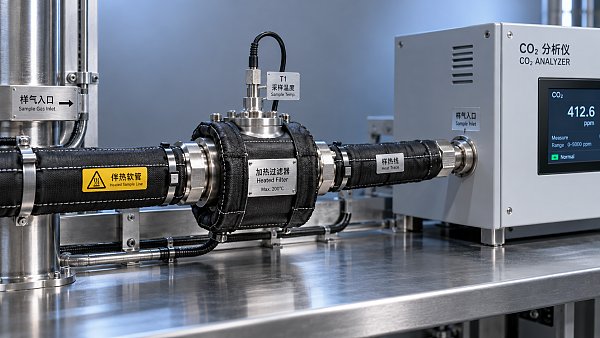
 How to prevent condensation in a CO2 analyzer sampling systemPrevent condensation in your CO2 analyzer sampling system. Learn how to control dew point, eliminate cold spots, and manage moisture for reliable readings and fewer costly disruptions.
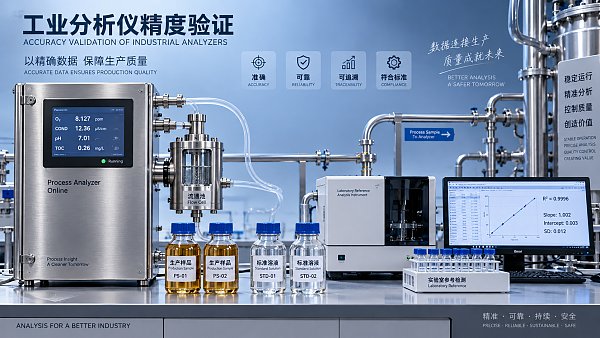
 How to verify accuracy claims for industrial quality analyzersVerify accuracy claims for industrial quality analyzers with calibration checks, independent testing, and clear acceptance criteria. Learn how to reduce risk and buy with confidence.
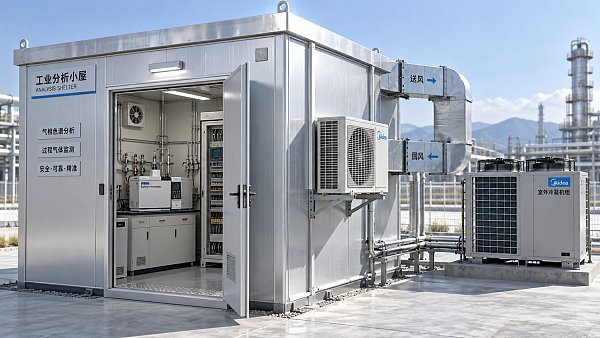
 How to calculate cooling loads for an industrial analyzer shelterSize industrial analyzer shelter cooling with confidence. Learn to calculate equipment heat, solar gains, and ventilation loads, then select HVAC capacity for reliable analyzer performance.
 Hydrogen Analyzers for Energy Storage: Purity Monitoring vs. Leak DetectionChoosing a hydrogen analyzer for energy storage systems? Compare purity monitoring and leak detection to select the right sensors, improve safety, and protect fuel cell performance.
 NH3 Monitoring in Fertilizer Plants: Where Should Leak Analyzers Be Installed?NH3 analyzer for fertilizer production: discover where to place leak detectors around storage, compressors, and loading areas to reduce blind spots and improve early warning.
 Diesel Engine NOx Analyzers: Response Time and NO2 Conversion ExplainedChoosing a NOX analyzer for diesel engines? Learn how response time, NO2 conversion, and sampling design affect accuracy—and make a smarter, evidence-based purchase.
 SO2 Analyzers for Smelter Emissions: Sampling Hot, Dust-Laden Flue GasSelect an SO2 analyzer for smelting industry applications. Discover how to handle hot, dust-laden flue gas, prevent sample losses, and achieve reliable emissions monitoring.
 Unstable CH4 Readings in Biogas Monitoring? Check Moisture and Sample FlowCH4 analyzer for biogas monitoring giving unstable readings? Discover how moisture, sample flow, and pressure checks help pinpoint faults and restore reliable methane measurements.
 Buying a CO2 Analyzer for Brewery Gas Recovery: Costs Beyond the Purchase PriceBuying a CO2 analyzer for brewery applications? Compare sampling, installation, calibration, and downtime costs to uncover hidden expenses and make a smarter gas recovery investment.
 Where to Place CO Analyzers for Effective Parking Garage VentilationOptimize your CO analyzer for parking garage ventilation with practical placement tips. Learn how sensor height, airflow, and zone coverage support timely detection and effective fan control.
 NDIR vs. FTIR Gas Analyzers: Which Fits Your Environmental Research?Find the right infrared gas analyzer for environmental research. Compare NDIR vs. FTIR on sensitivity, gas coverage, sampling needs, and cost to choose confidently for your study.
 Oxygen Analyzers for Diving: Calibration Checks Before Nitrox BlendingUsing an oxygen analyzer for diving applications? Discover essential calibration, sensor, and sampling checks before nitrox blending to support reliable readings.
 How Paramagnetic Oxygen Analyzers Work and Why Sample Pressure MattersLearn how a paramagnetic oxygen analyzer works, why sample pressure affects accuracy, and what to check in compensation and calibration before choosing your system.
 How Much Does a Complete CEMS Integration Project Typically Cost?How much does a complete CEMS integration project typically cost? Explore budget ranges, hidden installation costs, and compliance needs to compare quotes and plan confidently.
 What Is the Typical Response Time for Industrial Air Monitors?What is the typical response time for industrial air monitors? Explore T90, sampling delays, and alarm settings to compare performance and choose the right monitor with confidence.
 Do Regulatory Monitoring Systems Need Third-Party Certification?Do regulatory monitoring systems need third-party certification? Learn when it is required, what certificates prove, and how to verify compliance before buying.
 How Do You Choose Wired or Wireless for Stack Monitoring?Learn how to choose between wired and wireless for stack monitoring. Compare reliability, lifecycle costs, and data recovery to find the right CEMS setup for your site.
 What Happens When Combustible Gas Sensor Calibration Is Overdue?What happens if combustible gas sensor is not recalibrated on time? Discover the risks of inaccurate readings and missed alarms, plus steps to restore reliable protection.
 Can One Multi-Gas Detector Replace Four Separate Analyzers?Find out: can a single multi-gas detector replace four separate analyzers? Compare accuracy, safety, compliance, and lifetime costs to make a confident buying decision.
 Industrial Safety vs. Emission Monitoring: What Are the Differences?What are the main differences between industrial safety and emission monitoring? Compare goals, sensors, response times, and compliance needs to choose the right systems for your facility.
 Is Remote Monitoring Worth the Cost for Small Emission Sources?Is it worth investing in remote monitoring for small emission sources? Compare costs, compliance needs, and potential savings to choose the right solution for your operation.
 How Do You Handle Analyzer Failure During an Environmental Audit?Learn how to handle analyzer failure during environmental compliance audit procedures. Protect evidence, verify data, and restore monitoring with this practical response guide.
 Do VOC Monitors Require Explosion-Proof Certification?Does VOC monitoring require explosion-proof certification? Learn when approval is needed, compare ATEX and IECEx, and choose the right monitor for your site.






















Search Categories
Search Categories
- Smart Meters & Power Quality
- Transformer Gas Analyzers
- BESS Thermal Runaway Detectors
- Energy, Power & Smart Grid Monitoring
- Optical Profilers & CMM
- Ultrasonic & X-Ray NDT
- Calibration Standards
- Precision Metrology & NDT
- Water Quality Analyzers
- CEMS & VOCs Monitors
- Price Trends
- Import & Export Updates
- Market Trends
- Industry News
- Industry Insights
Latest Article
- How does cross-interference affect multi-component gas analyzers?How does cross-interference affect multi component gas analyzers? Explore measurement errors, compensation limits, and validation tips to choose the right system for your process.Posted by:
- How does temperature affect high-accuracy sensor performance?Explore how temperature affects high accuracy sensor performance. Learn to reduce thermal drift, evaluate compensation, and select the right sensor for reliable measurements.Posted by:
- Can a C4H8O concentration analyzer distinguish between isomers?Can a C4H8O concentration analyzer distinguish isomers? Compare GC, FTIR and MS methods, uncover selectivity limits, and learn what to validate before choosing your instrument.Posted by:
Please give us a message
