
Continuous Analyzer Downtime: 7 Causes and Practical Fixes


When a continuous analyzer stops working, the problem rarely stays local. One failed reading can trigger unstable control, manual sampling, delayed troubleshooting, and audit pressure across the line.
That is why downtime needs a practical response, not a vague one. In process plants, labs, utility systems, environmental monitoring stations, and energy facilities, the fastest fix usually starts with a structured check of the failure chain.
Drawing on the instrumentation focus of Global Instrument Hub, this article looks at seven common reasons a continuous analyzer goes offline and what can be done to restore stable performance with less repeat failure.
Why Continuous Analyzer Downtime Escalates So Quickly
A continuous analyzer often sits in the middle of a larger decision loop. It feeds operators, historians, alarms, compliance records, and sometimes automatic control actions.
If the analyzer signal is wrong, drifting, or missing, teams may waste hours chasing the wrong cause. That is especially risky in emissions monitoring, water treatment, chemical dosing, combustion control, and lab-linked production release.
The first priority is not only getting the unit back online. It is confirming whether the failure sits in the sample path, measurement cell, utilities, software, or communication layer.
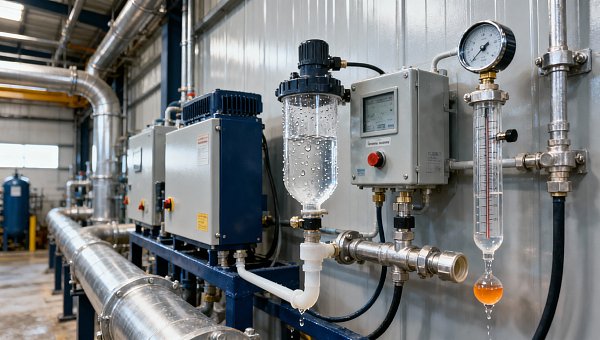
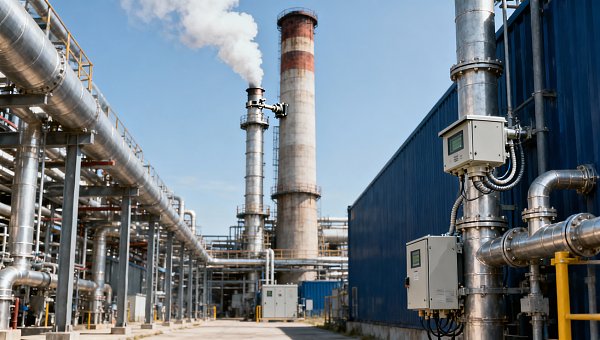
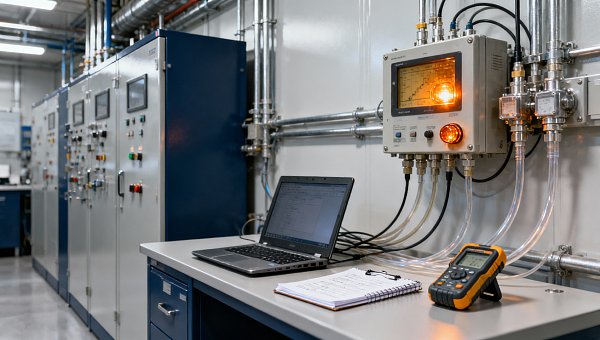
[Image 01: Maintenance technician checking sample conditioning system and analyzer status indicators]
Seven Causes That Show Up Again and Again
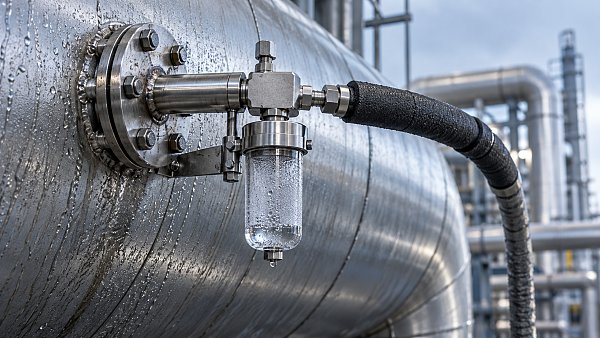
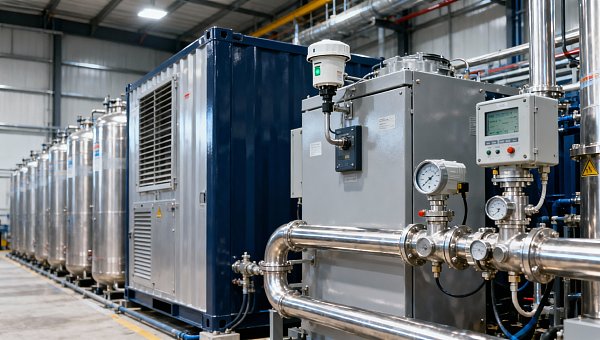
- Sample conditioning problems often start quietly. Check filters, coolers, regulators, drains, and heat tracing first, because bad sample quality can make a healthy continuous analyzer look defective.
- Calibration drift usually appears as slow bias, not sudden failure. Compare live readings with certified standards, review last calibration results, and verify zero and span gas quality before replacing parts.
- Sensor or measurement cell contamination is common in dusty, wet, corrosive, or sticky service. Inspect optics, electrodes, chambers, and tubing for deposits that reduce response speed or distort readings.
- Utility instability is easy to overlook. Power dips, instrument air moisture, low purge flow, or unstable carrier gas can repeatedly trip a continuous analyzer even when the core module is fine.
- Firmware, configuration, or logic errors can appear after maintenance. Confirm ranges, alarm settings, compensation factors, stream selection logic, and communication mapping before assuming a hardware breakdown.
- Communication faults create false downtime reports. Check terminals, grounding, shield continuity, network switches, protocol settings, and PLC or DCS tags before calling the analyzer unavailable.
- Aging consumables cause repeat shutdowns. Pumps, seals, lamps, membranes, desiccants, and filters may still run, but unstable performance usually means replacement timing is already overdue.
1. Sample Conditioning Faults
This is one of the biggest hidden causes of continuous analyzer downtime. The analyzer may be healthy, but the sample reaching it is not.
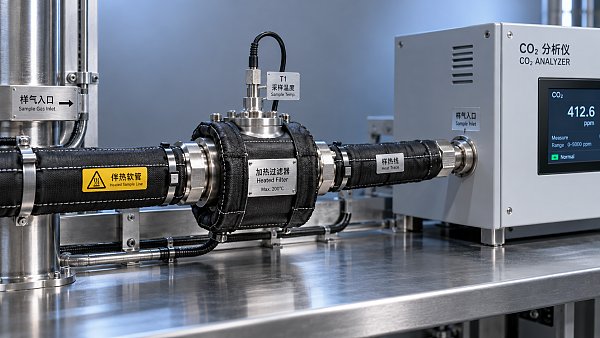
Look for plugged filters, condensate buildup, leaking fittings, blocked fast loops, failed coolers, or incorrect regulator settings. In cold areas, failed heat tracing can change sample phase before it reaches the cabinet.
A practical habit is to verify sample pressure, temperature, and flow at each stage, not only at the analyzer inlet. That narrows the fault location much faster.
2. Calibration Drift and Bad Reference Standards
A drifting continuous analyzer can stay online while silently producing bad decisions. That is often more dangerous than a full shutdown.
Do not stop at repeating auto-calibration. Check standard expiration, regulator leakage, line contamination, and whether zero or span gas matches the actual measurement range.
In regulated applications, poor calibration records can become a compliance issue. GIH often highlights this link between instrument reliability and audit readiness across environmental and life science settings.
3. Contaminated Sensors or Measuring Cells
If response becomes slow, noisy, or inconsistent, contamination is a strong suspect. Optical analyzers may lose signal strength, while electrochemical systems may show unstable baseline behavior.
Cleaning should follow the manufacturer procedure exactly. Aggressive solvents or rough handling can turn a recoverable issue into permanent damage.
One common oversight is failing to inspect upstream carryover sources. If the process keeps sending dirt, oil mist, or moisture downstream, the same continuous analyzer fault will return.
4. Utility and Environmental Instability
Some failures look random but actually follow utility fluctuations. Brief power sag, wet instrument air, low cabinet temperature, or weak purge flow can trigger repeat trips.
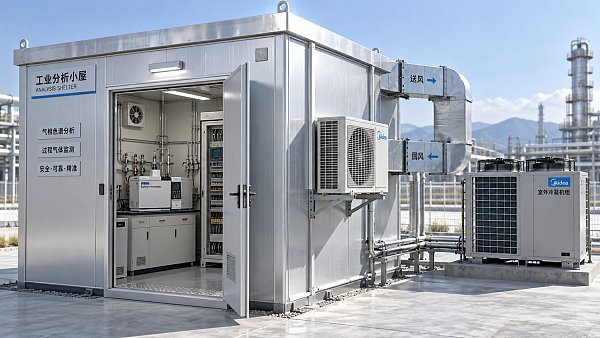
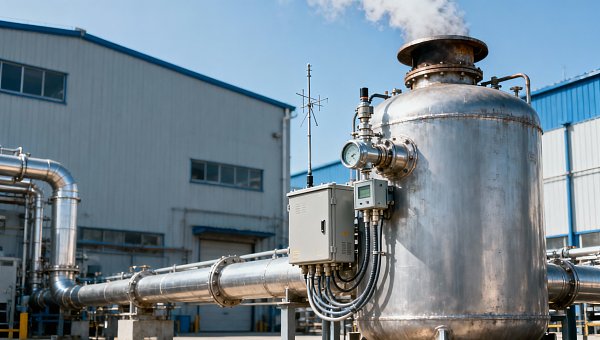
This matters in outdoor shelters, substations, stack monitoring systems, and remote skids. A continuous analyzer may pass a bench check and still fail in field conditions.
Check logs against weather events, compressor cycling, and UPS alarms. That timeline often reveals patterns hidden by single-event troubleshooting.
5. Configuration Errors After Service or Upgrade
Not every outage comes from a failed component. Sometimes the continuous analyzer is working exactly as configured, but the configuration is wrong.
Range scaling, stream mapping, compensation constants, time averaging, and alarm thresholds should all be reviewed after maintenance, firmware changes, or board replacement.
In multi-stream systems, a wrong stream assignment can create believable but false data. That kind of error is easy to miss when the signal still looks stable.
6. Communication and Integration Failures
Sometimes the analyzer is fine, but the control system cannot see it. That still gets reported as continuous analyzer downtime in many plants.
Check whether the problem is local display only, network only, or output only. Confirm analog output health, digital protocol status, and DCS tag integrity before opening the analyzer enclosure.
Ground loops and shield issues also deserve attention. Intermittent signal noise can mimic analyzer instability and waste a lot of repair time.
7. Deferred Replacement of Consumables
Many repeat failures come from parts that were known to be near end of life. The system may recover temporarily, but reliability keeps dropping.
Track lamps, membranes, seals, pump heads, desiccants, reagent lines, and filter elements by actual service condition, not by memory. A simple replacement history can cut continuous analyzer downtime sharply.
A Fast Triage Routine That Works in the Field
When a continuous analyzer goes down, speed matters, but sequence matters more. A rushed part swap often hides the real cause.
Where Small Mistakes Usually Get Expensive
In environmental systems, a failed continuous analyzer may affect reporting quality almost immediately. Missing records, invalid calibration, or unstable sample handling can create compliance exposure beyond the maintenance event.
In process control, the bigger risk is bad data that still looks believable. Operators may adjust combustion, dosing, or blending based on a signal that seems normal but is drifting.
That is why many experienced teams treat analyzer health checks like metrology checks. GIH consistently connects this mindset to stronger reliability across industrial manufacturing, power, laboratory analysis, and monitoring applications.
How to Reduce Repeat Continuous Analyzer Downtime
- Build failure history around symptoms, not only replaced parts. Recording drift rate, sample condition, alarms, and utility events makes the next continuous analyzer failure far easier to isolate.
- Standardize post-maintenance checks. After service, confirm sample flow, calibration response, output scaling, and communication health before returning the analyzer to normal duty.
- Match spare parts strategy to process criticality. Fast-moving consumables and common wear items should be stocked where downtime costs exceed the carrying cost of local inventory.
- Review enclosure and utility conditions regularly. Stable cabinet temperature, clean power, dry air, and reliable purge support longer continuous analyzer life than repeated reactive repairs.
- Use supplier documentation and standards carefully. In high-risk applications, service quality improves when maintenance decisions align with verified specifications, calibration rules, and compliance requirements.
A Practical Next Step
The best response to continuous analyzer downtime is a disciplined one. Start at the sample path, confirm analyzer health, validate calibration, check utilities, and only then move into deeper replacement work.
If repeat failures keep returning, the issue is usually systemic rather than random. Review installation conditions, maintenance intervals, consumable history, and integration settings together.
For operations that depend on accurate measurement, that small shift in troubleshooting approach often delivers the biggest gain: a continuous analyzer that stays reliable longer, fails less often, and supports better decisions every day.
Recommended for You
 How does cross-interference affect multi-component gas analyzers?How does cross-interference affect multi component gas analyzers? Explore measurement errors, compensation limits, and validation tips to choose the right system for your process.
 How does temperature affect high-accuracy sensor performance?Explore how temperature affects high accuracy sensor performance. Learn to reduce thermal drift, evaluate compensation, and select the right sensor for reliable measurements.
 Can a C4H8O concentration analyzer distinguish between isomers?Can a C4H8O concentration analyzer distinguish isomers? Compare GC, FTIR and MS methods, uncover selectivity limits, and learn what to validate before choosing your instrument.
 How to identify a reliable supplier using on-time delivery recordsIdentify a Reliable Supplier by verifying on-time delivery records, original commitments, and complete shipments. Learn practical checks to reduce purchasing risk and protect your project schedule.
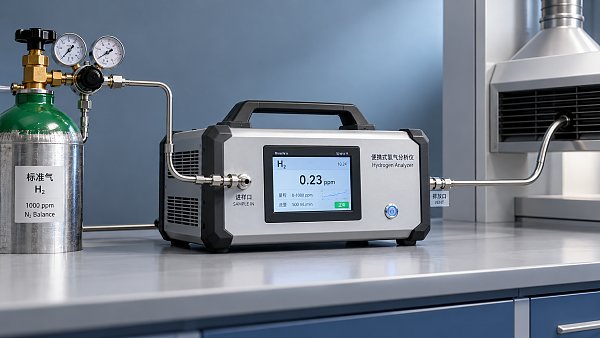
 How sensitive should a portable hydrogen analyzer be for lab use?Choose a portable hydrogen analyzer for laboratory use with the right quantification limit, accuracy, and range. Learn how to verify performance and avoid costly buying mistakes.
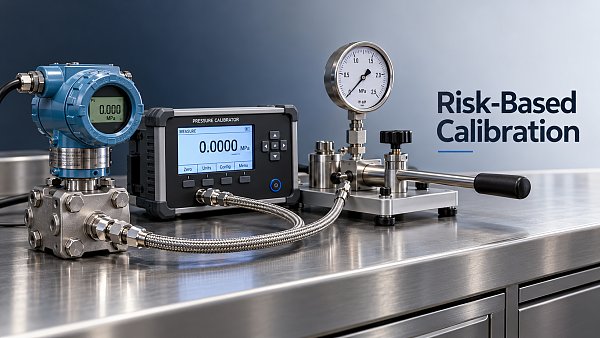
 How to set industrial calibration intervals based on equipment riskSet industrial calibration intervals based on equipment risk, drift, and as-found data. Learn when to shorten or extend schedules to improve reliability and avoid unnecessary costs.
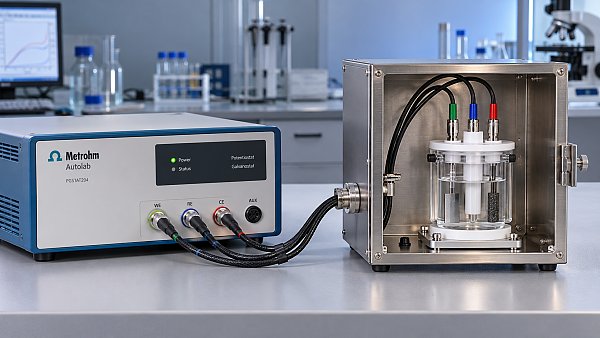
 How to choose electrochemical analyzers for low-current measurementsCompare electrochemical analyzers for precise low-current measurements. Learn how noise, leakage, bandwidth, and real-cell testing help you choose the right instrument.
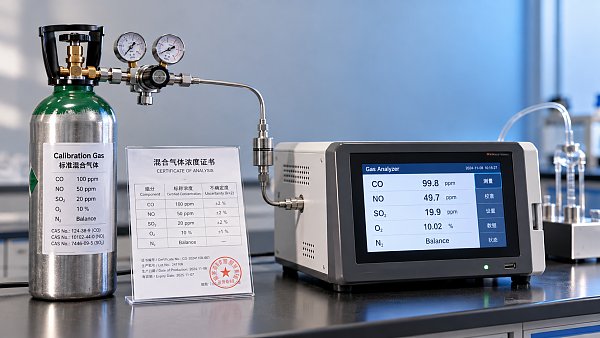
 What tolerance does a custom gas mixture need for calibration?Choose the right custom gas tolerance for calibration. Learn how blending tolerance, certified uncertainty, and stability affect accuracy—and avoid paying for precision you don’t need.
 How condensation affects stack detector readings in wet flue gasStack detector readings can drift when wet flue gas condenses. Learn how to identify moisture interference, prevent sample losses, and improve emissions monitoring reliability.
 How to prevent condensation in a CO2 analyzer sampling systemPrevent condensation in your CO2 analyzer sampling system. Learn how to control dew point, eliminate cold spots, and manage moisture for reliable readings and fewer costly disruptions.
 How to verify accuracy claims for industrial quality analyzersVerify accuracy claims for industrial quality analyzers with calibration checks, independent testing, and clear acceptance criteria. Learn how to reduce risk and buy with confidence.
 How to calculate cooling loads for an industrial analyzer shelterSize industrial analyzer shelter cooling with confidence. Learn to calculate equipment heat, solar gains, and ventilation loads, then select HVAC capacity for reliable analyzer performance.
 Hydrogen Analyzers for Energy Storage: Purity Monitoring vs. Leak DetectionChoosing a hydrogen analyzer for energy storage systems? Compare purity monitoring and leak detection to select the right sensors, improve safety, and protect fuel cell performance.
 NH3 Monitoring in Fertilizer Plants: Where Should Leak Analyzers Be Installed?NH3 analyzer for fertilizer production: discover where to place leak detectors around storage, compressors, and loading areas to reduce blind spots and improve early warning.
 Diesel Engine NOx Analyzers: Response Time and NO2 Conversion ExplainedChoosing a NOX analyzer for diesel engines? Learn how response time, NO2 conversion, and sampling design affect accuracy—and make a smarter, evidence-based purchase.
 SO2 Analyzers for Smelter Emissions: Sampling Hot, Dust-Laden Flue GasSelect an SO2 analyzer for smelting industry applications. Discover how to handle hot, dust-laden flue gas, prevent sample losses, and achieve reliable emissions monitoring.
 Unstable CH4 Readings in Biogas Monitoring? Check Moisture and Sample FlowCH4 analyzer for biogas monitoring giving unstable readings? Discover how moisture, sample flow, and pressure checks help pinpoint faults and restore reliable methane measurements.
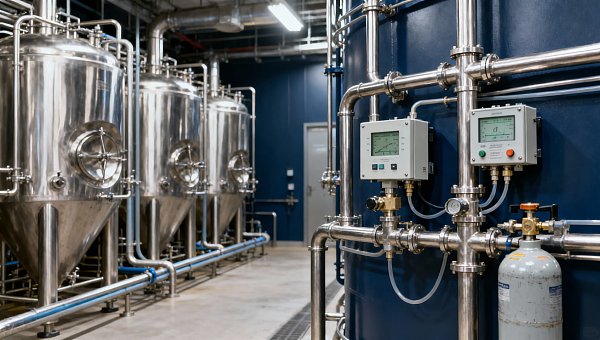
 Buying a CO2 Analyzer for Brewery Gas Recovery: Costs Beyond the Purchase PriceBuying a CO2 analyzer for brewery applications? Compare sampling, installation, calibration, and downtime costs to uncover hidden expenses and make a smarter gas recovery investment.
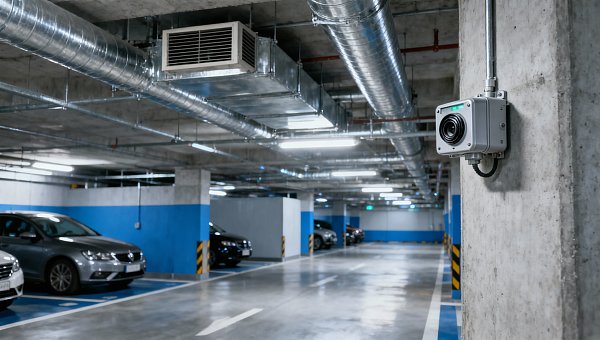
 Where to Place CO Analyzers for Effective Parking Garage VentilationOptimize your CO analyzer for parking garage ventilation with practical placement tips. Learn how sensor height, airflow, and zone coverage support timely detection and effective fan control.
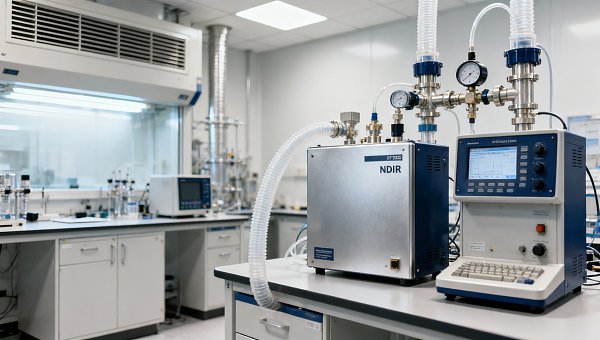
 NDIR vs. FTIR Gas Analyzers: Which Fits Your Environmental Research?Find the right infrared gas analyzer for environmental research. Compare NDIR vs. FTIR on sensitivity, gas coverage, sampling needs, and cost to choose confidently for your study.
 Oxygen Analyzers for Diving: Calibration Checks Before Nitrox BlendingUsing an oxygen analyzer for diving applications? Discover essential calibration, sensor, and sampling checks before nitrox blending to support reliable readings.
 How Paramagnetic Oxygen Analyzers Work and Why Sample Pressure MattersLearn how a paramagnetic oxygen analyzer works, why sample pressure affects accuracy, and what to check in compensation and calibration before choosing your system.
 How Much Does a Complete CEMS Integration Project Typically Cost?How much does a complete CEMS integration project typically cost? Explore budget ranges, hidden installation costs, and compliance needs to compare quotes and plan confidently.
 What Is the Typical Response Time for Industrial Air Monitors?What is the typical response time for industrial air monitors? Explore T90, sampling delays, and alarm settings to compare performance and choose the right monitor with confidence.
 Do Regulatory Monitoring Systems Need Third-Party Certification?Do regulatory monitoring systems need third-party certification? Learn when it is required, what certificates prove, and how to verify compliance before buying.
 How Do You Choose Wired or Wireless for Stack Monitoring?Learn how to choose between wired and wireless for stack monitoring. Compare reliability, lifecycle costs, and data recovery to find the right CEMS setup for your site.
 What Happens When Combustible Gas Sensor Calibration Is Overdue?What happens if combustible gas sensor is not recalibrated on time? Discover the risks of inaccurate readings and missed alarms, plus steps to restore reliable protection.
 Can One Multi-Gas Detector Replace Four Separate Analyzers?Find out: can a single multi-gas detector replace four separate analyzers? Compare accuracy, safety, compliance, and lifetime costs to make a confident buying decision.
 Industrial Safety vs. Emission Monitoring: What Are the Differences?What are the main differences between industrial safety and emission monitoring? Compare goals, sensors, response times, and compliance needs to choose the right systems for your facility.
 Is Remote Monitoring Worth the Cost for Small Emission Sources?Is it worth investing in remote monitoring for small emission sources? Compare costs, compliance needs, and potential savings to choose the right solution for your operation.
 How Do You Handle Analyzer Failure During an Environmental Audit?Learn how to handle analyzer failure during environmental compliance audit procedures. Protect evidence, verify data, and restore monitoring with this practical response guide.
 Do VOC Monitors Require Explosion-Proof Certification?Does VOC monitoring require explosion-proof certification? Learn when approval is needed, compare ATEX and IECEx, and choose the right monitor for your site.
Search Categories
Search Categories
- Smart Meters & Power Quality
- Transformer Gas Analyzers
- BESS Thermal Runaway Detectors
- Energy, Power & Smart Grid Monitoring
- Optical Profilers & CMM
- Ultrasonic & X-Ray NDT
- Calibration Standards
- Precision Metrology & NDT
- Water Quality Analyzers
- CEMS & VOCs Monitors
- Price Trends
- Import & Export Updates
- Market Trends
- Industry News
- Industry Insights
Latest Article
- How does cross-interference affect multi-component gas analyzers?How does cross-interference affect multi component gas analyzers? Explore measurement errors, compensation limits, and validation tips to choose the right system for your process.Posted by:
- How does temperature affect high-accuracy sensor performance?Explore how temperature affects high accuracy sensor performance. Learn to reduce thermal drift, evaluate compensation, and select the right sensor for reliable measurements.Posted by:
- Can a C4H8O concentration analyzer distinguish between isomers?Can a C4H8O concentration analyzer distinguish isomers? Compare GC, FTIR and MS methods, uncover selectivity limits, and learn what to validate before choosing your instrument.Posted by:
Please give us a message
