
Emission Reduction Costs: Where Projects Often Overspend


For finance approvers, Emission Reduction projects often look cost-effective on paper yet exceed budgets during execution. The biggest overspending usually comes from poor baseline measurement, mismatched monitoring instruments, fragmented supplier decisions, and underestimating compliance and integration costs. This article explains where spending typically goes off track and how better data, tighter technical due diligence, and smarter procurement can protect both capital efficiency and long-term decarbonization goals.
Why do Emission Reduction projects overspend so often?
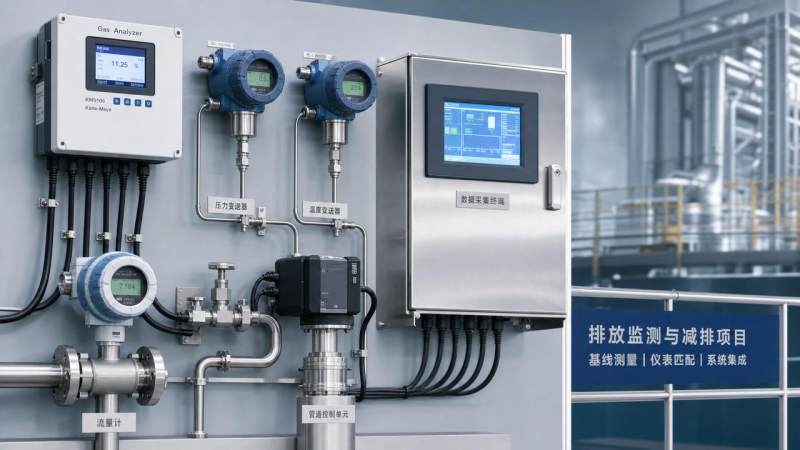
Emission Reduction spending rarely fails because the objective is wrong. It fails because the project logic is incomplete. Many companies approve capital on estimated carbon savings, then discover that measurement gaps, site constraints, and reporting obligations were never priced properly.
For a finance approver, the main risk is not only capex escalation. It is also the erosion of forecast payback, delayed compliance benefits, and future rework when systems cannot generate auditable emissions data. In industrial settings, poor instrumentation choices can turn a viable decarbonization program into a recurring cost center.
This is especially common across mixed asset portfolios such as manufacturing plants, utilities, environmental monitoring systems, laboratories, and energy facilities. Emission Reduction decisions are no longer just engineering purchases. They are linked to reporting credibility, supplier reliability, automation compatibility, and lifecycle service costs.
- Baseline data is incomplete, so the projected reduction is overstated and the return model becomes fragile.
- Monitoring equipment is selected too late, so integration requires redesign, extra wiring, software changes, and repeat commissioning.
- Procurement is split across disconnected vendors, causing hidden interface costs and unclear accountability for data quality.
- Compliance scope is underestimated, especially where CEMS, calibration traceability, hazardous-area installation, or audit-ready reporting is required.
Where does Emission Reduction budget leakage usually begin?
The earliest leakage usually starts before procurement. Finance teams often review a business case built on energy estimates, benchmark emission factors, and vendor brochures, but not on site-verified measurement architecture. If the original baseline is weak, every later cost estimate is vulnerable.
In practice, overspending tends to cluster around a few predictable areas. The table below helps finance approvers identify the most common cost inflation points in Emission Reduction projects and the early warning signs attached to each one.
For finance leaders, these are not random events. They are structural blind spots. The best cost control usually comes from demanding measurement validity and integration clarity before any budget approval is finalized.
Why baseline data is the first approval checkpoint
An Emission Reduction project without a reliable baseline is effectively a forecast without a denominator. If fuel quality varies, process loads fluctuate, or equipment duty cycles are irregular, simple averages can hide material risk. Finance teams should ask whether the baseline is derived from calibrated instruments, estimated calculations, or manual logs.
GIH’s sector coverage matters here because baseline integrity often depends on instrumentation categories that non-technical approvers do not see immediately: flow meters, gas analyzers, temperature and pressure transmitters, power quality meters, online water quality systems, and plant control interfaces. Better data at this stage prevents expensive corrections later.
Which technical decisions create the biggest hidden costs?
The most expensive technical errors are usually not dramatic equipment failures. They are small specification mistakes that spread through the project. An analyzer may be accurate in a laboratory but unstable in a humid field environment. A transmitter may perform well on paper yet fail to integrate with the plant PLC or DCS architecture.
For Emission Reduction programs, the hidden cost is often the gap between equipment purchase and operational evidence. If the system cannot produce trusted emissions data under real site conditions, the company may still spend capital without achieving verifiable reduction outcomes.
- Accuracy is specified without considering process variability, causing false confidence in reduction calculations.
- Sampling systems are overlooked, especially for gas composition or stack monitoring applications.
- Installation environment is ignored, including vibration, corrosion, dust, explosive zones, or thermal cycling.
- Calibration workload is not included in operating budgets, creating recurring service surprises after commissioning.
Instrumentation selection mistakes finance teams should flag
A finance approver does not need to redesign a measurement system, but should require a short technical-commercial summary before sign-off. It should explain what variable is being measured, what accuracy is needed, what standard applies, how often calibration is required, and how data enters the reporting chain.
This is where specialist intelligence is valuable. GIH tracks the instrumentation landscape across industrial process control, environmental monitoring, laboratory analysis, precision calibration, and smart energy monitoring. That perspective helps buyers avoid buying isolated hardware instead of a usable measurement solution.
How should finance approvers compare Emission Reduction options?
Comparing options by capex alone is one of the fastest ways to overspend later. A lower purchase price may hide higher integration costs, shorter calibration intervals, weaker supplier support, or poor data traceability. For Emission Reduction investments, total cost and evidence quality should be assessed together.
The following comparison table can be used during procurement reviews to test whether a proposal is financially robust or merely commercially attractive.
A high-confidence Emission Reduction project is not necessarily the cheapest at approval stage. It is the one least likely to require rework, extra consulting, urgent retrofit procurement, or repeated data validation after startup.
Questions finance teams should ask before approval
- What exactly is being reduced: fuel use, stack emissions, process losses, fugitive leaks, or electricity intensity?
- Which instruments generate the baseline and post-project evidence, and are they traceable?
- What software, control, or communications integration is excluded from the current quotation?
- Which compliance documents, certifications, or calibration records will be needed for audits or regulators?
- What operating costs will appear in year one and year three that are not visible in capex approval?
What compliance and reporting costs are commonly underestimated?
Compliance cost is one of the most underestimated parts of Emission Reduction spending. Many teams budget for equipment and installation, but not for documentation, metrology traceability, validation, hazardous-area requirements, cybersecurity reviews, or quality management procedures tied to measurement data.
Requirements vary by application, but finance approvers should assume that the more the project affects emissions reporting, safety, or regulated production, the higher the documentation burden will be. This is not administrative overhead alone. It can shape vendor choice, lead time, and acceptance risk.
- Calibration traceability may require alignment with recognized laboratory practices such as ISO/IEC 17025 workflows.
- Hazardous-area installations may trigger ATEX or IECEx related design and documentation needs.
- Continuous monitoring applications may need regular validation, maintenance logs, and auditable data retention.
- Cross-border procurement can add documentation translation, inspection coordination, and supplier qualification costs.
Because GIH operates at the intersection of instrumentation, supply-chain intelligence, and technical compliance, it helps procurement and finance teams see these downstream cost drivers before they become change orders. That visibility is particularly valuable when sourcing from multiple regions or evaluating unfamiliar suppliers.
How can smarter procurement reduce Emission Reduction overspend?
Smart procurement is less about forcing the lowest initial quote and more about improving decision certainty. In Emission Reduction projects, cost discipline improves when commercial review and technical review happen together. Finance teams should insist on supplier alignment around data quality, interoperability, and post-installation support.
GIH’s advantage is especially relevant here. Its intelligence model is built around deep-tier supplier research, instrumentation category expertise, and practical understanding of automation, laboratory analysis, environmental monitoring, and energy systems. That makes procurement less reactive and more evidence-based.
A practical procurement checklist
- Define the emissions variable and business metric together, so engineering outputs match financial approval logic.
- Request instrument-level details on accuracy, repeatability, operating conditions, and calibration interval.
- Map interfaces to existing PLC, DCS, SCADA, historian, or reporting platforms before issuing final purchase orders.
- Consolidate responsibility for integration where possible to reduce disputes between equipment and software suppliers.
- Include commissioning, training, spare parts, and document packages in the approval basis, not as optional add-ons.
FAQ: what do finance approvers ask most about Emission Reduction spending?
How much baseline data is enough before approving an Emission Reduction project?
There is no single universal threshold, but one billing cycle or one short production run is rarely enough for a variable industrial process. Data should cover representative operating conditions, shutdown and startup effects where relevant, and the main process variables that drive emissions. If the project depends on precise claims, finance should prefer measured site data over generalized assumptions.
Should lower-cost sensors be accepted if the savings case looks strong?
Only if their accuracy, durability, and integration fit the application. A cheaper sensor can become more expensive if it requires frequent recalibration, fails under site conditions, or produces data that auditors or internal teams do not trust. In Emission Reduction programs, evidence quality has financial value because it protects the savings model.
What is the most overlooked line item in project approval?
Integration and compliance are the most commonly overlooked. Teams often approve hardware but forget signal conditioning, sampling systems, control logic revisions, software configuration, documentation packages, or calibration support. These items are less visible in early proposals but frequently drive the final overspend.
When should finance involve a specialist intelligence partner?
The best timing is before supplier shortlisting is finalized. Early involvement helps validate whether quoted instruments match the application, whether the reporting chain is credible, and whether supplier claims align with real-world industrial requirements. Waiting until after a technical mismatch appears usually means higher correction costs.
Why choose us for Emission Reduction project evaluation?
Global Instrument Hub supports finance approvers, procurement teams, and engineering stakeholders who need more than generic market information. Our value lies in connecting instrumentation knowledge with supplier intelligence and practical decision support across industrial process control, environmental monitoring, laboratory systems, precision calibration, and smart energy applications.
If your Emission Reduction project is facing uncertain budgets, unclear measurement architecture, or supplier comparison difficulties, we can help you structure the right review path before costs escalate.
- Confirm which parameters must be measured to support a credible baseline and post-project verification.
- Evaluate product selection across analyzers, transmitters, monitoring systems, and control interfaces.
- Review delivery timelines, integration scope, and hidden lifecycle costs before approval.
- Clarify certification expectations, calibration needs, and documentation requirements for regulated environments.
- Discuss customized sourcing strategies, supplier screening, quotation comparison, and technical-commercial due diligence.
Contact GIH if you need support on parameter confirmation, product selection, delivery planning, compliance review, sample evaluation logic, or quotation comparison for your next Emission Reduction investment. The earlier the decision framework improves, the lower the chance that a promising project turns into a budget exception.
Recommended for You
 Can a C4H8O concentration analyzer distinguish between isomers?Can a C4H8O concentration analyzer distinguish isomers? Compare GC, FTIR and MS methods, uncover selectivity limits, and learn what to validate before choosing your instrument.
 How to identify a reliable supplier using on-time delivery recordsIdentify a Reliable Supplier by verifying on-time delivery records, original commitments, and complete shipments. Learn practical checks to reduce purchasing risk and protect your project schedule.
 How sensitive should a portable hydrogen analyzer be for lab use?Choose a portable hydrogen analyzer for laboratory use with the right quantification limit, accuracy, and range. Learn how to verify performance and avoid costly buying mistakes.
 How to set industrial calibration intervals based on equipment riskSet industrial calibration intervals based on equipment risk, drift, and as-found data. Learn when to shorten or extend schedules to improve reliability and avoid unnecessary costs.
 How to choose electrochemical analyzers for low-current measurementsCompare electrochemical analyzers for precise low-current measurements. Learn how noise, leakage, bandwidth, and real-cell testing help you choose the right instrument.
 What tolerance does a custom gas mixture need for calibration?Choose the right custom gas tolerance for calibration. Learn how blending tolerance, certified uncertainty, and stability affect accuracy—and avoid paying for precision you don’t need.
 How condensation affects stack detector readings in wet flue gasStack detector readings can drift when wet flue gas condenses. Learn how to identify moisture interference, prevent sample losses, and improve emissions monitoring reliability.
 How to prevent condensation in a CO2 analyzer sampling systemPrevent condensation in your CO2 analyzer sampling system. Learn how to control dew point, eliminate cold spots, and manage moisture for reliable readings and fewer costly disruptions.
 How to verify accuracy claims for industrial quality analyzersVerify accuracy claims for industrial quality analyzers with calibration checks, independent testing, and clear acceptance criteria. Learn how to reduce risk and buy with confidence.
 How to calculate cooling loads for an industrial analyzer shelterSize industrial analyzer shelter cooling with confidence. Learn to calculate equipment heat, solar gains, and ventilation loads, then select HVAC capacity for reliable analyzer performance.
 Hydrogen Analyzers for Energy Storage: Purity Monitoring vs. Leak DetectionChoosing a hydrogen analyzer for energy storage systems? Compare purity monitoring and leak detection to select the right sensors, improve safety, and protect fuel cell performance.
 NH3 Monitoring in Fertilizer Plants: Where Should Leak Analyzers Be Installed?NH3 analyzer for fertilizer production: discover where to place leak detectors around storage, compressors, and loading areas to reduce blind spots and improve early warning.
 Diesel Engine NOx Analyzers: Response Time and NO2 Conversion ExplainedChoosing a NOX analyzer for diesel engines? Learn how response time, NO2 conversion, and sampling design affect accuracy—and make a smarter, evidence-based purchase.
 SO2 Analyzers for Smelter Emissions: Sampling Hot, Dust-Laden Flue GasSelect an SO2 analyzer for smelting industry applications. Discover how to handle hot, dust-laden flue gas, prevent sample losses, and achieve reliable emissions monitoring.
 Unstable CH4 Readings in Biogas Monitoring? Check Moisture and Sample FlowCH4 analyzer for biogas monitoring giving unstable readings? Discover how moisture, sample flow, and pressure checks help pinpoint faults and restore reliable methane measurements.
 Buying a CO2 Analyzer for Brewery Gas Recovery: Costs Beyond the Purchase PriceBuying a CO2 analyzer for brewery applications? Compare sampling, installation, calibration, and downtime costs to uncover hidden expenses and make a smarter gas recovery investment.
 Where to Place CO Analyzers for Effective Parking Garage VentilationOptimize your CO analyzer for parking garage ventilation with practical placement tips. Learn how sensor height, airflow, and zone coverage support timely detection and effective fan control.
 NDIR vs. FTIR Gas Analyzers: Which Fits Your Environmental Research?Find the right infrared gas analyzer for environmental research. Compare NDIR vs. FTIR on sensitivity, gas coverage, sampling needs, and cost to choose confidently for your study.
 Oxygen Analyzers for Diving: Calibration Checks Before Nitrox BlendingUsing an oxygen analyzer for diving applications? Discover essential calibration, sensor, and sampling checks before nitrox blending to support reliable readings.
 How Paramagnetic Oxygen Analyzers Work and Why Sample Pressure MattersLearn how a paramagnetic oxygen analyzer works, why sample pressure affects accuracy, and what to check in compensation and calibration before choosing your system.
 How Much Does a Complete CEMS Integration Project Typically Cost?How much does a complete CEMS integration project typically cost? Explore budget ranges, hidden installation costs, and compliance needs to compare quotes and plan confidently.
 What Is the Typical Response Time for Industrial Air Monitors?What is the typical response time for industrial air monitors? Explore T90, sampling delays, and alarm settings to compare performance and choose the right monitor with confidence.
 Do Regulatory Monitoring Systems Need Third-Party Certification?Do regulatory monitoring systems need third-party certification? Learn when it is required, what certificates prove, and how to verify compliance before buying.
 How Do You Choose Wired or Wireless for Stack Monitoring?Learn how to choose between wired and wireless for stack monitoring. Compare reliability, lifecycle costs, and data recovery to find the right CEMS setup for your site.
 What Happens When Combustible Gas Sensor Calibration Is Overdue?What happens if combustible gas sensor is not recalibrated on time? Discover the risks of inaccurate readings and missed alarms, plus steps to restore reliable protection.
 Can One Multi-Gas Detector Replace Four Separate Analyzers?Find out: can a single multi-gas detector replace four separate analyzers? Compare accuracy, safety, compliance, and lifetime costs to make a confident buying decision.
 Industrial Safety vs. Emission Monitoring: What Are the Differences?What are the main differences between industrial safety and emission monitoring? Compare goals, sensors, response times, and compliance needs to choose the right systems for your facility.
 Is Remote Monitoring Worth the Cost for Small Emission Sources?Is it worth investing in remote monitoring for small emission sources? Compare costs, compliance needs, and potential savings to choose the right solution for your operation.
 How Do You Handle Analyzer Failure During an Environmental Audit?Learn how to handle analyzer failure during environmental compliance audit procedures. Protect evidence, verify data, and restore monitoring with this practical response guide.
 Do VOC Monitors Require Explosion-Proof Certification?Does VOC monitoring require explosion-proof certification? Learn when approval is needed, compare ATEX and IECEx, and choose the right monitor for your site.
 How sample conditioning affects accuracy in petrochemical analyzersImprove accuracy in petrochemical analyzers with smarter sample conditioning. Discover how phase control, filtration, and transport design prevent bias and deliver reliable process data.
 How to troubleshoot sensor drift in industrial gas detectorsIndustrial gas detectors showing sensor drift? Learn how to verify calibration gas, identify root causes, and determine when sensor replacement is needed for reliable monitoring.
Search Categories
Search Categories
- Smart Meters & Power Quality
- Transformer Gas Analyzers
- BESS Thermal Runaway Detectors
- Energy, Power & Smart Grid Monitoring
- Optical Profilers & CMM
- Ultrasonic & X-Ray NDT
- Calibration Standards
- Precision Metrology & NDT
- Water Quality Analyzers
- CEMS & VOCs Monitors
- Price Trends
- Import & Export Updates
- Market Trends
- Industry News
- Industry Insights
Latest Article
- Can a C4H8O concentration analyzer distinguish between isomers?Can a C4H8O concentration analyzer distinguish isomers? Compare GC, FTIR and MS methods, uncover selectivity limits, and learn what to validate before choosing your instrument.Posted by:
- How to identify a reliable supplier using on-time delivery recordsIdentify a Reliable Supplier by verifying on-time delivery records, original commitments, and complete shipments. Learn practical checks to reduce purchasing risk and protect your project schedule.Posted by:
- How sensitive should a portable hydrogen analyzer be for lab use?Choose a portable hydrogen analyzer for laboratory use with the right quantification limit, accuracy, and range. Learn how to verify performance and avoid costly buying mistakes.Posted by:
Please give us a message
