
Toxic Gas Monitors: A Practical Guide to Calibration and Response Time


For after-sales maintenance teams, toxic gas monitors are only as reliable as their calibration and response performance. In real-world industrial settings, even small errors can affect safety, compliance, and troubleshooting efficiency. This practical guide explains how calibration works, what influences response time, and how maintenance personnel can keep instruments accurate, stable, and ready for demanding applications across diverse monitoring environments.
The core search intent behind this topic is practical, not academic. Readers want to know how to keep toxic gas monitors trustworthy in daily service work, how to judge whether response behavior is acceptable, and how to avoid false confidence caused by poor calibration.
For after-sales maintenance staff, the biggest concerns are usually accuracy drift, slow response, failed bump tests, sensor aging, wrong calibration gas use, and uncertainty during field troubleshooting. They also need clear criteria for deciding whether a monitor can stay in service.
The most useful content is therefore action-oriented guidance: what calibration really confirms, what response time actually means onsite, which factors distort readings, and what maintenance steps reduce downtime while supporting compliance and user safety.
In this article, the focus is on service decisions, field checks, maintenance logic, and response interpretation. Broad background on gas detection technology is kept brief, because target readers benefit more from procedures, warning signs, and practical judgment methods.
Why calibration and response time matter more than any specification sheet
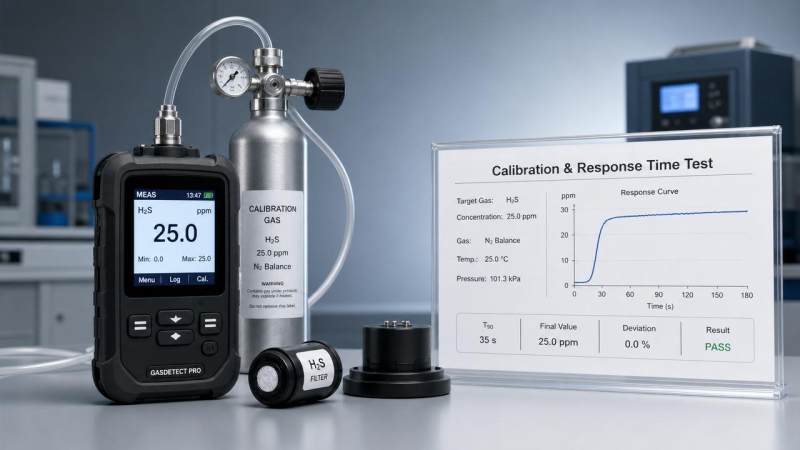
Many users assume a toxic gas monitor is reliable as long as it powers on and displays values. In reality, a working display does not guarantee accurate detection. For maintenance teams, calibration status and response time are the two checks that most directly affect instrument credibility.
Calibration verifies that the monitor reads a known gas concentration correctly within acceptable tolerance. Response time shows how quickly the instrument reacts when gas is actually present. A monitor can pass one and still fail the other, which is why both must be managed together.
In industrial environments, even a modest offset can create major consequences. A detector that reads low may delay alarm activation. A detector that responds too slowly may miss rapidly developing exposure conditions. Both problems can undermine safety programs, compliance records, and customer trust.
For after-sales teams, these issues are especially important because customers usually contact support when readings seem unstable, alarms appear inconsistent, or instruments behave differently across locations. In many cases, the root cause is not a major hardware failure but a calibration or response-related problem.
What calibration actually confirms in a toxic gas monitor
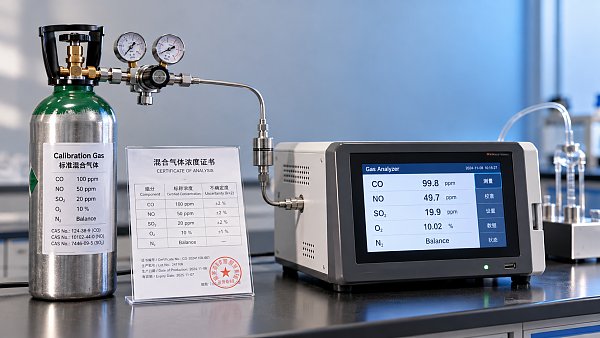
Calibration is often described too simply as adjusting a detector. In practice, it is a controlled comparison between the instrument reading and a certified reference concentration. The purpose is to confirm that the sensor and signal processing chain still translate gas exposure into a meaningful measurement.
For toxic gas monitors, calibration usually includes zero adjustment and span adjustment. Zero calibration establishes the baseline in clean air or zero gas. Span calibration aligns the reading against a known concentration of the target gas within the instrument’s intended measurement range.
This matters because sensor output naturally changes over time. Electrochemical cells age, optical paths can become contaminated, filters can restrict diffusion, and electronics can drift. Without periodic calibration, the monitor may continue operating while slowly moving away from true performance.
Maintenance personnel should also remember that calibration is not the same as a bump test. A bump test only checks whether the detector responds and alarms when exposed to gas. It is a functional check, while calibration is an accuracy adjustment and verification process.
If a customer reports that a detector responds to gas but reads lower than expected, the monitor may pass a bump test and still require calibration. If it cannot be adjusted into tolerance, that usually points to sensor degradation, gas delivery issues, or a deeper mechanical problem.
How response time should be interpreted during service and troubleshooting
Response time is typically expressed as T90, meaning the time required for the instrument to reach ninety percent of the final reading after exposure to gas. Some manufacturers also reference T50 or alarm response time, but T90 is the most useful baseline for technical evaluation.
After-sales staff should avoid treating response time as a fixed number under all conditions. Published values are usually obtained under controlled laboratory settings. Actual field response depends on gas concentration, temperature, humidity, diffusion path, sample line condition, and sensor health.
A monitor may appear accurate at steady concentration and still be too slow in actual use. This is important in confined spaces, process upsets, leak investigations, and any application where toxic gas levels can rise quickly. Slow response can make an otherwise calibrated instrument operationally risky.
When users complain that alarms feel delayed, do not assume the issue is only alarm settings. First check whether the gas is reaching the sensor efficiently, whether the sensor membrane is blocked, whether pumps and tubing are healthy, and whether recent calibration records show abnormal drift.
Response performance should also be reviewed after sensor replacement, filter change, pump maintenance, housing cleaning, firmware update, or any repair affecting gas flow or signal handling. An instrument that has been restored electrically may still behave differently in dynamic gas exposure.
What commonly causes calibration drift and slow response in the field
Several recurring issues affect toxic gas monitors in service environments. The first is normal sensor aging. Over time, many toxic gas sensors lose sensitivity, become less stable, or require more frequent adjustment. This is expected behavior, but it must be tracked before performance falls outside safe limits.
Environmental stress is another major factor. High humidity, temperature swings, dust, solvent vapors, corrosive atmospheres, and vibration can all change sensor behavior. Even if the target gas is not present continuously, surrounding process conditions may accelerate contamination or drift.
Incorrect calibration gas is also a frequent problem. Errors include wrong gas concentration, expired cylinders, poor regulator compatibility, mixed-gas cross-sensitivity effects, and unverified gas traceability. If the reference itself is wrong, the calibration result creates false confidence rather than real accuracy.
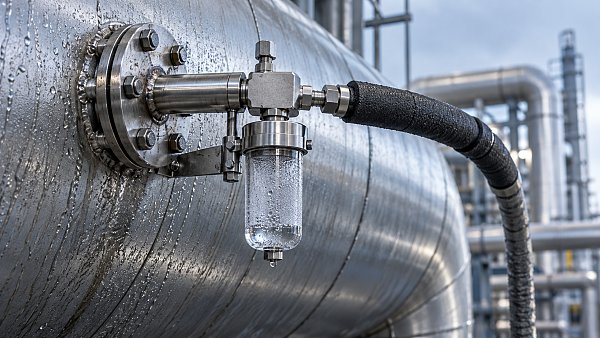
Gas delivery problems are equally common. Leaking tubing, blocked inlets, dirty filters, weak pumps, and loose fittings can reduce the amount of gas reaching the sensor. In that case, the monitor may show both low readings and longer response time, even though the sensor is not fully failed.
Another overlooked cause is improper stabilization time. If zeroing or spanning is performed before the signal settles, the final adjustment may be inaccurate. Technicians under time pressure sometimes shorten the procedure, which can create inconsistent results that are difficult to explain later.
Firmware settings, alarm latching behavior, and data logging intervals can also affect how users perceive response. Sometimes the sensor reacts normally, but display smoothing or output damping makes the reading appear delayed. Service teams should separate actual sensing delay from user interface behavior.
A practical calibration workflow for after-sales maintenance teams
A strong calibration routine starts before gas is applied. Confirm the instrument model, target gas, sensor type, range, firmware status, service history, and customer complaint. Review previous drift patterns, recent repairs, and environmental conditions to avoid repeating assumptions from past visits.
Next, inspect the monitor physically. Look for damaged housings, clogged inlets, expired filters, pump noise changes, loose connectors, contamination, water ingress, and signs of chemical exposure. Many calibration failures are caused by visible maintenance issues rather than invisible sensor chemistry alone.
Before zeroing, verify that the monitor is in truly clean air or use certified zero gas where required. False zeroing in contaminated ambient air can shift the baseline and affect the entire reading range. This is especially risky in industrial sites with intermittent background vapors.
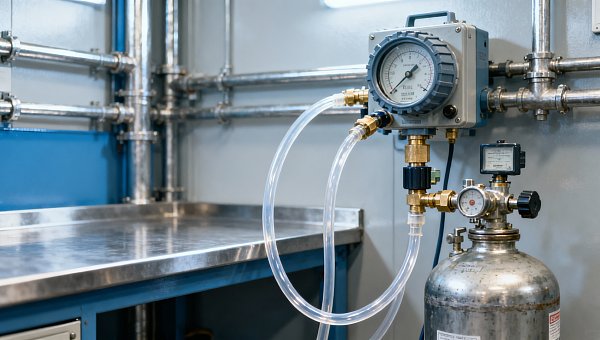
During span calibration, use the correct certified gas, regulator, tubing, and flow rate recommended for that instrument. Allow enough time for stabilization. Watch not only the final value but also how smoothly the reading rises. Irregular movement may indicate flow restriction or unstable sensor behavior.
After adjustment, perform a functional confirmation rather than ending the job immediately. Reapply gas and observe whether the reading returns consistently, alarms activate properly, and the response trend matches expected behavior. A calibration that cannot be repeated reliably is not a trustworthy result.
Finally, document everything clearly: gas lot, concentration, expiration date, applied flow, ambient conditions, pre- and post-calibration values, response observations, and any replaced parts. Good records help both technical analysis and customer communication, especially when instruments show progressive decline over time.
How to evaluate whether response time is still acceptable
Not every slow-feeling detector is actually out of specification. The best evaluation compares current response with the manufacturer’s stated performance, previous service records, and the instrument’s real application risk. Trend analysis is often more useful than a single isolated test result.
If a detector historically reached stable reading in ten seconds and now takes twenty-five under the same setup, that change deserves investigation even if the unit still alarms eventually. A growing delay often appears before complete sensor failure, making response checks valuable for preventive service.
Maintenance teams should use a repeatable test setup whenever possible. Keep gas concentration, tubing length, regulator type, flow, and exposure method consistent. Without a stable method, technicians may misinterpret setup variation as sensor deterioration or overlook real performance decline.
It is also important to distinguish between diffusion and pumped instruments. Diffusion monitors naturally depend on gas access through the inlet path, while pumped systems add pump health and sample path integrity to the response equation. Service criteria should reflect the instrument design.
When in doubt, evaluate the monitor in the context of the application. In a slow-changing ambient monitoring task, a slight increase in response time may be manageable for a short period. In emergency leak detection or entry safety checks, the same delay may justify immediate replacement.
Common service mistakes that reduce confidence in toxic gas monitors
One common mistake is calibrating on schedule alone without paying attention to field symptoms. If users report unstable readings, delayed alarms, or unusual drift, the monitor needs diagnostic review, not just routine adjustment. Calibration should support troubleshooting, not replace it.
Another mistake is assuming any gas response proves the monitor is healthy. A weak or slow sensor may still react enough to seem functional. That is why bump testing, calibration accuracy, and response evaluation must be treated as related but separate maintenance checks.
Some teams also overlook accessories. Regulators, tubing, sample probes, filters, and docking systems can all influence readings. Replacing a sensor without checking these supporting components may waste time and parts while leaving the actual problem unresolved.
Poor documentation is another major weakness. If records only show pass or fail, it becomes difficult to identify gradual degradation. Numeric drift data, response observations, and environmental notes give service teams a much stronger basis for future maintenance decisions and warranty discussions.
Finally, avoid overpromising based on a single bench result. A monitor that behaves well in the workshop may still face contamination, humidity, or cross-sensitivity issues at the customer site. Practical recommendations should reflect both test outcomes and operating conditions.
When to recalibrate, repair, or replace the instrument
The right decision depends on what the service data shows. If the monitor calibrates easily, repeats consistently, and response remains stable, it can usually stay in service with normal maintenance intervals. This is the ideal outcome and should be confirmed with documented evidence.
If the monitor requires frequent large adjustments, shows unstable zero, or demonstrates increasing response delay, maintenance teams should investigate root causes before returning it to the user. Continued drift often signals sensor exhaustion, contamination, or sample path degradation.
Repair is appropriate when the problem is tied to replaceable components such as pump modules, tubing, filters, connectors, or sensor cartridges. However, if repeated interventions do not restore stable calibration and acceptable response, replacement becomes the safer and more economical option.
Replacement should also be considered when service cost approaches instrument value, spare parts are limited, or the application risk is high. In toxic gas detection, uncertainty itself is a serious issue. A monitor that cannot be trusted consistently is no longer a useful safety device.
Building a maintenance strategy that supports safety and customer trust
For after-sales organizations, the best long-term approach is not simply calibrating more often. It is building a structured service strategy that combines periodic calibration, regular bump testing, response verification, environmental review, trend documentation, and clear replacement criteria.
This strategy improves more than compliance. It shortens troubleshooting time, reduces unnecessary sensor replacement, supports customer audits, and helps field teams explain service decisions with confidence. Customers value not only a repaired monitor but also a defensible maintenance process.
In sectors such as manufacturing, energy, laboratories, environmental monitoring, and utilities, toxic gas monitors operate under different risk profiles. A strong service team adapts maintenance intervals and acceptance criteria to actual exposure conditions rather than relying only on generic schedules.
When calibration records, response tests, and field observations are reviewed together, toxic gas monitors become easier to manage proactively. Instead of reacting to failures after a complaint, teams can identify drift patterns early and intervene before safety performance is compromised.
In summary, calibration tells you whether the monitor reads correctly, while response time tells you whether it reacts fast enough to matter. For after-sales maintenance personnel, both are essential. The most reliable toxic gas monitors are not merely powered devices, but instruments proven accurate, responsive, and stable under real service conditions.
Recommended for You
 How does cross-interference affect multi-component gas analyzers?How does cross-interference affect multi component gas analyzers? Explore measurement errors, compensation limits, and validation tips to choose the right system for your process.
 How does temperature affect high-accuracy sensor performance?Explore how temperature affects high accuracy sensor performance. Learn to reduce thermal drift, evaluate compensation, and select the right sensor for reliable measurements.
 Can a C4H8O concentration analyzer distinguish between isomers?Can a C4H8O concentration analyzer distinguish isomers? Compare GC, FTIR and MS methods, uncover selectivity limits, and learn what to validate before choosing your instrument.
 How to identify a reliable supplier using on-time delivery recordsIdentify a Reliable Supplier by verifying on-time delivery records, original commitments, and complete shipments. Learn practical checks to reduce purchasing risk and protect your project schedule.
 How sensitive should a portable hydrogen analyzer be for lab use?Choose a portable hydrogen analyzer for laboratory use with the right quantification limit, accuracy, and range. Learn how to verify performance and avoid costly buying mistakes.
 How to set industrial calibration intervals based on equipment riskSet industrial calibration intervals based on equipment risk, drift, and as-found data. Learn when to shorten or extend schedules to improve reliability and avoid unnecessary costs.
 How to choose electrochemical analyzers for low-current measurementsCompare electrochemical analyzers for precise low-current measurements. Learn how noise, leakage, bandwidth, and real-cell testing help you choose the right instrument.
 What tolerance does a custom gas mixture need for calibration?Choose the right custom gas tolerance for calibration. Learn how blending tolerance, certified uncertainty, and stability affect accuracy—and avoid paying for precision you don’t need.
 How condensation affects stack detector readings in wet flue gasStack detector readings can drift when wet flue gas condenses. Learn how to identify moisture interference, prevent sample losses, and improve emissions monitoring reliability.
 How to prevent condensation in a CO2 analyzer sampling systemPrevent condensation in your CO2 analyzer sampling system. Learn how to control dew point, eliminate cold spots, and manage moisture for reliable readings and fewer costly disruptions.
 How to verify accuracy claims for industrial quality analyzersVerify accuracy claims for industrial quality analyzers with calibration checks, independent testing, and clear acceptance criteria. Learn how to reduce risk and buy with confidence.
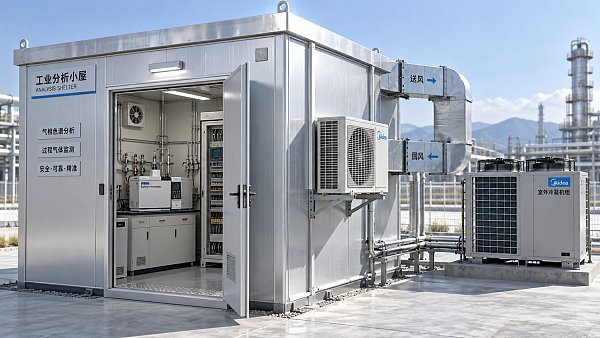
 How to calculate cooling loads for an industrial analyzer shelterSize industrial analyzer shelter cooling with confidence. Learn to calculate equipment heat, solar gains, and ventilation loads, then select HVAC capacity for reliable analyzer performance.
 Hydrogen Analyzers for Energy Storage: Purity Monitoring vs. Leak DetectionChoosing a hydrogen analyzer for energy storage systems? Compare purity monitoring and leak detection to select the right sensors, improve safety, and protect fuel cell performance.
 NH3 Monitoring in Fertilizer Plants: Where Should Leak Analyzers Be Installed?NH3 analyzer for fertilizer production: discover where to place leak detectors around storage, compressors, and loading areas to reduce blind spots and improve early warning.
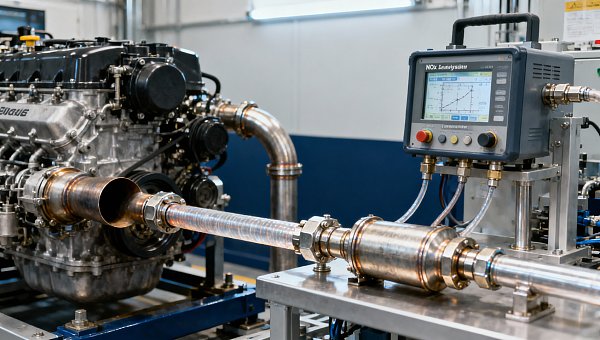
 Diesel Engine NOx Analyzers: Response Time and NO2 Conversion ExplainedChoosing a NOX analyzer for diesel engines? Learn how response time, NO2 conversion, and sampling design affect accuracy—and make a smarter, evidence-based purchase.
 SO2 Analyzers for Smelter Emissions: Sampling Hot, Dust-Laden Flue GasSelect an SO2 analyzer for smelting industry applications. Discover how to handle hot, dust-laden flue gas, prevent sample losses, and achieve reliable emissions monitoring.
 Unstable CH4 Readings in Biogas Monitoring? Check Moisture and Sample FlowCH4 analyzer for biogas monitoring giving unstable readings? Discover how moisture, sample flow, and pressure checks help pinpoint faults and restore reliable methane measurements.
 Buying a CO2 Analyzer for Brewery Gas Recovery: Costs Beyond the Purchase PriceBuying a CO2 analyzer for brewery applications? Compare sampling, installation, calibration, and downtime costs to uncover hidden expenses and make a smarter gas recovery investment.
 Where to Place CO Analyzers for Effective Parking Garage VentilationOptimize your CO analyzer for parking garage ventilation with practical placement tips. Learn how sensor height, airflow, and zone coverage support timely detection and effective fan control.
 NDIR vs. FTIR Gas Analyzers: Which Fits Your Environmental Research?Find the right infrared gas analyzer for environmental research. Compare NDIR vs. FTIR on sensitivity, gas coverage, sampling needs, and cost to choose confidently for your study.
 Oxygen Analyzers for Diving: Calibration Checks Before Nitrox BlendingUsing an oxygen analyzer for diving applications? Discover essential calibration, sensor, and sampling checks before nitrox blending to support reliable readings.
 How Paramagnetic Oxygen Analyzers Work and Why Sample Pressure MattersLearn how a paramagnetic oxygen analyzer works, why sample pressure affects accuracy, and what to check in compensation and calibration before choosing your system.
 How Much Does a Complete CEMS Integration Project Typically Cost?How much does a complete CEMS integration project typically cost? Explore budget ranges, hidden installation costs, and compliance needs to compare quotes and plan confidently.
 What Is the Typical Response Time for Industrial Air Monitors?What is the typical response time for industrial air monitors? Explore T90, sampling delays, and alarm settings to compare performance and choose the right monitor with confidence.
 Do Regulatory Monitoring Systems Need Third-Party Certification?Do regulatory monitoring systems need third-party certification? Learn when it is required, what certificates prove, and how to verify compliance before buying.
 How Do You Choose Wired or Wireless for Stack Monitoring?Learn how to choose between wired and wireless for stack monitoring. Compare reliability, lifecycle costs, and data recovery to find the right CEMS setup for your site.
 What Happens When Combustible Gas Sensor Calibration Is Overdue?What happens if combustible gas sensor is not recalibrated on time? Discover the risks of inaccurate readings and missed alarms, plus steps to restore reliable protection.
 Can One Multi-Gas Detector Replace Four Separate Analyzers?Find out: can a single multi-gas detector replace four separate analyzers? Compare accuracy, safety, compliance, and lifetime costs to make a confident buying decision.
 Industrial Safety vs. Emission Monitoring: What Are the Differences?What are the main differences between industrial safety and emission monitoring? Compare goals, sensors, response times, and compliance needs to choose the right systems for your facility.
 Is Remote Monitoring Worth the Cost for Small Emission Sources?Is it worth investing in remote monitoring for small emission sources? Compare costs, compliance needs, and potential savings to choose the right solution for your operation.
 How Do You Handle Analyzer Failure During an Environmental Audit?Learn how to handle analyzer failure during environmental compliance audit procedures. Protect evidence, verify data, and restore monitoring with this practical response guide.
 Do VOC Monitors Require Explosion-Proof Certification?Does VOC monitoring require explosion-proof certification? Learn when approval is needed, compare ATEX and IECEx, and choose the right monitor for your site.
Search Categories
Search Categories
- Smart Meters & Power Quality
- Transformer Gas Analyzers
- BESS Thermal Runaway Detectors
- Energy, Power & Smart Grid Monitoring
- Optical Profilers & CMM
- Ultrasonic & X-Ray NDT
- Calibration Standards
- Precision Metrology & NDT
- Water Quality Analyzers
- CEMS & VOCs Monitors
- Price Trends
- Import & Export Updates
- Market Trends
- Industry News
- Industry Insights
Latest Article
- How does cross-interference affect multi-component gas analyzers?How does cross-interference affect multi component gas analyzers? Explore measurement errors, compensation limits, and validation tips to choose the right system for your process.Posted by:
- How does temperature affect high-accuracy sensor performance?Explore how temperature affects high accuracy sensor performance. Learn to reduce thermal drift, evaluate compensation, and select the right sensor for reliable measurements.Posted by:
- Can a C4H8O concentration analyzer distinguish between isomers?Can a C4H8O concentration analyzer distinguish isomers? Compare GC, FTIR and MS methods, uncover selectivity limits, and learn what to validate before choosing your instrument.Posted by:
Please give us a message
