
IIoT Enabled Analyzers Market Trends: Integration, Data, and ROI


As industrial operations move toward smarter, data-driven performance, IIoT enabled analyzers are becoming critical tools for enterprise decision-makers seeking better visibility, faster response, and measurable returns.
By connecting real-time analysis with digital systems, these solutions help organizations improve process control, support compliance, reduce downtime, and turn operational data into strategic value across modern industrial environments.
Why IIoT Enabled Analyzers Are Moving from Technical Upgrade to Business Priority
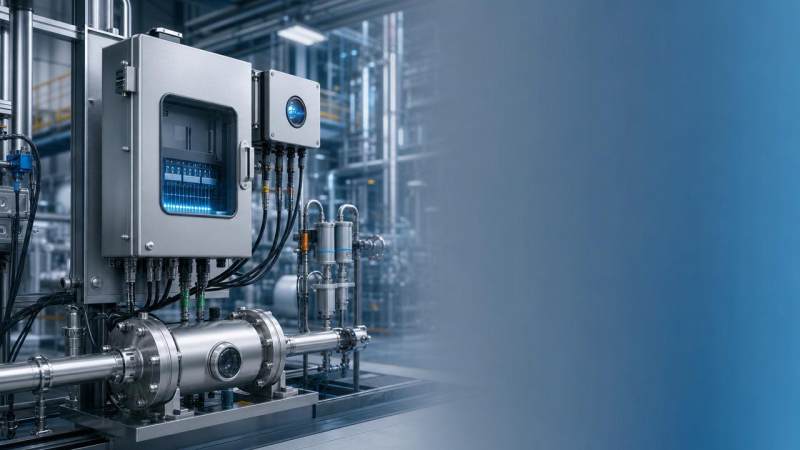
For enterprise decision-makers, the main question is no longer whether digital instrumentation matters, but where it creates the fastest and clearest operational value.
That is why IIoT enabled analyzers are gaining attention across manufacturing, energy, water treatment, chemicals, pharmaceuticals, and other process-intensive industries.
These systems do more than measure composition, quality, emissions, or process variables. They connect analytical results to control platforms, historians, cloud dashboards, maintenance systems, and enterprise reporting workflows.
The result is a shift from isolated measurement toward connected decision support. This is the core market trend driving investment and reshaping buying criteria.
In practical terms, buyers want analyzers that can deliver reliable data, integrate with existing infrastructure, and produce measurable returns within realistic project timelines.
They are less interested in abstract digital transformation promises and more focused on whether the system reduces risk, improves uptime, and supports stronger operating margins.
What Enterprise Buyers Are Really Searching for
When decision-makers search for information on the IIoT enabled analyzers market, their intent is usually commercial and strategic rather than purely technical.
They want to understand whether adoption is accelerating, which features matter most, and how to assess value before committing budget or changing operational standards.
Several concerns consistently shape their evaluation process. The first is integration: will the analyzer work with current control systems, data platforms, and cybersecurity policies?
The second is data quality. Connected instruments are only useful if the measurements are accurate, timely, traceable, and stable under real process conditions.
The third is return on investment. Executives need to know how IIoT enabled analyzers affect productivity, maintenance cost, compliance exposure, product quality, and operator efficiency.
They also want clarity on deployment risk. Questions around installation complexity, workforce readiness, vendor support, and long-term scalability often influence final purchase decisions.
Any useful market discussion therefore needs to address business outcomes first, then explain the technology in terms that support capital planning and operational strategy.
Integration Is the Defining Market Trend, Not Connectivity Alone
One of the biggest misconceptions in this market is that adding network access automatically creates value. In reality, connectivity without integration often produces limited results.
Leading organizations now expect analyzers to fit into broader digital ecosystems. This includes SCADA, DCS, MES, LIMS, CMMS, ERP, and cloud analytics environments.
The strongest market momentum is therefore around solutions that can move data smoothly across layers, from field measurement to business reporting and executive dashboards.
For example, a water treatment operator may use connected analyzers to monitor pH, conductivity, turbidity, and residual disinfectant in real time.
But the real business value appears when those measurements also trigger alerts, support compliance records, schedule maintenance, and help optimize chemical dosing automatically.
In manufacturing, the same principle applies to moisture analyzers, gas analyzers, spectrometers, or composition analyzers used in process control and quality assurance.
When integration is done well, plants can reduce manual sampling, shorten response times, improve process consistency, and make root-cause analysis far more effective.
This trend is pushing buyers to evaluate open communication protocols, edge computing capabilities, interoperability, and vendor experience with mixed legacy environments.
Data Strategy Is Becoming a Competitive Advantage
Another major trend in the IIoT enabled analyzers market is the growing importance of data strategy. Enterprises increasingly see analyzer data as a business asset, not just a process signal.
That shift changes procurement priorities. Buyers are no longer selecting instruments only on analytical performance, response speed, or environmental durability.
They are also asking how the data can be standardized, contextualized, stored, visualized, and used across multiple functions inside the organization.
High-value use cases often include predictive maintenance, process optimization, remote diagnostics, emissions reporting, energy efficiency analysis, and continuous improvement programs.
For decision-makers, this matters because analyzer data can support both local operational gains and larger corporate initiatives around sustainability, quality, and resilience.
However, data volume alone does not guarantee insight. If tags are inconsistent, timestamps are unreliable, or contextual process information is missing, analysis becomes difficult.
That is why mature buyers increasingly evaluate data architecture alongside hardware capability. They want systems that support clean data pipelines and actionable reporting.
Vendors that can help customers move from raw measurement to operational intelligence are likely to stand out as the market becomes more outcome-oriented.
Where the ROI Usually Comes From
For enterprise leaders, ROI is the deciding lens. The investment case for IIoT enabled analyzers usually depends on several measurable value drivers rather than one single benefit.
The first is reduced downtime. Continuous, connected analysis can detect process drift or equipment issues earlier than manual sampling or disconnected instrumentation.
Earlier detection helps teams intervene before quality loss, shutdowns, environmental incidents, or energy waste escalate into major costs.
The second source of return is improved process efficiency. Real-time data enables tighter control of feed rates, blending, combustion, treatment chemistry, and product consistency.
Even small efficiency gains can produce strong financial impact in high-throughput operations where raw material use, energy consumption, and yield directly affect margins.
Third, compliance and risk management often justify the investment. In regulated sectors, reliable analyzer data reduces reporting errors and supports audit readiness.
Fourth, labor productivity can improve. Connected systems reduce manual rounds, repetitive sampling, delayed reporting, and troubleshooting time for operations and maintenance teams.
Finally, remote visibility creates additional value for multi-site operators. Central teams can compare performance, identify anomalies, and standardize best practices across facilities.
Executives evaluating ROI should look beyond purchase price and consider lifecycle value, including maintenance reduction, process gains, avoided losses, and strategic visibility.
How to Evaluate a Business Case Without Overestimating the Benefits
A realistic business case starts with a specific operational problem, not with a broad digital ambition statement. That discipline helps avoid weak projects and inflated expectations.
Decision-makers should first identify where analytical blind spots create cost, delay, risk, or inconsistency in current operations.
Good starting points include unstable process quality, frequent manual intervention, delayed compliance reporting, recurring equipment issues, or high maintenance burden on legacy analyzers.
From there, estimate the baseline cost of the problem. This may involve downtime hours, wasted materials, energy loss, overtime labor, penalties, or customer quality claims.
Next, determine how a connected analyzer would change the workflow. Would it improve speed, reduce manual effort, enable alarms, support prediction, or automate control actions?
It is also important to account for implementation cost beyond the analyzer itself. Integration, networking, cybersecurity review, training, calibration practices, and change management all matter.
The strongest projects usually have narrow early goals and clear metrics, such as reducing process deviations, cutting manual sampling frequency, or shortening incident response times.
Once those metrics are validated, organizations can scale more confidently across lines, units, or sites without relying on assumptions.
Common Risks and Concerns Decision-Makers Should Address Early
Despite strong market momentum, adoption is not risk-free. Enterprise buyers need to understand where projects commonly struggle so they can plan effectively.
One frequent issue is underestimating integration complexity. Legacy control systems, fragmented software environments, and inconsistent plant standards can slow deployment.
Another risk is poor data governance. If ownership of analyzer data is unclear, insights may remain trapped in silos and fail to influence operations.
Cybersecurity is also a central concern. Connected instruments expand the digital footprint and must align with plant security architecture and access control policies.
Reliability remains equally important. An IIoT analyzer that is difficult to maintain or unstable in harsh environments can undermine trust in the whole initiative.
There is also an organizational challenge. Operations, IT, engineering, quality, and management may define success differently unless governance is aligned from the beginning.
For this reason, the most successful deployments usually involve cross-functional planning, clear ownership, and phased implementation rather than isolated purchasing decisions.
Executives should treat IIoT enabled analyzers as part of an operating model upgrade, not just an instrument replacement exercise.
Which Use Cases Deserve Priority
Not every application delivers equal value. The best candidates for early investment are processes where analytical data directly affects cost, compliance, uptime, or product quality.
In energy and power, gas analyzers connected to digital systems can improve combustion efficiency, emissions tracking, and equipment protection.
In chemicals and refining, composition and process analyzers can support yield optimization, safer operations, and faster response to process deviation.
In environmental monitoring and water treatment, connected analyzers help maintain regulatory compliance while reducing chemical waste and labor-intensive sampling routines.
In pharmaceuticals and laboratory-linked manufacturing, IIoT integration supports traceability, quality consistency, and stronger control over critical process parameters.
Discrete manufacturers may also find value where humidity, coating, curing, or material composition strongly influence final product performance.
For enterprise leaders, the best priority areas are usually those with measurable pain points and enough operational scale to justify standardization.
That approach creates a clearer path to enterprise-wide rollout and stronger internal confidence in the investment strategy.
What the Market Direction Means for Buyers in the Next Few Years
The IIoT enabled analyzers market is moving toward more intelligent, connected, and service-oriented solutions, but buyers should look past trend language and focus on practical fit.
Over the next few years, expect stronger demand for remote diagnostics, self-monitoring functions, edge analytics, and tighter integration with enterprise software platforms.
Buyers will also place more weight on vendor support models, lifecycle services, cybersecurity readiness, and interoperability across mixed fleets of instruments.
In parallel, data expectations will rise. Companies will increasingly want analyzer information that supports benchmarking, sustainability reporting, and multi-site performance management.
This means competitive advantage will not come from owning more devices alone. It will come from choosing analyzers that produce trusted data and embed into decision-making workflows.
For business leaders, the right question is not simply whether the technology is advanced. It is whether the deployment model aligns with operational priorities and financial discipline.
Conclusion: Focus on Measurable Value, Not Just Digital Features
IIoT enabled analyzers are no longer a niche upgrade for technically ambitious plants. They are becoming practical tools for enterprises that need faster insight and stronger operational control.
The most important market trends are clear: deeper integration, better data use, and sharper scrutiny of ROI.
For decision-makers, the opportunity is significant when the technology is tied to real business problems such as downtime, process variability, compliance risk, and limited visibility.
The strongest investments are those built on trusted measurement, useful integration, and a disciplined path from pilot success to broader operational adoption.
In short, enterprises should evaluate IIoT enabled analyzers not as stand-alone devices, but as strategic instruments for turning industrial data into measurable business performance.
Recommended for You
 How does cross-interference affect multi-component gas analyzers?How does cross-interference affect multi component gas analyzers? Explore measurement errors, compensation limits, and validation tips to choose the right system for your process.
 How does temperature affect high-accuracy sensor performance?Explore how temperature affects high accuracy sensor performance. Learn to reduce thermal drift, evaluate compensation, and select the right sensor for reliable measurements.
 Can a C4H8O concentration analyzer distinguish between isomers?Can a C4H8O concentration analyzer distinguish isomers? Compare GC, FTIR and MS methods, uncover selectivity limits, and learn what to validate before choosing your instrument.
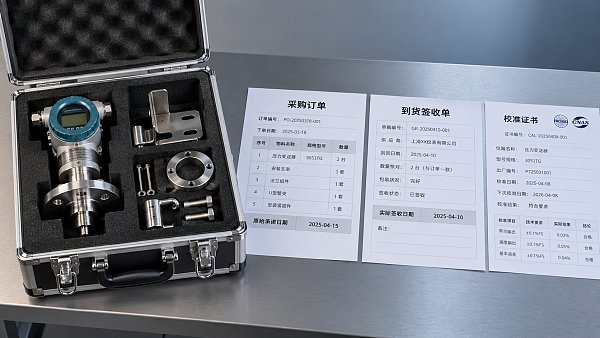
 How to identify a reliable supplier using on-time delivery recordsIdentify a Reliable Supplier by verifying on-time delivery records, original commitments, and complete shipments. Learn practical checks to reduce purchasing risk and protect your project schedule.
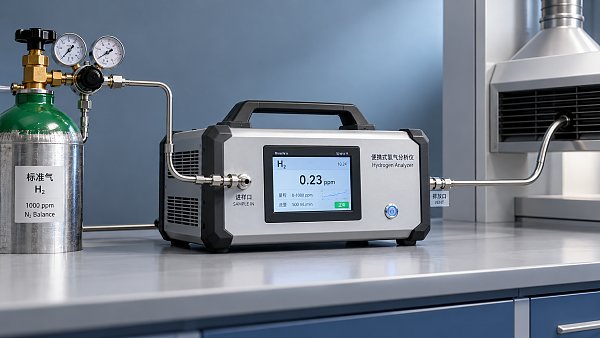
 How sensitive should a portable hydrogen analyzer be for lab use?Choose a portable hydrogen analyzer for laboratory use with the right quantification limit, accuracy, and range. Learn how to verify performance and avoid costly buying mistakes.
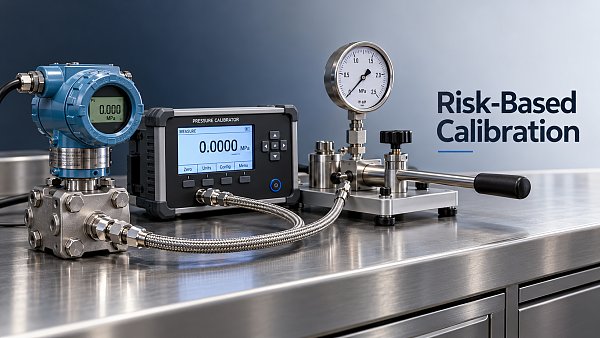
 How to set industrial calibration intervals based on equipment riskSet industrial calibration intervals based on equipment risk, drift, and as-found data. Learn when to shorten or extend schedules to improve reliability and avoid unnecessary costs.
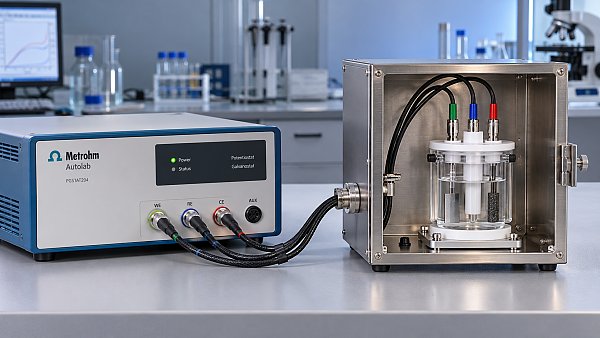
 How to choose electrochemical analyzers for low-current measurementsCompare electrochemical analyzers for precise low-current measurements. Learn how noise, leakage, bandwidth, and real-cell testing help you choose the right instrument.
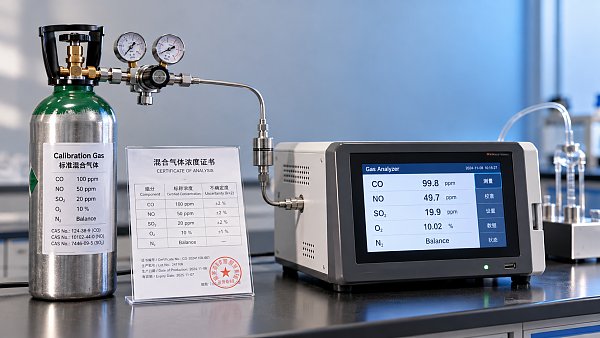
 What tolerance does a custom gas mixture need for calibration?Choose the right custom gas tolerance for calibration. Learn how blending tolerance, certified uncertainty, and stability affect accuracy—and avoid paying for precision you don’t need.
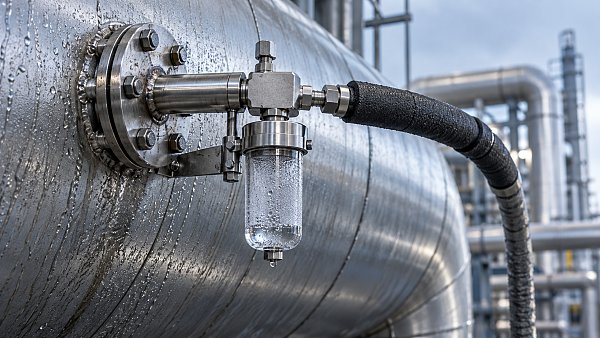
 How condensation affects stack detector readings in wet flue gasStack detector readings can drift when wet flue gas condenses. Learn how to identify moisture interference, prevent sample losses, and improve emissions monitoring reliability.
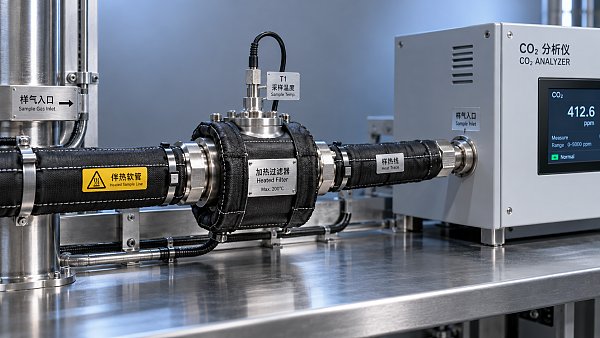
 How to prevent condensation in a CO2 analyzer sampling systemPrevent condensation in your CO2 analyzer sampling system. Learn how to control dew point, eliminate cold spots, and manage moisture for reliable readings and fewer costly disruptions.
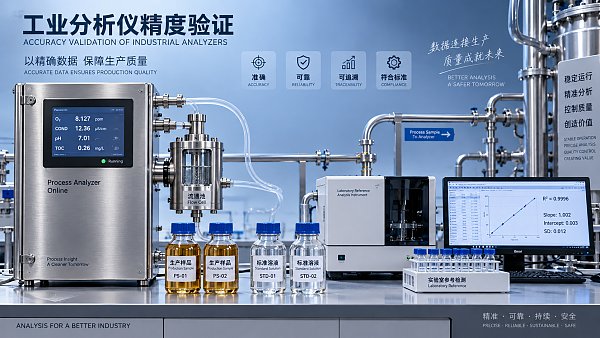
 How to verify accuracy claims for industrial quality analyzersVerify accuracy claims for industrial quality analyzers with calibration checks, independent testing, and clear acceptance criteria. Learn how to reduce risk and buy with confidence.
 How to calculate cooling loads for an industrial analyzer shelterSize industrial analyzer shelter cooling with confidence. Learn to calculate equipment heat, solar gains, and ventilation loads, then select HVAC capacity for reliable analyzer performance.
 Hydrogen Analyzers for Energy Storage: Purity Monitoring vs. Leak DetectionChoosing a hydrogen analyzer for energy storage systems? Compare purity monitoring and leak detection to select the right sensors, improve safety, and protect fuel cell performance.
 NH3 Monitoring in Fertilizer Plants: Where Should Leak Analyzers Be Installed?NH3 analyzer for fertilizer production: discover where to place leak detectors around storage, compressors, and loading areas to reduce blind spots and improve early warning.
 Diesel Engine NOx Analyzers: Response Time and NO2 Conversion ExplainedChoosing a NOX analyzer for diesel engines? Learn how response time, NO2 conversion, and sampling design affect accuracy—and make a smarter, evidence-based purchase.
 SO2 Analyzers for Smelter Emissions: Sampling Hot, Dust-Laden Flue GasSelect an SO2 analyzer for smelting industry applications. Discover how to handle hot, dust-laden flue gas, prevent sample losses, and achieve reliable emissions monitoring.
 Unstable CH4 Readings in Biogas Monitoring? Check Moisture and Sample FlowCH4 analyzer for biogas monitoring giving unstable readings? Discover how moisture, sample flow, and pressure checks help pinpoint faults and restore reliable methane measurements.
 Buying a CO2 Analyzer for Brewery Gas Recovery: Costs Beyond the Purchase PriceBuying a CO2 analyzer for brewery applications? Compare sampling, installation, calibration, and downtime costs to uncover hidden expenses and make a smarter gas recovery investment.
 Where to Place CO Analyzers for Effective Parking Garage VentilationOptimize your CO analyzer for parking garage ventilation with practical placement tips. Learn how sensor height, airflow, and zone coverage support timely detection and effective fan control.
 NDIR vs. FTIR Gas Analyzers: Which Fits Your Environmental Research?Find the right infrared gas analyzer for environmental research. Compare NDIR vs. FTIR on sensitivity, gas coverage, sampling needs, and cost to choose confidently for your study.
 Oxygen Analyzers for Diving: Calibration Checks Before Nitrox BlendingUsing an oxygen analyzer for diving applications? Discover essential calibration, sensor, and sampling checks before nitrox blending to support reliable readings.
 How Paramagnetic Oxygen Analyzers Work and Why Sample Pressure MattersLearn how a paramagnetic oxygen analyzer works, why sample pressure affects accuracy, and what to check in compensation and calibration before choosing your system.
 How Much Does a Complete CEMS Integration Project Typically Cost?How much does a complete CEMS integration project typically cost? Explore budget ranges, hidden installation costs, and compliance needs to compare quotes and plan confidently.
 What Is the Typical Response Time for Industrial Air Monitors?What is the typical response time for industrial air monitors? Explore T90, sampling delays, and alarm settings to compare performance and choose the right monitor with confidence.
 Do Regulatory Monitoring Systems Need Third-Party Certification?Do regulatory monitoring systems need third-party certification? Learn when it is required, what certificates prove, and how to verify compliance before buying.
 How Do You Choose Wired or Wireless for Stack Monitoring?Learn how to choose between wired and wireless for stack monitoring. Compare reliability, lifecycle costs, and data recovery to find the right CEMS setup for your site.
 What Happens When Combustible Gas Sensor Calibration Is Overdue?What happens if combustible gas sensor is not recalibrated on time? Discover the risks of inaccurate readings and missed alarms, plus steps to restore reliable protection.
 Can One Multi-Gas Detector Replace Four Separate Analyzers?Find out: can a single multi-gas detector replace four separate analyzers? Compare accuracy, safety, compliance, and lifetime costs to make a confident buying decision.
 Industrial Safety vs. Emission Monitoring: What Are the Differences?What are the main differences between industrial safety and emission monitoring? Compare goals, sensors, response times, and compliance needs to choose the right systems for your facility.
 Is Remote Monitoring Worth the Cost for Small Emission Sources?Is it worth investing in remote monitoring for small emission sources? Compare costs, compliance needs, and potential savings to choose the right solution for your operation.
 How Do You Handle Analyzer Failure During an Environmental Audit?Learn how to handle analyzer failure during environmental compliance audit procedures. Protect evidence, verify data, and restore monitoring with this practical response guide.
 Do VOC Monitors Require Explosion-Proof Certification?Does VOC monitoring require explosion-proof certification? Learn when approval is needed, compare ATEX and IECEx, and choose the right monitor for your site.




Search Categories
Search Categories
- Smart Meters & Power Quality
- Transformer Gas Analyzers
- BESS Thermal Runaway Detectors
- Energy, Power & Smart Grid Monitoring
- Optical Profilers & CMM
- Ultrasonic & X-Ray NDT
- Calibration Standards
- Precision Metrology & NDT
- Water Quality Analyzers
- CEMS & VOCs Monitors
- Price Trends
- Import & Export Updates
- Market Trends
- Industry News
- Industry Insights
Latest Article
- How does cross-interference affect multi-component gas analyzers?How does cross-interference affect multi component gas analyzers? Explore measurement errors, compensation limits, and validation tips to choose the right system for your process.Posted by:
- How does temperature affect high-accuracy sensor performance?Explore how temperature affects high accuracy sensor performance. Learn to reduce thermal drift, evaluate compensation, and select the right sensor for reliable measurements.Posted by:
- Can a C4H8O concentration analyzer distinguish between isomers?Can a C4H8O concentration analyzer distinguish isomers? Compare GC, FTIR and MS methods, uncover selectivity limits, and learn what to validate before choosing your instrument.Posted by:
Please give us a message
