
Ambient Gas Control Trends Shaping Safer Industrial Operations


Industrial risk is no longer confined to obvious hazard zones. It moves with production variability, tighter emission limits, denser facilities, and faster automation cycles.
That is why ambient gas control has become a board-level safety and continuity issue, not just an EHS line item.
In chemical plants, battery lines, laboratories, wastewater sites, and energy assets, the ability to detect, interpret, and respond to gas exposure now shapes uptime, compliance, and investment confidence.
Seen through the instrumentation lens, ambient gas control is part of a broader shift toward measurable, verifiable, and automated industrial safety.
Why Ambient Gas Control Is Moving to the Center
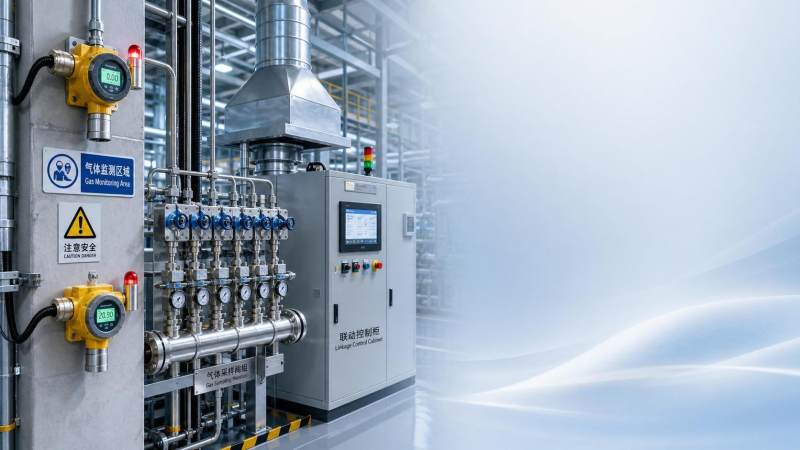
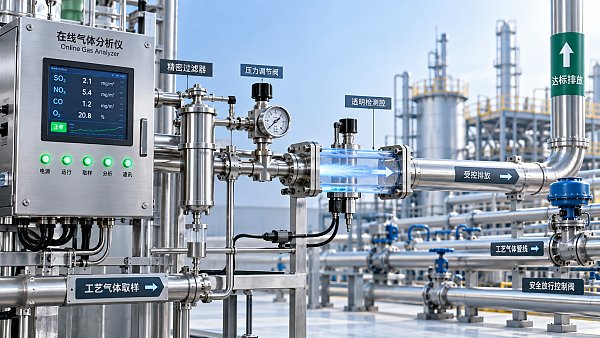
Ambient gas control refers to the monitoring and management of gases present in the working environment rather than inside a sealed process stream.
It covers toxic gases, combustible gases, oxygen displacement, solvent vapor buildup, refrigerant leaks, and other invisible conditions that can escalate quickly.
The topic matters more today because industrial sites are operating with less tolerance for uncertainty.
A short-duration leak can trigger worker exposure, shutdowns, regulatory reporting, product loss, or reputational damage.
At the same time, many operations are becoming more distributed, data-driven, and remotely supervised.
That combination pushes ambient gas control beyond standalone detectors toward connected sensing, alarm logic, analytics, and response workflows.
For organizations tracking industrial modernization, this shift is consistent with a larger truth: what cannot be accurately measured cannot be reliably controlled.
The Market Is Asking Better Questions
The most important trend is not simply more sensors. It is better judgment about what a gas monitoring system must actually deliver.
Sites are looking beyond device count and asking whether ambient gas control supports faster decision-making under real conditions.
Several questions now shape investment reviews:
- Can the system distinguish background fluctuation from meaningful risk?
- Will it integrate with PLC, DCS, SCADA, or building management layers?
- How easily can alarms be validated, documented, and audited?
- Does the design fit hazardous-area certification requirements such as ATEX or IECEx?
- Can calibration, maintenance, and spare strategy scale across multiple sites?
This is where intelligence-led evaluation becomes valuable.
Platforms such as Global Instrument Hub track suppliers, compliance expectations, and instrumentation trends across process control, environmental monitoring, laboratories, and energy systems.
That perspective helps separate mature ambient gas control capability from basic catalog availability.
Technology Trends Reshaping Ambient Gas Control
Ambient gas control is evolving through several technical shifts, each with operational consequences.
Multi-gas visibility is replacing single-point thinking
Many facilities no longer face one dominant gas hazard.
Mixed-use sites may need simultaneous monitoring for hydrogen, VOCs, carbon monoxide, hydrogen sulfide, oxygen depletion, and refrigerants.
This favors flexible architectures with fixed detectors, portable instruments, and contextual alarm logic.
Connectivity is becoming a baseline requirement
Wireless nodes, edge gateways, and cloud dashboards are extending coverage without waiting for major cabling projects.
Used carefully, connected ambient gas control improves trend visibility, incident traceability, and maintenance planning.
It also supports geographically dispersed operations where centralized oversight is essential.
Analytics is shifting from alarm to prediction
Historical gas data is becoming more useful when tied to ventilation behavior, process events, occupancy patterns, and weather conditions.
Instead of treating every event as isolated, operators can identify recurring micro-leaks, weak zones, or maintenance-driven anomalies.
That makes ambient gas control part of operational resilience, not only emergency response.
Compliance evidence is gaining weight
Auditability now matters almost as much as detection sensitivity.
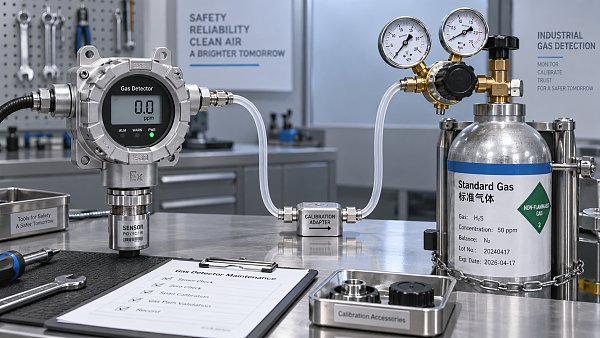
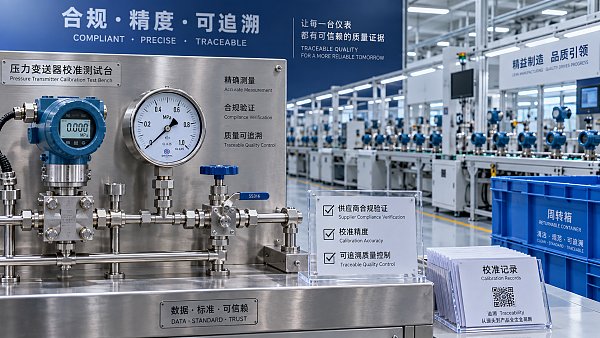
Calibration records, alarm histories, validation routines, and metrology discipline increasingly influence acceptance by global customers and regulators.
In sectors with strict validation culture, references to ISO/IEC 17025 or equivalent quality frameworks can shape supplier credibility.
Where the Value Shows Up in Real Operations
Ambient gas control creates value differently across sectors, but the pattern is consistent: earlier visibility reduces uncertainty at critical moments.
What stands out is that ambient gas control often protects both people and process economics at the same time.
That dual value is why the subject keeps moving higher in capital planning discussions.
What Deserves Closer Scrutiny Before Investment
Not every monitoring setup offers the same decision quality.
A credible ambient gas control strategy usually depends on design discipline in a few overlooked areas.
Sensor fit and placement logic
Gas density, airflow, ceiling height, temperature gradients, and enclosure geometry all affect placement.
Poor siting can create false confidence even when devices meet specification.
Alarm architecture
The best systems do more than sound an alert.
They connect alarms to ventilation changes, isolation steps, access restrictions, and escalation paths that people can follow under stress.
Lifecycle serviceability
Calibration frequency, bump testing, replacement parts, firmware support, and service coverage affect total ownership cost.
This is especially important for multi-site programs using ambient gas control as a standardized safety layer.
Supply chain confidence
Component traceability, certification authenticity, and vendor continuity deserve the same attention as headline performance.
GIH’s supply chain intelligence model is relevant here because procurement risk and technical risk increasingly overlap.
A Practical Way to Frame the Next Move
For many organizations, the next step is not a full replacement project.
It is a structured review of where ambient gas control is already present, where blind spots remain, and whether the data is actionable.
- Map gas hazards against real operating states, not only design assumptions.
- Check whether existing detectors align with current process changes and occupancy patterns.
- Review calibration evidence, alarm response records, and system integration status.
- Compare suppliers on certification depth, service model, and long-term parts availability.
- Use site data to prioritize upgrades where safety exposure and production consequences intersect.
Ambient gas control is becoming a defining layer of modern industrial assurance.
The strongest decisions will come from combining instrumentation insight, compliance rigor, and supply chain clarity before the next incident forces the timetable.
Recommended for You
 How condensation affects stack detector readings in wet flue gasStack detector readings can drift when wet flue gas condenses. Learn how to identify moisture interference, prevent sample losses, and improve emissions monitoring reliability.
 How to prevent condensation in a CO2 analyzer sampling systemPrevent condensation in your CO2 analyzer sampling system. Learn how to control dew point, eliminate cold spots, and manage moisture for reliable readings and fewer costly disruptions.
 How to verify accuracy claims for industrial quality analyzersVerify accuracy claims for industrial quality analyzers with calibration checks, independent testing, and clear acceptance criteria. Learn how to reduce risk and buy with confidence.
 How to calculate cooling loads for an industrial analyzer shelterSize industrial analyzer shelter cooling with confidence. Learn to calculate equipment heat, solar gains, and ventilation loads, then select HVAC capacity for reliable analyzer performance.
 Do Regulatory Monitoring Systems Need Third-Party Certification?Do regulatory monitoring systems need third-party certification? Learn when it is required, what certificates prove, and how to verify compliance before buying.
 How Do You Choose Wired or Wireless for Stack Monitoring?Learn how to choose between wired and wireless for stack monitoring. Compare reliability, lifecycle costs, and data recovery to find the right CEMS setup for your site.
 What Happens When Combustible Gas Sensor Calibration Is Overdue?What happens if combustible gas sensor is not recalibrated on time? Discover the risks of inaccurate readings and missed alarms, plus steps to restore reliable protection.
 Can One Multi-Gas Detector Replace Four Separate Analyzers?Find out: can a single multi-gas detector replace four separate analyzers? Compare accuracy, safety, compliance, and lifetime costs to make a confident buying decision.
 Industrial Safety vs. Emission Monitoring: What Are the Differences?What are the main differences between industrial safety and emission monitoring? Compare goals, sensors, response times, and compliance needs to choose the right systems for your facility.
 Is Remote Monitoring Worth the Cost for Small Emission Sources?Is it worth investing in remote monitoring for small emission sources? Compare costs, compliance needs, and potential savings to choose the right solution for your operation.
 How Do You Handle Analyzer Failure During an Environmental Audit?Learn how to handle analyzer failure during environmental compliance audit procedures. Protect evidence, verify data, and restore monitoring with this practical response guide.
 Do VOC Monitors Require Explosion-Proof Certification?Does VOC monitoring require explosion-proof certification? Learn when approval is needed, compare ATEX and IECEx, and choose the right monitor for your site.
 How sample conditioning affects accuracy in petrochemical analyzersImprove accuracy in petrochemical analyzers with smarter sample conditioning. Discover how phase control, filtration, and transport design prevent bias and deliver reliable process data.
 How to troubleshoot sensor drift in industrial gas detectorsIndustrial gas detectors showing sensor drift? Learn how to verify calibration gas, identify root causes, and determine when sensor replacement is needed for reliable monitoring.
 How to judge whether a competitive price reflects real valueCompetitive Price: learn how to compare scope, compliance, performance, and lifecycle costs to identify real value, reduce risk, and make smarter purchasing decisions.
 When custom gas analysis is the right fit for complex process streamsCustom gas analysis for complex process streams: learn when tailored sampling, interference control, and reliable measurement design deliver confident decisions.
 When does a laser gas analyzer meet stack emissions monitoring needs?Laser gas analyzer for stack emissions: learn when it delivers fast, reliable data, how to assess installation risks, and what to verify for CEMS compliance.
 How to select a hazardous gas analyzer for confined spacesHazardous gas analyzer selection for confined spaces: compare sensors, sampling, certifications, alarms, and maintenance to protect workers and choose with confidence.
 When is a single gas analyzer sufficient for workplace safety monitoring?Discover when a single gas analyzer delivers reliable workplace safety monitoring, and learn the key limits, calibration needs, and risks that require broader detection.
 How to choose an ambient gas analyzer for low-level leak detectionAmbient gas analyzer selection for low-level leak detection: compare sensitivity, cross-sensitivity, sampling design, alarms, and calibration for reliable site performance.
 How to tell when an oxygen sensor needs replacementOxygen sensor replacement signs explained: learn how live data, fault codes, wiring checks, and exhaust inspections pinpoint the real issue before you buy.
 How laser gas analyzers improve combustion control in steel furnacesLaser gas analyzer for steel industry applications delivers fast in-situ O₂ and CO data to optimize furnace combustion, cut fuel waste, and improve steel heating stability.
 How to verify whether explosion proof equipment meets site requirementsExplosion proof equipment verification made practical: match zones, gas or dust groups, temperature classes, certificates, and installation conditions for confident compliance.
 How industrial gas analysis helps detect contamination before releaseIndustrial Gas Analysis helps detect moisture, oil, oxygen, and toxic contaminants before release—protecting processes, ensuring compliance, and reducing costly risks.
 When is electrochemistry detection the right choice for water analysis?Electrochemistry detection for water analysis: learn when fast, reliable monitoring of ions, chlorine, pH, and more delivers actionable results.
 How industrial standards reduce quality risks in supplier selectionIndustrial Standard guidance helps quality and safety managers reduce supplier risks, verify compliance, strengthen traceability, and build resilient instrumentation supply chains.
 When does a multi-component system reduce installation complexity?Multi component systems reduce installation complexity when they eliminate field interfaces, streamline commissioning, and provide proven compatibility. Learn how to assess total cost and supplier accountability.
 How to size an industrial control shelter for outdoor equipmentIndustrial control shelter sizing guide: optimize layout, HVAC, access, safety, and expansion space for reliable outdoor equipment operations.
 How flue analysis helps verify combustion efficiencyFlue analysis verifies combustion efficiency by assessing O2, CO, CO2, and stack temperature to identify excess air, incomplete combustion, and heat losses.
 How to select industrial gas detectors for confined spacesIndustrial gas detectors for confined spaces: learn how to match sensors, sampling methods, alarms, and certifications to real atmospheric hazards.
 When does a laser oxygen analyzer outperform zirconia sensors?Laser oxygen analyzer vs. zirconia sensors: compare speed, selectivity, maintenance, gas chemistry, and installation needs to choose the right oxygen measurement solution.
 How to select a percent range analyzer for process measurementsPercent range analyzer selection made practical: compare accuracy, sample systems, calibration, gas matrix, integration, and lifecycle cost for reliable process measurements.
Search Categories
Search Categories
- Smart Meters & Power Quality
- Transformer Gas Analyzers
- BESS Thermal Runaway Detectors
- Energy, Power & Smart Grid Monitoring
- Optical Profilers & CMM
- Ultrasonic & X-Ray NDT
- Calibration Standards
- Precision Metrology & NDT
- Water Quality Analyzers
- CEMS & VOCs Monitors
- Price Trends
- Import & Export Updates
- Market Trends
- Industry News
- Industry Insights
Latest Article
- How condensation affects stack detector readings in wet flue gasStack detector readings can drift when wet flue gas condenses. Learn how to identify moisture interference, prevent sample losses, and improve emissions monitoring reliability.Posted by:
- How to prevent condensation in a CO2 analyzer sampling systemPrevent condensation in your CO2 analyzer sampling system. Learn how to control dew point, eliminate cold spots, and manage moisture for reliable readings and fewer costly disruptions.Posted by:
- How to verify accuracy claims for industrial quality analyzersVerify accuracy claims for industrial quality analyzers with calibration checks, independent testing, and clear acceptance criteria. Learn how to reduce risk and buy with confidence.Posted by:
Please give us a message
