
Process Control Equipment Cost Factors in 2026 Capital Planning


Process Control Equipment Cost Factors in 2026 Capital Planning
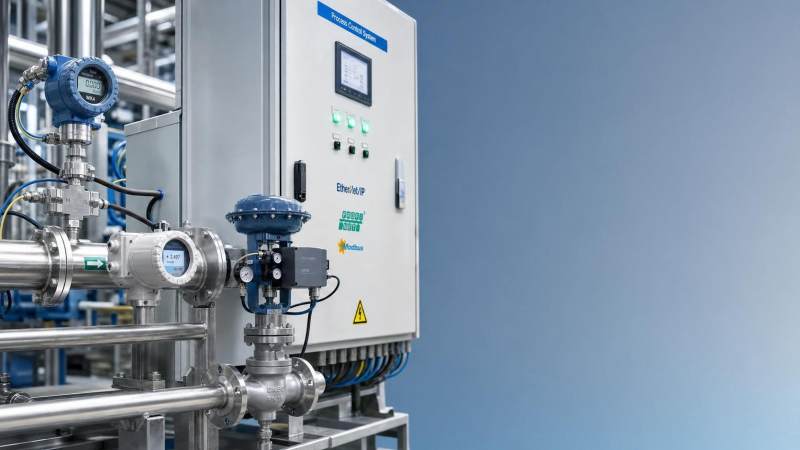
Capital planning for 2026 is getting less predictable, especially where process control equipment sits between operations, compliance, and digital transformation.
The headline price still matters, but it rarely explains the full investment. Integration work, certification, calibration, cybersecurity, and service access often change the real number.
That is why many budget reviews now treat process control equipment as infrastructure, not just a line-item purchase.
Across manufacturing, energy, environmental monitoring, life sciences, and utilities, the same question keeps surfacing: which cost drivers are fixed, and which can be managed?
GIH follows this issue closely because instrumentation decisions increasingly shape uptime, audit readiness, and long-horizon automation value.
What actually makes process control equipment expensive in 2026?
In practical terms, cost comes from system complexity more than from hardware labels alone.
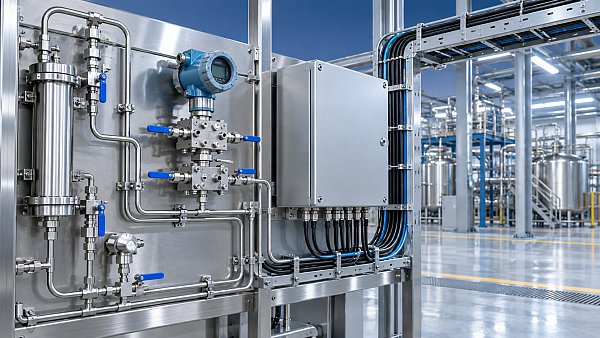
A pressure transmitter for a standard utility line and one for hazardous chemical duty may look similar on paper. Their installed cost can be very different.
The main cost layers usually include sensing accuracy, control architecture, environmental protection, and communication requirements.
- Measurement class: tighter accuracy, stability, and repeatability increase component and testing cost.
- Control integration: PLC, DCS, SCADA, and historian links add engineering hours.
- Site conditions: corrosive media, high temperature, vibration, and explosion-proof needs push specification upward.
- Digital readiness: Ethernet-based protocols, diagnostics, and remote monitoring raise initial spend but may reduce lifecycle waste.
A common budgeting mistake is to benchmark only catalog pricing. Installed process control equipment cost is usually shaped by engineering scope, not just procurement quotes.
In sectors covered by GIH research, this is especially visible in flow, level, pressure, temperature, and composition analysis devices tied to automated decisions.
Why does integration often cost more than expected?
Because process control equipment rarely operates as a standalone asset. It has to fit an existing control environment, data model, and maintenance routine.
The hidden spend often appears after vendor selection. Signal mapping, I/O expansion, software licensing, FAT and SAT support, and operator training start accumulating quickly.
This becomes more pronounced when mixed-brand facilities try to modernize in stages instead of replacing the full architecture at once.
A useful way to frame it is simple: the more a device must communicate, alarm, report, and self-diagnose, the more integration becomes part of the capital decision.
The table below helps separate common cost drivers before a budget is locked.
Where cost overruns happen most often, the root issue is incomplete interface mapping during planning.
How much do compliance, reliability, and supplier quality change the budget?
More than many teams expect. In regulated or safety-sensitive environments, low-cost process control equipment can become high-cost once documentation gaps appear.
This is not limited to oil and gas. Power systems, water treatment, pharmaceuticals, food processing, and advanced manufacturing all face traceability pressure.
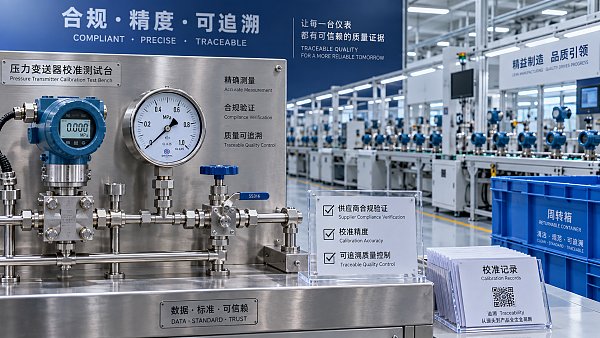
Reliable suppliers usually price in proof, not just product. That means material traceability, calibration records, firmware control, quality audits, and after-sales responsiveness.
The cheaper quote can still be valid, but only if the application risk is low and substitution risk is acceptable.
GIH often emphasizes one point in supplier research: trust signals matter when replacement cycles are long and shutdown windows are expensive.
- Check whether certification applies to the exact model and configuration.
- Confirm spare parts availability over the expected asset life.
- Review service coverage by region, especially for calibration and emergency support.
- Ask whether firmware updates or cybersecurity patches affect validation requirements.
Those details directly affect both capex confidence and future operating continuity.
When does higher-cost process control equipment deliver better value?
Not always, but often when downtime, product deviation, or environmental penalties are expensive.
For example, advanced analyzers or smart transmitters may cost more upfront, yet reduce manual sampling, drift-related losses, or false shutdowns.
The stronger case usually appears in continuous processes where one unstable measurement can distort the whole control loop.
In 2026 planning, value also comes from upgrade readiness. If process control equipment can support predictive maintenance, remote diagnostics, and clean data export, it protects future modernization options.
A useful comparison is not premium versus low-cost. It is constrained asset versus adaptable asset.
This matters across the broad industries GIH tracks, from smart grid monitoring to laboratory environments and environmental instrumentation.
A quick decision check
Higher-spec process control equipment tends to be worth the premium when several of these conditions are true:
- The process runs continuously and interruption cost is high.
- Measurement drift can affect safety, yield, or emissions.
- The site expects phased digital upgrades over three to five years.
- Qualification, auditability, or data integrity requirements are strict.
Which budget mistakes show up most often during capital planning?
The first is treating all process control equipment as interchangeable once the core measurement range matches.
In reality, media compatibility, ambient conditions, diagnostics, response time, and network architecture can materially change project cost.
Another frequent issue is underestimating commissioning. Startup delays often come from tuning, documentation revision, and control logic adjustments, not from late shipping alone.
Some plans also ignore obsolescence risk. A low initial quote can lose its appeal if the platform is nearing end-of-life or local support is thin.
More careful planning usually includes a simple screening list before final approval.
- Define the control objective, not only the device type.
- Separate hardware cost from installed and validated cost.
- Model maintenance, calibration, and spares over five years.
- Assess supplier continuity, technical depth, and regional service strength.
- Verify whether the equipment can fit future data and automation strategies.
This approach is less about building a bigger budget and more about reducing avoidable rework.
What is the smartest next step before approving a 2026 spend?
Start by ranking process control equipment by operational consequence, not by unit price.
A small sensor in a critical loop may deserve more scrutiny than a larger but less consequential package line item.
Then build a comparison around three views: installed cost, compliance burden, and upgrade pathway.
That structure usually exposes whether a quote is genuinely competitive or simply incomplete.
For organizations comparing global supply options, GIH-style intelligence is useful when shortlists need both technical credibility and supply chain visibility.
The strongest plans for 2026 do not chase the lowest entry number. They align process control equipment choices with measurement integrity, service resilience, and automation readiness.
Before final sign-off, review application conditions, interface scope, certification exposure, service access, and total ownership assumptions side by side. That is where better capital decisions usually become visible.
Recommended for You
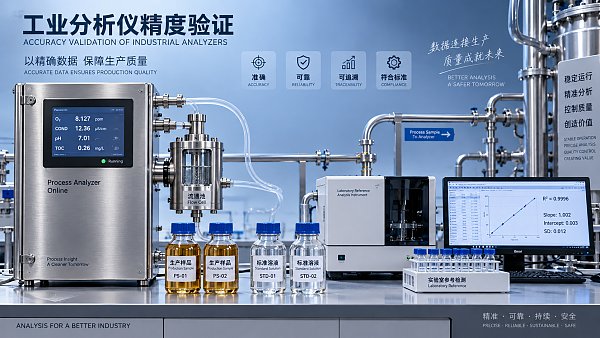
 How to verify accuracy claims for industrial quality analyzersVerify accuracy claims for industrial quality analyzers with calibration checks, independent testing, and clear acceptance criteria. Learn how to reduce risk and buy with confidence.
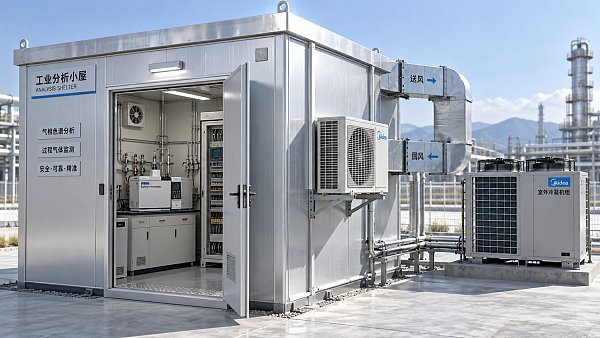
 How to calculate cooling loads for an industrial analyzer shelterSize industrial analyzer shelter cooling with confidence. Learn to calculate equipment heat, solar gains, and ventilation loads, then select HVAC capacity for reliable analyzer performance.
 Industrial Safety vs. Emission Monitoring: What Are the Differences?What are the main differences between industrial safety and emission monitoring? Compare goals, sensors, response times, and compliance needs to choose the right systems for your facility.
 Is Remote Monitoring Worth the Cost for Small Emission Sources?Is it worth investing in remote monitoring for small emission sources? Compare costs, compliance needs, and potential savings to choose the right solution for your operation.
 How Do You Handle Analyzer Failure During an Environmental Audit?Learn how to handle analyzer failure during environmental compliance audit procedures. Protect evidence, verify data, and restore monitoring with this practical response guide.
 Do VOC Monitors Require Explosion-Proof Certification?Does VOC monitoring require explosion-proof certification? Learn when approval is needed, compare ATEX and IECEx, and choose the right monitor for your site.
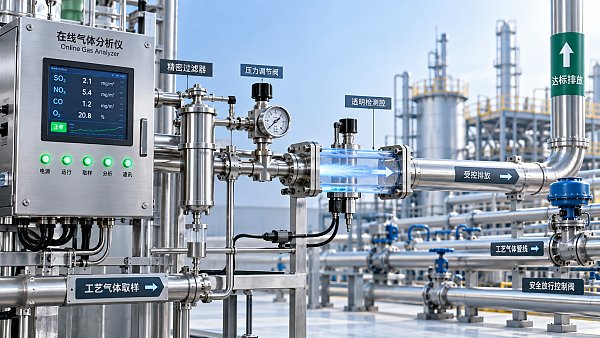
 How sample conditioning affects accuracy in petrochemical analyzersImprove accuracy in petrochemical analyzers with smarter sample conditioning. Discover how phase control, filtration, and transport design prevent bias and deliver reliable process data.
 How to troubleshoot sensor drift in industrial gas detectorsIndustrial gas detectors showing sensor drift? Learn how to verify calibration gas, identify root causes, and determine when sensor replacement is needed for reliable monitoring.
 How to judge whether a competitive price reflects real valueCompetitive Price: learn how to compare scope, compliance, performance, and lifecycle costs to identify real value, reduce risk, and make smarter purchasing decisions.
 When custom gas analysis is the right fit for complex process streamsCustom gas analysis for complex process streams: learn when tailored sampling, interference control, and reliable measurement design deliver confident decisions.
 When does a laser gas analyzer meet stack emissions monitoring needs?Laser gas analyzer for stack emissions: learn when it delivers fast, reliable data, how to assess installation risks, and what to verify for CEMS compliance.
 How to select a hazardous gas analyzer for confined spacesHazardous gas analyzer selection for confined spaces: compare sensors, sampling, certifications, alarms, and maintenance to protect workers and choose with confidence.
 When is a single gas analyzer sufficient for workplace safety monitoring?Discover when a single gas analyzer delivers reliable workplace safety monitoring, and learn the key limits, calibration needs, and risks that require broader detection.
 How to choose an ambient gas analyzer for low-level leak detectionAmbient gas analyzer selection for low-level leak detection: compare sensitivity, cross-sensitivity, sampling design, alarms, and calibration for reliable site performance.
 How to tell when an oxygen sensor needs replacementOxygen sensor replacement signs explained: learn how live data, fault codes, wiring checks, and exhaust inspections pinpoint the real issue before you buy.
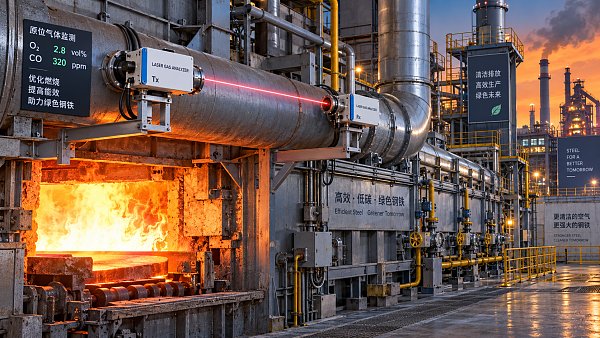
 How laser gas analyzers improve combustion control in steel furnacesLaser gas analyzer for steel industry applications delivers fast in-situ O₂ and CO data to optimize furnace combustion, cut fuel waste, and improve steel heating stability.
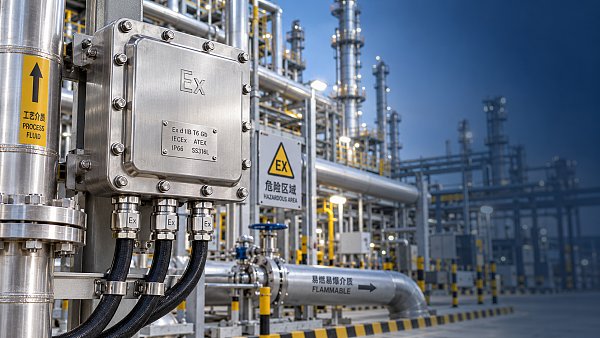
 How to verify whether explosion proof equipment meets site requirementsExplosion proof equipment verification made practical: match zones, gas or dust groups, temperature classes, certificates, and installation conditions for confident compliance.
 How industrial gas analysis helps detect contamination before releaseIndustrial Gas Analysis helps detect moisture, oil, oxygen, and toxic contaminants before release—protecting processes, ensuring compliance, and reducing costly risks.
 When is electrochemistry detection the right choice for water analysis?Electrochemistry detection for water analysis: learn when fast, reliable monitoring of ions, chlorine, pH, and more delivers actionable results.
 How industrial standards reduce quality risks in supplier selectionIndustrial Standard guidance helps quality and safety managers reduce supplier risks, verify compliance, strengthen traceability, and build resilient instrumentation supply chains.
 When does a multi-component system reduce installation complexity?Multi component systems reduce installation complexity when they eliminate field interfaces, streamline commissioning, and provide proven compatibility. Learn how to assess total cost and supplier accountability.
 How to size an industrial control shelter for outdoor equipmentIndustrial control shelter sizing guide: optimize layout, HVAC, access, safety, and expansion space for reliable outdoor equipment operations.
 How flue analysis helps verify combustion efficiencyFlue analysis verifies combustion efficiency by assessing O2, CO, CO2, and stack temperature to identify excess air, incomplete combustion, and heat losses.
 How to select industrial gas detectors for confined spacesIndustrial gas detectors for confined spaces: learn how to match sensors, sampling methods, alarms, and certifications to real atmospheric hazards.
 When does a laser oxygen analyzer outperform zirconia sensors?Laser oxygen analyzer vs. zirconia sensors: compare speed, selectivity, maintenance, gas chemistry, and installation needs to choose the right oxygen measurement solution.
 How to select a percent range analyzer for process measurementsPercent range analyzer selection made practical: compare accuracy, sample systems, calibration, gas matrix, integration, and lifecycle cost for reliable process measurements.
 How explosion proof analysis verifies safe equipment for hazardous areasExplosion proof analysis verifies hazardous-area equipment by matching certifications, temperature ratings, installation details, and inspection controls for safer compliance.
 When does fixed gas detection need point sensors instead of open-path monitoring?Fixed gas detection: discover when point sensors outperform open-path monitoring for predictable leaks, enclosed zones, local alarms, and safer design decisions.
 How to choose industrial metrology systems for tight-tolerance partsIndustrial metrology guide for tight-tolerance parts: compare CMMs, optical scanners, gauges, uncertainty, workflow, and traceable inspection strategies.
 How process metrology reduces measurement variation in productionProcess metrology reduces production measurement variation by improving traceability, uncertainty control, calibration, and reliable quality decisions.
 How to select an industrial monitoring analyzer for harsh environmentsIndustrial monitoring analyzer selection for harsh environments: evaluate sampling, durability, hazardous-area compliance, accuracy, maintenance, and data reliability.
 How calibration intervals affect test and measurement equipment accuracyTest and measurement equipment calibration intervals directly affect accuracy, risk, compliance, and uptime. Learn how to set evidence-based schedules that protect critical decisions.
Search Categories
Search Categories
- Smart Meters & Power Quality
- Transformer Gas Analyzers
- BESS Thermal Runaway Detectors
- Energy, Power & Smart Grid Monitoring
- Optical Profilers & CMM
- Ultrasonic & X-Ray NDT
- Calibration Standards
- Precision Metrology & NDT
- Water Quality Analyzers
- CEMS & VOCs Monitors
- Price Trends
- Import & Export Updates
- Market Trends
- Industry News
- Industry Insights
Latest Article
- How to verify accuracy claims for industrial quality analyzersVerify accuracy claims for industrial quality analyzers with calibration checks, independent testing, and clear acceptance criteria. Learn how to reduce risk and buy with confidence.Posted by:
- How to calculate cooling loads for an industrial analyzer shelterSize industrial analyzer shelter cooling with confidence. Learn to calculate equipment heat, solar gains, and ventilation loads, then select HVAC capacity for reliable analyzer performance.Posted by:
- Industrial Safety vs. Emission Monitoring: What Are the Differences?What are the main differences between industrial safety and emission monitoring? Compare goals, sensors, response times, and compliance needs to choose the right systems for your facility.Posted by:
Please give us a message
