
Continuous Monitoring Delays That Often Start With Sensor Placement


Continuous monitoring delays often begin with something overlooked: sensor placement. In industrial gas monitoring, even advanced systems like a fixed analyzer, explosion proof gas analyzer, or portable monitoring setup can underperform if positioning is wrong. From analyzer enclosure design to custom measurement, paramagnetic measurement, laser analysis, and thermal analysis, proper placement directly affects response time, accuracy, and safety.
For operators, safety teams, project managers, technical evaluators, and purchasing decision-makers, this issue is not theoretical. A sensor installed 2 meters too far from a leak path, too close to a vent, or inside a dead-air pocket can delay alarms by seconds or even minutes. In many industrial environments, that delay is enough to affect product quality, environmental compliance, maintenance planning, and personnel protection.
In the instrumentation industry, where continuous monitoring supports automation, digital visibility, and risk control, correct placement is as important as analyzer technology itself. This article explains why sensor placement causes monitoring delays, how those delays appear in real applications, what engineers should evaluate before installation, and how to improve response time without overbuilding the system.
Why Sensor Placement Becomes the First Source of Delay
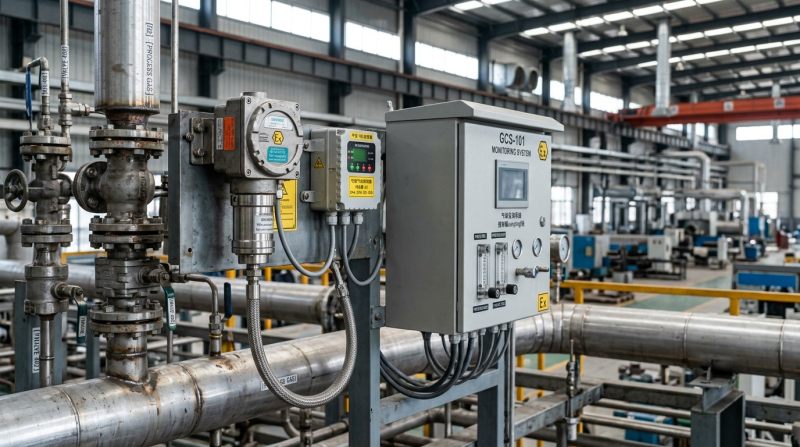
A continuous monitoring system is expected to detect a change in gas concentration, temperature, pressure, or composition as early as possible. Yet many facilities focus on detector sensitivity, analyzer range, or enclosure rating before they verify whether the sensing point is physically close to where the process change actually occurs. In practice, the first delay often happens before the instrument measures anything at all.
Gas behavior varies by density, pressure, ventilation pattern, release velocity, and ambient temperature. A heavy gas may accumulate near floor level within 30–90 seconds, while a lighter gas can stratify higher or disperse rapidly under forced airflow. If a sensor is mounted at a generic height rather than a process-informed height, the system may remain technically functional but operationally late.
The problem is not limited to hazardous gas detection. In sample conditioning systems, paramagnetic measurement, laser analysis, and thermal analysis all depend on representative sampling. If the probe sits downstream of dilution, upstream of unstable mixing, or too far from the process disturbance, measured values may lag the actual process by 10–120 seconds. For high-speed control loops, that delay can distort trend interpretation and trigger false corrective actions.
Another overlooked factor is analyzer enclosure design. A rugged or explosion proof gas analyzer may protect electronics in harsh environments, but if the sampling line is too long, has unnecessary bends, or includes condensation traps in the wrong location, the enclosure adds survivability without improving response. In many systems, 1 extra meter of tubing can add meaningful transport delay depending on flow rate and gas characteristics.
For project teams, this means placement should be considered during the first 3 stages of design: hazard identification, process mapping, and installation layout. Waiting until commissioning usually increases rework cost, cable rerouting, and scaffold time. A placement issue corrected on paper may take 1 hour; corrected after construction, it may take 1–3 days.
How delay typically enters the monitoring chain
- Detection point is located too far from the release, reaction, or transfer point.
- Airflow, fan discharge, or natural draft bypasses the sensor.
- Sampling lines exceed practical length, often above 5–15 meters without response optimization.
- Mounting height does not match gas density or process stratification behavior.
- Maintenance access was prioritized over measurement representativeness.
Typical placement risk by application type
The table below highlights how different industrial monitoring methods can suffer from delay when the sensing point is selected for convenience rather than process reality.
The key takeaway is simple: a fast instrument cannot compensate for a slow or unrepresentative sensing point. Placement defines whether the analyzer sees the event early, late, or not at all.
What Engineers Should Evaluate Before Mounting Any Sensor
Effective placement starts with a structured review, not a drawing mark-up alone. Whether the system is used in industrial manufacturing, energy and power, environmental monitoring, laboratory support, or process automation, at least 4 variables should be reviewed together: source location, transport path, environmental interference, and maintenance accessibility. Ignoring any one of these usually creates either poor response time or high lifecycle cost.
First, define the event you want to detect. Is the target a leak, a concentration increase, a combustion condition change, a process deviation, or a quality threshold? A sensor intended to catch a sudden leak within 15 seconds should not be placed using the same logic as one intended to track average composition over 5 minutes. Alarm purpose and control purpose are related, but not identical.
Second, review how the medium moves. In open areas, ventilation speed, doorway drafts, and fan-induced recirculation can redirect gas plumes. In enclosed skids, analyzer enclosure placement may affect tubing length, service access, and thermal stability. In stack or duct applications, a poor probe insertion depth can produce biased readings because flow profile and concentration are not uniform across the cross-section.
Third, match the instrument type to the sensing logic. A portable monitoring setup is useful for surveys and verification, but it should not be treated as a substitute for continuous fixed-point monitoring in high-risk zones. A fixed analyzer works best when the sensing point is stable and representative. Custom measurement systems may be necessary where process conditions include high dust, condensation, corrosive gas, or rapid temperature swings from 0°C to 60°C or more.
Fourth, plan access without sacrificing measurement quality. The sensor must be reachable for calibration and inspection, typically every 1–3 months in demanding environments and every 3–6 months in cleaner service, depending on plant policy and process severity. But easy access should not automatically override the correct process position.
A practical 6-point placement checklist
- Map the likely release or process change origin within a 1–5 meter zone.
- Identify gas density behavior and expected vertical movement.
- Review ventilation direction during normal and upset conditions.
- Estimate sampling lag from tubing length, bends, and flow rate.
- Confirm calibration access, cable routing, and enclosure protection needs.
- Validate the location through commissioning tests instead of assumption alone.
Recommended evaluation priorities by stakeholder
Different stakeholders evaluate sensor placement from different risk angles. The table below helps align technical and commercial decision-making before procurement or retrofit.
When these priorities are aligned early, the project is more likely to achieve both reliable detection and predictable implementation cost. That is especially important in retrofits, where relocation after installation can consume 10%–20% of the original field labor budget.
Placement Strategies for Fixed, Portable, and Custom Monitoring Systems
No single mounting rule fits every monitoring architecture. A fixed analyzer in a process unit, an explosion proof gas analyzer in a hazardous area, and a portable monitoring setup used for inspections all have different strengths and limits. Good placement strategy begins by treating the instrument as part of a measurement system, not as a standalone device.
For fixed systems, the goal is continuous representativeness. Sensors should typically be positioned close enough to the expected hazard or process change that the delay remains operationally useful, yet far enough to avoid direct contamination, splash, mechanical impact, or thermal overload. In many plants, this means evaluating mounting points within a 0.5–3 meter radius from valves, seals, flanges, transfer points, burner zones, or reaction interfaces.
Portable systems play a different role. They are well suited for temporary verification, confined space checks, route inspections, and commissioning support. However, using them as the primary control for a continuously changing area introduces inconsistency because operator position, sampling duration, and timing vary. A 30-second spot check cannot fully replace 24/7 fixed monitoring in high-consequence areas.
Custom measurement becomes necessary when process conditions exceed standard assumptions. For example, high moisture service may need heated lines or drainage control. Dust-heavy applications may require filtration or purge design. Paramagnetic measurement for oxygen, laser analysis for fast gas composition tracking, and thermal analysis for combustion-related monitoring each have placement requirements tied to sample integrity. The better the custom design matches actual process conditions, the more useful the measurement becomes.
Analyzer enclosure decisions should also support placement, not distort it. If the ideal sensing point is remote from the service platform, engineers may need to separate the sampling point from the analyzer cabinet, using optimized tubing lengths, temperature management, and maintenance access planning. The shortest cable route is not always the best measurement route.
Choosing the right placement logic by system type
- Fixed analyzer: Best for continuous risk zones and repeatable process control where alarm delay should remain tightly controlled.
- Explosion proof gas analyzer: Suitable for hazardous areas, but enclosure rating should be paired with verified sensing-point effectiveness.
- Portable monitoring setup: Useful for audits, troubleshooting, and supplemental verification rather than sole continuous protection.
- Custom measurement package: Appropriate when standard mounting creates condensation, lag, contamination, or access conflicts.
Common mistakes during retrofit projects
Retrofits often inherit old mounting positions that were selected for earlier process conditions. A line reroute, fan upgrade, enclosure shift, or production increase of 15%–30% can change airflow and gas accumulation patterns enough to make old placement ineffective. Yet many upgrades keep the same detector location because it simplifies installation drawings. That shortcut often creates hidden delay.
Another mistake is overconcentrating sensors near operator walkways or panel areas. These locations are easier to inspect, but they may sit outside the real release path. Field validation using smoke, tracer gas, or controlled process checks during commissioning is often a better investment than adding extra devices without placement verification.
How to Reduce Delay During Design, Commissioning, and Operation
Reducing delay is not only a design task. It requires action across the full lifecycle, from front-end engineering to routine maintenance. In many facilities, measurable improvement comes from a 3-step sequence: review the process hazard, optimize the sensing path, and validate real response after startup. Each step reduces the gap between theoretical coverage and actual field performance.
During design, define a target response window for each critical point. For some leak detection tasks, a practical objective may be response within 10–30 seconds of plume arrival. For process composition loops, the acceptable total lag may be 20–60 seconds depending on control strategy. Once the target is clear, tubing length, mounting elevation, sampling flow, and enclosure position can be evaluated against a real measurement goal rather than a generic specification.
During commissioning, perform functional verification under realistic conditions. This may include bump testing, localized release simulation, or comparison against a portable monitoring setup at multiple heights and distances. It is common to discover that a detector responds well at 1 meter from the source but too slowly at 4 meters due to crossflow or stagnation. Commissioning should therefore confirm both signal and placement.
During operation, trend review matters. Repeated late alarms, unexplained reading drift, frequent zero checks, or poor correlation with process events may indicate a placement problem rather than an analyzer fault. Maintenance teams should record at least 4 data points during service: calibration status, environmental condition, observed contamination, and response timing versus expected process behavior.
When improvement is needed, the most effective actions are often straightforward: shorten the sampling line, relocate the probe by 0.5–2 meters, adjust mounting height, reduce dead volume, improve moisture management, or add shielding from disruptive airflow. These modifications are usually more cost-effective than replacing a suitable analyzer with a more expensive model.
Delay reduction actions by lifecycle phase
The following table summarizes where delay enters the project and what teams can do to control it before it affects safety or process reliability.
A disciplined lifecycle approach reduces false confidence. It also helps procurement teams justify investment in better mounting hardware, sample conditioning, or commissioning support, which often delivers greater value than focusing only on analyzer headline specifications.
FAQ: Sensor Placement Questions That Affect Procurement and Performance
Because placement affects safety, uptime, and total cost of ownership, buyers and users often ask similar questions during selection and implementation. The answers below reflect common industrial practice across manufacturing, energy, environmental, and automated process applications.
How far should a sensor be from the suspected gas release point?
There is no single universal distance. In many practical installations, engineers evaluate positions within 0.5–3 meters of the most likely release path, then refine based on gas density, ventilation, obstructions, and maintenance access. A sensor too close may suffer contamination or damage, while one too far away may detect the event too late for meaningful action.
Can a better analyzer compensate for poor placement?
Only to a limited degree. Faster sensing technologies such as laser analysis or optimized paramagnetic measurement can reduce internal measurement time, but they cannot eliminate transport delay or poor process representation. If the sample arrives late or the plume never reaches the detector, even a high-performance analyzer will underdeliver in real service.
When is custom measurement a better choice than a standard package?
Custom measurement is often justified when standard placement leads to moisture condensation, dust loading, corrosive exposure, unstable temperatures, or long sample transport paths. It is also useful when the process demands specific response windows, such as under 30 seconds, or when enclosure location and sensing location must be separated for safety or maintenance reasons.
How often should sensor placement be reviewed after startup?
At minimum, review placement during commissioning, after major process modifications, and during annual safety or performance audits. Additional reviews are advisable after fan changes, enclosure relocation, line rerouting, production increases, or recurring alarm discrepancies. In dynamic facilities, a yearly check is often a practical baseline.
What should buyers request from suppliers or integrators?
Request application review support, not just instrument specifications. Useful deliverables may include sensing-point recommendations, sample path review, enclosure placement guidance, maintenance access evaluation, and commissioning verification steps. For complex projects, asking for a placement rationale can reduce rework and improve confidence across technical and management teams.
Continuous monitoring performance depends on more than sensor sensitivity or analyzer type. In many industrial applications, the earliest and most costly delay begins with where the sensor or sampling point is placed. Getting that decision right improves response time, data quality, safety performance, and long-term operating value across fixed analyzers, explosion proof gas analyzers, portable monitoring setups, and custom measurement systems.
If you are planning a new installation, upgrading an existing monitoring network, or comparing analyzer enclosure and sensing strategies, now is the right time to review placement assumptions before procurement and commissioning are finalized. Contact us to discuss your application, get a tailored monitoring layout recommendation, or request a customized solution built around your process conditions and response targets.
Recommended for You
 SAMR to Finalize 1,800+ Standards by 2026, Including EV Battery RecyclingSAMR to finalize 1,800+ standards by 2026—including EV battery recycling, hazardous chemical packaging & EMC immunity. Stay ahead of mandatory GB shifts and global export compliance.
 China's Largest Single-Line Large-Tow Carbon Fiber Line Starts OperationChina's largest single-line large-tow carbon fiber line is live—30,000 tons/year capacity, ASME-certified, 22% cheaper & 6-week lead time. Boost your industrial instrumentation supply chain now.
 China Mobile Unveils National Integrated Computing Power NetworkChina Mobile's National Integrated Computing Power Network accelerates AI quality inspection for global manufacturers—cutting model training time by 68% and enabling cross-border industrial AI development.
 World's First Humanoid Robot Industrial Calibration White Paper ReleasedWorld's First Humanoid Robot Industrial Calibration White Paper released—setting new global benchmarks for dynamic sensor calibration in robotics. Discover how ABB, Yaskawa & metrology leaders are reshaping industry trust.
 Red Sea Crisis Escalates: Aden Gulf Ban Extended to June 15Red Sea Crisis escalates: Aden Gulf ban extended to June 15 — disrupting industrial instrumentation trade between China and the Middle East with 452% air freight spikes and 7–12 day delays.
 Saudi SASO Introduces AI-Based Energy Validation for Industrial TransmittersAI-based energy validation for industrial transmitters is now mandatory in Saudi Arabia—learn how SASO’s new AI regulation impacts global exporters, compliance timelines, and supply chains.
 IEC TC65 Releases Cybersecurity Validation Guide for Industrial InstrumentsIEC TC65’s new Cybersecurity Validation Guide for Industrial Instruments mandates SDL certification & firmware signing—key for EU/US market access. Act now to align with GB/T 42278-2026 and avoid export delays.
 EU PEF Carbon Footprint Database Mandatory Access for Industrial InstrumentsEU PEF Carbon Footprint Database mandatory access starts June 2026 for industrial instruments—pressure, temperature & flow meters. Ensure compliance now to avoid EU customs delays and market exclusion.
 Gas Quality Analyzer Shelter Price Trends and Specification Gaps to WatchGas quality analyzer shelter price trends vary with materials, HVAC, safety, integration, and compliance. See key specification gaps before shortlisting suppliers or approving budget.
 Process Measurement Equipment: Key Accuracy Risks in Harsh EnvironmentsProcess measurement equipment in harsh environments can drift before failing. Discover key accuracy risks, warning signs, and practical controls to protect quality, safety, and compliance.
 Industrial Analyzer Shelter Export Factors Affecting Lead Times This YearIndustrial analyzer shelter export lead times vary with sourcing, engineering, compliance, packing, and logistics. Learn the key factors to quote smarter and deliver with confidence.
 What to Check Before Buying a Process Analyzer ShelterProcess analyzer shelter buying guide: learn what to check before purchase, from compliance and HVAC to utilities, durability, and maintenance access.
 Process Monitoring Equipment Trends Shaping Plant Upgrades in 2026Process monitoring equipment trends for 2026 reveal how smarter plant upgrades can cut downtime, improve compliance, boost efficiency, and deliver faster ROI.
 Flue Gas Analyzer Shelter Maintenance Issues That Shorten Service LifeFlue gas analyzer shelter maintenance issues can quietly shorten equipment life. Learn the key risks, warning signs, and practical checks to reduce downtime and protect accuracy.
 Emission Analyzer Shelter vs Outdoor Mounting: Which Reduces DowntimeEmission analyzer shelter vs outdoor mounting: discover which setup cuts downtime, improves analyzer reliability, and lowers lifecycle risk in harsh or compliance-critical environments.
 Common Gas Quality Equipment Selection Mistakes in Industrial ProjectsGas quality equipment selection mistakes can delay industrial projects and raise compliance risks. Learn how to choose the right solution for accuracy, safety, integration, and faster commissioning.
 Gas Quality System Costs: What Shapes Total Project Spending in 2026Gas quality system costs in 2026 depend on more than analyzer price. Discover the key budget drivers, hidden expenses, and smart planning steps to control total project spending.
 How to Choose Emission Measurement Equipment for Reliable Compliance DataEmission measurement equipment selection affects compliance accuracy, uptime, and audit readiness. Learn how to compare systems, reduce risk, and choose a solution built for reliable data.
 First Global White Paper on Dynamic Calibration for Humanoid Robot Sensors ReleasedFirst global white paper on dynamic calibration for humanoid robot sensors—key for pressure & 6-axis force/torque accuracy in smart manufacturing and collaborative robotics.
 FDA Updates IVD Import Guidelines: CNAS/NIST Calibration Chain RequiredFDA mandates CNAS/NIST calibration chain for IVD pressure & temperature sensors—key for Chinese exporters. Act now to meet July 2026 deadline.
 EU PEF Carbon Database Mandatory Access for Chinese Industrial InstrumentsEU PEF Carbon Database mandatory for Chinese industrial instruments—meet June 15, 2026 deadline to keep CE marking & win EU tenders.
 IEC TC65 Releases Cybersecurity Validation Guide for Industrial InstrumentsIEC TC65 releases cybersecurity validation guide for industrial instruments—key for firmware signing, OT encryption & remote audit compliance. Act now.
 SASO Introduces AI-Based Energy Efficiency Verification for Industrial TransmittersSASO AI energy efficiency verification now mandatory for industrial transmitters in Saudi Arabia—ensure compliance before June 1, 2026 to avoid customs delays.
 ASEAN Green Customs Corridor Fully LaunchedASEAN Green Customs Corridor now live: AI-verified CNAS calibration reports slash ASEAN-China customs clearance to under 4 hours — boost precision equipment trade today.
 Process Control Equipment Price Trends Under Energy Cost PressureProcess control equipment price trends are shifting under energy cost pressure. Discover key cost drivers, total ownership factors, and smart sourcing tips to reduce risk and improve ROI.
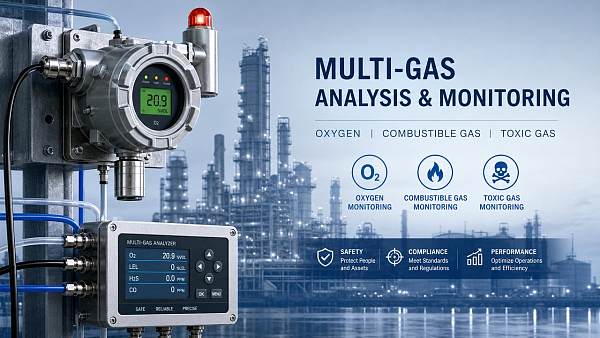
 Multi Gas Analysis in Safety-Critical Areas: What to Check FirstMulti gas analysis starts with risk, not just instruments. Learn what to check first in safety-critical areas to improve compliance, reduce downtime, and protect people and assets.
 Industrial Analyzer Equipment: Common Failures and Maintenance TipsIndustrial analyzer equipment failures can disrupt uptime, compliance, and data accuracy. Discover common faults and practical maintenance tips to improve reliability fast.
 Industrial Measurement System Import Trends and Supply RisksIndustrial measurement system import trends and supply risks explained: learn how distributors can protect margins, reduce delays, and build stronger sourcing resilience.
 Emission Control Equipment Rules Reshaping Industrial DemandEmission control equipment is reshaping industrial investment as stricter rules drive demand for smarter monitoring, lower risk, and compliance-ready systems. Explore what buyers must evaluate now.
 Emission Measurement System Costs in 2026: What Shapes PricingEmission measurement system costs in 2026 depend on accuracy, compliance, installation, integration, and service. Learn what shapes pricing and plan a smarter investment.
 Process Measurement System Upgrades: When Do They Pay Off?Process measurement system upgrades pay off when they cut downtime, improve accuracy, and support compliance. Learn the key signals, ROI factors, and smart upgrade strategies.
 Paramagnetic Gas Measurement: Where It Performs Best in IndustryParamagnetic gas measurement delivers fast, stable oxygen analysis for combustion, emissions, and process control. Discover where it performs best and how it improves efficiency, compliance, and reliability.





Search Categories
Search Categories
Latest Article
- SAMR to Finalize 1,800+ Standards by 2026, Including EV Battery RecyclingSAMR to finalize 1,800+ standards by 2026—including EV battery recycling, hazardous chemical packaging & EMC immunity. Stay ahead of mandatory GB shifts and global export compliance.Posted by:
- China's Largest Single-Line Large-Tow Carbon Fiber Line Starts OperationChina's largest single-line large-tow carbon fiber line is live—30,000 tons/year capacity, ASME-certified, 22% cheaper & 6-week lead time. Boost your industrial instrumentation supply chain now.Posted by:
- China Mobile Unveils National Integrated Computing Power NetworkChina Mobile's National Integrated Computing Power Network accelerates AI quality inspection for global manufacturers—cutting model training time by 68% and enabling cross-border industrial AI development.Posted by:
Please give us a message
