
What makes a custom solution worth the extra lead time?


When a project depends on precise gas monitoring, choosing a Custom Solution can justify extra lead time through better fit, lower risk, and stronger long-term value. For buyers balancing Wholesale Price, Bulk Order needs, Stable Supply, Long Term Supply, and Timely Delivery, the real question is not speed alone, but whether tailored performance, Logistics Support, Fast Delivery options, and Worldwide Shipping can improve operational reliability and return on investment.
In the instrumentation industry, that question matters across industrial manufacturing, energy systems, environmental monitoring, laboratory analysis, construction engineering, and automated process control. A standard gas monitoring package may ship in days, but a custom configuration often delivers a better sensor match, tighter integration with existing control architecture, and fewer surprises during commissioning.
For technical evaluators, operators, procurement teams, project managers, and business decision-makers, the value of customization should be measured against lifecycle impact rather than lead time alone. The best decision is rarely about buying the fastest product. It is about securing the right measurement performance, dependable supply, manageable maintenance, and a solution that fits the application from day 1 to year 5 or longer.
Why extra lead time can create measurable operational value
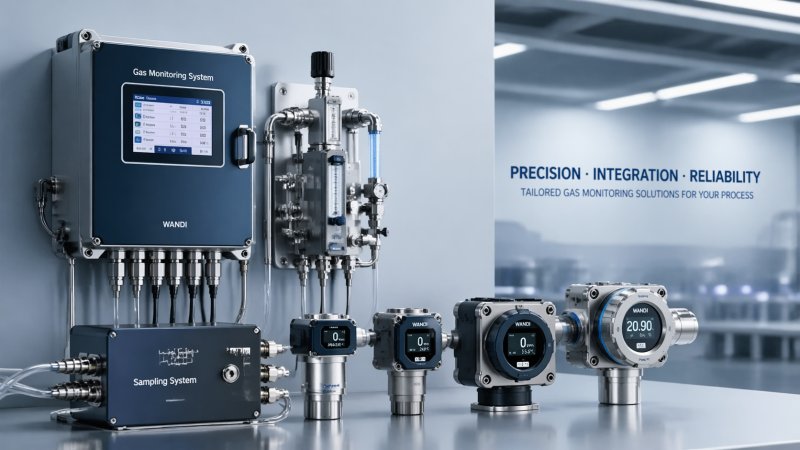
A custom gas monitoring solution usually needs an additional 2–6 weeks compared with an off-the-shelf unit. That extra time is not administrative delay alone. It often covers sensor selection, sampling path design, enclosure adaptation, calibration range setup, communication mapping, and verification against site conditions such as temperature, pressure, dust load, humidity, vibration, or hazardous area requirements.
In many projects, the cost of one missed specification is greater than the cost of waiting. If a fixed standard analyzer cannot tolerate a process temperature swing from 5°C to 45°C, or if its output protocol does not match the plant PLC or DCS, the result may be field modifications, downtime, repeated acceptance tests, or costly redesign. A 3-week delay in factory preparation can prevent 3 months of correction work on site.
Customization becomes especially valuable when the gas composition is complex, the sampling environment is aggressive, or the monitoring objective is tied to safety, emissions, quality assurance, or process stability. In these situations, a generic solution may meet catalog specifications but still underperform in real operating conditions. Instrumentation must be judged by installed performance, not brochure performance.
Where standard packages fall short
Standard systems work well for stable and repeatable duty. However, they are often limited in four areas: measurement range flexibility, installation constraints, communication compatibility, and maintenance access. A bulk buyer may gain a lower unit price, but if each installation needs adapter brackets, extra signal converters, or manual calibration changes, the total project cost rises quickly.
For example, an environmental monitoring project may need low-level detection at ppm range, while a combustion process may require percentage-level measurement and faster response within 5–15 seconds. One standard model rarely handles both needs without compromise. A custom solution can align the sensing method, alarm thresholds, and output logic to the actual control target.
Typical value drivers in customized instrumentation
- Better fit to process variables such as pressure, temperature, flow conditions, and gas composition.
- Reduced integration time through preconfigured 4–20 mA, RS485, Modbus, or relay output mapping.
- Lower commissioning risk by defining calibration ranges, alarm points, and sampling components before shipment.
- Longer service life through enclosure, filter, tubing, and material selection suited to the operating environment.
The result is not only technical fit. It also supports better ROI. If a tailored system cuts one unplanned shutdown event per year, reduces false alarms by 20%–30%, or shortens installation by 1–2 days per line, the financial advantage can outweigh a modest lead-time extension.
How to judge whether a custom solution is truly worth it
Not every project needs customization. Buyers should apply a practical evaluation framework. The key is to compare the cost of waiting with the cost of mismatch. In instrumentation procurement, this means looking beyond unit price and reviewing operating risk, maintenance burden, system compatibility, and expected supply continuity over 12–60 months.
A useful decision process includes technical review, commercial review, and implementation review. Technical review confirms sensor principle, range, accuracy, response time, and environmental suitability. Commercial review considers MOQ, Wholesale Price, spare parts planning, and Long Term Supply stability. Implementation review checks factory acceptance, logistics lead time, installation readiness, and operator training requirements.
The table below helps teams compare standard and custom options in a structured way rather than relying on assumptions.
The comparison shows that the right choice depends on variability and consequence. If your installation conditions are consistent and acceptance criteria are simple, standard products may be enough. If your process is critical, regulated, or hard to access after installation, the custom route usually reduces total project risk.
Four questions buyers should ask
- What is the cost of one specification mismatch in labor, delay, downtime, or failed acceptance?
- Will the site require special sampling, weather protection, hazardous-area arrangement, or communication conversion?
- Does the supplier support Stable Supply and spare parts planning for at least 24–36 months?
- Can Fast Delivery be offered for future repeat orders once the custom baseline is approved?
These questions help procurement and finance teams connect technical details with budget impact. In many cases, the first custom order takes longer, but follow-on orders become much faster because drawings, parts lists, and test procedures have already been defined.
Technical factors that most often justify customization
In gas monitoring applications, customization is most justified when performance depends on more than the sensor itself. The complete measurement chain includes probe location, sampling line material, filters, pressure conditioning, signal output, enclosure design, and service access. A single weak link in that chain can distort readings or increase maintenance frequency from every 6 months to every 4–8 weeks.
For industrial and laboratory environments, the most common customization points are range setting, cross-sensitivity management, response time, ingress protection, corrosion resistance, and communication interfaces. A plant with high humidity and corrosive gases may need stainless steel wetted parts and a heated sampling path. A mobile or modular site may require compact dimensions, quick connectors, and low-power design.
The next table outlines typical technical variables that influence whether a standard unit can perform reliably or whether a tailored package is the safer choice.
This table highlights a core point: customization is often about protecting measurement quality in the real world. In instrumentation, the installed environment determines performance as much as the sensor specification. Buyers evaluating technical risk should review the entire application chain, not the analyzer head alone.
Three application types where custom design often pays back
1. Continuous industrial process monitoring
In power, combustion, process gas, and manufacturing systems, monitoring errors can affect product quality, energy efficiency, and compliance. Customization supports stable sampling, appropriate analyzer range, and better integration with control loops that may run 24/7.
2. Environmental and emissions applications
Sites that report data or trigger alarms based on thresholds need dependable low-level detection and reliable calibration routines. A tailored solution can include preconditioning steps, weather protection, and maintenance-friendly layouts to reduce drift and false alerts.
3. Laboratory, pilot plant, and R&D projects
Research setups often change test gases, flow rates, and sampling lines more frequently than production sites. A custom platform with interchangeable fittings, software settings, and modular accessories can remain useful across multiple test campaigns over 12–24 months.
Procurement, supply chain, and delivery considerations beyond unit price
Many procurement teams hesitate on custom equipment because of lead time uncertainty. That concern is valid, but it should be addressed through process transparency rather than avoided by default. A reliable supplier should explain how long each step takes, what inputs are needed from the buyer, and which parts of the schedule can be accelerated through early drawing approval or preplanned component reservation.
In practice, custom projects often follow a 5-step path: requirement confirmation, engineering review, component sourcing, assembly and testing, then packing and shipment. Depending on complexity, this may take 15–45 days. However, repeat orders based on the same approved design can sometimes be reduced to 7–20 days, especially if the supplier maintains a Stable Supply strategy for core components.
For buyers managing Bulk Order and Worldwide Shipping, custom does not have to mean unpredictable. The more important issue is whether the supplier can offer delivery planning, spare part bundling, and Logistics Support that reduces total project delay across the full deployment schedule.
A practical delivery planning checklist
- Confirm freeze date for drawings, interfaces, and gas range settings before production starts.
- Ask which components have the longest procurement cycle and whether alternates are available.
- Define acceptance criteria, such as calibration verification, alarm testing, leak testing, or communication checks.
- Plan for 1–3 sets of critical spare parts if the equipment will be installed at remote or high-value sites.
- Align Incoterms, export documents, and regional power or connector standards before shipment.
These steps help business evaluators and project managers control lead time without sacrificing fit. Fast Delivery can still be part of a custom strategy when standard subassemblies, documented configurations, and phased shipment options are available.
How custom projects can still support commercial efficiency
A common misconception is that custom always eliminates price efficiency. In reality, a custom baseline can improve purchasing consistency over time. Once the first configuration is validated, distributors, EPC teams, and end users can reorder the same build with fewer engineering hours, less site adaptation, and clearer spare part planning. That often produces better cost control over a 2–3 year procurement cycle.
For finance reviewers, the real comparison should include installation labor, commissioning hours, expected maintenance visits, downtime exposure, and replacement risk. A lower initial quote may not be the lower total cost. In instrumentation, predictable performance and Long Term Supply often provide stronger budget protection than the cheapest first purchase.
Implementation risks, common mistakes, and how to avoid them
The value of a custom solution is highest when the project team avoids preventable mistakes during specification and rollout. Most problems do not come from advanced engineering. They come from incomplete input data, unclear acceptance criteria, or a weak handoff between engineering, procurement, and operations. Even a well-designed analyzer can disappoint if the sampling point, cable routing, or maintenance access is wrong.
One common error is defining only the target gas and range while ignoring process conditions. For example, moisture, dust, condensate, corrosive trace gases, and pulsating flow can affect stability far more than the nominal gas concentration. Another error is selecting outputs that fit procurement templates but not plant integration realities. A unit with the wrong protocol can delay commissioning by days or require extra gateway hardware.
A third mistake is focusing only on initial shipment speed without planning future service. If the system will run continuously, operators need calibration access, filter replacement logic, and spare part availability. A custom solution becomes more valuable when it is backed by practical maintenance planning rather than treated as a one-time purchase.
Common risk points and preventive actions
The pattern is clear: most lead-time problems are project-management problems rather than customization problems. When requirements are defined early and verified carefully, a custom solution can be delivered with much better predictability than many buyers expect.
FAQ for buyers and project teams
How long does a custom gas monitoring solution usually take?
A straightforward configuration may take 2–3 weeks, while a more complex integrated package often takes 4–6 weeks. The schedule depends on sensor availability, enclosure design, communication setup, and testing requirements. Repeat orders are usually faster once the baseline is approved.
Is customization suitable for small orders?
Yes, especially when the installation is critical or the environment is unusual. Even for 1–5 units, customization can be justified if failure, inaccuracy, or retrofit would be expensive. For larger volumes, the custom design can often become a repeatable standard across multiple sites.
What should procurement request from the supplier?
Request a clear scope, technical assumptions, lead-time breakdown, acceptance test list, spare parts recommendation, and logistics plan. These details help compare offers fairly and reduce the risk of hidden adaptation work after delivery.
Can custom projects still support Timely Delivery and Worldwide Shipping?
Yes, if the supplier has disciplined engineering control, component planning, export documentation capability, and packaging experience. Timely Delivery in custom projects depends more on coordination quality than on whether the product is standard or tailored.
Making the final decision: when custom is the better business case
A custom solution is worth the extra lead time when the project has meaningful technical complexity, safety sensitivity, integration requirements, or long operational life. In these cases, the decision should be based on total value over 12, 24, or 60 months, not on the fastest possible shipment. Better fit reduces rework. Better planning improves reliability. Better supply coordination strengthens long-term ownership economics.
This matters to different stakeholders in different ways. Operators care about stable readings and easier maintenance. Technical evaluators care about correct range, response, and compatibility. Procurement teams care about Wholesale Price, Timely Delivery, and Long Term Supply. Decision-makers and finance reviewers care about risk reduction, operational continuity, and return on investment. A well-scoped custom solution can address all of these at once.
If your application involves nonstandard process conditions, demanding installation constraints, high consequence of failure, or a need for repeatable deployment across multiple sites, a tailored gas monitoring approach is often the stronger business case. The additional lead time is not a delay for its own sake. It is time invested in fit, verification, and lifecycle control.
For companies seeking dependable instrumentation in industrial, environmental, laboratory, or automation settings, the most effective next step is to define the application clearly and review it with a supplier that understands both performance and delivery. Contact us to get a custom solution, discuss product details, or explore a delivery plan that balances Stable Supply, Logistics Support, Fast Delivery options, and long-term operational value.
Recommended for You
 IEC Approves China-Led Smart Sensor Semantic Interoperability GuideSmart sensor semantic interoperability takes a leap: IEC TR 63382—China-led, globally approved—sets the first semantic guide for IoT sensor data modeling, ontology, and APIs.
 SABIC Launches 'Smart Factory 2030' with China Sourcing PrioritySABIC's 'Smart Factory 2030' prioritizes China sourcing for AI-driven process analyzers — discover how ISA-88/95 compliance and Saudi data sovereignty unlock new market access.
 China Leads Global Offshore Wind Installations for 5th Consecutive YearChina leads global offshore wind installations for the 5th year — discover how domestic submarine cable monitoring, corrosion robots & FBG sensors drive export growth to UK, Vietnam, Brazil.
 Germany Enforces New EMC Standard EN IEC 61000-6-4:2026 for AI Edge DevicesEN IEC 61000-6-4:2026 is now mandatory in Germany for AI edge devices — discover radiated emission limits (1–6 GHz), CE impact, and urgent compliance actions.
 FDA Updates IVD Software Guidance for AI Diagnostic ToolsFDA updates IVD software guidance for AI diagnostic tools—new data transparency & bias assessment rules impact global manufacturers. Act now to align.
 MIIT Launches Enforcement Campaign on EV Battery RecyclingMIIT Launches EV Battery Recycling Enforcement: Key for compliance, data security & global exports. Act now to avoid delays and seize market advantage.
 Released") Guidelines for Domestic Trade Transactions (Trial) ReleasedGuidelines for Domestic Trade Transactions (Trial) released—key for instrumentation, automation & global procurement teams navigating quality, IP, data & dispute clauses.
Guidelines for Domestic Trade Transactions (Trial) ReleasedGuidelines for Domestic Trade Transactions (Trial) released—key for instrumentation, automation & global procurement teams navigating quality, IP, data & dispute clauses. China's Shipbuilding Industry Sees 195.2% YOY Growth in Q1 New OrdersChina's shipbuilding industry surges 195.2% YoY in Q1 2026 new orders — driving demand for marine survey instruments, LNG bunkering ships & integrated sensor systems.
 China Releases AI Terminal Intelligence Grading StandardChina's new AI Terminal Intelligence Grading Standard (GB/Z 177—2026) defines L1–L5 AI capabilities for smart sensors, automotive cockpits & edge controllers—key for EU/SEA market access.
 China-Europe Railway Express Hits 130,000 Trains, $520B Cargo ValueChina-Europe Railway Express hits 130,000 trains & $520B cargo value — discover how CERX boosts supply chain resilience, cuts carbon, and outperforms sea freight for high-value, time-sensitive shipments.
 Plant Automation Instruments: Upgrade Signals You Should Not IgnorePlant automation instruments show upgrade signals before costly failures happen. Learn the warning signs, business value, and smart replacement steps to improve uptime, safety, and control.
 How Industrial Quality Analyzers Reduce Rework and ScrapIndustrial quality analyzers help manufacturers detect defects early, reduce rework and scrap, improve compliance, and boost process efficiency with faster, data-driven control.
 Industrial Process Analyzers: What to Check Before ImportingIndustrial process analyzers: learn what to check before importing, from certifications and technical fit to maintenance and supplier support, to reduce risk and buy with confidence.
 Real-Time Analyzers vs Lab Testing for Faster Process ControlReal-time analyzers vs lab testing: learn how faster process data improves control, cuts delays, and boosts quality while lab methods ensure validation and compliance.
 Smart Measurement Devices in 2026: Where Adoption Is Growing FastSmart measurement devices are seeing rapid 2026 adoption across manufacturing, energy, labs, and environmental monitoring. Discover where demand is rising fastest and why buyers are acting now.
 Industrial Detection Systems: Common Selection Mistakes to AvoidIndustrial detection systems selection mistakes can trigger delays, compliance risks, and higher lifecycle costs. Learn how to choose smarter, integrate better, and avoid costly rework.
 When High-Accuracy Instruments Justify the Extra CostHigh-accuracy instruments justify extra cost when precision reduces waste, strengthens compliance, and improves ROI. Learn when premium accuracy delivers measurable business value.
 Utility Monitoring Equipment Costs: What Shapes 2026 BudgetsUtility monitoring equipment costs in 2026 are shaped by accuracy, integration, cybersecurity, and lifecycle service. See what drives budgets and how to plan smarter investments.
 ATEX Certified Analyzers: Key Specs That Matter in Hazardous PlantsATEX certified analyzers: discover the key specs that impact safety, accuracy, uptime, and maintenance in hazardous plants—essential guidance for smarter selection.
 How to Choose Plant Safety Instruments for High-Risk AreasPlant safety instruments selection for high-risk areas starts with the right standards, durability, and integration. Learn how to compare options, avoid costly mistakes, and improve plant safety.
 China's New Oil & Gas Discoveries Boost Export Demand for Analytical InstrumentsChina's new oil & gas discoveries drive export demand for analytical instruments—boosting global opportunities for chromatographic analyzers, gas detectors, and downhole sensors.
 China Academy Launches 800V HVDC Power-Computing Validation PlatformChina Academy launches 800V HVDC power-computing validation platform for IEC-compliant DC metering — accelerate CE/UL/SASO certification by 30%.
 MIIT Launches 'AI + Software' InitiativeAI + Software initiative by MIIT boosts intelligent programming tools, compute optimization & domestic industrial software—key for instrumentation, lab systems & monitoring platforms.
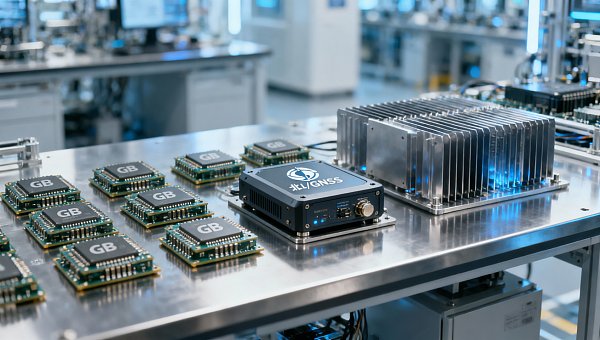
 China Approves New National Standards for AI, Chip, and GNSSChina's new national standards for AI, chips, and GNSS—effective Nov 2026—reshape global export compliance. Discover key impacts & actionable steps now.
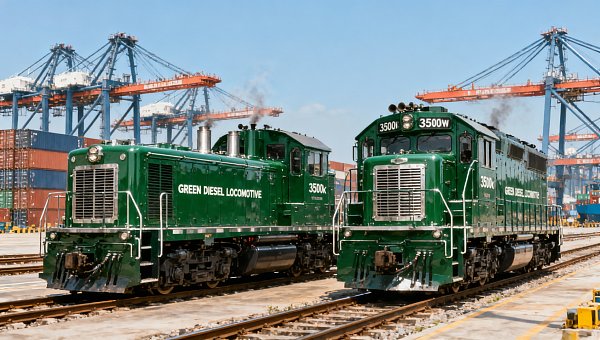
 Guangzhou Port Launches Tender for 3500kW Green Diesel LocomotivesGuangzhou Port's tender for 3500kW green diesel locomotives signals urgent demand for turnkey, eco-compliant rail solutions — act now to align with China’s port decarbonization timeline.
 Industrial Metrology Tools: When Accuracy Impacts OutputIndustrial metrology tools directly shape output, quality, and cost. Learn how accurate measurement reduces scrap, speeds decisions, and improves production performance.
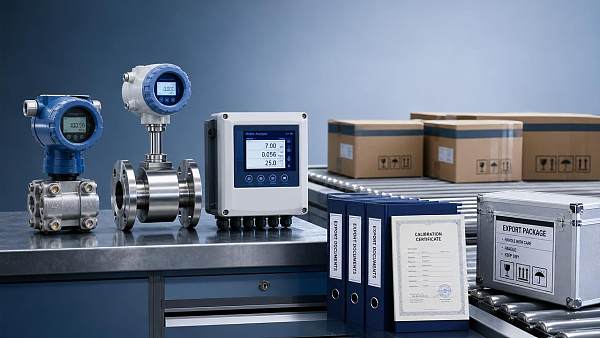
 Process Measurement Devices in Export Compliance UpdatesProcess measurement devices face new export compliance updates that impact classification, documents, lead times, and market access. Learn practical steps to reduce risk and protect growth.
 Quality Control Analyzers Price Shifts in Global SupplyQuality control analyzers prices are shifting with global supply changes. Learn the key cost drivers, compliance risks, and sourcing tips buyers need to reduce total cost.
 Production Line Monitoring: How to Reduce Downtime FastProduction line monitoring helps reduce downtime fast with practical checklists, smarter alarms, and real-time insights. Learn how to improve visibility, response speed, and line reliability.
 Process Optimization Instruments: ROI vs Maintenance CostsProcess optimization instruments: compare ROI, downtime reduction, and accuracy gains against calibration and maintenance costs. Learn how to choose smarter, lower-risk solutions.
 Manufacturing Process Control Trends Shaping 2026 OutputManufacturing process control trends for 2026: explore real-time monitoring, predictive quality, compliance readiness, and smarter automation strategies to boost output and reduce risk.
 Industrial Inspection Devices for Safer Quality ChecksIndustrial inspection devices help deliver safer quality checks by detecting faults early, reducing downtime, and improving compliance across manufacturing, energy, and infrastructure.






















Search Categories
Search Categories
Latest Article
- IEC Approves China-Led Smart Sensor Semantic Interoperability GuideSmart sensor semantic interoperability takes a leap: IEC TR 63382—China-led, globally approved—sets the first semantic guide for IoT sensor data modeling, ontology, and APIs.Posted by:
- SABIC Launches 'Smart Factory 2030' with China Sourcing PrioritySABIC's 'Smart Factory 2030' prioritizes China sourcing for AI-driven process analyzers — discover how ISA-88/95 compliance and Saudi data sovereignty unlock new market access.Posted by:
- China Leads Global Offshore Wind Installations for 5th Consecutive YearChina leads global offshore wind installations for the 5th year — discover how domestic submarine cable monitoring, corrosion robots & FBG sensors drive export growth to UK, Vietnam, Brazil.Posted by:
Please give us a message
