
Why some worldwide shipping quotes look low at first


Many Worldwide Shipping quotes seem attractive upfront, but hidden factors such as handling, customs, packaging, and Logistics Support can quickly change the real cost. For buyers of gas monitoring equipment and other precision instruments, understanding these details is essential to ensure Timely Delivery, Fast Delivery, Stable Supply, and the right Custom Solution for Bulk Order or Long Term Supply needs at a true Wholesale Price.
In the instrumentation industry, freight is rarely just a transport line on a quotation. It can affect calibration integrity, project schedules, compliance checks, installation readiness, and total landed cost. This matters to technical evaluators comparing suppliers, procurement teams reviewing bids, finance managers approving budgets, and project leaders trying to avoid delays that can stretch from 3 days to 3 weeks.
Whether the shipment includes portable gas detectors, online analyzers, pressure transmitters, flow meters, laboratory instruments, or control accessories, the real shipping cost depends on more than route and weight. The difference between an attractive quote and a reliable delivery plan often lies in packaging standards, documentation accuracy, customs classification, spare parts strategy, and after-sales coordination.
For B2B buyers, especially those handling bulk orders, distributor replenishment, plant upgrades, or long-term supply contracts, a low first quote can become expensive when storage fees, re-packing, inspection delays, or split deliveries appear later. Understanding where those extra charges come from helps teams compare quotations on a like-for-like basis and reduce avoidable cost.
Why initial worldwide shipping quotes often miss the real landed cost
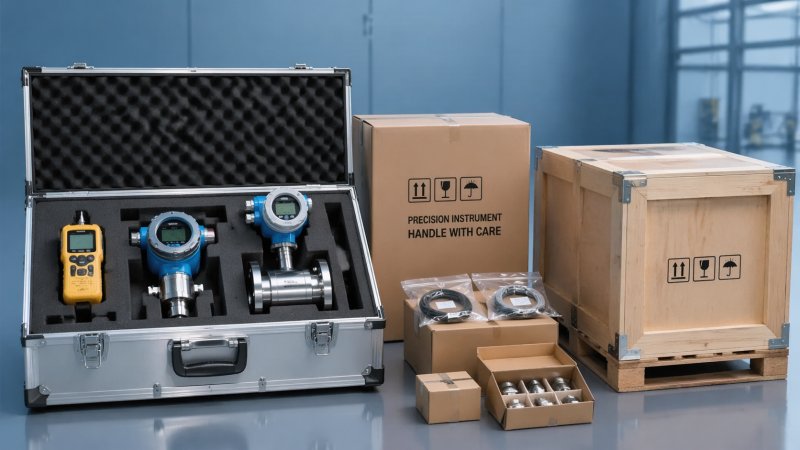
A low shipping quote usually reflects only the visible transport leg, such as airport-to-airport or port-to-port freight. For instrumentation products, the missing part is often the pre-shipment and post-arrival work. Precision equipment may require shock-resistant packaging, humidity protection, export documents, battery handling review, or destination clearance support. Each item can add 5% to 25% to the initial freight estimate depending on destination and product category.
Gas monitoring equipment and analytical instruments are especially sensitive because packaging must protect sensors, displays, probes, sample lines, and calibration accessories. A quote may look low because it is based on standard carton packing, while the actual shipment requires foam inserts, anti-static layers, sealed cases, or pallet reinforcement. When goods travel 5,000 to 12,000 km, weak packaging becomes a direct risk to delivery quality.
Another common issue is the difference between shipping price and landed price. Freight forwarders may quote only transport, while buyers later discover customs brokerage, duty, tax, terminal handling, inspection fees, or remote area surcharges. For project procurement, that gap can distort cost comparison across 2 or 3 suppliers and lead decision-makers to choose a quote that is cheaper only on paper.
In industrial and laboratory procurement, timing also changes cost. If the quote assumes flexible transit of 10 to 18 days but the project requires delivery within 4 to 7 days, the shipping mode may shift from consolidated cargo to express air freight. That change can double the transport rate, especially for urgent spare parts, replacement sensors, or commissioning-critical devices.
Typical hidden cost areas in instrumentation logistics
The table below shows where many low upfront quotes leave out meaningful cost elements for instrumentation orders.
The key point is that a low worldwide shipping quote is not automatically a low total cost. Buyers should verify whether the quotation is limited to freight only or includes the logistics services required for compliant delivery of sensitive industrial instruments.
The shipping factors that matter most for gas monitoring and precision instruments
Instrumentation shipments are different from generic industrial goods because value is not only in the product body but also in accuracy, calibration condition, and operational readiness. A damaged sensor cap, cracked display, or contaminated sampling accessory may not stop the shipment from arriving, but it can still make the product unusable on site. That is why the freight plan should match the product’s technical sensitivity.
For example, gas detectors, transmitters, and analyzers may include electrochemical, infrared, catalytic, or PID sensing elements. These components can be affected by strong vibration, prolonged high temperature, and poor sealing during transport. Typical recommended storage and transit conditions often fall within controlled ranges such as 0°C to 40°C or 10% to 90% non-condensing humidity, depending on product type. Shipping outside those conditions can increase calibration verification work after arrival.
Documentation is another hidden variable. A shipment may require packing list, commercial invoice, certificate of origin, battery declaration, calibration records, or product manuals aligned with the destination market. If even 1 or 2 documents are missing or inconsistent, customs review may hold the cargo. In project environments, a 48-hour delay can be manageable, but a 10-day hold may interrupt installation windows and contractor sequencing.
Buyers should also consider order structure. A single replacement unit may justify express shipping, but a bulk order of 50, 100, or 300 devices may need staged packing, serialized labeling, and partial dispatch planning. This is especially important for distributors and plant groups that require stable supply over 6 to 12 months rather than one-time delivery.
Key variables to check before approving freight
- Whether the quote is based on gross weight, volumetric weight, or a combination of both. Bulky protective packaging can increase billable freight by 15% to 40%.
- Whether batteries, calibration gases, or sensitive accessories create special handling requirements in air shipment.
- Whether the destination needs local compliance documents, inspection booking, or importer support before customs release.
- Whether the supplier can provide consolidated delivery for multi-item orders such as detectors, controllers, probes, cables, and spare parts.
Transport mode comparison for instrumentation orders
The following comparison helps technical and procurement teams align shipping mode with urgency, product sensitivity, and order volume.
The right mode is not only about freight cost per kilogram. It also affects lead time, packaging level, customs route, and receiving workflow. For high-accuracy instruments, lower transit stress and better visibility can often justify a higher headline shipping quote.
How procurement and finance teams should compare shipping quotes fairly
Procurement teams often receive 2 to 5 offers that appear similar, but they are structured differently. One supplier may quote EXW or FOB style terms with very low transport figures, while another may provide a more complete delivered quotation. Without aligning scope, finance reviewers may approve the cheapest visible number and unintentionally shift cost and risk to the receiving side.
A practical approach is to compare shipping quotes using total landed cost and service scope. This means adding freight, export packing, customs handling, local delivery, document support, insurance where required, and the cost of potential delay. For instrumentation projects, a delayed analyzer or gas detector can affect commissioning, safety checks, or regulatory readiness, which makes service completeness a commercial factor, not just an operational one.
Finance approvers should also ask whether the quoted price covers one shipment or multiple dispatches. In phased projects, goods may ship in 2 or 3 lots due to production sequencing, factory acceptance timing, or spare parts readiness. A low quote based on one consolidated shipment can change quickly if partial deliveries become necessary to protect the project timeline.
For distributors and long-term buyers, quote evaluation should include supply continuity. If a supplier offers low initial freight but has weak logistics coordination, the result may be more stock-outs, emergency shipments, and higher annual logistics cost. Stable supply over 12 months is often more valuable than a one-time saving of a few percentage points.
A practical checklist for quote evaluation
Use the following decision factors to compare low and complete shipping quotations on equal terms.
This type of comparison helps buyers avoid an incomplete quote that looks attractive in a spreadsheet but performs poorly in execution. For instrumentation procurement, transparency usually lowers risk more effectively than a nominally low freight line.
Four quote comparison rules
- Compare identical Incoterm scope or restate all offers into one common landed-cost format.
- Separate product price from packing, transport, customs, and site delivery so hidden items become visible.
- Ask for expected lead time range, not a single best-case day count.
- Check how the supplier handles damage claims, missing documents, and urgent replacements within 24 to 72 hours.
Reducing risk with better logistics planning, custom solutions, and long-term supply strategy
The best way to avoid misleading worldwide shipping quotes is not simply to demand lower prices. It is to define the right logistics model from the beginning. In instrumentation supply, that often means aligning product category, order size, urgency, destination complexity, and service expectations before the quotation is issued. A supplier that understands application context can recommend a custom solution instead of a generic shipping number.
For example, a distributor ordering 200 portable gas detectors over a quarter may benefit from scheduled batch shipments every 3 to 4 weeks. A project contractor needing online monitors, transmitters, and accessories for one shutdown window may require pre-labeled kits, serial number mapping, and direct-to-site delivery. A laboratory buyer may prioritize anti-vibration packing and documentation accuracy over the lowest freight rate. These are different logistics needs, and they should not be priced the same way.
Long-term supply strategy also reduces cost volatility. When forecasting demand over 6 to 12 months, buyers can reduce emergency freight, combine spare parts with routine orders, and agree on packaging standards that minimize rework. In many cases, moving from ad hoc urgent shipping to planned replenishment can lower annual logistics cost by a meaningful margin while improving stock reliability and service response.
Reliable logistics support is also part of product usability. Operators and maintenance teams need equipment that arrives complete, labeled, protected, and ready for installation or verification. Quality and safety managers need documentation consistency. Project managers need predictable milestones. When shipping is managed well, the entire procurement chain becomes more stable.
Recommended implementation workflow
- Step 1: Confirm product list, quantity, battery status, accessory set, and destination import conditions.
- Step 2: Choose transport mode based on target lead time, usually within 3–7 days, 7–15 days, or 20–45 days.
- Step 3: Define export packing level, pallet rules, and labeling format for site receiving or distributor inventory.
- Step 4: Review customs documents and importer responsibilities before dispatch, not after cargo arrival.
- Step 5: Monitor delivery milestones and prepare contingency support for shortages, damage, or urgent replacement.
Common mistakes to avoid
A frequent mistake is treating all instrumentation shipments as standard industrial cargo. Another is buying in small urgent lots because the original order plan did not include spare sensors, mounting kits, or calibration accessories. Buyers should also avoid approving quotes without confirming whether local charges are prepaid or payable on arrival. Even 1 missing detail in shipping scope can create cost escalation later.
If your business depends on timely installation, stable distributor replenishment, or repeat procurement at wholesale price, it is worth choosing a supplier that can combine product knowledge with practical logistics execution. Request a complete shipping breakdown, discuss your Bulk Order or Long Term Supply plan, and ask for a custom logistics solution tailored to your equipment type and destination. To reduce hidden cost and improve delivery confidence, contact us now to get a tailored quote, review your current shipping structure, and explore more reliable instrumentation supply solutions.
Recommended for You
 IEC Approves China-Led Smart Sensor Semantic Interoperability GuideSmart sensor semantic interoperability takes a leap: IEC TR 63382—China-led, globally approved—sets the first semantic guide for IoT sensor data modeling, ontology, and APIs.
 SABIC Launches 'Smart Factory 2030' with China Sourcing PrioritySABIC's 'Smart Factory 2030' prioritizes China sourcing for AI-driven process analyzers — discover how ISA-88/95 compliance and Saudi data sovereignty unlock new market access.
 China Leads Global Offshore Wind Installations for 5th Consecutive YearChina leads global offshore wind installations for the 5th year — discover how domestic submarine cable monitoring, corrosion robots & FBG sensors drive export growth to UK, Vietnam, Brazil.
 Germany Enforces New EMC Standard EN IEC 61000-6-4:2026 for AI Edge DevicesEN IEC 61000-6-4:2026 is now mandatory in Germany for AI edge devices — discover radiated emission limits (1–6 GHz), CE impact, and urgent compliance actions.
 FDA Updates IVD Software Guidance for AI Diagnostic ToolsFDA updates IVD software guidance for AI diagnostic tools—new data transparency & bias assessment rules impact global manufacturers. Act now to align.
 MIIT Launches Enforcement Campaign on EV Battery RecyclingMIIT Launches EV Battery Recycling Enforcement: Key for compliance, data security & global exports. Act now to avoid delays and seize market advantage.
 Released") Guidelines for Domestic Trade Transactions (Trial) ReleasedGuidelines for Domestic Trade Transactions (Trial) released—key for instrumentation, automation & global procurement teams navigating quality, IP, data & dispute clauses.
Guidelines for Domestic Trade Transactions (Trial) ReleasedGuidelines for Domestic Trade Transactions (Trial) released—key for instrumentation, automation & global procurement teams navigating quality, IP, data & dispute clauses. China's Shipbuilding Industry Sees 195.2% YOY Growth in Q1 New OrdersChina's shipbuilding industry surges 195.2% YoY in Q1 2026 new orders — driving demand for marine survey instruments, LNG bunkering ships & integrated sensor systems.
 China Releases AI Terminal Intelligence Grading StandardChina's new AI Terminal Intelligence Grading Standard (GB/Z 177—2026) defines L1–L5 AI capabilities for smart sensors, automotive cockpits & edge controllers—key for EU/SEA market access.
 China-Europe Railway Express Hits 130,000 Trains, $520B Cargo ValueChina-Europe Railway Express hits 130,000 trains & $520B cargo value — discover how CERX boosts supply chain resilience, cuts carbon, and outperforms sea freight for high-value, time-sensitive shipments.
 Plant Automation Instruments: Upgrade Signals You Should Not IgnorePlant automation instruments show upgrade signals before costly failures happen. Learn the warning signs, business value, and smart replacement steps to improve uptime, safety, and control.
 How Industrial Quality Analyzers Reduce Rework and ScrapIndustrial quality analyzers help manufacturers detect defects early, reduce rework and scrap, improve compliance, and boost process efficiency with faster, data-driven control.
 Industrial Process Analyzers: What to Check Before ImportingIndustrial process analyzers: learn what to check before importing, from certifications and technical fit to maintenance and supplier support, to reduce risk and buy with confidence.
 Real-Time Analyzers vs Lab Testing for Faster Process ControlReal-time analyzers vs lab testing: learn how faster process data improves control, cuts delays, and boosts quality while lab methods ensure validation and compliance.
 Smart Measurement Devices in 2026: Where Adoption Is Growing FastSmart measurement devices are seeing rapid 2026 adoption across manufacturing, energy, labs, and environmental monitoring. Discover where demand is rising fastest and why buyers are acting now.
 Industrial Detection Systems: Common Selection Mistakes to AvoidIndustrial detection systems selection mistakes can trigger delays, compliance risks, and higher lifecycle costs. Learn how to choose smarter, integrate better, and avoid costly rework.
 When High-Accuracy Instruments Justify the Extra CostHigh-accuracy instruments justify extra cost when precision reduces waste, strengthens compliance, and improves ROI. Learn when premium accuracy delivers measurable business value.
 Utility Monitoring Equipment Costs: What Shapes 2026 BudgetsUtility monitoring equipment costs in 2026 are shaped by accuracy, integration, cybersecurity, and lifecycle service. See what drives budgets and how to plan smarter investments.
 ATEX Certified Analyzers: Key Specs That Matter in Hazardous PlantsATEX certified analyzers: discover the key specs that impact safety, accuracy, uptime, and maintenance in hazardous plants—essential guidance for smarter selection.
 How to Choose Plant Safety Instruments for High-Risk AreasPlant safety instruments selection for high-risk areas starts with the right standards, durability, and integration. Learn how to compare options, avoid costly mistakes, and improve plant safety.
 China's New Oil & Gas Discoveries Boost Export Demand for Analytical InstrumentsChina's new oil & gas discoveries drive export demand for analytical instruments—boosting global opportunities for chromatographic analyzers, gas detectors, and downhole sensors.
 China Academy Launches 800V HVDC Power-Computing Validation PlatformChina Academy launches 800V HVDC power-computing validation platform for IEC-compliant DC metering — accelerate CE/UL/SASO certification by 30%.
 MIIT Launches 'AI + Software' InitiativeAI + Software initiative by MIIT boosts intelligent programming tools, compute optimization & domestic industrial software—key for instrumentation, lab systems & monitoring platforms.
 China Approves New National Standards for AI, Chip, and GNSSChina's new national standards for AI, chips, and GNSS—effective Nov 2026—reshape global export compliance. Discover key impacts & actionable steps now.
 Guangzhou Port Launches Tender for 3500kW Green Diesel LocomotivesGuangzhou Port's tender for 3500kW green diesel locomotives signals urgent demand for turnkey, eco-compliant rail solutions — act now to align with China’s port decarbonization timeline.
 Industrial Metrology Tools: When Accuracy Impacts OutputIndustrial metrology tools directly shape output, quality, and cost. Learn how accurate measurement reduces scrap, speeds decisions, and improves production performance.
 Process Measurement Devices in Export Compliance UpdatesProcess measurement devices face new export compliance updates that impact classification, documents, lead times, and market access. Learn practical steps to reduce risk and protect growth.
 Quality Control Analyzers Price Shifts in Global SupplyQuality control analyzers prices are shifting with global supply changes. Learn the key cost drivers, compliance risks, and sourcing tips buyers need to reduce total cost.
 Production Line Monitoring: How to Reduce Downtime FastProduction line monitoring helps reduce downtime fast with practical checklists, smarter alarms, and real-time insights. Learn how to improve visibility, response speed, and line reliability.
 Process Optimization Instruments: ROI vs Maintenance CostsProcess optimization instruments: compare ROI, downtime reduction, and accuracy gains against calibration and maintenance costs. Learn how to choose smarter, lower-risk solutions.
 Manufacturing Process Control Trends Shaping 2026 OutputManufacturing process control trends for 2026: explore real-time monitoring, predictive quality, compliance readiness, and smarter automation strategies to boost output and reduce risk.
 Industrial Inspection Devices for Safer Quality ChecksIndustrial inspection devices help deliver safer quality checks by detecting faults early, reducing downtime, and improving compliance across manufacturing, energy, and infrastructure.





























Search Categories
Search Categories
Latest Article
- IEC Approves China-Led Smart Sensor Semantic Interoperability GuideSmart sensor semantic interoperability takes a leap: IEC TR 63382—China-led, globally approved—sets the first semantic guide for IoT sensor data modeling, ontology, and APIs.Posted by:
- SABIC Launches 'Smart Factory 2030' with China Sourcing PrioritySABIC's 'Smart Factory 2030' prioritizes China sourcing for AI-driven process analyzers — discover how ISA-88/95 compliance and Saudi data sovereignty unlock new market access.Posted by:
- China Leads Global Offshore Wind Installations for 5th Consecutive YearChina leads global offshore wind installations for the 5th year — discover how domestic submarine cable monitoring, corrosion robots & FBG sensors drive export growth to UK, Vietnam, Brazil.Posted by:
Please give us a message
