
Worldwide shipping costs now depend more on route stability


Worldwide Shipping costs now depend more on route stability than distance alone, making Logistics Support, Timely Delivery, and Stable Supply critical for instrumentation buyers. From gas monitoring systems to bulk industrial equipment, companies increasingly seek Fast Delivery, Long Term Supply, Wholesale Price, Bulk Order flexibility, and Custom Solution options to reduce risk and maintain operational continuity.
Why route stability now matters more than distance in instrumentation supply
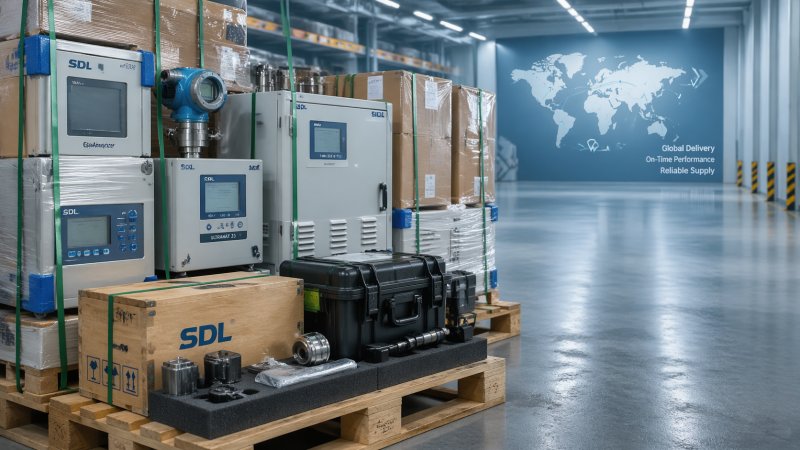
For instrumentation buyers, shipping cost is no longer a simple calculation based on kilometers or container rates. Route stability now affects the full landed cost, especially when products include calibrated sensors, gas analyzers, transmitters, laboratory instruments, control panels, and industrial online monitoring systems. A shipment delayed by 7–15 days can create much larger losses than a slightly higher freight rate, because plant commissioning, maintenance shutdowns, and compliance deadlines often run on fixed windows.
This is particularly important across industrial manufacturing, energy and power, environmental monitoring, medical testing, construction engineering, and automation control. In these sectors, the instrumentation industry supports measurement accuracy, process safety, traceability, and digital transformation. If route disruption causes missing spare parts, postponed calibration tools, or delayed control equipment, the result may be idle labor, delayed acceptance, or interrupted production rather than only higher logistics expense.
For procurement teams and technical evaluators, route stability influences at least 4 core decisions: whether to consolidate orders, whether to approve alternative specifications, whether to hold buffer stock, and whether to split urgent and standard shipments. For finance approvers, the question is not only freight budget but also how to avoid rework costs, emergency sourcing, and contract penalties. For operators and safety managers, stable supply protects routine maintenance cycles and inspection plans.
In practice, buyers increasingly compare suppliers on delivery resilience, not just unit price. A stable shipping lane with predictable customs handling and clear packaging standards can reduce schedule risk across 2–4 project stages: pre-installation, site integration, test run, and final acceptance. That is why route stability has become a purchasing factor for both small-batch orders and bulk order planning.
What changes when logistics risk becomes a technical risk
In instrumentation projects, a delayed item is rarely isolated. A missing pressure transmitter may postpone loop checks. A late gas monitoring module may delay environmental compliance testing. A postponed calibration device may stop quality release. As a result, logistics support now has direct influence on technical readiness, commissioning pace, and customer handover schedules.
This also changes how distributors, project managers, and end users evaluate Fast Delivery claims. Fast delivery is meaningful only when the route is repeatable, documentation is complete, and packing can handle vibration, humidity, and long handling cycles. For many products, especially precision instruments or analyzers, 3 factors matter together: physical protection, stable transit timing, and correct shipping documents.
Key buyer concerns now linked to route stability
- Whether delivery windows can support shutdown maintenance, usually planned within 3–10 days.
- Whether sensitive instruments need shock protection, moisture control, and separate packaging by component type.
- Whether long term supply can be maintained for spare parts, probes, valves, sensors, and calibration accessories over 12–36 months.
- Whether custom solution orders can be split into standard and engineered batches to reduce project delay.
Which instrumentation scenarios are most affected by unstable shipping routes?
Not every product is affected in the same way. Commodity items with broad interchangeability may tolerate longer transit times. However, instrumentation often includes products that are application-specific, calibrated, integrated into control logic, or required for regulatory checks. In these cases, route instability can increase replacement difficulty and approval time. Buyers should assess not only the product itself but also the operational consequence of late arrival.
The most sensitive scenarios usually involve continuous processes, compliance monitoring, and project-based installation. Examples include flue gas monitoring, water treatment analysis, pressure and flow measurement on energy systems, laboratory testing devices, and online measurement for automation upgrades. If even 1 key component is delayed, the downstream effect can spread across mechanical completion, electrical integration, and software commissioning.
A useful way to judge exposure is to classify products into 3 groups: operationally critical, commercially critical, and technically replaceable. Operationally critical items stop work when absent. Commercially critical items may trigger contract delays or inspection rescheduling. Technically replaceable items can be substituted with compatible alternatives, although not always without engineering review.
The table below helps buyers identify where route stability has the strongest impact on instrumentation procurement, installation timing, and supply continuity.
The comparison shows that route stability matters most when the instrument is tied to a fixed commissioning date, a compliance checkpoint, or a narrow maintenance window. In these situations, Timely Delivery and Stable Supply are not logistics extras; they are part of technical and commercial risk control.
How different stakeholders evaluate the same delay
A purchasing manager may focus on expedited freight and resale terms. A project manager sees schedule slippage. A quality or safety manager sees inspection delay. A finance approver sees cost variance and working capital pressure. This is why one shipping issue often affects 5–6 internal decision points before the order is closed.
For distributors and agents, the issue is also channel reliability. If bulk industrial equipment or sensor packages arrive unpredictably, it becomes harder to promise local delivery, support dealers, or maintain spare part confidence. That is why long term supply planning should be discussed before price negotiation is finalized.
How should buyers compare suppliers when delivery reliability matters?
When shipping conditions become volatile, supplier comparison should move beyond catalog specifications and nominal lead times. Buyers in the instrumentation industry need a balanced review covering product fit, route resilience, service response, and supply continuity. In many tenders, 5 evaluation dimensions produce better decisions than price-only comparison: technical suitability, documentation completeness, logistics support, after-sales responsiveness, and total project risk.
A lower ex-works price may lose its advantage if the route is unstable, packing is weak, or replacement lead time is unclear. This is especially true for instruments used in regulated or safety-sensitive operations, where incorrect substitutes may require engineering review or recalibration. Wholesale Price remains important, but it should be measured together with readiness for bulk order execution, spare support, and custom solution capability.
For technical evaluators, useful supplier questions include: Can key products be delivered in batches? What is the usual packaging method for vibration-sensitive devices? Which components are standard stock and which require engineering? Can certification-related documents be prepared before dispatch? Answers to these questions often reduce decision risk more effectively than a small discount.
The table below provides a practical selection framework for procurement teams, engineering reviewers, and business decision-makers evaluating instrumentation suppliers under route-stability pressure.
A good supplier comparison should reveal where cost is truly being spent. In many projects, paying slightly more for stable delivery, clearer packaging, and stronger coordination lowers the overall cost of ownership. This is especially relevant when a single late item can delay a multimillion installation or postpone a regulated monitoring task.
A practical 5-point procurement checklist
- Confirm whether the quoted lead time refers to factory readiness, dispatch, or actual delivery to site.
- Ask which components are standard and which depend on custom solution engineering.
- Review spare parts and consumables for at least the next 12 months of operation.
- Check whether packaging matches transport conditions such as humidity, vibration, and multi-transfer handling.
- Define escalation steps if the route changes after order confirmation.
What standards, documentation, and implementation details should not be overlooked?
Instrumentation procurement often fails not because the device is unsuitable, but because documentation and implementation details were treated as secondary. In cross-border supply, standards alignment, operating environment data, and handover records are essential. Buyers should verify which documents are needed for quotation, shipment, installation, and acceptance, especially when the products are used in industrial automation, laboratory analysis, or environmental monitoring applications.
Common documents include product datasheets, wiring or interface information, installation manuals, packing lists, and test or calibration-related records where applicable. For some applications, buyers may also need to review general compliance expectations such as electrical safety, electromagnetic compatibility, ingress protection, or pressure-related product documentation. The exact requirement depends on the use environment, not on a generic checklist alone.
Implementation planning should also be phased. A practical process often includes 4 steps: parameter confirmation, drawing or interface review, production and packing, then delivery coordination with installation support. When this sequence is clear, route stability becomes easier to manage because the buyer knows which project gate is affected if one step slips by 3–5 days.
For project managers and quality teams, the goal is to reduce mismatches between purchased equipment and field conditions. That means confirming medium type, pressure or temperature range, mounting form, output signal, cable length, enclosure requirement, and maintenance frequency before logistics booking. Many delivery problems are actually specification control problems discovered too late.
Typical implementation points that improve Timely Delivery
First, freeze the specification baseline before production starts. Last-minute changes to signal type, housing material, or process connection can create avoidable delays. Second, identify long-lead components early, particularly for analyzers, integrated panels, or multi-point monitoring systems. Third, align installation documents with the actual shipment so site teams do not lose 1–2 extra days clarifying cable lists or accessory matches.
In many industrial settings, acceptance is not based only on delivery receipt. It may involve visual inspection, quantity verification, document review, and basic functionality checks. Buyers should therefore prepare a 4-part incoming inspection routine covering packaging condition, model confirmation, accessories, and visible transit damage. This helps protect financial approval and warranty communication.
Frequent oversights that increase total risk
- Assuming all transmitters or analyzers are interchangeable without checking process connection and output requirements.
- Approving a low-price quotation without confirming spare availability for the next 12–24 months.
- Booking site work before the final shipping route and document status are confirmed.
- Ignoring the impact of fragile packaging on long or multi-stop routes.
FAQ: how can buyers reduce shipping uncertainty without overpaying?
The most common buyer questions are not only about freight rates. They are about maintaining supply continuity, controlling project timing, and securing the right balance between Wholesale Price, Fast Delivery, and technical fit. The answers below focus on realistic decision-making for instrumentation procurement.
How should I choose between a lower price and a more stable route?
Use a total-risk view. If the instrument supports a fixed installation date, a shutdown period, or a compliance test, route stability usually deserves higher weight than a small unit-price advantage. A practical method is to compare 3 cost layers: product price, delivery reliability, and delay consequence. If one delayed shipment could create 5–10 times the freight saving in project loss, the more stable route is often the better commercial decision.
What is a reasonable delivery expectation for instrumentation orders?
It depends on whether the order is standard, configured, or engineered. Standard accessories or common instruments may be available within 7–15 days. Configured products may need 2–4 weeks. More complex assemblies, integrated cabinets, or application-specific monitoring systems can require longer. Buyers should always ask whether the quoted time refers to production completion, dispatch, or arrival at destination.
Can bulk order planning reduce shipping risk?
Yes, if it is planned correctly. Bulk Order purchasing can improve unit cost and reduce repeated booking effort, but only when the order is split by urgency and installation sequence. A mixed shipment of all items may increase exposure if one engineered component is delayed. Many buyers now divide orders into 2 or 3 batches: urgent commissioning items, standard operating spares, and optional accessories.
What should be confirmed before requesting a custom solution?
At minimum, confirm process conditions, signal or communication needs, installation environment, maintenance expectations, and required documents. For example, pressure range, temperature range, wetted material, enclosure demand, power supply, and output interface may all affect both design and lead time. The more complete the input, the easier it is to protect Timely Delivery and avoid redesign after production starts.
Why choose us for stable instrumentation supply and what can you ask us now?
If your priority is not just buying equipment but keeping projects on schedule, we can support you with a practical supply approach built around route stability, technical clarity, and delivery coordination. This is especially valuable for buyers of gas monitoring systems, process instruments, laboratory devices, industrial online monitoring products, and automation-related equipment that must arrive in the correct sequence.
We can help you review parameter confirmation, product selection, delivery cycle planning, and custom solution scope before order release. If you are comparing suppliers, we can also discuss which items are suitable for Fast Delivery, which should be reserved for Long Term Supply planning, and how Bulk Order arrangements can be divided to reduce schedule risk. This is useful for procurement staff, technical reviewers, project managers, distributors, and decision-makers alike.
You can contact us to discuss 6 concrete topics: specification matching, replacement or alternative models, typical lead-time ranges, packaging and logistics support, certification or documentation expectations, and quotation structure for standard or wholesale supply. If needed, we can also help you sort urgent versus non-urgent items so your purchasing plan aligns with installation milestones rather than only unit pricing.
When route stability becomes a real business factor, the right supplier should do more than ship products. The supplier should help reduce uncertainty across technical review, procurement approval, and project delivery. If you are planning a new order, an upgrade, or a replacement purchase, send your parameters, quantity range, expected delivery window, and application scenario so the selection and shipping plan can be assessed together.
Recommended for You
 IEC Approves China-Led Smart Sensor Semantic Interoperability GuideSmart sensor semantic interoperability takes a leap: IEC TR 63382—China-led, globally approved—sets the first semantic guide for IoT sensor data modeling, ontology, and APIs.
 SABIC Launches 'Smart Factory 2030' with China Sourcing PrioritySABIC's 'Smart Factory 2030' prioritizes China sourcing for AI-driven process analyzers — discover how ISA-88/95 compliance and Saudi data sovereignty unlock new market access.
 China Leads Global Offshore Wind Installations for 5th Consecutive YearChina leads global offshore wind installations for the 5th year — discover how domestic submarine cable monitoring, corrosion robots & FBG sensors drive export growth to UK, Vietnam, Brazil.
 Germany Enforces New EMC Standard EN IEC 61000-6-4:2026 for AI Edge DevicesEN IEC 61000-6-4:2026 is now mandatory in Germany for AI edge devices — discover radiated emission limits (1–6 GHz), CE impact, and urgent compliance actions.
 FDA Updates IVD Software Guidance for AI Diagnostic ToolsFDA updates IVD software guidance for AI diagnostic tools—new data transparency & bias assessment rules impact global manufacturers. Act now to align.
 MIIT Launches Enforcement Campaign on EV Battery RecyclingMIIT Launches EV Battery Recycling Enforcement: Key for compliance, data security & global exports. Act now to avoid delays and seize market advantage.
 Released") Guidelines for Domestic Trade Transactions (Trial) ReleasedGuidelines for Domestic Trade Transactions (Trial) released—key for instrumentation, automation & global procurement teams navigating quality, IP, data & dispute clauses.
Guidelines for Domestic Trade Transactions (Trial) ReleasedGuidelines for Domestic Trade Transactions (Trial) released—key for instrumentation, automation & global procurement teams navigating quality, IP, data & dispute clauses. China's Shipbuilding Industry Sees 195.2% YOY Growth in Q1 New OrdersChina's shipbuilding industry surges 195.2% YoY in Q1 2026 new orders — driving demand for marine survey instruments, LNG bunkering ships & integrated sensor systems.
 China Releases AI Terminal Intelligence Grading StandardChina's new AI Terminal Intelligence Grading Standard (GB/Z 177—2026) defines L1–L5 AI capabilities for smart sensors, automotive cockpits & edge controllers—key for EU/SEA market access.
 China-Europe Railway Express Hits 130,000 Trains, $520B Cargo ValueChina-Europe Railway Express hits 130,000 trains & $520B cargo value — discover how CERX boosts supply chain resilience, cuts carbon, and outperforms sea freight for high-value, time-sensitive shipments.
 Plant Automation Instruments: Upgrade Signals You Should Not IgnorePlant automation instruments show upgrade signals before costly failures happen. Learn the warning signs, business value, and smart replacement steps to improve uptime, safety, and control.
 How Industrial Quality Analyzers Reduce Rework and ScrapIndustrial quality analyzers help manufacturers detect defects early, reduce rework and scrap, improve compliance, and boost process efficiency with faster, data-driven control.
 Industrial Process Analyzers: What to Check Before ImportingIndustrial process analyzers: learn what to check before importing, from certifications and technical fit to maintenance and supplier support, to reduce risk and buy with confidence.
 Real-Time Analyzers vs Lab Testing for Faster Process ControlReal-time analyzers vs lab testing: learn how faster process data improves control, cuts delays, and boosts quality while lab methods ensure validation and compliance.
 Smart Measurement Devices in 2026: Where Adoption Is Growing FastSmart measurement devices are seeing rapid 2026 adoption across manufacturing, energy, labs, and environmental monitoring. Discover where demand is rising fastest and why buyers are acting now.
 Industrial Detection Systems: Common Selection Mistakes to AvoidIndustrial detection systems selection mistakes can trigger delays, compliance risks, and higher lifecycle costs. Learn how to choose smarter, integrate better, and avoid costly rework.
 When High-Accuracy Instruments Justify the Extra CostHigh-accuracy instruments justify extra cost when precision reduces waste, strengthens compliance, and improves ROI. Learn when premium accuracy delivers measurable business value.
 Utility Monitoring Equipment Costs: What Shapes 2026 BudgetsUtility monitoring equipment costs in 2026 are shaped by accuracy, integration, cybersecurity, and lifecycle service. See what drives budgets and how to plan smarter investments.
 ATEX Certified Analyzers: Key Specs That Matter in Hazardous PlantsATEX certified analyzers: discover the key specs that impact safety, accuracy, uptime, and maintenance in hazardous plants—essential guidance for smarter selection.
 How to Choose Plant Safety Instruments for High-Risk AreasPlant safety instruments selection for high-risk areas starts with the right standards, durability, and integration. Learn how to compare options, avoid costly mistakes, and improve plant safety.
 China's New Oil & Gas Discoveries Boost Export Demand for Analytical InstrumentsChina's new oil & gas discoveries drive export demand for analytical instruments—boosting global opportunities for chromatographic analyzers, gas detectors, and downhole sensors.
 China Academy Launches 800V HVDC Power-Computing Validation PlatformChina Academy launches 800V HVDC power-computing validation platform for IEC-compliant DC metering — accelerate CE/UL/SASO certification by 30%.
 MIIT Launches 'AI + Software' InitiativeAI + Software initiative by MIIT boosts intelligent programming tools, compute optimization & domestic industrial software—key for instrumentation, lab systems & monitoring platforms.
 China Approves New National Standards for AI, Chip, and GNSSChina's new national standards for AI, chips, and GNSS—effective Nov 2026—reshape global export compliance. Discover key impacts & actionable steps now.
 Guangzhou Port Launches Tender for 3500kW Green Diesel LocomotivesGuangzhou Port's tender for 3500kW green diesel locomotives signals urgent demand for turnkey, eco-compliant rail solutions — act now to align with China’s port decarbonization timeline.
 Industrial Metrology Tools: When Accuracy Impacts OutputIndustrial metrology tools directly shape output, quality, and cost. Learn how accurate measurement reduces scrap, speeds decisions, and improves production performance.
 Process Measurement Devices in Export Compliance UpdatesProcess measurement devices face new export compliance updates that impact classification, documents, lead times, and market access. Learn practical steps to reduce risk and protect growth.
 Quality Control Analyzers Price Shifts in Global SupplyQuality control analyzers prices are shifting with global supply changes. Learn the key cost drivers, compliance risks, and sourcing tips buyers need to reduce total cost.
 Production Line Monitoring: How to Reduce Downtime FastProduction line monitoring helps reduce downtime fast with practical checklists, smarter alarms, and real-time insights. Learn how to improve visibility, response speed, and line reliability.
 Process Optimization Instruments: ROI vs Maintenance CostsProcess optimization instruments: compare ROI, downtime reduction, and accuracy gains against calibration and maintenance costs. Learn how to choose smarter, lower-risk solutions.
 Manufacturing Process Control Trends Shaping 2026 OutputManufacturing process control trends for 2026: explore real-time monitoring, predictive quality, compliance readiness, and smarter automation strategies to boost output and reduce risk.
 Industrial Inspection Devices for Safer Quality ChecksIndustrial inspection devices help deliver safer quality checks by detecting faults early, reducing downtime, and improving compliance across manufacturing, energy, and infrastructure.




























Search Categories
Search Categories
Latest Article
- IEC Approves China-Led Smart Sensor Semantic Interoperability GuideSmart sensor semantic interoperability takes a leap: IEC TR 63382—China-led, globally approved—sets the first semantic guide for IoT sensor data modeling, ontology, and APIs.Posted by:
- SABIC Launches 'Smart Factory 2030' with China Sourcing PrioritySABIC's 'Smart Factory 2030' prioritizes China sourcing for AI-driven process analyzers — discover how ISA-88/95 compliance and Saudi data sovereignty unlock new market access.Posted by:
- China Leads Global Offshore Wind Installations for 5th Consecutive YearChina leads global offshore wind installations for the 5th year — discover how domestic submarine cable monitoring, corrosion robots & FBG sensors drive export growth to UK, Vietnam, Brazil.Posted by:
Please give us a message
