
Air Quality Monitors: Key Accuracy Factors Before You Buy


Air quality monitors: what really affects accuracy before purchase?
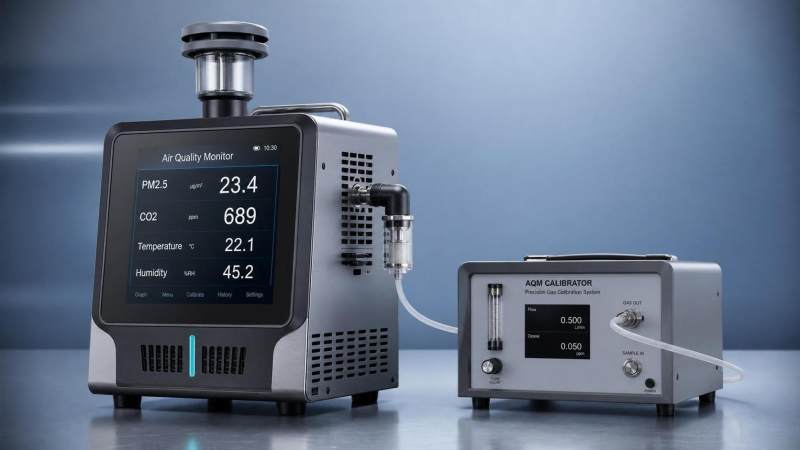
Air quality monitors look simple on a spec sheet, but accuracy is shaped by several hidden variables.
That matters in offices, factories, laboratories, schools, hospitals, warehouses, and public facilities.
A lower-cost device may still fit the job.
The problem starts when claims about precision are disconnected from the real environment.
In practice, reliable air quality monitors depend on sensor design, calibration stability, airflow, interference control, and data handling.
For any sourcing decision, the useful question is not only “How accurate is it?”
A better question is “How accurate will it remain after installation, daily use, and maintenance delays?”
That is why industry intelligence platforms such as Global Instrument Hub often focus on the measurement chain, not just the hardware label.
If the data will support compliance, ventilation control, ESG reporting, or occupational safety decisions, accuracy has a direct cost impact.
Are all air quality monitors measuring the same thing?
Not at all, and this is where many comparisons go wrong.
Some air quality monitors focus on PM2.5 and PM10.
Others prioritize CO2, VOCs, formaldehyde, ozone, temperature, humidity, or multi-parameter indoor air indicators.
The sensor technology changes with each target gas or particle type.
Laser scattering is common for particulates.
NDIR is widely used for CO2.
Electrochemical, metal oxide, and photoionization methods appear in other use cases.
So when one supplier advertises “high accuracy,” that statement means very little without the monitored parameter, range, and reference method.
A practical review usually starts with three points:
- Which pollutants actually matter in the site environment?
- Is the device intended for screening, continuous monitoring, or compliance support?
- Does the stated accuracy refer to laboratory conditions or field conditions?
This is especially important in mixed industrial settings, where dust, solvents, moisture, and thermal shifts can distort readings differently.
Which technical factors usually separate dependable models from weak ones?
The first separator is sensor quality, but not in the marketing sense.
The real issue is drift rate, response time, selectivity, and repeatability over time.
Air quality monitors often perform well during factory testing, then lose consistency after months in unstable environments.
The second factor is calibration architecture.
Some units allow field calibration with traceable references.
Others require return-to-base service, which affects downtime and total ownership cost.
The third factor is compensation logic.
Humidity and temperature can heavily influence particulate and gas readings.
A monitor with robust correction algorithms usually outperforms a cheaper device with nominally similar sensor parts.
Another point that deserves attention is enclosure and sampling path design.
If airflow is poorly managed, the monitor may under-sample or overreact to local spikes.
That creates attractive data dashboards but weak decision support.
A concise screening table helps organize these checks:
How much do installation conditions change the reading?
Often more than expected.
Air quality monitors can fail a project even when the device itself is acceptable.
Placement near vents, doors, exhausts, steam, forklifts, cleaning chemicals, or direct sunlight can distort measurement.
Indoor applications usually need representative breathing-zone placement.
Industrial zones may require separation from point-source spikes unless those spikes are the monitoring target.
Outdoor monitoring adds another layer.
Wind, rain, enclosure ingress protection, and seasonal temperature swings all affect accuracy retention.
This is why site mapping is not a luxury step.
It is part of measurement design.
In actual deployments, a smaller number of well-placed air quality monitors can outperform a larger network placed without sampling logic.
Need-to-check items include:
- Distance from HVAC supply and return points
- Exposure to water vapor, solvents, or process emissions
- Required mounting height and airflow direction
- Access for calibration, cleaning, and replacement
- Power, communications, and cybersecurity requirements
When does compliance matter more than the spec sheet?
Usually when the reading triggers action beyond comfort monitoring.
If air quality monitors support workplace exposure management, cleanroom control, healthcare environments, or regulated reporting, documentation matters as much as measurement.
Suppliers should be able to explain test methods, calibration traceability, data integrity, and relevant certifications.
Depending on the use case, buyers may need evidence linked to ISO practices, laboratory calibration capability, EMC performance, ingress protection, or hazardous area suitability.
That does not mean every project needs premium compliance layers.
It means the documentation level should match the consequence of a wrong reading.
This is where a sector-focused intelligence source adds value.
GIH’s instrumentation perspective is useful because it treats monitors as part of a broader control and verification ecosystem.
That mindset reduces the risk of buying data visibility without data trust.
Is the lowest upfront price ever the best option?
Sometimes, but only in narrow scenarios.
If air quality monitors are used for broad trend awareness in low-risk spaces, entry-level devices may be enough.
More commonly, total cost is shaped by recalibration cycles, false alarms, sensor replacement, software licensing, integration work, and data review labor.
A cheaper device that drifts early can become expensive very quickly.
The same is true for a monitor that cannot export data cleanly into BMS, SCADA, or cloud reporting workflows.
A balanced comparison should include both direct and hidden cost items:
- Initial unit price and accessories
- Commissioning and placement review
- Calibration consumables or service fees
- Expected sensor lifespan under site conditions
- Integration with existing reporting systems
- Downtime or operational risk caused by bad data
If two quotations look close, the smarter decision often comes from support depth and evidence quality, not the hardware price alone.
What should be confirmed before shortlisting suppliers?
A useful shortlist starts with application clarity, not brand familiarity.
Define the target pollutant, decision threshold, sampling environment, maintenance capability, and reporting requirement.
Then verify whether the proposed air quality monitors are designed for that exact context.
Before moving forward, confirm these points:
- Published accuracy range for each parameter, not just a general statement
- Recommended calibration interval under comparable field conditions
- Cross-sensitivity limits for gases, dust, and humidity
- Availability of traceable test reports and validation data
- Local service response, spare parts, and firmware support
- Data export format, protocol compatibility, and cybersecurity controls
That approach keeps the conversation grounded in measurement credibility.
It also makes supplier comparison more objective across regions and price tiers.
In the end, buying air quality monitors is less about chasing the highest specification.
It is about matching sensing performance, verification evidence, and lifecycle cost to the real monitoring task.
A sensible next step is to build a short evaluation matrix, request field-relevant validation records, and compare serviceability before comparing price alone.
That is usually where confident sourcing decisions begin.
Recommended for You
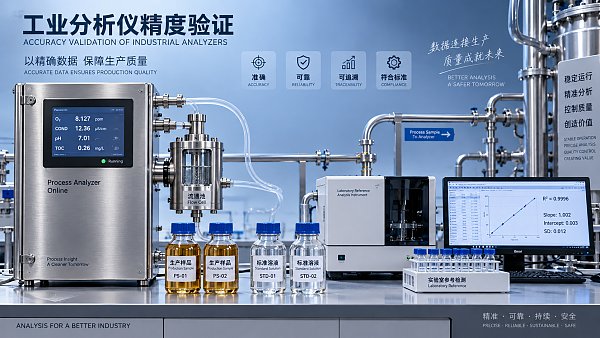
 How to verify accuracy claims for industrial quality analyzersVerify accuracy claims for industrial quality analyzers with calibration checks, independent testing, and clear acceptance criteria. Learn how to reduce risk and buy with confidence.
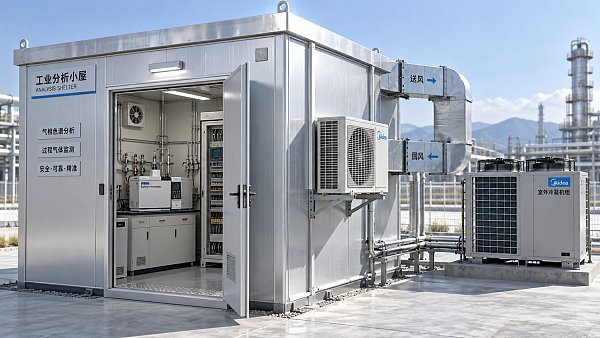
 How to calculate cooling loads for an industrial analyzer shelterSize industrial analyzer shelter cooling with confidence. Learn to calculate equipment heat, solar gains, and ventilation loads, then select HVAC capacity for reliable analyzer performance.
 How Do You Handle Analyzer Failure During an Environmental Audit?Learn how to handle analyzer failure during environmental compliance audit procedures. Protect evidence, verify data, and restore monitoring with this practical response guide.
 Do VOC Monitors Require Explosion-Proof Certification?Does VOC monitoring require explosion-proof certification? Learn when approval is needed, compare ATEX and IECEx, and choose the right monitor for your site.
 How sample conditioning affects accuracy in petrochemical analyzersImprove accuracy in petrochemical analyzers with smarter sample conditioning. Discover how phase control, filtration, and transport design prevent bias and deliver reliable process data.
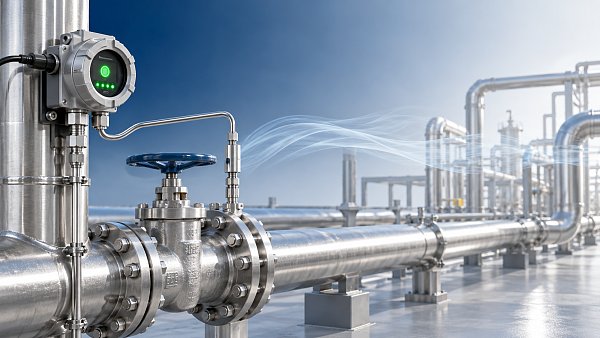
 How to troubleshoot sensor drift in industrial gas detectorsIndustrial gas detectors showing sensor drift? Learn how to verify calibration gas, identify root causes, and determine when sensor replacement is needed for reliable monitoring.
 How to judge whether a competitive price reflects real valueCompetitive Price: learn how to compare scope, compliance, performance, and lifecycle costs to identify real value, reduce risk, and make smarter purchasing decisions.
 When custom gas analysis is the right fit for complex process streamsCustom gas analysis for complex process streams: learn when tailored sampling, interference control, and reliable measurement design deliver confident decisions.
 When does a laser gas analyzer meet stack emissions monitoring needs?Laser gas analyzer for stack emissions: learn when it delivers fast, reliable data, how to assess installation risks, and what to verify for CEMS compliance.
 How to select a hazardous gas analyzer for confined spacesHazardous gas analyzer selection for confined spaces: compare sensors, sampling, certifications, alarms, and maintenance to protect workers and choose with confidence.
 When is a single gas analyzer sufficient for workplace safety monitoring?Discover when a single gas analyzer delivers reliable workplace safety monitoring, and learn the key limits, calibration needs, and risks that require broader detection.
 How to choose an ambient gas analyzer for low-level leak detectionAmbient gas analyzer selection for low-level leak detection: compare sensitivity, cross-sensitivity, sampling design, alarms, and calibration for reliable site performance.
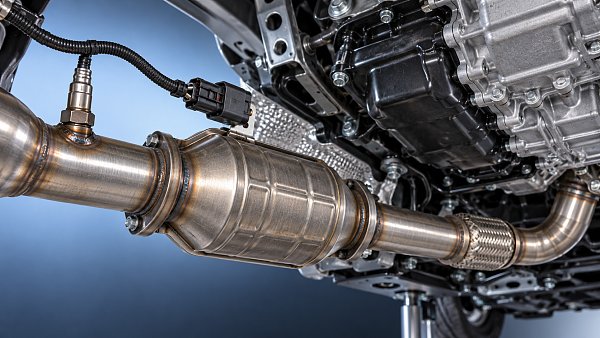
 How to tell when an oxygen sensor needs replacementOxygen sensor replacement signs explained: learn how live data, fault codes, wiring checks, and exhaust inspections pinpoint the real issue before you buy.
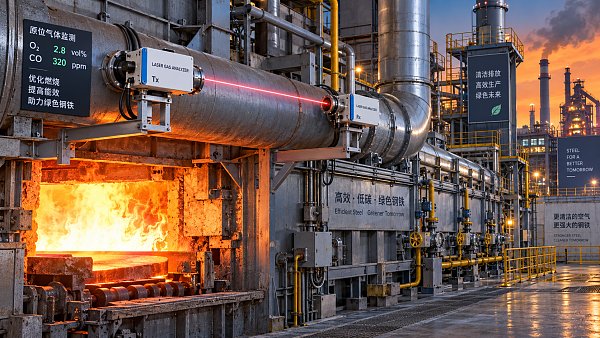
 How laser gas analyzers improve combustion control in steel furnacesLaser gas analyzer for steel industry applications delivers fast in-situ O₂ and CO data to optimize furnace combustion, cut fuel waste, and improve steel heating stability.
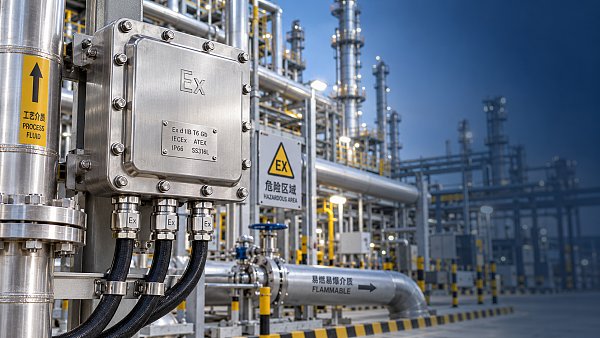
 How to verify whether explosion proof equipment meets site requirementsExplosion proof equipment verification made practical: match zones, gas or dust groups, temperature classes, certificates, and installation conditions for confident compliance.
 How industrial gas analysis helps detect contamination before releaseIndustrial Gas Analysis helps detect moisture, oil, oxygen, and toxic contaminants before release—protecting processes, ensuring compliance, and reducing costly risks.
 When is electrochemistry detection the right choice for water analysis?Electrochemistry detection for water analysis: learn when fast, reliable monitoring of ions, chlorine, pH, and more delivers actionable results.
 How industrial standards reduce quality risks in supplier selectionIndustrial Standard guidance helps quality and safety managers reduce supplier risks, verify compliance, strengthen traceability, and build resilient instrumentation supply chains.
 When does a multi-component system reduce installation complexity?Multi component systems reduce installation complexity when they eliminate field interfaces, streamline commissioning, and provide proven compatibility. Learn how to assess total cost and supplier accountability.
 How to size an industrial control shelter for outdoor equipmentIndustrial control shelter sizing guide: optimize layout, HVAC, access, safety, and expansion space for reliable outdoor equipment operations.
 How flue analysis helps verify combustion efficiencyFlue analysis verifies combustion efficiency by assessing O2, CO, CO2, and stack temperature to identify excess air, incomplete combustion, and heat losses.
 How to select industrial gas detectors for confined spacesIndustrial gas detectors for confined spaces: learn how to match sensors, sampling methods, alarms, and certifications to real atmospheric hazards.
 When does a laser oxygen analyzer outperform zirconia sensors?Laser oxygen analyzer vs. zirconia sensors: compare speed, selectivity, maintenance, gas chemistry, and installation needs to choose the right oxygen measurement solution.
 How to select a percent range analyzer for process measurementsPercent range analyzer selection made practical: compare accuracy, sample systems, calibration, gas matrix, integration, and lifecycle cost for reliable process measurements.
 How explosion proof analysis verifies safe equipment for hazardous areasExplosion proof analysis verifies hazardous-area equipment by matching certifications, temperature ratings, installation details, and inspection controls for safer compliance.
 When does fixed gas detection need point sensors instead of open-path monitoring?Fixed gas detection: discover when point sensors outperform open-path monitoring for predictable leaks, enclosed zones, local alarms, and safer design decisions.
 How to choose industrial metrology systems for tight-tolerance partsIndustrial metrology guide for tight-tolerance parts: compare CMMs, optical scanners, gauges, uncertainty, workflow, and traceable inspection strategies.
 How process metrology reduces measurement variation in productionProcess metrology reduces production measurement variation by improving traceability, uncertainty control, calibration, and reliable quality decisions.
 How to select an industrial monitoring analyzer for harsh environmentsIndustrial monitoring analyzer selection for harsh environments: evaluate sampling, durability, hazardous-area compliance, accuracy, maintenance, and data reliability.
 How calibration intervals affect test and measurement equipment accuracyTest and measurement equipment calibration intervals directly affect accuracy, risk, compliance, and uptime. Learn how to set evidence-based schedules that protect critical decisions.
 When does process gas monitoring need continuous measurement?Process gas monitoring needs continuous measurement when rapid changes threaten safety, quality, compliance, or uptime. Learn how to specify reliable, actionable monitoring systems.
 How to prevent false alarms in power plant instrumentationPower plant instrumentation guide: prevent false alarms with reliable signal checks, smarter alarm settings, mode-based control, and actionable operator responses.
Search Categories
Search Categories
- Smart Meters & Power Quality
- Transformer Gas Analyzers
- BESS Thermal Runaway Detectors
- Energy, Power & Smart Grid Monitoring
- Optical Profilers & CMM
- Ultrasonic & X-Ray NDT
- Calibration Standards
- Precision Metrology & NDT
- Water Quality Analyzers
- CEMS & VOCs Monitors
- Price Trends
- Import & Export Updates
- Market Trends
- Industry News
- Industry Insights
Latest Article
- How to verify accuracy claims for industrial quality analyzersVerify accuracy claims for industrial quality analyzers with calibration checks, independent testing, and clear acceptance criteria. Learn how to reduce risk and buy with confidence.Posted by:
- How to calculate cooling loads for an industrial analyzer shelterSize industrial analyzer shelter cooling with confidence. Learn to calculate equipment heat, solar gains, and ventilation loads, then select HVAC capacity for reliable analyzer performance.Posted by:
- How Do You Handle Analyzer Failure During an Environmental Audit?Learn how to handle analyzer failure during environmental compliance audit procedures. Protect evidence, verify data, and restore monitoring with this practical response guide.Posted by:
Please give us a message
