
Air Quality Monitoring Standards That Matter in 2026


Why are Air Quality Monitoring standards becoming a bigger issue in 2026?
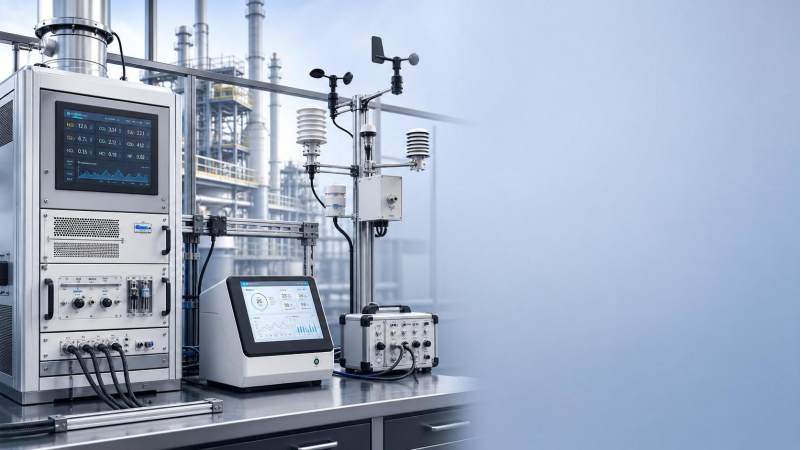
Air Quality Monitoring is no longer judged by sensor availability alone. In 2026, the harder question is whether the data can stand up to compliance, audits, and engineering decisions.
That shift matters across factories, utilities, buildings, laboratories, transport hubs, and municipal networks. A monitor that reports numbers is easy to buy. A system that produces defensible numbers is harder.
More regulators now focus on traceability, calibration discipline, cyber-secure reporting, and performance under realistic operating conditions. That means Air Quality Monitoring standards influence procurement risk as much as technical performance.
In practical terms, standards now shape four decisions at once: what to measure, how to verify it, how often to maintain it, and whether the resulting data is acceptable for reporting.
This is also why industry intelligence platforms such as Global Instrument Hub keep close watch on environmental monitoring, calibration practice, and supply chain credibility. The standards conversation is no longer separate from supplier evaluation.
If a monitoring project supports emissions control, indoor air compliance, smart infrastructure, or ESG disclosure, standards become the common language between engineering, quality, and long-term operations.
Which Air Quality Monitoring standards actually matter most?
The answer depends on application, but some standards consistently carry more weight because they affect credibility, not just documentation.
A useful way to read the landscape is to separate instrument performance standards from laboratory competence, site compliance rules, and communication requirements.
The key point is this: no single certificate proves total suitability. Air Quality Monitoring compliance usually sits at the intersection of method approval, calibration traceability, and field performance.
For industrial sites, CEMS-related rules may dominate. For hospitals, laboratories, and clean environments, particle monitoring and validation protocols may matter more than stack emissions standards.
A common mistake is to compare certificates without checking the tested gas ranges, humidity tolerance, cross-sensitivity, or software revision tied to the certificate.
How do you tell whether a compliant system is also technically reliable?
This is where many evaluations become more demanding. Formal compliance is necessary, but it does not automatically guarantee durable field performance.
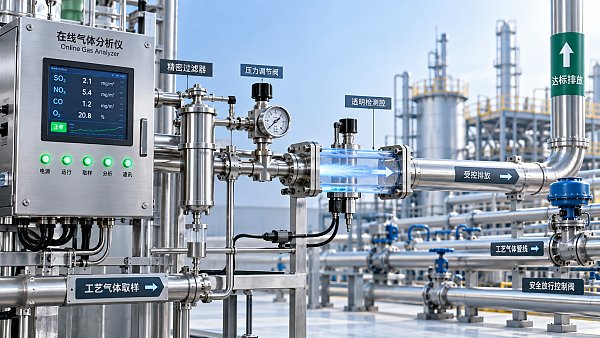
In actual deployment, reliability depends on how the Air Quality Monitoring system behaves between calibrations, during temperature swings, and under contaminated sampling conditions.
The more useful approach is to read performance evidence in layers:
- Check baseline drift and span drift, not just stated accuracy.
- Review cross-interference data for gases likely to coexist on site.
- Confirm response time under real sampling line lengths.
- Look at ingress protection, enclosure rating, and vibration tolerance.
- Verify software audit trails and data retention integrity.
For distributed sensor networks, communications design now matters almost as much as the sensor itself. If timestamps drift, firmware updates fail, or edge devices lose synchronization, compliance data becomes vulnerable.
That is one reason GIH often frames instrumentation as the sensory and nervous system of modern operations. Measurement quality depends on the whole chain, not just the probe or analyzer.
A robust review should ask for service records, calibration history examples, spare part lead times, and evidence that the platform can maintain performance after the first year.
Are ambient, indoor, and industrial Air Quality Monitoring requirements really that different?
Yes, and treating them as interchangeable creates avoidable risk. The pollutants may overlap, but the measurement purpose is often very different.
Ambient monitoring usually supports public reporting, policy compliance, and long-term trend analysis. Industrial monitoring is more likely to support emissions control, process safety, or permit obligations.
Indoor Air Quality Monitoring often combines health, ventilation optimization, occupancy patterns, and building performance. In that setting, PM, VOCs, CO2, and formaldehyde may all need different validation logic.
A short comparison helps clarify where standards pressure lands:
So the better question is not whether a monitor measures PM2.5 or NOx. It is whether the system was validated for the exact context where the data will be used.
What mistakes cause the most trouble during evaluation and implementation?
Most failures start before installation. They appear when specification sheets are treated as proof, while calibration scope, environmental limits, and service assumptions stay untested.
Several issues show up repeatedly in Air Quality Monitoring projects:
- Confusing laboratory accuracy with field accuracy.
- Ignoring sample conditioning requirements for humid or corrosive streams.
- Assuming every calibration certificate has equal metrological value.
- Underestimating maintenance access, filter replacement, and consumables cost.
- Overlooking cybersecurity and data handoff integrity in networked systems.
Another blind spot is supplier depth. A device may be certified, but local support, spare module availability, and firmware governance may still be weak.
That is where broader instrumentation intelligence becomes valuable. GIH’s supply chain perspective is useful because standard compliance only solves part of the decision. Lifecycle resilience solves the rest.
A safer path is to request application-specific references, calibration trace examples, and a maintenance concept before final approval. Those details reveal whether the compliance story is operationally real.
How should you prepare an Air Quality Monitoring shortlist for 2026?
Start by defining the decision use of the data. Reporting to authorities, controlling ventilation, protecting processes, and validating clean environments do not require the same evidence.
Then build the shortlist around a small set of non-negotiables rather than broad feature lists.
- Match each pollutant to an accepted method or relevant performance standard.
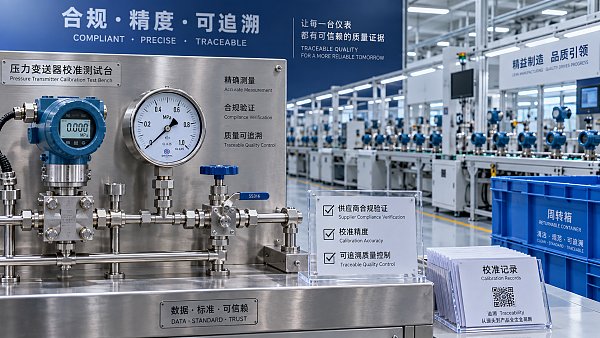
- Confirm calibration traceability through ISO/IEC 17025 or equivalent competence.
- Check field reliability evidence for temperature, humidity, and contamination exposure.
- Review software integrity, data export logic, and audit trail design.
- Estimate total service burden over three to five years.
It also helps to separate must-have certification from preferred trust signals. That keeps the process realistic when comparing global suppliers with different regional approvals.
By 2026, the strongest Air Quality Monitoring decisions will come from teams that connect standards, metrology, digital reliability, and supply chain confidence into one evaluation model.
If the next step is unclear, begin with a requirements matrix: pollutants, environment, reporting duty, calibration route, service interval, and integration constraints. Once those are visible, the right standards usually become obvious.
That approach reduces rework, limits compliance surprises, and makes future upgrades easier when regulations, sensors, or reporting platforms change.
Recommended for You
 How to verify accuracy claims for industrial quality analyzersVerify accuracy claims for industrial quality analyzers with calibration checks, independent testing, and clear acceptance criteria. Learn how to reduce risk and buy with confidence.
 How to calculate cooling loads for an industrial analyzer shelterSize industrial analyzer shelter cooling with confidence. Learn to calculate equipment heat, solar gains, and ventilation loads, then select HVAC capacity for reliable analyzer performance.
 How Do You Handle Analyzer Failure During an Environmental Audit?Learn how to handle analyzer failure during environmental compliance audit procedures. Protect evidence, verify data, and restore monitoring with this practical response guide.
 Do VOC Monitors Require Explosion-Proof Certification?Does VOC monitoring require explosion-proof certification? Learn when approval is needed, compare ATEX and IECEx, and choose the right monitor for your site.
 How sample conditioning affects accuracy in petrochemical analyzersImprove accuracy in petrochemical analyzers with smarter sample conditioning. Discover how phase control, filtration, and transport design prevent bias and deliver reliable process data.
 How to troubleshoot sensor drift in industrial gas detectorsIndustrial gas detectors showing sensor drift? Learn how to verify calibration gas, identify root causes, and determine when sensor replacement is needed for reliable monitoring.
 How to judge whether a competitive price reflects real valueCompetitive Price: learn how to compare scope, compliance, performance, and lifecycle costs to identify real value, reduce risk, and make smarter purchasing decisions.
 When custom gas analysis is the right fit for complex process streamsCustom gas analysis for complex process streams: learn when tailored sampling, interference control, and reliable measurement design deliver confident decisions.
 When does a laser gas analyzer meet stack emissions monitoring needs?Laser gas analyzer for stack emissions: learn when it delivers fast, reliable data, how to assess installation risks, and what to verify for CEMS compliance.
 How to select a hazardous gas analyzer for confined spacesHazardous gas analyzer selection for confined spaces: compare sensors, sampling, certifications, alarms, and maintenance to protect workers and choose with confidence.
 When is a single gas analyzer sufficient for workplace safety monitoring?Discover when a single gas analyzer delivers reliable workplace safety monitoring, and learn the key limits, calibration needs, and risks that require broader detection.
 How to choose an ambient gas analyzer for low-level leak detectionAmbient gas analyzer selection for low-level leak detection: compare sensitivity, cross-sensitivity, sampling design, alarms, and calibration for reliable site performance.
 How to tell when an oxygen sensor needs replacementOxygen sensor replacement signs explained: learn how live data, fault codes, wiring checks, and exhaust inspections pinpoint the real issue before you buy.
 How laser gas analyzers improve combustion control in steel furnacesLaser gas analyzer for steel industry applications delivers fast in-situ O₂ and CO data to optimize furnace combustion, cut fuel waste, and improve steel heating stability.
 How to verify whether explosion proof equipment meets site requirementsExplosion proof equipment verification made practical: match zones, gas or dust groups, temperature classes, certificates, and installation conditions for confident compliance.
 How industrial gas analysis helps detect contamination before releaseIndustrial Gas Analysis helps detect moisture, oil, oxygen, and toxic contaminants before release—protecting processes, ensuring compliance, and reducing costly risks.
 When is electrochemistry detection the right choice for water analysis?Electrochemistry detection for water analysis: learn when fast, reliable monitoring of ions, chlorine, pH, and more delivers actionable results.
 How industrial standards reduce quality risks in supplier selectionIndustrial Standard guidance helps quality and safety managers reduce supplier risks, verify compliance, strengthen traceability, and build resilient instrumentation supply chains.
 When does a multi-component system reduce installation complexity?Multi component systems reduce installation complexity when they eliminate field interfaces, streamline commissioning, and provide proven compatibility. Learn how to assess total cost and supplier accountability.
 How to size an industrial control shelter for outdoor equipmentIndustrial control shelter sizing guide: optimize layout, HVAC, access, safety, and expansion space for reliable outdoor equipment operations.
 How flue analysis helps verify combustion efficiencyFlue analysis verifies combustion efficiency by assessing O2, CO, CO2, and stack temperature to identify excess air, incomplete combustion, and heat losses.
 How to select industrial gas detectors for confined spacesIndustrial gas detectors for confined spaces: learn how to match sensors, sampling methods, alarms, and certifications to real atmospheric hazards.
 When does a laser oxygen analyzer outperform zirconia sensors?Laser oxygen analyzer vs. zirconia sensors: compare speed, selectivity, maintenance, gas chemistry, and installation needs to choose the right oxygen measurement solution.
 How to select a percent range analyzer for process measurementsPercent range analyzer selection made practical: compare accuracy, sample systems, calibration, gas matrix, integration, and lifecycle cost for reliable process measurements.
 How explosion proof analysis verifies safe equipment for hazardous areasExplosion proof analysis verifies hazardous-area equipment by matching certifications, temperature ratings, installation details, and inspection controls for safer compliance.
 When does fixed gas detection need point sensors instead of open-path monitoring?Fixed gas detection: discover when point sensors outperform open-path monitoring for predictable leaks, enclosed zones, local alarms, and safer design decisions.
 How to choose industrial metrology systems for tight-tolerance partsIndustrial metrology guide for tight-tolerance parts: compare CMMs, optical scanners, gauges, uncertainty, workflow, and traceable inspection strategies.
 How process metrology reduces measurement variation in productionProcess metrology reduces production measurement variation by improving traceability, uncertainty control, calibration, and reliable quality decisions.
 How to select an industrial monitoring analyzer for harsh environmentsIndustrial monitoring analyzer selection for harsh environments: evaluate sampling, durability, hazardous-area compliance, accuracy, maintenance, and data reliability.
 How calibration intervals affect test and measurement equipment accuracyTest and measurement equipment calibration intervals directly affect accuracy, risk, compliance, and uptime. Learn how to set evidence-based schedules that protect critical decisions.
 When does process gas monitoring need continuous measurement?Process gas monitoring needs continuous measurement when rapid changes threaten safety, quality, compliance, or uptime. Learn how to specify reliable, actionable monitoring systems.
 How to prevent false alarms in power plant instrumentationPower plant instrumentation guide: prevent false alarms with reliable signal checks, smarter alarm settings, mode-based control, and actionable operator responses.
Search Categories
Search Categories
- Smart Meters & Power Quality
- Transformer Gas Analyzers
- BESS Thermal Runaway Detectors
- Energy, Power & Smart Grid Monitoring
- Optical Profilers & CMM
- Ultrasonic & X-Ray NDT
- Calibration Standards
- Precision Metrology & NDT
- Water Quality Analyzers
- CEMS & VOCs Monitors
- Price Trends
- Import & Export Updates
- Market Trends
- Industry News
- Industry Insights
Latest Article
- How to verify accuracy claims for industrial quality analyzersVerify accuracy claims for industrial quality analyzers with calibration checks, independent testing, and clear acceptance criteria. Learn how to reduce risk and buy with confidence.Posted by:
- How to calculate cooling loads for an industrial analyzer shelterSize industrial analyzer shelter cooling with confidence. Learn to calculate equipment heat, solar gains, and ventilation loads, then select HVAC capacity for reliable analyzer performance.Posted by:
- How Do You Handle Analyzer Failure During an Environmental Audit?Learn how to handle analyzer failure during environmental compliance audit procedures. Protect evidence, verify data, and restore monitoring with this practical response guide.Posted by:
Please give us a message
