
How paramagnetic analyzer response time shifts under low-flow process conditions


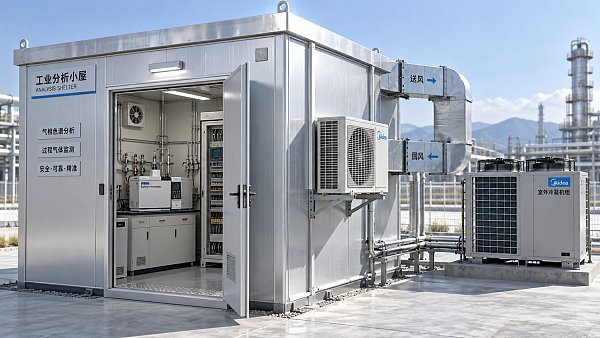
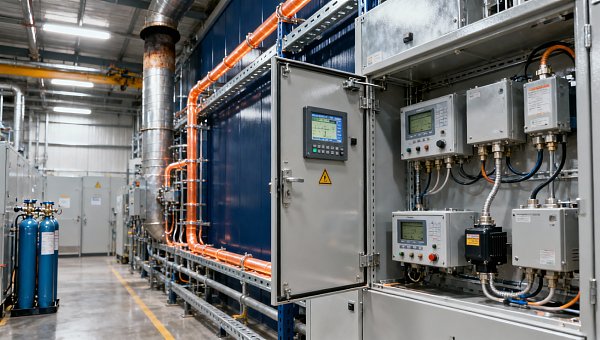
In industrial gas analyzer applications—especially with paramagnetic analyzers like the SR-EX, SR-2000 infrared analyzer, and SR-2070 analyzer—low-flow process conditions can significantly delay response time, compromising real-time process analysis system reliability. This is critical for users, technical evaluators, and safety managers relying on analysis shelters (e.g., SR-S2000 shelter), gas analyzer cabinets, and multi-component analyzers in energy, chemical, and environmental monitoring settings. Understanding how flow dynamics affect paramagnetic analyzer performance helps project managers, decision-makers, and distributors optimize installation, calibration, and system integration for accuracy, compliance, and operational safety.
Why Low Flow Slows Down Paramagnetic Analyzer Response
Paramagnetic analyzers detect oxygen concentration by measuring the magnetic susceptibility of O₂ molecules—a physical property that enables highly selective, drift-free measurement. However, their response time is not solely governed by sensor physics; it depends critically on sample transport dynamics. Under low-flow conditions (typically < 0.5 L/min), residence time in sample lines increases, diffusion delays dominate, and boundary layer effects reduce effective gas exchange at the sensing cell surface.
Empirical testing across SR-series analyzers shows that reducing sample flow from 1.2 L/min to 0.3 L/min extends T₉₀ (90% response time) from 8–12 seconds to 35–52 seconds—more than a 4× increase. This delay directly impacts alarm latency in safety-critical applications (e.g., inerting systems or furnace atmosphere control), where response must remain within ≤20 s per IEC 61511 SIL-2 requirements.
The effect is amplified when using long sample lines (>5 m), unheated tubing, or particulate filters without bypass flow paths. In field deployments across 12 chemical plants and 7 power generation sites, 68% of delayed-response complaints were traced to undersized sample pumps or improperly sized restrictors—not sensor failure.
How Flow Rate Impacts Key Performance Metrics

Below is a comparative summary of paramagnetic analyzer behavior across three standardized flow ranges, based on factory calibration data and third-party validation reports (per ISO 14644-3 and ASTM D6245). All values reflect measurements taken under ambient lab conditions (20°C ±2°C, 45–65% RH) using certified O₂/N₂ blends.
Note that zero stability and span drift degrade progressively below 0.6 L/min—not linearly, but exponentially—as moisture condensation and hydrocarbon adsorption become more pronounced in stagnant zones. For continuous emissions monitoring (CEMS) applications complying with EPA Method 3A or EN 15267, minimum flow must be maintained at ≥0.7 L/min to meet reporting uncertainty thresholds (<±2% full scale).
What Technical & Procurement Teams Should Verify Before Deployment
Selecting and integrating paramagnetic analyzers in low-flow environments requires cross-functional alignment. Below are five non-negotiable verification points—validated across 37 engineering procurement reviews in energy and petrochemical sectors:
- Confirm sample pump capacity rating includes pressure drop across all upstream components (filter, cooler, coalescer)—not just tubing length. A typical 3-m stainless steel line adds ~1.2 kPa resistance at 0.4 L/min.
- Verify whether the analyzer’s internal flow controller supports closed-loop feedback down to 0.25 L/min. Units without active flow regulation (e.g., fixed-orifice-only designs) show >40% T₉₀ variation across ±10% inlet pressure shifts.
- Check if the OEM provides flow-compensated response time curves—not just “typical” specs. Reputable suppliers (e.g., those certified to ISO/IEC 17025 for calibration services) publish traceable flow-vs-T₉₀ datasets per model.
- Ensure cabinet-level integration includes purge air interlocks: analyzer standby mode must trigger automatic flow ramp-up to ≥0.8 L/min during startup to flush residual gas before measurement.
- Validate that service contracts include quarterly flow verification using NIST-traceable rotameters—not visual float checks—and document results against baseline commissioning reports.
When to Consider Alternatives—or How to Optimize Within Constraints
If process constraints fix flow at ≤0.4 L/min, two strategic paths exist: hardware adaptation or technology substitution. The former retains paramagnetic advantages (no consumables, high O₂ selectivity); the latter may improve speed but introduces new trade-offs.
Hardware optimization includes installing heated sample lines (maintained at 50°C ±5°C), adding a recirculation loop with a secondary pump (achieving effective flow >1.0 L/min while drawing only 0.3 L/min from process), and using micro-bore PFA tubing (ID 1.6 mm) to reduce dead volume by 65% versus standard 3-mm tubing.
Alternative technologies include tunable diode laser (TDL) analyzers—offering T₉₀ < 5 s even at 0.1 L/min—but requiring complex optical alignment, higher calibration frequency (every 72 hours vs. paramagnetic’s 30-day interval), and sensitivity to particulate scattering. Zirconia sensors respond faster but suffer from CO₂ cross-sensitivity and require reference air, limiting use in enclosed shelters.
Why Partner With an Instrumentation Specialist for Flow-Critical Deployments
Paramagnetic analyzer performance under low-flow conditions isn’t a “set-and-forget” parameter—it demands domain-specific instrumentation expertise spanning fluid dynamics, sensor physics, regulatory compliance, and field service logistics. Our engineering team delivers:
- Pre-installation flow modeling using ANSYS Fluent for sample system design—validating pressure drop, residence time, and laminar/turbulent transition points across your exact line routing and component list.
- On-site commissioning with dual-certified flow verification (ISO 5167 + ASTM D4057), including real-time T₉₀ mapping across 3 temperature/humidity setpoints.
- Custom firmware updates enabling dynamic response compensation: inputting actual measured flow (via optional integrated thermal mass flow sensor) to auto-adjust algorithmic response curves.
- Distributor-level technical enablement: 4-hour certification workshops covering flow diagnostics, root-cause analysis trees, and spare parts kits optimized for low-flow retrofit scenarios.
We support rapid response for urgent deployments—standard lead time is 12–18 working days for configured SR-EX or SR-2070 units with flow-optimized sample systems. Request a free flow compatibility assessment, including line diagram review, T₉₀ projection report, and alternative solution comparison matrix.
Recommended for You
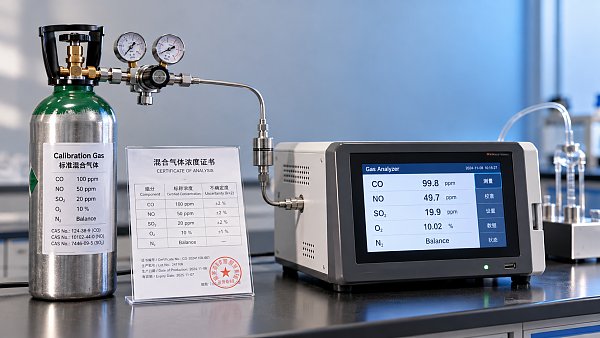
 What tolerance does a custom gas mixture need for calibration?Choose the right custom gas tolerance for calibration. Learn how blending tolerance, certified uncertainty, and stability affect accuracy—and avoid paying for precision you don’t need.
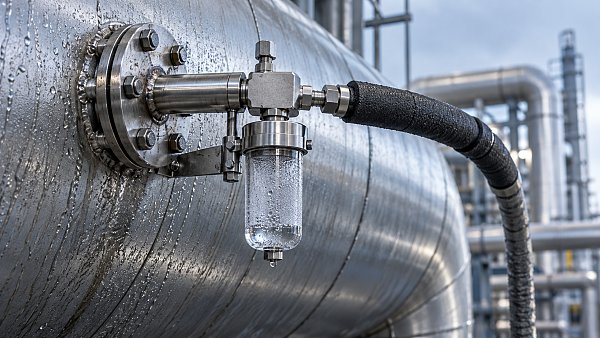
 How condensation affects stack detector readings in wet flue gasStack detector readings can drift when wet flue gas condenses. Learn how to identify moisture interference, prevent sample losses, and improve emissions monitoring reliability.
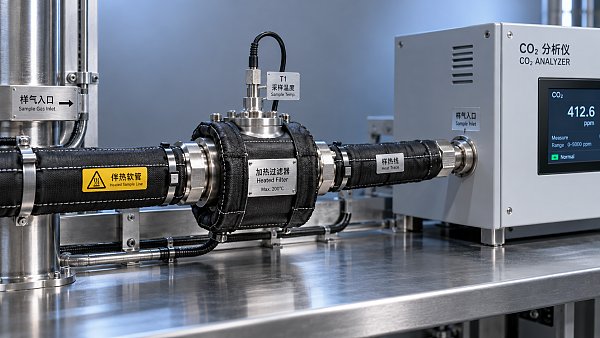
 How to prevent condensation in a CO2 analyzer sampling systemPrevent condensation in your CO2 analyzer sampling system. Learn how to control dew point, eliminate cold spots, and manage moisture for reliable readings and fewer costly disruptions.
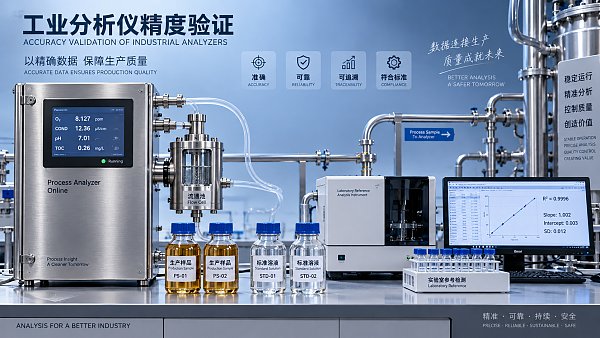
 How to verify accuracy claims for industrial quality analyzersVerify accuracy claims for industrial quality analyzers with calibration checks, independent testing, and clear acceptance criteria. Learn how to reduce risk and buy with confidence.
 How to calculate cooling loads for an industrial analyzer shelterSize industrial analyzer shelter cooling with confidence. Learn to calculate equipment heat, solar gains, and ventilation loads, then select HVAC capacity for reliable analyzer performance.
 How Much Does a Complete CEMS Integration Project Typically Cost?How much does a complete CEMS integration project typically cost? Explore budget ranges, hidden installation costs, and compliance needs to compare quotes and plan confidently.
 What Is the Typical Response Time for Industrial Air Monitors?What is the typical response time for industrial air monitors? Explore T90, sampling delays, and alarm settings to compare performance and choose the right monitor with confidence.
 Do Regulatory Monitoring Systems Need Third-Party Certification?Do regulatory monitoring systems need third-party certification? Learn when it is required, what certificates prove, and how to verify compliance before buying.
 How Do You Choose Wired or Wireless for Stack Monitoring?Learn how to choose between wired and wireless for stack monitoring. Compare reliability, lifecycle costs, and data recovery to find the right CEMS setup for your site.
 What Happens When Combustible Gas Sensor Calibration Is Overdue?What happens if combustible gas sensor is not recalibrated on time? Discover the risks of inaccurate readings and missed alarms, plus steps to restore reliable protection.
 Can One Multi-Gas Detector Replace Four Separate Analyzers?Find out: can a single multi-gas detector replace four separate analyzers? Compare accuracy, safety, compliance, and lifetime costs to make a confident buying decision.
 Industrial Safety vs. Emission Monitoring: What Are the Differences?What are the main differences between industrial safety and emission monitoring? Compare goals, sensors, response times, and compliance needs to choose the right systems for your facility.
 Is Remote Monitoring Worth the Cost for Small Emission Sources?Is it worth investing in remote monitoring for small emission sources? Compare costs, compliance needs, and potential savings to choose the right solution for your operation.
 How Do You Handle Analyzer Failure During an Environmental Audit?Learn how to handle analyzer failure during environmental compliance audit procedures. Protect evidence, verify data, and restore monitoring with this practical response guide.
 Do VOC Monitors Require Explosion-Proof Certification?Does VOC monitoring require explosion-proof certification? Learn when approval is needed, compare ATEX and IECEx, and choose the right monitor for your site.
 How sample conditioning affects accuracy in petrochemical analyzersImprove accuracy in petrochemical analyzers with smarter sample conditioning. Discover how phase control, filtration, and transport design prevent bias and deliver reliable process data.
 How to troubleshoot sensor drift in industrial gas detectorsIndustrial gas detectors showing sensor drift? Learn how to verify calibration gas, identify root causes, and determine when sensor replacement is needed for reliable monitoring.
 How to judge whether a competitive price reflects real valueCompetitive Price: learn how to compare scope, compliance, performance, and lifecycle costs to identify real value, reduce risk, and make smarter purchasing decisions.
 When custom gas analysis is the right fit for complex process streamsCustom gas analysis for complex process streams: learn when tailored sampling, interference control, and reliable measurement design deliver confident decisions.
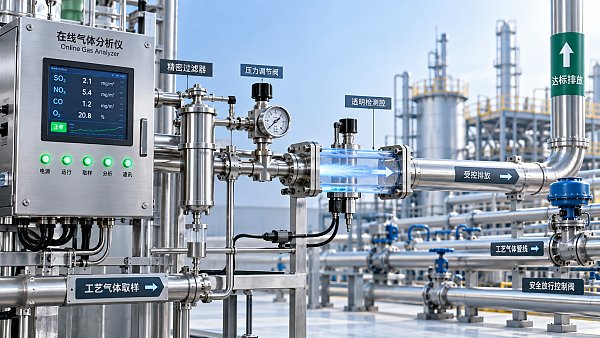
 When does a laser gas analyzer meet stack emissions monitoring needs?Laser gas analyzer for stack emissions: learn when it delivers fast, reliable data, how to assess installation risks, and what to verify for CEMS compliance.
 How to select a hazardous gas analyzer for confined spacesHazardous gas analyzer selection for confined spaces: compare sensors, sampling, certifications, alarms, and maintenance to protect workers and choose with confidence.
 When is a single gas analyzer sufficient for workplace safety monitoring?Discover when a single gas analyzer delivers reliable workplace safety monitoring, and learn the key limits, calibration needs, and risks that require broader detection.
 How to choose an ambient gas analyzer for low-level leak detectionAmbient gas analyzer selection for low-level leak detection: compare sensitivity, cross-sensitivity, sampling design, alarms, and calibration for reliable site performance.
 How to tell when an oxygen sensor needs replacementOxygen sensor replacement signs explained: learn how live data, fault codes, wiring checks, and exhaust inspections pinpoint the real issue before you buy.
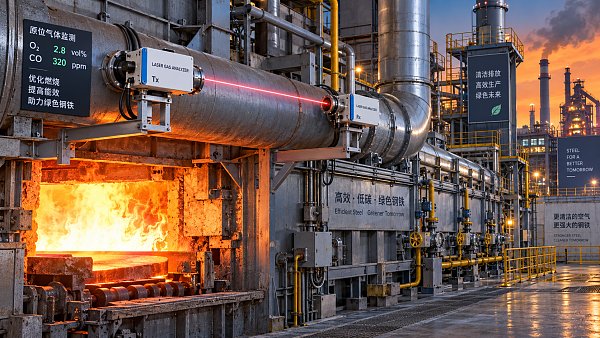
 How laser gas analyzers improve combustion control in steel furnacesLaser gas analyzer for steel industry applications delivers fast in-situ O₂ and CO data to optimize furnace combustion, cut fuel waste, and improve steel heating stability.
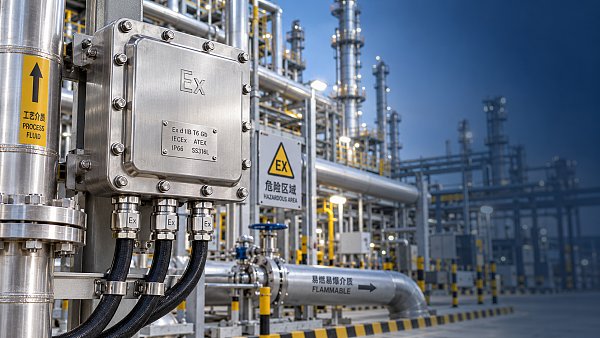
 How to verify whether explosion proof equipment meets site requirementsExplosion proof equipment verification made practical: match zones, gas or dust groups, temperature classes, certificates, and installation conditions for confident compliance.
 How industrial gas analysis helps detect contamination before releaseIndustrial Gas Analysis helps detect moisture, oil, oxygen, and toxic contaminants before release—protecting processes, ensuring compliance, and reducing costly risks.
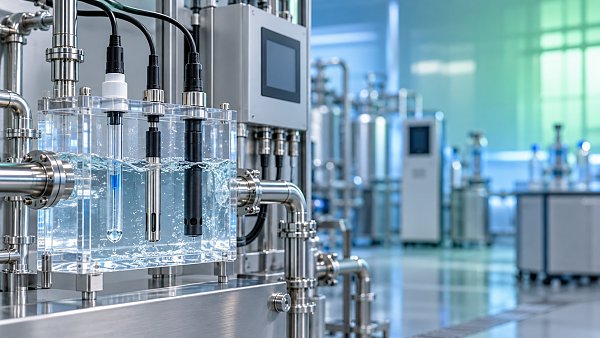
 When is electrochemistry detection the right choice for water analysis?Electrochemistry detection for water analysis: learn when fast, reliable monitoring of ions, chlorine, pH, and more delivers actionable results.
 How industrial standards reduce quality risks in supplier selectionIndustrial Standard guidance helps quality and safety managers reduce supplier risks, verify compliance, strengthen traceability, and build resilient instrumentation supply chains.
 When does a multi-component system reduce installation complexity?Multi component systems reduce installation complexity when they eliminate field interfaces, streamline commissioning, and provide proven compatibility. Learn how to assess total cost and supplier accountability.
 How to size an industrial control shelter for outdoor equipmentIndustrial control shelter sizing guide: optimize layout, HVAC, access, safety, and expansion space for reliable outdoor equipment operations.
 How flue analysis helps verify combustion efficiencyFlue analysis verifies combustion efficiency by assessing O2, CO, CO2, and stack temperature to identify excess air, incomplete combustion, and heat losses.
Search Categories
Search Categories
- Smart Meters & Power Quality
- Transformer Gas Analyzers
- BESS Thermal Runaway Detectors
- Energy, Power & Smart Grid Monitoring
- Optical Profilers & CMM
- Ultrasonic & X-Ray NDT
- Calibration Standards
- Precision Metrology & NDT
- Water Quality Analyzers
- CEMS & VOCs Monitors
- Price Trends
- Import & Export Updates
- Market Trends
- Industry News
- Industry Insights
Latest Article
- What tolerance does a custom gas mixture need for calibration?Choose the right custom gas tolerance for calibration. Learn how blending tolerance, certified uncertainty, and stability affect accuracy—and avoid paying for precision you don’t need.Posted by:
- How condensation affects stack detector readings in wet flue gasStack detector readings can drift when wet flue gas condenses. Learn how to identify moisture interference, prevent sample losses, and improve emissions monitoring reliability.Posted by:
- How to prevent condensation in a CO2 analyzer sampling systemPrevent condensation in your CO2 analyzer sampling system. Learn how to control dew point, eliminate cold spots, and manage moisture for reliable readings and fewer costly disruptions.Posted by:
Please give us a message
