
Flue Controller Selection: Key Risks to Check


Selecting the right flue controller is not just a component choice; it is a risk decision affecting combustion stability, emissions compliance, energy efficiency, and long-term reliability.
For technical evaluation, the challenge is finding hidden failure points before procurement, installation, commissioning, and operation expose them under real plant conditions.
A flue controller must be checked against sensor compatibility, control accuracy, environmental durability, communication protocols, safety interlocks, and lifecycle support.
This article outlines practical risks to examine when comparing a flue controller for industrial combustion, environmental monitoring, and energy management applications.
Flue Controller Fundamentals and Control Boundaries
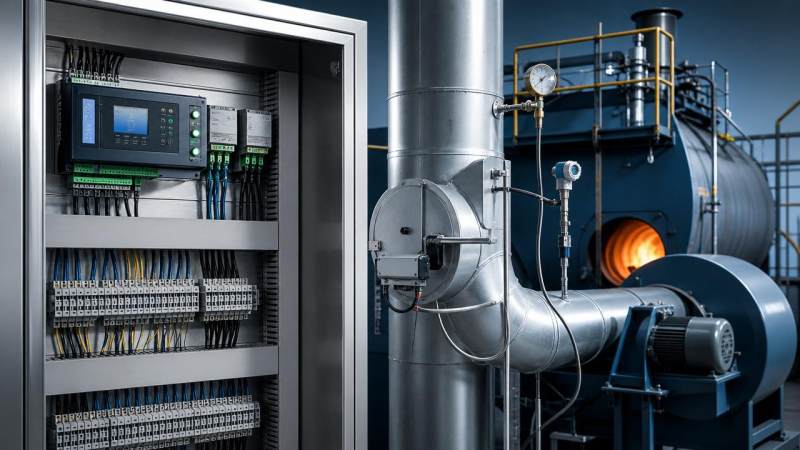
A flue controller manages draft, damper position, fan operation, temperature response, and sometimes oxygen-based combustion adjustment.
Its role is to keep exhaust flow stable while supporting safe fuel burning, predictable emissions, and efficient heat transfer.
In boilers, furnaces, incinerators, dryers, and thermal oxidizers, the flue controller connects measurement signals with final control elements.
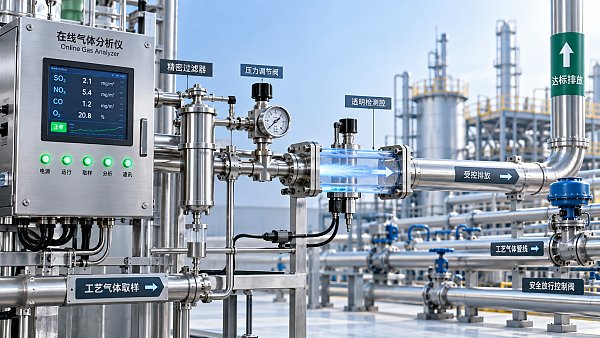
Typical inputs include pressure, temperature, oxygen concentration, carbon monoxide, damper feedback, and fan status.
Typical outputs include actuator commands, variable frequency drive signals, alarm relays, trip commands, and digital communication data.
The first selection risk is assuming every flue controller performs the same function across different combustion assets.
A simple draft regulator differs greatly from a controller integrated with CEMS, burner management, and plant DCS architecture.
Defining the Control Scope
Before comparison, define whether the flue controller will regulate draft only, coordinate combustion air, or support emissions optimization.
This boundary affects input count, response speed, control algorithms, SIL expectations, cabinet design, and communication requirements.
A poorly defined scope often leads to underspecified hardware, overloaded outputs, weak diagnostics, or commissioning delays.
Current Industry Signals Affecting Flue Controller Selection
Industrial sites now face stricter emissions supervision, volatile fuel quality, higher energy costs, and tighter uptime expectations.
These pressures turn the flue controller into a strategic interface between process control, environmental reporting, and operational safety.
Selection should therefore reflect both plant conditions and regulatory expectations, not only controller price or availability.
A flue controller selected without these signals may work during factory tests but underperform in continuous industrial operation.
Key Technical Risks to Check Before Procurement
The most important evaluation work is risk discovery before purchase commitments are made.
A flue controller should be assessed through documents, wiring diagrams, test reports, site references, and commissioning procedures.
Sensor and Signal Compatibility
Sensor mismatch is a common cause of unreliable draft control and wrong combustion correction.
Check whether the flue controller accepts 4-20 mA, RTD, thermocouple, pulse, voltage, dry contact, and digital analyzer signals.
Also verify input isolation, sensor fault detection, scaling flexibility, and filtering options.
For oxygen trim, confirm analyzer response time, calibration routine, sample conditioning, and controller handling of invalid readings.
Control Accuracy and Stability
A flue controller must respond fast enough to disturbances without creating hunting, overshoot, or actuator wear.
Review PID capability, cascade control options, feedforward functions, deadband settings, and manual override behavior.
Ask for real application data, not only laboratory resolution figures.
Draft systems are affected by wind, stack temperature, fouling, fan curves, damper leakage, and process load swings.
Environmental Durability
Many flue controller failures are environmental, not algorithmic.
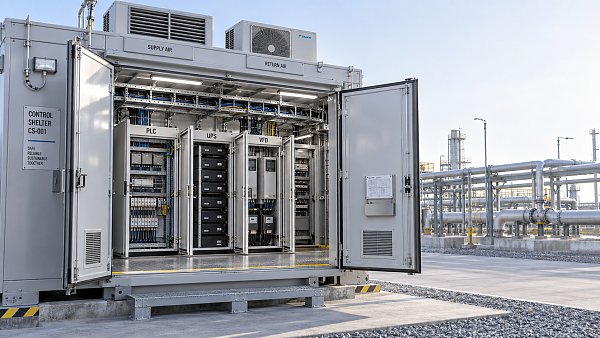
Check operating temperature range, humidity tolerance, EMC resistance, ingress protection, coating, and cabinet ventilation requirements.
Outdoor installations may need sun shielding, heaters, surge protection, and corrosion-resistant terminals.
For explosive atmospheres, confirm ATEX, IECEx, or local hazardous-area requirements before finalizing the flue controller design.
Safety Interlocks and Fail-Safe Behavior
A flue controller may interact with burner management, furnace purge, induced draft fans, and emergency shutdown systems.
Define fail-open, fail-close, and last-position behavior for dampers and actuators.
Confirm how the controller reacts to power loss, sensor failure, communication loss, and actuator feedback mismatch.
Safety logic should be documented through cause-and-effect matrices and tested during factory acceptance.
Business Value of a Reliable Flue Controller
A correctly selected flue controller reduces risk across compliance, fuel economy, maintenance, and production continuity.
It also improves confidence in process data, especially when emissions reporting depends on stable exhaust conditions.
- Improved combustion stability through consistent draft and controlled air movement.
- Lower fuel waste by reducing excess air and avoiding unstable firing.
- Better emissions control through coordinated oxygen, temperature, and flow response.
- Reduced maintenance from fewer actuator cycles and clearer diagnostic alarms.
- Stronger audit readiness through logged events, calibration records, and traceable settings.
The value is not limited to one device purchase.
A robust flue controller can extend asset life by preventing poor draft, flame disturbance, condensation, and thermal stress.
For multi-site operations, standardized controller platforms also simplify spare parts, training, cybersecurity reviews, and supplier qualification.
Typical Application Objects and Evaluation Priorities
Different assets require different emphasis during flue controller evaluation.
A universal checklist is useful, but final scoring should reflect actual operating hazards and performance targets.
This classification helps avoid overbuying in simple systems and underbuying in regulated or safety-critical installations.
Supplier, Compliance, and Lifecycle Risks
Technical specifications are only part of the decision.
A flue controller also depends on supplier documentation, firmware discipline, service capability, and long-term component availability.
Documentation and Traceability
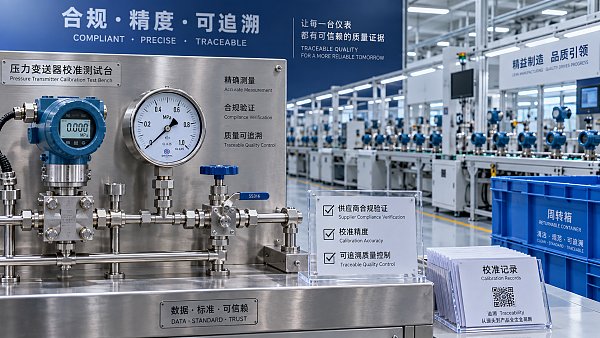
Request wiring diagrams, I/O lists, functional descriptions, test procedures, configuration files, and revision records.
For regulated sites, confirm calibration traceability and compatibility with ISO, local environmental, or plant-specific documentation systems.
Weak documentation increases handover risk and makes troubleshooting dependent on individual memory.
Cybersecurity and Access Control
Networked controllers create operational advantages and security exposure.
Check password policy, user levels, firmware update controls, port management, and remote access procedures.
A flue controller connected to plant networks should follow the same governance as other industrial automation assets.
Serviceability and Spare Parts
Consider repair turnaround, local service knowledge, spare module availability, and backward compatibility.
Also check whether settings can be backed up and restored after hardware replacement.
Lifecycle weakness can turn a low-cost flue controller into an expensive downtime source.
Practical Selection Checklist for Engineering Review
A structured checklist makes supplier comparison clearer and reduces subjective decision-making.
The following points can support technical clarification, quotation review, and factory acceptance planning.
- Define control scope, operating modes, interlocks, and boundaries with other automation systems.
- Map every sensor, actuator, analyzer, fan, damper, and alarm point before selecting I/O capacity.
- Confirm environmental ratings against actual site heat, dust, vibration, moisture, and corrosion.
- Review communication protocols, data tags, time synchronization, and integration with DCS or SCADA.
- Require clear fail-safe philosophy for sensor loss, power failure, network interruption, and actuator faults.
- Check tuning tools, trend recording, alarm history, and diagnostic access for maintenance teams.
- Evaluate supplier references in similar fuels, stack conditions, and emissions-control environments.
- Verify firmware management, backup methods, spare parts strategy, and service response commitments.
During FAT, test the flue controller under simulated abnormal conditions, not only normal operating sequences.
Useful tests include broken sensor input, frozen analog signal, actuator jam, communication loss, and high-draft alarm.
Commissioning should include baseline trend capture so future performance drift can be recognized early.
Decision Path for Lower-Risk Implementation
A low-risk decision path begins with process understanding and ends with verified operational evidence.
Start by documenting current draft behavior, emissions events, fuel changes, maintenance issues, and operator interventions.
Then compare each flue controller against measurable needs instead of generic catalogue claims.
For critical applications, use a weighted scorecard covering safety, control performance, integration, compliance, lifecycle, and supplier evidence.
GIH supports this type of high-confidence sourcing logic through industry intelligence, technical comparison, and supplier research.
In instrumentation decisions, the best choice is rarely the most complex device or the lowest quotation.
The best flue controller is the one whose risks are visible, tested, documented, and manageable across the asset lifecycle.
Before final approval, request a complete technical submission, a scenario-based test plan, and proof of comparable field operation.
This approach turns flue controller selection from a purchasing shortcut into a disciplined control-risk decision.
Recommended for You
 What tolerance does a custom gas mixture need for calibration?Choose the right custom gas tolerance for calibration. Learn how blending tolerance, certified uncertainty, and stability affect accuracy—and avoid paying for precision you don’t need.
 How condensation affects stack detector readings in wet flue gasStack detector readings can drift when wet flue gas condenses. Learn how to identify moisture interference, prevent sample losses, and improve emissions monitoring reliability.
 How to prevent condensation in a CO2 analyzer sampling systemPrevent condensation in your CO2 analyzer sampling system. Learn how to control dew point, eliminate cold spots, and manage moisture for reliable readings and fewer costly disruptions.
 How to verify accuracy claims for industrial quality analyzersVerify accuracy claims for industrial quality analyzers with calibration checks, independent testing, and clear acceptance criteria. Learn how to reduce risk and buy with confidence.
 How to calculate cooling loads for an industrial analyzer shelterSize industrial analyzer shelter cooling with confidence. Learn to calculate equipment heat, solar gains, and ventilation loads, then select HVAC capacity for reliable analyzer performance.
 Do Regulatory Monitoring Systems Need Third-Party Certification?Do regulatory monitoring systems need third-party certification? Learn when it is required, what certificates prove, and how to verify compliance before buying.
 How Do You Choose Wired or Wireless for Stack Monitoring?Learn how to choose between wired and wireless for stack monitoring. Compare reliability, lifecycle costs, and data recovery to find the right CEMS setup for your site.
 What Happens When Combustible Gas Sensor Calibration Is Overdue?What happens if combustible gas sensor is not recalibrated on time? Discover the risks of inaccurate readings and missed alarms, plus steps to restore reliable protection.
 Can One Multi-Gas Detector Replace Four Separate Analyzers?Find out: can a single multi-gas detector replace four separate analyzers? Compare accuracy, safety, compliance, and lifetime costs to make a confident buying decision.
 Industrial Safety vs. Emission Monitoring: What Are the Differences?What are the main differences between industrial safety and emission monitoring? Compare goals, sensors, response times, and compliance needs to choose the right systems for your facility.
 Is Remote Monitoring Worth the Cost for Small Emission Sources?Is it worth investing in remote monitoring for small emission sources? Compare costs, compliance needs, and potential savings to choose the right solution for your operation.
 How Do You Handle Analyzer Failure During an Environmental Audit?Learn how to handle analyzer failure during environmental compliance audit procedures. Protect evidence, verify data, and restore monitoring with this practical response guide.
 Do VOC Monitors Require Explosion-Proof Certification?Does VOC monitoring require explosion-proof certification? Learn when approval is needed, compare ATEX and IECEx, and choose the right monitor for your site.
 How sample conditioning affects accuracy in petrochemical analyzersImprove accuracy in petrochemical analyzers with smarter sample conditioning. Discover how phase control, filtration, and transport design prevent bias and deliver reliable process data.
 How to troubleshoot sensor drift in industrial gas detectorsIndustrial gas detectors showing sensor drift? Learn how to verify calibration gas, identify root causes, and determine when sensor replacement is needed for reliable monitoring.
 How to judge whether a competitive price reflects real valueCompetitive Price: learn how to compare scope, compliance, performance, and lifecycle costs to identify real value, reduce risk, and make smarter purchasing decisions.
 When custom gas analysis is the right fit for complex process streamsCustom gas analysis for complex process streams: learn when tailored sampling, interference control, and reliable measurement design deliver confident decisions.
 When does a laser gas analyzer meet stack emissions monitoring needs?Laser gas analyzer for stack emissions: learn when it delivers fast, reliable data, how to assess installation risks, and what to verify for CEMS compliance.
 How to select a hazardous gas analyzer for confined spacesHazardous gas analyzer selection for confined spaces: compare sensors, sampling, certifications, alarms, and maintenance to protect workers and choose with confidence.
 When is a single gas analyzer sufficient for workplace safety monitoring?Discover when a single gas analyzer delivers reliable workplace safety monitoring, and learn the key limits, calibration needs, and risks that require broader detection.
 How to choose an ambient gas analyzer for low-level leak detectionAmbient gas analyzer selection for low-level leak detection: compare sensitivity, cross-sensitivity, sampling design, alarms, and calibration for reliable site performance.
 How to tell when an oxygen sensor needs replacementOxygen sensor replacement signs explained: learn how live data, fault codes, wiring checks, and exhaust inspections pinpoint the real issue before you buy.
 How laser gas analyzers improve combustion control in steel furnacesLaser gas analyzer for steel industry applications delivers fast in-situ O₂ and CO data to optimize furnace combustion, cut fuel waste, and improve steel heating stability.
 How to verify whether explosion proof equipment meets site requirementsExplosion proof equipment verification made practical: match zones, gas or dust groups, temperature classes, certificates, and installation conditions for confident compliance.
 How industrial gas analysis helps detect contamination before releaseIndustrial Gas Analysis helps detect moisture, oil, oxygen, and toxic contaminants before release—protecting processes, ensuring compliance, and reducing costly risks.
 When is electrochemistry detection the right choice for water analysis?Electrochemistry detection for water analysis: learn when fast, reliable monitoring of ions, chlorine, pH, and more delivers actionable results.
 How industrial standards reduce quality risks in supplier selectionIndustrial Standard guidance helps quality and safety managers reduce supplier risks, verify compliance, strengthen traceability, and build resilient instrumentation supply chains.
 When does a multi-component system reduce installation complexity?Multi component systems reduce installation complexity when they eliminate field interfaces, streamline commissioning, and provide proven compatibility. Learn how to assess total cost and supplier accountability.
 How to size an industrial control shelter for outdoor equipmentIndustrial control shelter sizing guide: optimize layout, HVAC, access, safety, and expansion space for reliable outdoor equipment operations.
 How flue analysis helps verify combustion efficiencyFlue analysis verifies combustion efficiency by assessing O2, CO, CO2, and stack temperature to identify excess air, incomplete combustion, and heat losses.
 How to select industrial gas detectors for confined spacesIndustrial gas detectors for confined spaces: learn how to match sensors, sampling methods, alarms, and certifications to real atmospheric hazards.
 When does a laser oxygen analyzer outperform zirconia sensors?Laser oxygen analyzer vs. zirconia sensors: compare speed, selectivity, maintenance, gas chemistry, and installation needs to choose the right oxygen measurement solution.






Search Categories
Search Categories
- Smart Meters & Power Quality
- Transformer Gas Analyzers
- BESS Thermal Runaway Detectors
- Energy, Power & Smart Grid Monitoring
- Optical Profilers & CMM
- Ultrasonic & X-Ray NDT
- Calibration Standards
- Precision Metrology & NDT
- Water Quality Analyzers
- CEMS & VOCs Monitors
- Price Trends
- Import & Export Updates
- Market Trends
- Industry News
- Industry Insights
Latest Article
- What tolerance does a custom gas mixture need for calibration?Choose the right custom gas tolerance for calibration. Learn how blending tolerance, certified uncertainty, and stability affect accuracy—and avoid paying for precision you don’t need.Posted by:
- How condensation affects stack detector readings in wet flue gasStack detector readings can drift when wet flue gas condenses. Learn how to identify moisture interference, prevent sample losses, and improve emissions monitoring reliability.Posted by:
- How to prevent condensation in a CO2 analyzer sampling systemPrevent condensation in your CO2 analyzer sampling system. Learn how to control dew point, eliminate cold spots, and manage moisture for reliable readings and fewer costly disruptions.Posted by:
Please give us a message
