
What accuracy specs matter most when selecting petrochemical analyzers


In petrochemical operations, an analyzer that looks accurate on paper can still become a weak link in the field. A sulfur analyzer that drifts during ambient temperature swings, a moisture analyzer affected by sample conditioning, or a gas chromatograph that performs well in the lab but struggles with process variability can all create the same result: decisions based on numbers that seem precise but are not reliable enough for the process. That is why, when evaluating petrochemical analyzers, technical teams need to look past a single “accuracy” line in the datasheet.
The most important question is not simply, “How accurate is this instrument?” It is, “Accurate under what conditions, over what range, against which compounds, and for how long without intervention?” For selection and procurement teams, that distinction matters because analyzer accuracy directly shapes process safety, product quality, environmental compliance, unit optimization, and maintenance burden.
This is especially true in petrochemical plants, where analyzers are expected to work through pressure variation, changing compositions, contaminated samples, vibration, hazardous-area requirements, and nonstop operation. Under those realities, some accuracy specifications matter far more than others.
Why “accuracy” alone is too vague for analyzer selection
Many evaluation processes begin with a side-by-side spec comparison. One analyzer may state accuracy as “±1% of reading,” another as “±0.5% full scale,” and a third may emphasize repeatability rather than absolute accuracy. If the team compares those numbers without context, the decision can easily drift in the wrong direction.
For petrochemical analyzers, accuracy is usually the combined outcome of several technical characteristics: measurement principle, calibration method, sample conditioning design, analyzer range, environmental compensation, drift performance, and maintenance interval. A good selection process separates these elements rather than treating them as a single marketing claim.
That is also why experienced assessors often ask vendors to explain how the stated accuracy was established. Was it demonstrated under ideal laboratory conditions, or in an application that resembles your process stream? Was it verified across the full range or only near a calibration point? Was cross-interference included? These questions reveal more than the headline spec.
The specs that usually matter most in real petrochemical service
1. Accuracy relative to reading vs. accuracy relative to full scale
This is one of the most overlooked but consequential differences. If an analyzer is specified as a percentage of full scale, its absolute error may be acceptable near the top of the range but far less useful at lower concentrations. That can be a serious issue in trace analysis applications such as sulfur, oxygen, moisture, or impurity monitoring, where the operating point sits at a small fraction of the analyzer span.
For example, if your process target is near the lower end of the measurement range, a “better-looking” full-scale spec may actually deliver worse decision quality than an analyzer specified as a percentage of reading. Technical teams should always map the stated accuracy to the actual control or compliance concentration, not just the instrument’s advertised range.
2. Repeatability and reproducibility
Absolute accuracy matters, but in continuous petrochemical processes, repeatability often determines whether the analyzer is operationally useful. If readings scatter too much from one measurement to the next, operators lose confidence and stop using the analyzer for control decisions. That creates a hidden cost: the instrument is installed, maintained, and calibrated, yet it no longer drives action.
Repeatability tells you how stable the analyzer is under the same conditions. Reproducibility tells you whether the same result can be achieved over time, across calibrations, or sometimes across comparable units. In process environments, a highly repeatable analyzer can be more valuable than one with slightly better lab accuracy but poor measurement consistency in the field.
3. Limit of detection and limit of quantification
In petrochemical applications, not every measurement is about bulk composition. Many are about very low levels of contaminants or critical trace compounds that affect catalyst life, corrosion risk, emissions, or product acceptance. In those cases, the limit of detection and limit of quantification become selection-critical.
An analyzer may technically measure a compound, but if the expected process value is close to its noise floor, the reading will not be dependable enough for action. This is where technical assessment teams should ask: at what concentration does the analyzer provide stable, decision-grade performance, not merely signal presence?
That distinction is essential for streams involving trace moisture, H2S, sulfur species, oxygen ingress, or hydrocarbon impurity thresholds.
4. Linearity across the working range
Petrochemical plants rarely operate at one static point forever. Startup, grade changes, feedstock variation, upset conditions, and seasonal differences all push analyzers across their range. If linearity degrades at mid-range or near the low end, the analyzer may appear acceptable during acceptance testing yet underperform during real operation.
Good linearity matters when the analyzer output is used for process optimization or model-based control, not just alarm limits. A nonlinear response can distort trends, trigger unnecessary corrections, or mask emerging process changes. Technical teams should therefore review linearity over the intended working range, not the maximum possible range.
5. Drift over time
If there is one specification that deserves more attention in petrochemical analyzer selection, it is long-term drift. Drift is where theoretical accuracy meets operating reality. A unit that requires frequent recalibration may still claim strong accuracy, but the practical cost includes technician time, calibration gas or liquid standards, process interruption, and risk of unnoticed error between service intervals.
Zero drift and span drift both matter. Zero drift is especially important when measuring low-level compounds. Span drift becomes critical when readings are used for product quality or optimization. For unattended or remote installations, drift performance often matters as much as the initial accuracy figure.
When comparing vendors, ask for expected calibration stability in field service, not just in controlled conditions. This is often where experienced suppliers distinguish themselves.
6. Cross-sensitivity and matrix effects
Petrochemical streams are rarely simple. They contain mixtures of hydrocarbons, sulfur compounds, water vapor, inert gases, and sometimes process additives or contaminants that can influence measurement response. A strong analyzer selection process must examine cross-sensitivity: how much the presence of non-target components affects the reported value.
This point matters because an analyzer can be “accurate” in a standard mixture yet inaccurate in your actual stream. Matrix effects are especially relevant for optical analyzers, electrochemical methods, moisture measurement, and certain spectroscopic techniques. Technical teams should ask vendors to define known interferences, compensation methods, and whether application-specific validation is available.
7. Response time under installed conditions
Response time is not always filed under accuracy, but in many petrochemical applications it should be treated as part of measurement fidelity. A slow response caused by sample transport lag, dead volume, contaminated filters, or poor conditioning can create readings that are technically correct but operationally late. In fast-changing processes, late data becomes misleading data.
For process control, blending, leak detection, or safety-related monitoring, the useful analyzer is the one that reflects process change within the timeframe required for intervention. Evaluation should therefore separate analyzer core response from the total system response, including sample extraction and conditioning.
Specs that deserve closer scrutiny than buyers often give them
Some datasheet items look secondary but should move higher in the decision framework.
Temperature and pressure compensation is one. Many petrochemical analyzers are exposed to fluctuating ambient conditions or process pressures. If compensation is weak, measurement error can increase even when the sensor itself is functioning normally.
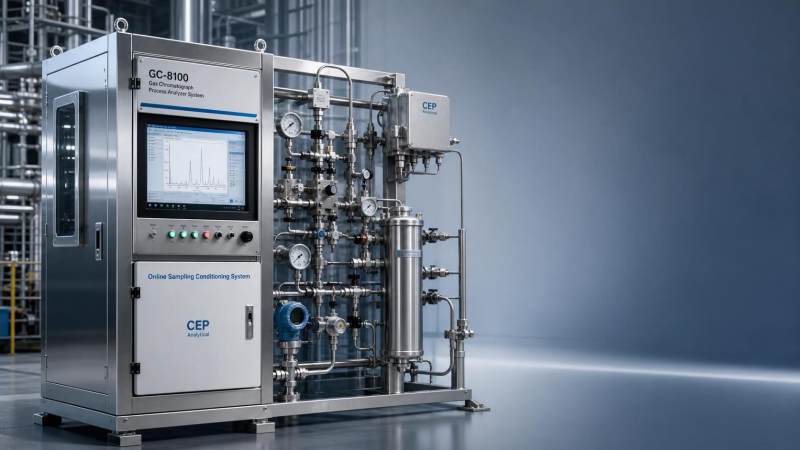
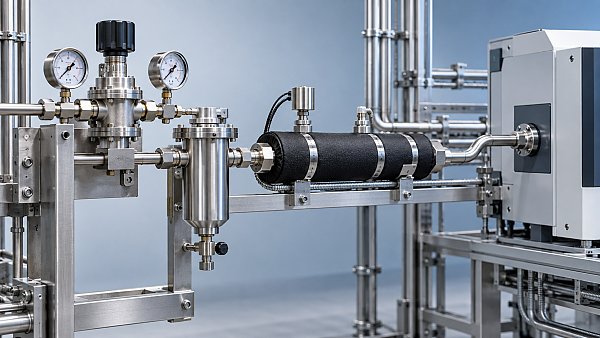
Sample conditioning compatibility is another. In many failures blamed on analyzer accuracy, the real problem is poor sample handling: phase change, contamination, adsorption, lag, or sample degradation before the measurement ever occurs. An analyzer should never be assessed in isolation from its sampling system.
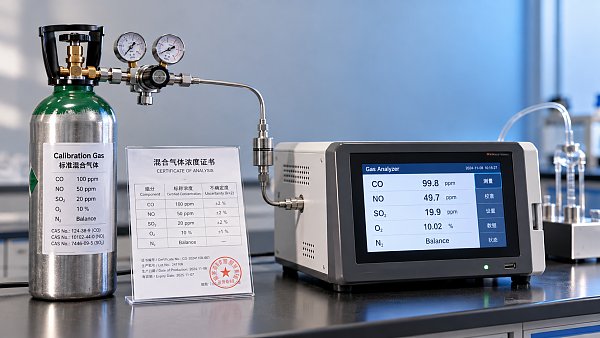
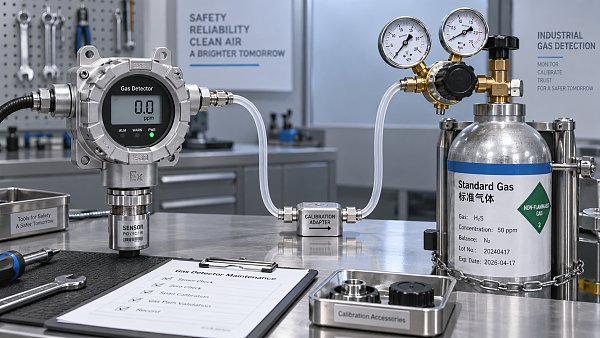
Calibration traceability also matters. Accuracy claims are only as trustworthy as the calibration standards and methods behind them. Teams involved in quality assurance or regulatory exposure should confirm how calibration is performed and how traceability is maintained.
How to match the spec to the application, not just the instrument
The right accuracy profile depends on what the analyzer is being asked to do. A custody-related quality measurement, a safety-critical oxygen monitor, and an optimization analyzer in a refinery unit do not carry the same risk if the number is wrong.
One practical way to evaluate petrochemical analyzers is to group the application by consequence:
- Safety and protection: Prioritize reliability, response time, drift resistance, and performance under upset conditions.
- Compliance and emissions: Focus on low-level accuracy, traceability, detection limits, and documented validation methods.
- Product quality: Emphasize repeatability, linearity, and stability across expected feed and grade variations.
- Process optimization: Pay close attention to trend fidelity, response time, and matrix tolerance rather than a single lab-style accuracy number.
This application-first approach usually leads to better analyzer decisions than starting from instrument type alone.
Common mistakes technical teams make during comparison
One common mistake is comparing analyzers with different ranges and assuming the lower numerical spec is automatically better. Another is evaluating bench performance while underestimating the installation environment. A third is treating the analyzer and sample system as separate procurement items, even though plant experience shows they operate as one measurement chain.
There is also a subtle but important mistake: selecting for ideal-state precision when the real business problem is availability. In some units, the best analyzer is not the one with the finest lab specification, but the one that maintains trustworthy performance with fewer interventions, fewer false readings, and less operator skepticism.
Questions worth asking vendors before final selection
Technical assessment teams often get more useful insight from five hard questions than from twenty pages of brochures:
- At the actual concentration range of our process, what is the expected uncertainty?
- How does performance change with common interferences in our stream?
- What are the expected zero and span drift intervals in field operation?
- How much of the stated performance depends on the sample conditioning design?
- Can you distinguish laboratory specification, installed system performance, and maintained long-term performance?
The answers usually reveal whether a vendor understands petrochemical service deeply or is only presenting generic analyzer data.
Where a more intelligence-led evaluation adds value
For multinational procurement teams and technical evaluators, the challenge is rarely a lack of options. It is filtering claims, comparing specifications on equal terms, and identifying which suppliers can deliver dependable performance in harsh industrial use. That is where a sector-focused intelligence approach becomes useful. Platforms such as Global Instrument Hub help decision-makers look beyond catalog language by connecting performance criteria with application context, supply chain credibility, regulatory expectations, and real-world instrumentation priorities.
In analyzer selection, that broader view matters because accuracy is not an isolated spec. It sits at the intersection of metrology, process chemistry, installation design, maintenance strategy, and supplier competence.
What accuracy specs matter most, in the end?
If the goal is a confident buying decision, the most important accuracy specifications for petrochemical analyzers are usually not the most eye-catching numbers on page one. What matters most is how the analyzer performs at your operating range, how consistently it repeats, how well it resists drift, how it handles interferences, and whether the complete installed system can preserve that performance over time.
For technical assessment teams, the smartest choice is often the analyzer whose specifications stay honest when exposed to the realities of petrochemical service. In other words: prioritize usable accuracy over advertised accuracy. That is the difference between selecting an instrument and selecting a measurement you can trust.
Recommended for You
 What tolerance does a custom gas mixture need for calibration?Choose the right custom gas tolerance for calibration. Learn how blending tolerance, certified uncertainty, and stability affect accuracy—and avoid paying for precision you don’t need.
 How condensation affects stack detector readings in wet flue gasStack detector readings can drift when wet flue gas condenses. Learn how to identify moisture interference, prevent sample losses, and improve emissions monitoring reliability.
 How to prevent condensation in a CO2 analyzer sampling systemPrevent condensation in your CO2 analyzer sampling system. Learn how to control dew point, eliminate cold spots, and manage moisture for reliable readings and fewer costly disruptions.
 How to verify accuracy claims for industrial quality analyzersVerify accuracy claims for industrial quality analyzers with calibration checks, independent testing, and clear acceptance criteria. Learn how to reduce risk and buy with confidence.
 How to calculate cooling loads for an industrial analyzer shelterSize industrial analyzer shelter cooling with confidence. Learn to calculate equipment heat, solar gains, and ventilation loads, then select HVAC capacity for reliable analyzer performance.
 How Much Does a Complete CEMS Integration Project Typically Cost?How much does a complete CEMS integration project typically cost? Explore budget ranges, hidden installation costs, and compliance needs to compare quotes and plan confidently.
 What Is the Typical Response Time for Industrial Air Monitors?What is the typical response time for industrial air monitors? Explore T90, sampling delays, and alarm settings to compare performance and choose the right monitor with confidence.
 Do Regulatory Monitoring Systems Need Third-Party Certification?Do regulatory monitoring systems need third-party certification? Learn when it is required, what certificates prove, and how to verify compliance before buying.
 How Do You Choose Wired or Wireless for Stack Monitoring?Learn how to choose between wired and wireless for stack monitoring. Compare reliability, lifecycle costs, and data recovery to find the right CEMS setup for your site.
 What Happens When Combustible Gas Sensor Calibration Is Overdue?What happens if combustible gas sensor is not recalibrated on time? Discover the risks of inaccurate readings and missed alarms, plus steps to restore reliable protection.
 Can One Multi-Gas Detector Replace Four Separate Analyzers?Find out: can a single multi-gas detector replace four separate analyzers? Compare accuracy, safety, compliance, and lifetime costs to make a confident buying decision.
 Industrial Safety vs. Emission Monitoring: What Are the Differences?What are the main differences between industrial safety and emission monitoring? Compare goals, sensors, response times, and compliance needs to choose the right systems for your facility.
 Is Remote Monitoring Worth the Cost for Small Emission Sources?Is it worth investing in remote monitoring for small emission sources? Compare costs, compliance needs, and potential savings to choose the right solution for your operation.
 How Do You Handle Analyzer Failure During an Environmental Audit?Learn how to handle analyzer failure during environmental compliance audit procedures. Protect evidence, verify data, and restore monitoring with this practical response guide.
 Do VOC Monitors Require Explosion-Proof Certification?Does VOC monitoring require explosion-proof certification? Learn when approval is needed, compare ATEX and IECEx, and choose the right monitor for your site.
 How sample conditioning affects accuracy in petrochemical analyzersImprove accuracy in petrochemical analyzers with smarter sample conditioning. Discover how phase control, filtration, and transport design prevent bias and deliver reliable process data.
 How to troubleshoot sensor drift in industrial gas detectorsIndustrial gas detectors showing sensor drift? Learn how to verify calibration gas, identify root causes, and determine when sensor replacement is needed for reliable monitoring.
 How to judge whether a competitive price reflects real valueCompetitive Price: learn how to compare scope, compliance, performance, and lifecycle costs to identify real value, reduce risk, and make smarter purchasing decisions.
 When custom gas analysis is the right fit for complex process streamsCustom gas analysis for complex process streams: learn when tailored sampling, interference control, and reliable measurement design deliver confident decisions.
 When does a laser gas analyzer meet stack emissions monitoring needs?Laser gas analyzer for stack emissions: learn when it delivers fast, reliable data, how to assess installation risks, and what to verify for CEMS compliance.
 How to select a hazardous gas analyzer for confined spacesHazardous gas analyzer selection for confined spaces: compare sensors, sampling, certifications, alarms, and maintenance to protect workers and choose with confidence.
 When is a single gas analyzer sufficient for workplace safety monitoring?Discover when a single gas analyzer delivers reliable workplace safety monitoring, and learn the key limits, calibration needs, and risks that require broader detection.
 How to choose an ambient gas analyzer for low-level leak detectionAmbient gas analyzer selection for low-level leak detection: compare sensitivity, cross-sensitivity, sampling design, alarms, and calibration for reliable site performance.
 How to tell when an oxygen sensor needs replacementOxygen sensor replacement signs explained: learn how live data, fault codes, wiring checks, and exhaust inspections pinpoint the real issue before you buy.
 How laser gas analyzers improve combustion control in steel furnacesLaser gas analyzer for steel industry applications delivers fast in-situ O₂ and CO data to optimize furnace combustion, cut fuel waste, and improve steel heating stability.
 How to verify whether explosion proof equipment meets site requirementsExplosion proof equipment verification made practical: match zones, gas or dust groups, temperature classes, certificates, and installation conditions for confident compliance.
 How industrial gas analysis helps detect contamination before releaseIndustrial Gas Analysis helps detect moisture, oil, oxygen, and toxic contaminants before release—protecting processes, ensuring compliance, and reducing costly risks.
 When is electrochemistry detection the right choice for water analysis?Electrochemistry detection for water analysis: learn when fast, reliable monitoring of ions, chlorine, pH, and more delivers actionable results.
 How industrial standards reduce quality risks in supplier selectionIndustrial Standard guidance helps quality and safety managers reduce supplier risks, verify compliance, strengthen traceability, and build resilient instrumentation supply chains.
 When does a multi-component system reduce installation complexity?Multi component systems reduce installation complexity when they eliminate field interfaces, streamline commissioning, and provide proven compatibility. Learn how to assess total cost and supplier accountability.
 How to size an industrial control shelter for outdoor equipmentIndustrial control shelter sizing guide: optimize layout, HVAC, access, safety, and expansion space for reliable outdoor equipment operations.
 How flue analysis helps verify combustion efficiencyFlue analysis verifies combustion efficiency by assessing O2, CO, CO2, and stack temperature to identify excess air, incomplete combustion, and heat losses.
Search Categories
Search Categories
- Smart Meters & Power Quality
- Transformer Gas Analyzers
- BESS Thermal Runaway Detectors
- Energy, Power & Smart Grid Monitoring
- Optical Profilers & CMM
- Ultrasonic & X-Ray NDT
- Calibration Standards
- Precision Metrology & NDT
- Water Quality Analyzers
- CEMS & VOCs Monitors
- Price Trends
- Import & Export Updates
- Market Trends
- Industry News
- Industry Insights
Latest Article
- What tolerance does a custom gas mixture need for calibration?Choose the right custom gas tolerance for calibration. Learn how blending tolerance, certified uncertainty, and stability affect accuracy—and avoid paying for precision you don’t need.Posted by:
- How condensation affects stack detector readings in wet flue gasStack detector readings can drift when wet flue gas condenses. Learn how to identify moisture interference, prevent sample losses, and improve emissions monitoring reliability.Posted by:
- How to prevent condensation in a CO2 analyzer sampling systemPrevent condensation in your CO2 analyzer sampling system. Learn how to control dew point, eliminate cold spots, and manage moisture for reliable readings and fewer costly disruptions.Posted by:
Please give us a message
