
Industrial Air Monitors: What Affects Lifetime Cost Most?


Industrial Air Monitors: Where does lifetime cost really come from?
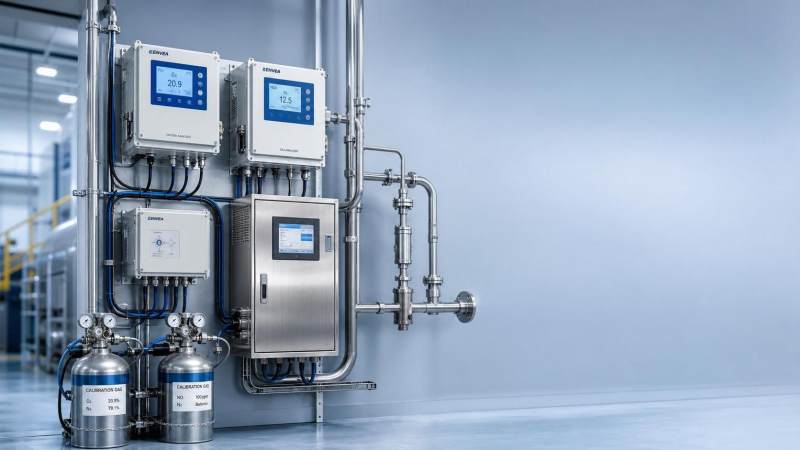
Industrial air monitors often look comparable on the quotation sheet. The larger cost gap usually appears after installation, not before it.
That is why industrial air monitors should be reviewed as long-life assets with operating consequences, not as simple line items.
In manufacturing, energy, laboratories, environmental compliance, and construction, air data affects safety, uptime, reporting accuracy, and maintenance planning.
A lower purchase price can still produce a higher lifetime cost when calibration labor, sensor drift, spare parts, false alarms, and integration delays accumulate.
The more practical question is this: which cost drivers matter most, and which ones are commonly missed during approval?
From GIH’s cross-sector instrumentation view, the answer usually depends on measurement stability, service burden, compliance fit, and data usability over time.
Is purchase price usually the biggest cost driver?
Usually, no. The initial invoice matters, but it rarely dominates the full ownership curve of industrial air monitors.
For many sites, five-year cost is shaped more by maintenance frequency than by hardware acquisition. This is especially true in harsh or regulated environments.
A monitor with lower drift may cost more upfront, yet require fewer interventions, fewer production interruptions, and fewer emergency sensor replacements.
That difference becomes visible when industrial air monitors support emissions tracking, worker exposure control, clean process stability, or hazardous area monitoring.
The most useful budgeting approach is to separate cost into four buckets:
- Acquisition: device price, accessories, mounting, and commissioning.
- Operations: calibration gas, technician time, software access, and periodic verification.
- Reliability: unscheduled repairs, sensor failures, and downtime linked to bad readings.
- Compliance and reporting: audits, record retention, validation, and data formatting effort.
When these categories are modeled together, the lowest-price unit often stops looking like the lowest-cost option.
Which hidden costs push industrial air monitors above budget?
The hidden costs are usually not mysterious. They are simply underestimated because they sit across different budgets or departments.
Calibration is the most common example. Frequent calibration may look manageable until travel time, documentation, shutdown coordination, and consumables are counted together.
Sensor replacement is another major factor. Electrochemical, infrared, PID, and particulate sensing technologies age differently and carry different replacement economics.
Then there is environmental stress. Heat, humidity, corrosive vapors, dust loading, vibration, and washdown routines can shorten sensor life sharply.
Software can also become a quiet cost center. Some industrial air monitors need paid licenses, proprietary gateways, or custom middleware to connect with SCADA, DCS, or cloud platforms.
The table below helps frame the usual cost pressure points.
In practice, industrial air monitors become expensive when several of these issues appear together rather than in isolation.
How much do calibration and sensor life change the economics?
More than most approval workflows assume. These two items often set the recurring cost baseline for industrial air monitors.
A monitor that needs monthly attention is not just twelve service events per year. It may also require permits, escorts, shutdown windows, and data reconciliation.
By contrast, a monitor with stronger stability may reduce intervention frequency and improve confidence in long-term trend data.
Sensor chemistry matters here. Gas type, target concentration range, cross-sensitivity, and ambient contaminants all influence usable life.
Particulate monitoring adds its own economics. Optical systems may need cleaning discipline, while gravimetric validation can raise labor costs.
A simple way to compare industrial air monitors is to ask for lifecycle assumptions in writing, including the conditions behind them.
- Expected calibration interval in the intended environment.
- Sensor replacement frequency by measurement type.
- Consumables needed for each maintenance cycle.
- On-site replacement time and technician skill level.
- Failure modes that trigger unscheduled service.
That level of detail turns an abstract operating estimate into a decision-grade cost model.
Can data integration and compliance cost more than maintenance?
In some projects, yes. This is especially common when industrial air monitors feed regulated reporting, remote dashboards, or plant-wide automation systems.
If data cannot move cleanly into existing infrastructure, engineering time rises quickly. Manual exports then create labor cost and traceability risk.
Compliance pressure can be even more expensive. A cheaper unit that lacks robust audit trails may create expensive gaps during inspections or incident reviews.
This matters across sectors. Environmental monitoring may require defensible records. Life science spaces may need tighter documentation. Hazardous sites may need ATEX or IECEx alignment.
GIH regularly highlights that instrumentation value is tied to trust in data, not just data collection. That principle applies directly to industrial air monitors.
Before approval, it helps to confirm whether the monitor supports:
- Native communication protocols already used on site.
- Secure timestamped records with change history.
- Remote diagnostics and firmware support.
- Regional certification and calibration traceability.
- Clear ownership of software updates and cybersecurity responsibilities.
These details rarely attract attention in early pricing rounds, yet they strongly affect lifetime cost and implementation speed.
What usually separates a sound choice from a false economy?
The sound choice is not always the most advanced unit. It is the one that fits the site, risk profile, and reporting burden with the fewest downstream surprises.
A false economy appears when industrial air monitors are compared only by detection range, display features, or nominal hardware price.
More useful comparisons focus on reliability in actual conditions, maintainability by existing teams, and evidence quality for audits or investigations.
It also helps to compare supplier depth, not just product labels. Spare part continuity, service network strength, and documentation quality affect long-term ownership risk.
That is where intelligence-led review becomes valuable. GIH’s instrumentation perspective is useful because supply chain confidence and technical fit should be evaluated together.
A practical shortlist for industrial air monitors should answer these questions clearly:
- What is the five-year service assumption behind the quoted cost?
- How does performance change in dust, humidity, heat, or solvent exposure?
- Which parts are consumable, and what are their lead times?
- What site event creates the largest financial consequence if readings are wrong?
- Can the monitor’s data be trusted and reused across operations, compliance, and management reporting?
Those answers usually reveal whether the lower quote is truly economical or simply incomplete.
What is the smartest next step before approving industrial air monitors?
Start with a lifecycle review, not a price-only comparison. That keeps industrial air monitors aligned with real operational exposure.
Build a short decision sheet using the site’s actual conditions, target gases or particulates, service access limits, data system needs, and compliance obligations.
Then request suppliers to map cost assumptions against that sheet. This usually exposes unrealistic maintenance promises or missing integration work.
For higher-risk applications, ask for a five-year ownership model with calibration events, consumables, spare parts, software, training, and downtime assumptions shown separately.
Industrial air monitors earn their value when they reduce uncertainty, protect continuity, and produce trustworthy data over time.
The most resilient decision is usually the one backed by measurable service assumptions, credible supplier support, and a realistic view of long-term operating burden.
A disciplined comparison now makes later budgeting, compliance management, and asset planning much easier.
Recommended for You
 How sample conditioning affects accuracy in petrochemical analyzersImprove accuracy in petrochemical analyzers with smarter sample conditioning. Discover how phase control, filtration, and transport design prevent bias and deliver reliable process data.
 How to troubleshoot sensor drift in industrial gas detectorsIndustrial gas detectors showing sensor drift? Learn how to verify calibration gas, identify root causes, and determine when sensor replacement is needed for reliable monitoring.
 How to judge whether a competitive price reflects real valueCompetitive Price: learn how to compare scope, compliance, performance, and lifecycle costs to identify real value, reduce risk, and make smarter purchasing decisions.
 When custom gas analysis is the right fit for complex process streamsCustom gas analysis for complex process streams: learn when tailored sampling, interference control, and reliable measurement design deliver confident decisions.
 When does a laser gas analyzer meet stack emissions monitoring needs?Laser gas analyzer for stack emissions: learn when it delivers fast, reliable data, how to assess installation risks, and what to verify for CEMS compliance.
 How to select a hazardous gas analyzer for confined spacesHazardous gas analyzer selection for confined spaces: compare sensors, sampling, certifications, alarms, and maintenance to protect workers and choose with confidence.
 When is a single gas analyzer sufficient for workplace safety monitoring?Discover when a single gas analyzer delivers reliable workplace safety monitoring, and learn the key limits, calibration needs, and risks that require broader detection.
 How to choose an ambient gas analyzer for low-level leak detectionAmbient gas analyzer selection for low-level leak detection: compare sensitivity, cross-sensitivity, sampling design, alarms, and calibration for reliable site performance.
 How to tell when an oxygen sensor needs replacementOxygen sensor replacement signs explained: learn how live data, fault codes, wiring checks, and exhaust inspections pinpoint the real issue before you buy.
 How laser gas analyzers improve combustion control in steel furnacesLaser gas analyzer for steel industry applications delivers fast in-situ O₂ and CO data to optimize furnace combustion, cut fuel waste, and improve steel heating stability.
 How to verify whether explosion proof equipment meets site requirementsExplosion proof equipment verification made practical: match zones, gas or dust groups, temperature classes, certificates, and installation conditions for confident compliance.
 How industrial gas analysis helps detect contamination before releaseIndustrial Gas Analysis helps detect moisture, oil, oxygen, and toxic contaminants before release—protecting processes, ensuring compliance, and reducing costly risks.
 When is electrochemistry detection the right choice for water analysis?Electrochemistry detection for water analysis: learn when fast, reliable monitoring of ions, chlorine, pH, and more delivers actionable results.
 How industrial standards reduce quality risks in supplier selectionIndustrial Standard guidance helps quality and safety managers reduce supplier risks, verify compliance, strengthen traceability, and build resilient instrumentation supply chains.
 When does a multi-component system reduce installation complexity?Multi component systems reduce installation complexity when they eliminate field interfaces, streamline commissioning, and provide proven compatibility. Learn how to assess total cost and supplier accountability.
 How to size an industrial control shelter for outdoor equipmentIndustrial control shelter sizing guide: optimize layout, HVAC, access, safety, and expansion space for reliable outdoor equipment operations.
 How flue analysis helps verify combustion efficiencyFlue analysis verifies combustion efficiency by assessing O2, CO, CO2, and stack temperature to identify excess air, incomplete combustion, and heat losses.
 How to select industrial gas detectors for confined spacesIndustrial gas detectors for confined spaces: learn how to match sensors, sampling methods, alarms, and certifications to real atmospheric hazards.
 When does a laser oxygen analyzer outperform zirconia sensors?Laser oxygen analyzer vs. zirconia sensors: compare speed, selectivity, maintenance, gas chemistry, and installation needs to choose the right oxygen measurement solution.
 How to select a percent range analyzer for process measurementsPercent range analyzer selection made practical: compare accuracy, sample systems, calibration, gas matrix, integration, and lifecycle cost for reliable process measurements.
 How explosion proof analysis verifies safe equipment for hazardous areasExplosion proof analysis verifies hazardous-area equipment by matching certifications, temperature ratings, installation details, and inspection controls for safer compliance.
 When does fixed gas detection need point sensors instead of open-path monitoring?Fixed gas detection: discover when point sensors outperform open-path monitoring for predictable leaks, enclosed zones, local alarms, and safer design decisions.
 How to choose industrial metrology systems for tight-tolerance partsIndustrial metrology guide for tight-tolerance parts: compare CMMs, optical scanners, gauges, uncertainty, workflow, and traceable inspection strategies.
 How process metrology reduces measurement variation in productionProcess metrology reduces production measurement variation by improving traceability, uncertainty control, calibration, and reliable quality decisions.
 How to select an industrial monitoring analyzer for harsh environmentsIndustrial monitoring analyzer selection for harsh environments: evaluate sampling, durability, hazardous-area compliance, accuracy, maintenance, and data reliability.
 How calibration intervals affect test and measurement equipment accuracyTest and measurement equipment calibration intervals directly affect accuracy, risk, compliance, and uptime. Learn how to set evidence-based schedules that protect critical decisions.
 When does process gas monitoring need continuous measurement?Process gas monitoring needs continuous measurement when rapid changes threaten safety, quality, compliance, or uptime. Learn how to specify reliable, actionable monitoring systems.
 How to prevent false alarms in power plant instrumentationPower plant instrumentation guide: prevent false alarms with reliable signal checks, smarter alarm settings, mode-based control, and actionable operator responses.
 How fixed gas detectors help prevent leaks in enclosed workspacesFixed gas detectors provide continuous leak monitoring in enclosed workspaces, enabling faster alarms, safer responses, and stronger protection for people and processes.
 How industrial gas analysis helps detect process contamination earlyIndustrial Gas Analysis helps detect oxygen, moisture, and hydrocarbon contamination early, enabling faster fault isolation, safer operations, and stronger process control.
 What drives environmental compliance continuous monitoring setup cost?Environmental compliance continuous monitoring setup cost: uncover hidden expenses, compare bids accurately, and build a reliable, audit-ready system.
 How to select gas analysis equipment for continuous emissions monitoringGas analysis equipment selection guide for reliable continuous emissions monitoring—compare technologies, sampling, calibration, compliance, and maintenance needs.



Search Categories
Search Categories
- Smart Meters & Power Quality
- Transformer Gas Analyzers
- BESS Thermal Runaway Detectors
- Energy, Power & Smart Grid Monitoring
- Optical Profilers & CMM
- Ultrasonic & X-Ray NDT
- Calibration Standards
- Precision Metrology & NDT
- Water Quality Analyzers
- CEMS & VOCs Monitors
- Price Trends
- Import & Export Updates
- Market Trends
- Industry News
- Industry Insights
Latest Article
- How sample conditioning affects accuracy in petrochemical analyzersImprove accuracy in petrochemical analyzers with smarter sample conditioning. Discover how phase control, filtration, and transport design prevent bias and deliver reliable process data.Posted by:
- How to troubleshoot sensor drift in industrial gas detectorsIndustrial gas detectors showing sensor drift? Learn how to verify calibration gas, identify root causes, and determine when sensor replacement is needed for reliable monitoring.Posted by:
- How to judge whether a competitive price reflects real valueCompetitive Price: learn how to compare scope, compliance, performance, and lifecycle costs to identify real value, reduce risk, and make smarter purchasing decisions.Posted by:
Please give us a message
