
China Completes '14th Five-Year' Smart CNC Line R&D


On May 15, 2026, China completed the reliability-focused R&D initiative for intelligent CNC machine tool production lines under its '14th Five-Year Plan', delivering integrated quality control and digital twin capabilities. This advancement directly affects precision metrology equipment manufacturers, high-precision mechanical assembly firms, and international procurement entities sourcing from China’s advanced measurement instrument supply chain — because it materially improves delivery predictability and post-sale technical responsiveness in a globally competitive segment where lead time and first-year reliability are key commercial differentiators.
Event Overview
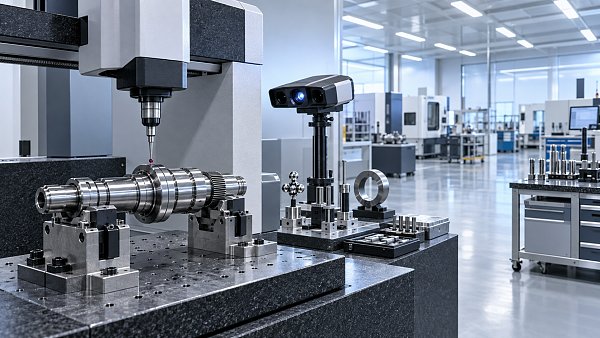
On May 15, 2026, the State Administration for Market Regulation announced the completion of the '14th Five-Year Plan' reliability攻关 (key technical breakthrough) for intelligent high-end CNC machine tool assembly lines. The outcome includes a 'terminal–edge–cloud' collaborative fault diagnosis system and a virtual-physical integrated digital twin platform. These systems have been deployed on production lines for coordinate measuring machines (CMMs), laser trackers, and optical profilometers. As verified, average delivery cycle for domestic high-end metrology equipment shortened by 22%, and first-year failure rate dropped by 37%. The result enhances delivery stability and after-sales response capability for overseas buyers of China-made precision measurement instruments.
Industries Affected by This Development
Direct Exporters of Precision Metrology Equipment
These companies supply CMMs, laser trackers, and optical profilometers to global industrial customers — especially in aerospace, automotive powertrain, and medical device manufacturing. They are affected because improved line-level reliability and shorter delivery cycles reduce order-to-shipment variance, enabling tighter integration into international OEMs’ just-in-time planning. Impact manifests in more predictable logistics scheduling, reduced buffer inventory requirements at overseas distribution hubs, and stronger contractual leverage in service-level agreements (SLAs).
Contract Manufacturers Serving Global Test & Measurement Brands
Firms engaged in ODM/OEM production for multinational metrology brands face revised expectations on process traceability and real-time quality monitoring. With the new 'terminal–edge–cloud' diagnostic infrastructure now operational on domestic lines, these manufacturers must align internal data protocols (e.g., OPC UA, MTConnect) with the national platform’s interoperability framework — or risk exclusion from Tier-1 supplier qualification lists tied to state-backed industrial digitization initiatives.
Importers and Distributors of High-Precision Measurement Instruments
International distributors handling Chinese-made metrology gear — particularly those operating in Southeast Asia, Eastern Europe, and Latin America — experience lower pre-delivery verification overhead. A 37% reduction in first-year failures implies fewer field service dispatches, less warranty-related calibration rework, and higher customer retention rates. However, this benefit is contingent on consistent implementation across certified production facilities — not all domestic manufacturers yet operate on the newly validated lines.
What Relevant Enterprises or Practitioners Should Focus On and How to Respond Now
Monitor official rollout scope and facility certification status
Track public updates from the State Administration for Market Regulation and provincial market supervision bureaus regarding which manufacturers and specific production bases have been formally accredited to deploy the 'terminal–edge–cloud' system and digital twin platform. Accreditation status determines eligibility for government-backed export facilitation programs and may influence tender eligibility in public-sector procurement abroad.
Assess exposure to CMM, laser tracker, and optical profiler supply lines
Map current sourcing relationships against known producers of these three equipment types — especially those previously identified in Ministry of Industry and Information Technology (MIIT) pilot programs. Prioritize due diligence on their production line digitalization maturity, as only facilities with validated deployment will deliver the reported 22% cycle time and 37% reliability improvements.
Distinguish between policy announcement and operational readiness
Recognize that system completion (May 15, 2026) marks technical validation — not universal deployment. Actual throughput gains and failure-rate reductions apply only where the full stack (sensor layer, edge analytics, cloud dashboard, twin synchronization logic) is live and calibrated. Avoid assuming uniform performance across all Chinese suppliers until third-party verification reports become publicly available.
Update procurement and service SLAs with measurable KPIs
Where contracting with Chinese metrology equipment suppliers, revise service-level agreements to include verifiable metrics tied to the new infrastructure — e.g., mean time to diagnose (MTTD) for hardware faults, digital twin update latency, or availability of remote diagnostic logs. These parameters are now technically enforceable and increasingly expected by downstream integrators.
Editorial Perspective / Industry Observation
Observably, this milestone signals maturation of China’s industrial IoT stack in high-precision discrete manufacturing — not merely incremental automation. The integration of real-time diagnostics with physics-based digital twins moves beyond predictive maintenance into closed-loop quality assurance. Analysis shows the initiative functions less as an isolated project and more as a foundational enabler: it establishes interoperability baselines and data governance templates now being extended to other high-accuracy sectors (e.g., semiconductor metrology tools, ultra-precision grinding). From an industry standpoint, this is best understood not as a near-term sales catalyst, but as a structural upgrade to China’s capacity to meet stringent, audit-ready quality commitments demanded by global Tier-1 industrial customers.

Conclusion: This development strengthens China’s position as a dependable source for high-precision measurement hardware — but only for buyers who engage with certified, digitally integrated production lines. It does not imply across-the-board improvement in all domestic metrology output. Rather, it introduces a new tiered landscape: one where delivery reliability and technical support responsiveness are now objectively measurable and increasingly standardized. Current interpretation should focus on facility-level accreditation — not country-of-origin generalizations.
Source: State Administration for Market Regulation (SAMR), official announcement dated May 15, 2026.
Areas requiring ongoing observation: Publicly listed accreditation records of individual manufacturers; independent verification of reported 22% delivery cycle and 37% failure rate metrics across diverse production batches and export destinations.
Recommended for You
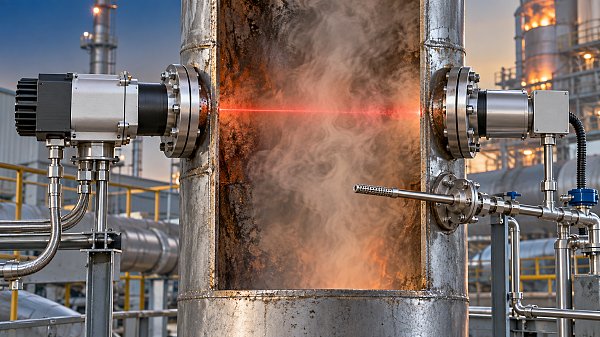
 When does a laser gas analyzer meet stack emissions monitoring needs?Laser gas analyzer for stack emissions: learn when it delivers fast, reliable data, how to assess installation risks, and what to verify for CEMS compliance.
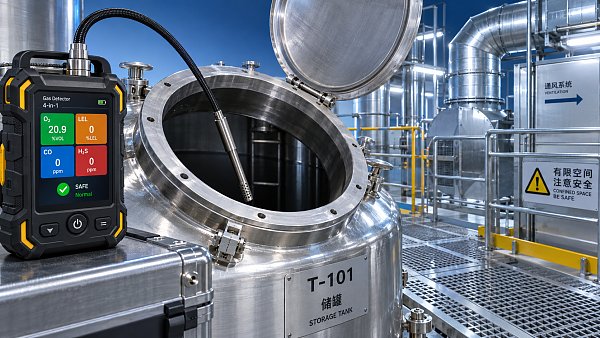
 How to select a hazardous gas analyzer for confined spacesHazardous gas analyzer selection for confined spaces: compare sensors, sampling, certifications, alarms, and maintenance to protect workers and choose with confidence.
 When is a single gas analyzer sufficient for workplace safety monitoring?Discover when a single gas analyzer delivers reliable workplace safety monitoring, and learn the key limits, calibration needs, and risks that require broader detection.
 How to choose an ambient gas analyzer for low-level leak detectionAmbient gas analyzer selection for low-level leak detection: compare sensitivity, cross-sensitivity, sampling design, alarms, and calibration for reliable site performance.
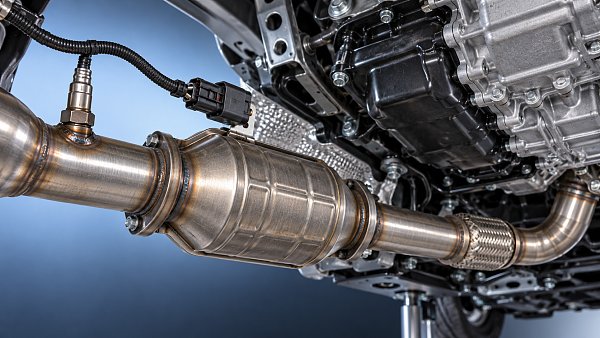
 How to tell when an oxygen sensor needs replacementOxygen sensor replacement signs explained: learn how live data, fault codes, wiring checks, and exhaust inspections pinpoint the real issue before you buy.
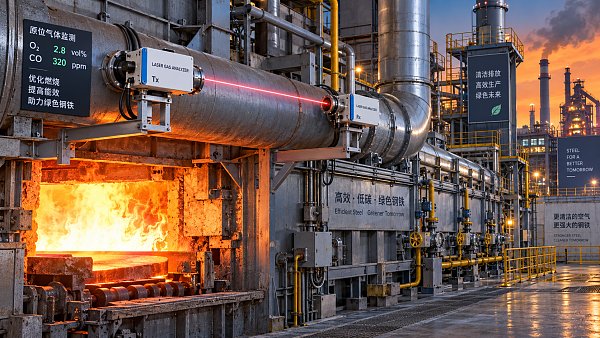
 How laser gas analyzers improve combustion control in steel furnacesLaser gas analyzer for steel industry applications delivers fast in-situ O₂ and CO data to optimize furnace combustion, cut fuel waste, and improve steel heating stability.
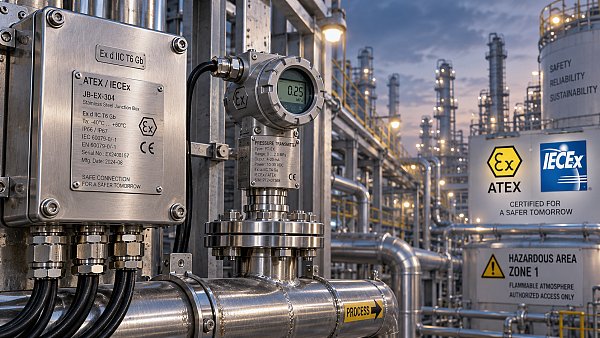
 How to verify whether explosion proof equipment meets site requirementsExplosion proof equipment verification made practical: match zones, gas or dust groups, temperature classes, certificates, and installation conditions for confident compliance.
 How industrial gas analysis helps detect contamination before releaseIndustrial Gas Analysis helps detect moisture, oil, oxygen, and toxic contaminants before release—protecting processes, ensuring compliance, and reducing costly risks.
 When is electrochemistry detection the right choice for water analysis?Electrochemistry detection for water analysis: learn when fast, reliable monitoring of ions, chlorine, pH, and more delivers actionable results.
 How industrial standards reduce quality risks in supplier selectionIndustrial Standard guidance helps quality and safety managers reduce supplier risks, verify compliance, strengthen traceability, and build resilient instrumentation supply chains.
 When does a multi-component system reduce installation complexity?Multi component systems reduce installation complexity when they eliminate field interfaces, streamline commissioning, and provide proven compatibility. Learn how to assess total cost and supplier accountability.
 How to size an industrial control shelter for outdoor equipmentIndustrial control shelter sizing guide: optimize layout, HVAC, access, safety, and expansion space for reliable outdoor equipment operations.
 How flue analysis helps verify combustion efficiencyFlue analysis verifies combustion efficiency by assessing O2, CO, CO2, and stack temperature to identify excess air, incomplete combustion, and heat losses.
 How to select industrial gas detectors for confined spacesIndustrial gas detectors for confined spaces: learn how to match sensors, sampling methods, alarms, and certifications to real atmospheric hazards.
 When does a laser oxygen analyzer outperform zirconia sensors?Laser oxygen analyzer vs. zirconia sensors: compare speed, selectivity, maintenance, gas chemistry, and installation needs to choose the right oxygen measurement solution.
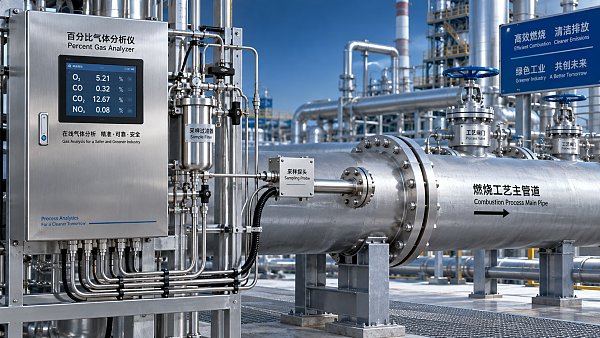
 How to select a percent range analyzer for process measurementsPercent range analyzer selection made practical: compare accuracy, sample systems, calibration, gas matrix, integration, and lifecycle cost for reliable process measurements.
 How explosion proof analysis verifies safe equipment for hazardous areasExplosion proof analysis verifies hazardous-area equipment by matching certifications, temperature ratings, installation details, and inspection controls for safer compliance.
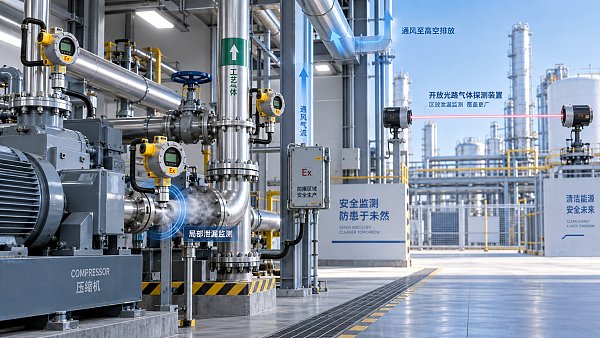
 When does fixed gas detection need point sensors instead of open-path monitoring?Fixed gas detection: discover when point sensors outperform open-path monitoring for predictable leaks, enclosed zones, local alarms, and safer design decisions.
 How to choose industrial metrology systems for tight-tolerance partsIndustrial metrology guide for tight-tolerance parts: compare CMMs, optical scanners, gauges, uncertainty, workflow, and traceable inspection strategies.
 How process metrology reduces measurement variation in productionProcess metrology reduces production measurement variation by improving traceability, uncertainty control, calibration, and reliable quality decisions.
 How to select an industrial monitoring analyzer for harsh environmentsIndustrial monitoring analyzer selection for harsh environments: evaluate sampling, durability, hazardous-area compliance, accuracy, maintenance, and data reliability.
 How calibration intervals affect test and measurement equipment accuracyTest and measurement equipment calibration intervals directly affect accuracy, risk, compliance, and uptime. Learn how to set evidence-based schedules that protect critical decisions.
 When does process gas monitoring need continuous measurement?Process gas monitoring needs continuous measurement when rapid changes threaten safety, quality, compliance, or uptime. Learn how to specify reliable, actionable monitoring systems.
 How to prevent false alarms in power plant instrumentationPower plant instrumentation guide: prevent false alarms with reliable signal checks, smarter alarm settings, mode-based control, and actionable operator responses.
 How fixed gas detectors help prevent leaks in enclosed workspacesFixed gas detectors provide continuous leak monitoring in enclosed workspaces, enabling faster alarms, safer responses, and stronger protection for people and processes.
 How industrial gas analysis helps detect process contamination earlyIndustrial Gas Analysis helps detect oxygen, moisture, and hydrocarbon contamination early, enabling faster fault isolation, safer operations, and stronger process control.
 What drives environmental compliance continuous monitoring setup cost?Environmental compliance continuous monitoring setup cost: uncover hidden expenses, compare bids accurately, and build a reliable, audit-ready system.
 How to select gas analysis equipment for continuous emissions monitoringGas analysis equipment selection guide for reliable continuous emissions monitoring—compare technologies, sampling, calibration, compliance, and maintenance needs.
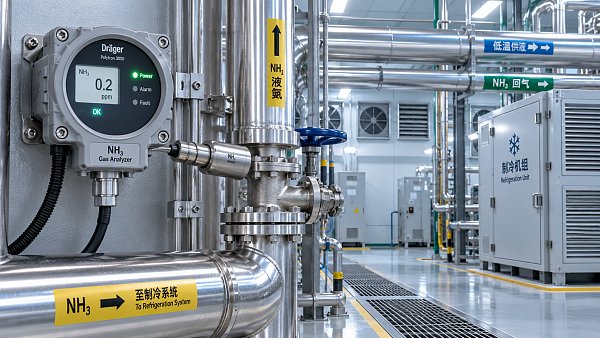
 What detection limit is needed for NH3 environmental monitoring?High accuracy NH3 analyzer for environmental monitoring: learn how to set the right detection limit, improve sampling reliability, and make defensible decisions.
 How to select a NOX analyzer for power plant emissions complianceNOX analyzer for power plant emissions: learn how to select a compliant, reliable CEMS solution with the right range, sample handling, calibration, and data integrity.
 How to evaluate a laser gas analyzer manufacturer in GermanyLaser gas analyzer manufacturer in Germany: compare accuracy, sample handling, interference control, calibration, and service to select a reliable solution.
 How does a flue gas analyzer maintain accuracy in wet stack gas?Flue gas analyzer accuracy in wet stack gas depends on heated sampling, moisture correction, reliable sensors, and calibration. Explore key selection tips.














Search Categories
Search Categories
- Smart Meters & Power Quality
- Transformer Gas Analyzers
- BESS Thermal Runaway Detectors
- Energy, Power & Smart Grid Monitoring
- Optical Profilers & CMM
- Ultrasonic & X-Ray NDT
- Calibration Standards
- Precision Metrology & NDT
- Water Quality Analyzers
- CEMS & VOCs Monitors
- Price Trends
- Import & Export Updates
- Market Trends
- Industry News
- Industry Insights
Latest Article
- When does a laser gas analyzer meet stack emissions monitoring needs?Laser gas analyzer for stack emissions: learn when it delivers fast, reliable data, how to assess installation risks, and what to verify for CEMS compliance.Posted by:
- How to select a hazardous gas analyzer for confined spacesHazardous gas analyzer selection for confined spaces: compare sensors, sampling, certifications, alarms, and maintenance to protect workers and choose with confidence.Posted by:
- When is a single gas analyzer sufficient for workplace safety monitoring?Discover when a single gas analyzer delivers reliable workplace safety monitoring, and learn the key limits, calibration needs, and risks that require broader detection.Posted by:
Please give us a message
