
PBOC April Data Shows Strong Credit Flow to Tech & Inclusive Lending


On May 14, 2026, the People’s Bank of China (PBOC) released its April 2026 financial statistics, revealing accelerated credit allocation toward technology-intensive small and medium-sized enterprises (SMEs) and inclusive finance segments. This shift is already driving measurable procurement activity across R&D instrumentation, calibration services, and laboratory automation — with spillover effects extending to cross-border equipment trade in emerging manufacturing markets.
Event Overview
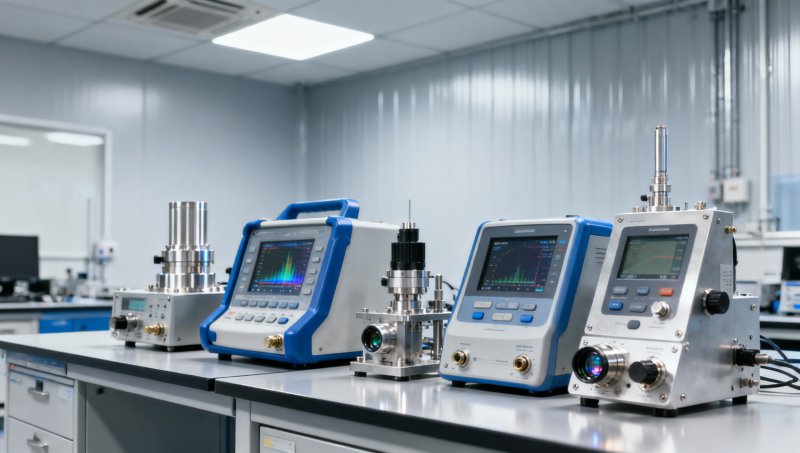
According to PBOC data released on May 14, 2026: social financing (SocFin) grew 7.8% year-on-year; M2 money supply expanded 8.6% year-on-year; outstanding loans to tech-oriented SMEs rose 22.3% YoY; and inclusive micro-loans increased 19.6% YoY. The liquidity support has translated into higher procurement volumes for R&D testing equipment, calibration services, and lab automation systems. Orders for portable spectrometers and smart temperature-humidity calibrators from SMEs in Southeast Asia and Africa—placed via Chinese cross-border e-commerce platforms—rose 41% month-on-month.
Industries Affected
Direct trade enterprises: Cross-border B2B equipment exporters—especially those selling calibrated analytical instruments through integrated e-commerce platforms—are seeing faster order conversion and shorter payment cycles. This reflects improved working capital conditions among overseas buyers, enabled by upstream Chinese lending policies targeting inclusive trade finance.
Raw material procurement enterprises: Suppliers of high-precision optical components, embedded sensors, and certified calibration-grade materials are experiencing tighter delivery windows and increased demand for traceable, ISO/IEC 17025-compliant documentation—driven by downstream equipment manufacturers scaling up production to meet export orders tied to newly accessible credit lines.
Manufacturing enterprises: Domestic OEMs producing portable lab instruments and automated calibration hardware face rising input costs but also stronger domestic and export order visibility. Their capacity utilization is trending upward, though margin pressure persists due to concurrent raw material price volatility and stricter regulatory scrutiny on metrological traceability.
Supply chain service enterprises: Third-party logistics providers offering metrology-aware warehousing, pre-shipment calibration verification, and customs-clearance support for precision instruments report a 28% YoY increase in service bookings—indicating that financing-enabled demand is shifting toward value-added compliance and readiness services, not just volume.
Key Focus Areas and Recommended Actions
Monitor loan eligibility criteria for export-linked SMEs
Eligibility for preferential lending under PBOC’s inclusive tech-lending framework now explicitly includes firms with documented export contracts for metrological equipment. Firms should align internal compliance records with PBOC’s updated “Tech Export Credit Guidelines” (2026 edition) ahead of Q3 application windows.
Strengthen calibration traceability documentation
With over 41% MoM growth in cross-border orders for calibrated instruments, buyers increasingly require full calibration history, uncertainty budgets, and NMI-recognized certificates. Manufacturers must audit their calibration workflows against ISO/IEC 17025:2017 Annex A.1 before scaling export fulfillment.
Evaluate regional logistics partnerships in ASEAN and East Africa
Rising order volume from Southeast Asian and African SMEs signals growing reliance on localized last-mile technical support—not just shipping. Enterprises should assess partnerships with regional metrology labs or authorized service centers capable of post-delivery verification and recalibration.
Editorial Perspective / Industry Observation
Analysis shows this credit acceleration is not merely cyclical liquidity easing—it reflects a structural pivot toward financing innovation infrastructure rather than broad-based stimulus. Observably, the 22.3% YoY growth in tech-SME lending outpaces overall SocFin growth (7.8%) by nearly threefold, suggesting targeted policy transmission. From an industry perspective, this signals increasing alignment between monetary policy design and national industrial metrology strategy. Current data better supports interpretation as a deliberate effort to harden China’s role as a supplier of *verified* measurement capability—not just hardware—to global manufacturing SMEs.
Conclusion
This policy-driven credit flow marks a maturing phase in China’s industrial finance ecosystem: one where lending metrics are increasingly coupled with technical outcomes—such as calibration compliance, equipment uptime, and export-ready certification. For global stakeholders, it underscores a shift from viewing Chinese financing as macro liquidity to recognizing it as an enabler of verifiable technical capacity building at scale.
Source Attribution
Official data sourced from the People’s Bank of China (PBOC), April 2026 Financial Statistics Report, published May 14, 2026. Further details available at www.pbc.gov.cn. Note: Loan classification methodology and regional breakdowns remain subject to official clarification; ongoing monitoring of PBOC’s quarterly “Inclusive Tech Finance Implementation Review” is recommended.
Recommended for You
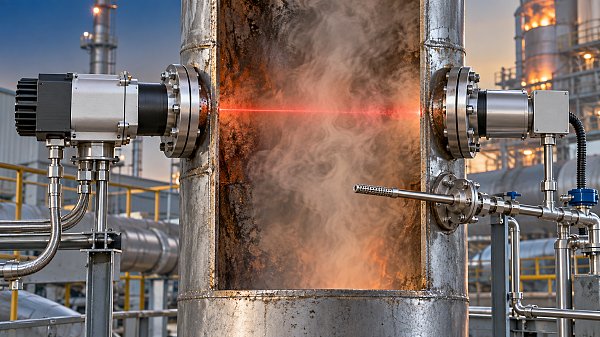
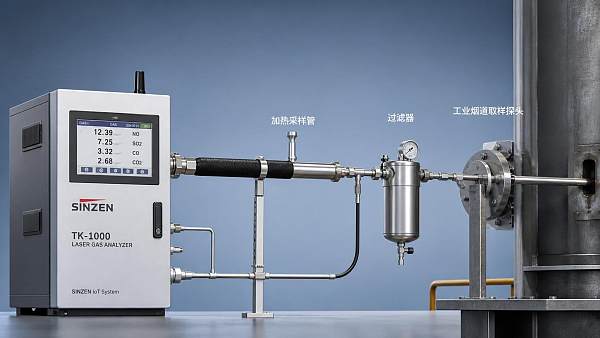
 When does a laser gas analyzer meet stack emissions monitoring needs?Laser gas analyzer for stack emissions: learn when it delivers fast, reliable data, how to assess installation risks, and what to verify for CEMS compliance.
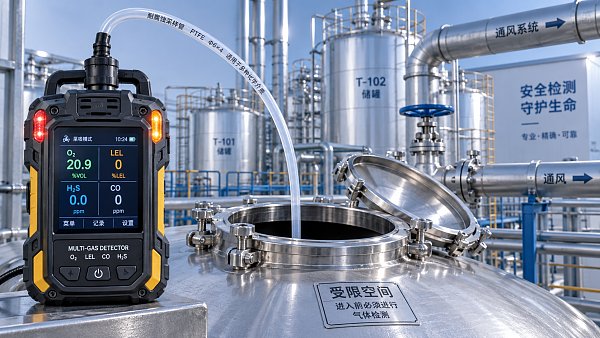
 How to select a hazardous gas analyzer for confined spacesHazardous gas analyzer selection for confined spaces: compare sensors, sampling, certifications, alarms, and maintenance to protect workers and choose with confidence.
 When is a single gas analyzer sufficient for workplace safety monitoring?Discover when a single gas analyzer delivers reliable workplace safety monitoring, and learn the key limits, calibration needs, and risks that require broader detection.
 How to choose an ambient gas analyzer for low-level leak detectionAmbient gas analyzer selection for low-level leak detection: compare sensitivity, cross-sensitivity, sampling design, alarms, and calibration for reliable site performance.
 How to tell when an oxygen sensor needs replacementOxygen sensor replacement signs explained: learn how live data, fault codes, wiring checks, and exhaust inspections pinpoint the real issue before you buy.
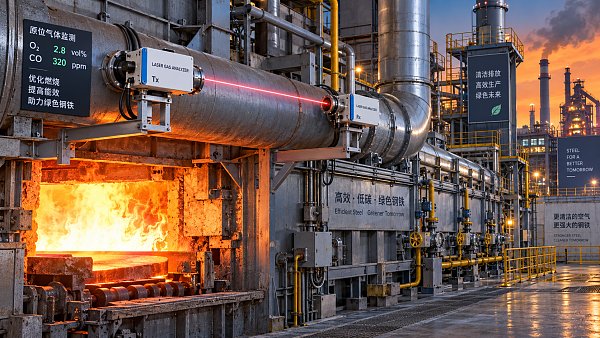
 How laser gas analyzers improve combustion control in steel furnacesLaser gas analyzer for steel industry applications delivers fast in-situ O₂ and CO data to optimize furnace combustion, cut fuel waste, and improve steel heating stability.
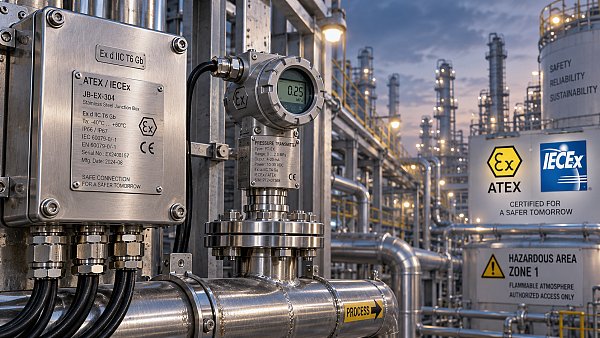
 How to verify whether explosion proof equipment meets site requirementsExplosion proof equipment verification made practical: match zones, gas or dust groups, temperature classes, certificates, and installation conditions for confident compliance.
 How industrial gas analysis helps detect contamination before releaseIndustrial Gas Analysis helps detect moisture, oil, oxygen, and toxic contaminants before release—protecting processes, ensuring compliance, and reducing costly risks.
 When is electrochemistry detection the right choice for water analysis?Electrochemistry detection for water analysis: learn when fast, reliable monitoring of ions, chlorine, pH, and more delivers actionable results.
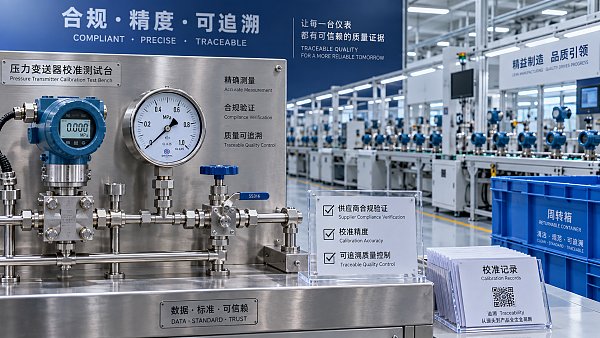
 How industrial standards reduce quality risks in supplier selectionIndustrial Standard guidance helps quality and safety managers reduce supplier risks, verify compliance, strengthen traceability, and build resilient instrumentation supply chains.
 When does a multi-component system reduce installation complexity?Multi component systems reduce installation complexity when they eliminate field interfaces, streamline commissioning, and provide proven compatibility. Learn how to assess total cost and supplier accountability.
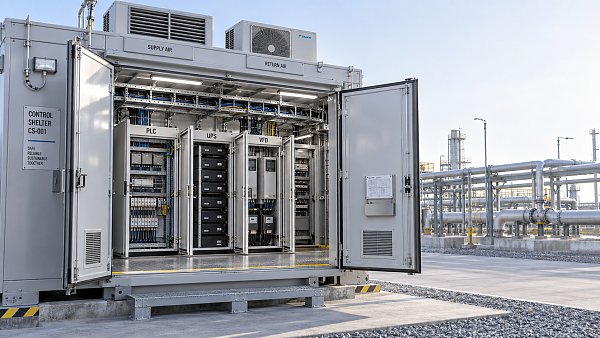
 How to size an industrial control shelter for outdoor equipmentIndustrial control shelter sizing guide: optimize layout, HVAC, access, safety, and expansion space for reliable outdoor equipment operations.
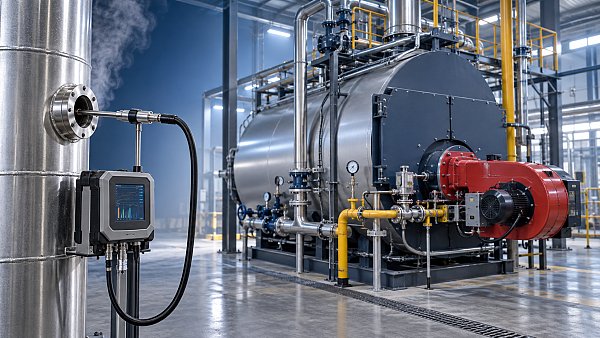
 How flue analysis helps verify combustion efficiencyFlue analysis verifies combustion efficiency by assessing O2, CO, CO2, and stack temperature to identify excess air, incomplete combustion, and heat losses.
 How to select industrial gas detectors for confined spacesIndustrial gas detectors for confined spaces: learn how to match sensors, sampling methods, alarms, and certifications to real atmospheric hazards.
 When does a laser oxygen analyzer outperform zirconia sensors?Laser oxygen analyzer vs. zirconia sensors: compare speed, selectivity, maintenance, gas chemistry, and installation needs to choose the right oxygen measurement solution.
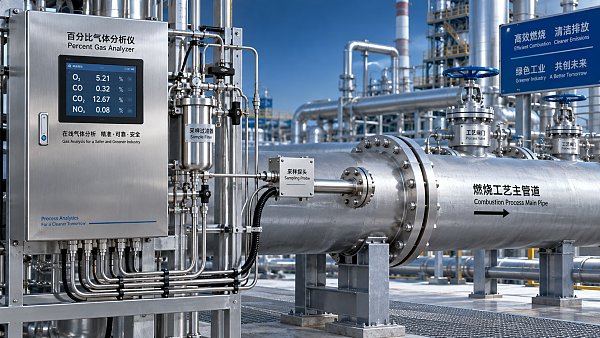
 How to select a percent range analyzer for process measurementsPercent range analyzer selection made practical: compare accuracy, sample systems, calibration, gas matrix, integration, and lifecycle cost for reliable process measurements.
 How explosion proof analysis verifies safe equipment for hazardous areasExplosion proof analysis verifies hazardous-area equipment by matching certifications, temperature ratings, installation details, and inspection controls for safer compliance.
 When does fixed gas detection need point sensors instead of open-path monitoring?Fixed gas detection: discover when point sensors outperform open-path monitoring for predictable leaks, enclosed zones, local alarms, and safer design decisions.
 How to choose industrial metrology systems for tight-tolerance partsIndustrial metrology guide for tight-tolerance parts: compare CMMs, optical scanners, gauges, uncertainty, workflow, and traceable inspection strategies.
 How process metrology reduces measurement variation in productionProcess metrology reduces production measurement variation by improving traceability, uncertainty control, calibration, and reliable quality decisions.
 How to select an industrial monitoring analyzer for harsh environmentsIndustrial monitoring analyzer selection for harsh environments: evaluate sampling, durability, hazardous-area compliance, accuracy, maintenance, and data reliability.
 How calibration intervals affect test and measurement equipment accuracyTest and measurement equipment calibration intervals directly affect accuracy, risk, compliance, and uptime. Learn how to set evidence-based schedules that protect critical decisions.
 When does process gas monitoring need continuous measurement?Process gas monitoring needs continuous measurement when rapid changes threaten safety, quality, compliance, or uptime. Learn how to specify reliable, actionable monitoring systems.
 How to prevent false alarms in power plant instrumentationPower plant instrumentation guide: prevent false alarms with reliable signal checks, smarter alarm settings, mode-based control, and actionable operator responses.
 How fixed gas detectors help prevent leaks in enclosed workspacesFixed gas detectors provide continuous leak monitoring in enclosed workspaces, enabling faster alarms, safer responses, and stronger protection for people and processes.
 How industrial gas analysis helps detect process contamination earlyIndustrial Gas Analysis helps detect oxygen, moisture, and hydrocarbon contamination early, enabling faster fault isolation, safer operations, and stronger process control.
 What drives environmental compliance continuous monitoring setup cost?Environmental compliance continuous monitoring setup cost: uncover hidden expenses, compare bids accurately, and build a reliable, audit-ready system.
 How to select gas analysis equipment for continuous emissions monitoringGas analysis equipment selection guide for reliable continuous emissions monitoring—compare technologies, sampling, calibration, compliance, and maintenance needs.
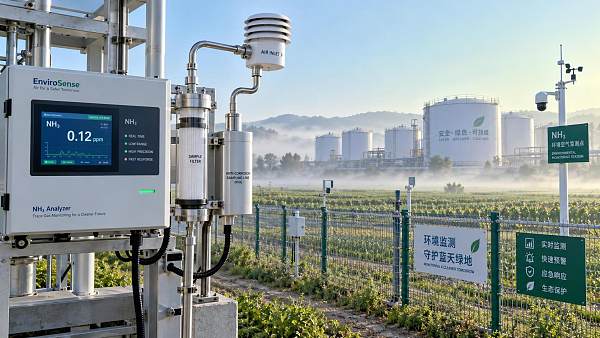
 What detection limit is needed for NH3 environmental monitoring?High accuracy NH3 analyzer for environmental monitoring: learn how to set the right detection limit, improve sampling reliability, and make defensible decisions.
 How to select a NOX analyzer for power plant emissions complianceNOX analyzer for power plant emissions: learn how to select a compliant, reliable CEMS solution with the right range, sample handling, calibration, and data integrity.
 How to evaluate a laser gas analyzer manufacturer in GermanyLaser gas analyzer manufacturer in Germany: compare accuracy, sample handling, interference control, calibration, and service to select a reliable solution.
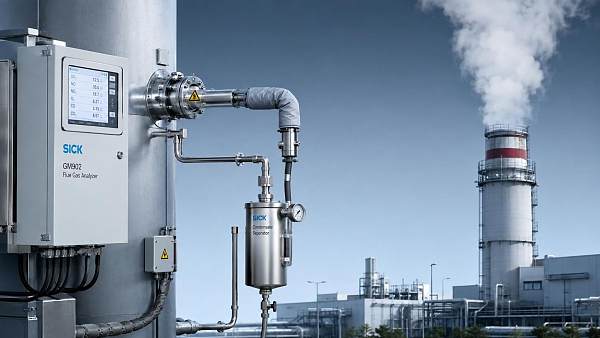
 How does a flue gas analyzer maintain accuracy in wet stack gas?Flue gas analyzer accuracy in wet stack gas depends on heated sampling, moisture correction, reliable sensors, and calibration. Explore key selection tips.













Search Categories
Search Categories
- Smart Meters & Power Quality
- Transformer Gas Analyzers
- BESS Thermal Runaway Detectors
- Energy, Power & Smart Grid Monitoring
- Optical Profilers & CMM
- Ultrasonic & X-Ray NDT
- Calibration Standards
- Precision Metrology & NDT
- Water Quality Analyzers
- CEMS & VOCs Monitors
- Price Trends
- Import & Export Updates
- Market Trends
- Industry News
- Industry Insights
Latest Article
- When does a laser gas analyzer meet stack emissions monitoring needs?Laser gas analyzer for stack emissions: learn when it delivers fast, reliable data, how to assess installation risks, and what to verify for CEMS compliance.Posted by:
- How to select a hazardous gas analyzer for confined spacesHazardous gas analyzer selection for confined spaces: compare sensors, sampling, certifications, alarms, and maintenance to protect workers and choose with confidence.Posted by:
- When is a single gas analyzer sufficient for workplace safety monitoring?Discover when a single gas analyzer delivers reliable workplace safety monitoring, and learn the key limits, calibration needs, and risks that require broader detection.Posted by:
Please give us a message
