
SR-2070 Analyzer vs Alternatives: Key Performance Checks


Choosing between the SR-2070 analyzer and competing instruments is not only a matter of specification sheets. In instrumentation, real value appears when accuracy, stability, service effort, and application fit remain reliable under daily operating conditions. This guide focuses on the key performance checks that matter most when comparing the SR-2070 analyzer with alternative analyzers across industrial, laboratory, environmental, and process-control settings.
Why a checklist-based evaluation matters
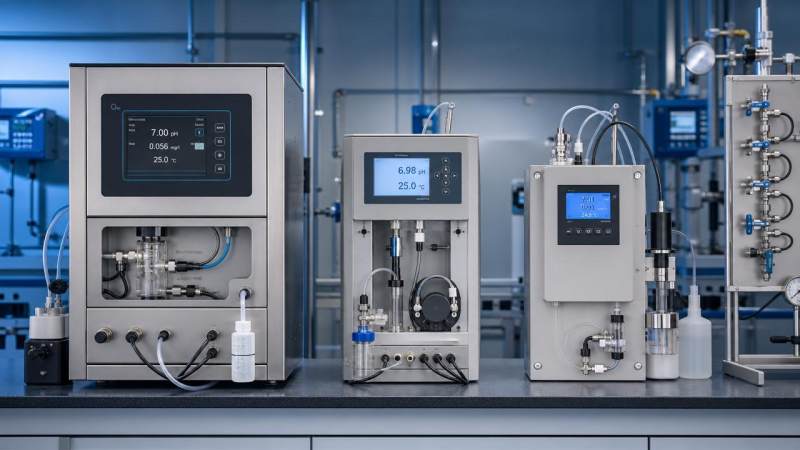
Analyzer comparisons often fail because buyers review only headline accuracy or price. That approach misses hidden differences in drift behavior, calibration effort, warm-up consistency, data integration, and maintenance intervals. A checklist-based review helps turn broad claims into measurable decision points.
For the SR-2070 analyzer, the best comparison method is to test how it performs under realistic load, sample variation, and environmental change. This avoids overvaluing a unit that looks strong in ideal conditions but weak in routine operation.
Core performance checklist for the SR-2070 analyzer
Use the following checklist to compare the SR-2070 analyzer with alternatives in a structured and repeatable way.
- Verify baseline accuracy using certified reference samples across low, mid, and high ranges, not just one point, to confirm whether the analyzer holds consistent measurement quality.
- Check repeatability by running the same sample multiple times under identical conditions and recording spread, deviation, and any unstable readings after warm-up or idle periods.
- Measure response time from sample introduction to stable output, especially where process control depends on fast correction and where delayed readings increase operational risk.
- Review zero drift and span drift over a full shift or longer cycle to see whether the SR-2070 analyzer maintains trustable results without frequent manual intervention.
- Compare calibration workload, including gas, liquid, or standard usage, technician steps, downtime, and the ease of restoring performance after maintenance or sensor replacement.
- Test sensitivity to temperature, humidity, vibration, dust, and sample contamination because field conditions in the instrumentation industry rarely match clean laboratory assumptions.
- Inspect detection range and lower-limit performance to confirm whether the analyzer can capture trace values or rapid concentration swings without excessive noise.
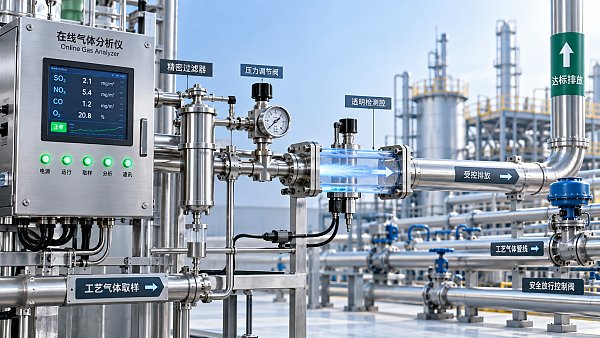
- Evaluate sample handling design, including filtration, conditioning, flow stability, dead volume, and cross-contamination control, since poor front-end handling can distort even good sensors.
- Confirm interface compatibility with PLC, DCS, SCADA, or laboratory information systems so the analyzer supports modern automation and digital traceability requirements.
- Review maintenance access, spare parts availability, consumable life, and fault diagnostics to estimate total ownership cost beyond the initial purchase comparison.
- Assess alarm logic, data logging, audit records, and remote diagnostics if the analyzer will support compliance, quality tracking, or continuous industrial monitoring.
- Validate long-term reliability by requesting field performance evidence, uptime history, and service feedback rather than relying only on brochure claims or nominal test results.
How the checks apply in different scenarios
Industrial manufacturing and automation
In manufacturing lines, the SR-2070 analyzer should be judged by response stability during process fluctuation. A slower analyzer may still be accurate, but delayed output can weaken control loops and raise scrap risk.
Integration also matters here. Check communication protocols, alarm response, and maintenance accessibility. If an analyzer interrupts production for calibration or cleaning too often, its real operating value drops quickly.
Environmental monitoring and utility systems
For environmental or utility applications, drift control and low-level detection become more important than raw speed. The SR-2070 analyzer should maintain stable readings through changing ambient temperature, moisture, and sample quality.
It is also useful to compare enclosure robustness, diagnostic alerts, and remote access capability. Many alternatives look competitive until outdoor exposure or unattended operation reveals service limitations.
Laboratory analysis and quality verification
In lab use, repeatability, traceability, and calibration simplicity often outweigh ruggedization. Compare the SR-2070 analyzer against alternatives by reviewing data export quality, method consistency, and standard recovery performance.
If the analyzer supports multiple sample types, verify carryover control and cleaning time. A unit that handles diverse samples with minimal reset effort can improve throughput and reduce result disputes.
Energy, power, and process infrastructure
In energy and power settings, analyzers often run continuously under demanding conditions. The SR-2070 analyzer should be checked for uptime, component life, and alarm reliability during continuous monitoring cycles.
Compare how each instrument behaves during startup, load change, and sample upset. Recovery speed after disturbance is often more valuable than ideal-state precision on a datasheet.
Commonly overlooked items and risk reminders
Ignoring sample conditioning
Many comparison errors come from evaluating only the analyzer core. If filters, moisture traps, pressure control, or flow conditioning differ, the results may reflect system design rather than analyzer quality.
Overlooking consumables and service intervals
A lower purchase price can hide higher operating cost. Compare reagents, sensors, pump parts, calibration media, and service frequency before deciding whether the SR-2070 analyzer or an alternative is more economical.
Trusting single-point accuracy claims
Some analyzers perform well near one calibration point but lose linearity elsewhere. Always test across the expected operating range, especially when process values can swing sharply.
Missing digital integration limits
An analyzer that cannot exchange data cleanly with control or reporting systems may create manual work, delay diagnostics, and reduce traceability. Integration capability is now a core performance factor, not an optional extra.
Practical execution steps for a fair comparison
- Define the real sample matrix, operating range, and environmental conditions before testing any analyzer.
- Use the same reference standards, sample preparation method, and timing sequence for every instrument.
- Record accuracy, repeatability, response time, drift, and maintenance actions in one comparison sheet.
- Include at least one extended run to observe stability after warm-up and through routine operating variation.
- Score integration, serviceability, and ownership cost alongside analytical performance metrics.
- Request field references or service evidence when shortlist results appear close.
A practical comparison usually reveals whether the SR-2070 analyzer delivers better long-term value through stable operation and lower support burden, or whether another option fits a narrower use case more effectively.
Conclusion and next action
The best analyzer choice depends on measured performance under real operating demands. When comparing the SR-2070 analyzer with alternatives, focus on accuracy across range, repeatability, drift, response speed, calibration effort, environmental tolerance, integration, and lifecycle cost.
Use this checklist as a working test plan, not just a reading guide. By documenting each performance check in the same conditions, you can select an analyzer with greater confidence, lower uncertainty, and stronger long-term reliability.
Recommended for You
 When does a laser gas analyzer meet stack emissions monitoring needs?Laser gas analyzer for stack emissions: learn when it delivers fast, reliable data, how to assess installation risks, and what to verify for CEMS compliance.
 How to select a hazardous gas analyzer for confined spacesHazardous gas analyzer selection for confined spaces: compare sensors, sampling, certifications, alarms, and maintenance to protect workers and choose with confidence.
 When is a single gas analyzer sufficient for workplace safety monitoring?Discover when a single gas analyzer delivers reliable workplace safety monitoring, and learn the key limits, calibration needs, and risks that require broader detection.
 How to choose an ambient gas analyzer for low-level leak detectionAmbient gas analyzer selection for low-level leak detection: compare sensitivity, cross-sensitivity, sampling design, alarms, and calibration for reliable site performance.
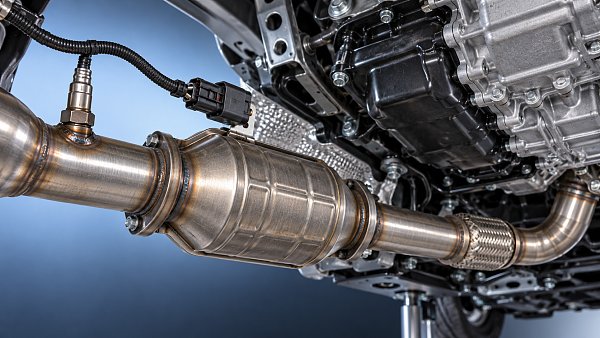
 How to tell when an oxygen sensor needs replacementOxygen sensor replacement signs explained: learn how live data, fault codes, wiring checks, and exhaust inspections pinpoint the real issue before you buy.
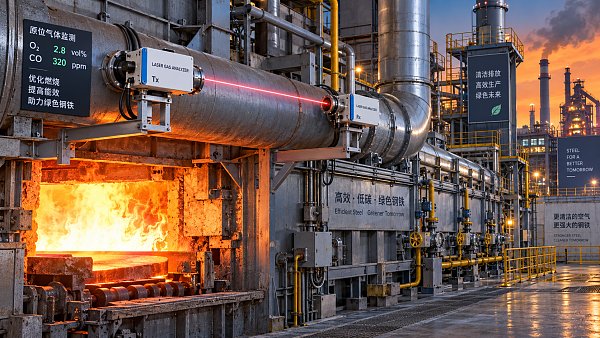
 How laser gas analyzers improve combustion control in steel furnacesLaser gas analyzer for steel industry applications delivers fast in-situ O₂ and CO data to optimize furnace combustion, cut fuel waste, and improve steel heating stability.
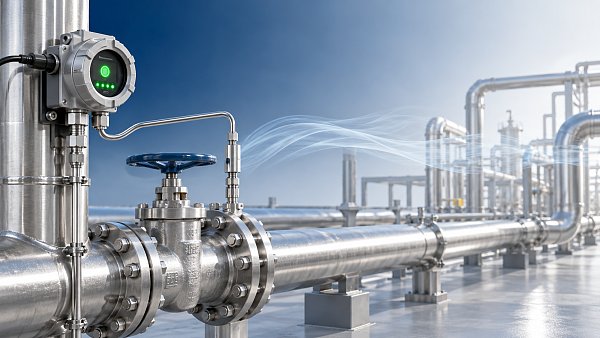
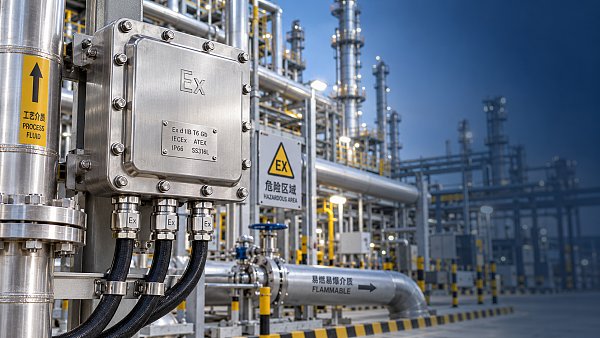
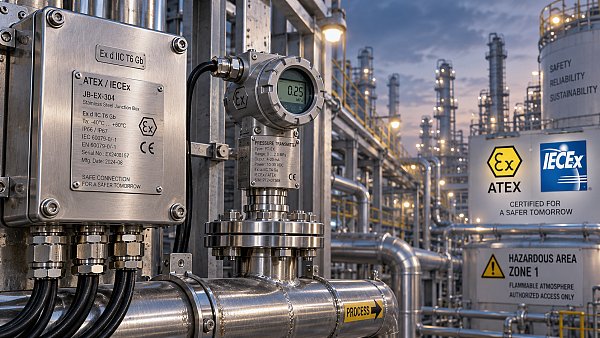
 How to verify whether explosion proof equipment meets site requirementsExplosion proof equipment verification made practical: match zones, gas or dust groups, temperature classes, certificates, and installation conditions for confident compliance.
 How industrial gas analysis helps detect contamination before releaseIndustrial Gas Analysis helps detect moisture, oil, oxygen, and toxic contaminants before release—protecting processes, ensuring compliance, and reducing costly risks.
 When is electrochemistry detection the right choice for water analysis?Electrochemistry detection for water analysis: learn when fast, reliable monitoring of ions, chlorine, pH, and more delivers actionable results.
 How industrial standards reduce quality risks in supplier selectionIndustrial Standard guidance helps quality and safety managers reduce supplier risks, verify compliance, strengthen traceability, and build resilient instrumentation supply chains.
 When does a multi-component system reduce installation complexity?Multi component systems reduce installation complexity when they eliminate field interfaces, streamline commissioning, and provide proven compatibility. Learn how to assess total cost and supplier accountability.
 How to size an industrial control shelter for outdoor equipmentIndustrial control shelter sizing guide: optimize layout, HVAC, access, safety, and expansion space for reliable outdoor equipment operations.
 How flue analysis helps verify combustion efficiencyFlue analysis verifies combustion efficiency by assessing O2, CO, CO2, and stack temperature to identify excess air, incomplete combustion, and heat losses.
 How to select industrial gas detectors for confined spacesIndustrial gas detectors for confined spaces: learn how to match sensors, sampling methods, alarms, and certifications to real atmospheric hazards.
 When does a laser oxygen analyzer outperform zirconia sensors?Laser oxygen analyzer vs. zirconia sensors: compare speed, selectivity, maintenance, gas chemistry, and installation needs to choose the right oxygen measurement solution.
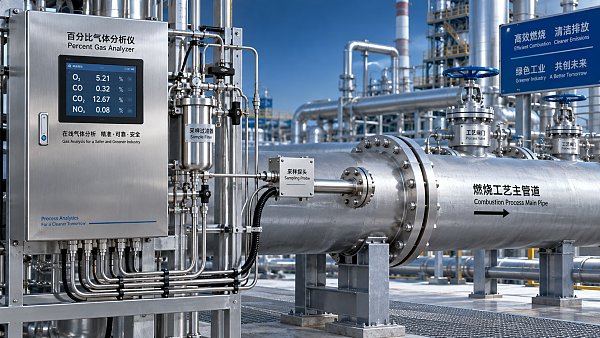
 How to select a percent range analyzer for process measurementsPercent range analyzer selection made practical: compare accuracy, sample systems, calibration, gas matrix, integration, and lifecycle cost for reliable process measurements.
 How explosion proof analysis verifies safe equipment for hazardous areasExplosion proof analysis verifies hazardous-area equipment by matching certifications, temperature ratings, installation details, and inspection controls for safer compliance.
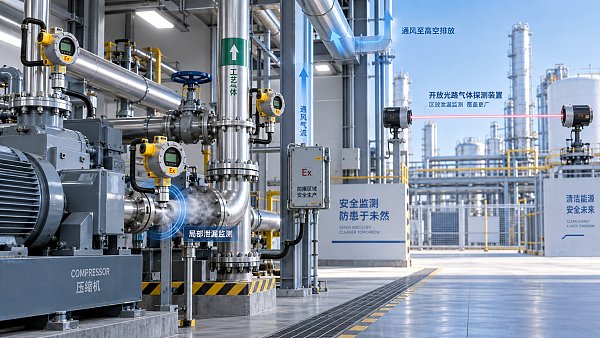
 When does fixed gas detection need point sensors instead of open-path monitoring?Fixed gas detection: discover when point sensors outperform open-path monitoring for predictable leaks, enclosed zones, local alarms, and safer design decisions.
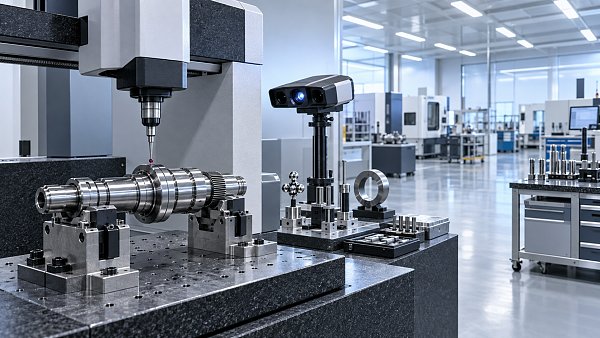
 How to choose industrial metrology systems for tight-tolerance partsIndustrial metrology guide for tight-tolerance parts: compare CMMs, optical scanners, gauges, uncertainty, workflow, and traceable inspection strategies.
 How process metrology reduces measurement variation in productionProcess metrology reduces production measurement variation by improving traceability, uncertainty control, calibration, and reliable quality decisions.
 How to select an industrial monitoring analyzer for harsh environmentsIndustrial monitoring analyzer selection for harsh environments: evaluate sampling, durability, hazardous-area compliance, accuracy, maintenance, and data reliability.
 How calibration intervals affect test and measurement equipment accuracyTest and measurement equipment calibration intervals directly affect accuracy, risk, compliance, and uptime. Learn how to set evidence-based schedules that protect critical decisions.
 When does process gas monitoring need continuous measurement?Process gas monitoring needs continuous measurement when rapid changes threaten safety, quality, compliance, or uptime. Learn how to specify reliable, actionable monitoring systems.
 How to prevent false alarms in power plant instrumentationPower plant instrumentation guide: prevent false alarms with reliable signal checks, smarter alarm settings, mode-based control, and actionable operator responses.
 How fixed gas detectors help prevent leaks in enclosed workspacesFixed gas detectors provide continuous leak monitoring in enclosed workspaces, enabling faster alarms, safer responses, and stronger protection for people and processes.
 How industrial gas analysis helps detect process contamination earlyIndustrial Gas Analysis helps detect oxygen, moisture, and hydrocarbon contamination early, enabling faster fault isolation, safer operations, and stronger process control.
 What drives environmental compliance continuous monitoring setup cost?Environmental compliance continuous monitoring setup cost: uncover hidden expenses, compare bids accurately, and build a reliable, audit-ready system.
 How to select gas analysis equipment for continuous emissions monitoringGas analysis equipment selection guide for reliable continuous emissions monitoring—compare technologies, sampling, calibration, compliance, and maintenance needs.
 What detection limit is needed for NH3 environmental monitoring?High accuracy NH3 analyzer for environmental monitoring: learn how to set the right detection limit, improve sampling reliability, and make defensible decisions.
 How to select a NOX analyzer for power plant emissions complianceNOX analyzer for power plant emissions: learn how to select a compliant, reliable CEMS solution with the right range, sample handling, calibration, and data integrity.
 How to evaluate a laser gas analyzer manufacturer in GermanyLaser gas analyzer manufacturer in Germany: compare accuracy, sample handling, interference control, calibration, and service to select a reliable solution.
 How does a flue gas analyzer maintain accuracy in wet stack gas?Flue gas analyzer accuracy in wet stack gas depends on heated sampling, moisture correction, reliable sensors, and calibration. Explore key selection tips.


Search Categories
Search Categories
- Smart Meters & Power Quality
- Transformer Gas Analyzers
- BESS Thermal Runaway Detectors
- Energy, Power & Smart Grid Monitoring
- Optical Profilers & CMM
- Ultrasonic & X-Ray NDT
- Calibration Standards
- Precision Metrology & NDT
- Water Quality Analyzers
- CEMS & VOCs Monitors
- Price Trends
- Import & Export Updates
- Market Trends
- Industry News
- Industry Insights
Latest Article
- When does a laser gas analyzer meet stack emissions monitoring needs?Laser gas analyzer for stack emissions: learn when it delivers fast, reliable data, how to assess installation risks, and what to verify for CEMS compliance.Posted by:
- How to select a hazardous gas analyzer for confined spacesHazardous gas analyzer selection for confined spaces: compare sensors, sampling, certifications, alarms, and maintenance to protect workers and choose with confidence.Posted by:
- When is a single gas analyzer sufficient for workplace safety monitoring?Discover when a single gas analyzer delivers reliable workplace safety monitoring, and learn the key limits, calibration needs, and risks that require broader detection.Posted by:
Please give us a message
