
IEC Approves China-Led Standard for Smart Sensor Semantic Interoperability


On May 15, 2026, the International Electrotechnical Commission (IEC) formally approved IEC TR 63372, the Guide for Semantic Interoperability of Smart Sensors, led by China. This technical report establishes unified definitions for data labels, unit encodings, and event semantics across multi-modal sensors—including temperature, pressure, and gas sensors. Industrial IoT integrators in Europe and North America, as well as global smart sensor exporters and certification service providers, should monitor developments closely: the standard is expected to reduce protocol translation costs and shorten Chinese smart sensor export certification cycles by 30% within 2026.
Event Overview
The International Electrotechnical Commission (IEC) approved IEC TR 63372—Guide for Semantic Interoperability of Smart Sensors—on May 15, 2026. The document is led by China and aims to standardize semantic representations for sensor data, specifically covering temperature, pressure, and gas sensing modalities. It defines consistent data labels, unit encodings, and event semantics. No further implementation timelines, adoption mandates, or national transposition plans have been publicly confirmed beyond this approval.
Industries Affected
Smart Sensor Exporters and OEM Manufacturers
These enterprises supply sensors to international industrial IoT platforms and system integrators. The approval directly affects their product certification workflows and technical documentation requirements. Impact manifests primarily in reduced need for proprietary semantic mapping layers when interfacing with Western platforms—potentially lowering integration support overhead and accelerating time-to-market for certified models.
Industrial IoT Integration Service Providers
Companies offering edge-to-cloud integration services for manufacturing, energy, or infrastructure clients rely on consistent sensor metadata to configure data ingestion pipelines. With harmonized semantic definitions, such providers may experience fewer manual configuration steps per sensor type, particularly when onboarding Chinese-sourced devices. However, actual impact depends on whether platform vendors update their ingestion logic to align with IEC TR 63372.
Certification and Conformity Assessment Bodies
Organizations issuing CE, UKCA, or other regional conformity marks for smart sensors may revise internal test protocols or guidance documents to reference IEC TR 63372’s semantic definitions. While not a mandatory standard, its inclusion in certification checklists could emerge as a de facto expectation—especially for clients targeting interoperability claims in tender submissions.
What Enterprises and Practitioners Should Monitor and Do Now
Track official IEC and national standardization body updates
Monitor announcements from IEC, SAC (Standardization Administration of China), and regional bodies (e.g., CENELEC, ANSI) for references to IEC TR 63372 in technical guidelines, certification schemes, or procurement specifications. Its status remains that of a Technical Report—not a normative standard—so formal referencing is not guaranteed.
Assess exposure across high-volume sensor categories and target markets
Review current export portfolios for temperature, pressure, and gas sensors shipped to EU and North American industrial customers. Identify whether those customers currently require custom semantic mapping or middleware; these are the segments most likely to benefit—or be asked to adopt—TR 63372-aligned labeling post-2026.
Distinguish between policy signal and operational readiness
This approval signals growing influence of Chinese technical proposals in foundational IoT interoperability domains—but does not equate to immediate regulatory change. No jurisdiction has announced mandatory application of IEC TR 63372. Enterprises should treat it as an emerging alignment opportunity, not a compliance deadline.
Prepare internal documentation and labeling templates for potential adoption
Manufacturers may begin reviewing sensor datasheets, firmware metadata schemas, and device ontology files to assess alignment gaps with IEC TR 63372’s semantic definitions. Early template adjustments—especially for new product families scheduled for launch in late 2026 or 2027—can ease future transition if adoption gains traction among key platform vendors.
Editorial Perspective / Industry Observation
Observably, this approval reflects a structural shift: China is increasingly shaping pre-normative technical frameworks in cross-domain digital infrastructure—not just hardware production. Analysis shows IEC TR 63372 functions less as an enforceable rule and more as a coordination tool to reduce friction in heterogeneous sensor ecosystems. From an industry perspective, its value hinges on voluntary uptake by platform developers and system integrators—not top-down mandates. Current momentum suggests it is best understood as a strong signal of convergence direction, rather than an implemented requirement. Continued observation is warranted for evidence of integration into commercial SDKs, cloud platform ingestion APIs, or public-sector procurement language.
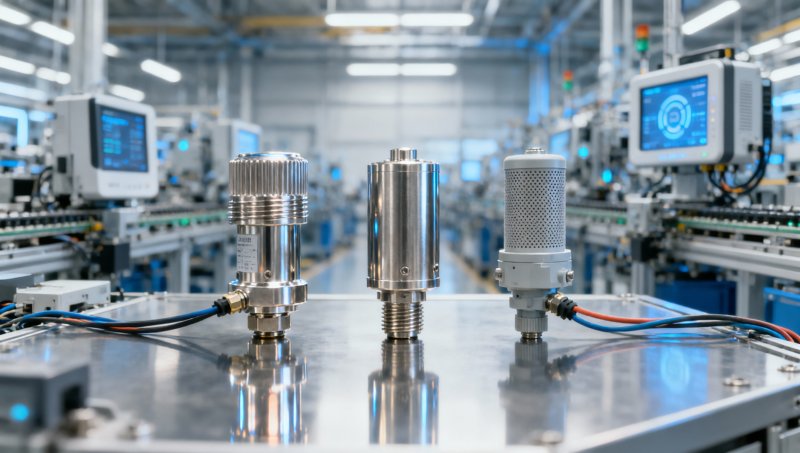
In summary, the IEC’s approval of IEC TR 63372 marks a step toward standardized semantic representation for multi-modal smart sensors—a development with tangible implications for exporters, integrators, and conformity assessors. It does not alter existing regulatory obligations, but introduces a reference framework that may gradually influence technical expectations in global industrial IoT deployments. For now, it is more accurately interpreted as a strategic alignment milestone than an operational inflection point.
Source: Official IEC announcement (May 15, 2026); confirmed scope and timeline per publicly released IEC TR 63372 project documentation.
Note: Adoption status by platform vendors, regional regulators, or certification bodies remains unconfirmed and subject to ongoing observation.
Recommended for You
 When does a laser gas analyzer meet stack emissions monitoring needs?Laser gas analyzer for stack emissions: learn when it delivers fast, reliable data, how to assess installation risks, and what to verify for CEMS compliance.
 How to select a hazardous gas analyzer for confined spacesHazardous gas analyzer selection for confined spaces: compare sensors, sampling, certifications, alarms, and maintenance to protect workers and choose with confidence.
 When is a single gas analyzer sufficient for workplace safety monitoring?Discover when a single gas analyzer delivers reliable workplace safety monitoring, and learn the key limits, calibration needs, and risks that require broader detection.
 How to choose an ambient gas analyzer for low-level leak detectionAmbient gas analyzer selection for low-level leak detection: compare sensitivity, cross-sensitivity, sampling design, alarms, and calibration for reliable site performance.
 How to tell when an oxygen sensor needs replacementOxygen sensor replacement signs explained: learn how live data, fault codes, wiring checks, and exhaust inspections pinpoint the real issue before you buy.
 How laser gas analyzers improve combustion control in steel furnacesLaser gas analyzer for steel industry applications delivers fast in-situ O₂ and CO data to optimize furnace combustion, cut fuel waste, and improve steel heating stability.
 How to verify whether explosion proof equipment meets site requirementsExplosion proof equipment verification made practical: match zones, gas or dust groups, temperature classes, certificates, and installation conditions for confident compliance.
 How industrial gas analysis helps detect contamination before releaseIndustrial Gas Analysis helps detect moisture, oil, oxygen, and toxic contaminants before release—protecting processes, ensuring compliance, and reducing costly risks.
 When is electrochemistry detection the right choice for water analysis?Electrochemistry detection for water analysis: learn when fast, reliable monitoring of ions, chlorine, pH, and more delivers actionable results.
 How industrial standards reduce quality risks in supplier selectionIndustrial Standard guidance helps quality and safety managers reduce supplier risks, verify compliance, strengthen traceability, and build resilient instrumentation supply chains.
 When does a multi-component system reduce installation complexity?Multi component systems reduce installation complexity when they eliminate field interfaces, streamline commissioning, and provide proven compatibility. Learn how to assess total cost and supplier accountability.
 How to size an industrial control shelter for outdoor equipmentIndustrial control shelter sizing guide: optimize layout, HVAC, access, safety, and expansion space for reliable outdoor equipment operations.
 How flue analysis helps verify combustion efficiencyFlue analysis verifies combustion efficiency by assessing O2, CO, CO2, and stack temperature to identify excess air, incomplete combustion, and heat losses.
 How to select industrial gas detectors for confined spacesIndustrial gas detectors for confined spaces: learn how to match sensors, sampling methods, alarms, and certifications to real atmospheric hazards.
 When does a laser oxygen analyzer outperform zirconia sensors?Laser oxygen analyzer vs. zirconia sensors: compare speed, selectivity, maintenance, gas chemistry, and installation needs to choose the right oxygen measurement solution.
 How to select a percent range analyzer for process measurementsPercent range analyzer selection made practical: compare accuracy, sample systems, calibration, gas matrix, integration, and lifecycle cost for reliable process measurements.
 How explosion proof analysis verifies safe equipment for hazardous areasExplosion proof analysis verifies hazardous-area equipment by matching certifications, temperature ratings, installation details, and inspection controls for safer compliance.
 When does fixed gas detection need point sensors instead of open-path monitoring?Fixed gas detection: discover when point sensors outperform open-path monitoring for predictable leaks, enclosed zones, local alarms, and safer design decisions.
 How to choose industrial metrology systems for tight-tolerance partsIndustrial metrology guide for tight-tolerance parts: compare CMMs, optical scanners, gauges, uncertainty, workflow, and traceable inspection strategies.
 How process metrology reduces measurement variation in productionProcess metrology reduces production measurement variation by improving traceability, uncertainty control, calibration, and reliable quality decisions.
 How to select an industrial monitoring analyzer for harsh environmentsIndustrial monitoring analyzer selection for harsh environments: evaluate sampling, durability, hazardous-area compliance, accuracy, maintenance, and data reliability.
 How calibration intervals affect test and measurement equipment accuracyTest and measurement equipment calibration intervals directly affect accuracy, risk, compliance, and uptime. Learn how to set evidence-based schedules that protect critical decisions.
 When does process gas monitoring need continuous measurement?Process gas monitoring needs continuous measurement when rapid changes threaten safety, quality, compliance, or uptime. Learn how to specify reliable, actionable monitoring systems.
 How to prevent false alarms in power plant instrumentationPower plant instrumentation guide: prevent false alarms with reliable signal checks, smarter alarm settings, mode-based control, and actionable operator responses.
 How fixed gas detectors help prevent leaks in enclosed workspacesFixed gas detectors provide continuous leak monitoring in enclosed workspaces, enabling faster alarms, safer responses, and stronger protection for people and processes.
 How industrial gas analysis helps detect process contamination earlyIndustrial Gas Analysis helps detect oxygen, moisture, and hydrocarbon contamination early, enabling faster fault isolation, safer operations, and stronger process control.
 What drives environmental compliance continuous monitoring setup cost?Environmental compliance continuous monitoring setup cost: uncover hidden expenses, compare bids accurately, and build a reliable, audit-ready system.
 How to select gas analysis equipment for continuous emissions monitoringGas analysis equipment selection guide for reliable continuous emissions monitoring—compare technologies, sampling, calibration, compliance, and maintenance needs.
 What detection limit is needed for NH3 environmental monitoring?High accuracy NH3 analyzer for environmental monitoring: learn how to set the right detection limit, improve sampling reliability, and make defensible decisions.
 How to select a NOX analyzer for power plant emissions complianceNOX analyzer for power plant emissions: learn how to select a compliant, reliable CEMS solution with the right range, sample handling, calibration, and data integrity.
 How to evaluate a laser gas analyzer manufacturer in GermanyLaser gas analyzer manufacturer in Germany: compare accuracy, sample handling, interference control, calibration, and service to select a reliable solution.
 How does a flue gas analyzer maintain accuracy in wet stack gas?Flue gas analyzer accuracy in wet stack gas depends on heated sampling, moisture correction, reliable sensors, and calibration. Explore key selection tips.



















Search Categories
Search Categories
- Smart Meters & Power Quality
- Transformer Gas Analyzers
- BESS Thermal Runaway Detectors
- Energy, Power & Smart Grid Monitoring
- Optical Profilers & CMM
- Ultrasonic & X-Ray NDT
- Calibration Standards
- Precision Metrology & NDT
- Water Quality Analyzers
- CEMS & VOCs Monitors
- Price Trends
- Import & Export Updates
- Market Trends
- Industry News
- Industry Insights
Latest Article
- When does a laser gas analyzer meet stack emissions monitoring needs?Laser gas analyzer for stack emissions: learn when it delivers fast, reliable data, how to assess installation risks, and what to verify for CEMS compliance.Posted by:
- How to select a hazardous gas analyzer for confined spacesHazardous gas analyzer selection for confined spaces: compare sensors, sampling, certifications, alarms, and maintenance to protect workers and choose with confidence.Posted by:
- When is a single gas analyzer sufficient for workplace safety monitoring?Discover when a single gas analyzer delivers reliable workplace safety monitoring, and learn the key limits, calibration needs, and risks that require broader detection.Posted by:
Please give us a message
