
IMF Warns AI Amplifies Financial Cybersecurity Risks


On May 15, 2026, the International Monetary Fund (IMF) issued a report highlighting how the deep integration of artificial intelligence into financial risk management and transaction monitoring is intensifying risks related to model hallucinations and adversarial sample attacks. This development is especially relevant for manufacturers of AI-powered detection equipment, cybersecurity service providers, financial technology vendors, and regulated financial institutions — all of whom must now navigate evolving expectations around explainable AI (XAI) verification.
Event Overview
On May 15, 2026, the IMF published a report stating that AI’s expanding use in financial risk control and real-time transaction surveillance is exacerbating vulnerabilities tied to model hallucination and adversarial sample exploitation. In response, regulatory authorities including Singapore’s Monetary Authority of Singapore (MAS) and the Central Bank of the United Arab Emirates (CBUAE) have begun requiring financial institutions to procure AI-based detection devices — such as anomaly traffic identifiers and behavioral biometric analysis terminals — with built-in explainability modules (XAI) and third-party stress-test validation.
Industries Affected
AI Detection Equipment Manufacturers
These firms supply hardware and embedded software used for real-time threat identification in banking and payment infrastructure. They are directly affected because regulators now mandate XAI functionality and third-party pressure testing as prerequisites for market access in key jurisdictions. Impact manifests in product certification timelines, R&D investment priorities, and post-deployment audit readiness.
Cybersecurity Service Providers
Organizations offering managed detection and response (MDR), AI model validation, or regulatory compliance support face heightened demand for XAI-specific assessment capabilities. Their service scope must now explicitly cover interpretability benchmarking and adversarial robustness evaluation — not just traditional penetration testing.
Financial Technology (FinTech) Vendors
Vendors embedding AI models into anti-fraud engines, credit scoring APIs, or AML monitoring platforms must ensure their models meet emerging XAI verification standards. Regulatory scrutiny now extends beyond model accuracy to include traceability of decision logic — particularly where automated actions trigger customer-facing outcomes.
Regulated Financial Institutions
Banks, payment processors, and digital asset custodians using AI-driven security tools must reassess procurement criteria and vendor due diligence protocols. Internal AI governance frameworks now need formal provisions for validating explainability claims and maintaining documentation for supervisory review.
What Enterprises and Practitioners Should Monitor and Do Now
Track regulatory guidance updates from MAS, CBUAE, and other early-adopter authorities
Current requirements originate from MAS and CBUAE, but similar language is expected in forthcoming revisions to EU’s DORA framework and U.S. FFIEC AI principles. Monitoring official consultations — not just final rules — helps anticipate implementation scope and timing.
Verify XAI module specifications against third-party test protocols
Procurement teams should request evidence of conformance with standardized XAI stress tests (e.g., SHAP-based fidelity checks, counterfactual robustness trials). Vendors’ self-reported explainability metrics alone no longer satisfy regulatory expectations.
Distinguish between policy signals and operational mandates
The IMF report itself does not impose binding obligations; it informs national regulators. Enterprises should treat MAS/CBUAE requirements as actionable benchmarks while recognizing that enforcement rigor and timeline vary across jurisdictions — some may adopt phased compliance windows.
Prepare documentation and validation workflows ahead of audits
Organizations deploying AI detection tools should begin compiling logs of XAI module configuration, test reports, and model versioning records. These materials are increasingly requested during supervisory examinations focused on AI governance.
Editorial Observation / Industry Perspective
Observably, this IMF report functions primarily as a policy catalyst rather than an immediate compliance trigger. It consolidates technical concerns already observed in financial AI deployments — notably cases where opaque model outputs led to undetected false negatives in fraud detection or inconsistent behavior under synthetic attack conditions. Analysis shows the emphasis on XAI verification reflects a broader regulatory pivot: from assessing AI inputs and outputs toward evaluating how decisions are derived and defended. From an industry perspective, the shift signals growing expectation that AI systems in critical financial infrastructure must be auditable at the reasoning level — not merely functional or statistically sound.
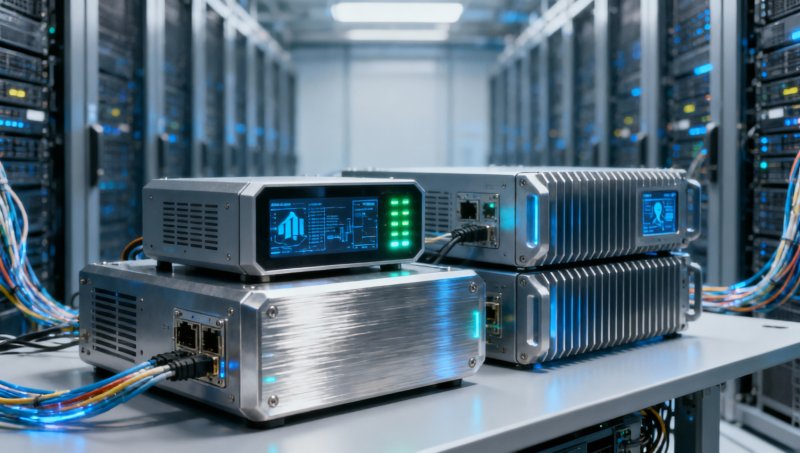
Concluding this update: The IMF’s May 2026 warning does not introduce new legal duties on its own, but it strengthens the rationale behind enforceable XAI verification requirements emerging in multiple jurisdictions. It is better understood as a coordinated signal — aligning technical risk awareness with regulatory action — rather than a standalone event. For stakeholders, the current priority is not theoretical debate about AI ethics, but practical alignment of product design, procurement standards, and audit preparedness with verified explainability benchmarks.
Source: International Monetary Fund (IMF) report, published May 15, 2026; public statements by Monetary Authority of Singapore (MAS) and Central Bank of the United Arab Emirates (CBUAE); no additional sources cited. Ongoing developments in EU DORA implementation and U.S. interagency AI guidance remain subject to observation.
Recommended for You
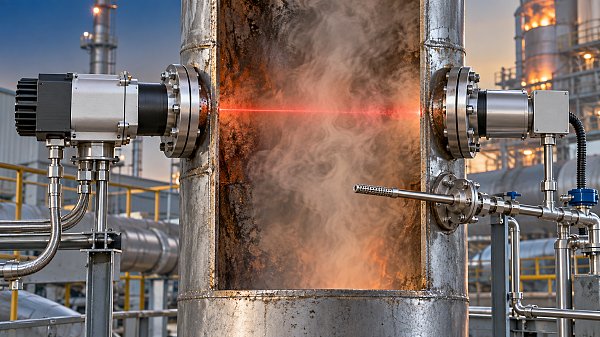
 When does a laser gas analyzer meet stack emissions monitoring needs?Laser gas analyzer for stack emissions: learn when it delivers fast, reliable data, how to assess installation risks, and what to verify for CEMS compliance.
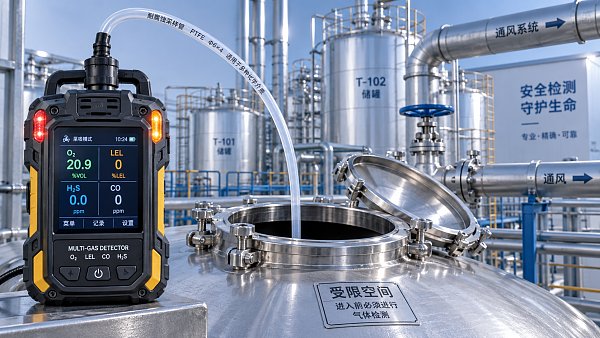
 How to select a hazardous gas analyzer for confined spacesHazardous gas analyzer selection for confined spaces: compare sensors, sampling, certifications, alarms, and maintenance to protect workers and choose with confidence.
 When is a single gas analyzer sufficient for workplace safety monitoring?Discover when a single gas analyzer delivers reliable workplace safety monitoring, and learn the key limits, calibration needs, and risks that require broader detection.
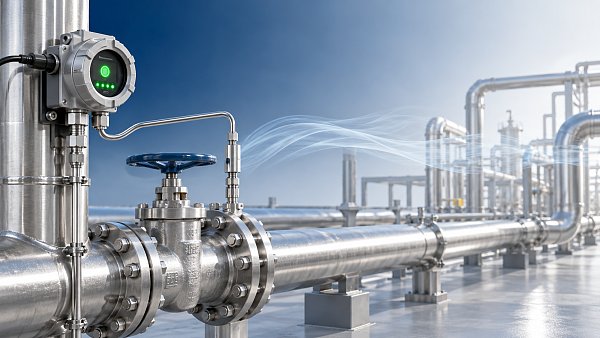
 How to choose an ambient gas analyzer for low-level leak detectionAmbient gas analyzer selection for low-level leak detection: compare sensitivity, cross-sensitivity, sampling design, alarms, and calibration for reliable site performance.
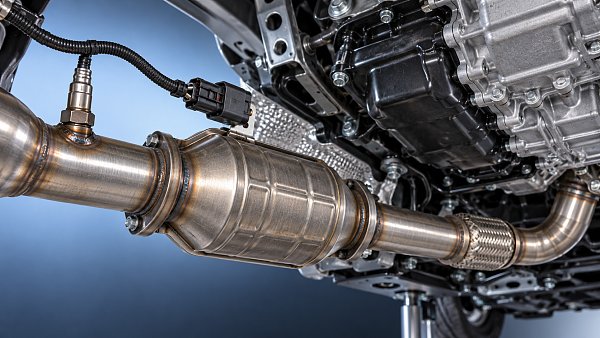
 How to tell when an oxygen sensor needs replacementOxygen sensor replacement signs explained: learn how live data, fault codes, wiring checks, and exhaust inspections pinpoint the real issue before you buy.
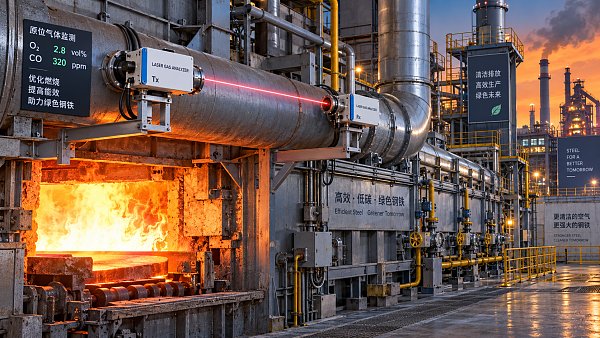
 How laser gas analyzers improve combustion control in steel furnacesLaser gas analyzer for steel industry applications delivers fast in-situ O₂ and CO data to optimize furnace combustion, cut fuel waste, and improve steel heating stability.
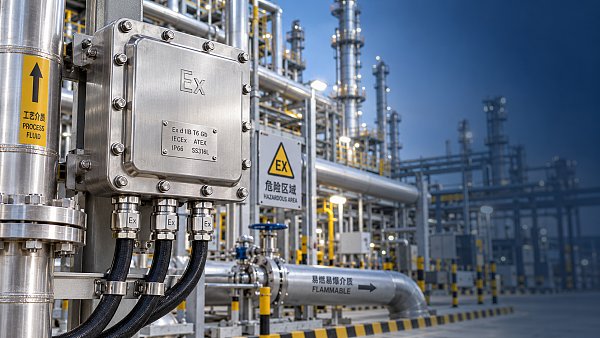
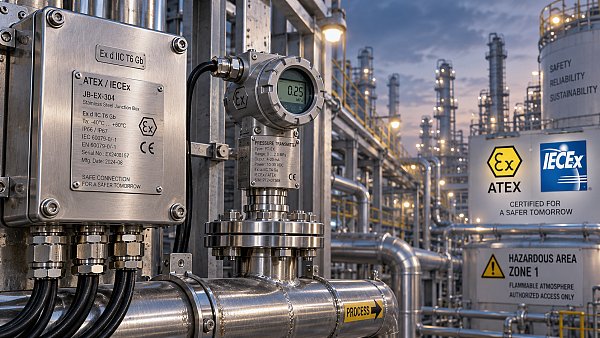
 How to verify whether explosion proof equipment meets site requirementsExplosion proof equipment verification made practical: match zones, gas or dust groups, temperature classes, certificates, and installation conditions for confident compliance.
 How industrial gas analysis helps detect contamination before releaseIndustrial Gas Analysis helps detect moisture, oil, oxygen, and toxic contaminants before release—protecting processes, ensuring compliance, and reducing costly risks.
 When is electrochemistry detection the right choice for water analysis?Electrochemistry detection for water analysis: learn when fast, reliable monitoring of ions, chlorine, pH, and more delivers actionable results.
 How industrial standards reduce quality risks in supplier selectionIndustrial Standard guidance helps quality and safety managers reduce supplier risks, verify compliance, strengthen traceability, and build resilient instrumentation supply chains.
 When does a multi-component system reduce installation complexity?Multi component systems reduce installation complexity when they eliminate field interfaces, streamline commissioning, and provide proven compatibility. Learn how to assess total cost and supplier accountability.
 How to size an industrial control shelter for outdoor equipmentIndustrial control shelter sizing guide: optimize layout, HVAC, access, safety, and expansion space for reliable outdoor equipment operations.
 How flue analysis helps verify combustion efficiencyFlue analysis verifies combustion efficiency by assessing O2, CO, CO2, and stack temperature to identify excess air, incomplete combustion, and heat losses.
 How to select industrial gas detectors for confined spacesIndustrial gas detectors for confined spaces: learn how to match sensors, sampling methods, alarms, and certifications to real atmospheric hazards.
 When does a laser oxygen analyzer outperform zirconia sensors?Laser oxygen analyzer vs. zirconia sensors: compare speed, selectivity, maintenance, gas chemistry, and installation needs to choose the right oxygen measurement solution.
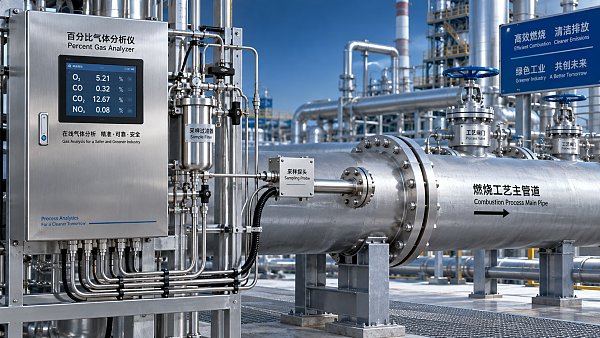
 How to select a percent range analyzer for process measurementsPercent range analyzer selection made practical: compare accuracy, sample systems, calibration, gas matrix, integration, and lifecycle cost for reliable process measurements.
 How explosion proof analysis verifies safe equipment for hazardous areasExplosion proof analysis verifies hazardous-area equipment by matching certifications, temperature ratings, installation details, and inspection controls for safer compliance.
 When does fixed gas detection need point sensors instead of open-path monitoring?Fixed gas detection: discover when point sensors outperform open-path monitoring for predictable leaks, enclosed zones, local alarms, and safer design decisions.
 How to choose industrial metrology systems for tight-tolerance partsIndustrial metrology guide for tight-tolerance parts: compare CMMs, optical scanners, gauges, uncertainty, workflow, and traceable inspection strategies.
 How process metrology reduces measurement variation in productionProcess metrology reduces production measurement variation by improving traceability, uncertainty control, calibration, and reliable quality decisions.
 How to select an industrial monitoring analyzer for harsh environmentsIndustrial monitoring analyzer selection for harsh environments: evaluate sampling, durability, hazardous-area compliance, accuracy, maintenance, and data reliability.
 How calibration intervals affect test and measurement equipment accuracyTest and measurement equipment calibration intervals directly affect accuracy, risk, compliance, and uptime. Learn how to set evidence-based schedules that protect critical decisions.
 When does process gas monitoring need continuous measurement?Process gas monitoring needs continuous measurement when rapid changes threaten safety, quality, compliance, or uptime. Learn how to specify reliable, actionable monitoring systems.
 How to prevent false alarms in power plant instrumentationPower plant instrumentation guide: prevent false alarms with reliable signal checks, smarter alarm settings, mode-based control, and actionable operator responses.
 How fixed gas detectors help prevent leaks in enclosed workspacesFixed gas detectors provide continuous leak monitoring in enclosed workspaces, enabling faster alarms, safer responses, and stronger protection for people and processes.
 How industrial gas analysis helps detect process contamination earlyIndustrial Gas Analysis helps detect oxygen, moisture, and hydrocarbon contamination early, enabling faster fault isolation, safer operations, and stronger process control.
 What drives environmental compliance continuous monitoring setup cost?Environmental compliance continuous monitoring setup cost: uncover hidden expenses, compare bids accurately, and build a reliable, audit-ready system.
 How to select gas analysis equipment for continuous emissions monitoringGas analysis equipment selection guide for reliable continuous emissions monitoring—compare technologies, sampling, calibration, compliance, and maintenance needs.
 What detection limit is needed for NH3 environmental monitoring?High accuracy NH3 analyzer for environmental monitoring: learn how to set the right detection limit, improve sampling reliability, and make defensible decisions.
 How to select a NOX analyzer for power plant emissions complianceNOX analyzer for power plant emissions: learn how to select a compliant, reliable CEMS solution with the right range, sample handling, calibration, and data integrity.
 How to evaluate a laser gas analyzer manufacturer in GermanyLaser gas analyzer manufacturer in Germany: compare accuracy, sample handling, interference control, calibration, and service to select a reliable solution.
 How does a flue gas analyzer maintain accuracy in wet stack gas?Flue gas analyzer accuracy in wet stack gas depends on heated sampling, moisture correction, reliable sensors, and calibration. Explore key selection tips.







Search Categories
Search Categories
- Smart Meters & Power Quality
- Transformer Gas Analyzers
- BESS Thermal Runaway Detectors
- Energy, Power & Smart Grid Monitoring
- Optical Profilers & CMM
- Ultrasonic & X-Ray NDT
- Calibration Standards
- Precision Metrology & NDT
- Water Quality Analyzers
- CEMS & VOCs Monitors
- Price Trends
- Import & Export Updates
- Market Trends
- Industry News
- Industry Insights
Latest Article
- When does a laser gas analyzer meet stack emissions monitoring needs?Laser gas analyzer for stack emissions: learn when it delivers fast, reliable data, how to assess installation risks, and what to verify for CEMS compliance.Posted by:
- How to select a hazardous gas analyzer for confined spacesHazardous gas analyzer selection for confined spaces: compare sensors, sampling, certifications, alarms, and maintenance to protect workers and choose with confidence.Posted by:
- When is a single gas analyzer sufficient for workplace safety monitoring?Discover when a single gas analyzer delivers reliable workplace safety monitoring, and learn the key limits, calibration needs, and risks that require broader detection.Posted by:
Please give us a message
