
How Remote Monitoring Devices Cut Downtime in Field Operations


In field operations, unplanned downtime can delay schedules, increase costs, and put project targets at risk. Remote monitoring devices help project managers and engineering leaders gain real-time visibility into equipment status, site conditions, and performance trends, enabling faster decisions and proactive maintenance. As field environments grow more complex, these technologies are becoming essential for improving reliability, reducing disruption, and keeping operations on track.
For project leaders in instrumentation-heavy environments, the cost of not seeing a problem early is rarely limited to one failed asset. A pressure transmitter drifting out of range, a pump running above its normal vibration band, or a remote power cabinet overheating can trigger delays across inspection, safety, quality, and handover milestones.
This is why remote monitoring devices are no longer viewed as optional add-ons. In industrial manufacturing, energy sites, environmental monitoring networks, laboratory-linked field systems, construction projects, and automation deployments, these devices help teams reduce downtime by turning scattered operating data into timely action.
Why downtime escalates so quickly in field operations
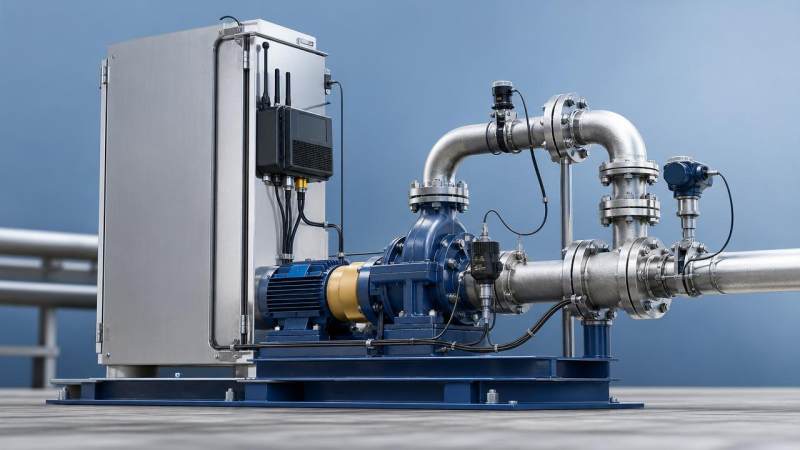
Field operations combine moving equipment, distributed assets, changing weather, limited staffing, and strict schedule dependencies. In many projects, a single service interruption of 2 to 4 hours can affect inspection windows, subcontractor sequencing, transport planning, and commissioning targets for the entire week.
Instrumentation systems are especially sensitive because they sit at the point where measurement and control decisions are made. If data quality degrades, operators may not immediately recognize whether the issue comes from the process, the sensor, the network, or the control logic.
Common sources of avoidable downtime
Project managers often discover that downtime is not caused by one dramatic failure. More often, it grows from small warning signs that were missed for 3 to 7 days. Remote monitoring devices reduce this blind spot by collecting status signals before the disruption becomes visible on site.
- Sensor drift in pressure, temperature, flow, or level measurement loops
- Abnormal vibration, current draw, or thermal rise in rotating equipment
- Power instability in remote cabinets, gateways, or battery-backed systems
- Communication loss between field instruments and supervisory platforms
- Environmental exposure such as moisture, dust, or temperature extremes beyond operating limits
The schedule impact is broader than equipment repair
A repair task may take only 45 minutes, but the total loss can be much higher. Access permits, technician travel, safety isolation, spare part confirmation, and restart verification can push the real recovery cycle to 6 or even 12 hours in remote locations.
For engineering project leaders, this means the true value of remote monitoring devices lies in earlier awareness and better prioritization. Catching a deviation at the warning stage can be more valuable than responding quickly after a shutdown has already occurred.
The table below shows how typical field issues develop and where remote monitoring devices make the biggest difference in response timing and operational continuity.
The key lesson is that downtime often starts as a measurable deviation. When remote monitoring devices capture trend data instead of only final alarm states, project teams gain a practical window for intervention, usually hours or days before a stoppage becomes unavoidable.
How remote monitoring devices cut downtime in practice
Remote monitoring devices reduce downtime by improving three operational capabilities at once: early detection, faster response, and better maintenance planning. This matters most in field deployments where assets are spread across multiple zones and site visits may require 1 to 3 technicians plus access coordination.
1. They detect degradation before failure
Instead of relying on periodic manual checks every 7, 14, or 30 days, remote monitoring devices provide continuous or scheduled data collection. Even a 15-minute sampling interval can reveal slow changes in pressure stability, enclosure temperature, fluid level, or energy consumption.
This allows project managers to move from reactive repair to condition-based maintenance. For example, a temperature rise from 48°C to 61°C across 5 days may not yet trigger shutdown, but it is a strong signal to inspect cooling airflow, terminal tightness, or internal load distribution.
2. They shorten diagnosis time
When a field issue occurs, the first question is not always how to fix it. It is often how to identify the actual cause. Remote monitoring devices reduce diagnosis time by combining process values, device health indicators, and communication status in one view.
Without remote visibility, teams may send personnel to inspect cables, process conditions, and instrument hardware separately. With usable live data, the team can often decide within 10 to 20 minutes whether the issue is mechanical, electrical, environmental, or network-related.
3. They improve maintenance scheduling
Unplanned site visits are expensive because they disrupt labor allocation and often require urgent logistics. Remote monitoring devices support maintenance batching, meaning teams can group 3 to 5 inspection tasks in one trip based on priority, alarm category, and spare part readiness.
This is especially useful in instrumentation projects with mixed assets such as analyzers, pressure transmitters, flow meters, data loggers, and PLC-linked cabinets. Rather than servicing everything on a fixed calendar, teams can service what shows measurable deterioration.
Typical downtime reduction mechanisms
Not every site uses the same architecture, but most successful deployments share a similar logic chain. The list below outlines a 5-step operational sequence used in many industrial and engineering field environments.
- Acquire data from critical sensors and device health points
- Apply thresholds, trend rules, or deviation alerts
- Route alarms to the responsible project or maintenance team
- Verify root cause remotely before dispatch
- Schedule corrective action with the right tools, parts, and personnel
When this cycle is implemented well, downtime is reduced not by one dramatic technology feature, but by dozens of small operational decisions made earlier and with better evidence.
What project managers should monitor first
A common mistake is trying to monitor every possible data point from day one. For better returns, project managers should begin with assets whose failure would stop production, delay commissioning, interrupt compliance records, or create safety exposure within 1 shift.
Priority assets and signals
In instrumentation-led field operations, the first monitoring layer typically includes 4 categories: process integrity, asset health, utility status, and environmental conditions. Each category supports a different decision path for maintenance and project control.
The following table can help engineering leaders decide where remote monitoring devices deliver the highest value during the first deployment phase.
For many projects, starting with 10 to 20 high-impact points produces better results than collecting 200 low-priority signals. The first goal is not maximum data volume. It is faster intervention on the few events most likely to cause schedule disruption.
Useful alert design principles
Alarm overload can be almost as damaging as no alarm at all. A practical setup uses at least 3 levels: advisory, warning, and critical. Advisory alerts support planning, warning alerts trigger review within the same shift, and critical alerts require immediate action or dispatch.
For example, a cabinet temperature threshold might be structured at 40°C, 50°C, and 60°C, while a battery health alert could use voltage decline, discharge duration, and recharge failure as separate conditions rather than one simple low-voltage alarm.
How to choose remote monitoring devices for field reliability
Selecting remote monitoring devices is not only a technology decision. It is also a risk control decision. A device that performs well in a clean indoor test area may struggle in dusty, wet, high-vibration, or high-temperature field conditions if the deployment requirements were not defined clearly.
Core selection criteria for engineering projects
- Measurement compatibility with the target parameters and signal types
- Environmental durability across expected temperature and humidity ranges
- Communication options such as wired, cellular, industrial bus, or hybrid links
- Power strategy, including mains, solar-assisted, or battery-backed operation
- Alarm logic, data logging interval, and local fail-safe capability
- Integration effort with SCADA, PLC, historian, or maintenance platforms
Questions to ask before purchase
Project managers should validate at least 6 points before finalizing a specification: what must be measured, how often it must be sampled, how quickly alarms must be delivered, what happens during communication loss, what maintenance access is available, and how data will be used after collection.
It is also wise to map the device choice to the project stage. During temporary construction or commissioning, rapid deployment and basic alarming may be enough. During long-term operation, teams usually need stronger data retention, better diagnostics, and lower ongoing service effort over 12 to 36 months.
Common procurement mistakes
One frequent mistake is choosing solely on unit price. A lower-cost device can become expensive if it requires frequent site recalibration, has limited alarm flexibility, or cannot support the process variables that matter most. Another mistake is ignoring installation conditions such as enclosure heat load or antenna placement.
A better procurement approach compares total deployment value over three layers: hardware fit, implementation effort, and operating continuity. For project-driven organizations, the fastest return often comes from fewer emergency visits, cleaner root-cause analysis, and better protection of project milestones.
Implementation steps that improve adoption and results
Even capable remote monitoring devices will not reduce downtime if the rollout is rushed or disconnected from field workflows. A controlled implementation typically takes place in 3 phases: pilot definition, operational tuning, and scaled deployment.
Phase 1: Define the pilot scope
Start with one process area, one remote station group, or one equipment class. Limit the pilot to assets that generate clear operational value, such as critical pumps, environmental cabinets, flow measurement nodes, or power distribution points. A 30 to 60 day pilot is usually enough to validate alarm quality and data usefulness.
Phase 2: Tune thresholds and response workflows
After installation, teams should review false alarms, missing alerts, and communication stability weekly during the first month. This stage is where remote monitoring devices become operational tools rather than simple data collectors. The best threshold is the one that leads to the right maintenance action at the right time.
Phase 3: Scale with standardization
Once the pilot proves value, standardize naming rules, alarm categories, reporting intervals, spare part strategy, and maintenance ownership. This reduces confusion when expanding from 10 monitored assets to 50 or more across multiple field teams or project zones.
Governance matters as much as hardware
Project leaders should define who reviews alerts, who approves dispatch, who closes the event, and how lessons learned are captured. A simple response matrix with 3 severity levels and 2 escalation paths can prevent delays that occur when alarms are seen but not owned.
Final considerations for project and engineering leaders
Remote monitoring devices create the most value when they are matched to operational risk, not installed for data volume alone. In the instrumentation industry, where pressure, temperature, flow, level, analytical quality, and control availability directly affect performance, better visibility can protect both equipment uptime and project delivery confidence.
For project managers and engineering decision-makers, the practical goal is clear: identify the 10 to 20 signals that matter most, establish useful thresholds, and connect those alerts to real maintenance actions. That is how remote monitoring devices move from a technical feature to a measurable downtime reduction tool.
If you are evaluating monitoring solutions for industrial field operations, environmental systems, remote instrumentation stations, or automation projects, now is the right time to review your current downtime risks and response gaps. Contact us to discuss product details, request a tailored monitoring plan, or explore a solution designed around your field conditions and project priorities.
Recommended for You
 When does a laser gas analyzer meet stack emissions monitoring needs?Laser gas analyzer for stack emissions: learn when it delivers fast, reliable data, how to assess installation risks, and what to verify for CEMS compliance.
 How to select a hazardous gas analyzer for confined spacesHazardous gas analyzer selection for confined spaces: compare sensors, sampling, certifications, alarms, and maintenance to protect workers and choose with confidence.
 When is a single gas analyzer sufficient for workplace safety monitoring?Discover when a single gas analyzer delivers reliable workplace safety monitoring, and learn the key limits, calibration needs, and risks that require broader detection.
 How to choose an ambient gas analyzer for low-level leak detectionAmbient gas analyzer selection for low-level leak detection: compare sensitivity, cross-sensitivity, sampling design, alarms, and calibration for reliable site performance.
 How to tell when an oxygen sensor needs replacementOxygen sensor replacement signs explained: learn how live data, fault codes, wiring checks, and exhaust inspections pinpoint the real issue before you buy.
 How laser gas analyzers improve combustion control in steel furnacesLaser gas analyzer for steel industry applications delivers fast in-situ O₂ and CO data to optimize furnace combustion, cut fuel waste, and improve steel heating stability.
 How to verify whether explosion proof equipment meets site requirementsExplosion proof equipment verification made practical: match zones, gas or dust groups, temperature classes, certificates, and installation conditions for confident compliance.
 How industrial gas analysis helps detect contamination before releaseIndustrial Gas Analysis helps detect moisture, oil, oxygen, and toxic contaminants before release—protecting processes, ensuring compliance, and reducing costly risks.
 When is electrochemistry detection the right choice for water analysis?Electrochemistry detection for water analysis: learn when fast, reliable monitoring of ions, chlorine, pH, and more delivers actionable results.
 How industrial standards reduce quality risks in supplier selectionIndustrial Standard guidance helps quality and safety managers reduce supplier risks, verify compliance, strengthen traceability, and build resilient instrumentation supply chains.
 When does a multi-component system reduce installation complexity?Multi component systems reduce installation complexity when they eliminate field interfaces, streamline commissioning, and provide proven compatibility. Learn how to assess total cost and supplier accountability.
 How to size an industrial control shelter for outdoor equipmentIndustrial control shelter sizing guide: optimize layout, HVAC, access, safety, and expansion space for reliable outdoor equipment operations.
 How flue analysis helps verify combustion efficiencyFlue analysis verifies combustion efficiency by assessing O2, CO, CO2, and stack temperature to identify excess air, incomplete combustion, and heat losses.
 How to select industrial gas detectors for confined spacesIndustrial gas detectors for confined spaces: learn how to match sensors, sampling methods, alarms, and certifications to real atmospheric hazards.
 When does a laser oxygen analyzer outperform zirconia sensors?Laser oxygen analyzer vs. zirconia sensors: compare speed, selectivity, maintenance, gas chemistry, and installation needs to choose the right oxygen measurement solution.
 How to select a percent range analyzer for process measurementsPercent range analyzer selection made practical: compare accuracy, sample systems, calibration, gas matrix, integration, and lifecycle cost for reliable process measurements.
 How explosion proof analysis verifies safe equipment for hazardous areasExplosion proof analysis verifies hazardous-area equipment by matching certifications, temperature ratings, installation details, and inspection controls for safer compliance.
 When does fixed gas detection need point sensors instead of open-path monitoring?Fixed gas detection: discover when point sensors outperform open-path monitoring for predictable leaks, enclosed zones, local alarms, and safer design decisions.
 How to choose industrial metrology systems for tight-tolerance partsIndustrial metrology guide for tight-tolerance parts: compare CMMs, optical scanners, gauges, uncertainty, workflow, and traceable inspection strategies.
 How process metrology reduces measurement variation in productionProcess metrology reduces production measurement variation by improving traceability, uncertainty control, calibration, and reliable quality decisions.
 How to select an industrial monitoring analyzer for harsh environmentsIndustrial monitoring analyzer selection for harsh environments: evaluate sampling, durability, hazardous-area compliance, accuracy, maintenance, and data reliability.
 How calibration intervals affect test and measurement equipment accuracyTest and measurement equipment calibration intervals directly affect accuracy, risk, compliance, and uptime. Learn how to set evidence-based schedules that protect critical decisions.
 When does process gas monitoring need continuous measurement?Process gas monitoring needs continuous measurement when rapid changes threaten safety, quality, compliance, or uptime. Learn how to specify reliable, actionable monitoring systems.
 How to prevent false alarms in power plant instrumentationPower plant instrumentation guide: prevent false alarms with reliable signal checks, smarter alarm settings, mode-based control, and actionable operator responses.
 How fixed gas detectors help prevent leaks in enclosed workspacesFixed gas detectors provide continuous leak monitoring in enclosed workspaces, enabling faster alarms, safer responses, and stronger protection for people and processes.
 How industrial gas analysis helps detect process contamination earlyIndustrial Gas Analysis helps detect oxygen, moisture, and hydrocarbon contamination early, enabling faster fault isolation, safer operations, and stronger process control.
 What drives environmental compliance continuous monitoring setup cost?Environmental compliance continuous monitoring setup cost: uncover hidden expenses, compare bids accurately, and build a reliable, audit-ready system.
 How to select gas analysis equipment for continuous emissions monitoringGas analysis equipment selection guide for reliable continuous emissions monitoring—compare technologies, sampling, calibration, compliance, and maintenance needs.
 What detection limit is needed for NH3 environmental monitoring?High accuracy NH3 analyzer for environmental monitoring: learn how to set the right detection limit, improve sampling reliability, and make defensible decisions.
 How to select a NOX analyzer for power plant emissions complianceNOX analyzer for power plant emissions: learn how to select a compliant, reliable CEMS solution with the right range, sample handling, calibration, and data integrity.
 How to evaluate a laser gas analyzer manufacturer in GermanyLaser gas analyzer manufacturer in Germany: compare accuracy, sample handling, interference control, calibration, and service to select a reliable solution.
 How does a flue gas analyzer maintain accuracy in wet stack gas?Flue gas analyzer accuracy in wet stack gas depends on heated sampling, moisture correction, reliable sensors, and calibration. Explore key selection tips.




Search Categories
Search Categories
- Smart Meters & Power Quality
- Transformer Gas Analyzers
- BESS Thermal Runaway Detectors
- Energy, Power & Smart Grid Monitoring
- Optical Profilers & CMM
- Ultrasonic & X-Ray NDT
- Calibration Standards
- Precision Metrology & NDT
- Water Quality Analyzers
- CEMS & VOCs Monitors
- Price Trends
- Import & Export Updates
- Market Trends
- Industry News
- Industry Insights
Latest Article
- When does a laser gas analyzer meet stack emissions monitoring needs?Laser gas analyzer for stack emissions: learn when it delivers fast, reliable data, how to assess installation risks, and what to verify for CEMS compliance.Posted by:
- How to select a hazardous gas analyzer for confined spacesHazardous gas analyzer selection for confined spaces: compare sensors, sampling, certifications, alarms, and maintenance to protect workers and choose with confidence.Posted by:
- When is a single gas analyzer sufficient for workplace safety monitoring?Discover when a single gas analyzer delivers reliable workplace safety monitoring, and learn the key limits, calibration needs, and risks that require broader detection.Posted by:
Please give us a message
