
CO2 Analyzer for Brewery Applications: What Impacts Accuracy Most?


In brewing, carbonation is not a minor finishing detail. It shapes mouthfeel, sensory consistency, package stability, and even how a brand is perceived. That is why a CO2 analyzer for brewery applications matters far beyond the cellar. Its reading influences process control, quality checks, and troubleshooting decisions. Yet accuracy rarely depends on the analyzer alone. It depends on the full measurement environment, from sample handling to calibration discipline.
Why accuracy has become a bigger issue in modern breweries
Breweries now operate with tighter product specifications, faster changeovers, and more digital quality records. A small CO2 deviation can ripple through filling performance, taste uniformity, and release timing.
That pressure is not unique to brewing. Across process industries, instrumentation is increasingly treated as a decision layer, not just a measurement device.
This broader view aligns with the perspective promoted by Global Instrument Hub, where measurement quality is tied directly to operational truth, automation reliability, and supply chain confidence.
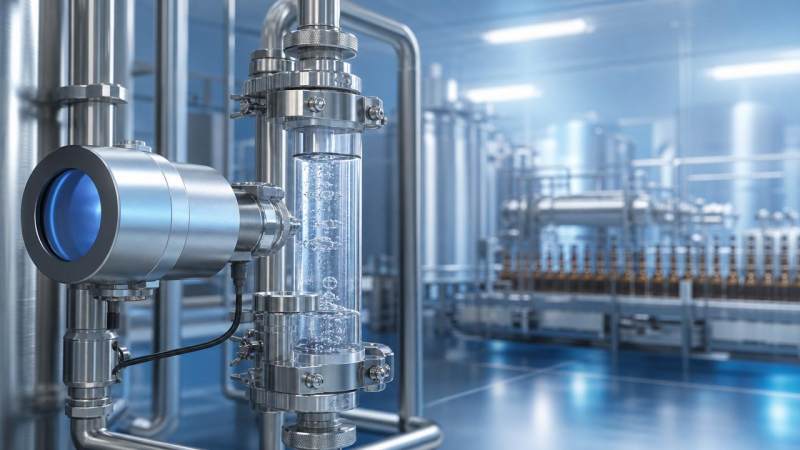
For a CO2 analyzer for brewery applications, the practical question is simple: which conditions distort the reading enough to affect the process?
What a CO2 analyzer is really measuring
A CO2 analyzer for brewery applications is used to determine dissolved carbon dioxide in beer, bright beer, or packaged product. The goal is not only to capture a number, but to reflect actual process conditions.
Different instruments use different principles. Some rely on pressure and temperature relationships. Others use optical, infrared, or hybrid sensing methods.
Even with a strong sensor design, accuracy can drift when the sample reaching the analyzer no longer represents the product in the tank, line, or package.
That is why measurement quality should be understood as a system issue. Sensor performance, installation practice, operating routine, and maintenance all contribute.
The factors that usually impact accuracy most
In most brewery environments, five factors create the largest share of measurement error. They often interact, which makes diagnosis harder if the data trend is viewed in isolation.
Pressure instability
CO2 stays dissolved according to pressure conditions. When pressure drops during sampling, gas can break out before measurement. The analyzer may then report a falsely low value.
This is common near transfer points, poorly regulated sample loops, or long lines with avoidable pressure losses.
Temperature variation
Temperature changes affect gas solubility and sensor compensation. A sample that warms up between extraction and analysis may no longer reflect the real dissolved CO2 content.
This matters especially in packaging areas, where ambient conditions shift more than in controlled cellar zones.
Moisture and condensate
Moisture is an underrated problem. In gas-phase sections or headspace-related measurements, condensate can interfere with sensor optics, block lines, or distort response stability.
If the analyzer design is not matched to wet process conditions, apparent drift may actually be a moisture management issue.
Calibration drift
Over time, even a high-quality CO2 analyzer for brewery applications can move away from its reference point. Sensor aging, contamination, and rough operating cycles all contribute.
When calibration intervals are too wide, operators may adjust the process around a bad number instead of correcting the instrument.
Sampling design
This is often the largest hidden variable. Dead legs, long tubing, trapped bubbles, poor seals, and delayed transport can all separate the sample from real line conditions.
In other words, the analyzer can be technically sound while the measurement system remains inaccurate.
Where these errors show up in brewery operations
Accuracy problems usually appear as process symptoms before they are recognized as instrumentation issues. The table below helps connect measurement errors with daily operational signals.
These patterns matter because breweries often chase foam, fill loss, or flavor inconsistency as separate issues, while the root cause sits inside a flawed CO2 measurement chain.
How to judge a measurement setup more effectively
A useful evaluation starts before comparing analyzer brands. It begins with the process path, the product state, and the expected control action after the reading appears.
For a CO2 analyzer for brewery applications, three questions usually clarify the real requirement.
- Is the measurement intended for continuous control, batch verification, or packaged product confirmation?
- Does the sample remain stable from extraction point to sensing point?
- Can the result be traced to a reliable reference through routine calibration and verification?
The strongest setups are usually the simplest. They minimize sample travel, protect pressure integrity, stabilize temperature, and make maintenance easy enough to happen on schedule.
This is where broader instrumentation thinking becomes valuable. GIH often frames measurement selection through the lens of metrology discipline, operating context, and long-term data trust.
That approach fits brewing well. Better readings come from better systems, not from specification sheets alone.
Practical steps that improve CO2 reading stability
Most improvements are operational rather than dramatic. Small corrections can remove repeat errors and make a CO2 analyzer for brewery applications far more dependable.
Tighten sample handling
- Shorten sample lines where possible.
- Avoid unnecessary bends, pockets, and dead legs.
- Maintain stable backpressure through the measurement path.
Control the thermal environment
- Keep measurement points away from avoidable heat exposure.
- Verify that temperature compensation matches actual operating conditions.
- Check seasonal shifts in packaging zones.
Treat calibration as process protection
- Set verification intervals based on production criticality, not habit.
- Compare with trusted references under repeatable conditions.
- Record drift patterns instead of only pass or fail outcomes.
These actions support more than accuracy. They also improve traceability, which is increasingly important in digital quality systems and cross-site operational benchmarking.
What deserves attention when comparing options
When reviewing a CO2 analyzer for brewery applications, headline accuracy is only one part of the picture. Serviceability and real-world fit often matter just as much.
Useful comparison points include sensor stability, response time, resistance to moisture, calibration workflow, hygienic integration, and compatibility with control systems.
It is also worth checking whether supplier documentation reflects genuine process understanding. In many cases, weak implementation support causes more problems than the instrument core.
That is one reason industry intelligence platforms like GIH remain relevant. They help connect technical selection with compliance thinking, supplier credibility, and long-term operating confidence.
A sound next step for better carbonation data
If readings seem inconsistent, start by mapping the full measurement chain rather than replacing the analyzer immediately. Check where pressure changes, where heat enters, and where moisture accumulates.
Then review calibration records against process events such as CIP cycles, product changeovers, and filler adjustments. The pattern usually becomes clearer when the data is tied to operations.
A reliable CO2 analyzer for brewery applications should support stable product quality because the entire setup is controlled, verified, and understood. That is the most practical standard to use when evaluating current performance or planning the next upgrade.
Recommended for You
 When custom gas analysis is the right fit for complex process streamsCustom gas analysis for complex process streams: learn when tailored sampling, interference control, and reliable measurement design deliver confident decisions.
 When does a laser gas analyzer meet stack emissions monitoring needs?Laser gas analyzer for stack emissions: learn when it delivers fast, reliable data, how to assess installation risks, and what to verify for CEMS compliance.
 How to select a hazardous gas analyzer for confined spacesHazardous gas analyzer selection for confined spaces: compare sensors, sampling, certifications, alarms, and maintenance to protect workers and choose with confidence.
 When is a single gas analyzer sufficient for workplace safety monitoring?Discover when a single gas analyzer delivers reliable workplace safety monitoring, and learn the key limits, calibration needs, and risks that require broader detection.
 How to choose an ambient gas analyzer for low-level leak detectionAmbient gas analyzer selection for low-level leak detection: compare sensitivity, cross-sensitivity, sampling design, alarms, and calibration for reliable site performance.
 How to tell when an oxygen sensor needs replacementOxygen sensor replacement signs explained: learn how live data, fault codes, wiring checks, and exhaust inspections pinpoint the real issue before you buy.
 How laser gas analyzers improve combustion control in steel furnacesLaser gas analyzer for steel industry applications delivers fast in-situ O₂ and CO data to optimize furnace combustion, cut fuel waste, and improve steel heating stability.
 How to verify whether explosion proof equipment meets site requirementsExplosion proof equipment verification made practical: match zones, gas or dust groups, temperature classes, certificates, and installation conditions for confident compliance.
 How industrial gas analysis helps detect contamination before releaseIndustrial Gas Analysis helps detect moisture, oil, oxygen, and toxic contaminants before release—protecting processes, ensuring compliance, and reducing costly risks.
 When is electrochemistry detection the right choice for water analysis?Electrochemistry detection for water analysis: learn when fast, reliable monitoring of ions, chlorine, pH, and more delivers actionable results.
 How industrial standards reduce quality risks in supplier selectionIndustrial Standard guidance helps quality and safety managers reduce supplier risks, verify compliance, strengthen traceability, and build resilient instrumentation supply chains.
 When does a multi-component system reduce installation complexity?Multi component systems reduce installation complexity when they eliminate field interfaces, streamline commissioning, and provide proven compatibility. Learn how to assess total cost and supplier accountability.
 How to size an industrial control shelter for outdoor equipmentIndustrial control shelter sizing guide: optimize layout, HVAC, access, safety, and expansion space for reliable outdoor equipment operations.
 How flue analysis helps verify combustion efficiencyFlue analysis verifies combustion efficiency by assessing O2, CO, CO2, and stack temperature to identify excess air, incomplete combustion, and heat losses.
 How to select industrial gas detectors for confined spacesIndustrial gas detectors for confined spaces: learn how to match sensors, sampling methods, alarms, and certifications to real atmospheric hazards.
 When does a laser oxygen analyzer outperform zirconia sensors?Laser oxygen analyzer vs. zirconia sensors: compare speed, selectivity, maintenance, gas chemistry, and installation needs to choose the right oxygen measurement solution.
 How to select a percent range analyzer for process measurementsPercent range analyzer selection made practical: compare accuracy, sample systems, calibration, gas matrix, integration, and lifecycle cost for reliable process measurements.
 How explosion proof analysis verifies safe equipment for hazardous areasExplosion proof analysis verifies hazardous-area equipment by matching certifications, temperature ratings, installation details, and inspection controls for safer compliance.
 When does fixed gas detection need point sensors instead of open-path monitoring?Fixed gas detection: discover when point sensors outperform open-path monitoring for predictable leaks, enclosed zones, local alarms, and safer design decisions.
 How to choose industrial metrology systems for tight-tolerance partsIndustrial metrology guide for tight-tolerance parts: compare CMMs, optical scanners, gauges, uncertainty, workflow, and traceable inspection strategies.
 How process metrology reduces measurement variation in productionProcess metrology reduces production measurement variation by improving traceability, uncertainty control, calibration, and reliable quality decisions.
 How to select an industrial monitoring analyzer for harsh environmentsIndustrial monitoring analyzer selection for harsh environments: evaluate sampling, durability, hazardous-area compliance, accuracy, maintenance, and data reliability.
 How calibration intervals affect test and measurement equipment accuracyTest and measurement equipment calibration intervals directly affect accuracy, risk, compliance, and uptime. Learn how to set evidence-based schedules that protect critical decisions.
 When does process gas monitoring need continuous measurement?Process gas monitoring needs continuous measurement when rapid changes threaten safety, quality, compliance, or uptime. Learn how to specify reliable, actionable monitoring systems.
 How to prevent false alarms in power plant instrumentationPower plant instrumentation guide: prevent false alarms with reliable signal checks, smarter alarm settings, mode-based control, and actionable operator responses.
 How fixed gas detectors help prevent leaks in enclosed workspacesFixed gas detectors provide continuous leak monitoring in enclosed workspaces, enabling faster alarms, safer responses, and stronger protection for people and processes.
 How industrial gas analysis helps detect process contamination earlyIndustrial Gas Analysis helps detect oxygen, moisture, and hydrocarbon contamination early, enabling faster fault isolation, safer operations, and stronger process control.
 What drives environmental compliance continuous monitoring setup cost?Environmental compliance continuous monitoring setup cost: uncover hidden expenses, compare bids accurately, and build a reliable, audit-ready system.
 How to select gas analysis equipment for continuous emissions monitoringGas analysis equipment selection guide for reliable continuous emissions monitoring—compare technologies, sampling, calibration, compliance, and maintenance needs.
 What detection limit is needed for NH3 environmental monitoring?High accuracy NH3 analyzer for environmental monitoring: learn how to set the right detection limit, improve sampling reliability, and make defensible decisions.
 How to select a NOX analyzer for power plant emissions complianceNOX analyzer for power plant emissions: learn how to select a compliant, reliable CEMS solution with the right range, sample handling, calibration, and data integrity.
 How to evaluate a laser gas analyzer manufacturer in GermanyLaser gas analyzer manufacturer in Germany: compare accuracy, sample handling, interference control, calibration, and service to select a reliable solution.


Search Categories
Search Categories
- Smart Meters & Power Quality
- Transformer Gas Analyzers
- BESS Thermal Runaway Detectors
- Energy, Power & Smart Grid Monitoring
- Optical Profilers & CMM
- Ultrasonic & X-Ray NDT
- Calibration Standards
- Precision Metrology & NDT
- Water Quality Analyzers
- CEMS & VOCs Monitors
- Price Trends
- Import & Export Updates
- Market Trends
- Industry News
- Industry Insights
Latest Article
- When custom gas analysis is the right fit for complex process streamsCustom gas analysis for complex process streams: learn when tailored sampling, interference control, and reliable measurement design deliver confident decisions.Posted by:
- When does a laser gas analyzer meet stack emissions monitoring needs?Laser gas analyzer for stack emissions: learn when it delivers fast, reliable data, how to assess installation risks, and what to verify for CEMS compliance.Posted by:
- How to select a hazardous gas analyzer for confined spacesHazardous gas analyzer selection for confined spaces: compare sensors, sampling, certifications, alarms, and maintenance to protect workers and choose with confidence.Posted by:
Please give us a message
