
How to Choose Predictive Analytics Instruments for Reliable Process Forecasting


How to Choose Predictive Analytics Instruments for Reliable Process Forecasting
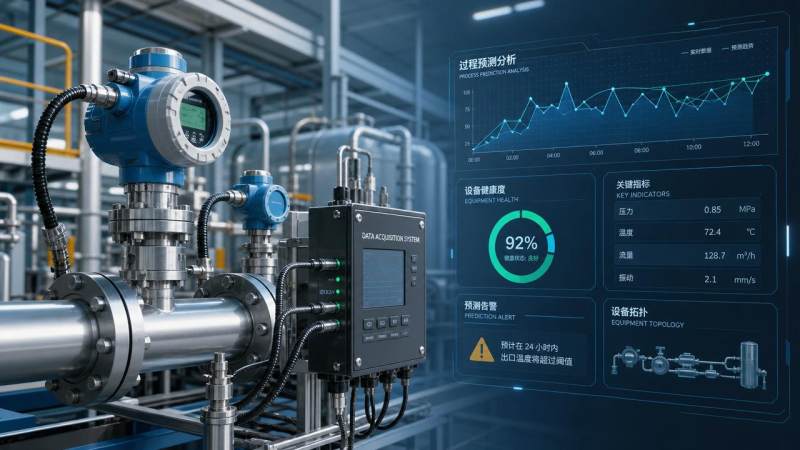
Choosing predictive analytics instruments is not about buying the most advanced dashboard. It is about selecting tools that improve forecasting confidence under real operating conditions.
For process forecasting, weak inputs create weak predictions. Even the best model fails when sensors drift, data pipelines break, or operating context is missing.
That is why predictive analytics instruments must be evaluated as part of a full measurement and decision system, not as isolated devices or software modules.
In industrial manufacturing, energy, life sciences, and environmental monitoring, reliable process forecasting depends on four basics: trusted data, stable integration, transparent models, and maintainable performance.
This also means the best predictive analytics instruments are not always the most complex ones. They are the ones that fit the process, the risk level, and the decision cycle.
Start with the Forecasting Decision, Not the Feature List
A practical evaluation starts with one question: what decision must the forecast support?
Some predictive analytics instruments are built for asset failure prediction. Others support yield optimization, emissions control, batch consistency, or energy load balancing.
If the target decision is unclear, teams usually compare functions that do not matter. That leads to expensive platforms with poor operational adoption.
Define the process variable, the forecast horizon, and the business consequence of error. A one-hour steam load forecast needs different instruments than a six-month pump degradation forecast.
- Identify the variable that drives action.
- Set the acceptable forecast error range.
- Define the time window for intervention.
- Map who will act on the prediction.
This step keeps the selection grounded. It also helps separate useful predictive analytics instruments from tools that only look impressive in demos.
Check Measurement Quality Before Model Quality
Reliable process forecasting begins at the measurement layer. If the source data is unstable, no analytics layer can fully recover trust.
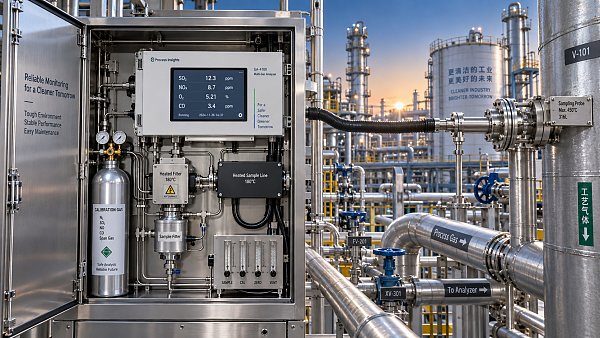
This is especially true for predictive analytics instruments used in harsh environments, where pressure, vibration, temperature swings, and contamination affect sensor behavior.
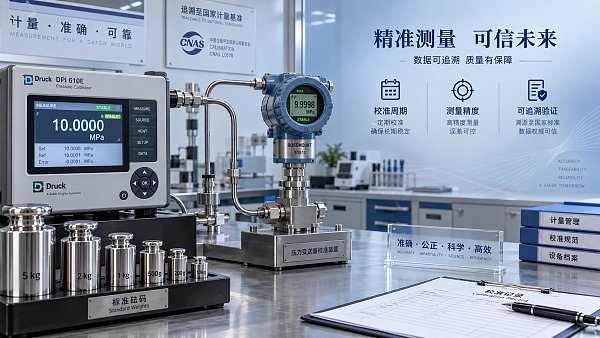
Review accuracy, repeatability, calibration intervals, signal drift, and response time. These factors shape the ceiling of forecasting reliability.
In practice, a stable and slightly less sophisticated instrument often produces better predictive results than a feature-rich system with noisy inputs.
When comparing predictive analytics instruments, ask for real performance data from similar process conditions, not only controlled lab specifications.
Evaluate Integration Readiness Across the Plant Data Stack
Many forecasting projects fail because the instrument fits the process but not the data architecture.
Predictive analytics instruments must connect cleanly with PLC, DCS, SCADA, historians, MES, LIMS, or cloud analytics layers, depending on the use case.
From recent market shifts, the clearer signal is that integration friction now costs more than algorithm limitations. Teams lose time cleaning tags, aligning timestamps, and fixing inconsistent metadata.
A strong candidate should support standard industrial protocols, secure data transfer, and structured context capture around batches, recipes, assets, and operating states.
- Check support for OPC UA, Modbus, HART, or other required protocols.
- Review timestamp precision and synchronization logic.
- Confirm data export formats for analytics and audit use.
- Verify cybersecurity controls and user access management.
Good predictive analytics instruments reduce engineering effort. Great ones also preserve data context, which is what forecasting models actually need.
Prioritize Model Transparency and Operational Explainability
A forecast is only useful when people trust it enough to act on it.
That makes explainability a critical selection factor for predictive analytics instruments, especially in regulated or safety-sensitive operations.
Users should be able to see which variables drive the forecast, how confidence is expressed, and when the model is likely outside its valid operating range.
Black-box outputs can slow decision-making. In contrast, transparent predictive analytics instruments help teams validate signals against process knowledge.
This matters even more in cross-functional environments, where engineering, operations, quality, and procurement all need a common basis for trust.
- Ask how the model explains key drivers.
- Review confidence scoring and alert thresholds.
- Check how the system handles missing or poor-quality data.
- Confirm retraining rules and version traceability.
If a supplier cannot explain forecast logic in practical terms, the instrument may struggle in live deployment.
Assess Fit by Use Case, Risk Profile, and Lifecycle Cost
Not all predictive analytics instruments should be judged by the same criteria. The correct balance changes by industry and process criticality.
For example, environmental compliance forecasting values traceability and auditability. Batch process forecasting often emphasizes context alignment and recipe sensitivity.
In energy operations, latency and resilience may matter more. In laboratories, data integrity and calibration discipline usually carry heavier weight.
That is why selection should include lifecycle economics, not just purchase price. Cheap instruments can become expensive when maintenance, retraining, and integration rework pile up.
In real procurement work, the strongest option is often the one that lowers total uncertainty, not just total cost.
Use a Structured Vendor Evaluation Framework
A structured framework keeps predictive analytics instruments comparable across suppliers and product categories.
This is where disciplined technical evaluation creates better decisions. It turns broad claims into measurable proof points.
Useful scoring criteria usually include performance, compatibility, explainability, service support, and compliance readiness.
- Measurement reliability under target conditions.
- Compatibility with current control and data systems.
- Forecast accuracy within the required decision window.
- Ease of validation by process and quality teams.
- Supplier support for commissioning and lifecycle service.
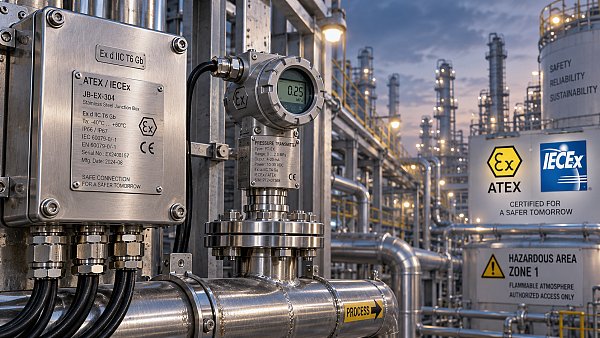
- Alignment with standards such as ISO/IEC 17025, ATEX, or IECEx, where relevant.
Suppliers should also provide reference cases, failure mode information, and clarity on how their predictive analytics instruments perform when process conditions shift.
That last point matters because forecasting performance often drops during changeovers, abnormal loads, or raw material variability.
Common Selection Mistakes to Avoid
Several mistakes appear again and again when teams evaluate predictive analytics instruments.
- Choosing based on interface quality instead of data quality.
- Ignoring calibration and maintenance burden.
- Overlooking integration costs hidden in deployment.
- Trusting generic AI claims without process-specific proof.
- Skipping operator acceptance and explainability checks.
- Failing to test performance during real process variability.
The better approach is simple. Run a pilot around a defined forecasting problem, track decision impact, and compare outcomes against baseline operations.
That creates evidence, not assumptions. It also reveals whether the predictive analytics instruments can hold performance beyond the sales demonstration.
Final Selection Checklist for Reliable Process Forecasting
Before making a final decision, use a short checklist that ties the technical review back to business value.
- Confirm the forecast supports a clear operational decision.
- Validate measurement reliability in actual field conditions.
- Test integration with the existing automation and data stack.
- Review model transparency and user trust factors.
- Compare lifecycle cost against uncertainty reduction.
- Request proof from similar industrial applications.
The right predictive analytics instruments do more than produce predictions. They help teams act earlier, reduce risk, and improve consistency across complex processes.
For organizations navigating digital transformation, that is the real goal: forecast with enough confidence to make smarter moves before problems become losses.
When selection is anchored in measurement truth, integration discipline, and practical explainability, predictive analytics instruments become a reliable foundation for better process forecasting.
Recommended for You
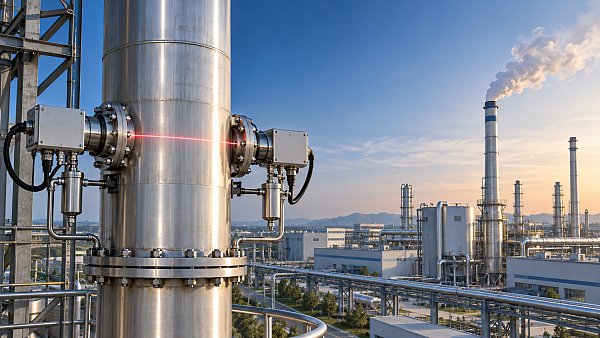
 When does a laser gas analyzer meet stack emissions monitoring needs?Laser gas analyzer for stack emissions: learn when it delivers fast, reliable data, how to assess installation risks, and what to verify for CEMS compliance.
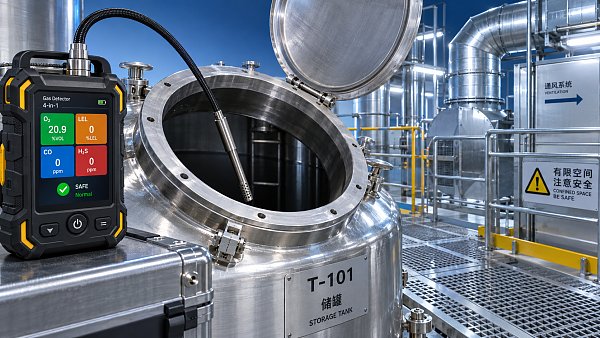
 How to select a hazardous gas analyzer for confined spacesHazardous gas analyzer selection for confined spaces: compare sensors, sampling, certifications, alarms, and maintenance to protect workers and choose with confidence.
 When is a single gas analyzer sufficient for workplace safety monitoring?Discover when a single gas analyzer delivers reliable workplace safety monitoring, and learn the key limits, calibration needs, and risks that require broader detection.
 How to choose an ambient gas analyzer for low-level leak detectionAmbient gas analyzer selection for low-level leak detection: compare sensitivity, cross-sensitivity, sampling design, alarms, and calibration for reliable site performance.
 How to tell when an oxygen sensor needs replacementOxygen sensor replacement signs explained: learn how live data, fault codes, wiring checks, and exhaust inspections pinpoint the real issue before you buy.
 How laser gas analyzers improve combustion control in steel furnacesLaser gas analyzer for steel industry applications delivers fast in-situ O₂ and CO data to optimize furnace combustion, cut fuel waste, and improve steel heating stability.
 How to verify whether explosion proof equipment meets site requirementsExplosion proof equipment verification made practical: match zones, gas or dust groups, temperature classes, certificates, and installation conditions for confident compliance.
 How industrial gas analysis helps detect contamination before releaseIndustrial Gas Analysis helps detect moisture, oil, oxygen, and toxic contaminants before release—protecting processes, ensuring compliance, and reducing costly risks.
 When is electrochemistry detection the right choice for water analysis?Electrochemistry detection for water analysis: learn when fast, reliable monitoring of ions, chlorine, pH, and more delivers actionable results.
 How industrial standards reduce quality risks in supplier selectionIndustrial Standard guidance helps quality and safety managers reduce supplier risks, verify compliance, strengthen traceability, and build resilient instrumentation supply chains.
 When does a multi-component system reduce installation complexity?Multi component systems reduce installation complexity when they eliminate field interfaces, streamline commissioning, and provide proven compatibility. Learn how to assess total cost and supplier accountability.
 How to size an industrial control shelter for outdoor equipmentIndustrial control shelter sizing guide: optimize layout, HVAC, access, safety, and expansion space for reliable outdoor equipment operations.
 How flue analysis helps verify combustion efficiencyFlue analysis verifies combustion efficiency by assessing O2, CO, CO2, and stack temperature to identify excess air, incomplete combustion, and heat losses.
 How to select industrial gas detectors for confined spacesIndustrial gas detectors for confined spaces: learn how to match sensors, sampling methods, alarms, and certifications to real atmospheric hazards.
 When does a laser oxygen analyzer outperform zirconia sensors?Laser oxygen analyzer vs. zirconia sensors: compare speed, selectivity, maintenance, gas chemistry, and installation needs to choose the right oxygen measurement solution.
 How to select a percent range analyzer for process measurementsPercent range analyzer selection made practical: compare accuracy, sample systems, calibration, gas matrix, integration, and lifecycle cost for reliable process measurements.
 How explosion proof analysis verifies safe equipment for hazardous areasExplosion proof analysis verifies hazardous-area equipment by matching certifications, temperature ratings, installation details, and inspection controls for safer compliance.
 When does fixed gas detection need point sensors instead of open-path monitoring?Fixed gas detection: discover when point sensors outperform open-path monitoring for predictable leaks, enclosed zones, local alarms, and safer design decisions.
 How to choose industrial metrology systems for tight-tolerance partsIndustrial metrology guide for tight-tolerance parts: compare CMMs, optical scanners, gauges, uncertainty, workflow, and traceable inspection strategies.
 How process metrology reduces measurement variation in productionProcess metrology reduces production measurement variation by improving traceability, uncertainty control, calibration, and reliable quality decisions.
 How to select an industrial monitoring analyzer for harsh environmentsIndustrial monitoring analyzer selection for harsh environments: evaluate sampling, durability, hazardous-area compliance, accuracy, maintenance, and data reliability.
 How calibration intervals affect test and measurement equipment accuracyTest and measurement equipment calibration intervals directly affect accuracy, risk, compliance, and uptime. Learn how to set evidence-based schedules that protect critical decisions.
 When does process gas monitoring need continuous measurement?Process gas monitoring needs continuous measurement when rapid changes threaten safety, quality, compliance, or uptime. Learn how to specify reliable, actionable monitoring systems.
 How to prevent false alarms in power plant instrumentationPower plant instrumentation guide: prevent false alarms with reliable signal checks, smarter alarm settings, mode-based control, and actionable operator responses.
 How fixed gas detectors help prevent leaks in enclosed workspacesFixed gas detectors provide continuous leak monitoring in enclosed workspaces, enabling faster alarms, safer responses, and stronger protection for people and processes.
 How industrial gas analysis helps detect process contamination earlyIndustrial Gas Analysis helps detect oxygen, moisture, and hydrocarbon contamination early, enabling faster fault isolation, safer operations, and stronger process control.
 What drives environmental compliance continuous monitoring setup cost?Environmental compliance continuous monitoring setup cost: uncover hidden expenses, compare bids accurately, and build a reliable, audit-ready system.
 How to select gas analysis equipment for continuous emissions monitoringGas analysis equipment selection guide for reliable continuous emissions monitoring—compare technologies, sampling, calibration, compliance, and maintenance needs.
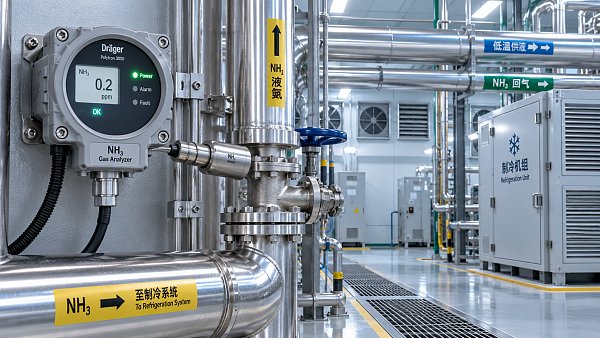
 What detection limit is needed for NH3 environmental monitoring?High accuracy NH3 analyzer for environmental monitoring: learn how to set the right detection limit, improve sampling reliability, and make defensible decisions.
 How to select a NOX analyzer for power plant emissions complianceNOX analyzer for power plant emissions: learn how to select a compliant, reliable CEMS solution with the right range, sample handling, calibration, and data integrity.
 How to evaluate a laser gas analyzer manufacturer in GermanyLaser gas analyzer manufacturer in Germany: compare accuracy, sample handling, interference control, calibration, and service to select a reliable solution.
 How does a flue gas analyzer maintain accuracy in wet stack gas?Flue gas analyzer accuracy in wet stack gas depends on heated sampling, moisture correction, reliable sensors, and calibration. Explore key selection tips.




Search Categories
Search Categories
- Smart Meters & Power Quality
- Transformer Gas Analyzers
- BESS Thermal Runaway Detectors
- Energy, Power & Smart Grid Monitoring
- Optical Profilers & CMM
- Ultrasonic & X-Ray NDT
- Calibration Standards
- Precision Metrology & NDT
- Water Quality Analyzers
- CEMS & VOCs Monitors
- Price Trends
- Import & Export Updates
- Market Trends
- Industry News
- Industry Insights
Latest Article
- When does a laser gas analyzer meet stack emissions monitoring needs?Laser gas analyzer for stack emissions: learn when it delivers fast, reliable data, how to assess installation risks, and what to verify for CEMS compliance.Posted by:
- How to select a hazardous gas analyzer for confined spacesHazardous gas analyzer selection for confined spaces: compare sensors, sampling, certifications, alarms, and maintenance to protect workers and choose with confidence.Posted by:
- When is a single gas analyzer sufficient for workplace safety monitoring?Discover when a single gas analyzer delivers reliable workplace safety monitoring, and learn the key limits, calibration needs, and risks that require broader detection.Posted by:
Please give us a message
