
How to Choose an Oxygen Analyzer for Fermentation Process Stability


How to Choose an Oxygen Analyzer for Fermentation Process Stability

Selecting the right oxygen analyzer for fermentation process stability is not a routine instrument purchase.
In fermentation, oxygen drives cell metabolism, product yield, and batch repeatability.
A weak analyzer can distort control logic long before anyone notices a visible process problem.
That is why an oxygen analyzer for fermentation process applications must be evaluated as part of the whole control loop.
The core question is simple.
Can the analyzer provide stable, fast, and trustworthy oxygen data under real fermentation conditions?
In practice, the answer depends on more than published accuracy.
Media composition, sterilization cycles, fouling, pressure shifts, and automation compatibility all matter.
A reliable oxygen analyzer for fermentation process stability should support control decisions, not just generate readings.
Start with the Process, Not the Catalog
The first screening step is defining the fermentation environment clearly.
Different microbial systems impose very different oxygen monitoring demands.
Aerobic bacteria, yeast, mammalian cells, and filamentous organisms do not consume oxygen the same way.
That affects required range, sensitivity, and acceptable response delay.
A small lab bioreactor may tolerate more manual intervention.
A production fermenter running continuous or fed-batch operation usually cannot.
Before comparing technologies, map these conditions:
- Fermenter size and geometry
- Expected dissolved oxygen range
- Agitation and aeration strategy
- Temperature and operating pressure
- SIP and CIP frequency
- Foam, solids, and coating risk
- Control system and communication protocol
This process map makes the oxygen analyzer for fermentation process selection much more defensible.
It also reduces the common mistake of overvaluing lab performance data that will not hold in production.
Choose the Right Sensing Technology
Most oxygen analyzer for fermentation process setups rely on either electrochemical or optical sensing.
Both can work well, but their tradeoffs are meaningful.
Electrochemical Sensors
These sensors are familiar, established, and often cost-effective.
They can deliver good accuracy, but they consume oxygen during measurement.
That detail matters in low-oxygen or highly dynamic fermentation phases.
Membrane maintenance and electrolyte replacement also increase routine service needs.
Optical Sensors
Optical designs are now widely preferred for many bioprocess lines.
They do not consume oxygen and usually need less maintenance.
They are often more stable across longer campaigns, especially where downtime is expensive.
However, sensing caps still age, and replacement cost should be included in lifecycle analysis.
For a practical comparison, use this framework:
The right oxygen analyzer for fermentation process control depends on total operating context, not sensor fashion.
Prioritize Response Time and Signal Stability
Fermentation conditions can shift quickly during feeding, aeration changes, or metabolic transitions.
If the analyzer lags, control actions may arrive too late.
That creates oscillation in dissolved oxygen control and can stress the culture.
Fast response is especially important in high-cell-density fermentation.
Still, speed alone is not enough.
The oxygen analyzer for fermentation process duty must also resist drift, noise, and false fluctuations.
When reviewing vendor data, check for:
- T90 response time under process conditions
- Long-term drift across full campaign length
- Signal behavior after sterilization cycles
- Performance in foaming or viscous media
- Temperature and pressure compensation quality
A stable signal often has more operational value than a slightly tighter laboratory accuracy specification.
Assess Mechanical Fit and Hygiene Requirements
Mechanical compatibility is where many otherwise strong options fail.
The oxygen analyzer for fermentation process installation must match vessel design and sanitary expectations.
Probe length, insertion angle, dead-leg risk, and seal material all deserve careful review.
This becomes more important in regulated food, beverage, and biopharma production.
Key checkpoints include:
- Compatibility with existing ports and housings
- Materials suitable for SIP and CIP exposure
- Surface finish and hygienic design standards
- Resistance to pressure shock and thermal cycling
- Certifications needed for the target production environment
From a risk perspective, a mechanically awkward probe often causes more downtime than a mediocre sensor.
That is why fit, hygiene, and service access should be part of the formal evaluation matrix.
Look Closely at Calibration and Maintenance Burden
An oxygen analyzer for fermentation process stability should reduce operator workload, not quietly add to it.
Frequent recalibration may be acceptable in development labs.
It is usually much harder to justify in a production environment.
Recent buying patterns show more interest in low-touch designs with predictable service intervals.
Ask suppliers direct questions about:
- One-point or two-point calibration workflow
- Typical recalibration frequency
- Consumables and replacement cycle
- Sensor diagnostics and predictive alerts
- Time needed for field service or probe exchange
This also affects training burden and spare parts planning.
In actual operations, maintenance simplicity often has a direct link to measurement consistency across batches.
Verify Integration with Automation and Data Systems
A modern oxygen analyzer for fermentation process control should fit smoothly into digital workflows.
That means more than providing a basic measurement output.
It should support reliable communication, diagnostics, and traceable calibration records.
For facilities pursuing stronger automation, these details influence both control quality and compliance readiness.
Review integration from four angles:
- Signal output options such as 4-20 mA, HART, or digital bus.
- Compatibility with PLC, DCS, SCADA, or bioprocess controllers.
- Availability of health diagnostics and alarm handling.
- Data logging support for batch records and performance analysis.
A good instrument becomes more valuable when its data can be trusted by the wider system.
This is where procurement choices start affecting future digitalization, not just current fermentation performance.
Build a Practical Evaluation Scorecard
A structured scorecard helps compare oxygen analyzer for fermentation process options on equal terms.
It also prevents one impressive feature from overshadowing more important operating realities.
A useful scoring model usually includes:
- Measurement performance under real process conditions
- Mechanical and hygienic suitability
- Calibration effort and maintenance burden
- Lifecycle cost, not just purchase price
- Automation integration and data visibility
- Local support, lead time, and spare part availability
Where possible, ask for pilot data, installed references, or trial use under representative fermentation conditions.
That evidence is often more useful than a polished brochure.
GIH tracks a broader pattern here.
Buyers are placing more weight on service continuity, digital readiness, and long-run signal integrity.
That shift makes sense because fermentation stability depends on reliable data over time, not isolated specification wins.
Final Decision Criteria That Hold Up in Production
The best oxygen analyzer for fermentation process stability is the one that performs consistently in the actual vessel, media, and control architecture.
Accuracy matters, but it should be judged together with durability, service effort, and control responsiveness.
A disciplined selection process usually leads to fewer batch deviations and better operating confidence.
For most teams, the strongest path is straightforward.
Define the process first, compare sensing technologies honestly, test maintenance assumptions, and confirm digital fit before purchase.
That approach makes oxygen monitoring a stable asset instead of a recurring troubleshooting point.
When evaluating the next oxygen analyzer for fermentation process use, push suppliers for application evidence, not generic claims.
That final step usually separates a technically acceptable option from a genuinely production-ready one.
Recommended for You
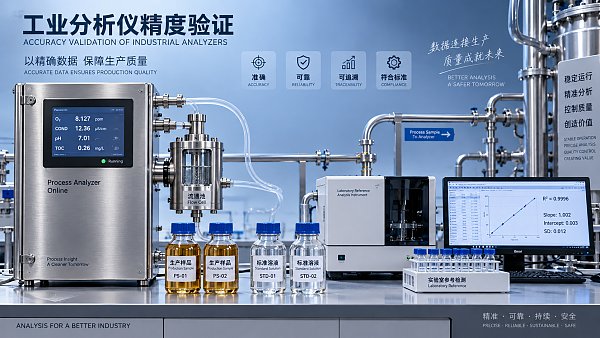
 How to verify accuracy claims for industrial quality analyzersVerify accuracy claims for industrial quality analyzers with calibration checks, independent testing, and clear acceptance criteria. Learn how to reduce risk and buy with confidence.
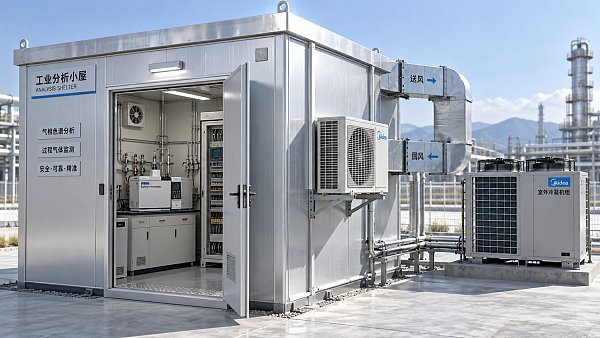
 How to calculate cooling loads for an industrial analyzer shelterSize industrial analyzer shelter cooling with confidence. Learn to calculate equipment heat, solar gains, and ventilation loads, then select HVAC capacity for reliable analyzer performance.
 Industrial Safety vs. Emission Monitoring: What Are the Differences?What are the main differences between industrial safety and emission monitoring? Compare goals, sensors, response times, and compliance needs to choose the right systems for your facility.
 Is Remote Monitoring Worth the Cost for Small Emission Sources?Is it worth investing in remote monitoring for small emission sources? Compare costs, compliance needs, and potential savings to choose the right solution for your operation.
 How Do You Handle Analyzer Failure During an Environmental Audit?Learn how to handle analyzer failure during environmental compliance audit procedures. Protect evidence, verify data, and restore monitoring with this practical response guide.
 Do VOC Monitors Require Explosion-Proof Certification?Does VOC monitoring require explosion-proof certification? Learn when approval is needed, compare ATEX and IECEx, and choose the right monitor for your site.
 How sample conditioning affects accuracy in petrochemical analyzersImprove accuracy in petrochemical analyzers with smarter sample conditioning. Discover how phase control, filtration, and transport design prevent bias and deliver reliable process data.
 How to troubleshoot sensor drift in industrial gas detectorsIndustrial gas detectors showing sensor drift? Learn how to verify calibration gas, identify root causes, and determine when sensor replacement is needed for reliable monitoring.
 How to judge whether a competitive price reflects real valueCompetitive Price: learn how to compare scope, compliance, performance, and lifecycle costs to identify real value, reduce risk, and make smarter purchasing decisions.
 When custom gas analysis is the right fit for complex process streamsCustom gas analysis for complex process streams: learn when tailored sampling, interference control, and reliable measurement design deliver confident decisions.
 When does a laser gas analyzer meet stack emissions monitoring needs?Laser gas analyzer for stack emissions: learn when it delivers fast, reliable data, how to assess installation risks, and what to verify for CEMS compliance.
 How to select a hazardous gas analyzer for confined spacesHazardous gas analyzer selection for confined spaces: compare sensors, sampling, certifications, alarms, and maintenance to protect workers and choose with confidence.
 When is a single gas analyzer sufficient for workplace safety monitoring?Discover when a single gas analyzer delivers reliable workplace safety monitoring, and learn the key limits, calibration needs, and risks that require broader detection.
 How to choose an ambient gas analyzer for low-level leak detectionAmbient gas analyzer selection for low-level leak detection: compare sensitivity, cross-sensitivity, sampling design, alarms, and calibration for reliable site performance.
 How to tell when an oxygen sensor needs replacementOxygen sensor replacement signs explained: learn how live data, fault codes, wiring checks, and exhaust inspections pinpoint the real issue before you buy.
 How laser gas analyzers improve combustion control in steel furnacesLaser gas analyzer for steel industry applications delivers fast in-situ O₂ and CO data to optimize furnace combustion, cut fuel waste, and improve steel heating stability.
 How to verify whether explosion proof equipment meets site requirementsExplosion proof equipment verification made practical: match zones, gas or dust groups, temperature classes, certificates, and installation conditions for confident compliance.
 How industrial gas analysis helps detect contamination before releaseIndustrial Gas Analysis helps detect moisture, oil, oxygen, and toxic contaminants before release—protecting processes, ensuring compliance, and reducing costly risks.
 When is electrochemistry detection the right choice for water analysis?Electrochemistry detection for water analysis: learn when fast, reliable monitoring of ions, chlorine, pH, and more delivers actionable results.
 How industrial standards reduce quality risks in supplier selectionIndustrial Standard guidance helps quality and safety managers reduce supplier risks, verify compliance, strengthen traceability, and build resilient instrumentation supply chains.
 When does a multi-component system reduce installation complexity?Multi component systems reduce installation complexity when they eliminate field interfaces, streamline commissioning, and provide proven compatibility. Learn how to assess total cost and supplier accountability.
 How to size an industrial control shelter for outdoor equipmentIndustrial control shelter sizing guide: optimize layout, HVAC, access, safety, and expansion space for reliable outdoor equipment operations.
 How flue analysis helps verify combustion efficiencyFlue analysis verifies combustion efficiency by assessing O2, CO, CO2, and stack temperature to identify excess air, incomplete combustion, and heat losses.
 How to select industrial gas detectors for confined spacesIndustrial gas detectors for confined spaces: learn how to match sensors, sampling methods, alarms, and certifications to real atmospheric hazards.
 When does a laser oxygen analyzer outperform zirconia sensors?Laser oxygen analyzer vs. zirconia sensors: compare speed, selectivity, maintenance, gas chemistry, and installation needs to choose the right oxygen measurement solution.
 How to select a percent range analyzer for process measurementsPercent range analyzer selection made practical: compare accuracy, sample systems, calibration, gas matrix, integration, and lifecycle cost for reliable process measurements.
 How explosion proof analysis verifies safe equipment for hazardous areasExplosion proof analysis verifies hazardous-area equipment by matching certifications, temperature ratings, installation details, and inspection controls for safer compliance.
 When does fixed gas detection need point sensors instead of open-path monitoring?Fixed gas detection: discover when point sensors outperform open-path monitoring for predictable leaks, enclosed zones, local alarms, and safer design decisions.
 How to choose industrial metrology systems for tight-tolerance partsIndustrial metrology guide for tight-tolerance parts: compare CMMs, optical scanners, gauges, uncertainty, workflow, and traceable inspection strategies.
 How process metrology reduces measurement variation in productionProcess metrology reduces production measurement variation by improving traceability, uncertainty control, calibration, and reliable quality decisions.
 How to select an industrial monitoring analyzer for harsh environmentsIndustrial monitoring analyzer selection for harsh environments: evaluate sampling, durability, hazardous-area compliance, accuracy, maintenance, and data reliability.
 How calibration intervals affect test and measurement equipment accuracyTest and measurement equipment calibration intervals directly affect accuracy, risk, compliance, and uptime. Learn how to set evidence-based schedules that protect critical decisions.
Search Categories
Search Categories
- Smart Meters & Power Quality
- Transformer Gas Analyzers
- BESS Thermal Runaway Detectors
- Energy, Power & Smart Grid Monitoring
- Optical Profilers & CMM
- Ultrasonic & X-Ray NDT
- Calibration Standards
- Precision Metrology & NDT
- Water Quality Analyzers
- CEMS & VOCs Monitors
- Price Trends
- Import & Export Updates
- Market Trends
- Industry News
- Industry Insights
Latest Article
- How to verify accuracy claims for industrial quality analyzersVerify accuracy claims for industrial quality analyzers with calibration checks, independent testing, and clear acceptance criteria. Learn how to reduce risk and buy with confidence.Posted by:
- How to calculate cooling loads for an industrial analyzer shelterSize industrial analyzer shelter cooling with confidence. Learn to calculate equipment heat, solar gains, and ventilation loads, then select HVAC capacity for reliable analyzer performance.Posted by:
- Industrial Safety vs. Emission Monitoring: What Are the Differences?What are the main differences between industrial safety and emission monitoring? Compare goals, sensors, response times, and compliance needs to choose the right systems for your facility.Posted by:
Please give us a message
