
Online Measurement vs Lab Testing: Cost and Accuracy


Online Measurement vs Lab Testing: Cost and Accuracy
For procurement teams, choosing between online measurement and lab testing is not just a technical decision. It shapes cost, control speed, compliance confidence, and long-term operating risk.
In instrumentation-heavy industries, the best choice rarely means picking one method alone. It means knowing where online measurement creates value, and where laboratory testing still earns its place.
That distinction matters in water treatment, chemicals, food processing, energy, life sciences, and advanced manufacturing. The wrong sourcing decision can increase downtime, waste, and hidden validation costs.
From a procurement and cost perspective, the question is practical: which option gives enough accuracy, at the right speed, with manageable lifecycle expense?
What Online Measurement and Lab Testing Actually Mean
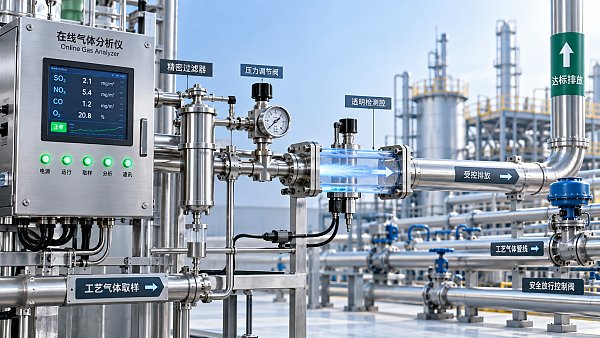
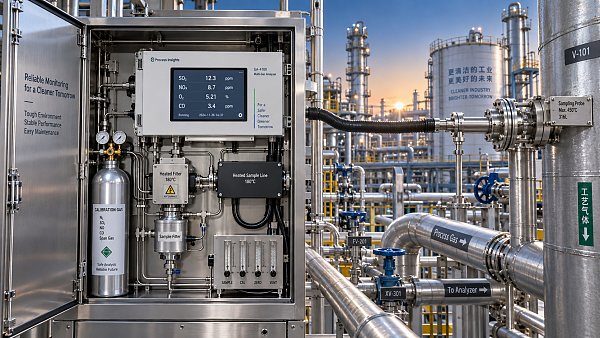
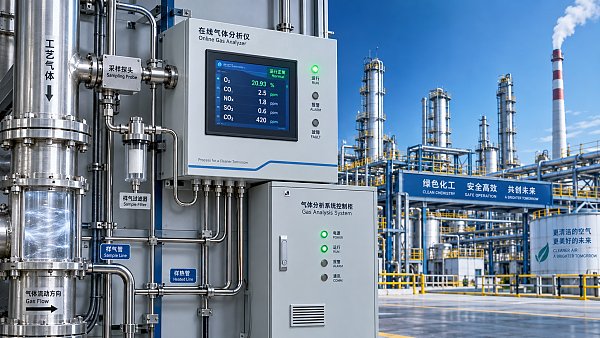
 Online measurement refers to instruments installed directly in a process line or field environment. They deliver continuous or near-real-time data without waiting for manual sampling.
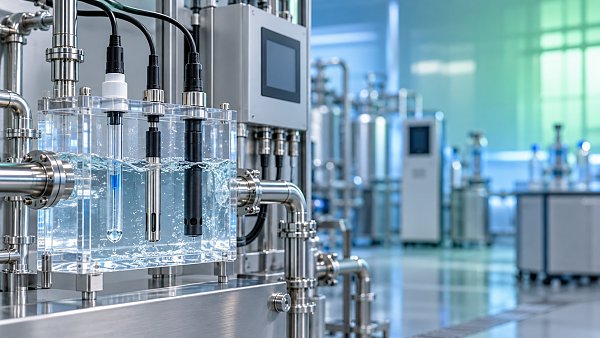
Typical examples include pH analyzers, conductivity sensors, flow meters, pressure transmitters, turbidity monitors, CEMS units, and online water quality analyzers.
Lab testing works differently. Samples are collected, transported, prepared, and analyzed in a controlled environment using benchtop or reference-grade equipment.
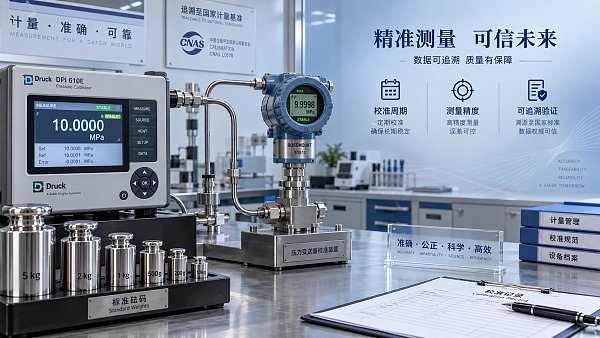
Examples include chromatography, mass spectrometry, titration, gravimetric analysis, and microbiological testing. These methods often provide deeper specificity and lower uncertainty.
So the real comparison is not simply online measurement versus lab testing. It is speed and continuity versus controlled precision and analytical depth.
Cost Comparison: Upfront Price Is Only Part of the Story
Online measurement usually requires higher initial capital spending. Procurement must consider sensors, transmitters, analyzers, installation hardware, integration, calibration tools, and commissioning.
That can make the purchase price look heavy at the start. Yet the operating model is often leaner when fast decisions reduce manual sampling and process deviation.
Lab testing often appears cheaper in early sourcing rounds. The instrument price may sit outside the process budget, or testing may be outsourced under a service agreement.
However, recurring costs add up quickly. Sample collection, transport, labor, consumables, retesting, reporting delays, and inventory losses can quietly exceed expectations.
In practical business terms, online measurement tends to save money when process changes happen fast. Lab testing tends to stay economical when testing frequency is low or parameters are highly specialized.
- Use online measurement when process drift can cause scrap, safety risk, or unplanned shutdown.
- Use lab testing when each analysis needs expert interpretation or advanced separation methods.
- Compare total cost of ownership, not just equipment quotes.
- Include calibration intervals, spare parts, service response, and operator training.
Accuracy: Real-Time Visibility Versus Reference Precision
Accuracy is where many procurement decisions become oversimplified. Online measurement is often described as less accurate, but that statement misses context.
A high-quality online measurement system can be accurate enough for control decisions, alarm handling, and compliance monitoring. In many plants, that is the operational requirement that matters most.
Lab testing still leads when the parameter is complex, trace-level, or legally sensitive. Reference methods usually benefit from tighter environmental control and more sophisticated sample preparation.
But online measurement has one major advantage: it catches change as it happens. A slightly lower absolute precision can still create better process outcomes than delayed perfect data.
That is especially true in dynamic systems. When reaction conditions shift within minutes, lab results may arrive too late to prevent quality loss.
Where Accuracy Risk Usually Comes From
- Sensor fouling, drift, and poor calibration practice in online measurement.
- Sampling error, contamination, and holding-time issues in lab testing.
- Mismatch between process conditions and instrument specification.
- Weak maintenance contracts or unclear validation protocols.
For sourcing decisions, the better question is not “Which is more accurate?” It is “Which delivers decision-grade data under actual operating conditions?”
When Online Measurement Makes Better Procurement Sense
Online measurement fits best where process continuity matters more than isolated snapshots. It supports control loops, predictive maintenance, faster intervention, and lower operator burden.
This is common in process manufacturing, power generation, wastewater treatment, and emissions monitoring. Here, missing a change can cost more than the analyzer itself.
Online measurement also helps where labor is constrained. Continuous monitoring reduces repetitive manual collection and improves traceability through digital records.
From recent market shifts, another clear signal is integration demand. Buyers increasingly want online measurement tied to SCADA, DCS, MES, or cloud analytics platforms.
- Fast-changing processes where data latency creates direct loss.
- Remote or hazardous sites where manual sampling increases safety exposure.
- Facilities aiming to automate reporting and reduce compliance gaps.
- High-volume operations where small deviations multiply into major cost.
When Lab Testing Still Delivers Better Value
Lab testing remains the better investment when analysis requires method depth, traceability, or complex component identification. That is common in pharmaceuticals, R&D, and specialty chemicals.
It also makes sense when testing frequency is limited. If a parameter is checked weekly or monthly, online measurement may be hard to justify financially.
Lab testing is often the preferred route for dispute resolution, certification support, and final release decisions. It provides confidence when audit trails and reference methods matter most.
In real procurement work, this means the cheaper option can still be the more specialized one. The key is matching testing depth to business consequence.
A Practical Sourcing Framework for Better Decisions
The most reliable buying approach uses both technical and commercial filters. Online measurement should be assessed as a lifecycle system, not just a device purchase.
Checklist Before You Buy
- Define the process consequence of bad or late data.
- Map required accuracy to operational decisions, not marketing claims.
- Ask suppliers for maintenance frequency and mean time between failures.
- Check compatibility with existing control architecture and compliance standards.
- Model five-year cost, including calibration, downtime, and support contracts.
- Request proof from similar installations in comparable media and conditions.
The Smarter Decision Is Often a Hybrid Model
In many industries, the strongest strategy combines online measurement with periodic lab testing. Online measurement handles immediate control, while lab analysis confirms accuracy and supports deeper investigation.
This hybrid model reduces blind spots. It also creates a stronger procurement business case, because each tool is used where it performs best.
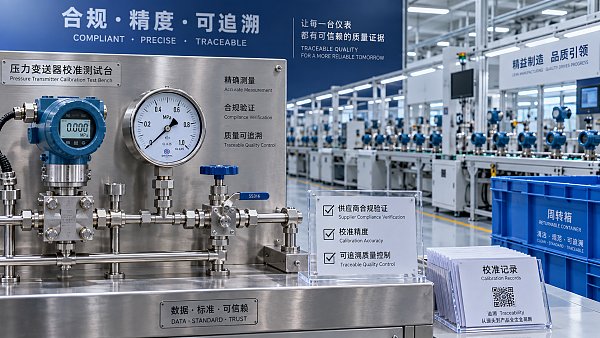
For buyers evaluating instrumentation suppliers, this means looking beyond headline specs. Service capability, calibration discipline, digital integration, and application knowledge usually decide long-term value.
GIH tracks these shifts across industrial process control, laboratory systems, environmental monitoring, and precision metrology. That broader market view helps turn technical comparison into a more confident sourcing decision.
When cost pressure is real, online measurement should not be judged only by purchase price. It should be judged by how much uncertainty, delay, and operating risk it removes over time.
Recommended for You
 How to calculate cooling loads for an industrial analyzer shelterSize industrial analyzer shelter cooling with confidence. Learn to calculate equipment heat, solar gains, and ventilation loads, then select HVAC capacity for reliable analyzer performance.
 How Do You Handle Analyzer Failure During an Environmental Audit?Learn how to handle analyzer failure during environmental compliance audit procedures. Protect evidence, verify data, and restore monitoring with this practical response guide.
 Do VOC Monitors Require Explosion-Proof Certification?Does VOC monitoring require explosion-proof certification? Learn when approval is needed, compare ATEX and IECEx, and choose the right monitor for your site.
 How sample conditioning affects accuracy in petrochemical analyzersImprove accuracy in petrochemical analyzers with smarter sample conditioning. Discover how phase control, filtration, and transport design prevent bias and deliver reliable process data.
 How to troubleshoot sensor drift in industrial gas detectorsIndustrial gas detectors showing sensor drift? Learn how to verify calibration gas, identify root causes, and determine when sensor replacement is needed for reliable monitoring.
 How to judge whether a competitive price reflects real valueCompetitive Price: learn how to compare scope, compliance, performance, and lifecycle costs to identify real value, reduce risk, and make smarter purchasing decisions.
 When custom gas analysis is the right fit for complex process streamsCustom gas analysis for complex process streams: learn when tailored sampling, interference control, and reliable measurement design deliver confident decisions.
 When does a laser gas analyzer meet stack emissions monitoring needs?Laser gas analyzer for stack emissions: learn when it delivers fast, reliable data, how to assess installation risks, and what to verify for CEMS compliance.
 How to select a hazardous gas analyzer for confined spacesHazardous gas analyzer selection for confined spaces: compare sensors, sampling, certifications, alarms, and maintenance to protect workers and choose with confidence.
 When is a single gas analyzer sufficient for workplace safety monitoring?Discover when a single gas analyzer delivers reliable workplace safety monitoring, and learn the key limits, calibration needs, and risks that require broader detection.
 How to choose an ambient gas analyzer for low-level leak detectionAmbient gas analyzer selection for low-level leak detection: compare sensitivity, cross-sensitivity, sampling design, alarms, and calibration for reliable site performance.
 How to tell when an oxygen sensor needs replacementOxygen sensor replacement signs explained: learn how live data, fault codes, wiring checks, and exhaust inspections pinpoint the real issue before you buy.
 How laser gas analyzers improve combustion control in steel furnacesLaser gas analyzer for steel industry applications delivers fast in-situ O₂ and CO data to optimize furnace combustion, cut fuel waste, and improve steel heating stability.
 How to verify whether explosion proof equipment meets site requirementsExplosion proof equipment verification made practical: match zones, gas or dust groups, temperature classes, certificates, and installation conditions for confident compliance.
 How industrial gas analysis helps detect contamination before releaseIndustrial Gas Analysis helps detect moisture, oil, oxygen, and toxic contaminants before release—protecting processes, ensuring compliance, and reducing costly risks.
 When is electrochemistry detection the right choice for water analysis?Electrochemistry detection for water analysis: learn when fast, reliable monitoring of ions, chlorine, pH, and more delivers actionable results.
 How industrial standards reduce quality risks in supplier selectionIndustrial Standard guidance helps quality and safety managers reduce supplier risks, verify compliance, strengthen traceability, and build resilient instrumentation supply chains.
 When does a multi-component system reduce installation complexity?Multi component systems reduce installation complexity when they eliminate field interfaces, streamline commissioning, and provide proven compatibility. Learn how to assess total cost and supplier accountability.
 How to size an industrial control shelter for outdoor equipmentIndustrial control shelter sizing guide: optimize layout, HVAC, access, safety, and expansion space for reliable outdoor equipment operations.
 How flue analysis helps verify combustion efficiencyFlue analysis verifies combustion efficiency by assessing O2, CO, CO2, and stack temperature to identify excess air, incomplete combustion, and heat losses.
 How to select industrial gas detectors for confined spacesIndustrial gas detectors for confined spaces: learn how to match sensors, sampling methods, alarms, and certifications to real atmospheric hazards.
 When does a laser oxygen analyzer outperform zirconia sensors?Laser oxygen analyzer vs. zirconia sensors: compare speed, selectivity, maintenance, gas chemistry, and installation needs to choose the right oxygen measurement solution.
 How to select a percent range analyzer for process measurementsPercent range analyzer selection made practical: compare accuracy, sample systems, calibration, gas matrix, integration, and lifecycle cost for reliable process measurements.
 How explosion proof analysis verifies safe equipment for hazardous areasExplosion proof analysis verifies hazardous-area equipment by matching certifications, temperature ratings, installation details, and inspection controls for safer compliance.
 When does fixed gas detection need point sensors instead of open-path monitoring?Fixed gas detection: discover when point sensors outperform open-path monitoring for predictable leaks, enclosed zones, local alarms, and safer design decisions.
 How to choose industrial metrology systems for tight-tolerance partsIndustrial metrology guide for tight-tolerance parts: compare CMMs, optical scanners, gauges, uncertainty, workflow, and traceable inspection strategies.
 How process metrology reduces measurement variation in productionProcess metrology reduces production measurement variation by improving traceability, uncertainty control, calibration, and reliable quality decisions.
 How to select an industrial monitoring analyzer for harsh environmentsIndustrial monitoring analyzer selection for harsh environments: evaluate sampling, durability, hazardous-area compliance, accuracy, maintenance, and data reliability.
 How calibration intervals affect test and measurement equipment accuracyTest and measurement equipment calibration intervals directly affect accuracy, risk, compliance, and uptime. Learn how to set evidence-based schedules that protect critical decisions.
 When does process gas monitoring need continuous measurement?Process gas monitoring needs continuous measurement when rapid changes threaten safety, quality, compliance, or uptime. Learn how to specify reliable, actionable monitoring systems.
 How to prevent false alarms in power plant instrumentationPower plant instrumentation guide: prevent false alarms with reliable signal checks, smarter alarm settings, mode-based control, and actionable operator responses.
 How fixed gas detectors help prevent leaks in enclosed workspacesFixed gas detectors provide continuous leak monitoring in enclosed workspaces, enabling faster alarms, safer responses, and stronger protection for people and processes.




Search Categories
Search Categories
- Smart Meters & Power Quality
- Transformer Gas Analyzers
- BESS Thermal Runaway Detectors
- Energy, Power & Smart Grid Monitoring
- Optical Profilers & CMM
- Ultrasonic & X-Ray NDT
- Calibration Standards
- Precision Metrology & NDT
- Water Quality Analyzers
- CEMS & VOCs Monitors
- Price Trends
- Import & Export Updates
- Market Trends
- Industry News
- Industry Insights
Latest Article
- How to calculate cooling loads for an industrial analyzer shelterSize industrial analyzer shelter cooling with confidence. Learn to calculate equipment heat, solar gains, and ventilation loads, then select HVAC capacity for reliable analyzer performance.Posted by:
- How Do You Handle Analyzer Failure During an Environmental Audit?Learn how to handle analyzer failure during environmental compliance audit procedures. Protect evidence, verify data, and restore monitoring with this practical response guide.Posted by:
- Do VOC Monitors Require Explosion-Proof Certification?Does VOC monitoring require explosion-proof certification? Learn when approval is needed, compare ATEX and IECEx, and choose the right monitor for your site.Posted by:
Please give us a message
