
Laser Detector Selection Guide: Range, Response Time, and False Alarms


Choosing a laser detector is rarely a simple matter of picking the longest range on a datasheet. In industrial lines, laboratories, construction layouts, and monitoring systems, detector behavior directly shapes measurement confidence, workflow speed, and signal reliability.
That is why range, response time, and false alarm resistance deserve to be evaluated together. A laser detector that reaches far but reacts slowly, or reacts quickly but misreads ambient interference, can create hidden operational costs.
Across the instrumentation landscape tracked by Global Instrument Hub, this topic matters because sensing quality sits at the foundation of automation, metrology, environmental observation, and safety-critical control.
Why laser detector selection has become more critical
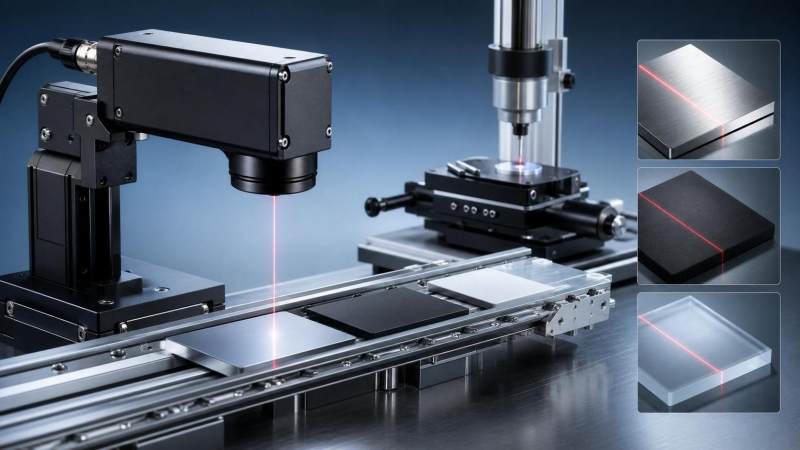
Modern operations depend on clean, fast, and dependable signals. A laser detector is often part of a wider chain that includes emitters, controllers, software, alarms, and operator decisions.
In practical terms, one weak detection point can distort a positioning routine, delay a conveyor stop, trigger unnecessary maintenance, or create unstable monitoring records.
This is especially relevant in sectors where GIH follows decision signals closely: process control, precision metrology, smart energy systems, laboratory analysis, and environmental monitoring.
As systems become more digital and automated, tolerance for uncertain input becomes smaller. The better the laser detector matches the task, the lower the downstream correction burden.
Start with what a laser detector must actually do
A laser detector receives optical energy and converts it into a usable signal. That sounds straightforward, but real selection depends on how the signal behaves under distance, movement, lighting, dust, vibration, and target variation.
Some applications need simple beam presence detection. Others need precise alignment, object positioning, level confirmation, edge sensing, or event triggering.
A detector used for indoor bench alignment faces a very different reality from one mounted near reflective metal, mist, solar glare, or a high-speed production lane.
That is why a good laser detector selection process starts with the operating scene, not the marketing headline.
The three questions behind most decisions
- How far must the detector work without losing stability?
- How fast must it respond to a real event?
- How well can it ignore noise that looks like a real signal?
These questions sound basic, yet they explain most field failures.
Range is more than maximum distance
Range is often the first specification people compare. However, advertised detection distance usually reflects controlled test conditions, not mixed industrial reality.
Useful range depends on beam quality, receiver sensitivity, target reflectivity, mounting angle, ambient light, airborne contamination, and the acceptable error margin.
A laser detector reading a matte dark surface at an angle may behave very differently from the same unit reading a bright reflective target head-on.
What to examine behind the range specification
Usually, the safest approach is to avoid selecting a laser detector at the edge of its rated range. A practical operating margin often prevents troubleshooting later.
Response time affects control quality and operator rhythm
Response time defines how quickly the detector recognizes a valid event and outputs a usable signal. In slow manual setups, milliseconds may seem trivial. In moving systems, they are not.
A delayed laser detector can shift stop positions, miss short-duration targets, or create timing mismatch between sensing and actuator response.
On the other hand, extremely fast settings are not always ideal. If filtering is too weak, the detector may react to noise spikes rather than true events.
Where faster response matters most
- High-speed conveyors and packaging lines
- Robotic positioning and pick-and-place routines
- Safety interlocks with narrow event windows
- Dynamic laboratory handling and automated stages
- Construction or survey tools requiring rapid visual confirmation
In these cases, the right laser detector supports both machine performance and smoother on-site operation. It reduces hesitation, rechecking, and manual compensation.
False alarms are often the hidden cost driver
False alarms receive less attention during purchase discussions, but they shape daily trust in a system. If a detector triggers too often without a real event, people begin to ignore it.
That loss of confidence can be more damaging than an occasional missed reading. It disrupts maintenance routines, weakens safety discipline, and complicates data interpretation.
For any laser detector, false alarm resistance depends on optical filtering, signal processing, installation quality, and environmental compatibility.
Common sources of false detection
- Direct sunlight or strong artificial lighting
- Reflective machine parts or polished metal surfaces
- Airborne dust, steam, smoke, or spray
- Electrical noise from nearby drives or switching equipment
- Improper sensitivity settings or poor alignment
In environments with heavy interference, a detector with stable filtering and better signal discrimination is often worth more than one with a more impressive nominal range.
How application context changes the right choice
A single laser detector specification cannot fit every workflow. The correct balance among range, speed, and alarm stability depends on what the measurement supports.
Industrial process and automation
Production systems usually favor repeatability, response consistency, and resistance to contamination. Minor instability can multiply quickly across shifts and batches.
Laboratory and precision positioning
Bench and instrument environments often demand cleaner signal interpretation and tighter alignment behavior. Here, false alarm control may matter as much as speed.
Environmental and outdoor monitoring
Outdoor use raises the importance of ambient light immunity, weather tolerance, and realistic range under changing visibility conditions.
Construction and field setup
Portable workflows usually depend on visibility, ease of alignment, battery efficiency, and fast confirmation in mixed lighting.
Seen this way, laser detector selection is not just a component choice. It is a task-to-signal matching exercise.
A practical evaluation framework before selection
A structured review helps narrow options without overcomplicating the process. The aim is to compare real operating conditions against detector behavior, not only catalog specifications.
- Define the minimum and preferred detection distance.
- Record target size, color, reflectivity, and movement pattern.
- Note ambient light, dust, moisture, vibration, and temperature.
- Set the acceptable delay for signal output.
- Estimate the operational impact of a false alarm.
- Check integration needs with controllers, alarms, or software.
- Confirm whether compliance or safety standards apply.
This kind of checklist reflects the broader GIH view of instrumentation decisions: accuracy alone is not enough; reliability within the real chain of use is what matters.
What to compare after the shortlist is ready
Once several laser detector options remain, side-by-side comparison should go beyond price and headline specifications.
- Stability at 70 to 80 percent of rated range
- Signal behavior under strong ambient light
- Adjustment simplicity during installation
- Tolerance to alignment drift over time
- Filtering options for noisy environments
- Maintenance burden, calibration needs, and diagnostics visibility
If possible, test each laser detector in the intended environment rather than relying only on bench validation. Field behavior often reveals trade-offs that paperwork hides.
Moving from specification to confident use
The best laser detector is not necessarily the fastest, longest-reaching, or most sensitive unit. It is the one that delivers a trustworthy signal under the exact conditions where decisions must be made.
Range should be treated as a usable operating window. Response time should match the process rhythm. False alarm resistance should protect confidence in the entire sensing chain.
A sensible next step is to map the real scene, rank the risk of missed events against nuisance triggers, and compare options with those priorities in mind. That approach usually leads to a laser detector choice that performs well long after installation.
Recommended for You
 How condensation affects stack detector readings in wet flue gasStack detector readings can drift when wet flue gas condenses. Learn how to identify moisture interference, prevent sample losses, and improve emissions monitoring reliability.
 How to prevent condensation in a CO2 analyzer sampling systemPrevent condensation in your CO2 analyzer sampling system. Learn how to control dew point, eliminate cold spots, and manage moisture for reliable readings and fewer costly disruptions.
 How to verify accuracy claims for industrial quality analyzersVerify accuracy claims for industrial quality analyzers with calibration checks, independent testing, and clear acceptance criteria. Learn how to reduce risk and buy with confidence.
 How to calculate cooling loads for an industrial analyzer shelterSize industrial analyzer shelter cooling with confidence. Learn to calculate equipment heat, solar gains, and ventilation loads, then select HVAC capacity for reliable analyzer performance.
 Do Regulatory Monitoring Systems Need Third-Party Certification?Do regulatory monitoring systems need third-party certification? Learn when it is required, what certificates prove, and how to verify compliance before buying.
 How Do You Choose Wired or Wireless for Stack Monitoring?Learn how to choose between wired and wireless for stack monitoring. Compare reliability, lifecycle costs, and data recovery to find the right CEMS setup for your site.
 What Happens When Combustible Gas Sensor Calibration Is Overdue?What happens if combustible gas sensor is not recalibrated on time? Discover the risks of inaccurate readings and missed alarms, plus steps to restore reliable protection.
 Can One Multi-Gas Detector Replace Four Separate Analyzers?Find out: can a single multi-gas detector replace four separate analyzers? Compare accuracy, safety, compliance, and lifetime costs to make a confident buying decision.
 Industrial Safety vs. Emission Monitoring: What Are the Differences?What are the main differences between industrial safety and emission monitoring? Compare goals, sensors, response times, and compliance needs to choose the right systems for your facility.
 Is Remote Monitoring Worth the Cost for Small Emission Sources?Is it worth investing in remote monitoring for small emission sources? Compare costs, compliance needs, and potential savings to choose the right solution for your operation.
 How Do You Handle Analyzer Failure During an Environmental Audit?Learn how to handle analyzer failure during environmental compliance audit procedures. Protect evidence, verify data, and restore monitoring with this practical response guide.
 Do VOC Monitors Require Explosion-Proof Certification?Does VOC monitoring require explosion-proof certification? Learn when approval is needed, compare ATEX and IECEx, and choose the right monitor for your site.
 How sample conditioning affects accuracy in petrochemical analyzersImprove accuracy in petrochemical analyzers with smarter sample conditioning. Discover how phase control, filtration, and transport design prevent bias and deliver reliable process data.
 How to troubleshoot sensor drift in industrial gas detectorsIndustrial gas detectors showing sensor drift? Learn how to verify calibration gas, identify root causes, and determine when sensor replacement is needed for reliable monitoring.
 How to judge whether a competitive price reflects real valueCompetitive Price: learn how to compare scope, compliance, performance, and lifecycle costs to identify real value, reduce risk, and make smarter purchasing decisions.
 When custom gas analysis is the right fit for complex process streamsCustom gas analysis for complex process streams: learn when tailored sampling, interference control, and reliable measurement design deliver confident decisions.
 When does a laser gas analyzer meet stack emissions monitoring needs?Laser gas analyzer for stack emissions: learn when it delivers fast, reliable data, how to assess installation risks, and what to verify for CEMS compliance.
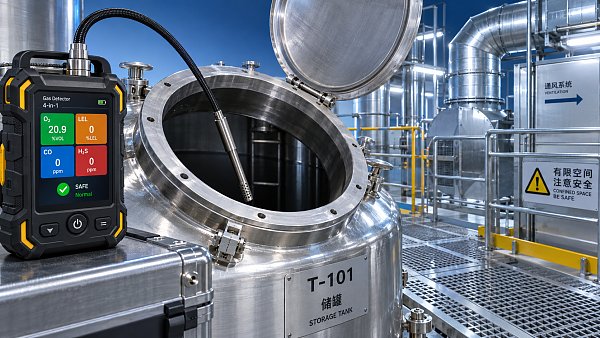
 How to select a hazardous gas analyzer for confined spacesHazardous gas analyzer selection for confined spaces: compare sensors, sampling, certifications, alarms, and maintenance to protect workers and choose with confidence.
 When is a single gas analyzer sufficient for workplace safety monitoring?Discover when a single gas analyzer delivers reliable workplace safety monitoring, and learn the key limits, calibration needs, and risks that require broader detection.
 How to choose an ambient gas analyzer for low-level leak detectionAmbient gas analyzer selection for low-level leak detection: compare sensitivity, cross-sensitivity, sampling design, alarms, and calibration for reliable site performance.
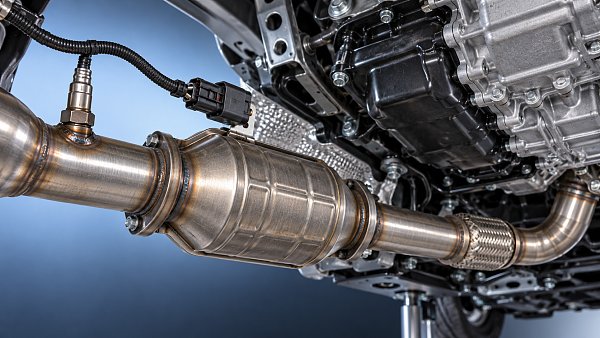
 How to tell when an oxygen sensor needs replacementOxygen sensor replacement signs explained: learn how live data, fault codes, wiring checks, and exhaust inspections pinpoint the real issue before you buy.
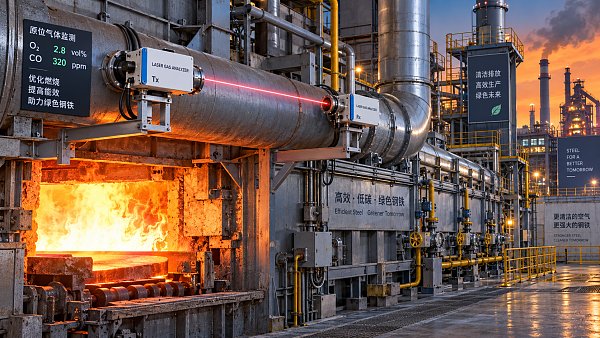
 How laser gas analyzers improve combustion control in steel furnacesLaser gas analyzer for steel industry applications delivers fast in-situ O₂ and CO data to optimize furnace combustion, cut fuel waste, and improve steel heating stability.
 How to verify whether explosion proof equipment meets site requirementsExplosion proof equipment verification made practical: match zones, gas or dust groups, temperature classes, certificates, and installation conditions for confident compliance.
 How industrial gas analysis helps detect contamination before releaseIndustrial Gas Analysis helps detect moisture, oil, oxygen, and toxic contaminants before release—protecting processes, ensuring compliance, and reducing costly risks.
 When is electrochemistry detection the right choice for water analysis?Electrochemistry detection for water analysis: learn when fast, reliable monitoring of ions, chlorine, pH, and more delivers actionable results.
 How industrial standards reduce quality risks in supplier selectionIndustrial Standard guidance helps quality and safety managers reduce supplier risks, verify compliance, strengthen traceability, and build resilient instrumentation supply chains.
 When does a multi-component system reduce installation complexity?Multi component systems reduce installation complexity when they eliminate field interfaces, streamline commissioning, and provide proven compatibility. Learn how to assess total cost and supplier accountability.
 How to size an industrial control shelter for outdoor equipmentIndustrial control shelter sizing guide: optimize layout, HVAC, access, safety, and expansion space for reliable outdoor equipment operations.
 How flue analysis helps verify combustion efficiencyFlue analysis verifies combustion efficiency by assessing O2, CO, CO2, and stack temperature to identify excess air, incomplete combustion, and heat losses.
 How to select industrial gas detectors for confined spacesIndustrial gas detectors for confined spaces: learn how to match sensors, sampling methods, alarms, and certifications to real atmospheric hazards.
 When does a laser oxygen analyzer outperform zirconia sensors?Laser oxygen analyzer vs. zirconia sensors: compare speed, selectivity, maintenance, gas chemistry, and installation needs to choose the right oxygen measurement solution.
 How to select a percent range analyzer for process measurementsPercent range analyzer selection made practical: compare accuracy, sample systems, calibration, gas matrix, integration, and lifecycle cost for reliable process measurements.










Search Categories
Search Categories
- Smart Meters & Power Quality
- Transformer Gas Analyzers
- BESS Thermal Runaway Detectors
- Energy, Power & Smart Grid Monitoring
- Optical Profilers & CMM
- Ultrasonic & X-Ray NDT
- Calibration Standards
- Precision Metrology & NDT
- Water Quality Analyzers
- CEMS & VOCs Monitors
- Price Trends
- Import & Export Updates
- Market Trends
- Industry News
- Industry Insights
Latest Article
- How condensation affects stack detector readings in wet flue gasStack detector readings can drift when wet flue gas condenses. Learn how to identify moisture interference, prevent sample losses, and improve emissions monitoring reliability.Posted by:
- How to prevent condensation in a CO2 analyzer sampling systemPrevent condensation in your CO2 analyzer sampling system. Learn how to control dew point, eliminate cold spots, and manage moisture for reliable readings and fewer costly disruptions.Posted by:
- How to verify accuracy claims for industrial quality analyzersVerify accuracy claims for industrial quality analyzers with calibration checks, independent testing, and clear acceptance criteria. Learn how to reduce risk and buy with confidence.Posted by:
Please give us a message
