
Manufacturing Process Bottlenecks That Quietly Raise Unit Costs


Where do unit costs usually start rising in a Manufacturing Process?

Unit costs rarely jump because of one dramatic failure.
More often, the Manufacturing Process becomes slightly slower, less stable, and harder to coordinate.
That is when hidden cost inflation begins.
A line may keep running, yet output per labor hour falls.
Scrap may stay within tolerance, yet rework hours increase.
Inventory may look healthy, yet one station keeps starving another.
In practical terms, bottlenecks are not only production problems.
They are capital efficiency problems.
Every extra hour of waiting, retesting, changeover, or manual checking raises cost per good unit.
This pattern appears across industrial manufacturing, power systems, environmental monitoring, laboratory equipment, and precision metrology.
Wherever measurement quality affects output quality, the Manufacturing Process becomes sensitive to small disruptions.
That is why instrumentation data matters early.
Global Instrument Hub follows this closely because process visibility often explains why margin compression appears before finance teams see a clear cause.
What kinds of bottlenecks quietly increase cost without showing up as a major incident?
The expensive bottlenecks are usually the quiet ones.
They do not shut the plant down.
They simply make the Manufacturing Process less productive every day.
- Unbalanced cycle times between upstream and downstream stations.
- Frequent micro-stoppages that never become official downtime events.
- Overreliance on manual inspection because sensor trust is low.
- Calibration drift that causes borderline quality variation.
- Changeovers that consume skilled labor longer than planned.
- Batch holds caused by missing test results or delayed approvals.
A useful way to read these issues is by asking one question.
Does this constraint reduce saleable output, or does it increase effort per saleable unit?
If the answer is yes, it is already a cost bottleneck.
In instrumentation-heavy operations, even slight instability in flow, pressure, temperature, or composition data can trigger slow decisions downstream.
That affects utilization, yield, and energy use at the same time.
The result is a Manufacturing Process that appears operational but performs below budget assumptions.
How can you tell whether the bottleneck is operational, quality-related, or measurement-driven?
This is where many reviews become too narrow.
A line can look constrained by labor or machine speed.
The deeper issue may actually be poor process signal quality.
When operators do not trust readings, they slow the Manufacturing Process to protect quality.
When calibration intervals are too wide, rechecks become common.
When test methods differ across sites, comparison becomes unreliable.
A simple diagnostic table helps separate symptoms from root causes.
In sectors covered by GIH, this distinction is critical.
A pressure transmitter issue in chemical processing, or a calibration gap in laboratory analysis, can create hidden cost long before failure appears.
The Manufacturing Process then absorbs extra labor, delayed release, and avoidable material consumption.
Why do standard cost reports often miss these Manufacturing Process leaks?
Because accounting categories are broader than process behavior.
Rework may be buried inside labor variance.
Idle time may sit inside overhead absorption.
Extra testing may appear as routine quality expense.
On paper, cost centers remain stable.
Inside the Manufacturing Process, however, throughput quality is slipping.
This is why period-end reviews often identify the symptom, not the operational cause.
A better approach is to connect cost review with three live indicators:
- Good units produced per critical hour of constrained equipment.
- Retest, hold, or rework rate by batch, shift, or product family.
- Measurement deviations that trigger intervention, overrides, or additional checks.
When these indicators move together, the cost story becomes clearer.
This is especially useful in multi-site sourcing or cross-border supplier evaluation.
GIH’s research model is relevant here because supplier quality cannot be judged by certificate lists alone.
The more revealing question is whether the supplier’s Manufacturing Process produces stable, traceable, high-confidence data under real operating load.
Which bottlenecks deserve investment first, and which ones can wait?
Not every bottleneck justifies immediate capital spending.
Some require process redesign.
Some need better instrumentation discipline.
Some are simply planning issues.
A useful rule is to rank bottlenecks by recoverable margin, not by operational noise.
The loudest issue is not always the most expensive one.
Good candidates for early action
- Constraints affecting multiple product lines or shifts.
- Measurement failures that drive recurring manual verification.
- Calibration or control gaps linked to scrap, energy, or compliance risk.
- Single-point bottlenecks that cap shipment volume.
Issues that may justify staged action
- Localized delays with limited impact on constrained output.
- Rare quality escapes without repeat pattern.
- Improvement ideas that depend on unstable demand assumptions.
In instrumentation-driven environments, early spending often works best when paired with stronger validation rules.
That may include tighter calibration governance, better sensor redundancy, or clearer traceability under ISO/IEC 17025 or sector-specific compliance demands.
The point is not to automate everything.
The point is to make the Manufacturing Process more predictable per unit of capital deployed.
What is the most practical next step if costs are drifting but the cause is still unclear?
Start with a bottleneck map, not a broad cost-cutting program.
The goal is to locate where value slows down, where quality loops back, and where measurement confidence breaks.
A short review cycle is usually enough to expose the main issue.
- Track one product family through the full Manufacturing Process.
- Mark every waiting point, retest point, approval gate, and manual override.
- Quantify lost time against saleable output, not total runtime.
- Check whether poor measurement trust caused the delay.
- Compare supplier, plant, or shift performance using the same definitions.
This method works well across general industry because it avoids abstract benchmarking.
It also creates a better basis for sourcing and investment decisions.
When the Manufacturing Process depends on precise sensing, control, and analytical verification, weak data discipline can cost as much as weak equipment utilization.
That is one reason GIH emphasizes technical trend analysis, supplier research, and measurement credibility together.
The most reliable cost improvement usually comes from seeing operations and instrumentation as one system.
If margins are tightening quietly, review the constrained steps first, validate the process data behind them, and build decisions around recoverable output, cycle stability, and traceable measurement confidence.
Recommended for You
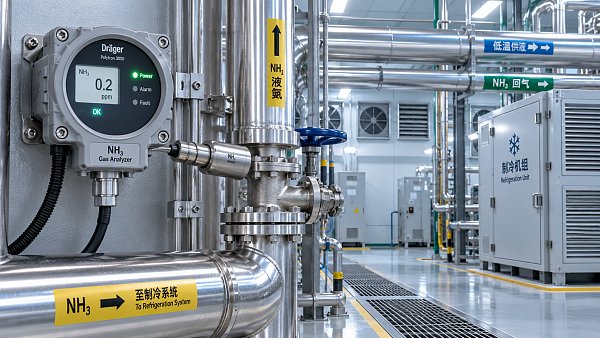
 How to verify accuracy claims for industrial quality analyzersVerify accuracy claims for industrial quality analyzers with calibration checks, independent testing, and clear acceptance criteria. Learn how to reduce risk and buy with confidence.
 How to calculate cooling loads for an industrial analyzer shelterSize industrial analyzer shelter cooling with confidence. Learn to calculate equipment heat, solar gains, and ventilation loads, then select HVAC capacity for reliable analyzer performance.
 Industrial Safety vs. Emission Monitoring: What Are the Differences?What are the main differences between industrial safety and emission monitoring? Compare goals, sensors, response times, and compliance needs to choose the right systems for your facility.
 Is Remote Monitoring Worth the Cost for Small Emission Sources?Is it worth investing in remote monitoring for small emission sources? Compare costs, compliance needs, and potential savings to choose the right solution for your operation.
 How Do You Handle Analyzer Failure During an Environmental Audit?Learn how to handle analyzer failure during environmental compliance audit procedures. Protect evidence, verify data, and restore monitoring with this practical response guide.
 Do VOC Monitors Require Explosion-Proof Certification?Does VOC monitoring require explosion-proof certification? Learn when approval is needed, compare ATEX and IECEx, and choose the right monitor for your site.
 How sample conditioning affects accuracy in petrochemical analyzersImprove accuracy in petrochemical analyzers with smarter sample conditioning. Discover how phase control, filtration, and transport design prevent bias and deliver reliable process data.
 How to troubleshoot sensor drift in industrial gas detectorsIndustrial gas detectors showing sensor drift? Learn how to verify calibration gas, identify root causes, and determine when sensor replacement is needed for reliable monitoring.
 How to judge whether a competitive price reflects real valueCompetitive Price: learn how to compare scope, compliance, performance, and lifecycle costs to identify real value, reduce risk, and make smarter purchasing decisions.
 When custom gas analysis is the right fit for complex process streamsCustom gas analysis for complex process streams: learn when tailored sampling, interference control, and reliable measurement design deliver confident decisions.
 When does a laser gas analyzer meet stack emissions monitoring needs?Laser gas analyzer for stack emissions: learn when it delivers fast, reliable data, how to assess installation risks, and what to verify for CEMS compliance.
 How to select a hazardous gas analyzer for confined spacesHazardous gas analyzer selection for confined spaces: compare sensors, sampling, certifications, alarms, and maintenance to protect workers and choose with confidence.
 When is a single gas analyzer sufficient for workplace safety monitoring?Discover when a single gas analyzer delivers reliable workplace safety monitoring, and learn the key limits, calibration needs, and risks that require broader detection.
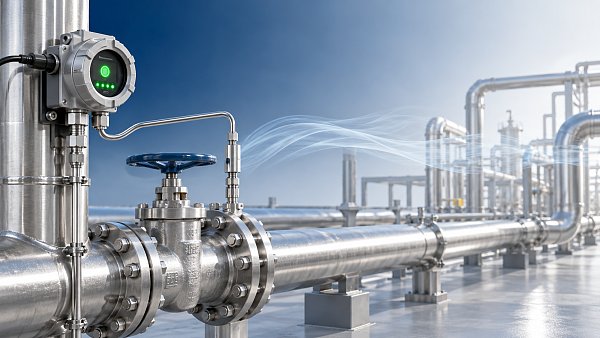
 How to choose an ambient gas analyzer for low-level leak detectionAmbient gas analyzer selection for low-level leak detection: compare sensitivity, cross-sensitivity, sampling design, alarms, and calibration for reliable site performance.
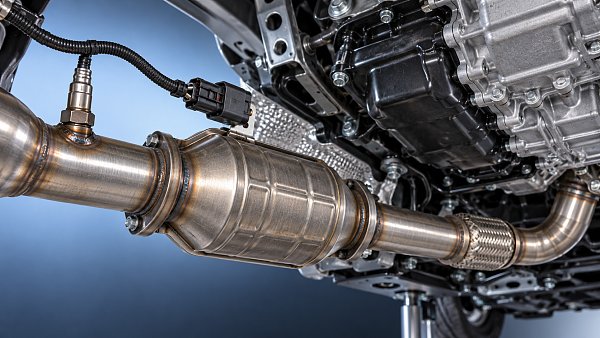
 How to tell when an oxygen sensor needs replacementOxygen sensor replacement signs explained: learn how live data, fault codes, wiring checks, and exhaust inspections pinpoint the real issue before you buy.
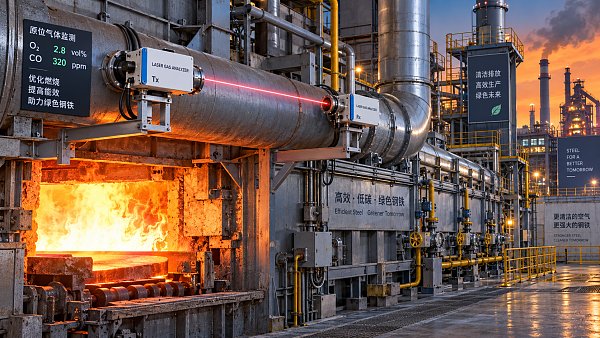
 How laser gas analyzers improve combustion control in steel furnacesLaser gas analyzer for steel industry applications delivers fast in-situ O₂ and CO data to optimize furnace combustion, cut fuel waste, and improve steel heating stability.
 How to verify whether explosion proof equipment meets site requirementsExplosion proof equipment verification made practical: match zones, gas or dust groups, temperature classes, certificates, and installation conditions for confident compliance.
 How industrial gas analysis helps detect contamination before releaseIndustrial Gas Analysis helps detect moisture, oil, oxygen, and toxic contaminants before release—protecting processes, ensuring compliance, and reducing costly risks.
 When is electrochemistry detection the right choice for water analysis?Electrochemistry detection for water analysis: learn when fast, reliable monitoring of ions, chlorine, pH, and more delivers actionable results.
 How industrial standards reduce quality risks in supplier selectionIndustrial Standard guidance helps quality and safety managers reduce supplier risks, verify compliance, strengthen traceability, and build resilient instrumentation supply chains.
 When does a multi-component system reduce installation complexity?Multi component systems reduce installation complexity when they eliminate field interfaces, streamline commissioning, and provide proven compatibility. Learn how to assess total cost and supplier accountability.
 How to size an industrial control shelter for outdoor equipmentIndustrial control shelter sizing guide: optimize layout, HVAC, access, safety, and expansion space for reliable outdoor equipment operations.
 How flue analysis helps verify combustion efficiencyFlue analysis verifies combustion efficiency by assessing O2, CO, CO2, and stack temperature to identify excess air, incomplete combustion, and heat losses.
 How to select industrial gas detectors for confined spacesIndustrial gas detectors for confined spaces: learn how to match sensors, sampling methods, alarms, and certifications to real atmospheric hazards.
 When does a laser oxygen analyzer outperform zirconia sensors?Laser oxygen analyzer vs. zirconia sensors: compare speed, selectivity, maintenance, gas chemistry, and installation needs to choose the right oxygen measurement solution.
 How to select a percent range analyzer for process measurementsPercent range analyzer selection made practical: compare accuracy, sample systems, calibration, gas matrix, integration, and lifecycle cost for reliable process measurements.
 How explosion proof analysis verifies safe equipment for hazardous areasExplosion proof analysis verifies hazardous-area equipment by matching certifications, temperature ratings, installation details, and inspection controls for safer compliance.
 When does fixed gas detection need point sensors instead of open-path monitoring?Fixed gas detection: discover when point sensors outperform open-path monitoring for predictable leaks, enclosed zones, local alarms, and safer design decisions.
 How to choose industrial metrology systems for tight-tolerance partsIndustrial metrology guide for tight-tolerance parts: compare CMMs, optical scanners, gauges, uncertainty, workflow, and traceable inspection strategies.
 How process metrology reduces measurement variation in productionProcess metrology reduces production measurement variation by improving traceability, uncertainty control, calibration, and reliable quality decisions.
 How to select an industrial monitoring analyzer for harsh environmentsIndustrial monitoring analyzer selection for harsh environments: evaluate sampling, durability, hazardous-area compliance, accuracy, maintenance, and data reliability.
 How calibration intervals affect test and measurement equipment accuracyTest and measurement equipment calibration intervals directly affect accuracy, risk, compliance, and uptime. Learn how to set evidence-based schedules that protect critical decisions.

Search Categories
Search Categories
- Smart Meters & Power Quality
- Transformer Gas Analyzers
- BESS Thermal Runaway Detectors
- Energy, Power & Smart Grid Monitoring
- Optical Profilers & CMM
- Ultrasonic & X-Ray NDT
- Calibration Standards
- Precision Metrology & NDT
- Water Quality Analyzers
- CEMS & VOCs Monitors
- Price Trends
- Import & Export Updates
- Market Trends
- Industry News
- Industry Insights
Latest Article
- How to verify accuracy claims for industrial quality analyzersVerify accuracy claims for industrial quality analyzers with calibration checks, independent testing, and clear acceptance criteria. Learn how to reduce risk and buy with confidence.Posted by:
- How to calculate cooling loads for an industrial analyzer shelterSize industrial analyzer shelter cooling with confidence. Learn to calculate equipment heat, solar gains, and ventilation loads, then select HVAC capacity for reliable analyzer performance.Posted by:
- Industrial Safety vs. Emission Monitoring: What Are the Differences?What are the main differences between industrial safety and emission monitoring? Compare goals, sensors, response times, and compliance needs to choose the right systems for your facility.Posted by:
Please give us a message
