
Process Metrology vs Final Inspection: What Improves Yield Faster?


Process Metrology vs Final Inspection: What Improves Yield Faster?
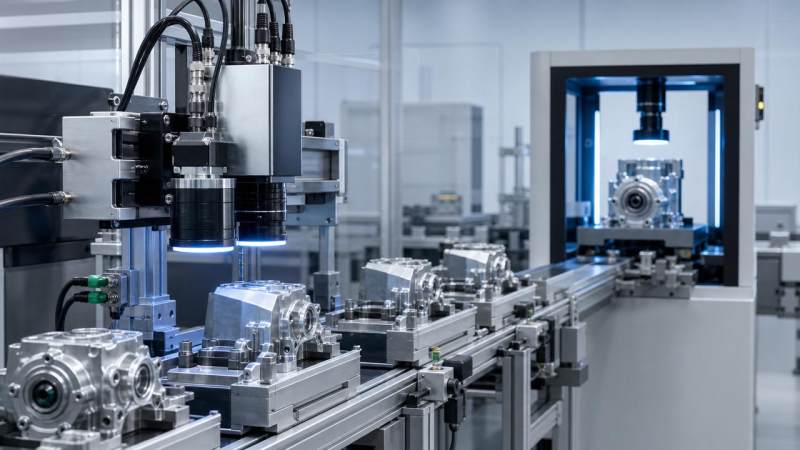
When yield losses rise, the biggest mistake is adding more checkpoints without changing where variation starts.
That is why the debate around process metrology and final inspection matters so much.
Both improve quality, but they work at different moments in the production cycle.
One detects defects after value is already added.
The other helps stop drift before scrap, delay, and rework begin to spread.
In practical terms, process metrology usually improves yield faster because it shortens the time between deviation and correction.
Final inspection still matters, especially for compliance, customer protection, and shipment release.
But if the goal is faster yield recovery, earlier measurement often creates stronger financial impact.
This matters across sectors, from machining and electronics to pharma, energy equipment, and precision assembly.
The core decision is not inspection versus metrology.
It is where measurement removes risk at the lowest total cost.
What Process Metrology Really Does
Process metrology measures critical parameters during production, not only at the end.
That can include dimensions, pressure, flow, temperature, surface condition, alignment, chemistry, or material thickness.
The purpose is simple: find variation while the process is still recoverable.
This changes the economics of quality.
Instead of sorting bad output later, teams control the source earlier.
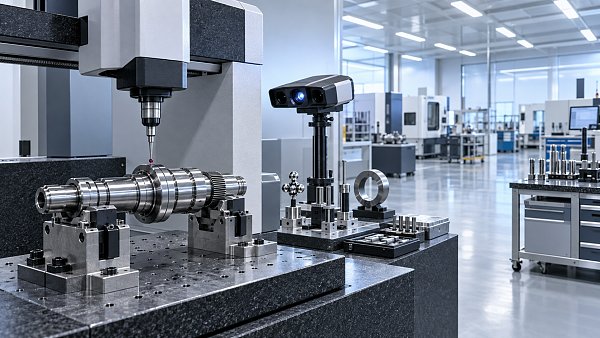
In a CNC environment, process metrology may track tool wear before tolerance failure appears.
In coating lines, it may monitor thickness drift in real time.
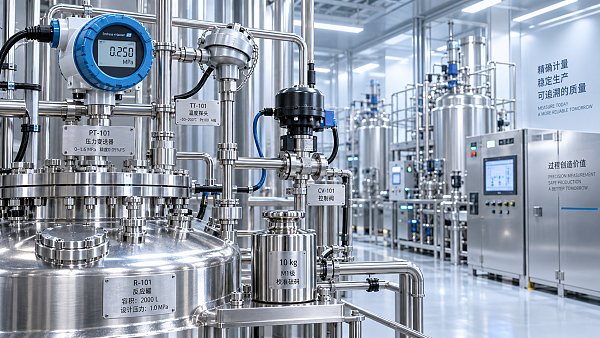
In life sciences, it can validate process conditions that affect batch consistency.
From a business perspective, process metrology improves speed-to-correction.
That is often the fastest route to better first-pass yield.
Where Final Inspection Still Adds Value
Final inspection verifies whether finished products meet defined specifications before release.
It acts as the last barrier between internal errors and external failure.
That role remains important in regulated and high-liability sectors.
Medical devices, aerospace parts, power components, and analytical instruments all rely on strong release control.
Final inspection is also useful when process stability is still immature.
If a factory runs many product variants, end-of-line verification can simplify customer assurance.
However, final inspection is mainly a detection tool.
It tells you what happened after labor, machine time, material, and overhead are already consumed.
That delay is why yield improvement is often slower when inspection carries most of the burden.
It protects shipments well, but it does not always protect margin early enough.
Why Process Metrology Usually Improves Yield Faster
Yield improves faster when feedback loops become shorter.
That is the clearest advantage of process metrology.
If measurement happens in-process, operators and engineers can correct drift before defects multiply.
This directly affects scrap rate, rework volume, unplanned downtime, and line balance.
It also improves root-cause visibility.
A failed final inspection may show a dimension is out of spec.
Process metrology can show whether the cause was temperature shift, fixture wear, tool degradation, or unstable material input.
That richer context speeds corrective action.
More importantly, process metrology supports prevention, not just sorting.
In most factories, prevention scales better than inspection labor.
- Less scrap accumulates between checks.
- Corrective actions happen closer to the cause.
- Process capability improves over time.
- Operators gain clearer control limits.
- Capacity increases without simply hiring more inspectors.
That combination is why process metrology often delivers faster yield gains than final inspection alone.
A Practical Comparison for Decision-Making
The choice becomes clearer when viewed through operations and finance.
This does not mean final inspection should disappear.
It means process metrology should lead whenever faster yield recovery is the priority.
Where Companies Get the Best Results
The strongest manufacturers do not treat this as a binary choice.
They place process metrology at high-risk steps and keep final inspection as release protection.
This layered model works well because each tool handles a different business risk.
In actual operations, the right placement depends on three questions.
- Where does variation first appear?
- How expensive is a late defect?
- Which measurement can trigger action in time?
If defects come from unstable process inputs, process metrology should be the first investment.
If customer risk is severe, final inspection should remain strict.
For most modern plants, the best answer is an integrated measurement strategy.
GIH sees this pattern across industrial process control, precision metrology, laboratory systems, and energy monitoring applications.
As production becomes more digital, process metrology gains even more value because it feeds real-time control decisions.
How to Improve Yield Without Over-Investing
A smart rollout starts with one unstable process, not a factory-wide overhaul.
That keeps capital discipline while proving the value of process metrology quickly.
- Map your top yield losses by process step, not only by final defect code.
- Identify the earliest measurable variable tied to that loss.
- Set action limits that operators can use in real time.
- Link process metrology data to maintenance, SPC, and quality reviews.
- Keep final inspection focused on validation, not as the main control method.
This approach reduces the risk of buying advanced measurement tools without workflow change.
That is a common trap.
Technology alone does not improve yield.
Actionable process metrology does.
The Bottom Line
If the question is what improves yield faster, process metrology is usually the stronger lever.
It reduces variation earlier, cuts hidden scrap costs, and strengthens process learning.
Final inspection remains essential, but mainly as a safeguard at the end.
The faster gains usually come from measuring where the process can still change.
For companies balancing quality, throughput, and capital allocation, that is the more durable strategy.
Start with one high-loss step, deploy process metrology where variation begins, and let final inspection confirm the result.
That is how yield improves faster, and how measurement becomes a competitive advantage instead of a cost center.
Recommended for You
 When custom gas analysis is the right fit for complex process streamsCustom gas analysis for complex process streams: learn when tailored sampling, interference control, and reliable measurement design deliver confident decisions.
 When does a laser gas analyzer meet stack emissions monitoring needs?Laser gas analyzer for stack emissions: learn when it delivers fast, reliable data, how to assess installation risks, and what to verify for CEMS compliance.
 How to select a hazardous gas analyzer for confined spacesHazardous gas analyzer selection for confined spaces: compare sensors, sampling, certifications, alarms, and maintenance to protect workers and choose with confidence.
 When is a single gas analyzer sufficient for workplace safety monitoring?Discover when a single gas analyzer delivers reliable workplace safety monitoring, and learn the key limits, calibration needs, and risks that require broader detection.
 How to choose an ambient gas analyzer for low-level leak detectionAmbient gas analyzer selection for low-level leak detection: compare sensitivity, cross-sensitivity, sampling design, alarms, and calibration for reliable site performance.
 How to tell when an oxygen sensor needs replacementOxygen sensor replacement signs explained: learn how live data, fault codes, wiring checks, and exhaust inspections pinpoint the real issue before you buy.
 How laser gas analyzers improve combustion control in steel furnacesLaser gas analyzer for steel industry applications delivers fast in-situ O₂ and CO data to optimize furnace combustion, cut fuel waste, and improve steel heating stability.
 How to verify whether explosion proof equipment meets site requirementsExplosion proof equipment verification made practical: match zones, gas or dust groups, temperature classes, certificates, and installation conditions for confident compliance.
 How industrial gas analysis helps detect contamination before releaseIndustrial Gas Analysis helps detect moisture, oil, oxygen, and toxic contaminants before release—protecting processes, ensuring compliance, and reducing costly risks.
 When is electrochemistry detection the right choice for water analysis?Electrochemistry detection for water analysis: learn when fast, reliable monitoring of ions, chlorine, pH, and more delivers actionable results.
 How industrial standards reduce quality risks in supplier selectionIndustrial Standard guidance helps quality and safety managers reduce supplier risks, verify compliance, strengthen traceability, and build resilient instrumentation supply chains.
 When does a multi-component system reduce installation complexity?Multi component systems reduce installation complexity when they eliminate field interfaces, streamline commissioning, and provide proven compatibility. Learn how to assess total cost and supplier accountability.
 How to size an industrial control shelter for outdoor equipmentIndustrial control shelter sizing guide: optimize layout, HVAC, access, safety, and expansion space for reliable outdoor equipment operations.
 How flue analysis helps verify combustion efficiencyFlue analysis verifies combustion efficiency by assessing O2, CO, CO2, and stack temperature to identify excess air, incomplete combustion, and heat losses.
 How to select industrial gas detectors for confined spacesIndustrial gas detectors for confined spaces: learn how to match sensors, sampling methods, alarms, and certifications to real atmospheric hazards.
 When does a laser oxygen analyzer outperform zirconia sensors?Laser oxygen analyzer vs. zirconia sensors: compare speed, selectivity, maintenance, gas chemistry, and installation needs to choose the right oxygen measurement solution.
 How to select a percent range analyzer for process measurementsPercent range analyzer selection made practical: compare accuracy, sample systems, calibration, gas matrix, integration, and lifecycle cost for reliable process measurements.
 How explosion proof analysis verifies safe equipment for hazardous areasExplosion proof analysis verifies hazardous-area equipment by matching certifications, temperature ratings, installation details, and inspection controls for safer compliance.
 When does fixed gas detection need point sensors instead of open-path monitoring?Fixed gas detection: discover when point sensors outperform open-path monitoring for predictable leaks, enclosed zones, local alarms, and safer design decisions.
 How to choose industrial metrology systems for tight-tolerance partsIndustrial metrology guide for tight-tolerance parts: compare CMMs, optical scanners, gauges, uncertainty, workflow, and traceable inspection strategies.
 How process metrology reduces measurement variation in productionProcess metrology reduces production measurement variation by improving traceability, uncertainty control, calibration, and reliable quality decisions.
 How to select an industrial monitoring analyzer for harsh environmentsIndustrial monitoring analyzer selection for harsh environments: evaluate sampling, durability, hazardous-area compliance, accuracy, maintenance, and data reliability.
 How calibration intervals affect test and measurement equipment accuracyTest and measurement equipment calibration intervals directly affect accuracy, risk, compliance, and uptime. Learn how to set evidence-based schedules that protect critical decisions.
 When does process gas monitoring need continuous measurement?Process gas monitoring needs continuous measurement when rapid changes threaten safety, quality, compliance, or uptime. Learn how to specify reliable, actionable monitoring systems.
 How to prevent false alarms in power plant instrumentationPower plant instrumentation guide: prevent false alarms with reliable signal checks, smarter alarm settings, mode-based control, and actionable operator responses.
 How fixed gas detectors help prevent leaks in enclosed workspacesFixed gas detectors provide continuous leak monitoring in enclosed workspaces, enabling faster alarms, safer responses, and stronger protection for people and processes.
 How industrial gas analysis helps detect process contamination earlyIndustrial Gas Analysis helps detect oxygen, moisture, and hydrocarbon contamination early, enabling faster fault isolation, safer operations, and stronger process control.
 What drives environmental compliance continuous monitoring setup cost?Environmental compliance continuous monitoring setup cost: uncover hidden expenses, compare bids accurately, and build a reliable, audit-ready system.
 How to select gas analysis equipment for continuous emissions monitoringGas analysis equipment selection guide for reliable continuous emissions monitoring—compare technologies, sampling, calibration, compliance, and maintenance needs.
 What detection limit is needed for NH3 environmental monitoring?High accuracy NH3 analyzer for environmental monitoring: learn how to set the right detection limit, improve sampling reliability, and make defensible decisions.
 How to select a NOX analyzer for power plant emissions complianceNOX analyzer for power plant emissions: learn how to select a compliant, reliable CEMS solution with the right range, sample handling, calibration, and data integrity.
 How to evaluate a laser gas analyzer manufacturer in GermanyLaser gas analyzer manufacturer in Germany: compare accuracy, sample handling, interference control, calibration, and service to select a reliable solution.


Search Categories
Search Categories
- Smart Meters & Power Quality
- Transformer Gas Analyzers
- BESS Thermal Runaway Detectors
- Energy, Power & Smart Grid Monitoring
- Optical Profilers & CMM
- Ultrasonic & X-Ray NDT
- Calibration Standards
- Precision Metrology & NDT
- Water Quality Analyzers
- CEMS & VOCs Monitors
- Price Trends
- Import & Export Updates
- Market Trends
- Industry News
- Industry Insights
Latest Article
- When custom gas analysis is the right fit for complex process streamsCustom gas analysis for complex process streams: learn when tailored sampling, interference control, and reliable measurement design deliver confident decisions.Posted by:
- When does a laser gas analyzer meet stack emissions monitoring needs?Laser gas analyzer for stack emissions: learn when it delivers fast, reliable data, how to assess installation risks, and what to verify for CEMS compliance.Posted by:
- How to select a hazardous gas analyzer for confined spacesHazardous gas analyzer selection for confined spaces: compare sensors, sampling, certifications, alarms, and maintenance to protect workers and choose with confidence.Posted by:
Please give us a message
