
Explosion-Proof Instruments: Key Certifications That Matter


Why do explosion-proof instruments deserve closer attention?
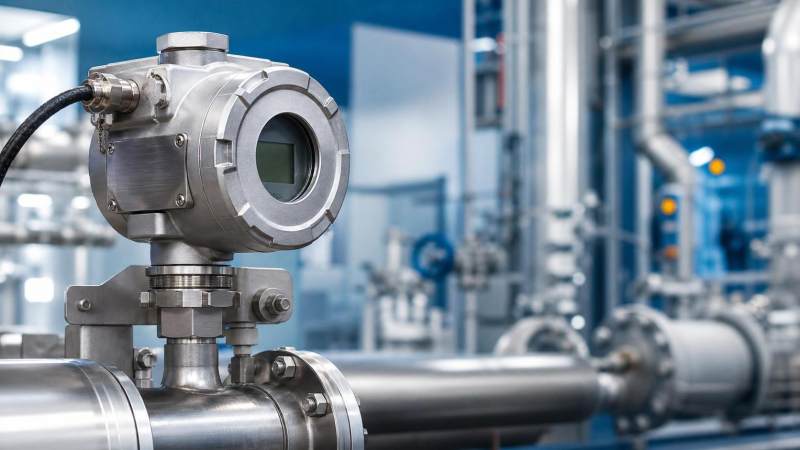
Explosion-proof instruments sit at the intersection of safety, compliance, and process reliability.
They are not ordinary field devices with a tougher enclosure.
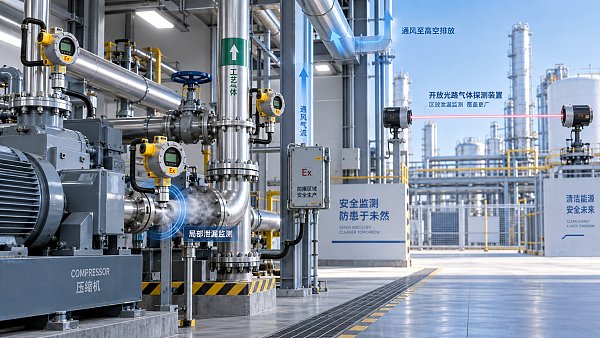
They are engineered for places where flammable gas, vapor, or dust may ignite.
In practice, that includes refineries, chemical units, LNG terminals, paint lines, grain handling, battery plants, and wastewater treatment.
The real question is rarely, “Is the instrument certified?”
A better question is, “Is it certified for this exact hazard, this installation method, and this market?”
That difference matters because the wrong approval can still create a noncompliant installation.
It can also delay audits, slow commissioning, and create expensive replacement cycles.
Across industrial automation, life sciences utilities, environmental monitoring, and energy systems, the same rule applies.
If a signal cannot be trusted in a hazardous area, control integrity also becomes uncertain.
That is why Global Instrument Hub often treats certification data as a decision layer, not a paperwork layer.
The point is simple: safe measurement starts long before the instrument reaches site.
Which certifications actually matter, and why are ATEX and IECEx discussed so often?
ATEX and IECEx dominate the discussion because they shape international expectations for hazardous-area equipment.
They are related, but they are not interchangeable in every project.
ATEX is a European regulatory framework.
IECEx is an international certification system built around IEC standards.
Many explosion-proof instruments carry both, especially when suppliers serve multiple export markets.
North America adds another layer through FM, UL, CSA, and the Class/Division or Class/Zone approach.
So a certificate name alone does not answer the installation question.
You also need to read the protection concept.
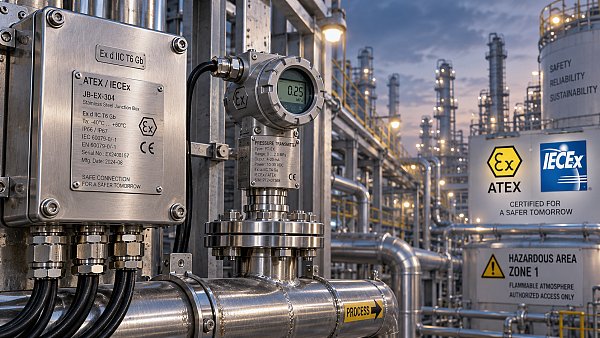
Typical markings include Ex d, Ex i, Ex e, and Ex p.
Each one reflects a different method of preventing ignition.
This is where many teams lose time.
They compare suppliers by brochure language, while the certificate marking tells the operational truth.
For explosion-proof instruments, the marking string is often more important than the headline certificate logo.
How do you know whether a certified instrument fits your hazardous area?
Start with the area classification, not the device catalog.
A transmitter suitable for Zone 2 may not be acceptable in Zone 1.
A gas approval does not automatically cover combustible dust.
Temperature class also changes the answer.
If the surface temperature can exceed the ignition temperature of the atmosphere, the device is unsuitable.
Ambient range matters too, especially outdoors, offshore, or near high-temperature process lines.
More than a few explosion-proof instruments are compliant on paper but derated by local conditions.
A practical screening process usually includes these checks:
- Confirm gas or dust classification and site zone.
- Match the protection concept to the installation philosophy.
- Verify ambient temperature limits and process temperature exposure.
- Check ingress protection, corrosion resistance, and cable gland compatibility.
- Review whether accessories are covered by the same approval path.
That last point is often missed.
A certified enclosure can be undermined by uncertified glands, plugs, or indicator modules.
For instrumentation used in process control, gas detection, pressure monitoring, and analytical skids, system fit matters more than standalone fit.
Where do buyers and project teams make the biggest mistakes?
One common mistake is treating all explosion-proof instruments as equivalent once they carry a recognizable logo.
They are not.
Certification scope can be narrow.
Options such as display units, communications boards, or housing changes may alter approval status.
Another mistake is forgetting document control.
The nameplate, certificate, test report summary, and installation manual must align.
If they do not, the inspection team will usually stop and ask hard questions.
There is also a cost misconception.
Cheaper explosion-proof instruments can become more expensive after redesign, recabling, or approval rework.
This shows up most clearly in multinational projects.
One site may accept IECEx-driven documentation.
Another may require additional local marks or inspector familiarity with regional standards.
GIH often emphasizes this supply-chain reality.
Reliable sourcing is not just about who can ship fast.
It is about who can ship the right certified configuration with traceable technical evidence.
A quick warning list worth keeping nearby
- Do not assume CE marking alone proves hazardous-area suitability.
- Do not mix approved and unapproved accessories without review.
- Do not ignore dust certifications in food, powder, and materials handling plants.
- Do not skip maintenance restrictions written in the certificate schedule.
- Do not approve substitutions before checking model-code impact.
Is intrinsic safety always better than flameproof design?
Not always, and this is where context matters.
Intrinsic safety is often preferred for low-power signals, maintenance flexibility, and reduced ignition energy.
It is common in transmitters, sensors, analyzers, and loop-powered devices.
Flameproof design can be more practical for higher-power equipment or legacy site standards.
The better choice depends on loop architecture, maintenance access, lifecycle cost, and plant engineering norms.
A short comparison helps frame the decision:
So the question is not which method sounds safer.
The better question is which certified design best supports the real operating model.
What should be checked before approval, shipment, and site acceptance?
This is where disciplined verification pays off.
Before releasing any explosion-proof instruments, build a short acceptance routine that combines technical, regulatory, and documentation checks.
Keep it practical.
It should help reduce ambiguity, not add bureaucracy.
- Verify full model code against the certificate, not only the product family.
- Check hazardous-area marking on drawings, datasheets, and nameplate.
- Confirm approved glands, stopping plugs, barriers, and junction accessories.
- Review certificate issue date and revision status.
- Make sure installation instructions are available in the project document set.
- Inspect packaging and traceability records before site handover.
For global projects, it also helps to track regional acceptance early.
That is one reason industry intelligence platforms remain useful beyond market news.
When certification rules, supplier behavior, and application trends change, the procurement decision changes with them.
In sectors from smart grid monitoring to laboratory utilities and heavy process automation, good instrument decisions are rarely isolated decisions.
They connect engineering data, safety practice, and supply-chain confidence.
A solid next step is to map every hazardous-area instrument by zone, protection concept, and market destination.
Then compare certificates, accessories, and installation constraints before final selection.
That approach makes explosion-proof instruments easier to evaluate, easier to defend in audits, and far less likely to create surprises during commissioning.
Recommended for You
 How sample conditioning affects accuracy in petrochemical analyzersImprove accuracy in petrochemical analyzers with smarter sample conditioning. Discover how phase control, filtration, and transport design prevent bias and deliver reliable process data.
 How to troubleshoot sensor drift in industrial gas detectorsIndustrial gas detectors showing sensor drift? Learn how to verify calibration gas, identify root causes, and determine when sensor replacement is needed for reliable monitoring.
 How to judge whether a competitive price reflects real valueCompetitive Price: learn how to compare scope, compliance, performance, and lifecycle costs to identify real value, reduce risk, and make smarter purchasing decisions.
 When custom gas analysis is the right fit for complex process streamsCustom gas analysis for complex process streams: learn when tailored sampling, interference control, and reliable measurement design deliver confident decisions.
 When does a laser gas analyzer meet stack emissions monitoring needs?Laser gas analyzer for stack emissions: learn when it delivers fast, reliable data, how to assess installation risks, and what to verify for CEMS compliance.
 How to select a hazardous gas analyzer for confined spacesHazardous gas analyzer selection for confined spaces: compare sensors, sampling, certifications, alarms, and maintenance to protect workers and choose with confidence.
 When is a single gas analyzer sufficient for workplace safety monitoring?Discover when a single gas analyzer delivers reliable workplace safety monitoring, and learn the key limits, calibration needs, and risks that require broader detection.
 How to choose an ambient gas analyzer for low-level leak detectionAmbient gas analyzer selection for low-level leak detection: compare sensitivity, cross-sensitivity, sampling design, alarms, and calibration for reliable site performance.
 How to tell when an oxygen sensor needs replacementOxygen sensor replacement signs explained: learn how live data, fault codes, wiring checks, and exhaust inspections pinpoint the real issue before you buy.
 How laser gas analyzers improve combustion control in steel furnacesLaser gas analyzer for steel industry applications delivers fast in-situ O₂ and CO data to optimize furnace combustion, cut fuel waste, and improve steel heating stability.
 How to verify whether explosion proof equipment meets site requirementsExplosion proof equipment verification made practical: match zones, gas or dust groups, temperature classes, certificates, and installation conditions for confident compliance.
 How industrial gas analysis helps detect contamination before releaseIndustrial Gas Analysis helps detect moisture, oil, oxygen, and toxic contaminants before release—protecting processes, ensuring compliance, and reducing costly risks.
 When is electrochemistry detection the right choice for water analysis?Electrochemistry detection for water analysis: learn when fast, reliable monitoring of ions, chlorine, pH, and more delivers actionable results.
 How industrial standards reduce quality risks in supplier selectionIndustrial Standard guidance helps quality and safety managers reduce supplier risks, verify compliance, strengthen traceability, and build resilient instrumentation supply chains.
 When does a multi-component system reduce installation complexity?Multi component systems reduce installation complexity when they eliminate field interfaces, streamline commissioning, and provide proven compatibility. Learn how to assess total cost and supplier accountability.
 How to size an industrial control shelter for outdoor equipmentIndustrial control shelter sizing guide: optimize layout, HVAC, access, safety, and expansion space for reliable outdoor equipment operations.
 How flue analysis helps verify combustion efficiencyFlue analysis verifies combustion efficiency by assessing O2, CO, CO2, and stack temperature to identify excess air, incomplete combustion, and heat losses.
 How to select industrial gas detectors for confined spacesIndustrial gas detectors for confined spaces: learn how to match sensors, sampling methods, alarms, and certifications to real atmospheric hazards.
 When does a laser oxygen analyzer outperform zirconia sensors?Laser oxygen analyzer vs. zirconia sensors: compare speed, selectivity, maintenance, gas chemistry, and installation needs to choose the right oxygen measurement solution.
 How to select a percent range analyzer for process measurementsPercent range analyzer selection made practical: compare accuracy, sample systems, calibration, gas matrix, integration, and lifecycle cost for reliable process measurements.
 How explosion proof analysis verifies safe equipment for hazardous areasExplosion proof analysis verifies hazardous-area equipment by matching certifications, temperature ratings, installation details, and inspection controls for safer compliance.
 When does fixed gas detection need point sensors instead of open-path monitoring?Fixed gas detection: discover when point sensors outperform open-path monitoring for predictable leaks, enclosed zones, local alarms, and safer design decisions.
 How to choose industrial metrology systems for tight-tolerance partsIndustrial metrology guide for tight-tolerance parts: compare CMMs, optical scanners, gauges, uncertainty, workflow, and traceable inspection strategies.
 How process metrology reduces measurement variation in productionProcess metrology reduces production measurement variation by improving traceability, uncertainty control, calibration, and reliable quality decisions.
 How to select an industrial monitoring analyzer for harsh environmentsIndustrial monitoring analyzer selection for harsh environments: evaluate sampling, durability, hazardous-area compliance, accuracy, maintenance, and data reliability.
 How calibration intervals affect test and measurement equipment accuracyTest and measurement equipment calibration intervals directly affect accuracy, risk, compliance, and uptime. Learn how to set evidence-based schedules that protect critical decisions.
 When does process gas monitoring need continuous measurement?Process gas monitoring needs continuous measurement when rapid changes threaten safety, quality, compliance, or uptime. Learn how to specify reliable, actionable monitoring systems.
 How to prevent false alarms in power plant instrumentationPower plant instrumentation guide: prevent false alarms with reliable signal checks, smarter alarm settings, mode-based control, and actionable operator responses.
 How fixed gas detectors help prevent leaks in enclosed workspacesFixed gas detectors provide continuous leak monitoring in enclosed workspaces, enabling faster alarms, safer responses, and stronger protection for people and processes.
 How industrial gas analysis helps detect process contamination earlyIndustrial Gas Analysis helps detect oxygen, moisture, and hydrocarbon contamination early, enabling faster fault isolation, safer operations, and stronger process control.
 What drives environmental compliance continuous monitoring setup cost?Environmental compliance continuous monitoring setup cost: uncover hidden expenses, compare bids accurately, and build a reliable, audit-ready system.
 How to select gas analysis equipment for continuous emissions monitoringGas analysis equipment selection guide for reliable continuous emissions monitoring—compare technologies, sampling, calibration, compliance, and maintenance needs.





Search Categories
Search Categories
- Smart Meters & Power Quality
- Transformer Gas Analyzers
- BESS Thermal Runaway Detectors
- Energy, Power & Smart Grid Monitoring
- Optical Profilers & CMM
- Ultrasonic & X-Ray NDT
- Calibration Standards
- Precision Metrology & NDT
- Water Quality Analyzers
- CEMS & VOCs Monitors
- Price Trends
- Import & Export Updates
- Market Trends
- Industry News
- Industry Insights
Latest Article
- How sample conditioning affects accuracy in petrochemical analyzersImprove accuracy in petrochemical analyzers with smarter sample conditioning. Discover how phase control, filtration, and transport design prevent bias and deliver reliable process data.Posted by:
- How to troubleshoot sensor drift in industrial gas detectorsIndustrial gas detectors showing sensor drift? Learn how to verify calibration gas, identify root causes, and determine when sensor replacement is needed for reliable monitoring.Posted by:
- How to judge whether a competitive price reflects real valueCompetitive Price: learn how to compare scope, compliance, performance, and lifecycle costs to identify real value, reduce risk, and make smarter purchasing decisions.Posted by:
Please give us a message
