
Industrial Metrology vs Traditional Inspection: What Affects Accuracy Most?


Industrial Metrology vs Traditional Inspection: What Affects Accuracy Most?
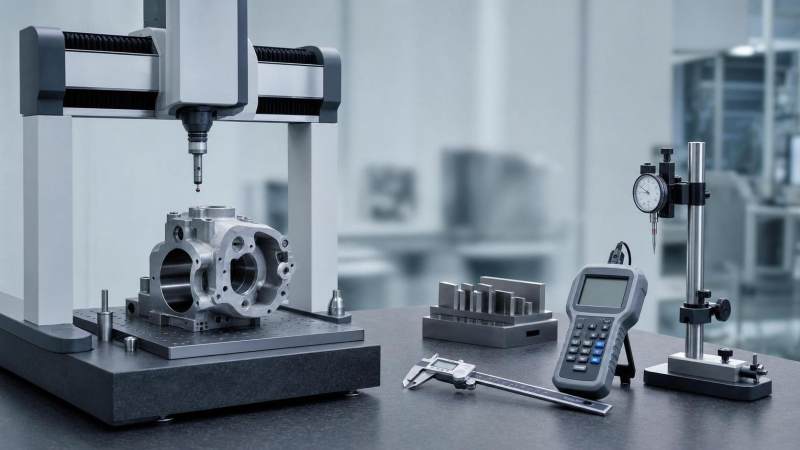
When quality, safety, and compliance matter, accuracy stops being a technical detail. It becomes a business control point.
That is where the difference between industrial metrology and traditional inspection becomes clear.
Traditional inspection often asks a simple question. Does this part, reading, or process result pass or fail?
Industrial metrology goes deeper. It asks how reliable the measurement is, how repeatable it remains, and whether the result is traceable.
In modern factories, labs, energy sites, and regulated plants, that difference affects more than scrap rates.
It affects shutdown risk, audit readiness, root cause analysis, and confidence in every downstream decision.
From a practical view, the biggest accuracy problem is rarely one bad instrument alone.
More often, errors build through weak calibration discipline, unstable environments, inconsistent handling, and poor data governance.
That is why industrial metrology is gaining ground over basic inspection routines.
What Industrial Metrology Really Means
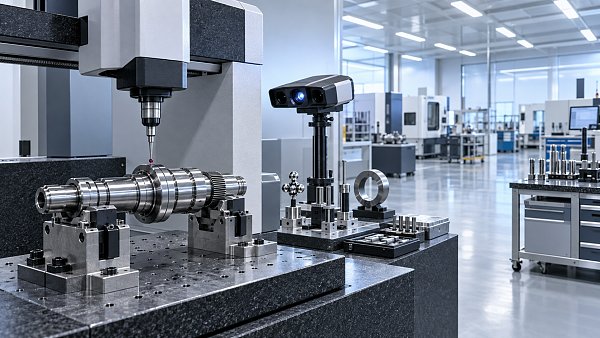
Industrial metrology is the science of measurement applied to production, maintenance, testing, and verification.
It covers dimensional measurement, process variables, calibration systems, uncertainty control, and traceable records.
Traditional inspection, by contrast, usually focuses on visible defects, gauge checks, sampling, and final acceptance.
Both have value. The problem appears when inspection is expected to deliver metrology-grade confidence.
A caliper reading, a visual check, or a go/no-go gauge may detect obvious deviation.
But those methods may not reveal drift, bias, uncertainty, or measurement system instability.
In sectors with narrow tolerances or safety exposure, that gap matters immediately.
Why the gap keeps widening
Recent shifts make industrial metrology more important than before.
Manufacturing lines run faster. Regulatory expectations are stricter. Digital systems demand clean data.
At the same time, multi-site operations need measurements that remain comparable across plants, suppliers, and audits.
That also explains why standards like ISO/IEC 17025 and structured calibration programs now influence procurement decisions.
What Affects Accuracy Most in Real Operations
If one factor deserves the most attention, it is not the instrument brand alone.
Accuracy depends on the full measurement system.
That system includes hardware, method, operator, environment, software, and traceability.
1. Calibration discipline
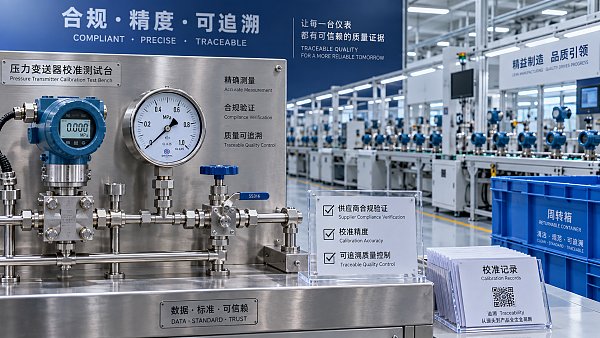
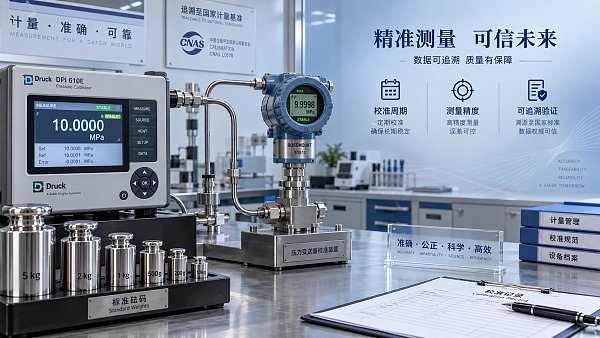
Calibration is the backbone of industrial metrology.
Without scheduled calibration, even premium instruments drift away from true values over time.
The real risk is not only missed calibration dates.
It is poorly defined intervals, weak reference standards, and incomplete traceability to recognized benchmarks.
In practice, a stable calibration program usually improves accuracy faster than replacing equipment too early.
2. Environmental conditions
Temperature, humidity, vibration, dust, and electromagnetic interference all influence measurement results.
This is especially true for precision metrology, pressure measurement, flow verification, and laboratory analysis.
Traditional inspection often treats the site as a fixed background.
Industrial metrology treats the environment as part of the measurement equation.
That shift alone can explain why two teams get different readings from the same asset.
3. Operator consistency
Even automated systems still depend on human setup, interpretation, and response.
Small differences in probe contact, alignment, sample preparation, or reading technique create measurable variation.
This is one reason measurement system analysis remains essential.
If repeatability and reproducibility are weak, inspection data may look precise while hiding instability.
4. Data traceability
Accurate results lose value when nobody can prove where the data came from.
Industrial metrology links measurements to calibration history, operator logs, method versions, and reference standards.
Traditional inspection records are often thinner and harder to audit.
When a defect, near miss, or compliance question appears, traceability becomes the deciding factor.
5. Measurement uncertainty
Many teams discuss accuracy without discussing uncertainty.
That creates false confidence.
Industrial metrology recognizes that every measurement carries some uncertainty.
The goal is to quantify it, reduce it, and decide whether it remains acceptable for the application.
For tight tolerances or safety-critical thresholds, this matters more than a pass/fail label.
Industrial Metrology vs Traditional Inspection: A Practical Comparison
A simple comparison helps show where each approach fits.
The point is not to eliminate inspection.
The smarter move is to use inspection for speed and industrial metrology for confidence where risk is higher.
Where Accuracy Failures Usually Start
In many sites, accuracy problems start upstream, long before final inspection.
- Instruments are selected for price, not measurement range, resolution, or environmental fit.
- Calibration intervals are copied from old schedules instead of actual drift behavior.
- Procedures are written once, then ignored when production pressure increases.
- Data is stored in disconnected files with no clear audit trail.
- Teams confuse repeatable readings with accurate readings.
That pattern is common across manufacturing, process plants, environmental monitoring, and laboratory operations.
More importantly, it explains why industrial metrology often delivers stronger returns than another round of end-point checks.
How to Improve Measurement Accuracy Without Overcomplicating the System
For most operations, better accuracy comes from disciplined basics.
- Map critical measurements first. Focus on parameters linked to safety, product release, compliance, or high-cost failure.
- Assign fit-for-purpose instruments. Match accuracy class, range, and stability to the process need.
- Strengthen calibration control. Use traceable references and review drift trends instead of relying on fixed habits.
- Standardize operator methods. Reduce variation through training, checklists, and periodic measurement system reviews.
- Capture traceable records digitally. Link measurement results to equipment status, method version, and corrective action history.
These actions are practical, not theoretical.
They also align with how advanced instrumentation programs are evolving under Industry 4.0 and digital quality management.
Why This Matters More for Safety and Compliance
In low-risk settings, a rough inspection may be enough.
In high-risk settings, it is not.
Pressure drift in a reactor, flow error in chemical dosing, or dimensional deviation in a critical assembly can escalate quickly.
When that happens, industrial metrology provides the stronger evidence base.
It helps teams prove that instruments were suitable, calibrated, controlled, and interpreted correctly.
That level of proof matters during audits, incident reviews, customer disputes, and supplier qualification.
It also supports a more strategic shift.
Instead of reacting to defects, organizations can predict failure, reduce uncertainty, and improve process control earlier.
Final Takeaway
So, what affects accuracy most?
The strongest answer is measurement discipline across the full system, not any single device.
Industrial metrology outperforms traditional inspection when decisions require traceability, uncertainty control, and repeatable confidence.
Traditional inspection still has a role, especially for routine screening and quick checks.
But where product integrity, plant safety, and standards compliance are at stake, industrial metrology is the more reliable foundation.
A useful next step is simple.
Review your highest-risk measurements, check calibration traceability, and identify where inspection data still lacks metrology-level support.
That is often where the biggest accuracy gains begin.
Recommended for You
 How sample conditioning affects accuracy in petrochemical analyzersImprove accuracy in petrochemical analyzers with smarter sample conditioning. Discover how phase control, filtration, and transport design prevent bias and deliver reliable process data.
 How to troubleshoot sensor drift in industrial gas detectorsIndustrial gas detectors showing sensor drift? Learn how to verify calibration gas, identify root causes, and determine when sensor replacement is needed for reliable monitoring.
 How to judge whether a competitive price reflects real valueCompetitive Price: learn how to compare scope, compliance, performance, and lifecycle costs to identify real value, reduce risk, and make smarter purchasing decisions.
 When custom gas analysis is the right fit for complex process streamsCustom gas analysis for complex process streams: learn when tailored sampling, interference control, and reliable measurement design deliver confident decisions.
 When does a laser gas analyzer meet stack emissions monitoring needs?Laser gas analyzer for stack emissions: learn when it delivers fast, reliable data, how to assess installation risks, and what to verify for CEMS compliance.
 How to select a hazardous gas analyzer for confined spacesHazardous gas analyzer selection for confined spaces: compare sensors, sampling, certifications, alarms, and maintenance to protect workers and choose with confidence.
 When is a single gas analyzer sufficient for workplace safety monitoring?Discover when a single gas analyzer delivers reliable workplace safety monitoring, and learn the key limits, calibration needs, and risks that require broader detection.
 How to choose an ambient gas analyzer for low-level leak detectionAmbient gas analyzer selection for low-level leak detection: compare sensitivity, cross-sensitivity, sampling design, alarms, and calibration for reliable site performance.
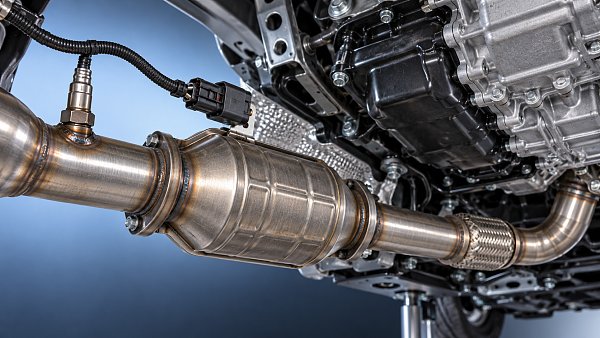
 How to tell when an oxygen sensor needs replacementOxygen sensor replacement signs explained: learn how live data, fault codes, wiring checks, and exhaust inspections pinpoint the real issue before you buy.
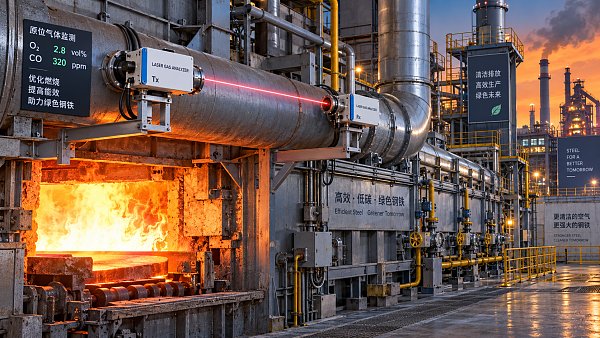
 How laser gas analyzers improve combustion control in steel furnacesLaser gas analyzer for steel industry applications delivers fast in-situ O₂ and CO data to optimize furnace combustion, cut fuel waste, and improve steel heating stability.
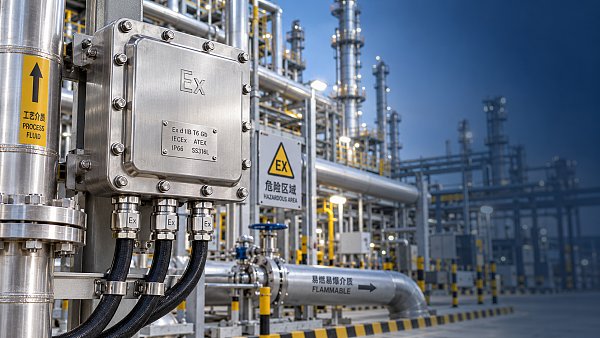
 How to verify whether explosion proof equipment meets site requirementsExplosion proof equipment verification made practical: match zones, gas or dust groups, temperature classes, certificates, and installation conditions for confident compliance.
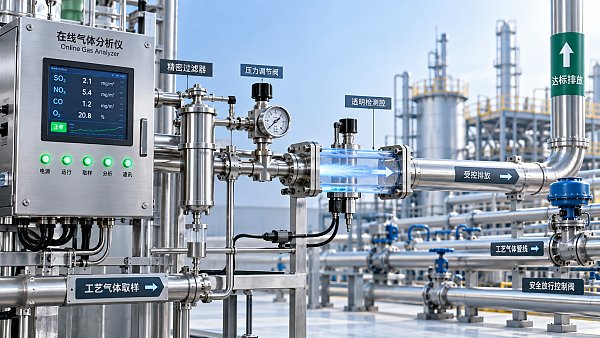
 How industrial gas analysis helps detect contamination before releaseIndustrial Gas Analysis helps detect moisture, oil, oxygen, and toxic contaminants before release—protecting processes, ensuring compliance, and reducing costly risks.
 When is electrochemistry detection the right choice for water analysis?Electrochemistry detection for water analysis: learn when fast, reliable monitoring of ions, chlorine, pH, and more delivers actionable results.
 How industrial standards reduce quality risks in supplier selectionIndustrial Standard guidance helps quality and safety managers reduce supplier risks, verify compliance, strengthen traceability, and build resilient instrumentation supply chains.
 When does a multi-component system reduce installation complexity?Multi component systems reduce installation complexity when they eliminate field interfaces, streamline commissioning, and provide proven compatibility. Learn how to assess total cost and supplier accountability.
 How to size an industrial control shelter for outdoor equipmentIndustrial control shelter sizing guide: optimize layout, HVAC, access, safety, and expansion space for reliable outdoor equipment operations.
 How flue analysis helps verify combustion efficiencyFlue analysis verifies combustion efficiency by assessing O2, CO, CO2, and stack temperature to identify excess air, incomplete combustion, and heat losses.
 How to select industrial gas detectors for confined spacesIndustrial gas detectors for confined spaces: learn how to match sensors, sampling methods, alarms, and certifications to real atmospheric hazards.
 When does a laser oxygen analyzer outperform zirconia sensors?Laser oxygen analyzer vs. zirconia sensors: compare speed, selectivity, maintenance, gas chemistry, and installation needs to choose the right oxygen measurement solution.
 How to select a percent range analyzer for process measurementsPercent range analyzer selection made practical: compare accuracy, sample systems, calibration, gas matrix, integration, and lifecycle cost for reliable process measurements.
 How explosion proof analysis verifies safe equipment for hazardous areasExplosion proof analysis verifies hazardous-area equipment by matching certifications, temperature ratings, installation details, and inspection controls for safer compliance.
 When does fixed gas detection need point sensors instead of open-path monitoring?Fixed gas detection: discover when point sensors outperform open-path monitoring for predictable leaks, enclosed zones, local alarms, and safer design decisions.
 How to choose industrial metrology systems for tight-tolerance partsIndustrial metrology guide for tight-tolerance parts: compare CMMs, optical scanners, gauges, uncertainty, workflow, and traceable inspection strategies.
 How process metrology reduces measurement variation in productionProcess metrology reduces production measurement variation by improving traceability, uncertainty control, calibration, and reliable quality decisions.
 How to select an industrial monitoring analyzer for harsh environmentsIndustrial monitoring analyzer selection for harsh environments: evaluate sampling, durability, hazardous-area compliance, accuracy, maintenance, and data reliability.
 How calibration intervals affect test and measurement equipment accuracyTest and measurement equipment calibration intervals directly affect accuracy, risk, compliance, and uptime. Learn how to set evidence-based schedules that protect critical decisions.
 When does process gas monitoring need continuous measurement?Process gas monitoring needs continuous measurement when rapid changes threaten safety, quality, compliance, or uptime. Learn how to specify reliable, actionable monitoring systems.
 How to prevent false alarms in power plant instrumentationPower plant instrumentation guide: prevent false alarms with reliable signal checks, smarter alarm settings, mode-based control, and actionable operator responses.
 How fixed gas detectors help prevent leaks in enclosed workspacesFixed gas detectors provide continuous leak monitoring in enclosed workspaces, enabling faster alarms, safer responses, and stronger protection for people and processes.
 How industrial gas analysis helps detect process contamination earlyIndustrial Gas Analysis helps detect oxygen, moisture, and hydrocarbon contamination early, enabling faster fault isolation, safer operations, and stronger process control.
 What drives environmental compliance continuous monitoring setup cost?Environmental compliance continuous monitoring setup cost: uncover hidden expenses, compare bids accurately, and build a reliable, audit-ready system.
 How to select gas analysis equipment for continuous emissions monitoringGas analysis equipment selection guide for reliable continuous emissions monitoring—compare technologies, sampling, calibration, compliance, and maintenance needs.




Search Categories
Search Categories
- Smart Meters & Power Quality
- Transformer Gas Analyzers
- BESS Thermal Runaway Detectors
- Energy, Power & Smart Grid Monitoring
- Optical Profilers & CMM
- Ultrasonic & X-Ray NDT
- Calibration Standards
- Precision Metrology & NDT
- Water Quality Analyzers
- CEMS & VOCs Monitors
- Price Trends
- Import & Export Updates
- Market Trends
- Industry News
- Industry Insights
Latest Article
- How sample conditioning affects accuracy in petrochemical analyzersImprove accuracy in petrochemical analyzers with smarter sample conditioning. Discover how phase control, filtration, and transport design prevent bias and deliver reliable process data.Posted by:
- How to troubleshoot sensor drift in industrial gas detectorsIndustrial gas detectors showing sensor drift? Learn how to verify calibration gas, identify root causes, and determine when sensor replacement is needed for reliable monitoring.Posted by:
- How to judge whether a competitive price reflects real valueCompetitive Price: learn how to compare scope, compliance, performance, and lifecycle costs to identify real value, reduce risk, and make smarter purchasing decisions.Posted by:
Please give us a message
