
Combustion Gas Analyzer Setup: What Operators Often Miss


A combustion gas analyzer can deliver reliable data only when setup matches real process conditions, yet operators often overlook key details that affect accuracy, safety, and compliance. From sampling design to sensor selection for high temperature analyzer, corrosive gas analyzer, or toxic gas analyzer applications, small mistakes can lead to costly errors. This guide highlights what teams should check before trusting any industrial process analyzer in demanding environments.
For instrumentation users, project engineers, safety managers, technical evaluators, and budget approvers, analyzer setup is rarely just a commissioning task. It directly affects process optimization, emissions control, burner tuning, fuel cost, maintenance intervals, and plant risk exposure. In many industrial environments, a 1% to 2% error in oxygen or carbon monoxide reading can push operators toward inefficient combustion settings or trigger unnecessary corrective actions.
The challenge is that many setup errors do not look dramatic on day one. They appear as drifting values, delayed response, moisture-related faults, clogged sample lines, or unstable readings during load changes. Those issues are especially common where industrial process analyzer systems are installed on boilers, furnaces, incinerators, thermal oxidizers, engines, kilns, and process heaters across manufacturing, power, environmental monitoring, and automation-driven facilities.
Process Conditions Must Define the Analyzer Setup
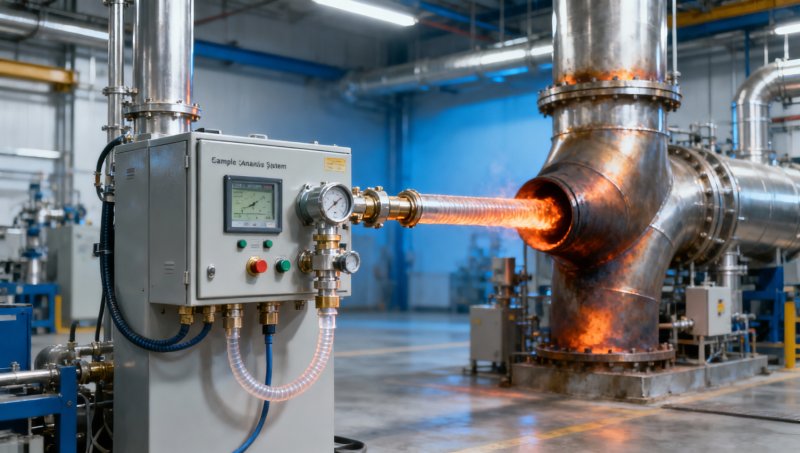
A combustion gas analyzer should never be configured from a catalog alone. The actual process defines the correct setup. Operators often focus on the analyzer cabinet, display, or sensor list, but the real starting point is the gas stream itself: temperature, pressure, dust loading, moisture content, corrosive compounds, oxygen range, expected CO level, and the required response time. If those inputs are incomplete, the setup is already compromised.
In practical terms, a stack gas application at 120°C behaves very differently from a furnace outlet at 650°C or a reformer line above 900°C. A high temperature analyzer may need hot-wet sampling or heated components kept at 120°C to 180°C to prevent condensation. By contrast, a lower-temperature application may work with a cooled sample conditioning system. Choosing the wrong approach can distort NOx, SO2, HCl, CO, or O2 readings before gas even reaches the measurement cell.
Corrosive gas analyzer and toxic gas analyzer projects require additional discipline. Acid gases, sulfur compounds, and solvent vapors can shorten sensor life, attack tubing, and degrade filters if material compatibility is not verified. PTFE, 316L stainless steel, Hastelloy, quartz, ceramic probes, and heated sample lines all have different suitability windows. A setup that survives 6 months in a clean natural gas application may fail within 4 to 8 weeks in waste incineration or chemical off-gas service.
Before design freeze, teams should document a minimum set of process variables. This helps technical buyers compare analyzer packages on equal terms and prevents hidden retrofit costs during commissioning.
- Normal and maximum gas temperature, such as 80°C, 250°C, and peak upset values above 500°C.
- Pressure condition: positive, negative, or fluctuating draft, with typical variation ranges.
- Target components and expected concentration bands, for example O2 at 0% to 25%, CO at 0 to 2,000 ppm, or NOx at 0 to 500 ppm.
- Moisture and particulate load, including whether droplets, tar, ash, or sticky condensables are present.
- Compliance objective, process control objective, or both, since each affects response and sampling design.
The table below shows how process conditions often change the suitable combustion gas analyzer setup in industrial environments.
The key takeaway is simple: analyzer accuracy starts upstream of the electronics. When process mapping is done correctly, the combustion gas analyzer becomes a reliable control and compliance tool. When process mapping is skipped, even a high-grade industrial process analyzer may deliver data that looks stable but is wrong.
Why application matching matters for decision-makers
For plant managers and financial approvers, mismatched setup often creates hidden lifecycle cost rather than visible purchase cost. A lower-priced analyzer package can become more expensive if it requires monthly probe cleaning, quarterly sensor replacement, or repeated shutdown access. In many plants, one unplanned troubleshooting visit can consume 6 to 12 labor-hours, not counting lost production or permit risk.
Sampling System Design Is Where Many Errors Begin
Operators often trust the analyzer module but underestimate the sampling path. In reality, the sample extraction point, probe depth, transport time, filtration, moisture handling, and line temperature can influence final readings as much as the sensor itself. In combustion service, the gas composition at the wall is often different from the gas composition in the duct centerline, especially where mixing is poor or excess air is uneven.
A poor extraction point can create a repeatable but misleading bias. For example, if the sampling point is installed too close to a burner inlet, damper, elbow, or fan discharge, stratification may cause O2 deviation of several tenths of a percent and much larger error for CO. In process control, that is enough to shift burner tuning away from optimal excess air and raise fuel consumption over a full operating season.
Transport delay is another frequent issue. A long sample line may add 10 to 30 seconds of lag, and in some large installations more than 45 seconds. That can be acceptable for slow emissions trending, but it is problematic for dynamic combustion control. If the industrial process analyzer is expected to support burner adjustments, furnace balancing, or engine tuning, teams should specify a target response window early, typically under 15 seconds for faster control loops and under 30 seconds for many monitoring applications.
Moisture is equally critical. Once water condenses, soluble gases can be lost and acidic condensate can damage components. Heated lines are often set between 120°C and 180°C, but the correct setpoint depends on dew point margin and gas composition. Operators sometimes lower heat to save energy, then face unstable data, corroded pumps, and blocked filters a few weeks later.
Practical sampling checks before startup
- Confirm the sampling point is in a representative zone, ideally with enough straight run and stable flow profile.
- Measure actual probe insertion depth rather than relying on drawing assumptions.
- Verify total transport delay from extraction to analyzer display under normal flow conditions.
- Check whether all condensate-prone sections are heated, insulated, sloped, or drained correctly.
- Ensure filters are sized for dust loading and are accessible without major shutdown preparation.
The following comparison helps teams decide which sample handling approach fits different combustion gas analyzer applications.
A good sampling system reduces false alarms, stabilizes readings, and lowers maintenance burden. It also supports technical evaluation during procurement because suppliers can be compared on measurable design details rather than on broad performance claims.
One missed detail: calibration gas path
Some installations use a well-designed sample path for process gas but a poor path for calibration gas. If zero and span gas do not pass through enough of the same system components, operators may validate only the analyzer cell while leaving probe, line, filter, or pump issues undetected. For many sites, a full-path verification every 1 to 4 weeks is more informative than a cell-only check.
Sensor Selection, Cross-Sensitivity, and Range Planning
Another common oversight is choosing sensor technology based only on the target gas name. A combustion gas analyzer may measure oxygen, carbon monoxide, carbon dioxide, NOx, SO2, or hydrocarbons, but not every sensing principle performs equally under the same temperature, moisture, and contaminant conditions. Electrochemical, zirconia, NDIR, TCD, paramagnetic, and optical methods each have tradeoffs in range, drift behavior, cross-sensitivity, and maintenance profile.
Oxygen is a good example. Zirconia sensors are widely used in combustion control because they respond quickly and suit hot flue gas service, but their installation, reference air quality, and temperature environment matter. Paramagnetic measurement may offer advantages in certain extractive systems where wider process variability or serviceability is important. The right answer depends on whether the analyzer is intended for continuous burner trim, periodic tuning, emissions support, or safety monitoring.
Carbon monoxide and NOx ranges also require careful planning. If normal CO is 50 to 200 ppm but startup spikes can exceed 4,000 ppm, the selected range and overload tolerance must reflect both states. Otherwise, the analyzer may saturate, recover slowly, or age prematurely. Similarly, a toxic gas analyzer used in enclosed combustion areas may need lower detection thresholds than a process analyzer used mainly for efficiency control.
Cross-sensitivity is often ignored until readings disagree with expectations. For example, hydrogen-rich streams, solvent vapors, sulfur compounds, or high CO2 backgrounds can influence some sensor types. That matters in mixed-fuel boilers, waste-to-energy, specialty thermal processes, and combustion systems tied to variable industrial feedstocks. During technical review, it is better to ask for known interference behavior than to assume the analyzer will separate all gases cleanly under field conditions.
Questions to ask before locking the gas measurement range
- What is the normal operating band, and what are the upset or startup peaks over the first 5 to 15 minutes?
- Is the required accuracy more critical at the low end, mid-range, or full scale?
- Will the analyzer face cross-interference from hydrogen, sulfur compounds, solvents, or high moisture?
- How often will calibration be performed, and can the chosen sensor support that maintenance rhythm?
- Is the analyzer part of process control, compliance trending, safety alerting, or all three?
The table below summarizes typical selection logic used in instrumentation projects without assuming one sensor type fits every plant.
For procurement teams, this is where lifecycle thinking matters. A sensor that is slightly more expensive but stable over 12 to 24 months may be more economical than a lower-cost option that drifts rapidly in contaminated service. Good specification work reduces both technical disputes and operating expense.
Do not ignore alarm and control thresholds
Setup is not complete when the analyzer reads correctly. Alarm levels, deadbands, validation logic, and control output scaling must also reflect the application. A toxic gas analyzer used for safety should not share the same threshold logic as a combustion tuning analyzer. In many plants, setting delays of 3 to 10 seconds can help avoid nuisance alarms, but excessive delay can hide real upsets.
Commissioning, Calibration, and Maintenance Planning
Even a well-specified combustion gas analyzer can underperform if commissioning is rushed. Operators often assume installation complete means measurement ready. In reality, commissioning should verify at least five areas: mechanical fit, leak tightness, heat management, signal integrity, and analytical performance under live process conditions. Skipping any of these may leave the system vulnerable to drift, lag, or false readings that only appear during production swings.
Calibration strategy should match risk level and process duty. A heavily loaded industrial furnace or waste gas application may need zero and span checks weekly or biweekly during early operation, then move to a monthly cycle after stability is proven. Cleaner fuel systems may support longer intervals, but that should be confirmed by trend data rather than assumption. A practical rule is to shorten intervals for the first 30 to 60 days after startup, because most setup-related defects surface early.
Maintenance access is another area teams often miss during project review. If the probe is mounted at a difficult elevation, if filter replacement requires scaffold access, or if condensate drains are hard to inspect, routine service becomes inconsistent. That affects both reliability and compliance readiness. For project managers, a simple maintenance design review can prevent years of inefficient service routines.
Documentation quality also matters. Good analyzer packages include wiring records, sample path drawings, calibration procedures, spare part lists, alarm setpoints, and startup benchmarks. Without that baseline, operators struggle to distinguish between normal process variation and measurement failure.
A practical 6-step commissioning sequence
- Verify probe location, insertion, sealing, and material suitability against actual operating temperature and gas chemistry.
- Check line heating, insulation, drains, filters, and pump operation before introducing process gas.
- Perform leak test and flow verification through the full sample path.
- Run zero and span validation using the intended calibration route, not only the analyzer cell.
- Compare analyzer behavior during stable load and changing load to detect transport lag or sampling bias.
- Record baseline values, response time, and maintenance checkpoints for future troubleshooting.
Typical maintenance items operators should schedule
A realistic maintenance plan should define daily, weekly, monthly, and quarterly tasks. Daily review may include alarm log and sample flow confirmation. Weekly review may include filter condition and condensate status. Monthly review may include zero/span verification, while quarterly or semiannual work may include probe inspection, pump assessment, and seal replacement depending on contamination level.
Where a corrosive gas analyzer or toxic gas analyzer is installed, spare strategy becomes especially important. Critical consumables such as filters, pump diaphragms, seals, and selected sensors should be stocked based on actual lead time. If replacement lead time is 4 to 8 weeks, holding only one spare for a 24/7 critical process may not be sufficient.
What Buyers and Plant Teams Should Evaluate Before Approval
For enterprise decision-makers and financial reviewers, the best combustion gas analyzer is not simply the one with the longest feature list. It is the one that fits the process, maintenance capability, compliance requirement, and total ownership cost. In instrumentation projects, purchase price may represent only part of the 3-year cost. Service visits, consumables, calibration gas use, downtime exposure, and retrofit changes can outweigh the initial equipment difference.
That is why technical evaluation should involve at least four viewpoints: operator use, process engineering, safety or quality oversight, and budget control. Operators understand access and service burden. Engineers understand process variability. Safety teams focus on alarm reliability and hazardous exposure. Finance teams need clarity on expected replacement cycles and implementation scope. When one of these views is missing, the project often inherits preventable risk.
Another useful practice is to separate mandatory requirements from preferred features. For example, a high temperature analyzer for a furnace line may require a specific probe rating and heated sample integrity as non-negotiable items, while touchscreen interface, enclosure finish, or reporting format may be secondary. This avoids paying extra for convenience features while under-specifying critical analytical performance.
Lead time and commissioning support should also be reviewed. Depending on customization, analyzer delivery can range from 2 to 6 weeks for simple packages and 8 to 12 weeks for more specialized systems with conditioning panels, hazardous-area considerations, or multiple gas channels. If startup dates are fixed, procurement should confirm not only shipment timing but also site readiness, installation scope, and calibration gas availability.
Procurement checklist for a combustion gas analyzer project
- Define whether the analyzer is for process optimization, compliance support, safety monitoring, or combined duty.
- Confirm required measurement ranges, response target, and expected upset conditions.
- Review sample conditioning design, wetted materials, and maintenance access before order release.
- Ask for recommended calibration interval and typical consumable list for the stated gas composition.
- Clarify what is included in commissioning support, training, documentation, and spare parts package.
Questions frequently raised during approval
How long will the system take to stabilize after startup? In many extractive systems, warm-up can range from 20 to 60 minutes depending on heaters and conditioning modules. How often will filters need replacement? In clean gas service it may be monthly or longer, while dusty service can require weekly inspection. What is the cost driver over time? Usually it is a combination of maintenance labor, consumables, and unplanned troubleshooting rather than the analyzer cell alone.
A disciplined buyer compares those factors before approval. That approach improves both technical success and return on instrumentation investment across industrial automation and digital monitoring programs.
Reliable combustion analysis depends on more than selecting a respected instrument type. It depends on matching the combustion gas analyzer to real process conditions, building the right sampling system, choosing appropriate sensor technology, and supporting the installation with disciplined commissioning and maintenance. These are the areas operators most often miss, and they are also the areas that most strongly influence data quality, safety confidence, and long-term operating cost.
If your team is evaluating a high temperature analyzer, corrosive gas analyzer, toxic gas analyzer, or a broader industrial process analyzer package, a structured technical review can prevent expensive rework and unreliable data. Contact us to discuss your application, get a tailored setup recommendation, or learn more about practical analyzer solutions for demanding industrial environments.
Recommended for You
 FDA Updates IVD Import Guidance: CNAS Calibration Chain Required for China-Made DevicesFDA now requires CNAS calibration chain reports for China-made IVD analyzers—pH, ion & clinical chemistry devices entering via 510(k)/De Novo. Act now to avoid U.S. port rejections.
 EN 61000-6-4:2026 Enters Force: Stricter EMC Requirements for Industrial Field InstrumentsEN 61000-6-4:2026 enforces stricter EMC requirements for industrial field instruments—key for AI edge controllers, sensors & exporters. Act now to ensure CE-EMC compliance by Nov 2026.
 Global Methanol Electric Alliance Launches Cross-Border Energy Efficiency Recognition RoadmapGlobal Methanol Electric Alliance launches cross-border energy efficiency recognition roadmap—key for exporters, cal labs & methanol-instrument manufacturers.
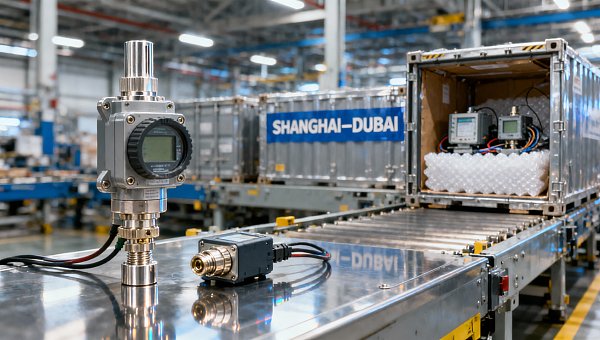
 Red Sea Crisis Escalates: Air Freight Premiums for China–Middle East Industrial Instruments Hit 390%Red Sea Crisis hits industrial instruments: China–Middle East air freight premiums surge 390%. Act now to secure Q3 capacity, avoid delays & optimize LCL alternatives.
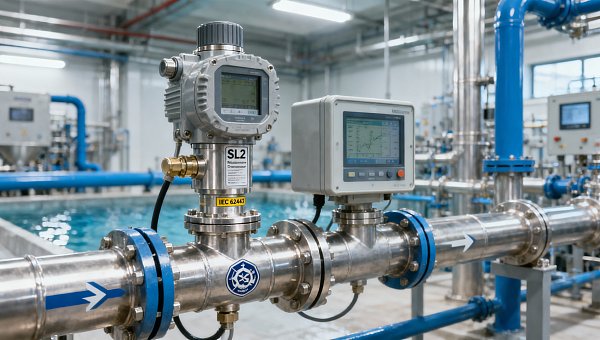
 IEC TC65 Mandates Cybersecurity Certification for Industrial Field Instruments from 2027IEC TC65 mandates cybersecurity certification for industrial field instruments by 2027 — pressure, flow & analytical devices must meet IEC 62443-4-2:2026 and display SL1–SL3 labels. Act now to ensure market access.
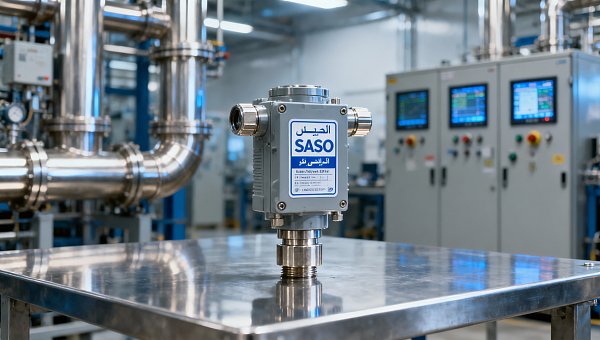
 SASO Cuts Energy Labeling Turnaround for Industrial Transmitters to 7 Working DaysSASO Energy Labeling now takes just 7 working days for industrial transmitters — faster market access, CNAS reports accepted. Act now!
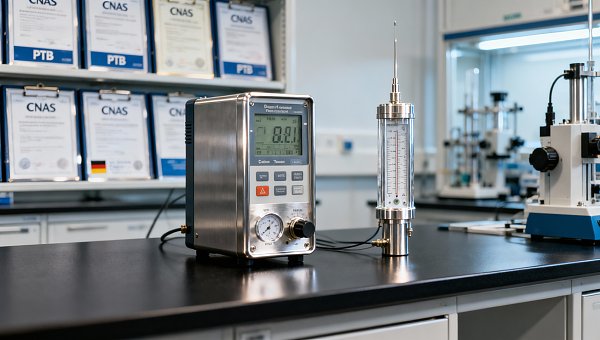
 PTB Launches CalCloud 2.0 with Direct CNAS Lab IntegrationCalCloud 2.0 now integrates directly with CNAS labs—enabling automated VDA 5 & ISO/IEC 17025 dual-compliant calibration reports for automotive and industrial exporters. Boost compliance efficiency today!
 ASEAN's Green Clearance Corridor for CNAS Calibration Reports LaunchesASEAN's Green Clearance Corridor now verifies CNAS calibration reports via blockchain—cut customs clearance to <48h for flow meters, analyzers & more. Act now!
 Vietnam Mandates CNAS Calibration Certificates & Vietnamese Manuals for Industrial Meters from June 1, 2026CNAS calibration certificates & Vietnamese manuals now mandatory for industrial meters entering Vietnam from June 1, 2026—avoid customs delays and ensure seamless market access.
 U.S. BIS Tightens Export Controls on High-Precision Laser InterferometersU.S. BIS tightens export controls on high-precision laser interferometers—critical for semiconductor metrology & ISO/IEC 17025 calibration. Act now to ensure compliance.
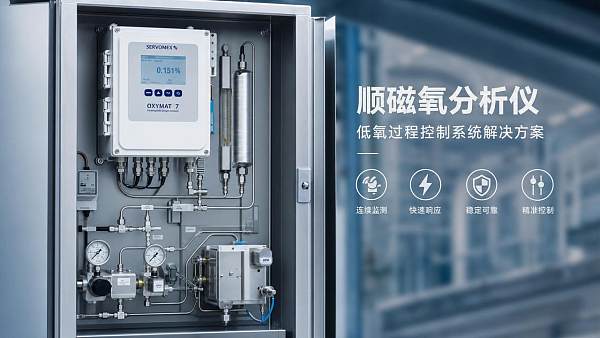
 Paramagnetic Monitor Calibration Tips for Stable OutputParamagnetic monitor calibration tips for stable output: learn how to reduce drift, improve accuracy, cut downtime, and keep oxygen measurement reliable in demanding industrial applications.
 Paramagnetic Measurement in Low-Oxygen Process ControlParamagnetic measurement enables accurate low-oxygen process control with fast response and stable oxygen analysis. Learn how it improves safety, consistency, and system performance.
 Laser Detector Import Risks and Certification DelaysLaser detector import risks can cause costly certification delays, customs issues, and testing setbacks. Learn how to avoid compliance failures before ordering.
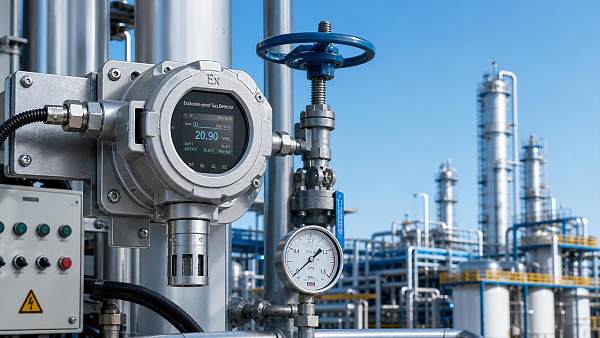
 Explosion Proof Detector Demand Under New Safety RulesExplosion proof detector demand is rising under new safety rules. Discover how to compare certified, reliable options that improve compliance, integration, and long-term site safety.
 Laboratory Detector Accuracy Standards You Should CheckLaboratory detector accuracy standards explained: check detection limits, repeatability, drift, and traceability to reduce risk, improve audit readiness, and choose with confidence.
 Custom Measurement Lead Times and Budget PlanningCustom measurement lead times and budgets explained for procurement teams. Learn key cost drivers, planning steps, and supplier tips to reduce delays and buy with confidence.
 Laser Measurement for Leak Detection: Common PitfallsLaser measurement for leak detection can fail due to setup, airflow, and data interpretation errors. Learn the common pitfalls and proven fixes for more accurate, reliable results.
 How to Evaluate a High Accuracy Detector in the FieldHigh accuracy detector evaluation starts with real field performance. Learn how to compare stability, response time, and reliability to choose the right detector with confidence.
 Electrochemical Monitor Lifespan and Replacement CostsElectrochemical monitor lifespan and replacement costs explained for buyers. Learn how sensor life, maintenance, and total ownership cost affect safer, smarter purchasing decisions.
 Thermal Analysis Market Direction in Process IndustriesThermal analysis market direction in process industries: discover trends, applications, and investment insights that improve quality control, reduce risk, and support smarter industrial decisions.
 Monitoring Shelter Design Priorities for Outdoor SitesMonitoring shelter design starts with protection, climate control, and power reliability. Discover how to choose the right outdoor solution for stable data, safer maintenance, and lower lifecycle risk.
 Fixed Measurement Planning for Multi-Point InstallationsFixed measurement planning is essential for multi-point installations. Learn how to improve accuracy, reliability, compliance, and maintenance efficiency across complex industrial systems.
 Fixed Analysis Systems for Stable Long-Term MonitoringFixed analysis systems enable stable long-term monitoring, reliable data, and better process control. Discover how they improve safety, compliance, and operational efficiency.
 Thermal Gas Applications Expanding in Clean IndustryThermal gas applications are reshaping clean industry with smarter flow measurement, emissions control, and energy optimization. Discover where they cut risk, boost efficiency, and support automation.
 Monitoring Detector Export Rules to Watch in 2026Monitoring detector export rules are changing fast in 2026. Learn the key compliance risks, supplier checks, and trade signals to protect margins and make smarter sourcing decisions.
 Control Detector Setup Mistakes That Affect ReliabilityControl detector setup mistakes can quietly reduce accuracy and uptime. Learn the most common installation, wiring, and calibration errors—and how to avoid them for reliable performance.
 What Defines a High Accuracy Monitor TodayHigh accuracy monitor selection starts with real-world performance. Learn the key accuracy factors, buyer checklist, and how to choose a reliable monitor for industrial control.
 Infrared Monitor Demand in Industrial Safety UpgradesInfrared monitor demand is rising as industrial safety upgrades accelerate. Discover where buyers need it most, how channel partners can sell smarter, and which applications drive long-term growth.
 Thermal Conductivity Monitor Limits in Mixed Gas StreamsThermal conductivity monitor limits in mixed gas streams explained—learn where accuracy drops, what buyers should compare, and how to choose the right analyzer with confidence.
 Laser Monitor vs Infrared Monitor for Fast DetectionLaser monitor vs infrared monitor for fast detection: discover which delivers better precision, response speed, and reliability for industrial monitoring and smarter sensor selection.
 Thermal Gas Analyzer Price Shifts Across Global MarketsThermal gas analyzer price shifts are reshaping global budgets. Learn what drives costs, regional differences, and how buyers can reduce risk and improve long-term value.
 Custom Analysis Options for Complex Gas ApplicationsCustom analysis helps solve complex gas applications with better accuracy, compliance, and reliability. Discover practical selection insights that reduce risk and improve system performance.
Search Categories
Search Categories
Latest Article
- FDA Updates IVD Import Guidance: CNAS Calibration Chain Required for China-Made DevicesFDA now requires CNAS calibration chain reports for China-made IVD analyzers—pH, ion & clinical chemistry devices entering via 510(k)/De Novo. Act now to avoid U.S. port rejections.Posted by:
- EN 61000-6-4:2026 Enters Force: Stricter EMC Requirements for Industrial Field InstrumentsEN 61000-6-4:2026 enforces stricter EMC requirements for industrial field instruments—key for AI edge controllers, sensors & exporters. Act now to ensure CE-EMC compliance by Nov 2026.Posted by:
- Global Methanol Electric Alliance Launches Cross-Border Energy Efficiency Recognition RoadmapGlobal Methanol Electric Alliance launches cross-border energy efficiency recognition roadmap—key for exporters, cal labs & methanol-instrument manufacturers.Posted by:
Please give us a message
