
How a Combustion Gas Analyzer Helps Cut Fuel Waste


A combustion gas analyzer helps plants identify hidden inefficiencies, reduce excess fuel use, and improve combustion performance with reliable, real-time data. For manufacturers, engineers, safety teams, and decision-makers, understanding how this tool supports cleaner operation, lower costs, and better process control is essential in today’s competitive industrial environment.
In the instrumentation industry, combustion analysis is more than a maintenance task. It is a practical way to connect measurement accuracy with fuel economy, emissions control, equipment reliability, and production stability. Whether a facility runs boilers, furnaces, kilns, dryers, ovens, generators, or thermal oxidizers, poor combustion tuning can quietly increase fuel bills by 3% to 15% without obvious warning signs.
For operators, the immediate concern is stable burner performance and safe operation. For technical evaluators, the focus is sensor response time, measurement range, sampling reliability, and calibration frequency. For finance teams and decision-makers, the main question is simple: how quickly can a combustion gas analyzer convert measurement data into measurable savings and lower operating risk?
This article explains how a combustion gas analyzer works in industrial settings, where fuel waste usually occurs, what parameters matter most, how to select the right configuration, and how to turn analyzer data into a repeatable improvement program.
Why Fuel Waste Happens in Combustion Systems
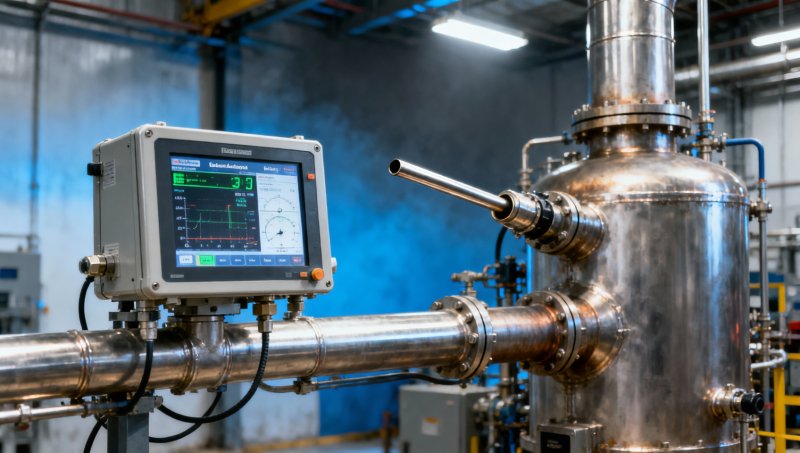
Fuel waste in combustion systems rarely comes from one obvious failure. In most plants, it builds up through small deviations: too much excess air, unstable draft, dirty burners, drifting oxygen readings, incorrect air-fuel ratio settings, or variable fuel quality. A 1% to 2% drift in oxygen content at the stack may appear minor, but over months of continuous operation it can translate into substantial extra gas or oil consumption.
Many facilities still rely on periodic manual checks instead of routine measurement. That approach misses fast process changes during start-up, load variation, product changeover, or seasonal ambient shifts. For example, a boiler operating at 40% load in the morning and 85% load by midday does not maintain the same ideal combustion conditions throughout the day. Without reliable monitoring, burners are often set conservatively, using more air than necessary to avoid incomplete combustion.
Excess air is one of the most common causes of hidden inefficiency. Too little air can create carbon monoxide, soot, and safety hazards. Too much air cools the flame, increases stack losses, and wastes energy because extra heated air leaves through the exhaust. In practical industrial use, many systems can improve thermal efficiency when oxygen is controlled within a more suitable band rather than left at a broad “safe” margin.
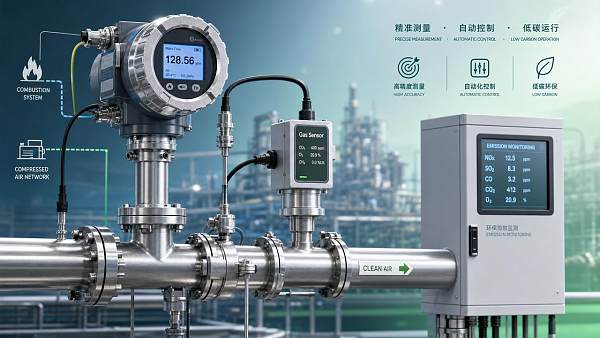
Another issue is measurement confidence. If a plant does not trust its process readings, tuning decisions are delayed or avoided. This is where instrumentation plays a central role. A combustion gas analyzer gives operators direct visibility into O2, CO, CO2, NOx, flue gas temperature, and sometimes differential pressure or combustion efficiency calculations. Instead of adjusting burners by flame appearance or sound, teams can work with measurable values.
Common sources of avoidable fuel loss
- Burners running with excess oxygen levels higher than process needs, often by 1% to 4%.
- Poor maintenance of air dampers, flame sensors, filters, or nozzles, reducing combustion stability.
- Irregular calibration intervals, such as every 12 months when the application may require checks every 3 to 6 months.
- Short-duration upsets during start-stop cycles, purge phases, and load transitions that are never recorded.
The table below shows how typical combustion issues affect fuel usage, process stability, and operating risk in industrial applications.
The key takeaway is that fuel waste usually starts as a measurement problem before it becomes a cost problem. Once gas composition and flue conditions are visible, teams can act earlier and tune with greater precision.
How a Combustion Gas Analyzer Improves Efficiency and Control
A combustion gas analyzer measures the gases produced by fuel burning and converts them into practical operating insight. In industrial settings, the most useful measurements often include oxygen, carbon monoxide, carbon dioxide, nitric oxides, and flue gas temperature. Some systems also support pressure, draft, or calculated combustion efficiency. Together, these values help determine whether burners are running lean, rich, stable, or outside safe limits.
The direct fuel-saving mechanism is straightforward. When operators know the actual O2 and CO values under real load conditions, they can reduce unnecessary excess air while still maintaining complete combustion. In many gas-fired systems, even modest optimization can improve efficiency by 1% to 5%. In high-hour operations such as 24/7 boilers or large process heaters, that range can justify analyzer investment within one heating season or one annual maintenance cycle.
The analyzer also supports cleaner operation. When combustion is optimized, soot and carbon buildup are reduced, heat transfer surfaces stay cleaner longer, and burners maintain more predictable flame characteristics. This improves not only energy performance but also maintenance planning. A unit that requires cleaning every 6 weeks may extend to 8 or 10 weeks after combustion quality improves, depending on fuel type and process conditions.
For quality and safety teams, analyzer data helps identify process deviations before they trigger alarms, product defects, or unsafe emissions. For example, a sudden rise in CO alongside a drop in O2 can indicate burner fouling, air restriction, or control instability. Early detection reduces the chance of shutdowns, rejected product, or non-compliant exhaust conditions.
What parameters matter most
Not every site needs the same gas package. A small commercial boiler room may focus on O2, CO, and temperature, while an industrial furnace may require O2, CO, NOx, and draft for tighter process and emissions control. Selection should reflect fuel type, burner design, regulatory needs, and the financial impact of inefficiency.
Core parameters and why they matter
- O2: Indicates excess air level and is central to fuel optimization.
- CO: Shows incomplete combustion and is critical for safety and tuning accuracy.
- CO2: Helps assess combustion quality and efficiency trends.
- Flue gas temperature: Helps estimate stack loss and heat transfer performance.
- NOx: Important where emissions targets or permit limits apply.
The next table summarizes how different measurements support different operational goals across industrial and commercial combustion environments.
When these readings are trended over time, the analyzer becomes more than a test tool. It becomes a control support instrument that links maintenance, production, energy management, and environmental performance in one measurable workflow.
Where Combustion Gas Analysis Delivers the Most Value
The strongest return usually appears in operations with long run hours, variable load, high fuel cost exposure, or strict quality requirements. This includes steam boilers in manufacturing plants, thermal oil heaters in process industries, drying lines in food and materials processing, metal heat treatment furnaces, glass and ceramics kilns, backup generators in energy and infrastructure sites, and incineration or oxidation systems that must control both efficiency and emissions.
In continuous production environments, even small efficiency gains are multiplied by operating hours. A combustion improvement worth only 2% may look minor on paper, but if the equipment runs 6,000 to 8,000 hours per year, the annual fuel reduction can be meaningful enough to support faster budget approval. This is especially relevant when natural gas prices fluctuate or when multiple combustion assets share one utility budget.
Combustion analysis is also valuable where product quality depends on stable heat. In dryers, ovens, and curing systems, poor combustion can create uneven temperature distribution, slow ramp-up, or inconsistent product finish. In these cases, the analyzer supports both energy control and quality assurance. That makes it relevant not only to maintenance teams but also to production managers and quality control personnel.
Another high-value scenario is troubleshooting recurring issues. Facilities often experience nuisance burner trips, unstable flame, visible smoke, or unexplained gas consumption increases. Without combustion data, teams may replace parts based on assumptions. With analyzer readings, they can narrow the issue faster and focus on air supply, fuel pressure, ignition sequence, burner cleanliness, or control loop behavior.
Typical industrial applications
- Boilers and steam systems that run at variable load across 2 or 3 production shifts.
- Furnaces and kilns where uniform heating and emissions balance are both critical.
- Dryers and process heaters where stack losses directly affect operating cost.
- Commissioning, preventive maintenance, and post-overhaul performance verification.
The table below compares typical use cases and the operational value a combustion gas analyzer can provide in each one.
This application diversity is why combustion gas analysis fits well within the broader instrumentation sector. It supports measurement-driven decision-making across energy, manufacturing, environmental control, and automated process management.
How to Select the Right Analyzer for Technical and Purchasing Needs
Selecting a combustion gas analyzer should start with the application rather than the catalog. A portable analyzer for field service has different priorities than a fixed system used for continuous monitoring. Buyers should first define fuel type, measurement points, sampling conditions, expected temperature range, maintenance capability, and whether the analyzer is intended for commissioning, periodic inspection, or ongoing process optimization.
Technical evaluators usually focus on sensor technology, response time, cross-sensitivity, sampling conditioning, and calibration method. Operators care more about readability, startup time, battery life, data logging, and probe handling. Decision-makers and finance reviewers will also ask about total cost of ownership over 3 to 5 years, including replacement sensors, calibration gas, filters, consumables, and service intervals.
In practice, selection often comes down to four core questions: what must be measured, how often the analyzer will be used, who will use it, and how critical the measurement is to fuel cost or compliance. If the tool will be used weekly across several assets, durability and service support become more important than the lowest purchase price. A low-cost analyzer that requires frequent downtime or unclear calibration procedures can increase cost instead of reducing it.
Another important factor is reporting. Many plants need downloadable records for maintenance files, audit preparation, energy reviews, or contractor verification. Simple test results may be enough for a small site, but larger facilities often benefit from trend logging, timestamped data, and export capability for monthly comparison.
A practical selection checklist
- Confirm the required gases: O2 and CO are common minimums; NOx may be needed in regulated environments.
- Match probe and sampling path to flue temperature, moisture, dust, and access conditions.
- Review calibration interval expectations, such as every 3, 6, or 12 months depending on usage intensity.
- Estimate lifecycle cost over at least 36 months, not only acquisition cost.
- Check supplier support for training, consumables, turnaround time, and documentation.
The following comparison can help procurement teams align technical and financial priorities before purchase approval.
A sound purchase decision balances precision, usability, serviceability, and business impact. In many cases, the best option is not the analyzer with the most functions, but the one that can be used consistently by the actual team in the field.
Implementation, Maintenance, and Common Mistakes to Avoid
Buying an analyzer does not automatically reduce fuel waste. The savings appear when the instrument is built into a defined workflow. A practical implementation plan usually includes baseline measurement, burner adjustment, verification at multiple load points, recordkeeping, and scheduled rechecks. For many plants, a 5-step routine is enough to turn isolated measurements into an ongoing efficiency program.
The first step is baseline capture. Measure current combustion performance at low, medium, and high load if the equipment operates across a wide range. The second step is adjustment, reducing excess air while watching CO and flame stability. The third step is verification after 24 to 72 hours of operation. The fourth is documentation, including operator notes and maintenance conditions. The fifth is periodic review, often monthly for critical systems or quarterly for stable systems.
Maintenance discipline is equally important. Filters, water traps, probes, and sensors must be checked on schedule. A clogged sample path can make readings slow or misleading. Portable analyzers used in harsh industrial areas may need consumable checks every few weeks, while lighter-duty use may allow longer intervals. Calibration practices should follow application intensity and supplier guidance, especially in operations where energy cost or safety risk is significant.
One of the most common mistakes is tuning based on a single snapshot. Combustion should be evaluated under real operating conditions, not only during startup or one steady-state moment. Another mistake is optimizing for low O2 without watching CO. The target is not the lowest oxygen reading possible; it is the best balance of efficiency, safety, emissions, and process stability.
Common implementation errors
- Measuring at the wrong sampling point, where dilution air or poor mixing distorts the results.
- Skipping warm-up or zeroing procedures before use.
- Failing to compare readings across at least 2 to 3 load conditions.
- Treating the analyzer as a one-time commissioning tool instead of a recurring optimization resource.
FAQ: What buyers and users often ask
How often should a combustion gas analyzer be used? For high-hour or fuel-intensive equipment, monthly checks are common. For stable systems with lower utilization, quarterly testing may be sufficient, with extra checks after maintenance or burner adjustments.
Is a portable analyzer enough for industrial use? In many plants, yes. Portable units are effective for routine inspection, troubleshooting, and commissioning. Fixed systems are more suitable when continuous monitoring is needed for critical process control or emissions management.
What is the fastest way to justify investment? Start with equipment that has high fuel spend, long run time, or known tuning issues. If one boiler or furnace runs 4,000 to 8,000 hours per year, even a modest efficiency improvement can create a clear payback case.
What should safety teams watch most closely? Carbon monoxide trends, unstable readings, and deviations after maintenance are key warning signs. These can indicate incomplete combustion, blocked air paths, or burner performance problems requiring immediate review.
A combustion gas analyzer delivers the greatest value when it is treated as part of a measurement and control strategy, not just a service accessory. It helps plants reduce hidden fuel waste, improve burner tuning, support cleaner exhaust, and create more reliable maintenance decisions across boilers, furnaces, dryers, and other thermal systems.
For information researchers, operators, engineers, quality teams, project managers, and financial approvers, the real advantage is clarity. With accurate combustion data, decisions become easier to justify, process risks become easier to detect, and energy savings become easier to capture. If you are evaluating combustion monitoring options or planning a fuel-efficiency upgrade, contact us to discuss application requirements, compare suitable analyzer configurations, and get a tailored solution for your operation.
Recommended for You
 FDA Updates IVD Import Guidance: CNAS Calibration Chain Required for China-Made DevicesFDA now requires CNAS calibration chain reports for China-made IVD analyzers—pH, ion & clinical chemistry devices entering via 510(k)/De Novo. Act now to avoid U.S. port rejections.
 EN 61000-6-4:2026 Enters Force: Stricter EMC Requirements for Industrial Field InstrumentsEN 61000-6-4:2026 enforces stricter EMC requirements for industrial field instruments—key for AI edge controllers, sensors & exporters. Act now to ensure CE-EMC compliance by Nov 2026.
 Global Methanol Electric Alliance Launches Cross-Border Energy Efficiency Recognition RoadmapGlobal Methanol Electric Alliance launches cross-border energy efficiency recognition roadmap—key for exporters, cal labs & methanol-instrument manufacturers.
 Red Sea Crisis Escalates: Air Freight Premiums for China–Middle East Industrial Instruments Hit 390%Red Sea Crisis hits industrial instruments: China–Middle East air freight premiums surge 390%. Act now to secure Q3 capacity, avoid delays & optimize LCL alternatives.
 IEC TC65 Mandates Cybersecurity Certification for Industrial Field Instruments from 2027IEC TC65 mandates cybersecurity certification for industrial field instruments by 2027 — pressure, flow & analytical devices must meet IEC 62443-4-2:2026 and display SL1–SL3 labels. Act now to ensure market access.
 SASO Cuts Energy Labeling Turnaround for Industrial Transmitters to 7 Working DaysSASO Energy Labeling now takes just 7 working days for industrial transmitters — faster market access, CNAS reports accepted. Act now!
 PTB Launches CalCloud 2.0 with Direct CNAS Lab IntegrationCalCloud 2.0 now integrates directly with CNAS labs—enabling automated VDA 5 & ISO/IEC 17025 dual-compliant calibration reports for automotive and industrial exporters. Boost compliance efficiency today!
 ASEAN's Green Clearance Corridor for CNAS Calibration Reports LaunchesASEAN's Green Clearance Corridor now verifies CNAS calibration reports via blockchain—cut customs clearance to <48h for flow meters, analyzers & more. Act now!
 Vietnam Mandates CNAS Calibration Certificates & Vietnamese Manuals for Industrial Meters from June 1, 2026CNAS calibration certificates & Vietnamese manuals now mandatory for industrial meters entering Vietnam from June 1, 2026—avoid customs delays and ensure seamless market access.
 U.S. BIS Tightens Export Controls on High-Precision Laser InterferometersU.S. BIS tightens export controls on high-precision laser interferometers—critical for semiconductor metrology & ISO/IEC 17025 calibration. Act now to ensure compliance.
 Paramagnetic Monitor Calibration Tips for Stable OutputParamagnetic monitor calibration tips for stable output: learn how to reduce drift, improve accuracy, cut downtime, and keep oxygen measurement reliable in demanding industrial applications.
 Paramagnetic Measurement in Low-Oxygen Process ControlParamagnetic measurement enables accurate low-oxygen process control with fast response and stable oxygen analysis. Learn how it improves safety, consistency, and system performance.
 Laser Detector Import Risks and Certification DelaysLaser detector import risks can cause costly certification delays, customs issues, and testing setbacks. Learn how to avoid compliance failures before ordering.
 Explosion Proof Detector Demand Under New Safety RulesExplosion proof detector demand is rising under new safety rules. Discover how to compare certified, reliable options that improve compliance, integration, and long-term site safety.
 Laboratory Detector Accuracy Standards You Should CheckLaboratory detector accuracy standards explained: check detection limits, repeatability, drift, and traceability to reduce risk, improve audit readiness, and choose with confidence.
 Custom Measurement Lead Times and Budget PlanningCustom measurement lead times and budgets explained for procurement teams. Learn key cost drivers, planning steps, and supplier tips to reduce delays and buy with confidence.
 Laser Measurement for Leak Detection: Common PitfallsLaser measurement for leak detection can fail due to setup, airflow, and data interpretation errors. Learn the common pitfalls and proven fixes for more accurate, reliable results.
 How to Evaluate a High Accuracy Detector in the FieldHigh accuracy detector evaluation starts with real field performance. Learn how to compare stability, response time, and reliability to choose the right detector with confidence.
 Electrochemical Monitor Lifespan and Replacement CostsElectrochemical monitor lifespan and replacement costs explained for buyers. Learn how sensor life, maintenance, and total ownership cost affect safer, smarter purchasing decisions.
 Thermal Analysis Market Direction in Process IndustriesThermal analysis market direction in process industries: discover trends, applications, and investment insights that improve quality control, reduce risk, and support smarter industrial decisions.
 Monitoring Shelter Design Priorities for Outdoor SitesMonitoring shelter design starts with protection, climate control, and power reliability. Discover how to choose the right outdoor solution for stable data, safer maintenance, and lower lifecycle risk.
 Fixed Measurement Planning for Multi-Point InstallationsFixed measurement planning is essential for multi-point installations. Learn how to improve accuracy, reliability, compliance, and maintenance efficiency across complex industrial systems.
 Fixed Analysis Systems for Stable Long-Term MonitoringFixed analysis systems enable stable long-term monitoring, reliable data, and better process control. Discover how they improve safety, compliance, and operational efficiency.
 Thermal Gas Applications Expanding in Clean IndustryThermal gas applications are reshaping clean industry with smarter flow measurement, emissions control, and energy optimization. Discover where they cut risk, boost efficiency, and support automation.
 Monitoring Detector Export Rules to Watch in 2026Monitoring detector export rules are changing fast in 2026. Learn the key compliance risks, supplier checks, and trade signals to protect margins and make smarter sourcing decisions.
 Control Detector Setup Mistakes That Affect ReliabilityControl detector setup mistakes can quietly reduce accuracy and uptime. Learn the most common installation, wiring, and calibration errors—and how to avoid them for reliable performance.
 What Defines a High Accuracy Monitor TodayHigh accuracy monitor selection starts with real-world performance. Learn the key accuracy factors, buyer checklist, and how to choose a reliable monitor for industrial control.
 Infrared Monitor Demand in Industrial Safety UpgradesInfrared monitor demand is rising as industrial safety upgrades accelerate. Discover where buyers need it most, how channel partners can sell smarter, and which applications drive long-term growth.
 Thermal Conductivity Monitor Limits in Mixed Gas StreamsThermal conductivity monitor limits in mixed gas streams explained—learn where accuracy drops, what buyers should compare, and how to choose the right analyzer with confidence.
 Laser Monitor vs Infrared Monitor for Fast DetectionLaser monitor vs infrared monitor for fast detection: discover which delivers better precision, response speed, and reliability for industrial monitoring and smarter sensor selection.
 Thermal Gas Analyzer Price Shifts Across Global MarketsThermal gas analyzer price shifts are reshaping global budgets. Learn what drives costs, regional differences, and how buyers can reduce risk and improve long-term value.
 Custom Analysis Options for Complex Gas ApplicationsCustom analysis helps solve complex gas applications with better accuracy, compliance, and reliability. Discover practical selection insights that reduce risk and improve system performance.
Search Categories
Search Categories
Latest Article
- FDA Updates IVD Import Guidance: CNAS Calibration Chain Required for China-Made DevicesFDA now requires CNAS calibration chain reports for China-made IVD analyzers—pH, ion & clinical chemistry devices entering via 510(k)/De Novo. Act now to avoid U.S. port rejections.Posted by:
- EN 61000-6-4:2026 Enters Force: Stricter EMC Requirements for Industrial Field InstrumentsEN 61000-6-4:2026 enforces stricter EMC requirements for industrial field instruments—key for AI edge controllers, sensors & exporters. Act now to ensure CE-EMC compliance by Nov 2026.Posted by:
- Global Methanol Electric Alliance Launches Cross-Border Energy Efficiency Recognition RoadmapGlobal Methanol Electric Alliance launches cross-border energy efficiency recognition roadmap—key for exporters, cal labs & methanol-instrument manufacturers.Posted by:
Please give us a message
