
Industrial Process Analyzer Upgrades: What Is Worth Doing


Upgrading an industrial process analyzer is rarely worth it if the result is only “newer equipment.” What matters is whether the upgrade improves measurement reliability, reduces safety and compliance risk, lowers operating cost, or supports a clearer production objective. For most plants, the best investments are targeted: replacing outdated sensing components, improving sample conditioning, upgrading communications and diagnostics, hardening analyzers for harsh service, or modernizing systems used in hazardous, toxic, corrosive, high-temperature, or low-range applications. The right decision depends less on the analyzer’s age alone and more on failure impact, maintenance burden, process criticality, and the cost of bad data.
In practice, users searching for guidance on industrial process analyzer upgrades usually want a practical answer to one question: what should we upgrade first, and what upgrades actually pay back? Operators want fewer false alarms and less maintenance. Technical evaluators want better stability, accuracy, and integration. Managers and finance teams want a defensible business case. Safety and quality teams want confidence that the analyzer can still perform in real operating conditions. This article focuses on those real-world priorities and explains which upgrades are truly worth doing.
What usually makes an analyzer upgrade worth the investment?
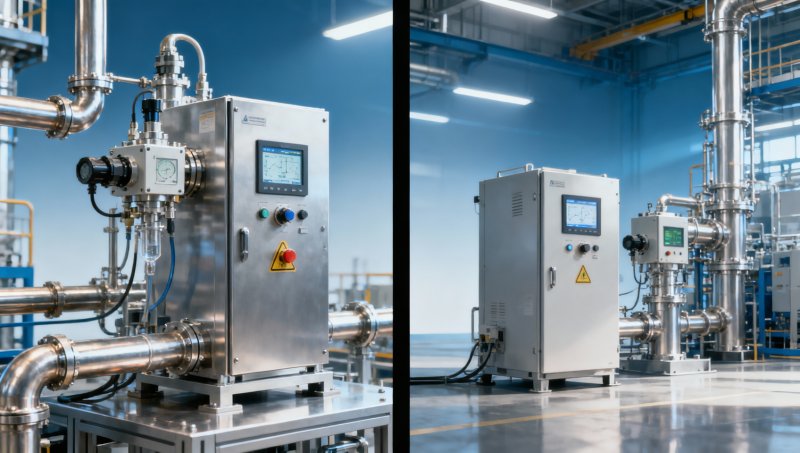
The most valuable analyzer upgrades are the ones that solve a costly problem, not the ones that add features no one uses. In most industrial settings, an upgrade is justified when it delivers one or more of the following outcomes:
- More reliable measurements that reduce process variability, off-spec production, or wasted raw materials
- Lower safety risk in toxic gas, corrosive gas, or hazardous area service
- Better compliance with environmental, quality, or operational requirements
- Less maintenance downtime due to fewer calibration drifts, clogging events, or component failures
- Improved digital visibility through modern diagnostics, remote status monitoring, and control system integration
- Lower lifecycle cost even if the initial capital cost is not the lowest option
A useful rule is this: if analyzer errors can cause shutdowns, quality loss, excess emissions, safety events, or expensive manual verification, then a focused upgrade is often worth doing. If the analyzer is rarely used, not process-critical, and still performs within required limits, a full replacement may not be necessary.
Which analyzer upgrades usually deliver the fastest practical value?
Many facilities assume analyzer modernization means complete replacement. Often, it does not. Some of the highest-value upgrades are modular and targeted.
1. Sensor or detector upgrades
If the analyzer body is still serviceable but the sensing technology is outdated, replacing the sensor or detector can improve response time, repeatability, drift performance, and detection limits. This is especially valuable in a low range analyzer, where small signal instability can lead to major data quality problems.
2. Sample conditioning improvements
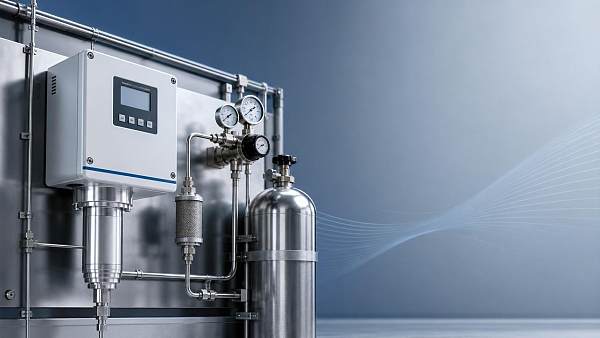
In real plants, many analyzer problems are not caused by the analyzer core at all. They come from poor sample extraction, contamination, condensation, pressure instability, or temperature variation. Upgrading filters, heaters, regulators, coolers, moisture removal systems, and sample lines often gives a better return than changing the analyzer alone.
3. Electronics and communications modernization
Adding modern outputs, diagnostics, digital communications, event logging, and remote access can extend the useful life of installed analyzers while making them easier to manage. For plants moving toward digitalization, this is often one of the most practical upgrades because it improves visibility without a full system redesign.
4. Enclosure and environmental hardening
For a high temperature analyzer or an analyzer installed in dusty, humid, corrosive, or vibration-prone conditions, better enclosure protection and thermal management can greatly improve uptime. Plants sometimes underestimate how much reliability is lost to environment-related stress rather than process measurement limits.
5. Safety-related configuration upgrades
For a toxic gas analyzer, corrosive gas analyzer, or hazardous area analyzer, upgrades that improve containment, purge systems, explosion protection, fail-safe behavior, and alarm integrity are usually worth serious consideration. These investments often protect not only the process, but also personnel, compliance standing, and insurance exposure.
When is a full analyzer replacement better than a partial upgrade?
Partial upgrades make sense when the installed base is fundamentally sound. Full replacement is usually the better option when several of the following conditions apply:
- The analyzer has recurring failures and spare parts are difficult or expensive to source
- Calibration drift is frequent enough to affect production decisions
- The measurement range no longer matches current process requirements
- The analyzer cannot meet current safety, hazardous area, or emissions requirements
- The sample system and analyzer are both aging and would require repeated piecemeal repairs
- Integration with the control system is poor, creating manual workarounds or blind spots
- The total maintenance burden exceeds the cost of modernization over a reasonable payback period
A full replacement is also more justifiable when the analyzer supports a bottleneck process, environmental reporting, product release decisions, combustion optimization, or operator safety. In those cases, data confidence matters more than squeezing a little more life from old equipment.
How should you evaluate upgrades for low range, high temperature, corrosive gas, toxic gas, and hazardous area analyzers?
Not all analyzer duties fail in the same way, so the upgrade logic should match the service condition.
Low range analyzer
For low-level measurement, the biggest risks are drift, contamination, baseline instability, and sample integrity issues. Worthwhile upgrades usually include improved sensor sensitivity, cleaner sample handling, tighter leak control, and better calibration verification. If trace-level decisions affect product quality, utility purity, or emissions performance, even small improvements can deliver strong value.
High temperature analyzer
In elevated temperature service, reliability depends on thermal management, materials selection, insulation, and the ability to maintain measurement stability under heat stress. Upgrades worth doing include heat-resistant sampling components, better cooling or isolation strategies, and analyzer designs specifically rated for high thermal load. If temperature cycling has been causing frequent maintenance, this should be a priority area.
Corrosive gas analyzer
Corrosive media quickly expose weak materials and poor sample system design. Valuable upgrades often involve corrosion-resistant wetted parts, improved seals, material compatibility review, and better moisture control. The main business case here is preventing premature failure, inaccurate readings, and unplanned replacement.
Toxic gas analyzer
For toxic gas measurement, the upgrade question is heavily tied to risk management. Faster response, better fail diagnostics, safer sample containment, and more reliable alarming are typically worth the cost. If a toxic gas analyzer supports personnel protection, process safety, or regulatory reporting, underinvestment creates disproportionate risk.
Hazardous area analyzer
In classified environments, upgrades should focus on certified suitability, enclosure integrity, intrinsic safety or explosion-proof requirements, purge systems where applicable, and maintainability without creating unsafe intervention conditions. Here, “worth doing” is not just about performance; it is about safe operation and audit defensibility.
What are the hidden costs of not upgrading?
Plants often delay upgrades because the analyzer is still technically running. But “still running” does not mean “still economical.” Common hidden costs include:
- Operator time spent on manual checks and workarounds
- Maintenance labor for repeated calibration and troubleshooting
- Quality losses from unstable or misleading measurements
- Energy waste from poor combustion or process control
- Regulatory exposure from reporting errors or emissions deviations
- Safety risk linked to delayed or inaccurate gas detection
- Production interruptions caused by analyzer-related trips or delayed decisions
For finance approvers, this is often the missing part of the evaluation. The question is not only “What does the upgrade cost?” but also “What is the cost of continuing with current performance?” In many cases, the operational cost of bad analyzer data is much higher than expected.
How can decision-makers build a strong business case for analyzer upgrades?
A convincing upgrade case usually combines technical need with financial impact. The clearest framework includes five factors:
1. Process criticality
How directly does the analyzer affect throughput, energy use, emissions, safety, or product release?
2. Failure consequences
What happens if the analyzer drifts, fails, or becomes unavailable? Is the result inconvenience, or a shutdown, safety event, or compliance issue?
3. Maintenance burden
How many labor hours, spare parts, callouts, and verification steps are currently required to keep it usable?
4. Upgrade benefit
Will the change reduce downtime, improve control, lower utility cost, reduce manual intervention, or improve reporting confidence?
5. Payback horizon
Can the value be shown over 12 to 36 months through avoided losses, lower maintenance, and better production performance?
For project managers and engineering leads, it also helps to classify upgrades into three tiers:
- Essential: safety, compliance, or end-of-life driven
- High-return: clear operational savings or quality improvement
- Optional: convenience or modernization with weaker near-term return
This approach makes approval easier because it separates urgent needs from desirable enhancements.
What practical mistakes should buyers and users avoid?
Several common mistakes reduce the value of analyzer upgrade projects:
- Replacing the analyzer without fixing the sample system
- Choosing by purchase price instead of lifecycle cost
- Ignoring environmental and process conditions during specification
- Underestimating hazardous area or toxic service requirements
- Failing to involve operators, maintenance, safety, and controls teams early
- Assuming more advanced technology automatically means better plant fit
- Overlooking calibration strategy, spares availability, and service support
The best results come from treating the analyzer as part of a measurement system, not as a standalone box. That means evaluating installation conditions, sample transport, maintenance access, digital integration, and the consequences of bad readings.
So, what is actually worth doing?
For most facilities, the analyzer upgrades worth doing are the ones that improve measurement trust where trust has real operational value. That usually means one or more of the following:
- Upgrading analyzers that directly affect safety, emissions, or product quality
- Modernizing low range analyzer applications where trace accuracy drives decisions
- Hardening high temperature analyzer installations for durability and stability
- Improving material compatibility and sample handling for corrosive gas analyzer service
- Strengthening response reliability and containment for toxic gas analyzer applications
- Ensuring certified, maintainable performance for hazardous area analyzer deployments
- Investing in sample system and diagnostics improvements before defaulting to total replacement
In short, the best upgrade is not the biggest one. It is the one that reduces risk, improves usable data, and delivers measurable operational or financial benefit. If your current analyzer setup creates repeated maintenance effort, uncertain readings, safety concerns, or process inefficiency, a targeted upgrade is usually worth doing. If it still meets process, safety, and compliance needs with low support cost, selective modernization may be enough.
The smartest decision is to prioritize analyzer upgrades by consequence and value: start where poor measurement hurts the business most, and invest where better data will actually change outcomes.
Recommended for You
 FDA Updates IVD Import Guidance: CNAS Calibration Chain Required for China-Made DevicesFDA now requires CNAS calibration chain reports for China-made IVD analyzers—pH, ion & clinical chemistry devices entering via 510(k)/De Novo. Act now to avoid U.S. port rejections.
 EN 61000-6-4:2026 Enters Force: Stricter EMC Requirements for Industrial Field InstrumentsEN 61000-6-4:2026 enforces stricter EMC requirements for industrial field instruments—key for AI edge controllers, sensors & exporters. Act now to ensure CE-EMC compliance by Nov 2026.
 Global Methanol Electric Alliance Launches Cross-Border Energy Efficiency Recognition RoadmapGlobal Methanol Electric Alliance launches cross-border energy efficiency recognition roadmap—key for exporters, cal labs & methanol-instrument manufacturers.
 Red Sea Crisis Escalates: Air Freight Premiums for China–Middle East Industrial Instruments Hit 390%Red Sea Crisis hits industrial instruments: China–Middle East air freight premiums surge 390%. Act now to secure Q3 capacity, avoid delays & optimize LCL alternatives.
 IEC TC65 Mandates Cybersecurity Certification for Industrial Field Instruments from 2027IEC TC65 mandates cybersecurity certification for industrial field instruments by 2027 — pressure, flow & analytical devices must meet IEC 62443-4-2:2026 and display SL1–SL3 labels. Act now to ensure market access.
 SASO Cuts Energy Labeling Turnaround for Industrial Transmitters to 7 Working DaysSASO Energy Labeling now takes just 7 working days for industrial transmitters — faster market access, CNAS reports accepted. Act now!
 PTB Launches CalCloud 2.0 with Direct CNAS Lab IntegrationCalCloud 2.0 now integrates directly with CNAS labs—enabling automated VDA 5 & ISO/IEC 17025 dual-compliant calibration reports for automotive and industrial exporters. Boost compliance efficiency today!
 ASEAN's Green Clearance Corridor for CNAS Calibration Reports LaunchesASEAN's Green Clearance Corridor now verifies CNAS calibration reports via blockchain—cut customs clearance to <48h for flow meters, analyzers & more. Act now!
 Vietnam Mandates CNAS Calibration Certificates & Vietnamese Manuals for Industrial Meters from June 1, 2026CNAS calibration certificates & Vietnamese manuals now mandatory for industrial meters entering Vietnam from June 1, 2026—avoid customs delays and ensure seamless market access.
 U.S. BIS Tightens Export Controls on High-Precision Laser InterferometersU.S. BIS tightens export controls on high-precision laser interferometers—critical for semiconductor metrology & ISO/IEC 17025 calibration. Act now to ensure compliance.
 Paramagnetic Monitor Calibration Tips for Stable OutputParamagnetic monitor calibration tips for stable output: learn how to reduce drift, improve accuracy, cut downtime, and keep oxygen measurement reliable in demanding industrial applications.
 Paramagnetic Measurement in Low-Oxygen Process ControlParamagnetic measurement enables accurate low-oxygen process control with fast response and stable oxygen analysis. Learn how it improves safety, consistency, and system performance.
 Laser Detector Import Risks and Certification DelaysLaser detector import risks can cause costly certification delays, customs issues, and testing setbacks. Learn how to avoid compliance failures before ordering.
 Explosion Proof Detector Demand Under New Safety RulesExplosion proof detector demand is rising under new safety rules. Discover how to compare certified, reliable options that improve compliance, integration, and long-term site safety.
 Laboratory Detector Accuracy Standards You Should CheckLaboratory detector accuracy standards explained: check detection limits, repeatability, drift, and traceability to reduce risk, improve audit readiness, and choose with confidence.
 Custom Measurement Lead Times and Budget PlanningCustom measurement lead times and budgets explained for procurement teams. Learn key cost drivers, planning steps, and supplier tips to reduce delays and buy with confidence.
 Laser Measurement for Leak Detection: Common PitfallsLaser measurement for leak detection can fail due to setup, airflow, and data interpretation errors. Learn the common pitfalls and proven fixes for more accurate, reliable results.
 How to Evaluate a High Accuracy Detector in the FieldHigh accuracy detector evaluation starts with real field performance. Learn how to compare stability, response time, and reliability to choose the right detector with confidence.
 Electrochemical Monitor Lifespan and Replacement CostsElectrochemical monitor lifespan and replacement costs explained for buyers. Learn how sensor life, maintenance, and total ownership cost affect safer, smarter purchasing decisions.
 Thermal Analysis Market Direction in Process IndustriesThermal analysis market direction in process industries: discover trends, applications, and investment insights that improve quality control, reduce risk, and support smarter industrial decisions.
 Monitoring Shelter Design Priorities for Outdoor SitesMonitoring shelter design starts with protection, climate control, and power reliability. Discover how to choose the right outdoor solution for stable data, safer maintenance, and lower lifecycle risk.
 Fixed Measurement Planning for Multi-Point InstallationsFixed measurement planning is essential for multi-point installations. Learn how to improve accuracy, reliability, compliance, and maintenance efficiency across complex industrial systems.
 Fixed Analysis Systems for Stable Long-Term MonitoringFixed analysis systems enable stable long-term monitoring, reliable data, and better process control. Discover how they improve safety, compliance, and operational efficiency.
 Thermal Gas Applications Expanding in Clean IndustryThermal gas applications are reshaping clean industry with smarter flow measurement, emissions control, and energy optimization. Discover where they cut risk, boost efficiency, and support automation.
 Monitoring Detector Export Rules to Watch in 2026Monitoring detector export rules are changing fast in 2026. Learn the key compliance risks, supplier checks, and trade signals to protect margins and make smarter sourcing decisions.
 Control Detector Setup Mistakes That Affect ReliabilityControl detector setup mistakes can quietly reduce accuracy and uptime. Learn the most common installation, wiring, and calibration errors—and how to avoid them for reliable performance.
 What Defines a High Accuracy Monitor TodayHigh accuracy monitor selection starts with real-world performance. Learn the key accuracy factors, buyer checklist, and how to choose a reliable monitor for industrial control.
 Infrared Monitor Demand in Industrial Safety UpgradesInfrared monitor demand is rising as industrial safety upgrades accelerate. Discover where buyers need it most, how channel partners can sell smarter, and which applications drive long-term growth.
 Thermal Conductivity Monitor Limits in Mixed Gas StreamsThermal conductivity monitor limits in mixed gas streams explained—learn where accuracy drops, what buyers should compare, and how to choose the right analyzer with confidence.
 Laser Monitor vs Infrared Monitor for Fast DetectionLaser monitor vs infrared monitor for fast detection: discover which delivers better precision, response speed, and reliability for industrial monitoring and smarter sensor selection.
 Thermal Gas Analyzer Price Shifts Across Global MarketsThermal gas analyzer price shifts are reshaping global budgets. Learn what drives costs, regional differences, and how buyers can reduce risk and improve long-term value.
 Custom Analysis Options for Complex Gas ApplicationsCustom analysis helps solve complex gas applications with better accuracy, compliance, and reliability. Discover practical selection insights that reduce risk and improve system performance.
Search Categories
Search Categories
Latest Article
- FDA Updates IVD Import Guidance: CNAS Calibration Chain Required for China-Made DevicesFDA now requires CNAS calibration chain reports for China-made IVD analyzers—pH, ion & clinical chemistry devices entering via 510(k)/De Novo. Act now to avoid U.S. port rejections.Posted by:
- EN 61000-6-4:2026 Enters Force: Stricter EMC Requirements for Industrial Field InstrumentsEN 61000-6-4:2026 enforces stricter EMC requirements for industrial field instruments—key for AI edge controllers, sensors & exporters. Act now to ensure CE-EMC compliance by Nov 2026.Posted by:
- Global Methanol Electric Alliance Launches Cross-Border Energy Efficiency Recognition RoadmapGlobal Methanol Electric Alliance launches cross-border energy efficiency recognition roadmap—key for exporters, cal labs & methanol-instrument manufacturers.Posted by:
Please give us a message
