
N2 Concentration Analyzer vs O2 Sensors


When comparing an N2 concentration analyzer with O2 sensors, buyers and technical teams need more than basic gas detection—they need reliable data for process control, safety, quality assurance, and compliance. From industrial automation to laboratory analysis, understanding where an N2 concentration analyzer outperforms conventional O2 sensors can help operators, engineers, and decision-makers choose the right solution for accurate and cost-effective monitoring.
What is the real difference between an N2 concentration analyzer and O2 sensors?
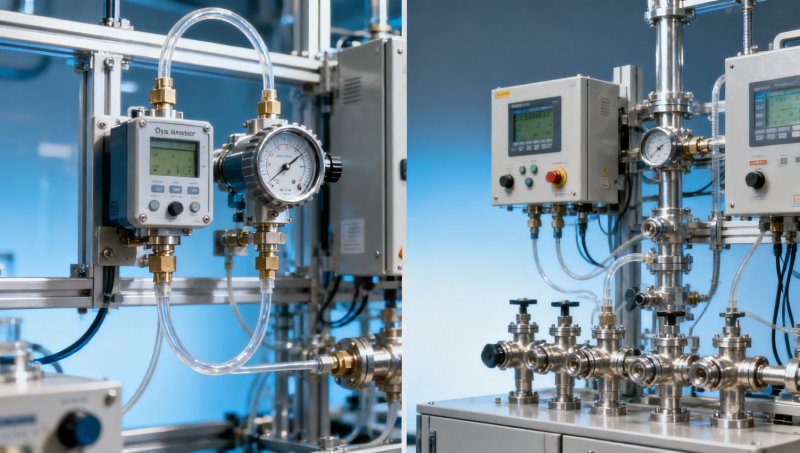
In many instrumentation projects, these two technologies are treated as interchangeable because both relate to gas composition. In practice, they solve different problems. An O2 sensor measures oxygen directly, usually as a percentage or trace value. An N2 concentration analyzer is designed to determine nitrogen concentration more directly or through a gas analysis method configured for higher confidence in nitrogen-related control tasks.
This difference matters in industrial manufacturing, energy systems, environmental monitoring, laboratory analysis, and automated process lines. If a process only needs to know whether oxygen is above or below a threshold such as 1%, 5%, or 10%, an O2 sensor may be enough. If the process must verify nitrogen purity, inerting effectiveness, or batch consistency over a wider operating range, an N2 concentration analyzer often becomes the better engineering choice.
For operators and quality teams, the key issue is not only measurement principle but decision risk. An O2 sensor can indicate low oxygen, yet low oxygen does not always equal confirmed nitrogen concentration if other gases are present. In mixed-gas environments, that distinction can affect safety reviews, product quality records, and acceptance criteria.
For procurement and finance teams, the comparison should focus on 3 core questions: what gas mixture is being monitored, what control accuracy is required, and what cost of wrong measurement is acceptable. In many B2B projects, the purchase price is only one part of the decision; downtime, calibration burden, and compliance exposure can be far more expensive over 2–5 years of operation.
Why indirect oxygen measurement is not always enough
O2 sensors are commonly used because they are compact, familiar, and relatively easy to integrate into control panels, portable devices, and online monitoring systems. However, they generally infer nitrogen conditions by assuming the rest of the gas is mostly nitrogen. That assumption may fail in combustion exhaust, shielding gas systems, modified atmosphere packaging, research setups, or industrial vessels containing CO2, Ar, H2, or solvent vapors.
An N2 concentration analyzer is more suitable when the process owner needs a direct answer to questions such as: Is nitrogen concentration at 95%–99.999%? Is purge quality stable during a 30–90 minute cycle? Has the inert atmosphere reached the specification before production starts? These are not minor details. They affect scrap rates, safety interlocks, and process repeatability.
Technical evaluators should also remember response requirements. Some applications value fast alarm response within seconds, while others value stable composition verification over longer runs of 8–24 hours. The right technology depends on whether the priority is hazard alerting, closed-loop control, certification documentation, or product quality assurance.
Typical decision signals
- Choose an O2 sensor first when the main requirement is oxygen deficiency monitoring, personnel safety alarming, or simple threshold control in relatively clean gas conditions.
- Choose an N2 concentration analyzer when nitrogen purity, inerting validation, batch traceability, or multi-gas process accuracy is part of the operating target.
- Reassess both options if the application includes fluctuating temperature, pressure variation, moisture, dust loading, or cross-interfering gases, because installation and sampling design may matter as much as the sensor itself.
Which technology fits industrial, laboratory, and safety applications better?
The instrumentation industry serves diverse environments, from automation control cabinets and energy facilities to medical testing and laboratory systems. That diversity is why there is no universal winner in the N2 concentration analyzer vs O2 sensors discussion. The right answer depends on process objective, gas background, maintenance capacity, and audit expectations.
In packaging and food processing, O2 sensors are often used to confirm low residual oxygen in modified atmosphere packaging. Yet where nitrogen filling must be validated across multiple packaging lines and variable gas blends, an N2 concentration analyzer can provide stronger confirmation of actual nitrogen concentration, especially during line qualification or troubleshooting.
In metal processing, electronics, and chemical handling, inerting systems rely on nitrogen to suppress oxidation, moisture impact, or ignition risk. Here, a direct nitrogen-focused approach is often preferred for critical chambers, glove boxes, or purge systems. A simple oxygen reading may support alarms, but it may not fully document purge performance in mixed-gas or transitional states.
In laboratories and R&D environments, decision-makers often require reproducibility over multiple test cycles per week. If a lab runs 10–50 validation tests per month, stable concentration analysis can reduce repeated experiments caused by uncertain gas composition. That is where analyzer-grade instrumentation can justify a higher initial budget.
Application-by-application suitability
The table below helps engineers, project managers, and distributors identify where an N2 concentration analyzer or O2 sensors are more commonly selected. It is not a substitute for a site survey, but it provides a practical starting point for specification work and supplier discussions.
The main takeaway is straightforward: O2 sensors are often effective for oxygen-centric safety and control tasks, while an N2 concentration analyzer becomes more valuable as process complexity, documentation needs, and concentration confidence requirements increase. For large plants with several sampling points, it is common to use both technologies in different layers of the same system.
A practical 4-step suitability check
- Define the gas objective: safety alarm, purity confirmation, process control, or quality release.
- Review the gas matrix: confirm whether only oxygen and nitrogen are relevant, or whether other gases may distort indirect interpretation.
- Set the operating range: decide if you need threshold monitoring, trace analysis, or high-purity verification.
- Match maintenance resources: check whether the site can support periodic calibration, sampling line upkeep, and operator training every month or quarter.
How should technical teams compare performance, installation, and lifecycle cost?
Technical comparison should move beyond a single specification sheet. In the instrumentation sector, real performance depends on measurement principle, sampling method, ambient conditions, and control system integration. Procurement teams often focus on upfront device cost, but project managers and quality personnel need a wider view that includes commissioning time, spare parts, recalibration intervals, and false-decision risk.
O2 sensors are usually simpler to deploy in standalone or distributed monitoring points. They may require less space and less sample conditioning in clean applications. An N2 concentration analyzer may involve a more complete analytical setup, especially when high accuracy or stable online analysis is required. That can mean more planning effort during the first 2–4 weeks of project engineering, but better data quality over the operating life.
For cost control, the correct comparison is total ownership burden over 12–36 months, not only equipment price on day one. A lower-cost O2 sensor can become expensive if the application truly needs nitrogen verification and repeated recalibration, retesting, or product rejection occurs. Likewise, specifying an analyzer for a simple oxygen alarm point may add unnecessary capital cost and complexity.
Finance approvers often ask a useful question: what is the cost of being wrong? If a bad reading can lead to one rejected batch, one delayed startup, or one failed audit, the premium for better analysis may be justified. If the process consequence is minor and safety thresholds are clear, a simpler sensor strategy may be financially sound.
Side-by-side evaluation factors
The table below highlights practical factors that frequently appear in RFQs, technical clarifications, and factory acceptance discussions. Teams can use it as a shortlist when comparing bids from instrumentation suppliers.
This comparison shows why technical teams should not reduce the decision to “sensor versus analyzer.” The better question is whether the process requires oxygen indication or nitrogen confirmation. That shift in wording often prevents specification errors early in the bidding phase.
5 items to verify before issuing a purchase order
- Measurement range and decision threshold: define whether the critical point is a low-O2 alarm, a nitrogen purity band, or both.
- Sampling conditions: confirm pressure, temperature, humidity, dust load, and whether a bypass or conditioning unit is needed.
- Calibration plan: decide if site teams can manage weekly, monthly, or quarterly checks, depending on process criticality and operating hours.
- Control integration: check output signals, alarm logic, PLC or DCS compatibility, and data logging requirements.
- Service support: ask for startup guidance, spare parts lead time, and expected delivery cycle, which is often 2–8 weeks depending on configuration.
What standards, compliance points, and implementation risks are often overlooked?
In B2B procurement, the measurement device is only part of the compliance picture. Quality managers, safety officers, and project owners also need to consider installation environment, calibration traceability, documentation practices, and hazardous area requirements where applicable. A well-selected analyzer or sensor can still underperform if sampling lines, alarm setpoints, or maintenance procedures are not defined during implementation.
For general industry, commonly reviewed items include electrical safety, electromagnetic compatibility, calibration traceability, and process documentation. In some sectors, additional expectations may apply, such as cleanability, laboratory validation procedures, or hazardous area suitability. The exact standard package depends on country, plant type, and end use, so buyers should confirm required documents before final approval.
A common mistake is assuming that an oxygen deficiency alarm automatically proves nitrogen process compliance. Safety and process quality are related but not identical. Another mistake is specifying measurement hardware without defining sampling location. A poor sampling point can delay response by several seconds or several minutes, especially in long tubing runs or dead zones.
Implementation success typically depends on 3 stages: pre-sale specification review, commissioning verification, and operating maintenance. If one stage is skipped, the project may still start up, but data reliability tends to degrade over time. For critical processes, it is good practice to review alarm logic, acceptance criteria, and calibration records at least once per quarter.
Common risk points during deployment
Risk 1: wrong measurement objective
Many projects begin with the phrase “we need to monitor nitrogen,” but the actual requirement may be oxygen safety monitoring, nitrogen purity verification, or batch quality logging. These are three different objectives. Clarifying them early can prevent scope mismatch and unnecessary redesign during commissioning.
Risk 2: underestimating sample conditioning
Moisture, particles, condensate, and pressure fluctuation can affect both O2 sensors and an N2 concentration analyzer. In industrial online monitoring, adding suitable filtration, pressure control, or drying can improve stability significantly. This is especially important in plants that run 24/7 or handle variable upstream conditions.
Risk 3: insufficient operator guidance
Even the best instrumentation can create confusion if operators do not know the difference between alarm thresholds, calibration intervals, and process acceptance limits. A short training session of 1–2 hours for operators and a separate technical briefing for maintenance staff can reduce misuse and unnecessary service calls.
FAQ for buyers, engineers, and distributors
Can O2 sensors be used to estimate nitrogen concentration?
Yes, but only in limited conditions where the gas background is simple and the process accepts indirect interpretation. If additional gases are present or nitrogen purity itself is a release criterion, an N2 concentration analyzer is usually the safer choice.
When is an N2 concentration analyzer worth the extra investment?
It is often justified when the process requires nitrogen concentration verification across a defined range, when audits or customer specifications require documented gas data, or when one incorrect reading can cause batch loss, startup delay, or safety investigation.
What delivery and implementation timeline is typical?
Common delivery timing in the instrumentation market ranges from 2–8 weeks, depending on standard or customized configuration. Site commissioning may take from a few hours for simple sensor points to several days for analyzer systems with sampling, signal integration, and acceptance checks.
What should distributors or project contractors confirm first?
Confirm the gas composition, installation environment, required outputs, maintenance expectations, and end-user acceptance criteria. These 5 checks usually determine whether a standard O2 sensor package is enough or whether the project needs an N2 concentration analyzer solution.
Why choose us for gas analysis selection, system matching, and project support?
In the instrumentation industry, good product selection is rarely a one-line comparison. Buyers need support that connects gas analysis, process control, automation integration, and operating reality. We help technical teams compare an N2 concentration analyzer and O2 sensors based on actual application logic, not generic catalog language.
Our support can begin with parameter confirmation and expand to solution matching for industrial manufacturing, laboratory analysis, environmental monitoring, automation control, and other general industry projects. Whether you are a user, technical evaluator, purchaser, project manager, or distributor, we can help clarify which measurement path fits your process and budget.
You can contact us for 6 practical topics: gas composition review, measurement range confirmation, installation condition assessment, delivery cycle discussion, customization needs, and quotation comparison. If your project includes multiple points or phased deployment over 2–3 stages, we can also help structure a selection roadmap that balances risk, cost, and future expansion.
If you are evaluating an N2 concentration analyzer vs O2 sensors right now, send your application details, target range, process purpose, and any compliance requirements. We can help you shorten the selection cycle, avoid under-specification or over-specification, and build a more reliable gas monitoring strategy before purchasing.
Recommended for You
 FDA Updates IVD Import Guidance: CNAS Calibration Chain Required for China-Made DevicesFDA now requires CNAS calibration chain reports for China-made IVD analyzers—pH, ion & clinical chemistry devices entering via 510(k)/De Novo. Act now to avoid U.S. port rejections.
 EN 61000-6-4:2026 Enters Force: Stricter EMC Requirements for Industrial Field InstrumentsEN 61000-6-4:2026 enforces stricter EMC requirements for industrial field instruments—key for AI edge controllers, sensors & exporters. Act now to ensure CE-EMC compliance by Nov 2026.
 Global Methanol Electric Alliance Launches Cross-Border Energy Efficiency Recognition RoadmapGlobal Methanol Electric Alliance launches cross-border energy efficiency recognition roadmap—key for exporters, cal labs & methanol-instrument manufacturers.
 Red Sea Crisis Escalates: Air Freight Premiums for China–Middle East Industrial Instruments Hit 390%Red Sea Crisis hits industrial instruments: China–Middle East air freight premiums surge 390%. Act now to secure Q3 capacity, avoid delays & optimize LCL alternatives.
 IEC TC65 Mandates Cybersecurity Certification for Industrial Field Instruments from 2027IEC TC65 mandates cybersecurity certification for industrial field instruments by 2027 — pressure, flow & analytical devices must meet IEC 62443-4-2:2026 and display SL1–SL3 labels. Act now to ensure market access.
 SASO Cuts Energy Labeling Turnaround for Industrial Transmitters to 7 Working DaysSASO Energy Labeling now takes just 7 working days for industrial transmitters — faster market access, CNAS reports accepted. Act now!
 PTB Launches CalCloud 2.0 with Direct CNAS Lab IntegrationCalCloud 2.0 now integrates directly with CNAS labs—enabling automated VDA 5 & ISO/IEC 17025 dual-compliant calibration reports for automotive and industrial exporters. Boost compliance efficiency today!
 ASEAN's Green Clearance Corridor for CNAS Calibration Reports LaunchesASEAN's Green Clearance Corridor now verifies CNAS calibration reports via blockchain—cut customs clearance to <48h for flow meters, analyzers & more. Act now!
 Vietnam Mandates CNAS Calibration Certificates & Vietnamese Manuals for Industrial Meters from June 1, 2026CNAS calibration certificates & Vietnamese manuals now mandatory for industrial meters entering Vietnam from June 1, 2026—avoid customs delays and ensure seamless market access.
 U.S. BIS Tightens Export Controls on High-Precision Laser InterferometersU.S. BIS tightens export controls on high-precision laser interferometers—critical for semiconductor metrology & ISO/IEC 17025 calibration. Act now to ensure compliance.
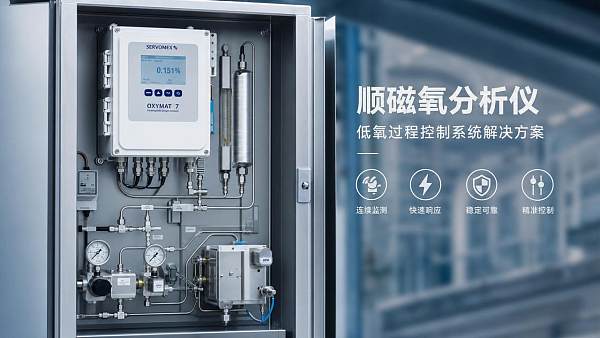
 Paramagnetic Monitor Calibration Tips for Stable OutputParamagnetic monitor calibration tips for stable output: learn how to reduce drift, improve accuracy, cut downtime, and keep oxygen measurement reliable in demanding industrial applications.
 Paramagnetic Measurement in Low-Oxygen Process ControlParamagnetic measurement enables accurate low-oxygen process control with fast response and stable oxygen analysis. Learn how it improves safety, consistency, and system performance.
 Laser Detector Import Risks and Certification DelaysLaser detector import risks can cause costly certification delays, customs issues, and testing setbacks. Learn how to avoid compliance failures before ordering.
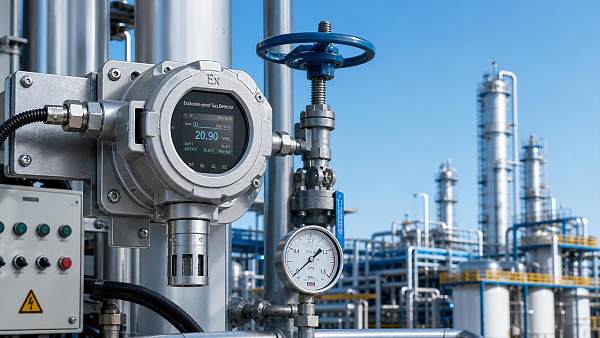
 Explosion Proof Detector Demand Under New Safety RulesExplosion proof detector demand is rising under new safety rules. Discover how to compare certified, reliable options that improve compliance, integration, and long-term site safety.
 Laboratory Detector Accuracy Standards You Should CheckLaboratory detector accuracy standards explained: check detection limits, repeatability, drift, and traceability to reduce risk, improve audit readiness, and choose with confidence.
 Custom Measurement Lead Times and Budget PlanningCustom measurement lead times and budgets explained for procurement teams. Learn key cost drivers, planning steps, and supplier tips to reduce delays and buy with confidence.
 Laser Measurement for Leak Detection: Common PitfallsLaser measurement for leak detection can fail due to setup, airflow, and data interpretation errors. Learn the common pitfalls and proven fixes for more accurate, reliable results.
 How to Evaluate a High Accuracy Detector in the FieldHigh accuracy detector evaluation starts with real field performance. Learn how to compare stability, response time, and reliability to choose the right detector with confidence.
 Electrochemical Monitor Lifespan and Replacement CostsElectrochemical monitor lifespan and replacement costs explained for buyers. Learn how sensor life, maintenance, and total ownership cost affect safer, smarter purchasing decisions.
 Thermal Analysis Market Direction in Process IndustriesThermal analysis market direction in process industries: discover trends, applications, and investment insights that improve quality control, reduce risk, and support smarter industrial decisions.
 Monitoring Shelter Design Priorities for Outdoor SitesMonitoring shelter design starts with protection, climate control, and power reliability. Discover how to choose the right outdoor solution for stable data, safer maintenance, and lower lifecycle risk.
 Fixed Measurement Planning for Multi-Point InstallationsFixed measurement planning is essential for multi-point installations. Learn how to improve accuracy, reliability, compliance, and maintenance efficiency across complex industrial systems.
 Fixed Analysis Systems for Stable Long-Term MonitoringFixed analysis systems enable stable long-term monitoring, reliable data, and better process control. Discover how they improve safety, compliance, and operational efficiency.
 Thermal Gas Applications Expanding in Clean IndustryThermal gas applications are reshaping clean industry with smarter flow measurement, emissions control, and energy optimization. Discover where they cut risk, boost efficiency, and support automation.
 Monitoring Detector Export Rules to Watch in 2026Monitoring detector export rules are changing fast in 2026. Learn the key compliance risks, supplier checks, and trade signals to protect margins and make smarter sourcing decisions.
 Control Detector Setup Mistakes That Affect ReliabilityControl detector setup mistakes can quietly reduce accuracy and uptime. Learn the most common installation, wiring, and calibration errors—and how to avoid them for reliable performance.
 What Defines a High Accuracy Monitor TodayHigh accuracy monitor selection starts with real-world performance. Learn the key accuracy factors, buyer checklist, and how to choose a reliable monitor for industrial control.
 Infrared Monitor Demand in Industrial Safety UpgradesInfrared monitor demand is rising as industrial safety upgrades accelerate. Discover where buyers need it most, how channel partners can sell smarter, and which applications drive long-term growth.
 Thermal Conductivity Monitor Limits in Mixed Gas StreamsThermal conductivity monitor limits in mixed gas streams explained—learn where accuracy drops, what buyers should compare, and how to choose the right analyzer with confidence.
 Laser Monitor vs Infrared Monitor for Fast DetectionLaser monitor vs infrared monitor for fast detection: discover which delivers better precision, response speed, and reliability for industrial monitoring and smarter sensor selection.
 Thermal Gas Analyzer Price Shifts Across Global MarketsThermal gas analyzer price shifts are reshaping global budgets. Learn what drives costs, regional differences, and how buyers can reduce risk and improve long-term value.
 Custom Analysis Options for Complex Gas ApplicationsCustom analysis helps solve complex gas applications with better accuracy, compliance, and reliability. Discover practical selection insights that reduce risk and improve system performance.
Search Categories
Search Categories
Latest Article
- FDA Updates IVD Import Guidance: CNAS Calibration Chain Required for China-Made DevicesFDA now requires CNAS calibration chain reports for China-made IVD analyzers—pH, ion & clinical chemistry devices entering via 510(k)/De Novo. Act now to avoid U.S. port rejections.Posted by:
- EN 61000-6-4:2026 Enters Force: Stricter EMC Requirements for Industrial Field InstrumentsEN 61000-6-4:2026 enforces stricter EMC requirements for industrial field instruments—key for AI edge controllers, sensors & exporters. Act now to ensure CE-EMC compliance by Nov 2026.Posted by:
- Global Methanol Electric Alliance Launches Cross-Border Energy Efficiency Recognition RoadmapGlobal Methanol Electric Alliance launches cross-border energy efficiency recognition roadmap—key for exporters, cal labs & methanol-instrument manufacturers.Posted by:
Please give us a message
