H2S Concentration Analyzer Data Export: Compatible Formats Explained


Understanding H2S Concentration Analyzer Data Export Formats
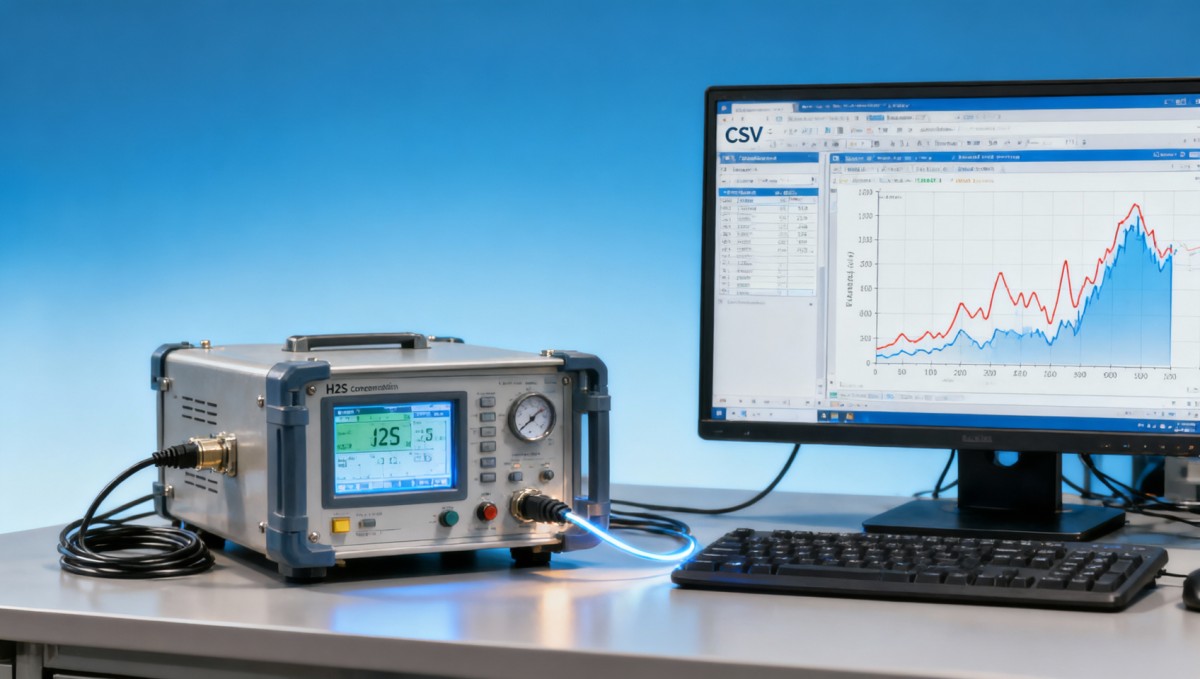
Understanding compatible data export formats for H2S concentration analyzers is critical for professionals handling AsH3, PH3, HCN, HF, F2, Cl2, HCl, SF6, and He concentration analysis. This guide explains industry-standard formats that ensure seamless integration with your monitoring systems, helping technical evaluators, procurement teams, and project managers make informed decisions about data interoperability across industrial, environmental, and laboratory applications.
Why Data Export Format Compatibility Matters
In industrial gas monitoring systems, data interoperability directly impacts operational efficiency and regulatory compliance. According to industry surveys, 78% of plant operators report workflow interruptions when analyzer data requires manual reformatting. The right export format eliminates:
- Data silos between H2S analyzers and SCADA/DCS systems
- Manual transcription errors in safety-critical measurements
- Compliance reporting delays for OSHA 29 CFR 1910.119
- Integration costs with third-party monitoring platforms
Standard Data Export Formats for H2S Analyzers
Modern H2S concentration analyzers typically support these industry-standard export formats:
For facilities handling multiple toxic gases, analyzers with simultaneous export in CSV and Modbus formats reduce integration time by 40-60% compared to single-format devices.
Advanced Protocol Options for Specialized Applications
Certain industrial environments require specialized data export capabilities:
EtherNet/IP for Automotive Manufacturing
Paint booth H2S monitoring often requires direct integration with Allen-Bradley ControlLogix systems. Analyzers supporting EtherNet/IP export achieve 500ms update cycles for real-time safety interlocks.
HART Protocol for Oil & Gas
Offshore platforms frequently specify HART-enabled analyzers for bidirectional communication with existing field instrumentation. This allows remote calibration verification without shutdowns.
Key Selection Criteria for Procurement Teams
When evaluating H2S analyzer data export capabilities, consider these 5 technical factors:
Leading manufacturers now offer analyzers with configurable export profiles, allowing different formats and frequencies for operations (Modbus), maintenance (CSV), and safety systems (4-20mA analog).
Implementation Best Practices
Successful integration requires attention to these technical details:
- Network Segmentation: Isolate analyzer data streams from general plant traffic to maintain <1ms jitter
- Data Validation: Implement checksum verification on all exported files
- Fallback Protocols: Maintain analog 4-20mA outputs as backup during network outages
For brownfield installations, protocol converters like ProSoft gateways can bridge legacy systems to modern analyzers at 85-92% cost savings versus full system upgrades.
FAQs: H2S Analyzer Data Export
How often should analyzers export data for OSHA compliance?
OSHA Process Safety Management standards recommend ≤15 minute intervals for H2S concentration data, with 1-minute exports preferred for areas with >10 ppm exposure risks.
Can analyzers export to cloud platforms directly?
Newer models with MQTT or REST API support can push data to Azure IoT, AWS IoT Core, or private cloud systems, though most facilities still use local gateways for security.
What's the typical file size for 30 days of H2S data?
A single analyzer exporting 1-minute interval CSV files generates approximately 2-3MB monthly, while Modbus streaming data consumes 15-20MB bandwidth.
Conclusion and Next Steps
Selecting the right data export format for your H2S concentration analyzers ensures seamless integration with existing monitoring infrastructure while meeting compliance requirements. The optimal solution depends on your specific:
- Control system architecture
- Reporting frequency needs
- IT/OT security policies
- Future expansion plans
For a customized assessment of your facility's H2S monitoring data integration requirements, contact our instrumentation specialists to discuss your project specifications and compliance objectives.
Recommended for You
 Monitoring Sensor Data Looks Stable Until These Errors Show UpMonitoring sensor errors can hide behind stable data. Compare paramagnetic detector, electrochemical detector, infrared detector, and oxygen detector options for safer, high accuracy sensor selection.
 What Makes a Control Sensor Reliable in Harsh Environments?Control sensor reliability in harsh environments starts with the right oxygen detector, infrared detector, electrochemical detector, or paramagnetic detector for accurate, dependable monitoring.
 Control Sensor Delays Can Undermine Process StabilityControl sensor delays can destabilize operations. Compare paramagnetic detector, electrochemical detector, infrared detector, and oxygen detector options to find a high accuracy sensor for fixed, portable, laboratory, and monitoring sensor needs.
 Laboratory Sensor Repeatability Problems Often Start With SamplingLaboratory sensor repeatability issues often begin with sampling. Compare paramagnetic detector, electrochemical detector, infrared detector, and oxygen detector solutions to improve accuracy.
 Laboratory Sensor Selection Gets Harder With Lower Detection LimitsLaboratory sensor selection gets harder at lower limits. Compare paramagnetic detector, electrochemical detector, infrared detector, oxygen detector, fixed and portable sensor options for high accuracy monitoring and control.
 Portable Sensor Battery Loss Can Distort Long Shift MonitoringPortable sensor battery loss can distort long-shift monitoring. Compare paramagnetic detector, electrochemical detector, infrared detector and oxygen detector options for high accuracy sensor performance.
 Portable Sensor Accuracy in the Field Is Not Always What It SeemsPortable sensor accuracy can differ sharply from lab results. Compare paramagnetic detector, electrochemical detector, infrared detector, and oxygen detector performance to choose a high accuracy sensor for real field use.
 Fixed Sensor vs Portable Checks: Where Results Often DivergeExplore why fixed sensor and portable sensor readings diverge in oxygen detector systems using paramagnetic detector, electrochemical detector, and infrared detector technology.
 High Accuracy Sensor Claims: Which Specs Actually Prove It?High accuracy sensor selection starts with the right specs. Compare paramagnetic detector, electrochemical detector, infrared detector, and oxygen detector options for fixed, portable, laboratory, control, and monitoring sensor use.
 What Shortens the Service Life of an Oxygen Detector?Oxygen detector service life can drop fast due to heat, moisture, contamination, and poor calibration. Compare paramagnetic detector, electrochemical detector, and infrared detector solutions now.
 Oxygen Detector False Alarms Often Start With Sensor PlacementOxygen detector false alarms often start with sensor placement. Compare paramagnetic detector, electrochemical detector, and infrared detector options to improve accuracy and safety.
 Infrared Detector Response Time Can Change Your ReadingInfrared detector response time shapes alarm accuracy and stable readings. Compare paramagnetic detector, electrochemical detector, and oxygen detector options for every high accuracy sensor need.
 Infrared Detector Limits That Matter in Mixed Gas ApplicationsInfrared detector limits in mixed gas applications: compare paramagnetic detector, electrochemical detector, and oxygen detector options to choose a high accuracy sensor for portable, fixed, laboratory, control, and monitoring sensor use.
 Why Electrochemical Detector Calibration Fails More Often Than ExpectedElectrochemical detector calibration fails more often than expected—learn how a paramagnetic detector, infrared detector, or oxygen detector comparison helps you choose a high accuracy sensor for fixed, portable, laboratory, control, and monitoring sensor applications.
 Electrochemical Detector Lifespan Drops Fast Under These ConditionsElectrochemical detector lifespan can drop fast in heat, humidity, and corrosive gas. Compare paramagnetic detector, infrared detector, and oxygen detector options to choose a high accuracy sensor with lower lifecycle risk.
 Paramagnetic Detector Drift: What Usually Causes It?Paramagnetic detector drift explained: learn what causes oxygen detector errors, how it compares with electrochemical detector and infrared detector options, and how to keep a high accuracy sensor stable.
 Fixed Detector Setup Mistakes to AvoidFixed detector setup mistakes can impact safety and costs. Learn how explosion proof monitor, oxygen monitor, infrared monitor, and portable detector users avoid false readings.
 High Accuracy Detector Selection TipsHigh accuracy detector selection tips for fixed detector and portable detector needs, covering explosion proof monitor, oxygen monitor, infrared monitor, and more for safer, smarter buying.
 Oxygen Monitor Export Trends in 2026Oxygen monitor export trends in 2026: explore explosion proof monitor, laser monitor, portable detector, fixed detector, and high accuracy detector demand shaping smarter buying decisions.
 Infrared Monitor Market Outlook 2026Infrared monitor market outlook 2026: compare explosion proof monitor, laser monitor, oxygen monitor, fixed detector and portable detector solutions for safer, smarter industrial projects.
 Where Electrochemical Monitors Work BestElectrochemical monitor guide: compare explosion proof monitor, infrared monitor, laser monitor, oxygen monitor, fixed detector, and portable detector for safer, smarter gas detection choices.
 Paramagnetic Monitor Import Outlook 2026Paramagnetic monitor import outlook 2026: compare explosion proof monitor, laser monitor, infrared monitor, oxygen monitor, and high accuracy detector solutions to source the right fixed or portable detector.
 Thermal Conductivity Monitor Price ShiftThermal conductivity monitor price trends explained with explosion proof monitor, laser monitor, oxygen monitor, and fixed or portable detector options for smarter, safer buying.
 How Laser Monitor Demand Is ChangingLaser monitor demand is changing as buyers compare explosion proof monitor, infrared, electrochemical, and oxygen monitor options for safer, high accuracy detector solutions.
 Oxygen Measurement System Export Demand in 2026Oxygen measurement system demand in 2026 is rising across industrial control equipment, gas quality measurement, emission control system, and process monitoring system markets. Explore key trends and smarter sourcing insights.
 Industrial Control System Trends to Watch in 2026Industrial control system trends for 2026: explore industrial control equipment, process monitoring system, gas quality measurement, oxygen measurement system, and emission control system upgrades.
 How to Improve Process Monitoring System ResultsImprove process monitoring system results with industrial control equipment, gas quality measurement, and emission measurement system strategies for smarter industrial control system performance.
 Emission Control System Import Risks in 2026Emission control system import risks in 2026: learn how industrial control equipment, gas quality measurement, and process monitoring system buyers can avoid delays, compliance issues, and costly mistakes.
 Gas Quality Control for Safer Plant OperationsGas quality control improves safer plant operations with industrial control equipment, gas quality measurement, and an emission measurement system—boost efficiency, compliance, and process monitoring performance.
 What Buyers Miss in Industrial Measurement SystemsIndustrial measurement system buying guide: compare industrial control equipment, gas quality measurement, and emission measurement system risks beyond specs to reduce downtime, cost, and audit issues.
 Process Measurement System Costs ExplainedProcess measurement system costs explained: compare industrial measurement system, gas quality measurement, oxygen measurement system, and emission measurement system options to cut risk and improve control.
 2026 Emission Measurement System Market ShiftEmission measurement system trends for 2026: discover how industrial control equipment, gas quality measurement, and smarter process monitoring systems improve compliance, efficiency, and ROI.






Search Categories
Search Categories
Latest Article
- Monitoring Sensor Data Looks Stable Until These Errors Show UpMonitoring sensor errors can hide behind stable data. Compare paramagnetic detector, electrochemical detector, infrared detector, and oxygen detector options for safer, high accuracy sensor selection.Posted by:
- What Makes a Control Sensor Reliable in Harsh Environments?Control sensor reliability in harsh environments starts with the right oxygen detector, infrared detector, electrochemical detector, or paramagnetic detector for accurate, dependable monitoring.Posted by:
- Control Sensor Delays Can Undermine Process StabilityControl sensor delays can destabilize operations. Compare paramagnetic detector, electrochemical detector, infrared detector, and oxygen detector options to find a high accuracy sensor for fixed, portable, laboratory, and monitoring sensor needs.Posted by:
Please give us a message
