
NH3 Concentration Analyzer Price Factors Explained


Understanding NH3 concentration analyzer price starts with knowing what truly drives cost: measurement range, sensor technology, accuracy, durability, and compliance needs. For buyers comparing an NH3 concentration analyzer with an H2S concentration analyzer, HCl concentration analyzer, SF6 concentration analyzer, He concentration analyzer, Ar concentration analyzer, N2 concentration analyzer, O2 concentration analyzer, H2 concentration analyzer, or NOX concentration analyzer, this guide explains the key pricing factors that affect performance, safety, and long-term value.
In instrumentation purchasing, the lowest quote rarely represents the best total value. End users, technical evaluators, procurement teams, project managers, quality supervisors, and financial approvers usually need a clear picture of what is included in the analyzer price, how configuration choices affect operating reliability, and where hidden lifecycle costs may appear after installation.
For ammonia monitoring in industrial manufacturing, environmental control, process safety, laboratory analysis, and utility systems, price differences can be significant. A compact analyzer used for a narrow ppm range may cost far less than a multi-point online NH3 concentration analyzer designed for corrosive gas streams, 24/7 operation, and integration with a PLC or DCS platform.
The sections below break down the main price factors, compare common buying scenarios, explain what technical teams should verify before ordering, and show how to balance budget, compliance, and long-term performance in a practical B2B context.
What Usually Determines NH3 Concentration Analyzer Price
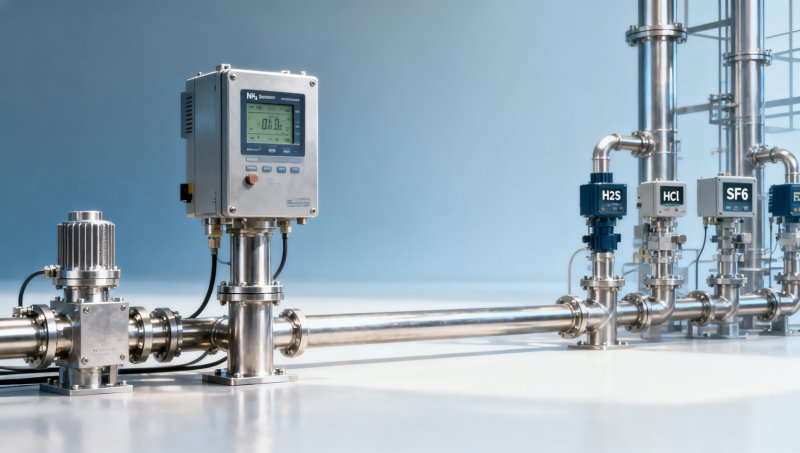
The first and most visible price driver is measurement specification. An NH3 concentration analyzer designed for 0–100 ppm leak detection has a different cost structure than a system intended for 0–10,000 ppm process monitoring or percentage-level concentration analysis. Wider ranges often require more robust sensing elements, better signal conditioning, and tighter calibration control.
Sensor technology also changes the price substantially. Electrochemical, infrared, tunable diode laser, photoacoustic, and other analytical methods differ in sensitivity, cross-interference resistance, warm-up time, and maintenance demands. In many industrial projects, the jump from a basic sensor platform to a higher-selectivity analytical method can raise initial equipment cost by 20%–60%, but it may reduce false readings and unplanned downtime later.
Mechanical design matters as much as the sensing core. A laboratory benchtop unit, a wall-mounted field analyzer, and a rack-mounted continuous emissions or process analyzer do not share the same enclosure, sampling path, filter system, or protection level. Requirements such as IP65 sealing, corrosion-resistant wetted parts, sample conditioning modules, or explosion-risk area compatibility can move pricing into a completely different tier.
Core cost components buyers should separate
A common mistake is to treat the analyzer as a single-price product. In practice, suppliers may split the quotation into analyzer body, sampling system, installation accessories, communication module, calibration kit, software, commissioning, and service package. Two quotes that differ by 30% may actually include different scopes rather than different product quality.
The table below summarizes the most common cost components procurement and engineering teams should compare line by line before approval.
The main conclusion is that analyzer price should be assessed by application fit, not by catalog position alone. A lower-cost instrument may be entirely suitable for a clean indoor process line, while a higher-cost unit becomes necessary when gas composition is unstable, humidity is high, or safety and compliance thresholds are strict.
Four early checks before asking for a quote
- Define the actual NH3 range, such as 0–100 ppm, 0–1,000 ppm, or 0–5% vol, instead of requesting a generic analyzer.
- Confirm whether the gas is dry, wet, hot, dusty, corrosive, or mixed with interfering components.
- State required response time, for example T90 within 10–30 seconds or within 60 seconds.
- Clarify whether calibration gases, commissioning, and communication outputs are included in the quote.
How Technical Specifications Change Cost Across Applications
In the instrumentation industry, NH3 concentration analyzers are used in very different operating environments. A wastewater odor control project, an ammonia refrigeration safety application, a fertilizer production line, and an emissions monitoring point may all need ammonia measurement, but the technical demands behind the price are not the same. This is why application-specific specification is more important than a general product comparison.
Accuracy is one of the most important pricing variables. Many buyers initially ask for the “highest possible accuracy,” but in practice they should match accuracy to process need. A requirement such as ±1% of full scale may be adequate in one process, while another application may need ±2% of reading, lower drift, and stable zero performance over 6–12 months. Higher precision usually means tighter manufacturing control, better optics or electronics, and more frequent calibration discipline.
Response time and sample handling can add notable cost. Fast detection for safety interlock or leak alerts may require a short sampling path, dedicated pump, heated lines, or optimized flow control. For wet or particulate-laden gas, sample conditioning may include filters, moisture separation, pressure reduction, or heated components. These additions improve signal quality but increase both capital cost and maintenance workload.
Typical specification choices and their budget effect
The table below shows how common technical choices usually influence budget planning. It does not assign a universal market price, but it helps evaluation teams understand where extra cost is likely to appear.
For most project teams, the lesson is straightforward: every performance increase should be justified by a real process, safety, or compliance need. Over-specification can increase budget without improving outcomes, while under-specification can create unstable readings, premature component wear, and repeated service calls within the first 12 months.
Applications that usually require higher configuration levels
- Continuous outdoor monitoring in temperatures from -20°C to 50°C.
- Gas streams with water vapor, aerosols, or dust that require filtration and conditioning.
- Safety-critical process points where alarm delay must be minimized.
- Systems requiring remote maintenance support and 24/7 data traceability.
These conditions often justify a higher analyzer price because the instrument becomes part of an operating control strategy rather than a simple measurement device. For project owners, this distinction is essential when evaluating return on investment.
Comparing NH3 Analyzer Pricing with Other Gas Concentration Analyzers
Buyers often compare an NH3 concentration analyzer with equipment used for H2S, HCl, SF6, He, Ar, N2, O2, H2, or NOX monitoring. That comparison is useful, but only if teams understand that pricing differences often come from gas behavior, required sensitivity, chemical reactivity, and interference risk. The gas itself changes the analyzer architecture.
NH3 can be particularly sensitive to sample path material, moisture, and adsorption effects. In contrast, inert gas analysis for He, Ar, or N2 may prioritize purity measurement stability and lower background interference. H2S and HCl applications often demand strong corrosion resistance, while SF6 analysis may require tight leak integrity and specialized handling due to the gas’s insulation role in electrical systems.
This means a direct price comparison without reviewing measurement principle, sample conditioning, and environmental constraints can be misleading. One analyzer may seem expensive until the buyer realizes it includes heated sampling, anti-corrosion flow paths, and interference compensation needed for reliable NH3 detection.
Practical comparison across common analyzer types
The following table provides a practical comparison framework procurement teams can use when discussing analyzer categories with suppliers and internal stakeholders.
The key takeaway is that NH3 analyzer price should be benchmarked against analyzers with similar installation complexity and reliability targets, not simply against any gas analyzer on a supplier list. For distributors and project managers, this helps prevent unrealistic budget assumptions during early-stage estimation.
When cross-comparison is useful
- When selecting a common communication platform for multiple analyzer types in one facility.
- When comparing maintenance labor between reactive gas and inert gas measurement systems.
- When planning spare parts strategy across 3–5 analyzer categories under one procurement contract.
Hidden Costs: Installation, Calibration, Maintenance, and Downtime Risk
A technically acceptable analyzer can still become expensive if the total cost of ownership is ignored. Many organizations focus on purchase price but underestimate installation complexity, calibration labor, spare parts replacement, and production interruption risk. In real instrumentation projects, these secondary costs often determine whether the analyzer remains cost-effective after 1–3 years of operation.
Installation cost depends on mounting location, cable routing, sample line distance, and control system integration. A local standalone NH3 analyzer may be installed in 1–2 days, while a process-connected system with sampling cabinet, heated line, and DCS communication can require 1–2 weeks including wiring checks, gas path verification, and functional testing. These project conditions should be budgeted early.
Calibration and maintenance schedules also affect lifetime cost. Some systems may require monthly zero/span checks in harsh environments, while cleaner applications may run with quarterly or semiannual verification. If calibration gas cylinders, trained labor, and planned shutdown windows are difficult to arrange, a low initial analyzer price may quickly lose its advantage.
Total cost elements that financial and technical teams should review
The list below helps connect technical choices with operational expense over the service life of the analyzer.
- Initial commissioning cost, including setup, calibration, and control system signal verification.
- Routine maintenance frequency, such as every 1 month, 3 months, or 6 months depending on site conditions.
- Consumables and wear parts, including filters, pumps, tubing, seals, or sensor replacement modules.
- Downtime cost caused by false alarms, drift, or slow response in safety-critical processes.
- Support response time, especially for remote projects where on-site service may take 48–72 hours.
Three common hidden-cost mistakes
First, buyers often omit the sample conditioning system from the first budget request, even though it can be essential for wet, dusty, or unstable gas streams. Second, they may assume all analyzers share the same calibration interval, which is rarely true across different technologies and environments. Third, they may not price the cost of inaccurate readings, especially where ammonia levels trigger ventilation, dosing, or safety actions.
For finance teams and approvers, a useful approach is to compare not just acquisition cost, but expected 12-month and 36-month ownership cost. This method gives a more realistic basis for selecting between a lower-spec analyzer and a more stable system with higher upfront price but lower service burden.
How to Evaluate Quotes and Choose the Right Analyzer for Your Budget
The best purchasing process links technical need, project timeline, and budget control. Instead of asking suppliers only for a unit price, professional buyers should request a structured quotation with configuration details, exclusions, lead time, warranty terms, and recommended spares. This reduces the chance of change orders after approval.
Lead time is another practical pricing factor. A standard analyzer configuration may ship in 2–4 weeks, while a customized NH3 concentration analyzer with special materials, heated sample line, or additional communication protocol may require 6–10 weeks. For project-based procurement, shorter delivery can justify a moderate premium if it protects construction or startup milestones.
Decision-makers should also check warranty and support scope. A 12-month warranty that covers core analyzer defects but excludes consumables is common, yet the real value lies in what level of remote troubleshooting, spare parts availability, and commissioning support is offered. These factors can strongly influence long-term operating risk.
A practical quote comparison framework
Use the matrix below when comparing proposals from different suppliers or channel partners. It helps technical and commercial teams review the same criteria during approval.
A strong sourcing decision usually balances 4 dimensions: technical suitability, delivered scope, serviceability, and cost over time. If one quotation is 15% higher but includes commissioning, spare filters, communication module, and a clearer maintenance plan, it may be the lower-risk choice for a plant owner or EPC contractor.
Recommended 5-step selection process
- Define process conditions and target NH3 range.
- Confirm required accuracy, response time, and communication outputs.
- Request itemized quotations from qualified suppliers.
- Compare 12-month and 36-month ownership cost, not only purchase price.
- Verify service support, delivery time, and commissioning responsibilities before approval.
FAQ: Common Buyer Questions About NH3 Concentration Analyzer Pricing
How do I know if a higher-priced NH3 analyzer is worth it?
It is worth the higher price when your application includes corrosive or humid gas, strict alarm response requirements, continuous 24/7 operation, or mandatory integration with plant control systems. In those cases, a more advanced analyzer can reduce maintenance frequency, improve measurement stability, and lower downtime risk over 1–3 years.
What should procurement teams ask for in a quotation?
Request at least 6 items: measurement range, analytical method, included accessories, output signals, calibration requirements, and delivery time. It is also wise to ask whether commissioning, operator training, and consumables are included. This makes supplier comparison far more accurate.
Does a lower-maintenance analyzer always cost more initially?
Not always, but it often does. A design with better anti-interference performance, longer calibration intervals, and more durable gas path materials may carry a higher upfront cost. However, if maintenance labor is expensive or site access is difficult, the lifecycle savings can outweigh the difference.
How long is the typical delivery cycle?
For standard configurations, 2–4 weeks is a common planning range. Customized systems that include sample conditioning, special enclosures, or project-specific communication requirements may take 6–10 weeks. Buyers should confirm the schedule before final budget approval and installation planning.
NH3 concentration analyzer price is shaped by much more than the sensing element alone. Range, analytical method, sampling design, environmental durability, integration needs, and service scope all affect what you pay and what you actually receive. For operators, engineers, procurement managers, and decision-makers, the best result comes from matching the analyzer to the application instead of chasing the lowest visible quote.
If you are reviewing options for ammonia monitoring or comparing NH3 solutions with H2S, HCl, SF6, He, Ar, N2, O2, H2, or NOX analyzer projects, a structured technical and commercial evaluation will help you control budget while protecting performance and safety. Contact us now to discuss your measurement conditions, get a tailored recommendation, and explore the right analyzer solution for your project.
Recommended for You
 FDA Updates IVD Import Guidance: CNAS Calibration Chain Required for China-Made DevicesFDA now requires CNAS calibration chain reports for China-made IVD analyzers—pH, ion & clinical chemistry devices entering via 510(k)/De Novo. Act now to avoid U.S. port rejections.
 EN 61000-6-4:2026 Enters Force: Stricter EMC Requirements for Industrial Field InstrumentsEN 61000-6-4:2026 enforces stricter EMC requirements for industrial field instruments—key for AI edge controllers, sensors & exporters. Act now to ensure CE-EMC compliance by Nov 2026.
 Global Methanol Electric Alliance Launches Cross-Border Energy Efficiency Recognition RoadmapGlobal Methanol Electric Alliance launches cross-border energy efficiency recognition roadmap—key for exporters, cal labs & methanol-instrument manufacturers.
 Red Sea Crisis Escalates: Air Freight Premiums for China–Middle East Industrial Instruments Hit 390%Red Sea Crisis hits industrial instruments: China–Middle East air freight premiums surge 390%. Act now to secure Q3 capacity, avoid delays & optimize LCL alternatives.
 IEC TC65 Mandates Cybersecurity Certification for Industrial Field Instruments from 2027IEC TC65 mandates cybersecurity certification for industrial field instruments by 2027 — pressure, flow & analytical devices must meet IEC 62443-4-2:2026 and display SL1–SL3 labels. Act now to ensure market access.
 SASO Cuts Energy Labeling Turnaround for Industrial Transmitters to 7 Working DaysSASO Energy Labeling now takes just 7 working days for industrial transmitters — faster market access, CNAS reports accepted. Act now!
 PTB Launches CalCloud 2.0 with Direct CNAS Lab IntegrationCalCloud 2.0 now integrates directly with CNAS labs—enabling automated VDA 5 & ISO/IEC 17025 dual-compliant calibration reports for automotive and industrial exporters. Boost compliance efficiency today!
 ASEAN's Green Clearance Corridor for CNAS Calibration Reports LaunchesASEAN's Green Clearance Corridor now verifies CNAS calibration reports via blockchain—cut customs clearance to <48h for flow meters, analyzers & more. Act now!
 Vietnam Mandates CNAS Calibration Certificates & Vietnamese Manuals for Industrial Meters from June 1, 2026CNAS calibration certificates & Vietnamese manuals now mandatory for industrial meters entering Vietnam from June 1, 2026—avoid customs delays and ensure seamless market access.
 U.S. BIS Tightens Export Controls on High-Precision Laser InterferometersU.S. BIS tightens export controls on high-precision laser interferometers—critical for semiconductor metrology & ISO/IEC 17025 calibration. Act now to ensure compliance.
 Paramagnetic Monitor Calibration Tips for Stable OutputParamagnetic monitor calibration tips for stable output: learn how to reduce drift, improve accuracy, cut downtime, and keep oxygen measurement reliable in demanding industrial applications.
 Paramagnetic Measurement in Low-Oxygen Process ControlParamagnetic measurement enables accurate low-oxygen process control with fast response and stable oxygen analysis. Learn how it improves safety, consistency, and system performance.
 Laser Detector Import Risks and Certification DelaysLaser detector import risks can cause costly certification delays, customs issues, and testing setbacks. Learn how to avoid compliance failures before ordering.
 Explosion Proof Detector Demand Under New Safety RulesExplosion proof detector demand is rising under new safety rules. Discover how to compare certified, reliable options that improve compliance, integration, and long-term site safety.
 Laboratory Detector Accuracy Standards You Should CheckLaboratory detector accuracy standards explained: check detection limits, repeatability, drift, and traceability to reduce risk, improve audit readiness, and choose with confidence.
 Custom Measurement Lead Times and Budget PlanningCustom measurement lead times and budgets explained for procurement teams. Learn key cost drivers, planning steps, and supplier tips to reduce delays and buy with confidence.
 Laser Measurement for Leak Detection: Common PitfallsLaser measurement for leak detection can fail due to setup, airflow, and data interpretation errors. Learn the common pitfalls and proven fixes for more accurate, reliable results.
 How to Evaluate a High Accuracy Detector in the FieldHigh accuracy detector evaluation starts with real field performance. Learn how to compare stability, response time, and reliability to choose the right detector with confidence.
 Electrochemical Monitor Lifespan and Replacement CostsElectrochemical monitor lifespan and replacement costs explained for buyers. Learn how sensor life, maintenance, and total ownership cost affect safer, smarter purchasing decisions.
 Thermal Analysis Market Direction in Process IndustriesThermal analysis market direction in process industries: discover trends, applications, and investment insights that improve quality control, reduce risk, and support smarter industrial decisions.
 Monitoring Shelter Design Priorities for Outdoor SitesMonitoring shelter design starts with protection, climate control, and power reliability. Discover how to choose the right outdoor solution for stable data, safer maintenance, and lower lifecycle risk.
 Fixed Measurement Planning for Multi-Point InstallationsFixed measurement planning is essential for multi-point installations. Learn how to improve accuracy, reliability, compliance, and maintenance efficiency across complex industrial systems.
 Fixed Analysis Systems for Stable Long-Term MonitoringFixed analysis systems enable stable long-term monitoring, reliable data, and better process control. Discover how they improve safety, compliance, and operational efficiency.
 Thermal Gas Applications Expanding in Clean IndustryThermal gas applications are reshaping clean industry with smarter flow measurement, emissions control, and energy optimization. Discover where they cut risk, boost efficiency, and support automation.
 Monitoring Detector Export Rules to Watch in 2026Monitoring detector export rules are changing fast in 2026. Learn the key compliance risks, supplier checks, and trade signals to protect margins and make smarter sourcing decisions.
 Control Detector Setup Mistakes That Affect ReliabilityControl detector setup mistakes can quietly reduce accuracy and uptime. Learn the most common installation, wiring, and calibration errors—and how to avoid them for reliable performance.
 What Defines a High Accuracy Monitor TodayHigh accuracy monitor selection starts with real-world performance. Learn the key accuracy factors, buyer checklist, and how to choose a reliable monitor for industrial control.
 Infrared Monitor Demand in Industrial Safety UpgradesInfrared monitor demand is rising as industrial safety upgrades accelerate. Discover where buyers need it most, how channel partners can sell smarter, and which applications drive long-term growth.
 Thermal Conductivity Monitor Limits in Mixed Gas StreamsThermal conductivity monitor limits in mixed gas streams explained—learn where accuracy drops, what buyers should compare, and how to choose the right analyzer with confidence.
 Laser Monitor vs Infrared Monitor for Fast DetectionLaser monitor vs infrared monitor for fast detection: discover which delivers better precision, response speed, and reliability for industrial monitoring and smarter sensor selection.
 Thermal Gas Analyzer Price Shifts Across Global MarketsThermal gas analyzer price shifts are reshaping global budgets. Learn what drives costs, regional differences, and how buyers can reduce risk and improve long-term value.
 Custom Analysis Options for Complex Gas ApplicationsCustom analysis helps solve complex gas applications with better accuracy, compliance, and reliability. Discover practical selection insights that reduce risk and improve system performance.


Search Categories
Search Categories
Latest Article
- FDA Updates IVD Import Guidance: CNAS Calibration Chain Required for China-Made DevicesFDA now requires CNAS calibration chain reports for China-made IVD analyzers—pH, ion & clinical chemistry devices entering via 510(k)/De Novo. Act now to avoid U.S. port rejections.Posted by:
- EN 61000-6-4:2026 Enters Force: Stricter EMC Requirements for Industrial Field InstrumentsEN 61000-6-4:2026 enforces stricter EMC requirements for industrial field instruments—key for AI edge controllers, sensors & exporters. Act now to ensure CE-EMC compliance by Nov 2026.Posted by:
- Global Methanol Electric Alliance Launches Cross-Border Energy Efficiency Recognition RoadmapGlobal Methanol Electric Alliance launches cross-border energy efficiency recognition roadmap—key for exporters, cal labs & methanol-instrument manufacturers.Posted by:
Please give us a message
