
How Process Control Reduces Energy Waste in Gas Operations


How Process Control Reduces Energy Waste in Gas Operations
In gas operations, rising energy costs and tighter performance targets are changing investment priorities.
Process Control now sits closer to the center of efficiency strategy, not only plant automation strategy.
When pressure, temperature, and flow drift too far, energy waste follows quickly.
That waste often hides inside compressors, heaters, separators, and transfer systems.
Advanced Process Control helps operators see those losses earlier and respond with precision.
It improves stability, lowers rework, reduces venting, and supports better energy decisions across gas operations.
For companies balancing output, safety, and cost, that combination matters more than ever.
Why energy waste persists in gas operations
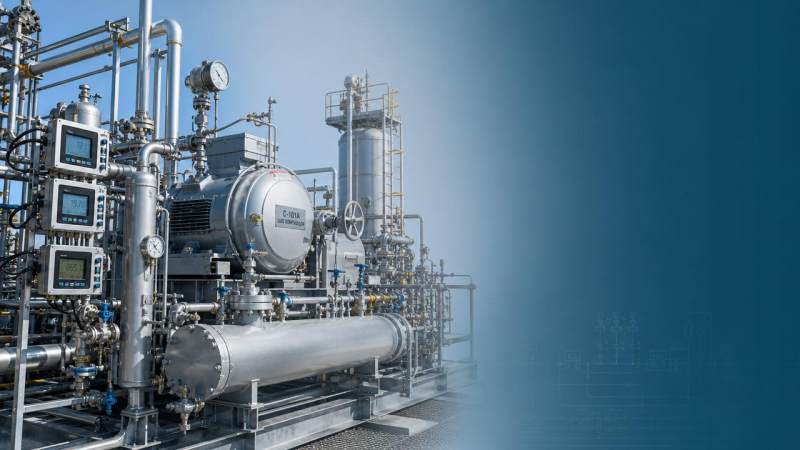
Gas facilities are dynamic systems with constant variation in feed quality, ambient conditions, and demand.
Without strong Process Control, those variations create instability that consumes extra energy.
A compressor may run harder than needed.
A heater may overshoot target temperature.
A valve may cycle too often because control loops are poorly tuned.
On paper, each issue looks small.
Across a full site, the losses become material.
More importantly, waste is not always caused by old equipment.
In many cases, the root problem is limited visibility or slow control response.
This is where Process Control creates practical value.
It connects field measurements with control logic, operator action, and system optimization.
The result is a more stable process that uses less energy per unit of gas handled.
How Process Control cuts avoidable energy loss
The biggest gains usually come from reducing variability.
Stable processes demand less correction, less emergency intervention, and fewer energy-intensive swings.
In practical terms, effective Process Control supports several energy-saving mechanisms.
- Maintains tighter pressure bands, reducing unnecessary compressor load.
- Controls flow more accurately, avoiding overdelivery and recycle losses.
- Improves temperature regulation, lowering excess fuel use in heating stages.
- Prevents frequent valve hunting, which increases wear and wastes energy.
- Reduces flaring, venting, and purge inefficiencies during transitions.
- Supports smoother start-up and shutdown sequences.
These improvements are especially valuable in gas compression, processing, transmission, and storage operations.
They also create a second benefit.
When Process Control reduces noise in the system, performance data becomes more trustworthy.
That makes future optimization faster and less risky.
Where smarter control has the strongest impact
Not every process step offers the same return.
From recent operating trends, the strongest Process Control opportunities often appear in energy-heavy assets.
Compression systems
Compressors are major energy consumers in gas operations.
Small control errors in suction pressure, discharge pressure, or anti-surge logic can raise power demand quickly.
Better Process Control helps match compressor output to actual process need.
Heating and treatment units
Gas drying, treating, and preheating stages often rely on precise thermal balance.
If temperature control is loose, sites burn extra fuel or miss product specifications.
That usually means more correction later, which adds more waste.
Flow balancing and transfer networks
Pipeline networks require steady coordination between flow, pressure, and linepack.
Strong Process Control reduces throttling losses and keeps transfers closer to the economic optimum.
Storage and load changes
Demand swings can trigger abrupt operating changes.
Well-designed Process Control absorbs those swings with fewer spikes in fuel, power, and emissions.
What decision-makers should evaluate first
The best Process Control program starts with business priorities, not just instrument lists.
A useful first question is simple.
Where does energy intensity rise without a clear production benefit?
That question often reveals where Process Control is underperforming.
- Map the highest-energy assets and identify unstable operating zones.
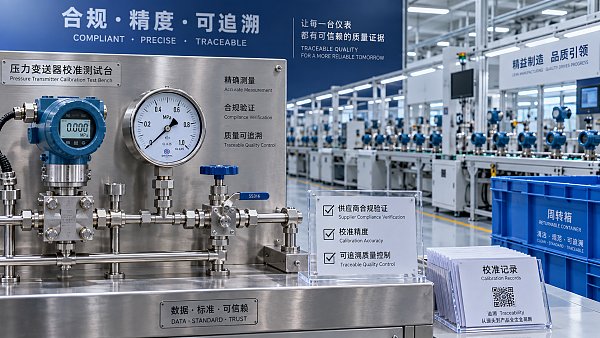
- Review sensor quality, calibration frequency, and data reliability.
- Assess loop tuning, alarm performance, and operator intervention frequency.
- Compare energy use during normal runs, transitions, and upset recovery.
- Prioritize changes with clear payback and low operational disruption.
This approach keeps Process Control tied to outcomes that matter.
Those outcomes include lower operating cost, stronger uptime, and more resilient compliance performance.
The role of measurement quality in Process Control
No control strategy performs better than the measurements behind it.
In gas operations, inaccurate pressure, flow, level, or temperature data can distort every downstream decision.
This is why Process Control and instrumentation strategy must move together.
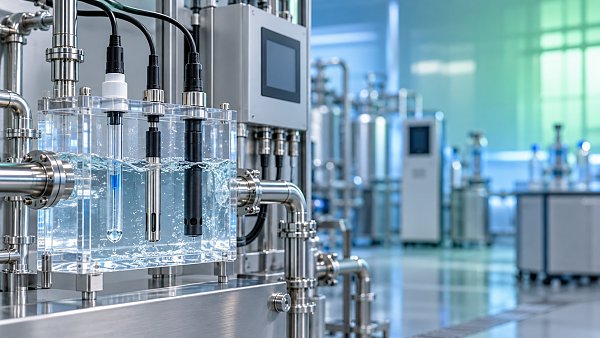
High-confidence sensing improves control stability and strengthens optimization models.
It also reduces hidden waste caused by false readings or delayed response.
In actual operations, that can mean fewer unnecessary setpoint changes and fewer manual workarounds.
For organizations managing large asset networks, this matters at scale.
Common barriers to Process Control improvement
Many sites already have DCS, PLC, and monitoring infrastructure.
Even so, Process Control performance may still lag because execution gaps remain.
- Legacy sensors produce noisy or delayed signals.
- Control loops were never retuned after process changes.
- Alarm overload pushes operators into reactive behavior.
- Energy KPIs are separated from control-room decisions.
- Teams lack a shared view of energy loss mechanisms.
The more visible signal is that many losses are tolerated because they seem operationally normal.
That mindset is expensive.
A structured Process Control review can turn those normalized losses into measurable improvement projects.
A practical roadmap for lower-energy gas operations
A workable roadmap does not need to begin with a full system overhaul.
In many cases, the fastest value comes from targeted Process Control upgrades.
Start with the assets that combine high energy cost and repeated instability.
Then improve data quality, retune loops, and tighten operating windows.
After that, connect control performance with energy and emissions metrics.
This creates a more complete business case for continuous improvement.
Over time, Process Control becomes more than an automation layer.
It becomes a discipline for protecting margin, supporting compliance, and using energy with greater precision.
For gas operators facing tighter cost pressure, that shift is increasingly hard to ignore.
The smartest next step is to identify one high-loss area and improve Process Control where waste is already visible.
Recommended for You
 When does a laser gas analyzer meet stack emissions monitoring needs?Laser gas analyzer for stack emissions: learn when it delivers fast, reliable data, how to assess installation risks, and what to verify for CEMS compliance.
 How to select a hazardous gas analyzer for confined spacesHazardous gas analyzer selection for confined spaces: compare sensors, sampling, certifications, alarms, and maintenance to protect workers and choose with confidence.
 When is a single gas analyzer sufficient for workplace safety monitoring?Discover when a single gas analyzer delivers reliable workplace safety monitoring, and learn the key limits, calibration needs, and risks that require broader detection.
 How to choose an ambient gas analyzer for low-level leak detectionAmbient gas analyzer selection for low-level leak detection: compare sensitivity, cross-sensitivity, sampling design, alarms, and calibration for reliable site performance.
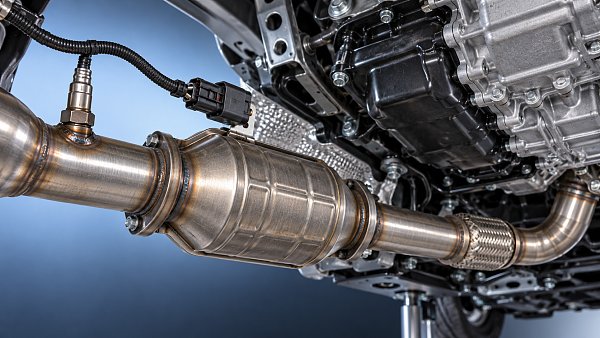
 How to tell when an oxygen sensor needs replacementOxygen sensor replacement signs explained: learn how live data, fault codes, wiring checks, and exhaust inspections pinpoint the real issue before you buy.
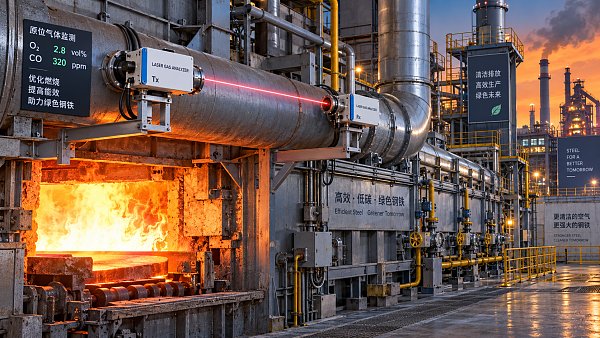
 How laser gas analyzers improve combustion control in steel furnacesLaser gas analyzer for steel industry applications delivers fast in-situ O₂ and CO data to optimize furnace combustion, cut fuel waste, and improve steel heating stability.
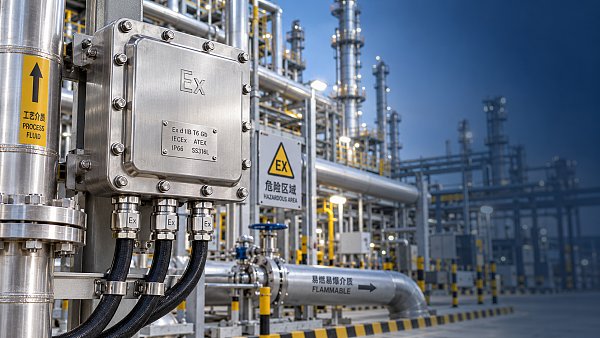
 How to verify whether explosion proof equipment meets site requirementsExplosion proof equipment verification made practical: match zones, gas or dust groups, temperature classes, certificates, and installation conditions for confident compliance.
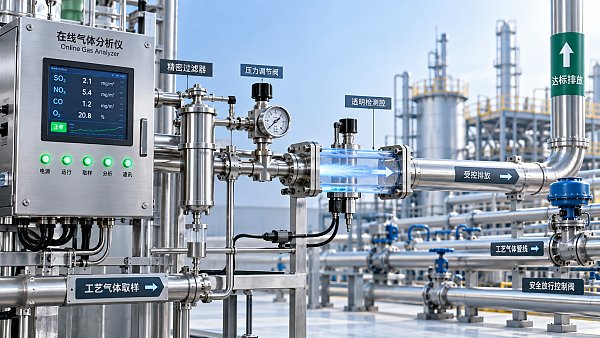
 How industrial gas analysis helps detect contamination before releaseIndustrial Gas Analysis helps detect moisture, oil, oxygen, and toxic contaminants before release—protecting processes, ensuring compliance, and reducing costly risks.
 When is electrochemistry detection the right choice for water analysis?Electrochemistry detection for water analysis: learn when fast, reliable monitoring of ions, chlorine, pH, and more delivers actionable results.
 How industrial standards reduce quality risks in supplier selectionIndustrial Standard guidance helps quality and safety managers reduce supplier risks, verify compliance, strengthen traceability, and build resilient instrumentation supply chains.
 When does a multi-component system reduce installation complexity?Multi component systems reduce installation complexity when they eliminate field interfaces, streamline commissioning, and provide proven compatibility. Learn how to assess total cost and supplier accountability.
 How to size an industrial control shelter for outdoor equipmentIndustrial control shelter sizing guide: optimize layout, HVAC, access, safety, and expansion space for reliable outdoor equipment operations.
 How flue analysis helps verify combustion efficiencyFlue analysis verifies combustion efficiency by assessing O2, CO, CO2, and stack temperature to identify excess air, incomplete combustion, and heat losses.
 How to select industrial gas detectors for confined spacesIndustrial gas detectors for confined spaces: learn how to match sensors, sampling methods, alarms, and certifications to real atmospheric hazards.
 When does a laser oxygen analyzer outperform zirconia sensors?Laser oxygen analyzer vs. zirconia sensors: compare speed, selectivity, maintenance, gas chemistry, and installation needs to choose the right oxygen measurement solution.
 How to select a percent range analyzer for process measurementsPercent range analyzer selection made practical: compare accuracy, sample systems, calibration, gas matrix, integration, and lifecycle cost for reliable process measurements.
 How explosion proof analysis verifies safe equipment for hazardous areasExplosion proof analysis verifies hazardous-area equipment by matching certifications, temperature ratings, installation details, and inspection controls for safer compliance.
 When does fixed gas detection need point sensors instead of open-path monitoring?Fixed gas detection: discover when point sensors outperform open-path monitoring for predictable leaks, enclosed zones, local alarms, and safer design decisions.
 How to choose industrial metrology systems for tight-tolerance partsIndustrial metrology guide for tight-tolerance parts: compare CMMs, optical scanners, gauges, uncertainty, workflow, and traceable inspection strategies.
 How process metrology reduces measurement variation in productionProcess metrology reduces production measurement variation by improving traceability, uncertainty control, calibration, and reliable quality decisions.
 How to select an industrial monitoring analyzer for harsh environmentsIndustrial monitoring analyzer selection for harsh environments: evaluate sampling, durability, hazardous-area compliance, accuracy, maintenance, and data reliability.
 How calibration intervals affect test and measurement equipment accuracyTest and measurement equipment calibration intervals directly affect accuracy, risk, compliance, and uptime. Learn how to set evidence-based schedules that protect critical decisions.
 When does process gas monitoring need continuous measurement?Process gas monitoring needs continuous measurement when rapid changes threaten safety, quality, compliance, or uptime. Learn how to specify reliable, actionable monitoring systems.
 How to prevent false alarms in power plant instrumentationPower plant instrumentation guide: prevent false alarms with reliable signal checks, smarter alarm settings, mode-based control, and actionable operator responses.
 How fixed gas detectors help prevent leaks in enclosed workspacesFixed gas detectors provide continuous leak monitoring in enclosed workspaces, enabling faster alarms, safer responses, and stronger protection for people and processes.
 How industrial gas analysis helps detect process contamination earlyIndustrial Gas Analysis helps detect oxygen, moisture, and hydrocarbon contamination early, enabling faster fault isolation, safer operations, and stronger process control.
 What drives environmental compliance continuous monitoring setup cost?Environmental compliance continuous monitoring setup cost: uncover hidden expenses, compare bids accurately, and build a reliable, audit-ready system.
 How to select gas analysis equipment for continuous emissions monitoringGas analysis equipment selection guide for reliable continuous emissions monitoring—compare technologies, sampling, calibration, compliance, and maintenance needs.
 What detection limit is needed for NH3 environmental monitoring?High accuracy NH3 analyzer for environmental monitoring: learn how to set the right detection limit, improve sampling reliability, and make defensible decisions.
 How to select a NOX analyzer for power plant emissions complianceNOX analyzer for power plant emissions: learn how to select a compliant, reliable CEMS solution with the right range, sample handling, calibration, and data integrity.
 How to evaluate a laser gas analyzer manufacturer in GermanyLaser gas analyzer manufacturer in Germany: compare accuracy, sample handling, interference control, calibration, and service to select a reliable solution.
 How does a flue gas analyzer maintain accuracy in wet stack gas?Flue gas analyzer accuracy in wet stack gas depends on heated sampling, moisture correction, reliable sensors, and calibration. Explore key selection tips.



Search Categories
Search Categories
- Smart Meters & Power Quality
- Transformer Gas Analyzers
- BESS Thermal Runaway Detectors
- Energy, Power & Smart Grid Monitoring
- Optical Profilers & CMM
- Ultrasonic & X-Ray NDT
- Calibration Standards
- Precision Metrology & NDT
- Water Quality Analyzers
- CEMS & VOCs Monitors
- Price Trends
- Import & Export Updates
- Market Trends
- Industry News
- Industry Insights
Latest Article
- When does a laser gas analyzer meet stack emissions monitoring needs?Laser gas analyzer for stack emissions: learn when it delivers fast, reliable data, how to assess installation risks, and what to verify for CEMS compliance.Posted by:
- How to select a hazardous gas analyzer for confined spacesHazardous gas analyzer selection for confined spaces: compare sensors, sampling, certifications, alarms, and maintenance to protect workers and choose with confidence.Posted by:
- When is a single gas analyzer sufficient for workplace safety monitoring?Discover when a single gas analyzer delivers reliable workplace safety monitoring, and learn the key limits, calibration needs, and risks that require broader detection.Posted by:
Please give us a message
