
Process Monitoring Equipment for Harsh Industrial Environments


Why harsh environments change the rules for process monitoring equipment
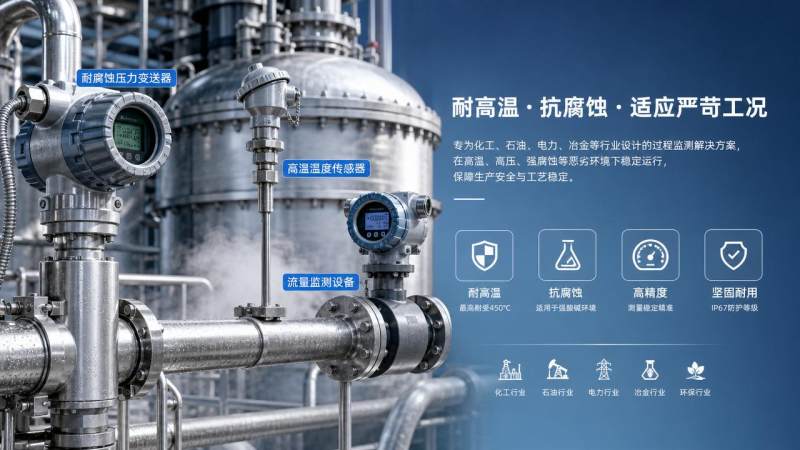
Process monitoring equipment matters most when conditions are least forgiving.
In corrosive plants, hot utility zones, offshore platforms, and dusty material lines, small measurement errors can escalate into shutdowns, compliance failures, or unsafe operations.
That is why durable instrumentation is never selected by specification sheet alone.
The better approach is to read the operating context first, then match process monitoring equipment to the physical, electrical, and maintenance realities of the site.
This is also where GIH brings practical value.
Its industry intelligence perspective treats instrumentation as the sensing layer behind safe automation, reliable energy systems, environmental accountability, and production continuity.
In actual field use, two sites may both require pressure, temperature, flow, vibration, or gas monitoring, yet the correct solution can differ sharply.
A stainless enclosure that survives washdown may still fail in chloride exposure.
A sensor with good accuracy in the lab may drift quickly beside a furnace, compressor, or chemical scrubber.
The real question is not whether process monitoring equipment is needed.
It is which design, certification, communication method, and maintenance model fit the actual operating burden.
Different sites create different monitoring priorities
Harsh environments do not fail equipment in the same way.
Chemical exposure attacks wetted materials and seals.
Thermal cycling stresses electronics and calibration stability.
Remote energy locations expose process monitoring equipment to power instability, lightning risk, and limited service access.
Dust-heavy lines create false readings, blocked impulse paths, and degraded connectors.
Because of that, the same keyword often hides several different buying decisions.
Some operations need fast response and control loop integrity.
Others need environmental survivability first, even if sampling speed is slower.
More complex sites may need both, along with proof of compliance under ATEX, IECEx, or industry-specific validation standards.
A useful evaluation starts with five field questions.
- What damages the device first: corrosion, heat, moisture, vibration, dust, or electrical noise?
- Which variable drives the operational decision: safety shutdown, efficiency tuning, quality control, or emissions reporting?
- How quickly must the signal be trusted after a disturbance?
- How often can the point be inspected, calibrated, or replaced?
- Which control architecture must the signal integrate with: PLC, DCS, SCADA, or edge monitoring?
In chemical and corrosive processing, material compatibility comes before precision claims
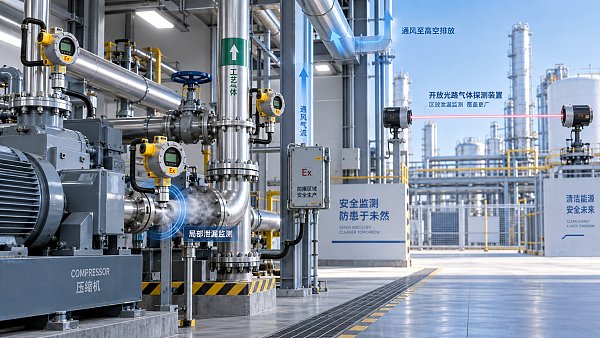
Corrosive processing often exposes the weakness of generic process monitoring equipment faster than any brochure suggests.
Acids, alkalis, solvents, vapors, and washdown cycles affect diaphragms, gaskets, cable jackets, windows, and housing coatings differently.
Here, the right judgment is less about headline accuracy and more about long-term signal stability.
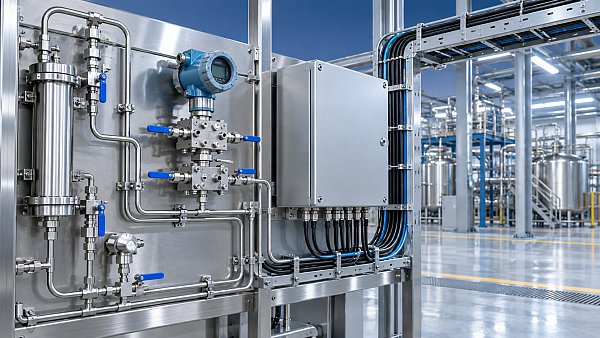
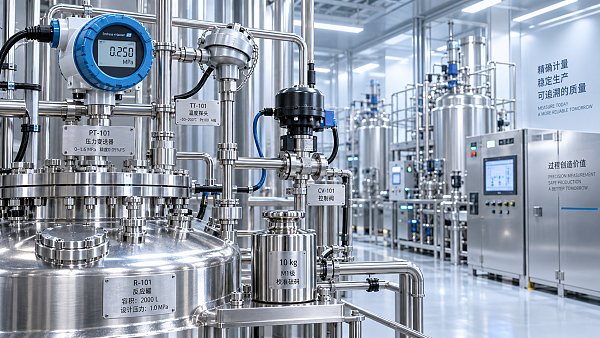
For pressure and level points, attention usually shifts to wetted materials, remote seals, capillary design, and clog resistance.
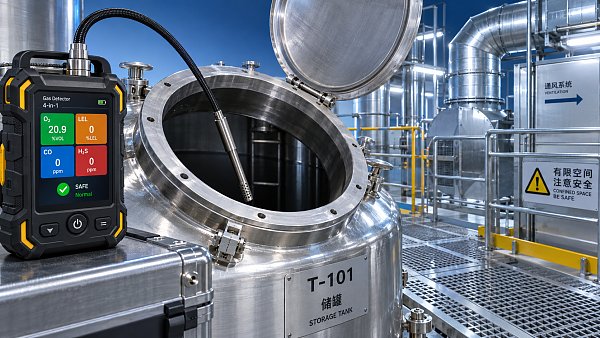
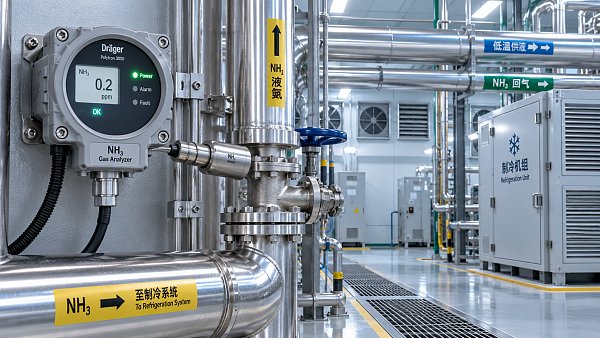
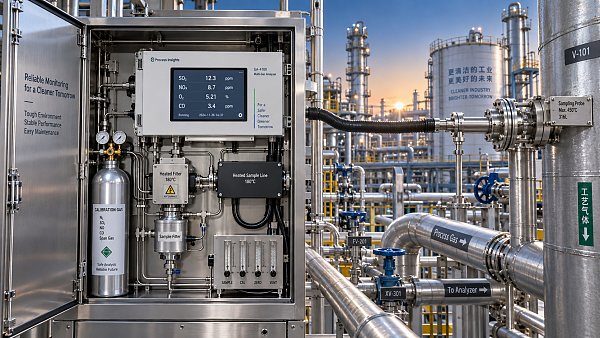
For gas detection, sensor poisoning, cross-sensitivity, and purge requirements become more important than nominal detection range.
A common mistake is treating all stainless options as equally durable.
In practice, chloride content, cleaning chemistry, and temperature can make alloy choice critical.
Another mistake is selecting compact instruments where impulse lines or sensing faces will foul repeatedly.
In these settings, process monitoring equipment should be judged by service life between interventions, not only first-year performance.
What usually deserves closer review
- Wetted parts and seal materials matched to the actual media and cleaning routine.
- Ingress protection, enclosure coating, and connector resistance to chemical mist.
- Installation geometry that reduces clogging, dead legs, and trapped condensate.
- Calibration intervals under real exposure, not controlled test conditions.
High-temperature power and thermal processes need stability under stress, not just survivability
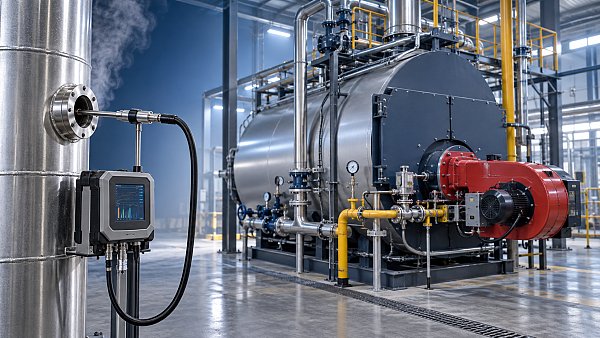
Power generation, boilers, furnaces, and heat recovery systems create a different challenge.
The environment is harsh, but the main issue is often drift under constant thermal stress.
Process monitoring equipment in these areas must keep signal quality despite radiant heat, vibration, pressure pulsation, and cycling loads.
Temperature sensors may survive the heat yet lose useful accuracy because sheath selection, insertion depth, or response time were poorly matched.
Pressure transmitters near steam service can also mislead operations if condensate management is overlooked.
This is where field judgment matters more than nominal temperature rating.
The better installations account for mounting distance, thermal barriers, cable routing, and electronics separation.
They also confirm whether the measurement supports protective action, combustion tuning, heat balance, or predictive maintenance.
Each purpose tolerates uncertainty differently.
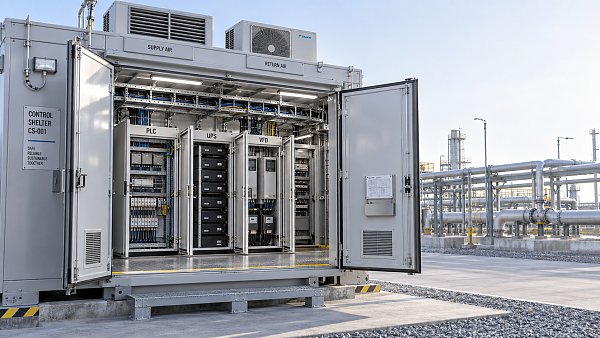
Remote energy and infrastructure sites reward low-touch monitoring designs
At isolated pumping stations, renewable assets, substations, or pipeline nodes, travel time becomes part of equipment cost.
That changes how process monitoring equipment should be evaluated.
A device that performs well in a staffed plant may become expensive if every reset, battery replacement, or recalibration requires a field visit.
More common priorities here include remote diagnostics, low-power operation, surge protection, secure communications, and stable performance across large ambient swings.
Wireless options can help, but only when radio reliability, cybersecurity, and maintenance access are reviewed together.
In actual deployment, process monitoring equipment at remote sites often succeeds because the support model is realistic.
That means replaceable modules, clear fault codes, and integration with SCADA or edge analytics, not just rugged hardware.
GIH’s broader intelligence lens is relevant here because site reliability is shaped by supply continuity, certification traceability, and vendor support depth as much as device performance.
Dust, vibration, and heavy handling environments create quieter failures
Cement, mining support systems, grain transfer, metals handling, and bulk solids facilities often damage process monitoring equipment gradually.
The readings do not always fail dramatically.
Instead, sensing faces get coated, brackets loosen, cables fatigue, and alarms become unreliable enough to be ignored.
This is why similar-looking applications should not be treated as identical.
A dusty silo level point and a vibrating conveyor bearing point may both appear rugged, yet they fail for different reasons.
For one, the challenge is buildup and false echo.
For the other, it is mechanical fatigue and signal noise.
Better choices usually come from reviewing mounting method, cleaning access, shielding, cable strain relief, and alarm logic together.
Process monitoring equipment that cannot be cleaned or verified safely will not remain trustworthy for long.
Where selection mistakes usually happen
One frequent mistake is focusing on nominal performance while ignoring how the signal will age in service.
Another is assuming hazardous approval alone guarantees field fit.
ATEX or IECEx compliance matters, but it does not replace checks on chemical resistance, cable routing, thermal shielding, or maintenance access.
It is also common to underestimate lifecycle costs.
Cheap process monitoring equipment can become costly when spare parts are inconsistent, recalibration is frequent, or diagnostics are too limited to support fast troubleshooting.
A more subtle error is copying a successful design from one unit to another without reviewing local process differences.
Changes in media composition, ambient heat, vibration pattern, or cleaning practice can make a familiar instrument the wrong choice.
Practical checks before final selection
- Map the exact stress factors at each measuring point, not just the general site conditions.
- Review certifications together with media compatibility and installation limits.
- Compare calibration burden, spare availability, and expected failure modes.
- Confirm signal compatibility with existing PLC, DCS, or SCADA architecture.
- Test whether maintenance can be performed safely during normal operations.
A better next step is building a site-specific monitoring shortlist
The strongest decisions around process monitoring equipment usually come from narrowing the shortlist by environment, duty, and service model.
That means separating what must survive from what must stay accurate, and what must communicate from what must remain easy to maintain.
For complex operations, it helps to document three layers.
The first is process risk, including shutdown consequence and compliance exposure.
The second is environmental burden, such as corrosion, heat, dust, washdown, or remoteness.
The third is support reality, including calibration access, digital integration, and supplier continuity.
That approach aligns well with GIH’s role as an instrumentation intelligence hub.
The goal is not simply to identify rugged process monitoring equipment.
It is to identify equipment that remains credible after months of exposure, fits the control architecture, and supports confident operational decisions.
Before moving forward, compare the harshest measuring points, define the non-negotiable standards, and rank instruments by lifecycle fit rather than purchase price alone.
That is usually where durable monitoring strategy begins to separate from routine equipment buying.
Recommended for You
 How to judge whether a competitive price reflects real valueCompetitive Price: learn how to compare scope, compliance, performance, and lifecycle costs to identify real value, reduce risk, and make smarter purchasing decisions.
 When custom gas analysis is the right fit for complex process streamsCustom gas analysis for complex process streams: learn when tailored sampling, interference control, and reliable measurement design deliver confident decisions.
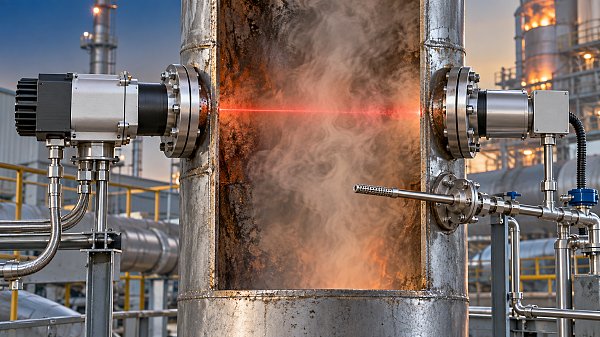
 When does a laser gas analyzer meet stack emissions monitoring needs?Laser gas analyzer for stack emissions: learn when it delivers fast, reliable data, how to assess installation risks, and what to verify for CEMS compliance.
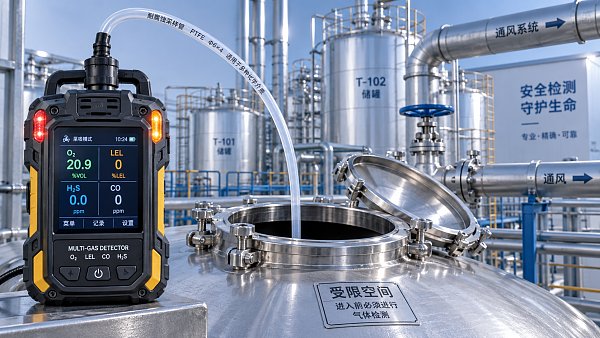
 How to select a hazardous gas analyzer for confined spacesHazardous gas analyzer selection for confined spaces: compare sensors, sampling, certifications, alarms, and maintenance to protect workers and choose with confidence.
 When is a single gas analyzer sufficient for workplace safety monitoring?Discover when a single gas analyzer delivers reliable workplace safety monitoring, and learn the key limits, calibration needs, and risks that require broader detection.
 How to choose an ambient gas analyzer for low-level leak detectionAmbient gas analyzer selection for low-level leak detection: compare sensitivity, cross-sensitivity, sampling design, alarms, and calibration for reliable site performance.
 How to tell when an oxygen sensor needs replacementOxygen sensor replacement signs explained: learn how live data, fault codes, wiring checks, and exhaust inspections pinpoint the real issue before you buy.
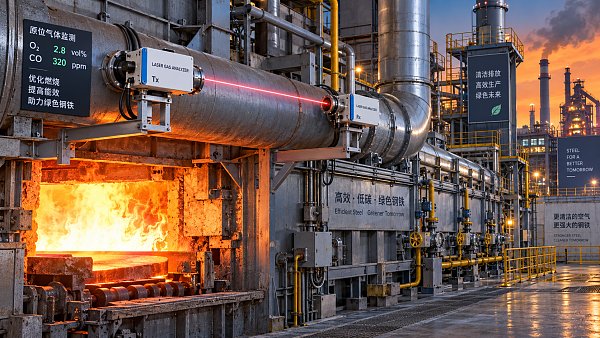
 How laser gas analyzers improve combustion control in steel furnacesLaser gas analyzer for steel industry applications delivers fast in-situ O₂ and CO data to optimize furnace combustion, cut fuel waste, and improve steel heating stability.
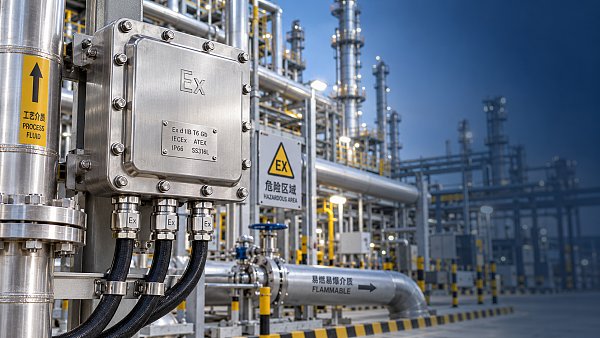
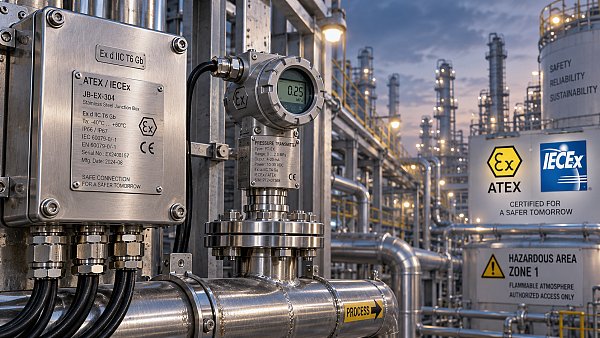
 How to verify whether explosion proof equipment meets site requirementsExplosion proof equipment verification made practical: match zones, gas or dust groups, temperature classes, certificates, and installation conditions for confident compliance.
 How industrial gas analysis helps detect contamination before releaseIndustrial Gas Analysis helps detect moisture, oil, oxygen, and toxic contaminants before release—protecting processes, ensuring compliance, and reducing costly risks.
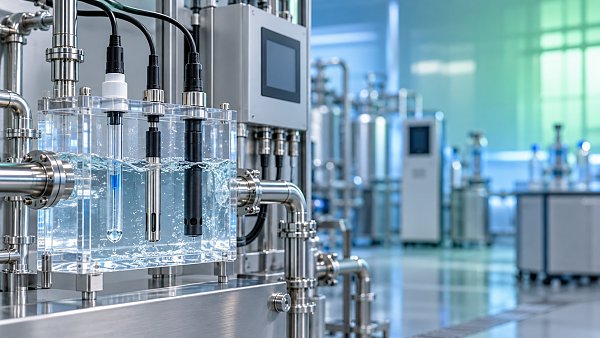
 When is electrochemistry detection the right choice for water analysis?Electrochemistry detection for water analysis: learn when fast, reliable monitoring of ions, chlorine, pH, and more delivers actionable results.
 How industrial standards reduce quality risks in supplier selectionIndustrial Standard guidance helps quality and safety managers reduce supplier risks, verify compliance, strengthen traceability, and build resilient instrumentation supply chains.
 When does a multi-component system reduce installation complexity?Multi component systems reduce installation complexity when they eliminate field interfaces, streamline commissioning, and provide proven compatibility. Learn how to assess total cost and supplier accountability.
 How to size an industrial control shelter for outdoor equipmentIndustrial control shelter sizing guide: optimize layout, HVAC, access, safety, and expansion space for reliable outdoor equipment operations.
 How flue analysis helps verify combustion efficiencyFlue analysis verifies combustion efficiency by assessing O2, CO, CO2, and stack temperature to identify excess air, incomplete combustion, and heat losses.
 How to select industrial gas detectors for confined spacesIndustrial gas detectors for confined spaces: learn how to match sensors, sampling methods, alarms, and certifications to real atmospheric hazards.
 When does a laser oxygen analyzer outperform zirconia sensors?Laser oxygen analyzer vs. zirconia sensors: compare speed, selectivity, maintenance, gas chemistry, and installation needs to choose the right oxygen measurement solution.
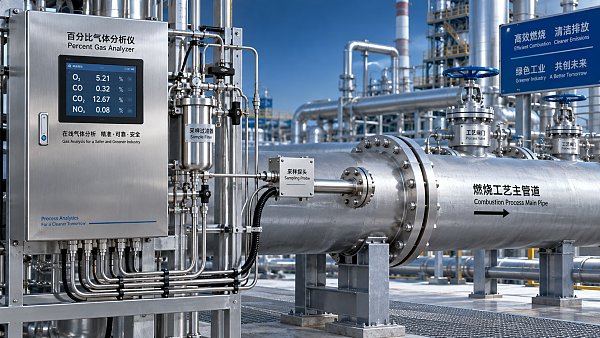
 How to select a percent range analyzer for process measurementsPercent range analyzer selection made practical: compare accuracy, sample systems, calibration, gas matrix, integration, and lifecycle cost for reliable process measurements.
 How explosion proof analysis verifies safe equipment for hazardous areasExplosion proof analysis verifies hazardous-area equipment by matching certifications, temperature ratings, installation details, and inspection controls for safer compliance.
 When does fixed gas detection need point sensors instead of open-path monitoring?Fixed gas detection: discover when point sensors outperform open-path monitoring for predictable leaks, enclosed zones, local alarms, and safer design decisions.
 How to choose industrial metrology systems for tight-tolerance partsIndustrial metrology guide for tight-tolerance parts: compare CMMs, optical scanners, gauges, uncertainty, workflow, and traceable inspection strategies.
 How process metrology reduces measurement variation in productionProcess metrology reduces production measurement variation by improving traceability, uncertainty control, calibration, and reliable quality decisions.
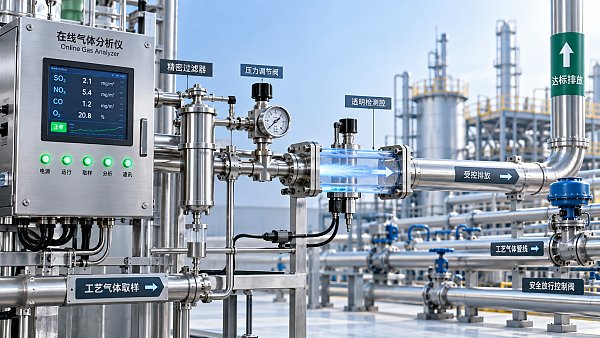
 How to select an industrial monitoring analyzer for harsh environmentsIndustrial monitoring analyzer selection for harsh environments: evaluate sampling, durability, hazardous-area compliance, accuracy, maintenance, and data reliability.
 How calibration intervals affect test and measurement equipment accuracyTest and measurement equipment calibration intervals directly affect accuracy, risk, compliance, and uptime. Learn how to set evidence-based schedules that protect critical decisions.
 When does process gas monitoring need continuous measurement?Process gas monitoring needs continuous measurement when rapid changes threaten safety, quality, compliance, or uptime. Learn how to specify reliable, actionable monitoring systems.
 How to prevent false alarms in power plant instrumentationPower plant instrumentation guide: prevent false alarms with reliable signal checks, smarter alarm settings, mode-based control, and actionable operator responses.
 How fixed gas detectors help prevent leaks in enclosed workspacesFixed gas detectors provide continuous leak monitoring in enclosed workspaces, enabling faster alarms, safer responses, and stronger protection for people and processes.
 How industrial gas analysis helps detect process contamination earlyIndustrial Gas Analysis helps detect oxygen, moisture, and hydrocarbon contamination early, enabling faster fault isolation, safer operations, and stronger process control.
 What drives environmental compliance continuous monitoring setup cost?Environmental compliance continuous monitoring setup cost: uncover hidden expenses, compare bids accurately, and build a reliable, audit-ready system.
 How to select gas analysis equipment for continuous emissions monitoringGas analysis equipment selection guide for reliable continuous emissions monitoring—compare technologies, sampling, calibration, compliance, and maintenance needs.
 What detection limit is needed for NH3 environmental monitoring?High accuracy NH3 analyzer for environmental monitoring: learn how to set the right detection limit, improve sampling reliability, and make defensible decisions.
 How to select a NOX analyzer for power plant emissions complianceNOX analyzer for power plant emissions: learn how to select a compliant, reliable CEMS solution with the right range, sample handling, calibration, and data integrity.


Search Categories
Search Categories
- Smart Meters & Power Quality
- Transformer Gas Analyzers
- BESS Thermal Runaway Detectors
- Energy, Power & Smart Grid Monitoring
- Optical Profilers & CMM
- Ultrasonic & X-Ray NDT
- Calibration Standards
- Precision Metrology & NDT
- Water Quality Analyzers
- CEMS & VOCs Monitors
- Price Trends
- Import & Export Updates
- Market Trends
- Industry News
- Industry Insights
Latest Article
- How to judge whether a competitive price reflects real valueCompetitive Price: learn how to compare scope, compliance, performance, and lifecycle costs to identify real value, reduce risk, and make smarter purchasing decisions.Posted by:
- When custom gas analysis is the right fit for complex process streamsCustom gas analysis for complex process streams: learn when tailored sampling, interference control, and reliable measurement design deliver confident decisions.Posted by:
- When does a laser gas analyzer meet stack emissions monitoring needs?Laser gas analyzer for stack emissions: learn when it delivers fast, reliable data, how to assess installation risks, and what to verify for CEMS compliance.Posted by:
Please give us a message
