
Emission Gas Analyzer News in 2026: Regulatory Shifts Affecting Demand


In 2026, the emission gas analyzer market is being reshaped by tighter environmental rules, updated industrial standards, and growing compliance pressure across multiple sectors. For information-focused researchers, understanding how regulatory shifts influence product demand, technology adoption, and purchasing priorities is essential. This article explores the key policy changes and what they mean for the instrumentation industry’s evolving opportunities.
Why a checklist matters for emission gas analyzer decisions in 2026
Regulatory change no longer affects only environmental departments. It now shapes equipment selection, data handling, maintenance cycles, and capital planning across the broader instrumentation industry.
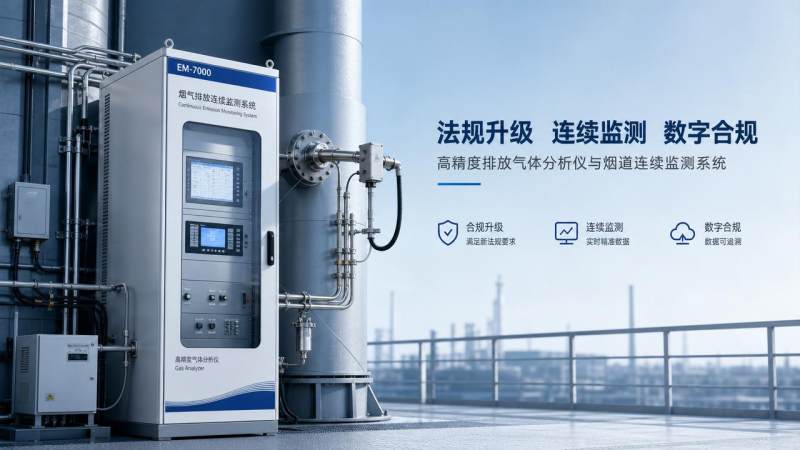
A checklist approach helps compare each emission gas analyzer against compliance needs, reporting methods, plant conditions, and long-term operating cost. That reduces the risk of buying a system that passes today but fails next year.
It also supports cross-sector evaluation. Power generation, waste treatment, process manufacturing, and laboratory verification now face different timelines, limits, and verification rules, even when using similar analyzer technologies.
Core checklist: how regulatory shifts are affecting emission gas analyzer demand
- Track revised emission limits for NOx, SO2, CO, CO2, methane, and particulates, because tighter thresholds often require a higher-accuracy emission gas analyzer with stronger drift control.
- Review continuous emissions monitoring obligations, since more facilities must now install permanent analyzer systems instead of relying on periodic stack testing or manual sampling.
- Check certification and performance standards, including regional approval schemes, because compliant hardware must match formal audit, calibration, and traceability expectations.
- Verify digital reporting compatibility, as many rules now require secure data logging, automated uploads, timestamp integrity, and remote access for inspection or internal review.
- Compare measurement technology options, such as NDIR, FTIR, TDLAS, electrochemical, and paramagnetic methods, against the target gas mix and required detection range.
- Assess maintenance intensity early, because new compliance programs favor analyzer uptime, fast validation routines, and lower dependence on frequent manual service intervention.
- Map the installation environment carefully, including heat, dust, moisture, corrosive gas, and vibration, so the emission gas analyzer remains stable under real operating conditions.
- Estimate lifecycle cost instead of purchase price alone, since calibration gas use, spare parts, sample conditioning, software support, and downtime now influence total compliance cost.
- Confirm expansion capability, because future rules may add ammonia slip, hydrogen blending, VOCs, or greenhouse gas metrics that a fixed analyzer platform cannot easily support.
- Align supplier support with regulatory timelines, ensuring training, validation documents, service records, and firmware updates are available before audits or permit renewals.
Which policy trends are moving the market
Continuous monitoring is replacing occasional testing
In many regions, authorities now prefer continuous evidence over periodic snapshots. This directly increases demand for fixed emission gas analyzer systems with automated validation and permanent data retention.
For the instrumentation industry, this favors integrated packages. Sample handling, analyzer cabinet design, communication protocols, and compliance software are becoming part of one purchasing decision.
Greenhouse gas reporting is becoming more detailed
Carbon policy in 2026 is broader than carbon dioxide alone. Methane, process emissions, combustion efficiency, and fuel switching all increase the need for a more capable emission gas analyzer.
This is especially relevant where hydrogen blending, waste-derived fuels, or carbon capture projects change flue gas composition. Analyzer selection must reflect unstable gas matrices and new verification needs.
Data integrity rules are influencing analyzer architecture
Regulators increasingly examine data continuity, alarm history, and audit trails. As a result, the value of an emission gas analyzer now includes software resilience, cybersecurity posture, and storage logic.
Application notes across major sectors
Power and energy systems
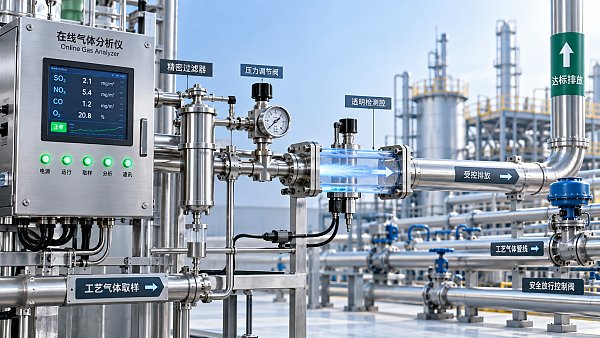
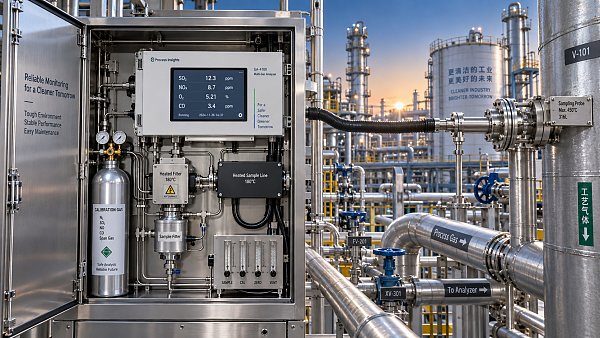
Thermal power, biomass units, and waste-to-energy plants face stricter control of NOx, SO2, CO, and greenhouse gases. Here, an emission gas analyzer often operates as part of a full CEMS setup.
Demand is strongest for durable systems with strong sample conditioning, heated lines, and reliable operation during fuel variability, startup phases, and changing combustion loads.
Process manufacturing and heavy industry
Cement, steel, chemicals, refining, and glass production are seeing expanded scrutiny around combustion optimization and stack emissions. A compliant emission gas analyzer supports both reporting and process efficiency.
In these settings, analyzer demand rises when plants upgrade burners, recover waste heat, or change feedstock. Each operational shift can alter gas composition enough to require technology reassessment.
Environmental monitoring and laboratories
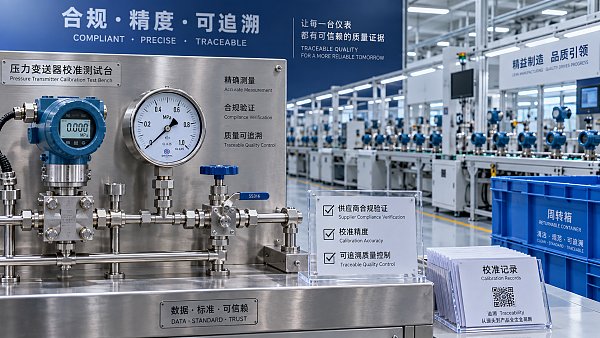
Reference labs and environmental service providers need an emission gas analyzer for verification, method comparison, and independent compliance support. Precision, calibration traceability, and reporting consistency matter most.
This segment also benefits from portable and semi-portable systems, especially where site audits, temporary checks, or cross-validation of fixed analyzers are required.
Commonly overlooked risks
Ignoring future pollutants
A low-cost analyzer may meet current permit limits yet fail when methane, ammonia, VOCs, or additional greenhouse gas indicators enter the reporting framework.
Underestimating sample system design
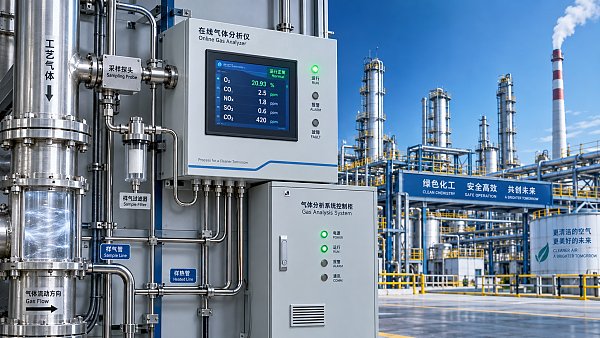
Even a high-performance emission gas analyzer can produce weak results if filtration, moisture removal, heated transport, or probe design do not match the stack environment.
Treating software as secondary
Many compliance failures come from missing records, broken communications, or unverifiable corrections. Software capability now matters almost as much as sensor performance.
Planning only for installation
Regulations evaluate long-term reliability. Without spare parts planning, calibration routines, and service documentation, analyzer performance may degrade before the next formal review.
Practical execution steps
- Start with the latest local and sector-specific rules, then list target gases, required ranges, reporting intervals, and audit documentation.
- Match those requirements to analyzer technology, conditioning hardware, communication protocols, and validation procedures before comparing prices.
- Run a lifecycle review covering maintenance frequency, calibration needs, spare availability, software support, and expected operating uptime.
- Document upgrade paths for future pollutants, digital compliance demands, and possible process changes that could affect gas composition.
- Confirm that every emission gas analyzer under review can produce records suitable for both operational use and regulatory inspection.
Conclusion and next actions
The 2026 market for emission gas analyzer solutions is being driven by stricter limits, wider continuous monitoring requirements, and stronger digital compliance expectations. Demand is not rising evenly; it is shifting toward flexible, auditable, and upgrade-ready systems.
The best next step is to build a regulation-based evaluation sheet, compare analyzer technologies against actual gas conditions, and verify data management capability before final selection. In the instrumentation industry, that disciplined approach supports compliance, protects investment, and improves long-term monitoring reliability.
Recommended for You
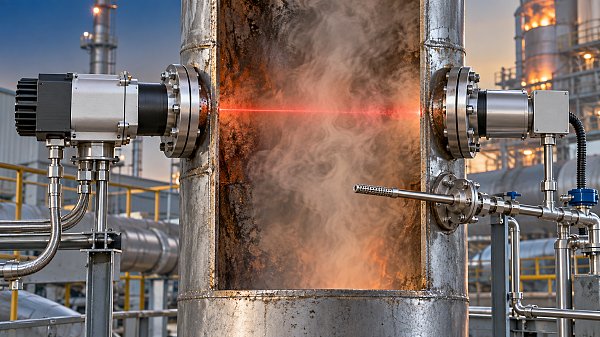
 When does a laser gas analyzer meet stack emissions monitoring needs?Laser gas analyzer for stack emissions: learn when it delivers fast, reliable data, how to assess installation risks, and what to verify for CEMS compliance.
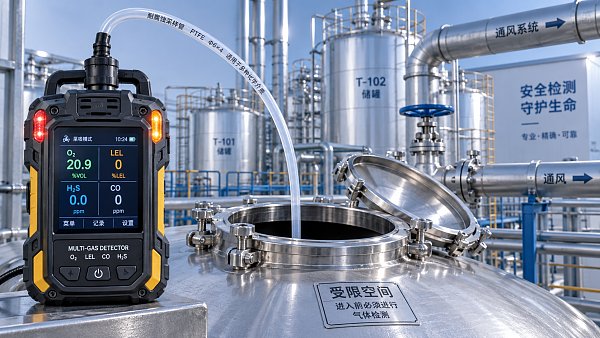
 How to select a hazardous gas analyzer for confined spacesHazardous gas analyzer selection for confined spaces: compare sensors, sampling, certifications, alarms, and maintenance to protect workers and choose with confidence.
 When is a single gas analyzer sufficient for workplace safety monitoring?Discover when a single gas analyzer delivers reliable workplace safety monitoring, and learn the key limits, calibration needs, and risks that require broader detection.
 How to choose an ambient gas analyzer for low-level leak detectionAmbient gas analyzer selection for low-level leak detection: compare sensitivity, cross-sensitivity, sampling design, alarms, and calibration for reliable site performance.
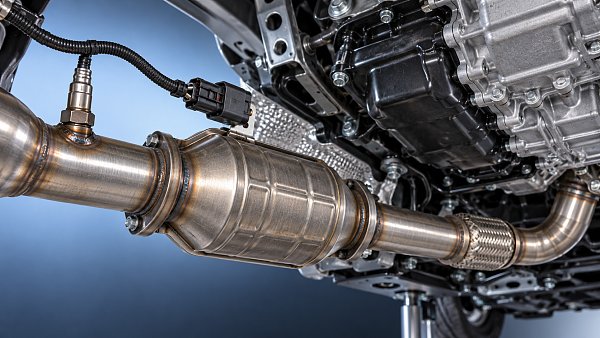
 How to tell when an oxygen sensor needs replacementOxygen sensor replacement signs explained: learn how live data, fault codes, wiring checks, and exhaust inspections pinpoint the real issue before you buy.
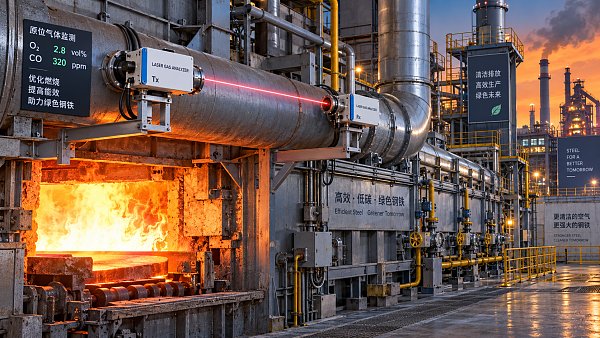
 How laser gas analyzers improve combustion control in steel furnacesLaser gas analyzer for steel industry applications delivers fast in-situ O₂ and CO data to optimize furnace combustion, cut fuel waste, and improve steel heating stability.
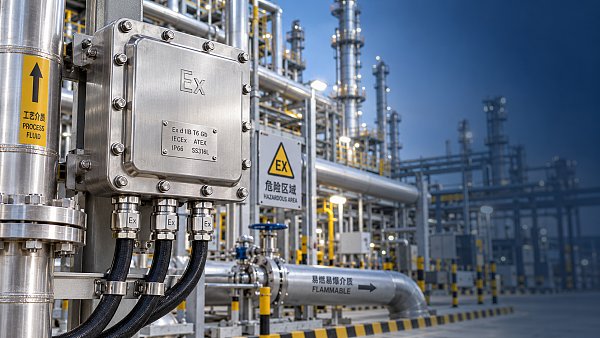
 How to verify whether explosion proof equipment meets site requirementsExplosion proof equipment verification made practical: match zones, gas or dust groups, temperature classes, certificates, and installation conditions for confident compliance.
 How industrial gas analysis helps detect contamination before releaseIndustrial Gas Analysis helps detect moisture, oil, oxygen, and toxic contaminants before release—protecting processes, ensuring compliance, and reducing costly risks.
 When is electrochemistry detection the right choice for water analysis?Electrochemistry detection for water analysis: learn when fast, reliable monitoring of ions, chlorine, pH, and more delivers actionable results.
 How industrial standards reduce quality risks in supplier selectionIndustrial Standard guidance helps quality and safety managers reduce supplier risks, verify compliance, strengthen traceability, and build resilient instrumentation supply chains.
 When does a multi-component system reduce installation complexity?Multi component systems reduce installation complexity when they eliminate field interfaces, streamline commissioning, and provide proven compatibility. Learn how to assess total cost and supplier accountability.
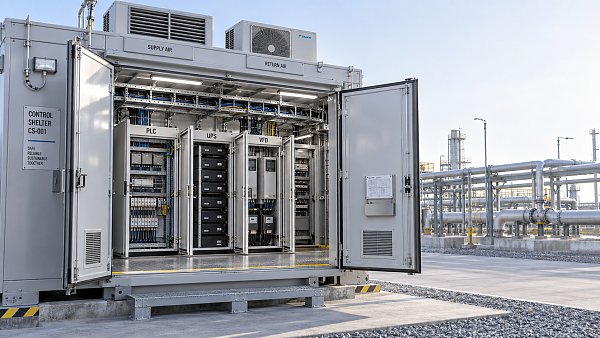
 How to size an industrial control shelter for outdoor equipmentIndustrial control shelter sizing guide: optimize layout, HVAC, access, safety, and expansion space for reliable outdoor equipment operations.
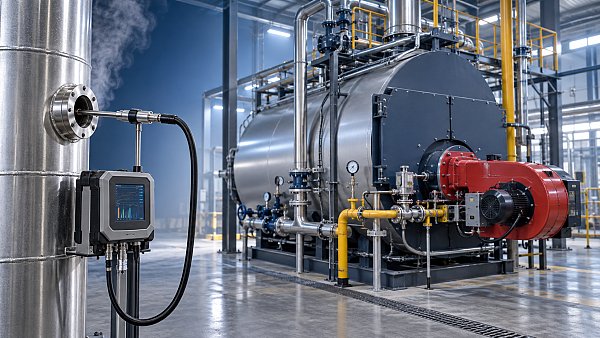
 How flue analysis helps verify combustion efficiencyFlue analysis verifies combustion efficiency by assessing O2, CO, CO2, and stack temperature to identify excess air, incomplete combustion, and heat losses.
 How to select industrial gas detectors for confined spacesIndustrial gas detectors for confined spaces: learn how to match sensors, sampling methods, alarms, and certifications to real atmospheric hazards.
 When does a laser oxygen analyzer outperform zirconia sensors?Laser oxygen analyzer vs. zirconia sensors: compare speed, selectivity, maintenance, gas chemistry, and installation needs to choose the right oxygen measurement solution.
 How to select a percent range analyzer for process measurementsPercent range analyzer selection made practical: compare accuracy, sample systems, calibration, gas matrix, integration, and lifecycle cost for reliable process measurements.
 How explosion proof analysis verifies safe equipment for hazardous areasExplosion proof analysis verifies hazardous-area equipment by matching certifications, temperature ratings, installation details, and inspection controls for safer compliance.
 When does fixed gas detection need point sensors instead of open-path monitoring?Fixed gas detection: discover when point sensors outperform open-path monitoring for predictable leaks, enclosed zones, local alarms, and safer design decisions.
 How to choose industrial metrology systems for tight-tolerance partsIndustrial metrology guide for tight-tolerance parts: compare CMMs, optical scanners, gauges, uncertainty, workflow, and traceable inspection strategies.
 How process metrology reduces measurement variation in productionProcess metrology reduces production measurement variation by improving traceability, uncertainty control, calibration, and reliable quality decisions.
 How to select an industrial monitoring analyzer for harsh environmentsIndustrial monitoring analyzer selection for harsh environments: evaluate sampling, durability, hazardous-area compliance, accuracy, maintenance, and data reliability.
 How calibration intervals affect test and measurement equipment accuracyTest and measurement equipment calibration intervals directly affect accuracy, risk, compliance, and uptime. Learn how to set evidence-based schedules that protect critical decisions.
 When does process gas monitoring need continuous measurement?Process gas monitoring needs continuous measurement when rapid changes threaten safety, quality, compliance, or uptime. Learn how to specify reliable, actionable monitoring systems.
 How to prevent false alarms in power plant instrumentationPower plant instrumentation guide: prevent false alarms with reliable signal checks, smarter alarm settings, mode-based control, and actionable operator responses.
 How fixed gas detectors help prevent leaks in enclosed workspacesFixed gas detectors provide continuous leak monitoring in enclosed workspaces, enabling faster alarms, safer responses, and stronger protection for people and processes.
 How industrial gas analysis helps detect process contamination earlyIndustrial Gas Analysis helps detect oxygen, moisture, and hydrocarbon contamination early, enabling faster fault isolation, safer operations, and stronger process control.
 What drives environmental compliance continuous monitoring setup cost?Environmental compliance continuous monitoring setup cost: uncover hidden expenses, compare bids accurately, and build a reliable, audit-ready system.
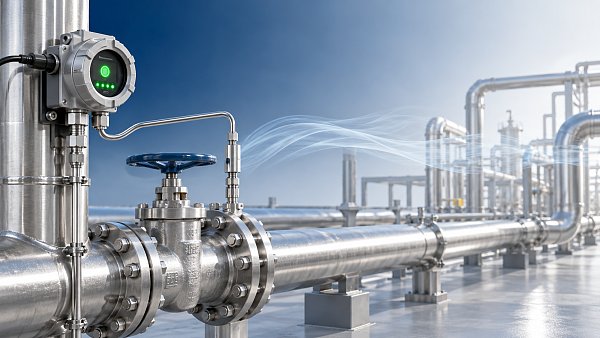
 How to select gas analysis equipment for continuous emissions monitoringGas analysis equipment selection guide for reliable continuous emissions monitoring—compare technologies, sampling, calibration, compliance, and maintenance needs.
 What detection limit is needed for NH3 environmental monitoring?High accuracy NH3 analyzer for environmental monitoring: learn how to set the right detection limit, improve sampling reliability, and make defensible decisions.
 How to select a NOX analyzer for power plant emissions complianceNOX analyzer for power plant emissions: learn how to select a compliant, reliable CEMS solution with the right range, sample handling, calibration, and data integrity.
 How to evaluate a laser gas analyzer manufacturer in GermanyLaser gas analyzer manufacturer in Germany: compare accuracy, sample handling, interference control, calibration, and service to select a reliable solution.
 How does a flue gas analyzer maintain accuracy in wet stack gas?Flue gas analyzer accuracy in wet stack gas depends on heated sampling, moisture correction, reliable sensors, and calibration. Explore key selection tips.


Search Categories
Search Categories
- Smart Meters & Power Quality
- Transformer Gas Analyzers
- BESS Thermal Runaway Detectors
- Energy, Power & Smart Grid Monitoring
- Optical Profilers & CMM
- Ultrasonic & X-Ray NDT
- Calibration Standards
- Precision Metrology & NDT
- Water Quality Analyzers
- CEMS & VOCs Monitors
- Price Trends
- Import & Export Updates
- Market Trends
- Industry News
- Industry Insights
Latest Article
- When does a laser gas analyzer meet stack emissions monitoring needs?Laser gas analyzer for stack emissions: learn when it delivers fast, reliable data, how to assess installation risks, and what to verify for CEMS compliance.Posted by:
- How to select a hazardous gas analyzer for confined spacesHazardous gas analyzer selection for confined spaces: compare sensors, sampling, certifications, alarms, and maintenance to protect workers and choose with confidence.Posted by:
- When is a single gas analyzer sufficient for workplace safety monitoring?Discover when a single gas analyzer delivers reliable workplace safety monitoring, and learn the key limits, calibration needs, and risks that require broader detection.Posted by:
Please give us a message
