
2026 H2S Concentration Analyzer Price Outlook


As industrial safety, emissions compliance, and process optimization gain urgency in 2026, demand for the H2S concentration analyzer is drawing strong market attention. Buyers comparing an H2S concentration analyzer with options such as an HCl concentration analyzer, SF6 concentration analyzer, O2 concentration analyzer, or NH3 concentration analyzer need clear pricing signals, technology trends, and procurement factors to make confident decisions.
Why is the 2026 H2S concentration analyzer price outlook becoming a key procurement issue?
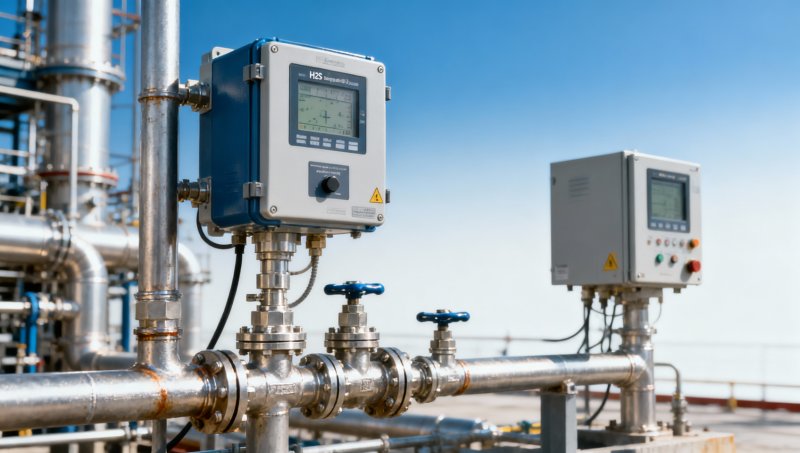
The H2S concentration analyzer sits at the intersection of safety control, process reliability, and compliance management. In refining, natural gas treatment, biogas upgrading, wastewater handling, chemical production, and enclosed industrial spaces, hydrogen sulfide monitoring is not optional. It is tied to operator exposure control, corrosion prevention, and stable process performance. For this reason, 2026 purchasing discussions are no longer centered only on the analyzer price itself, but on total application value across installation, calibration, maintenance, and system integration.
In the broader instrumentation industry, buyers are under pressure to modernize plants while controlling capital spending. Measurement and control devices are now expected to support digital transformation, remote diagnostics, and continuous data availability. That shift is influencing the H2S concentration analyzer market in 3 visible ways: higher demand for online monitoring, stronger interest in multi-gas strategy planning, and closer scrutiny of lifecycle cost over 3–5 years rather than only initial purchase price.
Price variation in 2026 is likely to remain significant because the term “H2S concentration analyzer” covers multiple technical routes. A portable safety checker, a fixed-point transmitter, and a continuous process analyzer may all be described similarly in a quotation request, but their pricing logic is very different. Response time, detection range, wet or corrosive sample handling, enclosure rating, communication protocol, and sampling system complexity can shift the budget from a basic level to a much higher project investment.
For information researchers and financial approvers, the real challenge is separating price from value. A lower-cost option may be acceptable for periodic checks every week or every month, yet unsuitable for 24/7 duty in a hazardous process line. For project managers and technical evaluators, the question is not only “How much does an H2S concentration analyzer cost in 2026?” but also “Which configuration prevents downtime, rework, or compliance risk during the next 12–36 months?”
What is driving cost movement in 2026?
Several factors are shaping the 2026 H2S concentration analyzer price outlook. First, material and electronics costs still affect sensor modules, control boards, pumps, valves, and corrosion-resistant wetted parts. Second, stricter safety expectations in industrial automation environments are pushing demand toward analyzers with better diagnostics, safer enclosures, and stronger communication support such as 4–20 mA, Modbus, or relay integration.
Third, buyers increasingly require application-specific engineering. A standard instrument shipped in 7–15 days typically costs less than a customized skid, heated sample line, or shelter-mounted analyzer package that may need 3–6 weeks or longer. Fourth, distributor stock position and regional service support influence quotations, especially when commissioning, spare sensor kits, or annual calibration plans are included.
- Base hardware cost varies by detection principle, housing level, and whether the analyzer is portable, fixed, or process-integrated.
- Application engineering raises cost when sample conditioning, corrosion control, or continuous unattended operation is required.
- Lifecycle services such as commissioning, calibration every 3–6 months, and spare parts planning can materially affect ownership cost.
How do H2S analyzer types and application scenarios change the price range?
Not every H2S concentration analyzer is built for the same duty. In practice, pricing depends heavily on whether the instrument is intended for operator safety, process optimization, emissions monitoring, or laboratory verification. A buyer evaluating equipment for a treatment plant, a sulfur recovery unit, or a confined-space inspection team should begin by matching the use case to the analyzer category. This avoids the common mistake of comparing unlike products under one budget line.
The table below helps distinguish typical analyzer forms, common application settings, and the price drivers that matter most in the instrumentation sector. It is especially useful for procurement staff, distributors, and engineering teams preparing an initial shortlist before requesting formal quotations.
This comparison shows why asking for a single “H2S concentration analyzer price” rarely yields a useful answer. The more continuous, corrosive, or compliance-sensitive the duty, the more supporting hardware and engineering are needed. In many projects, the sample handling and integration package can influence cost almost as much as the sensor core, especially when stable operation is required across shifting temperatures, moisture load, or variable gas composition.
Application scenario also shapes maintenance expectations. A portable analyzer used intermittently may need a simpler service plan. By contrast, a fixed or online analyzer often needs scheduled checks every quarter, spare consumables, and verification against process conditions. For quality managers and safety officers, this distinction matters because the least expensive purchase option may not be the least disruptive operating option.
Which industries usually require tighter H2S monitoring logic?
The strongest demand usually comes from sectors where toxic exposure and equipment corrosion combine with strict uptime requirements. These include oil and gas processing, petrochemical plants, wastewater treatment, landfill gas and biogas systems, pulp and paper operations, and certain mining or chemical production environments. In these settings, a monitoring gap of even a short duration can disrupt work permits, maintenance scheduling, or environmental reporting processes.
Typical scenario checklist
- Continuous process monitoring where analyzer uptime is expected for 24/7 operation and alarms must integrate into plant control systems.
- Safety monitoring in locations with rotating staff, where audible and visual alerts and easy bump-test routines matter.
- Quality verification in laboratory or batch-release settings, where repeatability and documented calibration intervals are essential.
For distributors and resellers, understanding these scenario differences helps shorten the sales cycle. It is easier to position a suitable H2S concentration analyzer when the inquiry is framed around duty cycle, sampling condition, and required outputs rather than only around headline price.
H2S vs HCl, SF6, O2, and NH3 concentration analyzers: what should buyers really compare?
Many buyers search across several gas analyzer categories at the same time. That is practical, especially for plants planning a broader instrumentation upgrade. Still, the comparison should be structured. An H2S concentration analyzer should not be evaluated only by list price against an HCl concentration analyzer, SF6 concentration analyzer, O2 concentration analyzer, or NH3 concentration analyzer. Each gas creates a different measurement challenge, safety consequence, and maintenance burden.
For example, O2 analyzers are often selected for combustion control, inerting verification, or general process optimization, while SF6 analyzers are commonly linked to electrical equipment monitoring. HCl and NH3 analyzers may bring stronger corrosion or chemical compatibility concerns in wet sampling conditions. H2S, however, frequently combines toxicity, corrosive impact, and process sensitivity, which means the practical value of a well-matched analyzer often depends on sample conditioning and reliable low-level detection rather than on a simple upfront price comparison.
The following table provides a procurement-oriented comparison. It helps technical reviewers and commercial teams see why cross-gas analyzer pricing should be interpreted in context rather than treated as a direct one-to-one match.
The main takeaway is that cost benchmarking across gas analyzers only works when 3 conditions are aligned: application duty, measurement range, and system architecture. If one device is a handheld detector and another is a cabinet-mounted continuous analyzer, the comparison is misleading. Procurement teams should therefore compare analyzers by use case group first, then by technical route, and only then by quotation amount.
What comparison method is most useful in real projects?
A practical method is to screen each analyzer option through 5 decision filters: target gas behavior, required detection range, installation environment, service interval expectation, and integration requirement. This framework helps technical staff explain to management why a low-cost model may create hidden costs if it lacks the right enclosure, communication output, or moisture handling design.
- Define whether the objective is personal safety, process control, emissions compliance, or laboratory verification.
- Confirm if the analyzer will operate intermittently, every shift, or continuously for 24 hours a day.
- Check whether the sample contains moisture, dust, corrosive components, or temperature variation that requires conditioning.
- Review required outputs, alarm logic, and control system communication before approving the price comparison.
This structured approach is especially valuable in integrated instrumentation projects where multiple analyzers are sourced together. It keeps the budget discussion tied to risk control and plant performance instead of turning into a simple but inaccurate lowest-price race.
How should buyers evaluate technical performance, compliance, and total cost?
An H2S concentration analyzer should be evaluated as part of a working measurement system, not as an isolated box. For users and operators, ease of calibration and alarm clarity matter. For engineers, repeatability, stability, and interference handling matter. For procurement and finance teams, delivery time, spare part predictability, and service exposure matter. A sound evaluation balances all of these points rather than overemphasizing one specification line.
Technical performance often begins with the expected measurement range and environment. A unit intended for trace-level monitoring in dry gas will differ from one used in a wet, dirty, or corrosive stream. Buyers should ask whether the analyzer requires filters, condensate handling, pumps, heated lines, or periodic replacement parts. These details often determine the true cost over 12 months, 24 months, and 36 months.
Compliance is another major factor. While exact regulatory requirements differ by site and country, many projects still need alignment with common industrial practices such as hazardous-area suitability, electrical safety expectations, calibration traceability, or plant documentation standards. Safety managers and project owners should therefore confirm documentation scope early, including manuals, wiring details, calibration instructions, and commissioning records when applicable.
A practical procurement checklist for 2026
The table below summarizes common evaluation dimensions used by instrumentation buyers when comparing H2S concentration analyzer quotations. It is useful when multiple vendors or channel partners submit offers with different hardware and service assumptions.
This checklist is effective because it translates technical details into purchasing logic. For example, a shorter lead time of 7–15 days may be attractive for urgent replacement, but if the project also requires special mounting, field commissioning, and operator training, a 2–4 week delivery plan with better scope definition may reduce overall risk. In other words, time-to-install is often as important as time-to-ship.
Common mistakes to avoid
- Approving a quotation without confirming whether calibration gas, sampling accessories, or mounting hardware are included.
- Comparing only detector sensitivity while ignoring operating environment, expected runtime, and communication compatibility.
- Treating maintenance as an afterthought instead of budgeting for routine checks every quarter or every 6 months where applicable.
- Assuming one analyzer platform can cover all gases equally well without verifying interference and application-specific suitability.
For quality control and safety teams, avoiding these mistakes improves not only budget control but also audit readiness and operational continuity. In the instrumentation industry, the best value usually comes from analyzers that fit the process, the maintenance capability, and the plant control architecture at the same time.
What trends, FAQs, and next-step actions matter most for 2026 sourcing?
The 2026 H2S concentration analyzer market is likely to reward buyers who prepare earlier and specify more clearly. Suppliers increasingly prioritize projects with complete application data, because this reduces redesign and accelerates delivery. Buyers who can define gas range, duty cycle, installation environment, communication requirements, and service expectations from the start usually receive more accurate quotations and fewer change orders later.
Another trend is the move toward smarter instrumentation ecosystems. More end users now want analyzers that fit into centralized monitoring platforms, support digital maintenance records, and simplify diagnostics. This is particularly important in multi-site industrial groups, utility networks, and environmental infrastructure projects where operators and decision-makers need consistent data from several locations over months and years, not only a standalone reading at one point in time.
Distributors and project contractors should also watch demand for bundled solutions. Instead of ordering a single H2S concentration analyzer, many customers request a package that includes mounting accessories, startup support, spare parts, and documentation for internal approval. That bundled approach can improve budget transparency, especially when financial reviewers need to compare 2–3 competing offers on equal scope.
FAQ: common buyer questions
How should I choose between a portable and an online H2S concentration analyzer?
Choose a portable analyzer when the task is periodic inspection, maintenance verification, or confined-space entry support. Choose an online H2S concentration analyzer when the process requires continuous readings, alarm integration, or control actions. A useful rule is this: if the gas condition can change between operator rounds or if records are needed continuously, online monitoring is usually the safer and more economical long-term choice.
What lead time should buyers expect in 2026?
For standard configurations, many projects target a common delivery window of 7–15 working days or 2–4 weeks, depending on stock, documentation, and accessories. Customized analyzer systems with sampling panels, special materials, or project-specific integration may require longer. Buyers should always ask whether the quoted lead time covers only shipment or also includes factory setup, testing, and commissioning readiness.
What are the most overlooked cost items?
The most overlooked items are usually calibration materials, spare sensors, filters, pumps, mounting hardware, and site startup support. Another hidden cost is mismatched integration. If a purchased analyzer cannot connect smoothly with the plant system, the added labor and interface changes can offset any initial savings. Always review the full system bill, not just the analyzer core.
Can one supplier support multiple analyzer categories such as H2S, HCl, O2, NH3, and SF6?
In many instrumentation projects, yes, but suitability still depends on application depth. A supplier may offer several gas analyzer categories, yet the right selection depends on whether they can match the sensing method, sample system, and service scope to each use case. For procurement efficiency, it helps to work with a partner that understands both analyzer hardware and the surrounding measurement-and-control environment.
Why choose us for H2S concentration analyzer evaluation and sourcing?
We support buyers with a practical, engineering-based approach shaped by the realities of the instrumentation industry. That means we do more than discuss H2S concentration analyzer price. We help clarify measurement duty, sampling conditions, installation constraints, integration needs, and service expectations so your team can compare options on a like-for-like basis and avoid under-scoped quotations.
You can contact us for specific support on 6 key topics: parameter confirmation, analyzer type selection, lead time planning, custom solution discussion, documentation and certification alignment, and quotation comparison. If you are reviewing H2S concentration analyzer options alongside HCl, SF6, O2, or NH3 analyzer requirements, we can also help structure a cross-category selection list that is easier for engineering, procurement, and finance teams to approve.
If your project is at the inquiry stage, send the gas type, expected range, installation environment, duty cycle, and any control system requirements. If your project is already under budget review, share the existing specification or quotation scope. We can help identify missing items, evaluate total ownership factors over the next 12–36 months, and support a more confident 2026 sourcing decision.
Recommended for You
 FDA Updates IVD Import Guidance: CNAS Calibration Chain Required for China-Made DevicesFDA now requires CNAS calibration chain reports for China-made IVD analyzers—pH, ion & clinical chemistry devices entering via 510(k)/De Novo. Act now to avoid U.S. port rejections.
 EN 61000-6-4:2026 Enters Force: Stricter EMC Requirements for Industrial Field InstrumentsEN 61000-6-4:2026 enforces stricter EMC requirements for industrial field instruments—key for AI edge controllers, sensors & exporters. Act now to ensure CE-EMC compliance by Nov 2026.
 Global Methanol Electric Alliance Launches Cross-Border Energy Efficiency Recognition RoadmapGlobal Methanol Electric Alliance launches cross-border energy efficiency recognition roadmap—key for exporters, cal labs & methanol-instrument manufacturers.
 Red Sea Crisis Escalates: Air Freight Premiums for China–Middle East Industrial Instruments Hit 390%Red Sea Crisis hits industrial instruments: China–Middle East air freight premiums surge 390%. Act now to secure Q3 capacity, avoid delays & optimize LCL alternatives.
 IEC TC65 Mandates Cybersecurity Certification for Industrial Field Instruments from 2027IEC TC65 mandates cybersecurity certification for industrial field instruments by 2027 — pressure, flow & analytical devices must meet IEC 62443-4-2:2026 and display SL1–SL3 labels. Act now to ensure market access.
 SASO Cuts Energy Labeling Turnaround for Industrial Transmitters to 7 Working DaysSASO Energy Labeling now takes just 7 working days for industrial transmitters — faster market access, CNAS reports accepted. Act now!
 PTB Launches CalCloud 2.0 with Direct CNAS Lab IntegrationCalCloud 2.0 now integrates directly with CNAS labs—enabling automated VDA 5 & ISO/IEC 17025 dual-compliant calibration reports for automotive and industrial exporters. Boost compliance efficiency today!
 ASEAN's Green Clearance Corridor for CNAS Calibration Reports LaunchesASEAN's Green Clearance Corridor now verifies CNAS calibration reports via blockchain—cut customs clearance to <48h for flow meters, analyzers & more. Act now!
 Vietnam Mandates CNAS Calibration Certificates & Vietnamese Manuals for Industrial Meters from June 1, 2026CNAS calibration certificates & Vietnamese manuals now mandatory for industrial meters entering Vietnam from June 1, 2026—avoid customs delays and ensure seamless market access.
 U.S. BIS Tightens Export Controls on High-Precision Laser InterferometersU.S. BIS tightens export controls on high-precision laser interferometers—critical for semiconductor metrology & ISO/IEC 17025 calibration. Act now to ensure compliance.
 Paramagnetic Monitor Calibration Tips for Stable OutputParamagnetic monitor calibration tips for stable output: learn how to reduce drift, improve accuracy, cut downtime, and keep oxygen measurement reliable in demanding industrial applications.
 Paramagnetic Measurement in Low-Oxygen Process ControlParamagnetic measurement enables accurate low-oxygen process control with fast response and stable oxygen analysis. Learn how it improves safety, consistency, and system performance.
 Laser Detector Import Risks and Certification DelaysLaser detector import risks can cause costly certification delays, customs issues, and testing setbacks. Learn how to avoid compliance failures before ordering.
 Explosion Proof Detector Demand Under New Safety RulesExplosion proof detector demand is rising under new safety rules. Discover how to compare certified, reliable options that improve compliance, integration, and long-term site safety.
 Laboratory Detector Accuracy Standards You Should CheckLaboratory detector accuracy standards explained: check detection limits, repeatability, drift, and traceability to reduce risk, improve audit readiness, and choose with confidence.
 Custom Measurement Lead Times and Budget PlanningCustom measurement lead times and budgets explained for procurement teams. Learn key cost drivers, planning steps, and supplier tips to reduce delays and buy with confidence.
 Laser Measurement for Leak Detection: Common PitfallsLaser measurement for leak detection can fail due to setup, airflow, and data interpretation errors. Learn the common pitfalls and proven fixes for more accurate, reliable results.
 How to Evaluate a High Accuracy Detector in the FieldHigh accuracy detector evaluation starts with real field performance. Learn how to compare stability, response time, and reliability to choose the right detector with confidence.
 Electrochemical Monitor Lifespan and Replacement CostsElectrochemical monitor lifespan and replacement costs explained for buyers. Learn how sensor life, maintenance, and total ownership cost affect safer, smarter purchasing decisions.
 Thermal Analysis Market Direction in Process IndustriesThermal analysis market direction in process industries: discover trends, applications, and investment insights that improve quality control, reduce risk, and support smarter industrial decisions.
 Monitoring Shelter Design Priorities for Outdoor SitesMonitoring shelter design starts with protection, climate control, and power reliability. Discover how to choose the right outdoor solution for stable data, safer maintenance, and lower lifecycle risk.
 Fixed Measurement Planning for Multi-Point InstallationsFixed measurement planning is essential for multi-point installations. Learn how to improve accuracy, reliability, compliance, and maintenance efficiency across complex industrial systems.
 Fixed Analysis Systems for Stable Long-Term MonitoringFixed analysis systems enable stable long-term monitoring, reliable data, and better process control. Discover how they improve safety, compliance, and operational efficiency.
 Thermal Gas Applications Expanding in Clean IndustryThermal gas applications are reshaping clean industry with smarter flow measurement, emissions control, and energy optimization. Discover where they cut risk, boost efficiency, and support automation.
 Monitoring Detector Export Rules to Watch in 2026Monitoring detector export rules are changing fast in 2026. Learn the key compliance risks, supplier checks, and trade signals to protect margins and make smarter sourcing decisions.
 Control Detector Setup Mistakes That Affect ReliabilityControl detector setup mistakes can quietly reduce accuracy and uptime. Learn the most common installation, wiring, and calibration errors—and how to avoid them for reliable performance.
 What Defines a High Accuracy Monitor TodayHigh accuracy monitor selection starts with real-world performance. Learn the key accuracy factors, buyer checklist, and how to choose a reliable monitor for industrial control.
 Infrared Monitor Demand in Industrial Safety UpgradesInfrared monitor demand is rising as industrial safety upgrades accelerate. Discover where buyers need it most, how channel partners can sell smarter, and which applications drive long-term growth.
 Thermal Conductivity Monitor Limits in Mixed Gas StreamsThermal conductivity monitor limits in mixed gas streams explained—learn where accuracy drops, what buyers should compare, and how to choose the right analyzer with confidence.
 Laser Monitor vs Infrared Monitor for Fast DetectionLaser monitor vs infrared monitor for fast detection: discover which delivers better precision, response speed, and reliability for industrial monitoring and smarter sensor selection.
 Thermal Gas Analyzer Price Shifts Across Global MarketsThermal gas analyzer price shifts are reshaping global budgets. Learn what drives costs, regional differences, and how buyers can reduce risk and improve long-term value.
 Custom Analysis Options for Complex Gas ApplicationsCustom analysis helps solve complex gas applications with better accuracy, compliance, and reliability. Discover practical selection insights that reduce risk and improve system performance.

Search Categories
Search Categories
Latest Article
- FDA Updates IVD Import Guidance: CNAS Calibration Chain Required for China-Made DevicesFDA now requires CNAS calibration chain reports for China-made IVD analyzers—pH, ion & clinical chemistry devices entering via 510(k)/De Novo. Act now to avoid U.S. port rejections.Posted by:
- EN 61000-6-4:2026 Enters Force: Stricter EMC Requirements for Industrial Field InstrumentsEN 61000-6-4:2026 enforces stricter EMC requirements for industrial field instruments—key for AI edge controllers, sensors & exporters. Act now to ensure CE-EMC compliance by Nov 2026.Posted by:
- Global Methanol Electric Alliance Launches Cross-Border Energy Efficiency Recognition RoadmapGlobal Methanol Electric Alliance launches cross-border energy efficiency recognition roadmap—key for exporters, cal labs & methanol-instrument manufacturers.Posted by:
Please give us a message
