
Industrial Gas Price Trends and Supply Risks in 2026


Industrial gas pricing is entering a more fragile phase
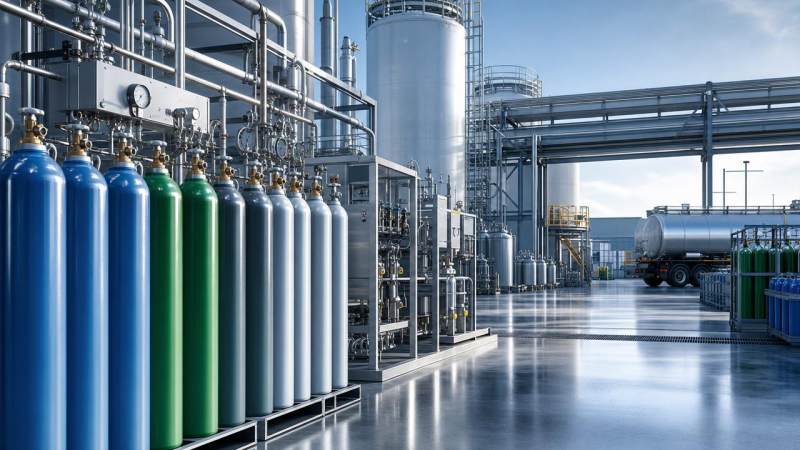
As 2026 comes closer, the industrial gas market no longer looks like a stable utility layer behind production.
It is becoming a visible cost variable, and in some sectors, a direct operational risk.
That shift matters across manufacturing, energy, laboratories, healthcare, electronics, and environmental monitoring.
Industrial gas demand is still supported by long-cycle industrial activity, but supply flexibility is not improving at the same pace.
The result is sharper price movement for oxygen, nitrogen, argon, helium, hydrogen, and specialty calibration gases.
What makes 2026 different is not one dramatic shortage.
It is the accumulation of smaller constraints that now interact more often.
Power costs, maintenance cycles, regional logistics, export controls, and plant outages are increasingly moving in the same direction.
For a platform like Global Instrument Hub, this is more than a commodity story.
Industrial gas availability affects calibration, process control, emissions monitoring, analytical testing, and safe plant performance.
Instruments can only report the truth of a process when the gas inputs behind analysis and control remain consistent.
The market signal is not only higher prices, but wider spread
A useful way to read the industrial gas market in 2026 is through dispersion rather than average price.
Some regions will still secure predictable industrial gas contracts.
Others will face larger premiums for the same molecule, purity level, and delivery mode.
Bulk pipeline gas, merchant liquid gas, and packaged specialty gas are also moving differently.
That means price benchmarking is becoming less reliable when based on headline averages alone.
This wider spread changes how cost exposure should be assessed.
The key issue is not whether industrial gas prices rise everywhere at once.
It is whether local supply conditions create sudden gaps between expected and executable pricing.
Why the pressure is building from several directions
Recent movement in the industrial gas market reflects a stacked cost structure.
Even when demand is not overheating, production and delivery costs remain exposed.
- Electricity remains a major variable for air separation units producing oxygen, nitrogen, and argon.
- Natural gas prices still influence hydrogen economics and some downstream industrial gas contracts.
- Aging production assets increase unplanned shutdown risk in mature industrial regions.
- Cylinder, valve, and cryogenic transport constraints can delay specialty gas fulfillment.
- Trade restrictions add uncertainty for helium and certain high-purity industrial gas products.
- Carbon policies are starting to reshape cost pass-through, especially for energy-intensive producers.
More worth noting is the link between industrial gas supply and adjacent industrial cycles.
Argon is a clear example.
It is recovered during oxygen production, but actual availability depends heavily on steel sector operating patterns.
If steel output softens or shifts regionally, argon tightness can appear even when broader industrial gas capacity seems adequate.
Helium shows a different problem.
Supply remains concentrated, project timelines are long, and geopolitical interruptions still move the market quickly.
That makes helium less a pure pricing issue and more a continuity issue.
The impact is spreading beyond direct gas consumption
Industrial gas volatility now reaches into systems that many cost models treat as secondary.
In practice, those systems often determine uptime, compliance, and product quality.
Instrumentation and analytical operations feel the pressure early
Calibration gases support reliable readings in process plants, emissions systems, and laboratories.
When lead times stretch, maintenance schedules and compliance windows become harder to hold.
For CEMS, gas chromatography, mass spectrometry, and online analyzers, purity and certificate integrity matter as much as price.
This aligns closely with GIH’s core view of the market.
Measurement reliability depends on the hidden supply chain behind every validated reading.
Manufacturing plants face cost and scheduling distortion
Metal fabrication, electronics, chemicals, glass, and food processing all use industrial gas differently.
Yet the common problem is planning confidence.
A small industrial gas shortage can force output rescheduling, quality rechecks, or switching to less efficient process settings.
That hidden cost often exceeds the invoice increase itself.
Energy and life science applications are becoming more selective
Power and energy monitoring systems require dependable specialty gas support for analyzers and safety systems.
In life science settings, the tolerance for substitution is low.
That pushes buyers toward suppliers with stronger quality systems, documented traceability, and regional resilience.
What deserves closer attention before 2026 contracts are locked
The industrial gas discussion is moving away from simple unit cost comparison.
A more useful approach is to evaluate where the supply chain can fail silently.
- Check regional plant concentration rather than assuming national supply diversity.
- Review contract clauses on electricity pass-through, force majeure, and delivery priority.
- Separate base industrial gas exposure from specialty gas exposure in internal forecasting.
- Map which critical instruments depend on certified gas mixtures with limited substitute options.
- Track cylinder turnaround time and packaging availability, not only gas molecule pricing.
- Watch certification requirements such as ISO/IEC 17025, ATEX, IECEx, and regulated laboratory standards.
These checks matter because the industrial gas market is becoming more layered.
A supplier may appear competitive on volume gas, yet remain exposed on delivery reliability or specialty inventory.
That is exactly where intelligence-led evaluation becomes more valuable than price collection alone.
The next phase will reward better signal reading
Looking into 2026, the industrial gas market does not point to universal shortage.
It points to a less forgiving environment where weak assumptions are exposed faster.
That is especially true in industries where gas quality underpins control accuracy, safety integrity, and regulatory reporting.
The more practical conclusion is to treat industrial gas as strategic operating infrastructure.
This changes how budgets, sourcing scenarios, and supplier qualification should be framed.
Short-term spot prices still matter, but they no longer tell the full story.
Plant maintenance schedules, recovery rates, logistics depth, and certification discipline now carry equal weight.
For organizations following industrial modernization, this is where broader instrumentation intelligence becomes useful.
Industrial gas conditions influence how accurately processes are measured, controlled, and verified across sectors.
A sound next step is to build a 2026 watchlist covering price triggers, supplier concentration, gas-dependent instruments, and compliance-critical applications.
That kind of structured monitoring will do more than reduce procurement surprises.
It will improve judgment on where industrial gas risk can materially alter cost, continuity, and technical confidence.
Recommended for You
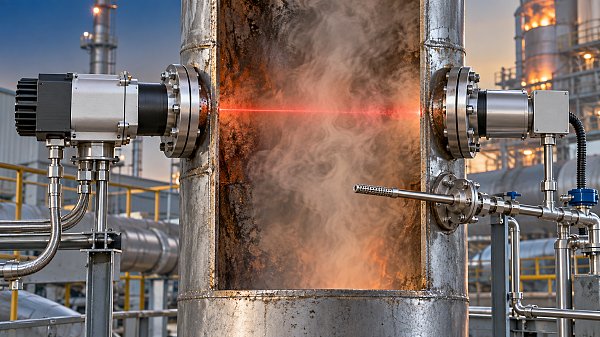
 When does a laser gas analyzer meet stack emissions monitoring needs?Laser gas analyzer for stack emissions: learn when it delivers fast, reliable data, how to assess installation risks, and what to verify for CEMS compliance.
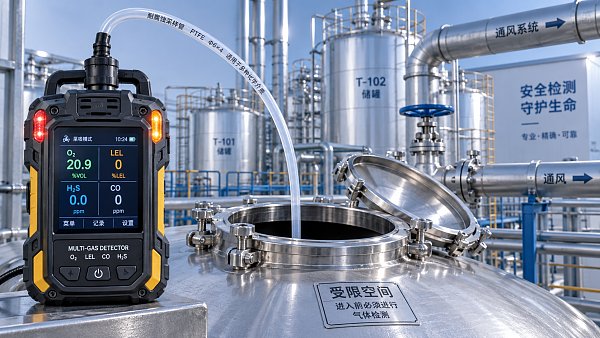
 How to select a hazardous gas analyzer for confined spacesHazardous gas analyzer selection for confined spaces: compare sensors, sampling, certifications, alarms, and maintenance to protect workers and choose with confidence.
 When is a single gas analyzer sufficient for workplace safety monitoring?Discover when a single gas analyzer delivers reliable workplace safety monitoring, and learn the key limits, calibration needs, and risks that require broader detection.
 How to choose an ambient gas analyzer for low-level leak detectionAmbient gas analyzer selection for low-level leak detection: compare sensitivity, cross-sensitivity, sampling design, alarms, and calibration for reliable site performance.
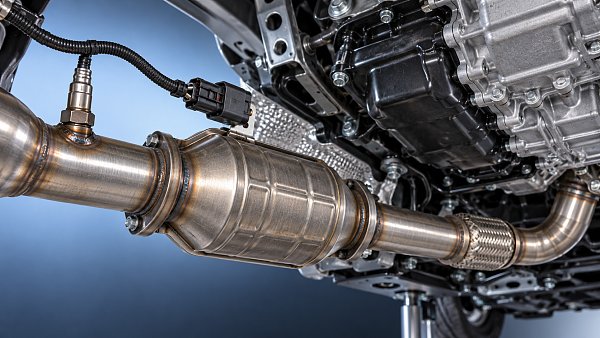
 How to tell when an oxygen sensor needs replacementOxygen sensor replacement signs explained: learn how live data, fault codes, wiring checks, and exhaust inspections pinpoint the real issue before you buy.
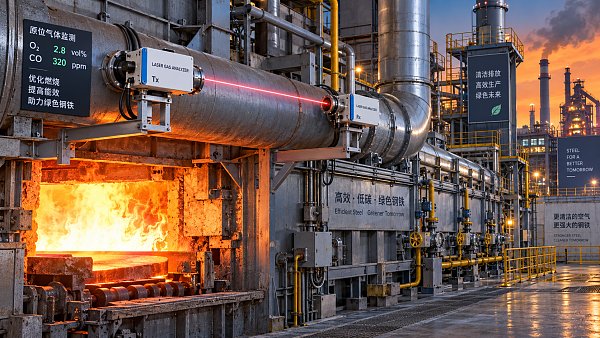
 How laser gas analyzers improve combustion control in steel furnacesLaser gas analyzer for steel industry applications delivers fast in-situ O₂ and CO data to optimize furnace combustion, cut fuel waste, and improve steel heating stability.
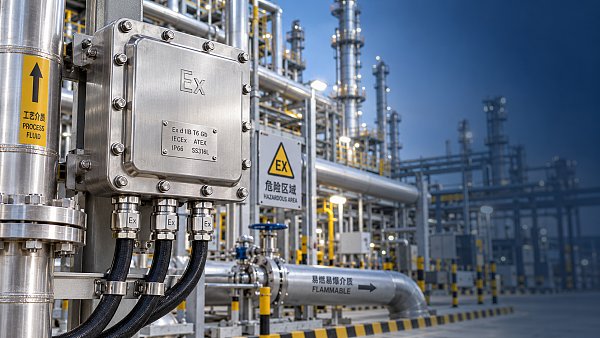
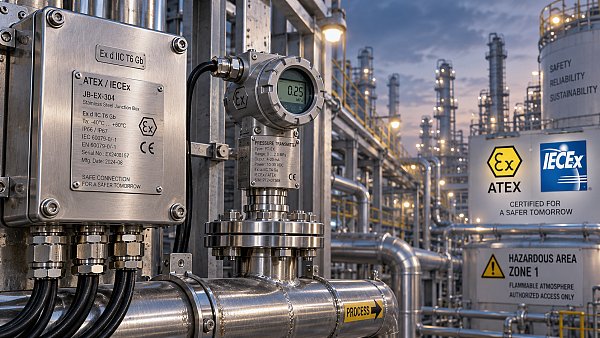
 How to verify whether explosion proof equipment meets site requirementsExplosion proof equipment verification made practical: match zones, gas or dust groups, temperature classes, certificates, and installation conditions for confident compliance.
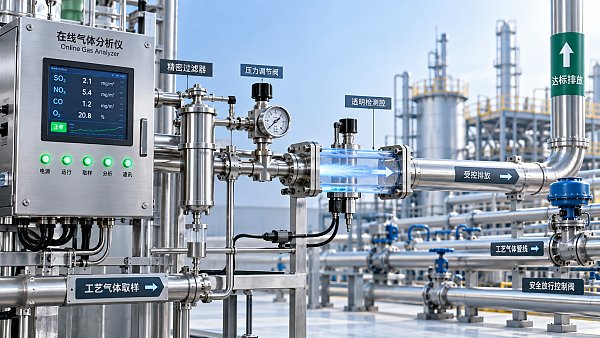
 How industrial gas analysis helps detect contamination before releaseIndustrial Gas Analysis helps detect moisture, oil, oxygen, and toxic contaminants before release—protecting processes, ensuring compliance, and reducing costly risks.
 When is electrochemistry detection the right choice for water analysis?Electrochemistry detection for water analysis: learn when fast, reliable monitoring of ions, chlorine, pH, and more delivers actionable results.
 How industrial standards reduce quality risks in supplier selectionIndustrial Standard guidance helps quality and safety managers reduce supplier risks, verify compliance, strengthen traceability, and build resilient instrumentation supply chains.
 When does a multi-component system reduce installation complexity?Multi component systems reduce installation complexity when they eliminate field interfaces, streamline commissioning, and provide proven compatibility. Learn how to assess total cost and supplier accountability.
 How to size an industrial control shelter for outdoor equipmentIndustrial control shelter sizing guide: optimize layout, HVAC, access, safety, and expansion space for reliable outdoor equipment operations.
 How flue analysis helps verify combustion efficiencyFlue analysis verifies combustion efficiency by assessing O2, CO, CO2, and stack temperature to identify excess air, incomplete combustion, and heat losses.
 How to select industrial gas detectors for confined spacesIndustrial gas detectors for confined spaces: learn how to match sensors, sampling methods, alarms, and certifications to real atmospheric hazards.
 When does a laser oxygen analyzer outperform zirconia sensors?Laser oxygen analyzer vs. zirconia sensors: compare speed, selectivity, maintenance, gas chemistry, and installation needs to choose the right oxygen measurement solution.
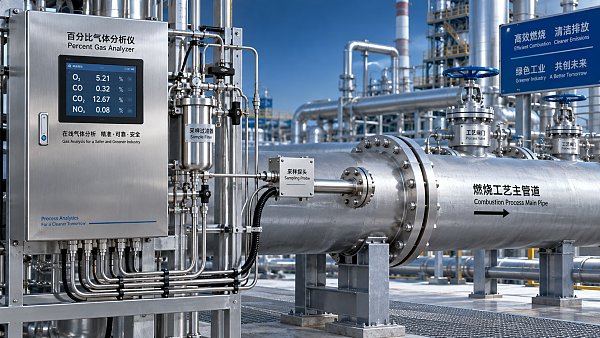
 How to select a percent range analyzer for process measurementsPercent range analyzer selection made practical: compare accuracy, sample systems, calibration, gas matrix, integration, and lifecycle cost for reliable process measurements.
 How explosion proof analysis verifies safe equipment for hazardous areasExplosion proof analysis verifies hazardous-area equipment by matching certifications, temperature ratings, installation details, and inspection controls for safer compliance.
 When does fixed gas detection need point sensors instead of open-path monitoring?Fixed gas detection: discover when point sensors outperform open-path monitoring for predictable leaks, enclosed zones, local alarms, and safer design decisions.
 How to choose industrial metrology systems for tight-tolerance partsIndustrial metrology guide for tight-tolerance parts: compare CMMs, optical scanners, gauges, uncertainty, workflow, and traceable inspection strategies.
 How process metrology reduces measurement variation in productionProcess metrology reduces production measurement variation by improving traceability, uncertainty control, calibration, and reliable quality decisions.
 How to select an industrial monitoring analyzer for harsh environmentsIndustrial monitoring analyzer selection for harsh environments: evaluate sampling, durability, hazardous-area compliance, accuracy, maintenance, and data reliability.
 How calibration intervals affect test and measurement equipment accuracyTest and measurement equipment calibration intervals directly affect accuracy, risk, compliance, and uptime. Learn how to set evidence-based schedules that protect critical decisions.
 When does process gas monitoring need continuous measurement?Process gas monitoring needs continuous measurement when rapid changes threaten safety, quality, compliance, or uptime. Learn how to specify reliable, actionable monitoring systems.
 How to prevent false alarms in power plant instrumentationPower plant instrumentation guide: prevent false alarms with reliable signal checks, smarter alarm settings, mode-based control, and actionable operator responses.
 How fixed gas detectors help prevent leaks in enclosed workspacesFixed gas detectors provide continuous leak monitoring in enclosed workspaces, enabling faster alarms, safer responses, and stronger protection for people and processes.
 How industrial gas analysis helps detect process contamination earlyIndustrial Gas Analysis helps detect oxygen, moisture, and hydrocarbon contamination early, enabling faster fault isolation, safer operations, and stronger process control.
 What drives environmental compliance continuous monitoring setup cost?Environmental compliance continuous monitoring setup cost: uncover hidden expenses, compare bids accurately, and build a reliable, audit-ready system.
 How to select gas analysis equipment for continuous emissions monitoringGas analysis equipment selection guide for reliable continuous emissions monitoring—compare technologies, sampling, calibration, compliance, and maintenance needs.
 What detection limit is needed for NH3 environmental monitoring?High accuracy NH3 analyzer for environmental monitoring: learn how to set the right detection limit, improve sampling reliability, and make defensible decisions.
 How to select a NOX analyzer for power plant emissions complianceNOX analyzer for power plant emissions: learn how to select a compliant, reliable CEMS solution with the right range, sample handling, calibration, and data integrity.
 How to evaluate a laser gas analyzer manufacturer in GermanyLaser gas analyzer manufacturer in Germany: compare accuracy, sample handling, interference control, calibration, and service to select a reliable solution.
 How does a flue gas analyzer maintain accuracy in wet stack gas?Flue gas analyzer accuracy in wet stack gas depends on heated sampling, moisture correction, reliable sensors, and calibration. Explore key selection tips.





Search Categories
Search Categories
- Smart Meters & Power Quality
- Transformer Gas Analyzers
- BESS Thermal Runaway Detectors
- Energy, Power & Smart Grid Monitoring
- Optical Profilers & CMM
- Ultrasonic & X-Ray NDT
- Calibration Standards
- Precision Metrology & NDT
- Water Quality Analyzers
- CEMS & VOCs Monitors
- Price Trends
- Import & Export Updates
- Market Trends
- Industry News
- Industry Insights
Latest Article
- When does a laser gas analyzer meet stack emissions monitoring needs?Laser gas analyzer for stack emissions: learn when it delivers fast, reliable data, how to assess installation risks, and what to verify for CEMS compliance.Posted by:
- How to select a hazardous gas analyzer for confined spacesHazardous gas analyzer selection for confined spaces: compare sensors, sampling, certifications, alarms, and maintenance to protect workers and choose with confidence.Posted by:
- When is a single gas analyzer sufficient for workplace safety monitoring?Discover when a single gas analyzer delivers reliable workplace safety monitoring, and learn the key limits, calibration needs, and risks that require broader detection.Posted by:
Please give us a message
