
Paramagnetic Monitoring Accuracy in Oxygen Control


In oxygen control applications, paramagnetic monitoring is valued for its fast response, strong selectivity, and dependable accuracy under demanding operating conditions. For users and operators, understanding how this technology performs in real-world environments is essential to maintaining process stability, safety, and compliance. This article explores the key factors that influence measurement accuracy and how proper use can improve control results.
For most users searching for information on paramagnetic monitoring accuracy in oxygen control, the main question is practical: how accurate is it in daily operation, what affects that accuracy, and what can be done to keep readings stable and trustworthy? The short answer is that paramagnetic monitoring can deliver very reliable oxygen measurement, but only when installation conditions, sample quality, calibration practices, and maintenance are handled correctly.
Operators usually care less about theory alone and more about results. They want to know whether the analyzer will respond fast enough for control, whether drift will create process risk, how moisture or pressure variation will affect readings, and how to recognize bad data before it causes a shutdown, quality loss, or compliance issue. That is where this article focuses its attention.
Why Paramagnetic Monitoring Is Trusted for Oxygen Control
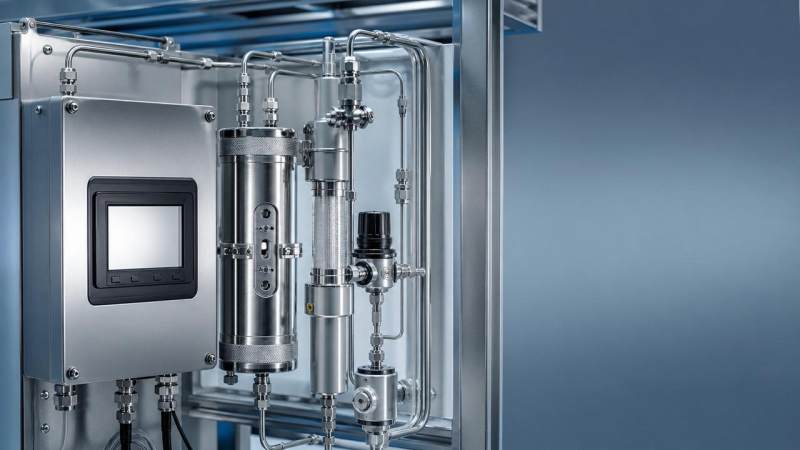
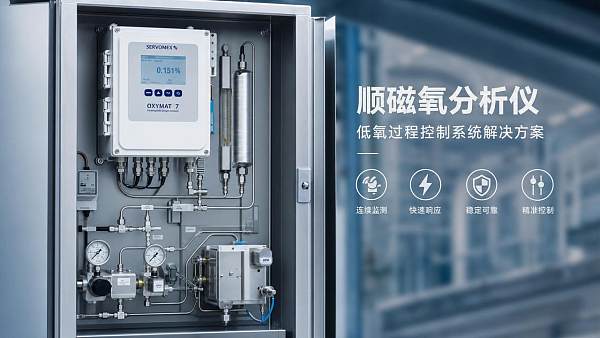
Paramagnetic monitoring is widely used because oxygen is strongly paramagnetic compared with most other common gases. This gives the technology a natural selectivity that many users value in combustion control, inerting systems, gas production, and process safety applications. In many real-world installations, that selectivity supports better oxygen measurement than methods that are more vulnerable to cross-sensitivity.
For operators, the most important performance benefits are usually fast response, good repeatability, and continuous measurement without frequent consumable replacement. In oxygen control, these features matter because the analyzer is often part of a live decision chain. If oxygen rises in a protected atmosphere or falls outside a combustion target, the control system needs a reading that is both quick and dependable.
That said, high inherent selectivity does not automatically guarantee perfect field accuracy. A paramagnetic analyzer can only measure what actually reaches the sensor in stable condition. If the sample is contaminated, delayed, pressure-disturbed, or outside the intended operating range, the displayed oxygen value may no longer represent the true process condition.
What Accuracy Really Means in Daily Operation
When users discuss accuracy, they often mean several different things at once. There is the manufacturer’s specified accuracy under reference conditions, but there is also repeatability, zero stability, span stability, response time, and long-term drift in the field. For oxygen control, all of these influence whether the measurement is useful in practice.
A monitor may have an excellent specification on paper, but if it responds too slowly for the process, operators may still make poor decisions. Similarly, a unit may repeat well in a clean laboratory test but show unreliable results in a plant if the sample system allows condensation or pressure swings. From an operator’s perspective, useful accuracy means the reading is close enough to reality, stable enough to trust, and fast enough to support control action.
It is also important to understand that acceptable accuracy depends on application risk. In general process monitoring, a small measurement deviation may be manageable. In inerting, combustion optimization, medical gas systems, or regulated emissions-related processes, even a modest oxygen error can create safety, product quality, or compliance concerns. That is why the process context should define how accuracy is judged.
Which Factors Most Often Reduce Paramagnetic Monitoring Accuracy
The most common causes of reduced paramagnetic monitoring accuracy are not usually the sensing principle itself. They are installation and operating issues. Sample contamination, moisture carryover, unstable pressure, vibration, poor calibration routines, and leaks in the sample path are among the main reasons operators see readings that seem inconsistent or inaccurate.
Pressure is especially important. Many paramagnetic analyzers are sensitive to changes in pressure or flow conditions because the measurement depends on gas behavior inside the analyzer. If the sample pressure changes significantly from the condition assumed during setup or calibration, the oxygen reading may shift even when the real oxygen concentration does not.
Temperature can also matter. Although analyzers are designed with compensation methods, extreme or rapidly changing temperatures may still affect electronics, gas density, and measurement stability. In outdoor or variable industrial environments, poor enclosure protection or insufficient thermal control can create avoidable errors.
Moisture is another major factor. Water vapor can change the effective gas composition, condense in tubing, damage components, or interfere with stable flow. Even where the analyzer itself is robust, the sample conditioning system may become the weak point. Operators who overlook dryers, filters, drains, or heated lines often end up blaming the analyzer for a sample-handling problem.
Contaminant gases and particulates can have a similar effect. While paramagnetic monitoring is selective to oxygen, that does not mean the system is immune to physical fouling or process interference. Dust, oil mist, corrosive vapors, or sticky condensables can alter flow paths, affect internal components, and gradually reduce confidence in the measurement.
How Sample System Design Directly Affects Oxygen Reading Quality
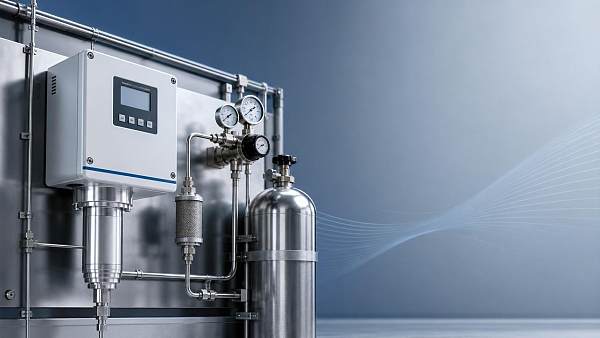
For many oxygen control systems, the sample handling arrangement determines whether the analyzer can achieve its intended performance. A well-designed sample path delivers a representative gas sample at stable pressure, stable flow, and suitable temperature, without introducing delay or contamination. A poorly designed one can make a good analyzer appear inaccurate.
Operators should pay close attention to sample extraction point, line length, dead volume, filtration, moisture management, and materials compatibility. If the sample point is not representative of the process, even a perfectly calibrated instrument cannot provide a useful oxygen value. Likewise, if the line is too long or oversized, the response time may become too slow for effective control.
Leak prevention is equally critical, especially in low-oxygen applications. Even a small air ingress can significantly raise the apparent oxygen concentration. This is a common problem in inert gas blanketing and protective atmosphere systems. When unexpected oxygen readings appear, checking for leaks in fittings, seals, pumps, and tubing should be one of the first troubleshooting steps.
Flow control deserves the same level of attention. Excessive flow can disturb the measurement chamber, while insufficient flow can delay response or produce unstable readings. Operators should verify that the actual sample flow matches the analyzer requirement, not just the design assumption written in a manual or commissioning sheet.
Calibration Practices That Preserve Real-World Accuracy
Calibration is one of the clearest areas where operators can actively protect paramagnetic monitoring accuracy. Good calibration does not simply mean following a schedule. It means using the correct gases, applying them under stable conditions, allowing enough time for the reading to settle, and recording results so drift can be recognized early.
Zero and span checks should reflect the application. If the process runs at low oxygen concentrations, the calibration approach should support reliable performance in that region, not only at ambient oxygen levels. Using poor-quality reference gas, mismatched pressure conditions, or contaminated regulators can introduce hidden errors that remain unnoticed until process performance suffers.
It is also helpful to distinguish between calibration frequency and calibration quality. Increasing the number of checks does not solve a bad sample system or unstable operating conditions. In fact, repeated adjustment without root-cause analysis can mask developing problems. If the analyzer needs frequent correction, users should investigate whether contamination, drift, leaks, or environmental stress is driving the change.
Many facilities benefit from trend-based maintenance records. When calibration data is logged over time, operators can see whether zero shifts, span shifts, or response time changes are developing gradually. That makes it easier to plan maintenance before the analyzer becomes unreliable enough to affect oxygen control decisions.
How Operators Can Recognize Inaccurate Readings Before They Cause Trouble
One of the most valuable operator skills is knowing when a number looks wrong. In many cases, inaccurate oxygen readings are not identified by the analyzer alone, but by comparison with process behavior. If a combustion system’s fuel efficiency changes without a matching oxygen trend, or if an inerted vessel shows rising oxygen with no known air ingress path, the reading deserves investigation.
Other warning signs include slow response to known process changes, unstable values under steady process conditions, frequent calibration shifts, differences between parallel instruments, and readings that return to normal after line purging or maintenance. These clues often indicate sample system issues rather than a failed sensor principle.
Operators should also use basic verification habits. Confirm that sample flow is correct, drains are clear, filters are clean, pressure is within range, and no condensation is visible where it should not be. Review alarm history and compare analyzer behavior with production events, maintenance work, or weather changes if the installation is exposed to ambient conditions.
Where process criticality is high, cross-checking with a secondary reference method can be useful during troubleshooting or periodic validation. This does not reduce the value of paramagnetic monitoring. Instead, it strengthens confidence by confirming that the installed system remains aligned with actual process oxygen levels.
Best Practices for Improving Paramagnetic Monitoring Accuracy in Oxygen Control
To get the best performance from paramagnetic monitoring, operators should focus on a few practical disciplines. First, keep the sample representative and clean. Second, maintain stable pressure and flow. Third, calibrate correctly with suitable gases and procedures. Fourth, monitor trends instead of reacting only when alarms occur. Fifth, treat the analyzer and sample conditioning system as one integrated measurement chain.
Routine inspection should include tubing condition, fitting tightness, filter status, moisture control devices, pumps where used, and analyzer diagnostics. In many plants, these checks can be built into standard operator rounds or preventive maintenance routines without major burden. The value comes from consistency rather than complexity.
Training also matters. When operators understand what the technology is sensitive to, they respond faster and make better adjustments. For example, a trained user is more likely to recognize that a sudden oxygen shift after maintenance may come from a leak or line disturbance, rather than assuming the process itself has changed.
Finally, application-specific setup is essential. The best configuration for combustion optimization may not be ideal for high-purity inerting or batch process control. Users should confirm that analyzer range, sample handling design, response expectations, and alarm strategy fit the actual operating purpose. Accuracy improves when the instrument is matched to the job instead of used as a generic oxygen meter.
When Paramagnetic Monitoring Is the Right Choice—and When Extra Caution Is Needed
Paramagnetic monitoring is often an excellent choice for continuous oxygen measurement because it combines strong oxygen selectivity with fast, stable performance. It is especially well suited to applications where real-time oxygen control supports safety, product consistency, or process efficiency. For many users, it offers a very good balance between performance and operational practicality.
However, extra care is needed in harsh environments with heavy particulates, corrosive components, high moisture load, or severe pressure fluctuation. In such cases, the technology may still perform well, but only if the supporting sample conditioning and maintenance approach are strong enough. The analyzer cannot compensate for every weakness in the installation.
Users should therefore evaluate the full operating environment, not just the analyzer specification sheet. A realistic question is not only “How accurate is paramagnetic monitoring?” but “How accurate will it remain in this specific process with our sample conditions, maintenance resources, and control requirements?” That is the question that leads to better decisions.
Conclusion
Paramagnetic monitoring can provide highly dependable oxygen measurement accuracy, and that is why it remains a trusted technology in oxygen control applications. For users and operators, the biggest takeaway is that real-world accuracy depends as much on sample handling, pressure stability, calibration practice, and maintenance discipline as on the analyzer itself.
If the system is properly installed, correctly calibrated, and routinely checked, paramagnetic monitoring can deliver the fast response and reliable oxygen data needed for stable control, safer operation, and better process performance. If problems appear, the first place to look is usually the total measurement chain rather than the sensing principle alone.
In practical terms, operators who understand these factors are in the best position to protect measurement quality. That knowledge helps turn oxygen readings from a simple display value into a dependable control tool that supports daily performance, long-term reliability, and confident decision-making.
Recommended for You
 FDA Updates IVD Import Guidance: CNAS Calibration Chain Required for China-Made DevicesFDA now requires CNAS calibration chain reports for China-made IVD analyzers—pH, ion & clinical chemistry devices entering via 510(k)/De Novo. Act now to avoid U.S. port rejections.
 EN 61000-6-4:2026 Enters Force: Stricter EMC Requirements for Industrial Field InstrumentsEN 61000-6-4:2026 enforces stricter EMC requirements for industrial field instruments—key for AI edge controllers, sensors & exporters. Act now to ensure CE-EMC compliance by Nov 2026.
 Global Methanol Electric Alliance Launches Cross-Border Energy Efficiency Recognition RoadmapGlobal Methanol Electric Alliance launches cross-border energy efficiency recognition roadmap—key for exporters, cal labs & methanol-instrument manufacturers.
 Red Sea Crisis Escalates: Air Freight Premiums for China–Middle East Industrial Instruments Hit 390%Red Sea Crisis hits industrial instruments: China–Middle East air freight premiums surge 390%. Act now to secure Q3 capacity, avoid delays & optimize LCL alternatives.
 IEC TC65 Mandates Cybersecurity Certification for Industrial Field Instruments from 2027IEC TC65 mandates cybersecurity certification for industrial field instruments by 2027 — pressure, flow & analytical devices must meet IEC 62443-4-2:2026 and display SL1–SL3 labels. Act now to ensure market access.
 SASO Cuts Energy Labeling Turnaround for Industrial Transmitters to 7 Working DaysSASO Energy Labeling now takes just 7 working days for industrial transmitters — faster market access, CNAS reports accepted. Act now!
 PTB Launches CalCloud 2.0 with Direct CNAS Lab IntegrationCalCloud 2.0 now integrates directly with CNAS labs—enabling automated VDA 5 & ISO/IEC 17025 dual-compliant calibration reports for automotive and industrial exporters. Boost compliance efficiency today!
 ASEAN's Green Clearance Corridor for CNAS Calibration Reports LaunchesASEAN's Green Clearance Corridor now verifies CNAS calibration reports via blockchain—cut customs clearance to <48h for flow meters, analyzers & more. Act now!
 Vietnam Mandates CNAS Calibration Certificates & Vietnamese Manuals for Industrial Meters from June 1, 2026CNAS calibration certificates & Vietnamese manuals now mandatory for industrial meters entering Vietnam from June 1, 2026—avoid customs delays and ensure seamless market access.
 U.S. BIS Tightens Export Controls on High-Precision Laser InterferometersU.S. BIS tightens export controls on high-precision laser interferometers—critical for semiconductor metrology & ISO/IEC 17025 calibration. Act now to ensure compliance.
 Paramagnetic Monitor Calibration Tips for Stable OutputParamagnetic monitor calibration tips for stable output: learn how to reduce drift, improve accuracy, cut downtime, and keep oxygen measurement reliable in demanding industrial applications.
 Paramagnetic Measurement in Low-Oxygen Process ControlParamagnetic measurement enables accurate low-oxygen process control with fast response and stable oxygen analysis. Learn how it improves safety, consistency, and system performance.
 Laser Detector Import Risks and Certification DelaysLaser detector import risks can cause costly certification delays, customs issues, and testing setbacks. Learn how to avoid compliance failures before ordering.
 Explosion Proof Detector Demand Under New Safety RulesExplosion proof detector demand is rising under new safety rules. Discover how to compare certified, reliable options that improve compliance, integration, and long-term site safety.
 Laboratory Detector Accuracy Standards You Should CheckLaboratory detector accuracy standards explained: check detection limits, repeatability, drift, and traceability to reduce risk, improve audit readiness, and choose with confidence.
 Custom Measurement Lead Times and Budget PlanningCustom measurement lead times and budgets explained for procurement teams. Learn key cost drivers, planning steps, and supplier tips to reduce delays and buy with confidence.
 Laser Measurement for Leak Detection: Common PitfallsLaser measurement for leak detection can fail due to setup, airflow, and data interpretation errors. Learn the common pitfalls and proven fixes for more accurate, reliable results.
 How to Evaluate a High Accuracy Detector in the FieldHigh accuracy detector evaluation starts with real field performance. Learn how to compare stability, response time, and reliability to choose the right detector with confidence.
 Electrochemical Monitor Lifespan and Replacement CostsElectrochemical monitor lifespan and replacement costs explained for buyers. Learn how sensor life, maintenance, and total ownership cost affect safer, smarter purchasing decisions.
 Thermal Analysis Market Direction in Process IndustriesThermal analysis market direction in process industries: discover trends, applications, and investment insights that improve quality control, reduce risk, and support smarter industrial decisions.
 Monitoring Shelter Design Priorities for Outdoor SitesMonitoring shelter design starts with protection, climate control, and power reliability. Discover how to choose the right outdoor solution for stable data, safer maintenance, and lower lifecycle risk.
 Fixed Measurement Planning for Multi-Point InstallationsFixed measurement planning is essential for multi-point installations. Learn how to improve accuracy, reliability, compliance, and maintenance efficiency across complex industrial systems.
 Fixed Analysis Systems for Stable Long-Term MonitoringFixed analysis systems enable stable long-term monitoring, reliable data, and better process control. Discover how they improve safety, compliance, and operational efficiency.
 Thermal Gas Applications Expanding in Clean IndustryThermal gas applications are reshaping clean industry with smarter flow measurement, emissions control, and energy optimization. Discover where they cut risk, boost efficiency, and support automation.
 Monitoring Detector Export Rules to Watch in 2026Monitoring detector export rules are changing fast in 2026. Learn the key compliance risks, supplier checks, and trade signals to protect margins and make smarter sourcing decisions.
 Control Detector Setup Mistakes That Affect ReliabilityControl detector setup mistakes can quietly reduce accuracy and uptime. Learn the most common installation, wiring, and calibration errors—and how to avoid them for reliable performance.
 What Defines a High Accuracy Monitor TodayHigh accuracy monitor selection starts with real-world performance. Learn the key accuracy factors, buyer checklist, and how to choose a reliable monitor for industrial control.
 Infrared Monitor Demand in Industrial Safety UpgradesInfrared monitor demand is rising as industrial safety upgrades accelerate. Discover where buyers need it most, how channel partners can sell smarter, and which applications drive long-term growth.
 Thermal Conductivity Monitor Limits in Mixed Gas StreamsThermal conductivity monitor limits in mixed gas streams explained—learn where accuracy drops, what buyers should compare, and how to choose the right analyzer with confidence.
 Laser Monitor vs Infrared Monitor for Fast DetectionLaser monitor vs infrared monitor for fast detection: discover which delivers better precision, response speed, and reliability for industrial monitoring and smarter sensor selection.
 Thermal Gas Analyzer Price Shifts Across Global MarketsThermal gas analyzer price shifts are reshaping global budgets. Learn what drives costs, regional differences, and how buyers can reduce risk and improve long-term value.
 Custom Analysis Options for Complex Gas ApplicationsCustom analysis helps solve complex gas applications with better accuracy, compliance, and reliability. Discover practical selection insights that reduce risk and improve system performance.





Search Categories
Search Categories
Latest Article
- FDA Updates IVD Import Guidance: CNAS Calibration Chain Required for China-Made DevicesFDA now requires CNAS calibration chain reports for China-made IVD analyzers—pH, ion & clinical chemistry devices entering via 510(k)/De Novo. Act now to avoid U.S. port rejections.Posted by:
- EN 61000-6-4:2026 Enters Force: Stricter EMC Requirements for Industrial Field InstrumentsEN 61000-6-4:2026 enforces stricter EMC requirements for industrial field instruments—key for AI edge controllers, sensors & exporters. Act now to ensure CE-EMC compliance by Nov 2026.Posted by:
- Global Methanol Electric Alliance Launches Cross-Border Energy Efficiency Recognition RoadmapGlobal Methanol Electric Alliance launches cross-border energy efficiency recognition roadmap—key for exporters, cal labs & methanol-instrument manufacturers.Posted by:
Please give us a message
