Multi gas analyzers: When simultaneous detection creates calibration trade-offs


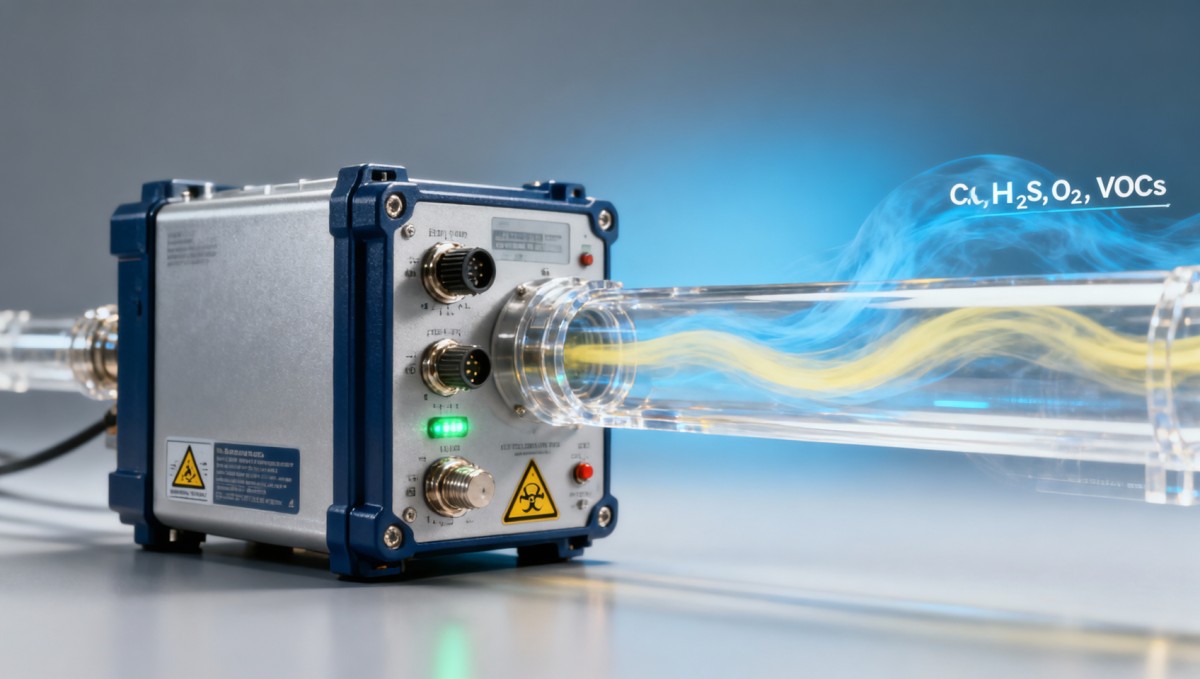
Multi gas analyzers deliver critical simultaneous detection of gases like CO, H₂S, O₂, and VOCs—yet this versatility introduces calibration trade-offs across percent range analyzer, ppm gas analyzer, ppb gas analyzer, and trace gas analyzer configurations. Whether deploying a dual gas analyzer for safety compliance or a corrosive gas analyzer in harsh process environments, users face real-world compromises in accuracy, span stability, and cross-sensitivity management. This article unpacks how low range analyzer sensitivity clashes with high temperature analyzer durability, why toxic gas analyzer certification impacts response time, and what it means for decision-makers—from project managers and safety officers to financial approvers and distributors—when selecting a robust, future-proof solution.
Why Simultaneous Detection Forces Calibration Compromises
Simultaneous multi-gas analysis isn’t just about adding sensors—it’s an engineering balancing act. Each gas detection principle (electrochemical, NDIR, PID, catalytic bead) operates optimally within distinct concentration ranges: O₂ sensors target 0–25% vol, while H₂S electrochemical cells resolve down to 0.1 ppm, and PID-based VOC detection extends to sub-ppb levels. When integrated into one platform, shared electronics, power regulation, and thermal management create unavoidable interference.
Calibration drift accelerates when a single analyzer must satisfy divergent requirements: a ±2% full-scale error acceptable for %O₂ measurement becomes unacceptable at 10 ppm H₂S (where ±0.2 ppm is industry-standard). Field recalibration intervals shrink from quarterly (for stable %O₂) to monthly (for reactive H₂S), increasing total cost of ownership by up to 35% over 3 years.
Thermal gradients further compound uncertainty. A typical industrial enclosure sees 15–40°C ambient swings; without active temperature compensation, NDIR CO₂ readings shift ±0.05% per °C, while electrochemical H₂S response drops 0.8% per °C above 30°C. This forces designers to prioritize either thermal ruggedness or low-end sensitivity—not both.
How Application Context Dictates Analyzer Architecture
Not all multi-gas use cases demand equal performance across all channels. Safety-critical confined space entry (OSHA 1910.146) requires rapid O₂ depletion and H₂S/CO alarms within 15 seconds—but tolerates ±5% span error on CH₄. In contrast, semiconductor fab ambient monitoring mandates <1 ppb NH₃ resolution with <2% cross-sensitivity to H₂O vapor.
The table below compares calibration priorities across four deployment scenarios:
This divergence explains why “one-size-fits-all” multi-gas platforms often underperform: they optimize for median use cases, not your specific risk profile. A wastewater plant may overpay for ppb-level VOC resolution while neglecting H₂S sensor longevity in high-humidity, sulfide-rich air.
Procurement Checklist: 5 Non-Negotiable Evaluation Criteria
Technical evaluators and procurement teams must move beyond spec-sheet comparisons. These five criteria directly impact TCO, compliance risk, and operational continuity:
- Independent channel calibration capability: Verify whether zero/span adjustments can be performed per gas channel without affecting others—critical for labs managing ISO/IEC 17025 traceability.
- Cross-sensitivity validation data: Request manufacturer-provided interference tables (e.g., % signal change in H₂S channel when exposed to 50 ppm SO₂ or 1000 ppm CO₂) tested per IEC 60079-29-1 Annex D.
- Span stability under thermal cycling: Confirm minimum guaranteed stability across -20°C to +50°C operating range—not just at 23°C lab conditions.
- Serviceable sensor lifetime: Electrochemical cells degrade faster in multi-gas housings due to shared humidity control; require documented field life ≥24 months at 80% RH average.
- Firmware upgrade path: Ensure calibration algorithms can be updated remotely to accommodate new regulatory thresholds (e.g., EPA Method 21 revisions) without hardware replacement.
Neglecting any of these increases re-calibration labor by 2–4 hours per unit annually—and raises non-compliance risk during EHS audits by 3×.
Future-Proofing Your Investment: Modular vs. Integrated Architectures
Integrated multi-gas analyzers offer compactness but lock users into fixed configurations. Modular systems—where gas-specific sensor modules plug into a common signal-processing base—enable staged upgrades: add a Cl₂ module for new chemical handling lines without replacing the entire unit.
Modular designs extend usable life by 3–5 years versus monolithic units, reduce spare-part inventory by 40%, and allow calibration traceability per module (not per chassis). Leading instrumentation providers now support hot-swappable modules compliant with IEC 61000-6-2/6-4 for EMC resilience in industrial settings.
For distributors and system integrators, modular platforms simplify configuration quoting: pre-certified module combinations (e.g., “H₂S + O₂ + LEL for oil & gas”) shorten sales cycles by 2–3 weeks versus custom-integrated solutions.
Why Partner With a Full-Cycle Instrumentation Provider
Selecting a multi-gas analyzer isn’t just about hardware—it’s about sustaining accuracy across its lifecycle. Our instrumentation team delivers calibrated, application-validated solutions backed by:
- On-site calibration verification using NIST-traceable gas standards (within 7–10 business days of order)
- Custom firmware development for unique alarm logic (e.g., time-weighted average + ceiling limit for VOCs)
- Extended service contracts covering sensor replacement, firmware updates, and audit documentation (ISO 9001/14001 aligned)
- Distributor training programs covering calibration best practices, interference mitigation, and regulatory reporting workflows
Contact us to discuss your specific calibration trade-off challenge—whether you need parameter confirmation for hazardous area classification, customized span validation for EPA reporting, or OEM module integration support. We’ll provide a no-cost technical assessment within 48 hours.
Recommended for You
 Monitoring Sensor Prices in 2026: What Is Changing and WhyMonitoring sensor prices in 2026: compare portable sensor, fixed sensor, oxygen detector, infrared detector, electrochemical detector and paramagnetic detector options to choose a high accuracy sensor with better lifecycle value.
 Monitoring Sensor Data Looks Stable Until These Errors Show UpMonitoring sensor errors can hide behind stable data. Compare paramagnetic detector, electrochemical detector, infrared detector, and oxygen detector options for safer, high accuracy sensor selection.
 What Makes a Control Sensor Reliable in Harsh Environments?Control sensor reliability in harsh environments starts with the right oxygen detector, infrared detector, electrochemical detector, or paramagnetic detector for accurate, dependable monitoring.
 Control Sensor Delays Can Undermine Process StabilityControl sensor delays can destabilize operations. Compare paramagnetic detector, electrochemical detector, infrared detector, and oxygen detector options to find a high accuracy sensor for fixed, portable, laboratory, and monitoring sensor needs.
 Laboratory Sensor Repeatability Problems Often Start With SamplingLaboratory sensor repeatability issues often begin with sampling. Compare paramagnetic detector, electrochemical detector, infrared detector, and oxygen detector solutions to improve accuracy.
 Laboratory Sensor Selection Gets Harder With Lower Detection LimitsLaboratory sensor selection gets harder at lower limits. Compare paramagnetic detector, electrochemical detector, infrared detector, oxygen detector, fixed and portable sensor options for high accuracy monitoring and control.
 Portable Sensor Battery Loss Can Distort Long Shift MonitoringPortable sensor battery loss can distort long-shift monitoring. Compare paramagnetic detector, electrochemical detector, infrared detector and oxygen detector options for high accuracy sensor performance.
 Portable Sensor Accuracy in the Field Is Not Always What It SeemsPortable sensor accuracy can differ sharply from lab results. Compare paramagnetic detector, electrochemical detector, infrared detector, and oxygen detector performance to choose a high accuracy sensor for real field use.
 Fixed Sensor vs Portable Checks: Where Results Often DivergeExplore why fixed sensor and portable sensor readings diverge in oxygen detector systems using paramagnetic detector, electrochemical detector, and infrared detector technology.
 Why a High Accuracy Sensor May Still Miss Critical ChangesHigh accuracy sensor limits explained: compare paramagnetic detector, electrochemical detector, infrared detector and oxygen detector options to choose the right fixed, portable, laboratory or monitoring sensor.
 High Accuracy Sensor Claims: Which Specs Actually Prove It?High accuracy sensor selection starts with the right specs. Compare paramagnetic detector, electrochemical detector, infrared detector, and oxygen detector options for fixed, portable, laboratory, control, and monitoring sensor use.
 What Shortens the Service Life of an Oxygen Detector?Oxygen detector service life can drop fast due to heat, moisture, contamination, and poor calibration. Compare paramagnetic detector, electrochemical detector, and infrared detector solutions now.
 Oxygen Detector False Alarms Often Start With Sensor PlacementOxygen detector false alarms often start with sensor placement. Compare paramagnetic detector, electrochemical detector, and infrared detector options to improve accuracy and safety.
 Infrared Detector Response Time Can Change Your ReadingInfrared detector response time shapes alarm accuracy and stable readings. Compare paramagnetic detector, electrochemical detector, and oxygen detector options for every high accuracy sensor need.
 Infrared Detector Limits That Matter in Mixed Gas ApplicationsInfrared detector limits in mixed gas applications: compare paramagnetic detector, electrochemical detector, and oxygen detector options to choose a high accuracy sensor for portable, fixed, laboratory, control, and monitoring sensor use.
 Why Electrochemical Detector Calibration Fails More Often Than ExpectedElectrochemical detector calibration fails more often than expected—learn how a paramagnetic detector, infrared detector, or oxygen detector comparison helps you choose a high accuracy sensor for fixed, portable, laboratory, control, and monitoring sensor applications.
 Electrochemical Detector Lifespan Drops Fast Under These ConditionsElectrochemical detector lifespan can drop fast in heat, humidity, and corrosive gas. Compare paramagnetic detector, infrared detector, and oxygen detector options to choose a high accuracy sensor with lower lifecycle risk.
 Paramagnetic Detector Drift: What Usually Causes It?Paramagnetic detector drift explained: learn what causes oxygen detector errors, how it compares with electrochemical detector and infrared detector options, and how to keep a high accuracy sensor stable.
 Portable Detector Trends to WatchPortable detector trends: explore explosion proof monitor, laser monitor, infrared monitor, oxygen monitor, and high accuracy detector solutions that integrate with fixed detector systems.
 Fixed Detector Setup Mistakes to AvoidFixed detector setup mistakes can impact safety and costs. Learn how explosion proof monitor, oxygen monitor, infrared monitor, and portable detector users avoid false readings.
 High Accuracy Detector Selection TipsHigh accuracy detector selection tips for fixed detector and portable detector needs, covering explosion proof monitor, oxygen monitor, infrared monitor, and more for safer, smarter buying.
 Oxygen Monitor Export Trends in 2026Oxygen monitor export trends in 2026: explore explosion proof monitor, laser monitor, portable detector, fixed detector, and high accuracy detector demand shaping smarter buying decisions.
 Infrared Monitor Market Outlook 2026Infrared monitor market outlook 2026: compare explosion proof monitor, laser monitor, oxygen monitor, fixed detector and portable detector solutions for safer, smarter industrial projects.
 Where Electrochemical Monitors Work BestElectrochemical monitor guide: compare explosion proof monitor, infrared monitor, laser monitor, oxygen monitor, fixed detector, and portable detector for safer, smarter gas detection choices.
 Paramagnetic Monitor Import Outlook 2026Paramagnetic monitor import outlook 2026: compare explosion proof monitor, laser monitor, infrared monitor, oxygen monitor, and high accuracy detector solutions to source the right fixed or portable detector.
 Thermal Conductivity Monitor Price ShiftThermal conductivity monitor price trends explained with explosion proof monitor, laser monitor, oxygen monitor, and fixed or portable detector options for smarter, safer buying.
 How Laser Monitor Demand Is ChangingLaser monitor demand is changing as buyers compare explosion proof monitor, infrared, electrochemical, and oxygen monitor options for safer, high accuracy detector solutions.
 Oxygen Measurement System Export Demand in 2026Oxygen measurement system demand in 2026 is rising across industrial control equipment, gas quality measurement, emission control system, and process monitoring system markets. Explore key trends and smarter sourcing insights.
 Industrial Control System Trends to Watch in 2026Industrial control system trends for 2026: explore industrial control equipment, process monitoring system, gas quality measurement, oxygen measurement system, and emission control system upgrades.
 How to Improve Process Monitoring System ResultsImprove process monitoring system results with industrial control equipment, gas quality measurement, and emission measurement system strategies for smarter industrial control system performance.
 Emission Control System Import Risks in 2026Emission control system import risks in 2026: learn how industrial control equipment, gas quality measurement, and process monitoring system buyers can avoid delays, compliance issues, and costly mistakes.
 Gas Quality Control for Safer Plant OperationsGas quality control improves safer plant operations with industrial control equipment, gas quality measurement, and an emission measurement system—boost efficiency, compliance, and process monitoring performance.

Search Categories
Search Categories
Latest Article
- Monitoring Sensor Prices in 2026: What Is Changing and WhyMonitoring sensor prices in 2026: compare portable sensor, fixed sensor, oxygen detector, infrared detector, electrochemical detector and paramagnetic detector options to choose a high accuracy sensor with better lifecycle value.Posted by:
- Monitoring Sensor Data Looks Stable Until These Errors Show UpMonitoring sensor errors can hide behind stable data. Compare paramagnetic detector, electrochemical detector, infrared detector, and oxygen detector options for safer, high accuracy sensor selection.Posted by:
- What Makes a Control Sensor Reliable in Harsh Environments?Control sensor reliability in harsh environments starts with the right oxygen detector, infrared detector, electrochemical detector, or paramagnetic detector for accurate, dependable monitoring.Posted by:
Please give us a message
