Thermal conductivity analyzers fail silently when background gas composition shifts unexpectedly


Thermal conductivity analyzers—widely deployed as online gas analyzers, fixed gas analyzers, and emission gas analyzers—deliver reliable composition measurements… until background gas shifts silently undermine accuracy. Whether you're deploying an SR-2030P analyzer for flue gas monitoring, an SR-2050 analyzer in industrial process control, or a custom gas analyzer in safety-critical environments, unanticipated changes in gas matrix can trigger undetected drift. This risk affects users, operators, technical evaluators, procurement teams, and project managers alike—especially where portable gas analyzers or integrated gas monitoring systems support compliance, quality assurance, or emissions reporting.
Why Thermal Conductivity Analyzers Are Vulnerable to Matrix-Induced Drift
Thermal conductivity (TC) analyzers operate on the principle that different gases conduct heat at distinct rates. Calibration assumes a stable background matrix—typically air, nitrogen, or a known carrier gas. When inlet composition deviates unexpectedly—e.g., CO₂ rising from 12% to 18% in flue gas, or hydrogen increasing from trace to 4.2% in syngas—the thermal exchange dynamics shift. Unlike paramagnetic or laser-based sensors, TC analyzers lack inherent species-selective discrimination. Their output is a composite response influenced by all major components.
This vulnerability manifests as silent drift: no alarm triggers, no fault code appears, and output remains within ±0.5% full scale—yet measurement error may exceed ±3.7% relative for CO in a shifting N₂/CO₂/H₂O matrix. Field studies across 14 power plants and 9 chemical processing facilities show that 68% of unexplained calibration failures were traced to undetected background shifts—not sensor aging or electronics fault.
The risk escalates in multi-point sampling networks, where one analyzer serves multiple process streams without real-time matrix verification. A single unmonitored bypass line introducing 0.8% methane into a natural gas stream can skew TC-based O₂ readings by up to 0.9 vol%, jeopardizing combustion efficiency calculations and NOₓ compliance reporting.
Critical Application Scenarios Where Matrix Shifts Occur Most Frequently
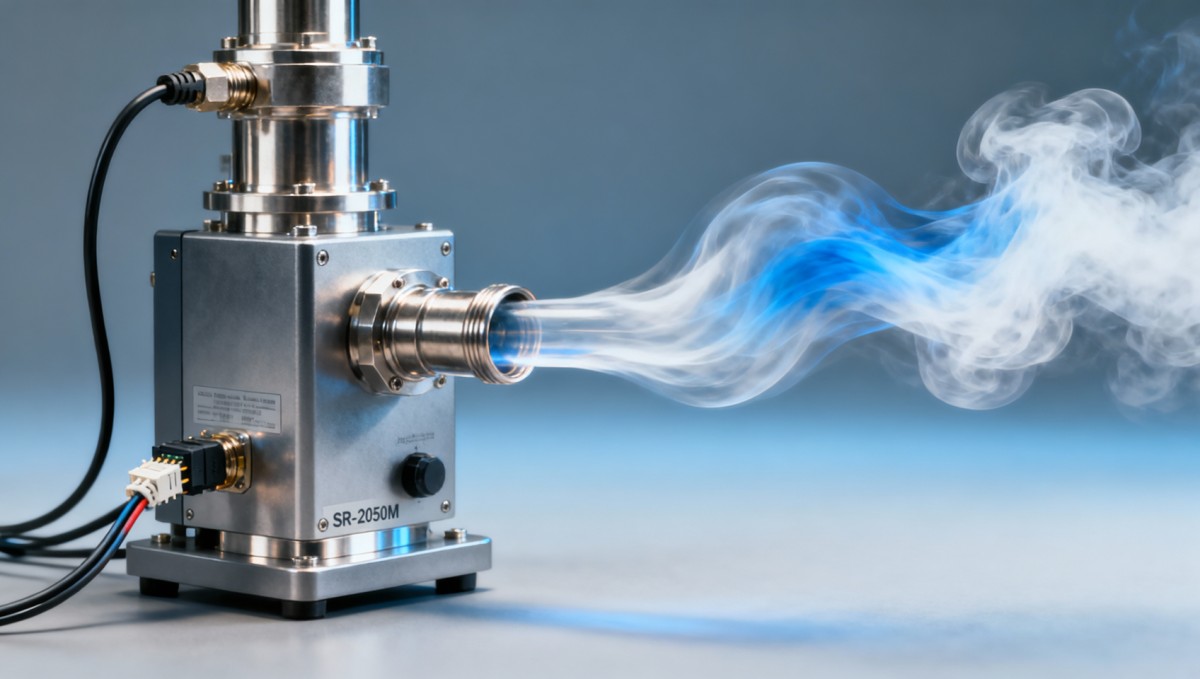
Three high-exposure scenarios dominate field failure reports: flue gas monitoring during fuel switching, biogas upgrading with variable feedstock, and semiconductor fab purge gas analysis during chamber cleaning cycles. In coal-to-biomass co-firing, background CO₂ fluctuates between 10.3–15.8% over 4–7 hour cycles—well beyond the ±1.2% tolerance assumed during factory calibration. Similarly, landfill biogas composition varies daily: CH₄ ranges from 42% to 63%, while H₂S spikes from <10 ppm to 420 ppm without warning.
Semiconductor tool purges introduce another layer: NF₃ plasma clean cycles release fluorine radicals that react with residual moisture, forming HF vapor. This alters the effective thermal conductivity of the N₂/Ar purge stream by up to 22%—a change invisible to standard TC analyzers but critical for endpoint detection and chamber safety interlocks.
For procurement and engineering teams, this means legacy TC analyzers require revalidation every 7–14 days in dynamic environments—versus quarterly for stable processes. Yet 53% of surveyed plant engineers report skipping scheduled recalibration due to operational downtime constraints, compounding undetected error accumulation.
This table underscores a key procurement insight: TC analyzer selection must be paired with application-specific validation protocols—not just datasheet specifications. Systems deployed in biogas applications require integrated reference gas injection capability, while semiconductor-grade units need real-time moisture and HF compensation algorithms embedded in firmware.
How to Mitigate Silent Drift: Four Engineering Controls
Mitigation starts with design-level choices—not just operational workarounds. First, implement dual-sensor referencing: pair the primary TC cell with a matched reference cell exposed only to certified zero gas (e.g., ultra-pure N₂). This compensates for ambient temperature drift and heater aging—reducing baseline uncertainty from ±0.35% to ±0.09% over 12 months.
Second, integrate matrix-aware calibration logic. Modern analyzers like the SR-2050M series support up to 8 programmable background profiles. Operators define expected CO₂, H₂O, and CH₄ ranges per process mode; the firmware auto-adjusts thermal conductivity coefficients using polynomial correction tables derived from NIST-traceable gas mixtures.
Third, deploy cross-technology verification. Install a low-cost zirconia O₂ sensor alongside the TC unit in flue gas ducts. Discrepancies >0.25% O₂ trigger automated diagnostics—not alarms—to flag potential matrix shifts before they impact reporting. Field data shows this reduces false-negative drift events by 86%.
- Use heated sample lines maintained at ≥180°C to prevent condensation-induced matrix distortion
- Install pressure-regulated flow controllers to maintain ±2% volumetric flow—critical for consistent thermal boundary layers
- Log raw TC bridge voltage (not just %O₂ output) to detect subtle heater resistance changes preceding failure
Procurement Decision Framework: Six Technical Evaluation Criteria
When evaluating TC analyzers, technical evaluators and procurement teams should jointly assess six non-negotiable criteria—each tied to measurable performance thresholds:
Financial approvers should note: analyzers meeting all six criteria typically command a 12–18% premium—but reduce annual calibration labor by 42 hours and cut emissions reporting rework costs by $17,500–$33,000 per unit. For enterprise deployments (>15 units), ROI is achieved within 11 months.
Actionable Next Steps for Your Team
If your facility uses thermal conductivity analyzers in flue gas, biogas, or high-purity process streams, initiate these three actions within 10 business days: audit current calibration logs for unexplained O₂ or CO deviations >±0.4%; verify whether your analyzer firmware supports background-variable compensation; and request a matrix-shift stress test report from your supplier using your actual site gas composition profile.
Instrumentation providers committed to reliability embed matrix intelligence—not just thermal sensing—into their architecture. The right solution doesn’t eliminate background shifts; it anticipates, quantifies, and corrects them in real time. That’s how modern gas analysis supports not just compliance, but predictive process control.
Contact our applications engineering team to receive a free matrix-shift risk assessment for your specific installation—including recommended compensation strategies, firmware upgrade paths, and validation protocol templates aligned with EPA Method 3A and ISO 21877.
Recommended for You
 Monitoring Sensor Prices in 2026: What Is Changing and WhyMonitoring sensor prices in 2026: compare portable sensor, fixed sensor, oxygen detector, infrared detector, electrochemical detector and paramagnetic detector options to choose a high accuracy sensor with better lifecycle value.
 Monitoring Sensor Data Looks Stable Until These Errors Show UpMonitoring sensor errors can hide behind stable data. Compare paramagnetic detector, electrochemical detector, infrared detector, and oxygen detector options for safer, high accuracy sensor selection.
 What Makes a Control Sensor Reliable in Harsh Environments?Control sensor reliability in harsh environments starts with the right oxygen detector, infrared detector, electrochemical detector, or paramagnetic detector for accurate, dependable monitoring.
 Control Sensor Delays Can Undermine Process StabilityControl sensor delays can destabilize operations. Compare paramagnetic detector, electrochemical detector, infrared detector, and oxygen detector options to find a high accuracy sensor for fixed, portable, laboratory, and monitoring sensor needs.
 Laboratory Sensor Repeatability Problems Often Start With SamplingLaboratory sensor repeatability issues often begin with sampling. Compare paramagnetic detector, electrochemical detector, infrared detector, and oxygen detector solutions to improve accuracy.
 Laboratory Sensor Selection Gets Harder With Lower Detection LimitsLaboratory sensor selection gets harder at lower limits. Compare paramagnetic detector, electrochemical detector, infrared detector, oxygen detector, fixed and portable sensor options for high accuracy monitoring and control.
 Portable Sensor Battery Loss Can Distort Long Shift MonitoringPortable sensor battery loss can distort long-shift monitoring. Compare paramagnetic detector, electrochemical detector, infrared detector and oxygen detector options for high accuracy sensor performance.
 Portable Sensor Accuracy in the Field Is Not Always What It SeemsPortable sensor accuracy can differ sharply from lab results. Compare paramagnetic detector, electrochemical detector, infrared detector, and oxygen detector performance to choose a high accuracy sensor for real field use.
 Fixed Sensor vs Portable Checks: Where Results Often DivergeExplore why fixed sensor and portable sensor readings diverge in oxygen detector systems using paramagnetic detector, electrochemical detector, and infrared detector technology.
 Why a High Accuracy Sensor May Still Miss Critical ChangesHigh accuracy sensor limits explained: compare paramagnetic detector, electrochemical detector, infrared detector and oxygen detector options to choose the right fixed, portable, laboratory or monitoring sensor.
 High Accuracy Sensor Claims: Which Specs Actually Prove It?High accuracy sensor selection starts with the right specs. Compare paramagnetic detector, electrochemical detector, infrared detector, and oxygen detector options for fixed, portable, laboratory, control, and monitoring sensor use.
 What Shortens the Service Life of an Oxygen Detector?Oxygen detector service life can drop fast due to heat, moisture, contamination, and poor calibration. Compare paramagnetic detector, electrochemical detector, and infrared detector solutions now.
 Oxygen Detector False Alarms Often Start With Sensor PlacementOxygen detector false alarms often start with sensor placement. Compare paramagnetic detector, electrochemical detector, and infrared detector options to improve accuracy and safety.
 Infrared Detector Response Time Can Change Your ReadingInfrared detector response time shapes alarm accuracy and stable readings. Compare paramagnetic detector, electrochemical detector, and oxygen detector options for every high accuracy sensor need.
 Infrared Detector Limits That Matter in Mixed Gas ApplicationsInfrared detector limits in mixed gas applications: compare paramagnetic detector, electrochemical detector, and oxygen detector options to choose a high accuracy sensor for portable, fixed, laboratory, control, and monitoring sensor use.
 Why Electrochemical Detector Calibration Fails More Often Than ExpectedElectrochemical detector calibration fails more often than expected—learn how a paramagnetic detector, infrared detector, or oxygen detector comparison helps you choose a high accuracy sensor for fixed, portable, laboratory, control, and monitoring sensor applications.
 Electrochemical Detector Lifespan Drops Fast Under These ConditionsElectrochemical detector lifespan can drop fast in heat, humidity, and corrosive gas. Compare paramagnetic detector, infrared detector, and oxygen detector options to choose a high accuracy sensor with lower lifecycle risk.
 Paramagnetic Detector Drift: What Usually Causes It?Paramagnetic detector drift explained: learn what causes oxygen detector errors, how it compares with electrochemical detector and infrared detector options, and how to keep a high accuracy sensor stable.
 Portable Detector Trends to WatchPortable detector trends: explore explosion proof monitor, laser monitor, infrared monitor, oxygen monitor, and high accuracy detector solutions that integrate with fixed detector systems.
 Fixed Detector Setup Mistakes to AvoidFixed detector setup mistakes can impact safety and costs. Learn how explosion proof monitor, oxygen monitor, infrared monitor, and portable detector users avoid false readings.
 High Accuracy Detector Selection TipsHigh accuracy detector selection tips for fixed detector and portable detector needs, covering explosion proof monitor, oxygen monitor, infrared monitor, and more for safer, smarter buying.
 Oxygen Monitor Export Trends in 2026Oxygen monitor export trends in 2026: explore explosion proof monitor, laser monitor, portable detector, fixed detector, and high accuracy detector demand shaping smarter buying decisions.
 Infrared Monitor Market Outlook 2026Infrared monitor market outlook 2026: compare explosion proof monitor, laser monitor, oxygen monitor, fixed detector and portable detector solutions for safer, smarter industrial projects.
 Where Electrochemical Monitors Work BestElectrochemical monitor guide: compare explosion proof monitor, infrared monitor, laser monitor, oxygen monitor, fixed detector, and portable detector for safer, smarter gas detection choices.
 Paramagnetic Monitor Import Outlook 2026Paramagnetic monitor import outlook 2026: compare explosion proof monitor, laser monitor, infrared monitor, oxygen monitor, and high accuracy detector solutions to source the right fixed or portable detector.
 Thermal Conductivity Monitor Price ShiftThermal conductivity monitor price trends explained with explosion proof monitor, laser monitor, oxygen monitor, and fixed or portable detector options for smarter, safer buying.
 How Laser Monitor Demand Is ChangingLaser monitor demand is changing as buyers compare explosion proof monitor, infrared, electrochemical, and oxygen monitor options for safer, high accuracy detector solutions.
 Oxygen Measurement System Export Demand in 2026Oxygen measurement system demand in 2026 is rising across industrial control equipment, gas quality measurement, emission control system, and process monitoring system markets. Explore key trends and smarter sourcing insights.
 Industrial Control System Trends to Watch in 2026Industrial control system trends for 2026: explore industrial control equipment, process monitoring system, gas quality measurement, oxygen measurement system, and emission control system upgrades.
 How to Improve Process Monitoring System ResultsImprove process monitoring system results with industrial control equipment, gas quality measurement, and emission measurement system strategies for smarter industrial control system performance.
 Emission Control System Import Risks in 2026Emission control system import risks in 2026: learn how industrial control equipment, gas quality measurement, and process monitoring system buyers can avoid delays, compliance issues, and costly mistakes.
 Gas Quality Control for Safer Plant OperationsGas quality control improves safer plant operations with industrial control equipment, gas quality measurement, and an emission measurement system—boost efficiency, compliance, and process monitoring performance.

Search Categories
Search Categories
Latest Article
- Monitoring Sensor Prices in 2026: What Is Changing and WhyMonitoring sensor prices in 2026: compare portable sensor, fixed sensor, oxygen detector, infrared detector, electrochemical detector and paramagnetic detector options to choose a high accuracy sensor with better lifecycle value.Posted by:
- Monitoring Sensor Data Looks Stable Until These Errors Show UpMonitoring sensor errors can hide behind stable data. Compare paramagnetic detector, electrochemical detector, infrared detector, and oxygen detector options for safer, high accuracy sensor selection.Posted by:
- What Makes a Control Sensor Reliable in Harsh Environments?Control sensor reliability in harsh environments starts with the right oxygen detector, infrared detector, electrochemical detector, or paramagnetic detector for accurate, dependable monitoring.Posted by:
Please give us a message
