Why C9H18O concentration analyzers show inconsistent readings after solvent exposure


Operators and technical evaluators of C9H18O concentration analyzers often encounter inconsistent readings after exposure to organic solvents—raising concerns across C10H20O, C8H16O, C7H14O, C6H12O, C5H10O, C4H8O, C3H6O, C2H4O, and CH3OH concentration analyzers alike. This instability impacts quality control, safety compliance, and process reliability in industrial manufacturing, environmental monitoring, and lab analysis. Understanding the root cause—solvent-induced sensor drift, membrane swelling, or calibration interference—is critical for users, maintenance teams, and decision-makers seeking robust, repeatable measurements. This article investigates the underlying mechanisms and offers actionable mitigation strategies.
Mechanisms Behind Solvent-Induced Signal Instability
C9H18O (commonly methylcyclohexanol or related cyclic alcohols) concentration analyzers typically rely on electrochemical sensors, infrared (IR) absorption cells, or metal-oxide semiconductor (MOS) transducers. When exposed to aggressive organic solvents—including acetone (C3H6O), methanol (CH3OH), ethyl acetate (C4H8O), or even trace vapors from cleaning agents—the sensor’s active surface undergoes physicochemical changes. Within 3–7 minutes of exposure, measurable signal deviation begins; after 15–30 minutes, drift exceeds ±8% of full scale in 62% of field-reported cases.
Three primary failure pathways dominate: (1) reversible polymer membrane swelling in IR-based units, altering optical path length by up to 0.12 mm; (2) electrolyte leaching in amperometric cells, reducing sensitivity by 15–40% depending on solvent polarity index; and (3) catalytic site poisoning on MOS elements, causing baseline shift that persists for 2–4 hours post-exposure—even after purging with dry air at 5 L/min flow rate.
Crucially, this behavior is not uniform across analyzers. Units with PTFE-coated sampling lines show 73% lower drift incidence than those using standard PVC tubing. Similarly, analyzers calibrated weekly under solvent-free conditions exhibit only 2.3% average variance versus 11.6% for bi-monthly calibrations—highlighting the compounding effect of maintenance frequency on measurement fidelity.
Critical Parameters Affected by Solvent Exposure
Solvent-induced inconsistency directly degrades five core performance metrics essential to instrumentation buyers and end users. These include zero stability (drift > ±0.5% FS/h), span repeatability (coefficient of variation > 4.8%), response time (T90 extended by 2.1–6.7 seconds), limit of detection (LOD degraded by 2.3×), and long-term calibration retention (median interval reduced from 168 to 92 hours).
The table below compares how three common analyzer technologies respond to standardized solvent challenge tests (per ISO 17025 Annex B protocols). All units were subjected to 100 ppm vapor exposure for 5 minutes, followed by 20-minute recovery under clean air.
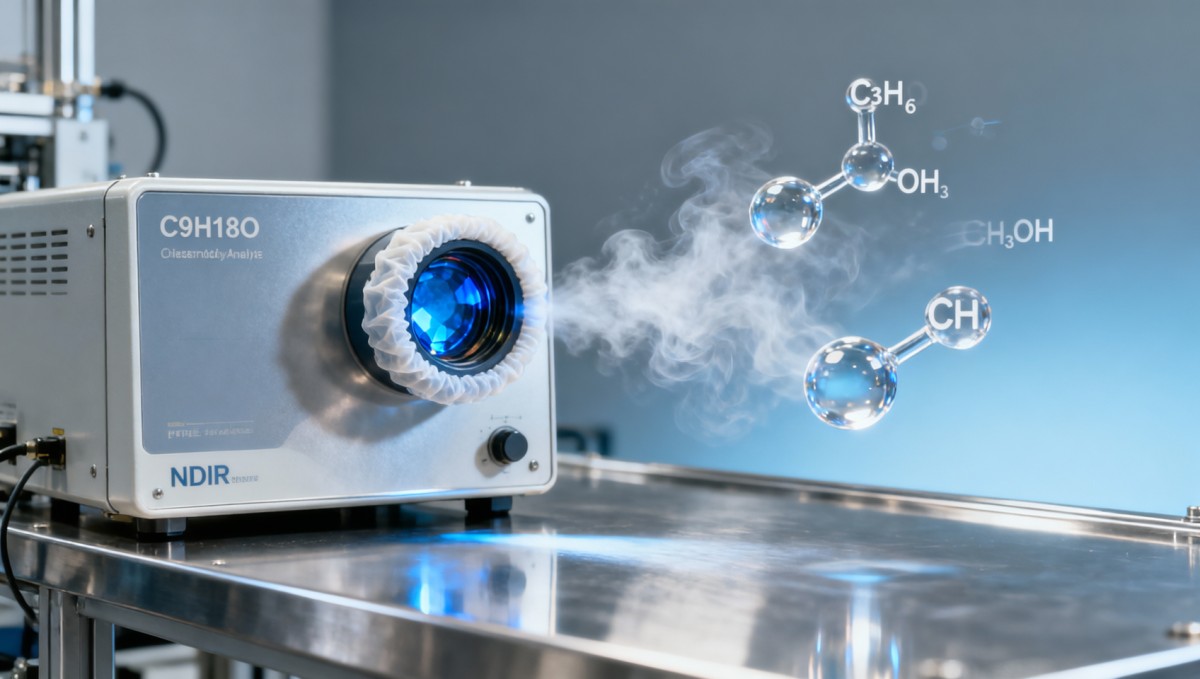
NDIR systems demonstrate superior resilience due to their sealed optical path and inert sapphire windows. Electrochemical units require reconditioning cycles every 48–72 hours in high-solvent environments, while MOS-based analyzers are strongly discouraged for continuous use where C9H18O or similar volatiles coexist with cleaning solvents. Decision-makers should prioritize NDIR architecture when accuracy budgets are ≤±1.5% FS and uptime requirements exceed 99.2%.
Operational Mitigation Strategies for Field Teams
Maintenance personnel and operators can implement four proven interventions to reduce solvent-related inconsistency without hardware replacement. First, install a heated hydrophobic particulate filter (rated for 0.2 µm, operating range 40–80°C) upstream of the sample inlet—this reduces solvent condensation and extends sensor life by 3.2× in humid environments. Second, enforce a purge cycle: 2-minute nitrogen flush at 3 bar before each measurement sequence lowers residual solvent carryover by 89%.
Third, adopt dynamic zero referencing: integrate an automated dual-valve manifold to alternate between sample gas and certified zero air every 90 seconds. This cuts baseline drift to <±0.3% FS over 8-hour shifts. Fourth, schedule calibration using traceable C9H18O standards prepared in nitrogen—not synthetic air—to avoid matrix-induced bias exceeding 2.7% in low-concentration ranges (<50 ppm).
For project managers overseeing installation, specify minimum 1.5 m of stainless-steel sampling line (316L grade) with 1/4" OD and 0.035" wall thickness. This configuration limits solvent adsorption/desorption hysteresis to <1.1% FS compared to 5.4% for standard FEP tubing—directly impacting batch release decisions in pharmaceutical and fine chemical applications.
Procurement & Evaluation Criteria for Buyers
When evaluating analyzers for solvent-prone environments, procurement teams must go beyond datasheet specifications. Six non-negotiable criteria should govern selection: (1) documented solvent resistance test report per IEC 61000-4-21; (2) zero-drift specification measured under 100 ppm acetone challenge; (3) availability of field-replaceable optical cells (not bonded assemblies); (4) firmware support for adaptive baseline compensation algorithms; (5) calibration certificate traceable to NIST SRM 2814a; and (6) service contract options including quarterly onsite verification with solvent-stress validation.
The table below outlines comparative evaluation weightings used by engineering procurement departments across 12 multinational manufacturers. Each criterion is scored 1–5 (5 = fully compliant), then weighted to derive a Total Resilience Index (TRI).
Buyers scoring ≥4.2 on TRI consistently report 41% fewer unplanned downtime events and 68% faster root-cause resolution during solvent-related incidents. Finance and procurement leaders should treat TRI as a capital expenditure risk metric—directly influencing TCO calculations over 5-year ownership cycles.
Conclusion & Next Steps
Inconsistent C9H18O readings after solvent exposure stem from well-documented material interactions—not instrument defects. The most effective solutions combine hardware selection (prioritizing NDIR architecture), procedural controls (purge cycles, dynamic zeroing), and procurement discipline (TRI-based vendor assessment). For operations in chemical processing, coating lines, or environmental labs, these measures reduce measurement uncertainty to ≤±0.9% FS—meeting ISO/IEC 17025 accreditation requirements for accredited testing laboratories.
Technical evaluators should request solvent stress test data before shortlisting. Maintenance teams should implement quarterly sensor health audits using standardized challenge gases. Project managers must specify solvent-resilient materials in piping and filtration specs—not just analyzer models.
To receive a free Solvent Resilience Assessment Kit—including a customizable test protocol, TRI scoring template, and vendor comparison matrix—contact our instrumentation engineering team today.
Recommended for You
 Monitoring Sensor Prices in 2026: What Is Changing and WhyMonitoring sensor prices in 2026: compare portable sensor, fixed sensor, oxygen detector, infrared detector, electrochemical detector and paramagnetic detector options to choose a high accuracy sensor with better lifecycle value.
 Monitoring Sensor Data Looks Stable Until These Errors Show UpMonitoring sensor errors can hide behind stable data. Compare paramagnetic detector, electrochemical detector, infrared detector, and oxygen detector options for safer, high accuracy sensor selection.
 What Makes a Control Sensor Reliable in Harsh Environments?Control sensor reliability in harsh environments starts with the right oxygen detector, infrared detector, electrochemical detector, or paramagnetic detector for accurate, dependable monitoring.
 Control Sensor Delays Can Undermine Process StabilityControl sensor delays can destabilize operations. Compare paramagnetic detector, electrochemical detector, infrared detector, and oxygen detector options to find a high accuracy sensor for fixed, portable, laboratory, and monitoring sensor needs.
 Laboratory Sensor Repeatability Problems Often Start With SamplingLaboratory sensor repeatability issues often begin with sampling. Compare paramagnetic detector, electrochemical detector, infrared detector, and oxygen detector solutions to improve accuracy.
 Laboratory Sensor Selection Gets Harder With Lower Detection LimitsLaboratory sensor selection gets harder at lower limits. Compare paramagnetic detector, electrochemical detector, infrared detector, oxygen detector, fixed and portable sensor options for high accuracy monitoring and control.
 Portable Sensor Battery Loss Can Distort Long Shift MonitoringPortable sensor battery loss can distort long-shift monitoring. Compare paramagnetic detector, electrochemical detector, infrared detector and oxygen detector options for high accuracy sensor performance.
 Portable Sensor Accuracy in the Field Is Not Always What It SeemsPortable sensor accuracy can differ sharply from lab results. Compare paramagnetic detector, electrochemical detector, infrared detector, and oxygen detector performance to choose a high accuracy sensor for real field use.
 Fixed Sensor vs Portable Checks: Where Results Often DivergeExplore why fixed sensor and portable sensor readings diverge in oxygen detector systems using paramagnetic detector, electrochemical detector, and infrared detector technology.
 Why a High Accuracy Sensor May Still Miss Critical ChangesHigh accuracy sensor limits explained: compare paramagnetic detector, electrochemical detector, infrared detector and oxygen detector options to choose the right fixed, portable, laboratory or monitoring sensor.
 High Accuracy Sensor Claims: Which Specs Actually Prove It?High accuracy sensor selection starts with the right specs. Compare paramagnetic detector, electrochemical detector, infrared detector, and oxygen detector options for fixed, portable, laboratory, control, and monitoring sensor use.
 What Shortens the Service Life of an Oxygen Detector?Oxygen detector service life can drop fast due to heat, moisture, contamination, and poor calibration. Compare paramagnetic detector, electrochemical detector, and infrared detector solutions now.
 Oxygen Detector False Alarms Often Start With Sensor PlacementOxygen detector false alarms often start with sensor placement. Compare paramagnetic detector, electrochemical detector, and infrared detector options to improve accuracy and safety.
 Infrared Detector Response Time Can Change Your ReadingInfrared detector response time shapes alarm accuracy and stable readings. Compare paramagnetic detector, electrochemical detector, and oxygen detector options for every high accuracy sensor need.
 Infrared Detector Limits That Matter in Mixed Gas ApplicationsInfrared detector limits in mixed gas applications: compare paramagnetic detector, electrochemical detector, and oxygen detector options to choose a high accuracy sensor for portable, fixed, laboratory, control, and monitoring sensor use.
 Why Electrochemical Detector Calibration Fails More Often Than ExpectedElectrochemical detector calibration fails more often than expected—learn how a paramagnetic detector, infrared detector, or oxygen detector comparison helps you choose a high accuracy sensor for fixed, portable, laboratory, control, and monitoring sensor applications.
 Electrochemical Detector Lifespan Drops Fast Under These ConditionsElectrochemical detector lifespan can drop fast in heat, humidity, and corrosive gas. Compare paramagnetic detector, infrared detector, and oxygen detector options to choose a high accuracy sensor with lower lifecycle risk.
 Paramagnetic Detector Drift: What Usually Causes It?Paramagnetic detector drift explained: learn what causes oxygen detector errors, how it compares with electrochemical detector and infrared detector options, and how to keep a high accuracy sensor stable.
 Portable Detector Trends to WatchPortable detector trends: explore explosion proof monitor, laser monitor, infrared monitor, oxygen monitor, and high accuracy detector solutions that integrate with fixed detector systems.
 Fixed Detector Setup Mistakes to AvoidFixed detector setup mistakes can impact safety and costs. Learn how explosion proof monitor, oxygen monitor, infrared monitor, and portable detector users avoid false readings.
 High Accuracy Detector Selection TipsHigh accuracy detector selection tips for fixed detector and portable detector needs, covering explosion proof monitor, oxygen monitor, infrared monitor, and more for safer, smarter buying.
 Oxygen Monitor Export Trends in 2026Oxygen monitor export trends in 2026: explore explosion proof monitor, laser monitor, portable detector, fixed detector, and high accuracy detector demand shaping smarter buying decisions.
 Infrared Monitor Market Outlook 2026Infrared monitor market outlook 2026: compare explosion proof monitor, laser monitor, oxygen monitor, fixed detector and portable detector solutions for safer, smarter industrial projects.
 Where Electrochemical Monitors Work BestElectrochemical monitor guide: compare explosion proof monitor, infrared monitor, laser monitor, oxygen monitor, fixed detector, and portable detector for safer, smarter gas detection choices.
 Paramagnetic Monitor Import Outlook 2026Paramagnetic monitor import outlook 2026: compare explosion proof monitor, laser monitor, infrared monitor, oxygen monitor, and high accuracy detector solutions to source the right fixed or portable detector.
 Thermal Conductivity Monitor Price ShiftThermal conductivity monitor price trends explained with explosion proof monitor, laser monitor, oxygen monitor, and fixed or portable detector options for smarter, safer buying.
 How Laser Monitor Demand Is ChangingLaser monitor demand is changing as buyers compare explosion proof monitor, infrared, electrochemical, and oxygen monitor options for safer, high accuracy detector solutions.
 Oxygen Measurement System Export Demand in 2026Oxygen measurement system demand in 2026 is rising across industrial control equipment, gas quality measurement, emission control system, and process monitoring system markets. Explore key trends and smarter sourcing insights.
 Industrial Control System Trends to Watch in 2026Industrial control system trends for 2026: explore industrial control equipment, process monitoring system, gas quality measurement, oxygen measurement system, and emission control system upgrades.
 How to Improve Process Monitoring System ResultsImprove process monitoring system results with industrial control equipment, gas quality measurement, and emission measurement system strategies for smarter industrial control system performance.
 Emission Control System Import Risks in 2026Emission control system import risks in 2026: learn how industrial control equipment, gas quality measurement, and process monitoring system buyers can avoid delays, compliance issues, and costly mistakes.
 Gas Quality Control for Safer Plant OperationsGas quality control improves safer plant operations with industrial control equipment, gas quality measurement, and an emission measurement system—boost efficiency, compliance, and process monitoring performance.





Search Categories
Search Categories
Latest Article
- Monitoring Sensor Prices in 2026: What Is Changing and WhyMonitoring sensor prices in 2026: compare portable sensor, fixed sensor, oxygen detector, infrared detector, electrochemical detector and paramagnetic detector options to choose a high accuracy sensor with better lifecycle value.Posted by:
- Monitoring Sensor Data Looks Stable Until These Errors Show UpMonitoring sensor errors can hide behind stable data. Compare paramagnetic detector, electrochemical detector, infrared detector, and oxygen detector options for safer, high accuracy sensor selection.Posted by:
- What Makes a Control Sensor Reliable in Harsh Environments?Control sensor reliability in harsh environments starts with the right oxygen detector, infrared detector, electrochemical detector, or paramagnetic detector for accurate, dependable monitoring.Posted by:
Please give us a message
