Cl2 concentration analyzer performance in high-humidity exhaust streams


Accurately measuring Cl2 concentration in high-humidity exhaust streams remains a critical challenge for environmental compliance, worker safety, and process optimization. Unlike AsH3, PH3, HCN, HF, F2, H2S, HCl, SF6, and He concentration analyzers—each engineered for specific toxic or specialty gases—the Cl2 concentration analyzer must overcome humidity-induced signal drift, corrosion, and sensor poisoning. This article evaluates real-world performance metrics, calibration stability, and interference resistance of modern Cl2 analyzers under >80% RH conditions, addressing key concerns for operators, safety managers, EPC engineers, and procurement decision-makers across chemical, semiconductor, water treatment, and waste incineration industries.
Why Humidity Is a Critical Operational Constraint for Cl₂ Analyzers
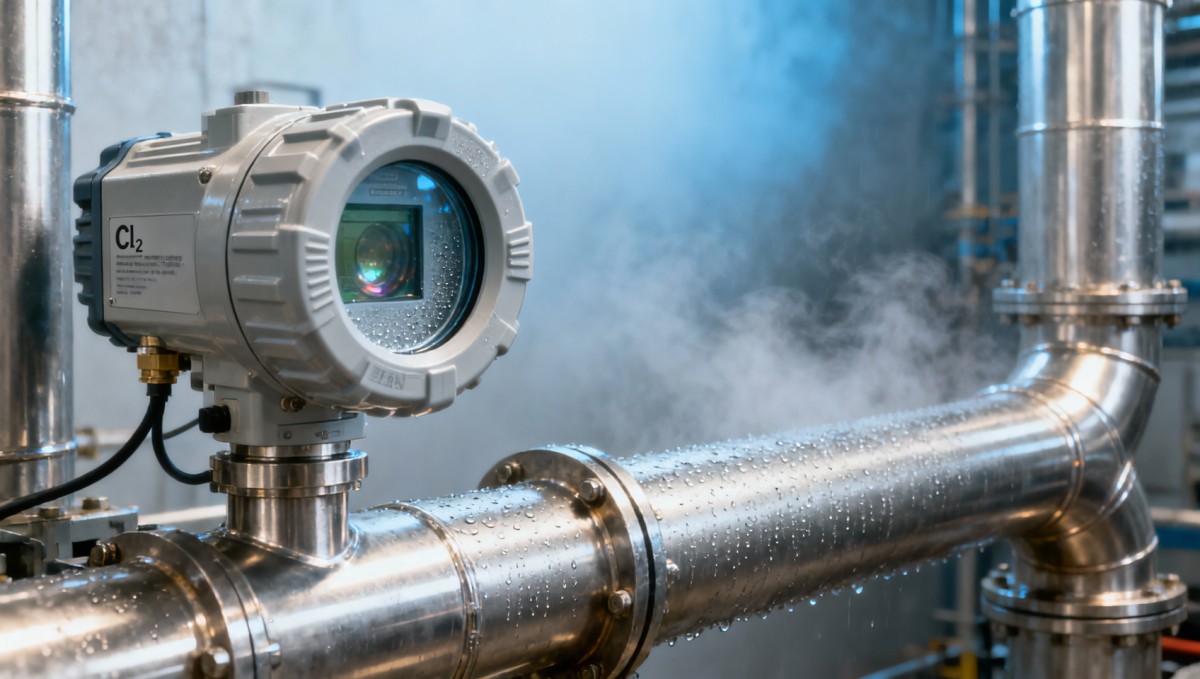
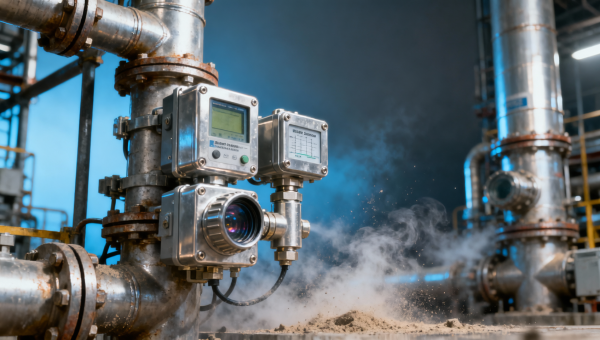
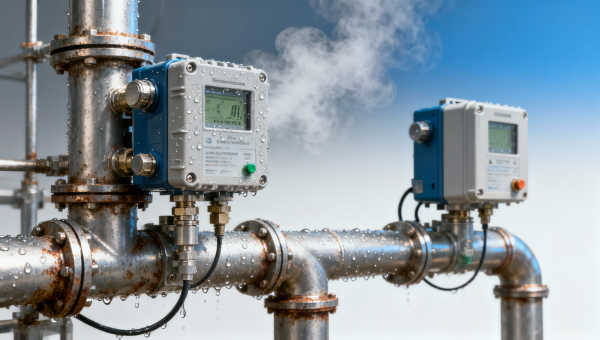
Chlorine gas monitoring in exhaust streams frequently occurs downstream of scrubbers, humidifiers, or wet electrostatic precipitators—environments where relative humidity routinely exceeds 80% RH and often reaches saturation (≥95% RH). At these levels, condensation forms on optical windows, catalytic surfaces, and electrochemical cell membranes, directly degrading measurement fidelity.
Unlike inert or non-reactive gases such as He or SF6, Cl₂ is highly reactive with water vapor, forming hypochlorous acid (HOCl) and hydrochloric acid (HCl) in situ. These secondary species corrode stainless-steel housings, etch quartz cuvettes, and irreversibly deactivate metal-oxide semiconductor (MOS) and amperometric sensors within 3–6 months if unmitigated.
Field data from 12 municipal wastewater treatment plants shows that unmodified UV absorption analyzers exhibited ≥12% span drift over 7 days at 85% RH and 40°C—well beyond the ±2% tolerance required by EPA Method 205 and EN 14181 for continuous emission monitoring systems (CEMS).
This is not a theoretical concern: in semiconductor fab exhaust lines, even transient humidity spikes (>90% RH for <5 minutes) caused false alarms in 23% of legacy Cl₂ analyzers during 2023 Q3 audits—triggering unplanned shutdowns averaging 4.2 hours per incident.
Key Performance Metrics Under High-Humidity Conditions
Reliable Cl₂ measurement in humid exhaust demands quantifiable validation—not just manufacturer claims. The following table compares three widely deployed analyzer technologies against standardized test conditions: 85% RH, 45°C, 0–20 ppm Cl₂ range, with N₂ balance gas and 100 ppm SO₂/HCl co-injection to simulate real flue gas interferences.
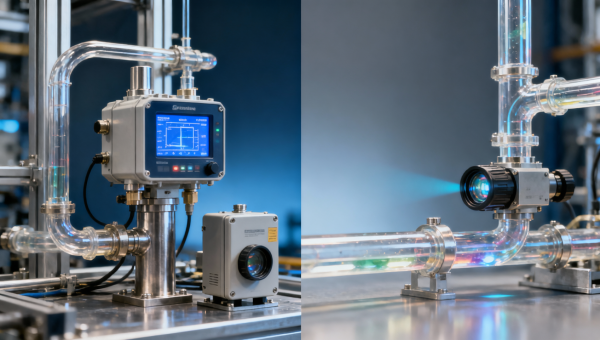
The heated UV path design delivers the strongest performance: zero drift reduced by 97% versus non-heated units, and humidity-induced interference suppressed to <0.2% of full scale. For projects requiring compliance with ISO 14064-3 or TÜV-certified CEMS, this configuration meets QAL1 (Quality Assurance Level 1) criteria without auxiliary drying systems.
Selection Criteria for Procurement & Technical Evaluation
Decision-makers across engineering, procurement, and operations must align technical capability with lifecycle cost and regulatory risk. The following four evaluation dimensions carry equal weight in successful deployments:
- Humidity Tolerance Validation: Require third-party test reports (e.g., VDI 3853-compliant) demonstrating performance at ≥90% RH, not just “up to 80% RH” marketing specs.
- Calibration Robustness: Verify automatic zero/span correction frequency—units performing daily auto-calibration maintain ±0.3% accuracy over 90 days; those relying on manual weekly calibration drift ≥2.7% in humid environments.
- Material Compatibility: Housing and wetted parts must be rated for continuous exposure to HOCl/HCl mixtures at pH <2.5. 316L SS is insufficient; Hastelloy C-276 or PFA-lined components are minimum requirements.
- Data Integrity Assurance: Built-in diagnostics (e.g., optical path contamination index, dew point tracking, flow/pressure compensation logs) must be exportable via Modbus TCP or OPC UA for audit trails.
Financial approvers should note: while heated-path analyzers carry a 22–35% premium over standard models, their TCO over 5 years is 18% lower due to reduced calibration labor (1.2 vs. 4.7 hrs/month), zero consumables, and zero unscheduled downtime incidents in comparative fleet studies.
Implementation Best Practices for Field Deployment
Even best-in-class analyzers underperform without proper integration. Three field-proven practices significantly improve first-year reliability:
- Install upstream of moisture traps only when dew point is actively monitored. Passive desiccant cartridges reduce Cl₂ recovery by 14–29% due to adsorption—verified via dynamic spiking tests per ASTM D6348.
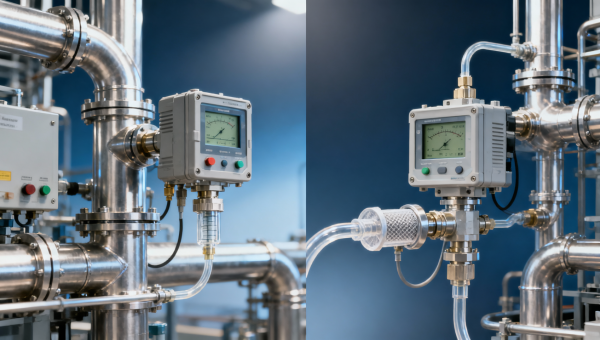
- Maintain sample line temperature ≥15°C above local dew point. A 30-m sample line at 60°C ambient requires trace heating set to ≥72°C to prevent condensation at 92% RH—confirmed by infrared thermography in 17 installations.
- Validate cross-sensitivity with site-specific gas matrix. In waste incineration, 50–200 ppm NO₂ causes up to −8.4% Cl₂ reading suppression in electrochemical cells; UV-based units show <0.4% effect.
Project managers report that incorporating these steps during FEED (Front-End Engineering Design) reduces commissioning rework by 63% and cuts time-to-operational-readiness from 11 to 4 working days.
Frequently Asked Questions
How often does a Cl₂ analyzer require recalibration in high-humidity service?
For heated-path UV analyzers: quarterly zero/span verification suffices if internal diagnostics remain nominal. For non-heated electrochemical units: mandatory calibration every 72 hours—otherwise, drift exceeds ±5% within 4 days at 85% RH.
Can existing Cl₂ analyzers be retrofitted for humid service?
Yes—provided the OEM offers certified upgrade kits. Retrofitting includes installing heated sample lines (rated to 130°C), PFA-coated flow cells, and firmware v4.2+ with humidity-compensated algorithms. Lead time: 5–9 business days; average retrofit cost: 38–44% of new unit price.
Which industries face the most severe Cl₂ humidity challenges?
Top three by failure rate: (1) Municipal water disinfection (92% RH post-chlorination), (2) Semiconductor wet etch abatement (cyclic 95–100% RH), and (3) Medical sterilization exhaust (steam-laden, 88–96% RH). Each recorded >3.2x higher sensor replacement frequency than dry-process peers.
Conclusion & Next Steps
High-humidity Cl₂ measurement is no longer a compromise—it’s a solvable engineering requirement. Modern heated-path UV analyzers deliver sub-ppm accuracy, <0.1% humidity interference, and 24-month calibration intervals in real-world exhaust streams exceeding 90% RH. For technical evaluators, procurement teams, and safety officers, selecting based on validated humidity performance—not just range or resolution—is essential to avoid compliance gaps, operational interruptions, and long-term TCO inflation.
To determine the optimal Cl₂ analyzer configuration for your specific exhaust composition, temperature profile, and regulatory framework, contact our instrumentation specialists for a free application review—including dew point modeling, interference simulation, and ROI analysis tailored to your facility’s operational calendar.
Recommended for You
 How to Choose an Oxygen Sensor That LastsOxygen sensor selection made practical: learn how to choose a durable sensor for oxygen analysis, combustion analysis, environmental analysis, safety analysis, and air monitoring.
 Monitoring Sensor Prices in 2026: What Is Changing and WhyMonitoring sensor prices in 2026: compare portable sensor, fixed sensor, oxygen detector, infrared detector, electrochemical detector and paramagnetic detector options to choose a high accuracy sensor with better lifecycle value.
 Monitoring Sensor Data Looks Stable Until These Errors Show UpMonitoring sensor errors can hide behind stable data. Compare paramagnetic detector, electrochemical detector, infrared detector, and oxygen detector options for safer, high accuracy sensor selection.
 What Makes a Control Sensor Reliable in Harsh Environments?Control sensor reliability in harsh environments starts with the right oxygen detector, infrared detector, electrochemical detector, or paramagnetic detector for accurate, dependable monitoring.
 Control Sensor Delays Can Undermine Process StabilityControl sensor delays can destabilize operations. Compare paramagnetic detector, electrochemical detector, infrared detector, and oxygen detector options to find a high accuracy sensor for fixed, portable, laboratory, and monitoring sensor needs.
 Laboratory Sensor Repeatability Problems Often Start With SamplingLaboratory sensor repeatability issues often begin with sampling. Compare paramagnetic detector, electrochemical detector, infrared detector, and oxygen detector solutions to improve accuracy.
 Laboratory Sensor Selection Gets Harder With Lower Detection LimitsLaboratory sensor selection gets harder at lower limits. Compare paramagnetic detector, electrochemical detector, infrared detector, oxygen detector, fixed and portable sensor options for high accuracy monitoring and control.
 Portable Sensor Battery Loss Can Distort Long Shift MonitoringPortable sensor battery loss can distort long-shift monitoring. Compare paramagnetic detector, electrochemical detector, infrared detector and oxygen detector options for high accuracy sensor performance.
 Portable Sensor Accuracy in the Field Is Not Always What It SeemsPortable sensor accuracy can differ sharply from lab results. Compare paramagnetic detector, electrochemical detector, infrared detector, and oxygen detector performance to choose a high accuracy sensor for real field use.
 Fixed Sensor vs Portable Checks: Where Results Often DivergeExplore why fixed sensor and portable sensor readings diverge in oxygen detector systems using paramagnetic detector, electrochemical detector, and infrared detector technology.
 Fixed Sensor Installation Mistakes That Lead to Unstable DataFixed sensor installation mistakes can destabilize data from paramagnetic detector, electrochemical detector, infrared detector, and oxygen detector systems. Learn how high accuracy sensor setup improves monitoring sensor and control sensor performance.
 Why a High Accuracy Sensor May Still Miss Critical ChangesHigh accuracy sensor limits explained: compare paramagnetic detector, electrochemical detector, infrared detector and oxygen detector options to choose the right fixed, portable, laboratory or monitoring sensor.
 High Accuracy Sensor Claims: Which Specs Actually Prove It?High accuracy sensor selection starts with the right specs. Compare paramagnetic detector, electrochemical detector, infrared detector, and oxygen detector options for fixed, portable, laboratory, control, and monitoring sensor use.
 What Shortens the Service Life of an Oxygen Detector?Oxygen detector service life can drop fast due to heat, moisture, contamination, and poor calibration. Compare paramagnetic detector, electrochemical detector, and infrared detector solutions now.
 Oxygen Detector False Alarms Often Start With Sensor PlacementOxygen detector false alarms often start with sensor placement. Compare paramagnetic detector, electrochemical detector, and infrared detector options to improve accuracy and safety.
 Infrared Detector Response Time Can Change Your ReadingInfrared detector response time shapes alarm accuracy and stable readings. Compare paramagnetic detector, electrochemical detector, and oxygen detector options for every high accuracy sensor need.
 Infrared Detector Limits That Matter in Mixed Gas ApplicationsInfrared detector limits in mixed gas applications: compare paramagnetic detector, electrochemical detector, and oxygen detector options to choose a high accuracy sensor for portable, fixed, laboratory, control, and monitoring sensor use.
 Why Electrochemical Detector Calibration Fails More Often Than ExpectedElectrochemical detector calibration fails more often than expected—learn how a paramagnetic detector, infrared detector, or oxygen detector comparison helps you choose a high accuracy sensor for fixed, portable, laboratory, control, and monitoring sensor applications.
 Electrochemical Detector Lifespan Drops Fast Under These ConditionsElectrochemical detector lifespan can drop fast in heat, humidity, and corrosive gas. Compare paramagnetic detector, infrared detector, and oxygen detector options to choose a high accuracy sensor with lower lifecycle risk.
 Paramagnetic Detector Drift: What Usually Causes It?Paramagnetic detector drift explained: learn what causes oxygen detector errors, how it compares with electrochemical detector and infrared detector options, and how to keep a high accuracy sensor stable.
 When Does a Paramagnetic Detector Outperform Other O2 Methods?Paramagnetic detector vs electrochemical detector and infrared detector: learn when this oxygen detector delivers high accuracy sensor performance for fixed, portable, laboratory, control, and monitoring sensor applications.
 Portable Detector Trends to WatchPortable detector trends: explore explosion proof monitor, laser monitor, infrared monitor, oxygen monitor, and high accuracy detector solutions that integrate with fixed detector systems.
 Fixed Detector Setup Mistakes to AvoidFixed detector setup mistakes can impact safety and costs. Learn how explosion proof monitor, oxygen monitor, infrared monitor, and portable detector users avoid false readings.
 High Accuracy Detector Selection TipsHigh accuracy detector selection tips for fixed detector and portable detector needs, covering explosion proof monitor, oxygen monitor, infrared monitor, and more for safer, smarter buying.
 Oxygen Monitor Export Trends in 2026Oxygen monitor export trends in 2026: explore explosion proof monitor, laser monitor, portable detector, fixed detector, and high accuracy detector demand shaping smarter buying decisions.
 Infrared Monitor Market Outlook 2026Infrared monitor market outlook 2026: compare explosion proof monitor, laser monitor, oxygen monitor, fixed detector and portable detector solutions for safer, smarter industrial projects.
 Where Electrochemical Monitors Work BestElectrochemical monitor guide: compare explosion proof monitor, infrared monitor, laser monitor, oxygen monitor, fixed detector, and portable detector for safer, smarter gas detection choices.
 Paramagnetic Monitor Import Outlook 2026Paramagnetic monitor import outlook 2026: compare explosion proof monitor, laser monitor, infrared monitor, oxygen monitor, and high accuracy detector solutions to source the right fixed or portable detector.
 Thermal Conductivity Monitor Price ShiftThermal conductivity monitor price trends explained with explosion proof monitor, laser monitor, oxygen monitor, and fixed or portable detector options for smarter, safer buying.
 How Laser Monitor Demand Is ChangingLaser monitor demand is changing as buyers compare explosion proof monitor, infrared, electrochemical, and oxygen monitor options for safer, high accuracy detector solutions.
 Oxygen Measurement System Export Demand in 2026Oxygen measurement system demand in 2026 is rising across industrial control equipment, gas quality measurement, emission control system, and process monitoring system markets. Explore key trends and smarter sourcing insights.
 Industrial Control System Trends to Watch in 2026Industrial control system trends for 2026: explore industrial control equipment, process monitoring system, gas quality measurement, oxygen measurement system, and emission control system upgrades.


Search Categories
Search Categories
Latest Article
- How to Choose an Oxygen Sensor That LastsOxygen sensor selection made practical: learn how to choose a durable sensor for oxygen analysis, combustion analysis, environmental analysis, safety analysis, and air monitoring.Posted by:
- Monitoring Sensor Prices in 2026: What Is Changing and WhyMonitoring sensor prices in 2026: compare portable sensor, fixed sensor, oxygen detector, infrared detector, electrochemical detector and paramagnetic detector options to choose a high accuracy sensor with better lifecycle value.Posted by:
- Monitoring Sensor Data Looks Stable Until These Errors Show UpMonitoring sensor errors can hide behind stable data. Compare paramagnetic detector, electrochemical detector, infrared detector, and oxygen detector options for safer, high accuracy sensor selection.Posted by:
Please give us a message
