Comparing Detection Stability Between New and Legacy C5H10O Concentration Analyzers


As measurement accuracy and operational reliability become critical benchmarks in industrial analytics, understanding the detection stability of both new and legacy C5H10O concentration analyzers gains significant importance. This comparison not only reveals the technological evolution of composition analysis tools but also offers practical insights for users evaluating options such as C10H20O, C9H18O, C8H16O, C7H14O, C6H12O, C4H8O, C3H6O, C2H4O, and CH3OH concentration analyzers in diverse instrumentation applications.
Understanding the Role of C5H10O Analyzers in Industrial Instrumentation
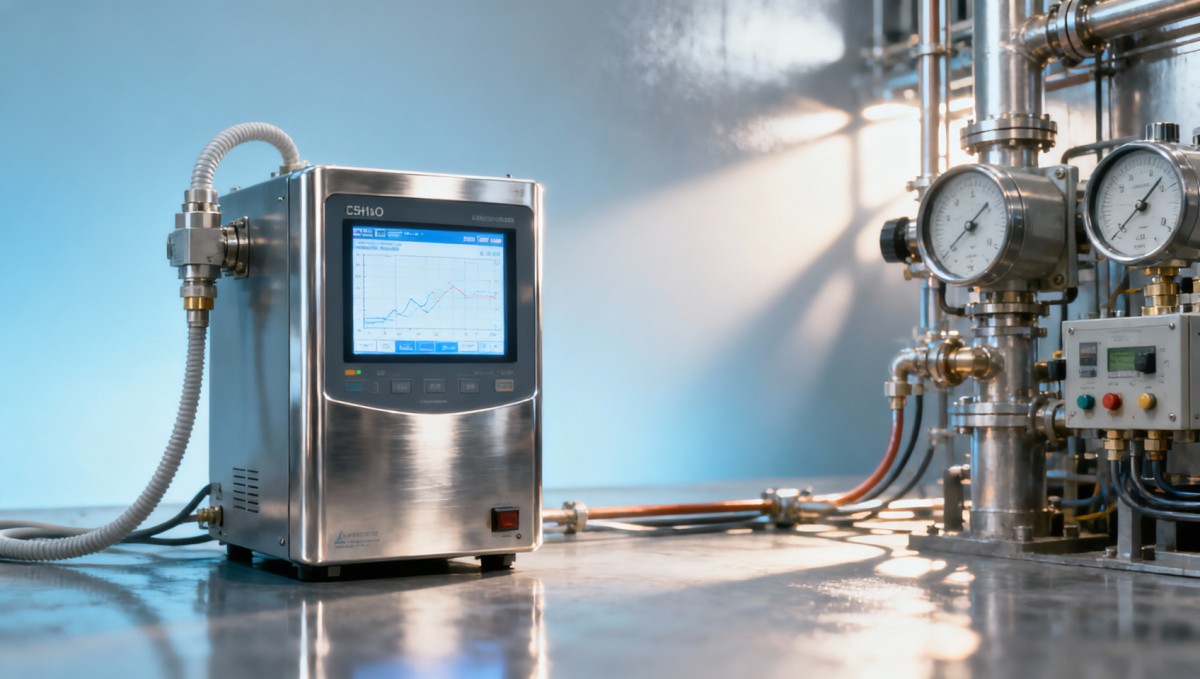
C5H10O, often categorized within the ketone or alcohol family depending on its isomeric structure, is a volatile compound used across multiple industrial environments. Its accurate detection under 10–200 ppm concentration range is crucial for process control, environmental safety, and product formulation integrity. The analyzers measuring such compounds directly influence plant efficiency and compliance with standards such as ISO/IEC 17025 and ASTM D5197.
Legacy analyzers typically rely on gas chromatography or infrared absorption methods requiring 15–30 min calibration cycles, while new-generation instruments integrate photoionization detection (PID) with real-time correction algorithms reducing calibration time to 5–10 min. This 50–60% improvement in operational speed directly supports high-frequency monitoring demands in industrial automation systems.
For information researchers and project managers, understanding analyzer behavior under variable temperature (15–35 °C) and humidity (30–85 %RH) conditions helps ensure reliable data across manufacturing, laboratory, or environmental testing environments. As composition analytics evolves toward digital connectivity, measurement stability forms a foundation for predictive maintenance and quality traceability.
The recent generation of C5H10O analyzers supports Modbus RTU and Ethernet protocols, enabling integration with supervisory control systems. This compatibility facilitates data-driven control loops essential for Industry 4.0 applications where continuous operational feedback must be achieved within seconds.
Comparison Analysis: New vs. Legacy C5H10O Concentration Analyzers
The stability of detection is largely governed by analyzer response time, drift rate, and calibration sustainability. In practical evaluations, new models often exhibit linear drift below ±0.5 % over 48 h, compared with ±2.0 % typically observed in legacy devices. Below is a consolidated table showing major differences across five core performance criteria commonly examined by procurement teams during technical tenders.
This data highlights how modernization achieves not only stability but sustainability, reducing energy use by nearly 40 %. For plant managers operating continuous 24/7 processes, the drift control advantage directly translates to fewer recalibrations per quarter, minimizing downtime and sample waste.
Users focusing on environmental or energy audits may calculate a payback cycle of 12–18 months when replacing legacy analyzers with new models, primarily from reduced labor hours and lower calibration gas consumption. For financial approvers, these quantifiable parameters simplify cost-benefit justification.
From a safety management perspective, new analyzers with built‑in self‑diagnostic functions trigger predictive alerts approximately 2–4 weeks before potential sensor drift, preventing unplanned process interruptions.
Technical Reliability and Instrument Stability Factors
Stability evaluation considers more than signal drift—it includes thermal equilibrium range, mechanical vibration tolerance, and electronic noise suppression. Modern analyzers typically maintain spectroscopic signal consistency under ±2 °C thermal variation and 20 Hz vibration levels common in manufacturing floors.
Three major system modules ensure consistency: (1) an adaptive photometric sensor maintaining 0.1 ppm resolution, (2) algorithmic noise filtration within 10 ms sampling speed, and (3) auto‑zero logic executing every 300 s to prevent baseline shift. These internal corrections enable operational confidence across wide environments.
Certification compliance remains essential. Most analyzers align with CE and RoHS restrictions, while laboratories often require EN 15267-3 validation for repeatability under ±0.75 % test variation. During procurement, verifying documentation ensures transparency in long-term audit cycles spanning 24–36 months.
Below is a summary table comparing common stability assurance features typically provided or required across industrial-grade analyzers.
When evaluating analyzer stability for C5H10O and related compounds like C9H18O or C7H14O, engineering teams should prioritize the alignment of control loop latency within 200–500 ms to ensure synchronized data processing with SCADA or DCS systems.
Procurement and Selection Considerations for Decision Makers
Procurement teams commonly assess analyzers across three principal dimensions: analytical performance, operational economy, and integration compatibility. A structured evaluation using quantifiable metrics supports informed purchase justification and long‑term ROI tracking.
Key selection factors include detection stability, calibration frequency, sensor longevity (typically 18–24 months), and automatic data logging capability with 1 s update rate. Decision makers should benchmark total cost of ownership (TCO) under a 3‑year operational window, considering both preventive maintenance and sensor replacement schedules.
When specifying analyzers for field deployment, project leaders should validate three-stage implementation support: (1) parameter confirmation within 5 working days, (2) pre‑shipment functional verification during factory acceptance test, and (3) site commissioning calibration within 7–10 days post‑delivery. This structured process ensures system readiness with minimal learning curve.
For laboratory or distributed monitoring setups, modular analyzers offering integrated Ethernet data output reduce installation time by approximately 30 % and simplify data centralization in multi‑instrument networks covering C6H12O or C4H8O detection arrays.
FAQ: Common Questions About C5H10O Analyzer Detection Stability
How often should calibration be performed for new analyzers?
Under continuous 24 h operation, new C5H10O analyzers typically require calibration every 6 months, compared with monthly intervals for older devices. For facilities with fluctuating humidity over 80 %, an additional drift check every quarter is advisable.
What environmental limits affect detection stability?
Most units maintain stable performance within 10–40 °C and 25–90 % RH. Outside this window, optical path stability can decline by up to 3 %, leading to measurement variability. Ensuring proper ventilation and vibration isolation prolongs sensor lifespan.
Are there differences in maintenance complexity between new and legacy systems?
Yes. New analyzers include replaceable sensor cartridges and digital diagnostics simplifying maintenance to roughly 30 min per inspection. Legacy units often require manual tuning that may consume 2–3 hours monthly for equivalent accuracy levels.
Can new analyzers integrate with existing industrial data systems?
Modern C5H10O analyzers support standard industrial communication protocols like Modbus and OPC UA, facilitating smooth integration with SCADA or MES systems. This compatibility shortens deployment from 10 days to 4–5 days in typical automation projects.
Why Choose Our Analytical Solutions
We specialize in comprehensive instrumentation solutions supporting measurement, analysis, and control across manufacturing, energy, environmental, and laboratory sectors. Our expertise lies in helping clients evaluate detection stability across compounds such as C5H10O, C4H8O, and CH3OH through scientifically structured testing and configuration guidance.
Clients can consult us for parameter verification, analyzer configuration matching, certification alignment, delivery scheduling, and comparative cost analysis tailored to their project constraints. With data‑driven engineering support and lifecycle maintenance programs, we ensure consistent analyzer performance and compliance continuity throughout the operational phase.
To discuss specification customization, certification requirements, or pilot testing options, contact our instrumentation consultants for professional guidance on implementing new‑generation C5H10O analyzers that combine precision, stability, and connectivity for modern industrial ecosystems.
Recommended for You
 Monitoring Sensor Prices in 2026: What Is Changing and WhyMonitoring sensor prices in 2026: compare portable sensor, fixed sensor, oxygen detector, infrared detector, electrochemical detector and paramagnetic detector options to choose a high accuracy sensor with better lifecycle value.
 Monitoring Sensor Data Looks Stable Until These Errors Show UpMonitoring sensor errors can hide behind stable data. Compare paramagnetic detector, electrochemical detector, infrared detector, and oxygen detector options for safer, high accuracy sensor selection.
 What Makes a Control Sensor Reliable in Harsh Environments?Control sensor reliability in harsh environments starts with the right oxygen detector, infrared detector, electrochemical detector, or paramagnetic detector for accurate, dependable monitoring.
 Control Sensor Delays Can Undermine Process StabilityControl sensor delays can destabilize operations. Compare paramagnetic detector, electrochemical detector, infrared detector, and oxygen detector options to find a high accuracy sensor for fixed, portable, laboratory, and monitoring sensor needs.
 Laboratory Sensor Repeatability Problems Often Start With SamplingLaboratory sensor repeatability issues often begin with sampling. Compare paramagnetic detector, electrochemical detector, infrared detector, and oxygen detector solutions to improve accuracy.
 Laboratory Sensor Selection Gets Harder With Lower Detection LimitsLaboratory sensor selection gets harder at lower limits. Compare paramagnetic detector, electrochemical detector, infrared detector, oxygen detector, fixed and portable sensor options for high accuracy monitoring and control.
 Portable Sensor Battery Loss Can Distort Long Shift MonitoringPortable sensor battery loss can distort long-shift monitoring. Compare paramagnetic detector, electrochemical detector, infrared detector and oxygen detector options for high accuracy sensor performance.
 Portable Sensor Accuracy in the Field Is Not Always What It SeemsPortable sensor accuracy can differ sharply from lab results. Compare paramagnetic detector, electrochemical detector, infrared detector, and oxygen detector performance to choose a high accuracy sensor for real field use.
 Fixed Sensor vs Portable Checks: Where Results Often DivergeExplore why fixed sensor and portable sensor readings diverge in oxygen detector systems using paramagnetic detector, electrochemical detector, and infrared detector technology.
 Why a High Accuracy Sensor May Still Miss Critical ChangesHigh accuracy sensor limits explained: compare paramagnetic detector, electrochemical detector, infrared detector and oxygen detector options to choose the right fixed, portable, laboratory or monitoring sensor.
 High Accuracy Sensor Claims: Which Specs Actually Prove It?High accuracy sensor selection starts with the right specs. Compare paramagnetic detector, electrochemical detector, infrared detector, and oxygen detector options for fixed, portable, laboratory, control, and monitoring sensor use.
 What Shortens the Service Life of an Oxygen Detector?Oxygen detector service life can drop fast due to heat, moisture, contamination, and poor calibration. Compare paramagnetic detector, electrochemical detector, and infrared detector solutions now.
 Oxygen Detector False Alarms Often Start With Sensor PlacementOxygen detector false alarms often start with sensor placement. Compare paramagnetic detector, electrochemical detector, and infrared detector options to improve accuracy and safety.
 Infrared Detector Response Time Can Change Your ReadingInfrared detector response time shapes alarm accuracy and stable readings. Compare paramagnetic detector, electrochemical detector, and oxygen detector options for every high accuracy sensor need.
 Infrared Detector Limits That Matter in Mixed Gas ApplicationsInfrared detector limits in mixed gas applications: compare paramagnetic detector, electrochemical detector, and oxygen detector options to choose a high accuracy sensor for portable, fixed, laboratory, control, and monitoring sensor use.
 Why Electrochemical Detector Calibration Fails More Often Than ExpectedElectrochemical detector calibration fails more often than expected—learn how a paramagnetic detector, infrared detector, or oxygen detector comparison helps you choose a high accuracy sensor for fixed, portable, laboratory, control, and monitoring sensor applications.
 Electrochemical Detector Lifespan Drops Fast Under These ConditionsElectrochemical detector lifespan can drop fast in heat, humidity, and corrosive gas. Compare paramagnetic detector, infrared detector, and oxygen detector options to choose a high accuracy sensor with lower lifecycle risk.
 Paramagnetic Detector Drift: What Usually Causes It?Paramagnetic detector drift explained: learn what causes oxygen detector errors, how it compares with electrochemical detector and infrared detector options, and how to keep a high accuracy sensor stable.
 Portable Detector Trends to WatchPortable detector trends: explore explosion proof monitor, laser monitor, infrared monitor, oxygen monitor, and high accuracy detector solutions that integrate with fixed detector systems.
 Fixed Detector Setup Mistakes to AvoidFixed detector setup mistakes can impact safety and costs. Learn how explosion proof monitor, oxygen monitor, infrared monitor, and portable detector users avoid false readings.
 High Accuracy Detector Selection TipsHigh accuracy detector selection tips for fixed detector and portable detector needs, covering explosion proof monitor, oxygen monitor, infrared monitor, and more for safer, smarter buying.
 Oxygen Monitor Export Trends in 2026Oxygen monitor export trends in 2026: explore explosion proof monitor, laser monitor, portable detector, fixed detector, and high accuracy detector demand shaping smarter buying decisions.
 Infrared Monitor Market Outlook 2026Infrared monitor market outlook 2026: compare explosion proof monitor, laser monitor, oxygen monitor, fixed detector and portable detector solutions for safer, smarter industrial projects.
 Where Electrochemical Monitors Work BestElectrochemical monitor guide: compare explosion proof monitor, infrared monitor, laser monitor, oxygen monitor, fixed detector, and portable detector for safer, smarter gas detection choices.
 Paramagnetic Monitor Import Outlook 2026Paramagnetic monitor import outlook 2026: compare explosion proof monitor, laser monitor, infrared monitor, oxygen monitor, and high accuracy detector solutions to source the right fixed or portable detector.
 Thermal Conductivity Monitor Price ShiftThermal conductivity monitor price trends explained with explosion proof monitor, laser monitor, oxygen monitor, and fixed or portable detector options for smarter, safer buying.
 How Laser Monitor Demand Is ChangingLaser monitor demand is changing as buyers compare explosion proof monitor, infrared, electrochemical, and oxygen monitor options for safer, high accuracy detector solutions.
 Oxygen Measurement System Export Demand in 2026Oxygen measurement system demand in 2026 is rising across industrial control equipment, gas quality measurement, emission control system, and process monitoring system markets. Explore key trends and smarter sourcing insights.
 Industrial Control System Trends to Watch in 2026Industrial control system trends for 2026: explore industrial control equipment, process monitoring system, gas quality measurement, oxygen measurement system, and emission control system upgrades.
 How to Improve Process Monitoring System ResultsImprove process monitoring system results with industrial control equipment, gas quality measurement, and emission measurement system strategies for smarter industrial control system performance.
 Emission Control System Import Risks in 2026Emission control system import risks in 2026: learn how industrial control equipment, gas quality measurement, and process monitoring system buyers can avoid delays, compliance issues, and costly mistakes.
 Gas Quality Control for Safer Plant OperationsGas quality control improves safer plant operations with industrial control equipment, gas quality measurement, and an emission measurement system—boost efficiency, compliance, and process monitoring performance.

Search Categories
Search Categories
Latest Article
- Monitoring Sensor Prices in 2026: What Is Changing and WhyMonitoring sensor prices in 2026: compare portable sensor, fixed sensor, oxygen detector, infrared detector, electrochemical detector and paramagnetic detector options to choose a high accuracy sensor with better lifecycle value.Posted by:
- Monitoring Sensor Data Looks Stable Until These Errors Show UpMonitoring sensor errors can hide behind stable data. Compare paramagnetic detector, electrochemical detector, infrared detector, and oxygen detector options for safer, high accuracy sensor selection.Posted by:
- What Makes a Control Sensor Reliable in Harsh Environments?Control sensor reliability in harsh environments starts with the right oxygen detector, infrared detector, electrochemical detector, or paramagnetic detector for accurate, dependable monitoring.Posted by:
Please give us a message
